Therapy Methods
Therapy
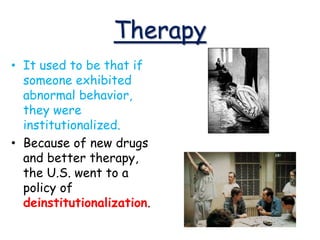
• It used to be that if
someone exhibited
abnormal behavior,
they were
institutionalized.
• Because of new drugs
and better therapy,
the U.S. went to a
policy of
deinstitutionalization.
Therapy
Other Reforms in Treatment
 Seeing the “insane” as ill
instead of “possessed”
 Treating them with
tenderness, not harshness
 Housing them in hospitals
rather than locking them
up in asylums
 Developing
psychotherapeutic
treatments, medications,
and community supports
to allow life outside
hospitals
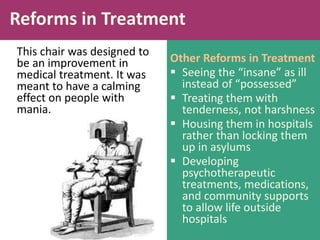
Reforms in Treatment
This chair was designed to
be an improvement in
medical treatment. It was
meant to have a calming
effect on people with
mania.
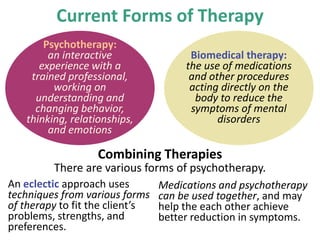
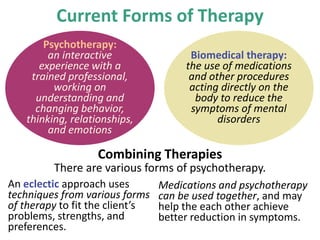
Psychotherapy:
an interactive
experience with a
trained professional,
working on
understanding and
changing behavior,
thinking, relationships,
and emotions
Current Forms of Therapy
Biomedical therapy:
the use of medications
and other procedures
acting directly on the
body to reduce the
symptoms of mental
disorders
There are various forms of psychotherapy.
Combining Therapies
An eclectic approach uses
techniques from various forms
of therapy to fit the client’s
problems, strengths, and
preferences.
Medications and psychotherapy
can be used together, and may
help the each other achieve
better reduction in symptoms.
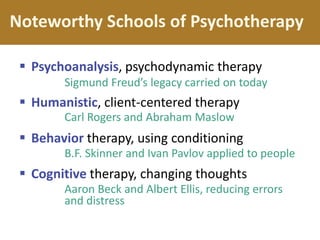
Noteworthy Schools of Psychotherapy
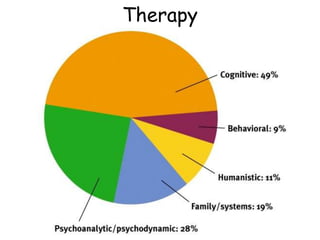
 Psychoanalysis, psychodynamic therapy
 Humanistic, client-centered therapy
 Behavior therapy, using conditioning
 Cognitive therapy, changing thoughts
Sigmund Freud’s legacy carried on today
Carl Rogers and Abraham Maslow
B.F. Skinner and Ivan Pavlov applied to people
Aaron Beck and Albert Ellis, reducing errors
and distress
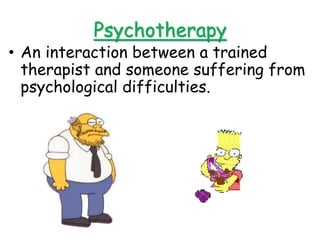
Psychotherapy
• An interaction between a trained
therapist and someone suffering from
psychological difficulties.
Psychoanalysis
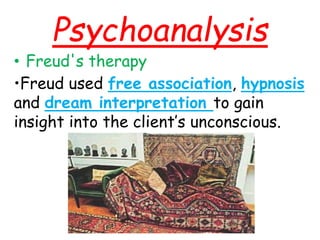
• Freud's therapy
•Freud used free association, hypnosis
and dream interpretation to gain
insight into the client’s unconscious.
Psychoanalytic Therapy
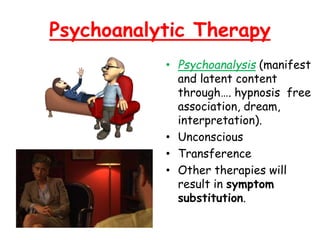
• Psychoanalysis (manifest
and latent content
through…. hypnosis free
association, dream,
interpretation).
• Unconscious
• Transference
• Other therapies will
result in symptom
substitution.
Humanistic Therapy
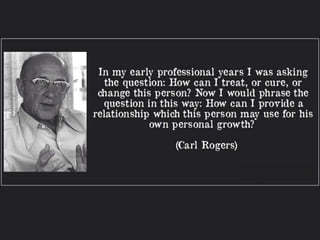
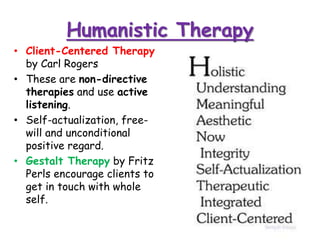
• Client-Centered Therapy
by Carl Rogers
• These are non-directive
therapies and use active
listening.
• Self-actualization, free-
will and unconditional
positive regard.
• Gestalt Therapy by Fritz
Perls encourage clients to
get in touch with whole
self.
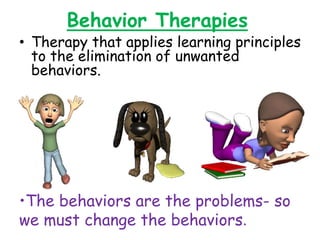
Behavior Therapies
• Therapy that applies learning principles
to the elimination of unwanted
behaviors.
•The behaviors are the problems- so
we must change the behaviors.
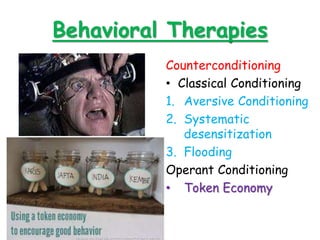
Behavioral Therapies
Counterconditioning
• Classical Conditioning
1. Aversive Conditioning
2. Systematic
desensitization
3. Flooding
Operant Conditioning
• Token Economy
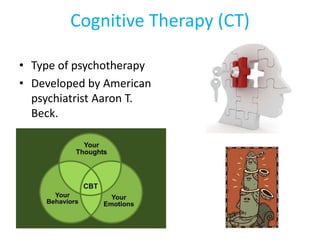
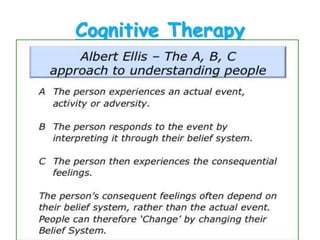
Cognitive Therapy (CT)
• Type of psychotherapy
• Developed by American
psychiatrist Aaron T.
Beck.
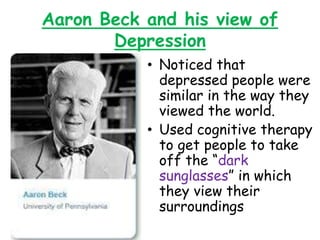
Aaron Beck and his view of
Depression
• Noticed that
depressed people were
similar in the way they
viewed the world.
• Used cognitive therapy
to get people to take
off the “dark
sunglasses” in which
they view their
surroundings
Cognitive Therapy
• Change the way we
view the world
(change our
schemas)
• Albert Ellis and
Rational Emotive
Therapy
Psychotherapy:
an interactive
experience with a
trained professional,
working on
understanding and
changing behavior,
thinking, relationships,
and emotions
Current Forms of Therapy
Biomedical therapy:
the use of medications
and other procedures
acting directly on the
body to reduce the
symptoms of mental
disorders
There are various forms of psychotherapy.
Combining Therapies
An eclectic approach uses
techniques from various forms
of therapy to fit the client’s
problems, strengths, and
preferences.
Medications and psychotherapy
can be used together, and may
help the each other achieve
better reduction in symptoms.
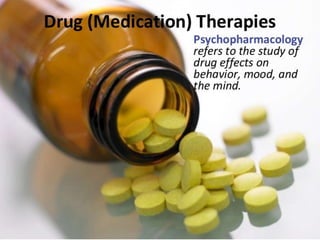
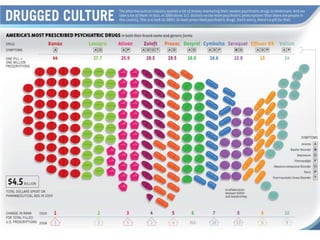
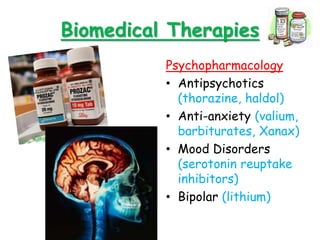
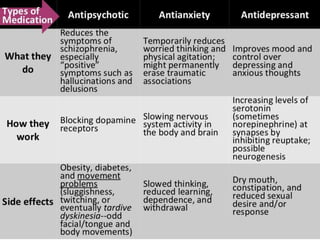
Biomedical Therapies
Psychopharmacology
• Antipsychotics
(thorazine, haldol)
• Anti-anxiety (valium,
barbiturates, Xanax)
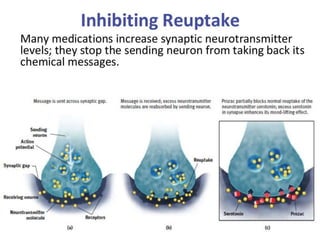
• Mood Disorders
(serotonin reuptake
inhibitors)
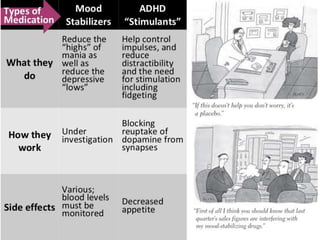
• Bipolar (lithium)
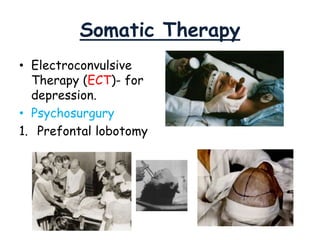
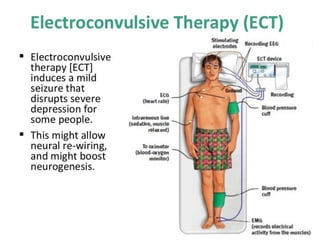
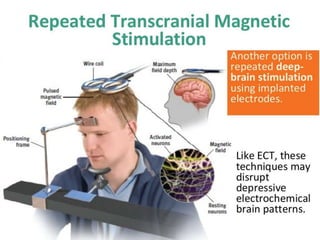
Somatic Therapy
• Electroconvulsive
Therapy (ECT)- for
depression.
• Psychosurgury
1. Prefontal lobotomy
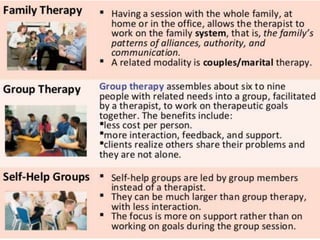
Group Therapy
Virtual Technology Exposure Therapy
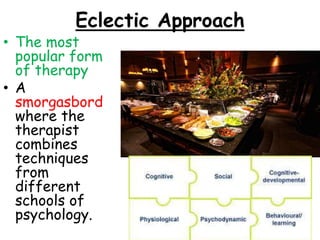
Eclectic Approach
• The most
popular form
of therapy
• A
smorgasbord
where the
therapist
combines
techniques
from
different
schools of
psychology.
Therapy Methods
Therapy Methods

Therapy Methods

  • 1.
  • 3.
    Therapy • It usedto be that if someone exhibited abnormal behavior, they were institutionalized. • Because of new drugs and better therapy, the U.S. went to a policy of deinstitutionalization.
  • 4.
  • 5.
    Other Reforms inTreatment  Seeing the “insane” as ill instead of “possessed”  Treating them with tenderness, not harshness  Housing them in hospitals rather than locking them up in asylums  Developing psychotherapeutic treatments, medications, and community supports to allow life outside hospitals Reforms in Treatment This chair was designed to be an improvement in medical treatment. It was meant to have a calming effect on people with mania.
  • 6.
    Psychotherapy: an interactive experience witha trained professional, working on understanding and changing behavior, thinking, relationships, and emotions Current Forms of Therapy Biomedical therapy: the use of medications and other procedures acting directly on the body to reduce the symptoms of mental disorders There are various forms of psychotherapy. Combining Therapies An eclectic approach uses techniques from various forms of therapy to fit the client’s problems, strengths, and preferences. Medications and psychotherapy can be used together, and may help the each other achieve better reduction in symptoms.
  • 7.
    Noteworthy Schools ofPsychotherapy  Psychoanalysis, psychodynamic therapy  Humanistic, client-centered therapy  Behavior therapy, using conditioning  Cognitive therapy, changing thoughts Sigmund Freud’s legacy carried on today Carl Rogers and Abraham Maslow B.F. Skinner and Ivan Pavlov applied to people Aaron Beck and Albert Ellis, reducing errors and distress
  • 8.
    Psychotherapy • An interactionbetween a trained therapist and someone suffering from psychological difficulties.
  • 9.
    Psychoanalysis • Freud's therapy •Freudused free association, hypnosis and dream interpretation to gain insight into the client’s unconscious.
  • 10.
    Psychoanalytic Therapy • Psychoanalysis(manifest and latent content through…. hypnosis free association, dream, interpretation). • Unconscious • Transference • Other therapies will result in symptom substitution.
  • 12.
    Humanistic Therapy • Client-CenteredTherapy by Carl Rogers • These are non-directive therapies and use active listening. • Self-actualization, free- will and unconditional positive regard. • Gestalt Therapy by Fritz Perls encourage clients to get in touch with whole self.
  • 13.
    Behavior Therapies • Therapythat applies learning principles to the elimination of unwanted behaviors. •The behaviors are the problems- so we must change the behaviors.
  • 14.
    Behavioral Therapies Counterconditioning • ClassicalConditioning 1. Aversive Conditioning 2. Systematic desensitization 3. Flooding Operant Conditioning • Token Economy
  • 15.
    Cognitive Therapy (CT) •Type of psychotherapy • Developed by American psychiatrist Aaron T. Beck.
  • 16.
    Aaron Beck andhis view of Depression • Noticed that depressed people were similar in the way they viewed the world. • Used cognitive therapy to get people to take off the “dark sunglasses” in which they view their surroundings
  • 17.
    Cognitive Therapy • Changethe way we view the world (change our schemas) • Albert Ellis and Rational Emotive Therapy
  • 18.
    Psychotherapy: an interactive experience witha trained professional, working on understanding and changing behavior, thinking, relationships, and emotions Current Forms of Therapy Biomedical therapy: the use of medications and other procedures acting directly on the body to reduce the symptoms of mental disorders There are various forms of psychotherapy. Combining Therapies An eclectic approach uses techniques from various forms of therapy to fit the client’s problems, strengths, and preferences. Medications and psychotherapy can be used together, and may help the each other achieve better reduction in symptoms.
  • 21.
    Biomedical Therapies Psychopharmacology • Antipsychotics (thorazine,haldol) • Anti-anxiety (valium, barbiturates, Xanax) • Mood Disorders (serotonin reuptake inhibitors) • Bipolar (lithium)
  • 25.
    Somatic Therapy • Electroconvulsive Therapy(ECT)- for depression. • Psychosurgury 1. Prefontal lobotomy
  • 28.
  • 29.
  • 30.
    Eclectic Approach • Themost popular form of therapy • A smorgasbord where the therapist combines techniques from different schools of psychology.

Editor's Notes

  • #6 Click to reveal sidebar bullets. Instructor, you can add that the designer of this chair, Benjamin Rush (1746-1813), was a strong advocate for more humane treatment of the mentally ill. Students may laugh about the supposed humanity of this chair, but compare it to trephination. Actually, some people with autism find firm restraint to be dramatically soothing when they are overwhelmed and stressed.
  • #7 After bubbles appear, click through to reveal remaining text.
  • #8 Click to reveal sub-bullets for each type of therapy.
  • #19 After bubbles appear, click through to reveal remaining text.