Download to read offline






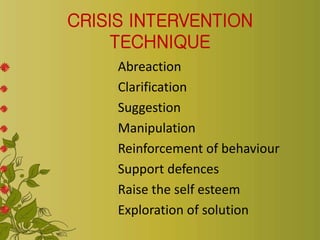


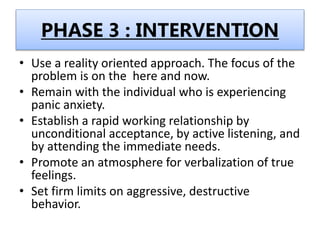


Crisis is characterized by an initial rise in anxiety and tension, followed by problem-solving efforts. It is acute rather than chronic and has the potential for psychological growth or deterioration. Crisis intervention aims to reduce distress, help individuals return to pre-crisis functioning, provide understanding of precipitating events, and initiate new coping responses. The intervention involves assessment, planning, active intervention including reality-oriented discussion and limit-setting, and evaluation of resolution and follow-up planning.


