Research Methods
It is actually way more exciting
than it sounds!!!!
Why do we have to learn this
stuff?
Psychology is first and foremost a science.
Thus it is based in research.
Who does what?
• Psychologist: studies patients, tests disorders, talks
and counsels
• Psychiatrist : works inside a branch of medicine dealing
with psychological disorders
• Provides medical (drug) treatment
• http://www.diffen.com/difference/Psychiatrist_vs_Psychologist
Why do we need research?
• Why? Because just asking people how/why
they felt and acted the way they did can be
misleading.
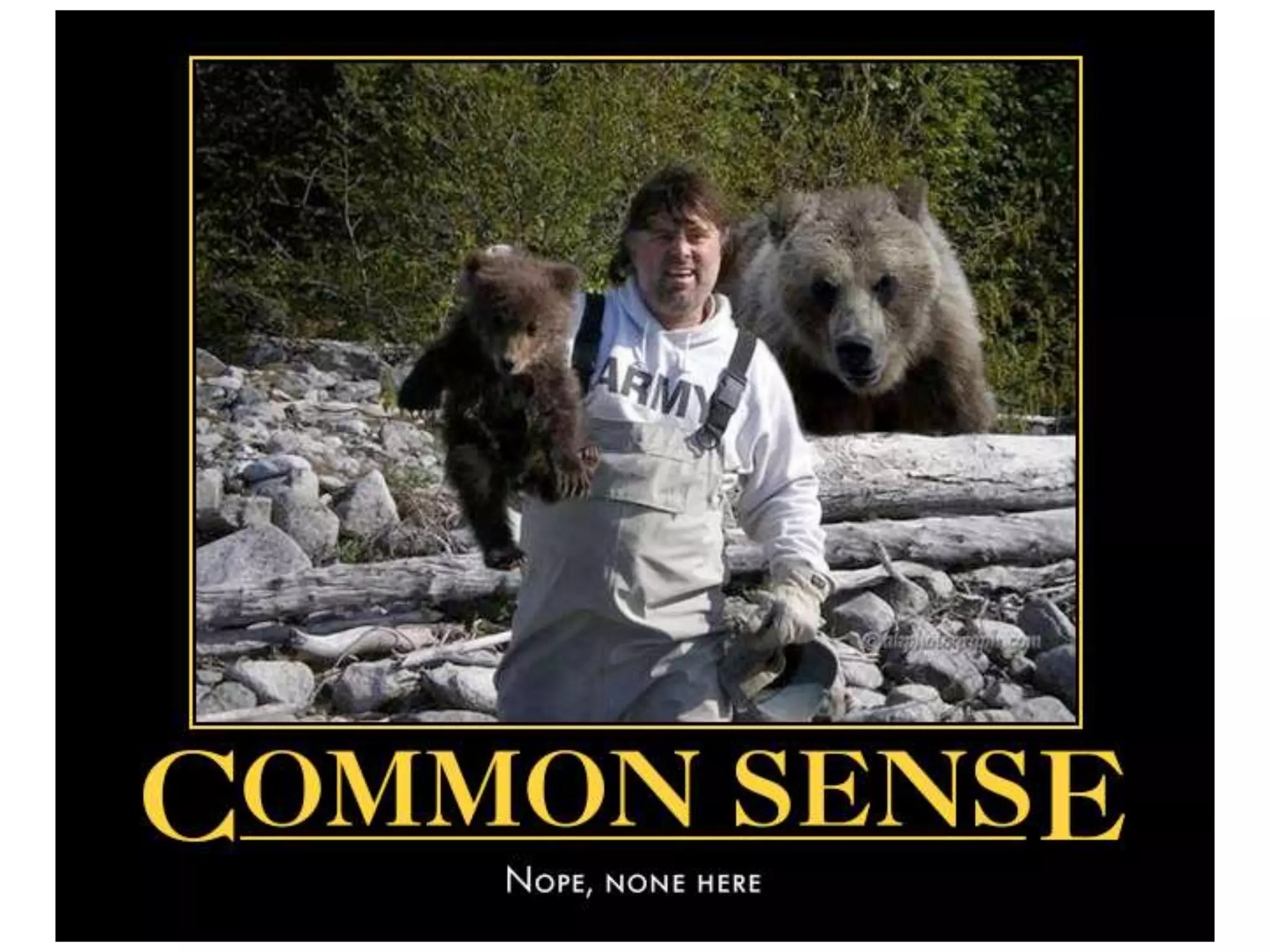
• Common sense isn’t all it is cracked up to be.
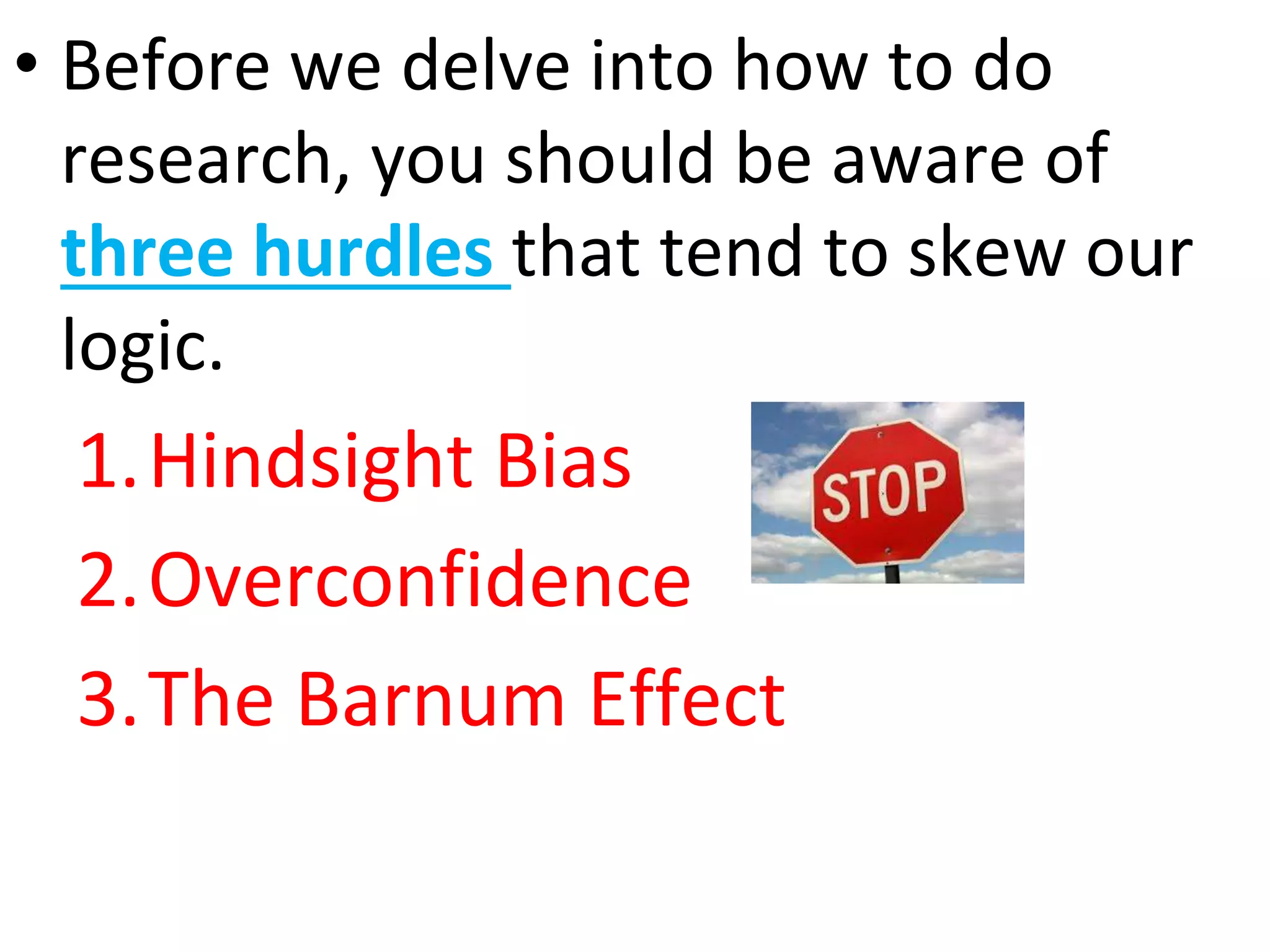
• Before we delve into how to do
research, you should be aware of
three hurdles that tend to skew our
logic.
1.Hindsight Bias
2.Overconfidence
3.The Barnum Effect
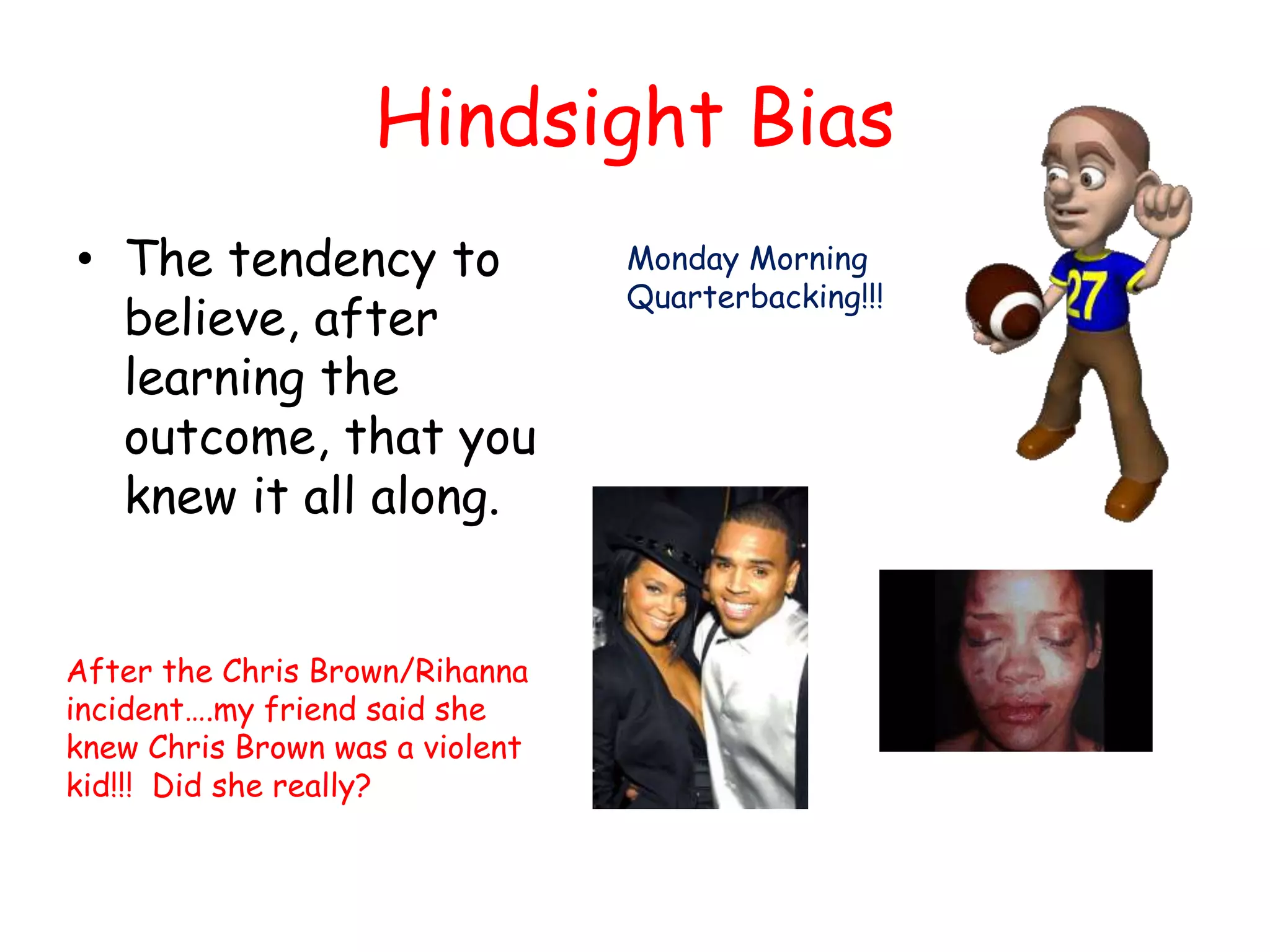
Hindsight Bias
• The tendency to
believe, after
learning the
outcome, that you
knew it all along.
Monday Morning
Quarterbacking!!!
After the Chris Brown/Rihanna
incident….my friend said she
knew Chris Brown was a violent
kid!!! Did she really?
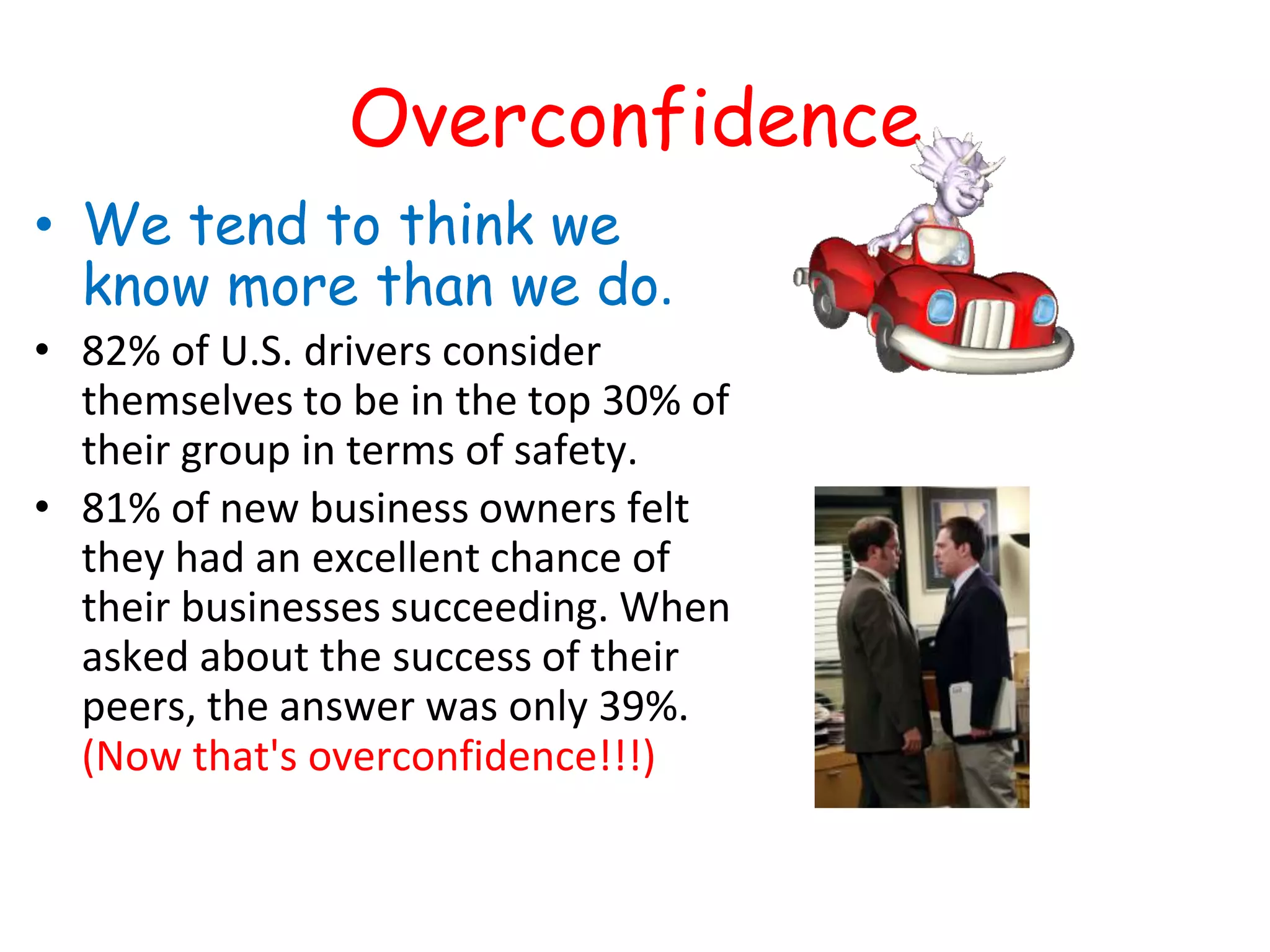
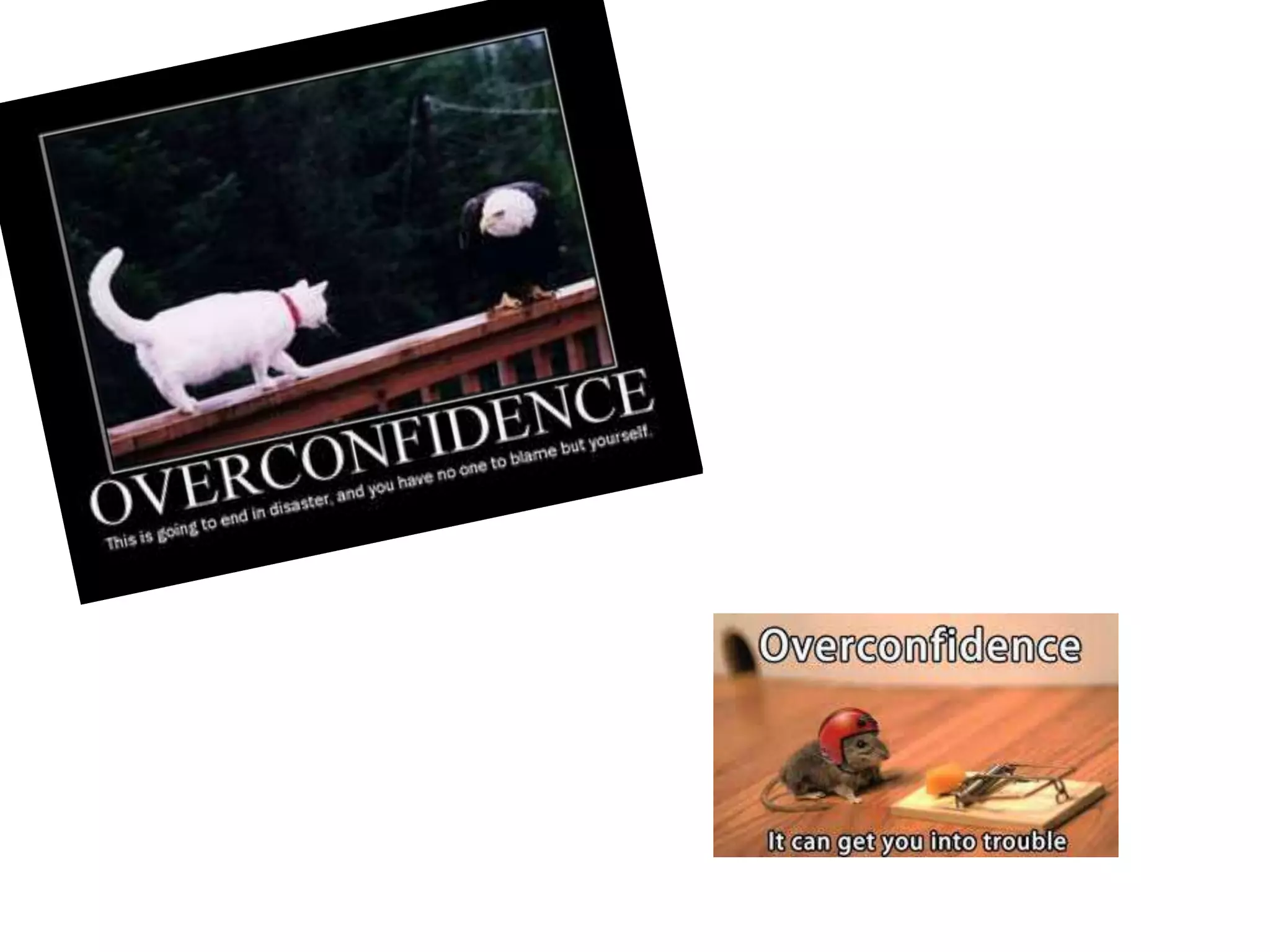
Overconfidence
• We tend to think we
know more than we do.
• 82% of U.S. drivers consider
themselves to be in the top 30% of
their group in terms of safety.
• 81% of new business owners felt
they had an excellent chance of
their businesses succeeding. When
asked about the success of their
peers, the answer was only 39%.
(Now that's overconfidence!!!)
The Barnum Effect
• It is the tendency for
people to accept very
general or vague
characterizations of
themselves and take
them to be accurate.
Terminology
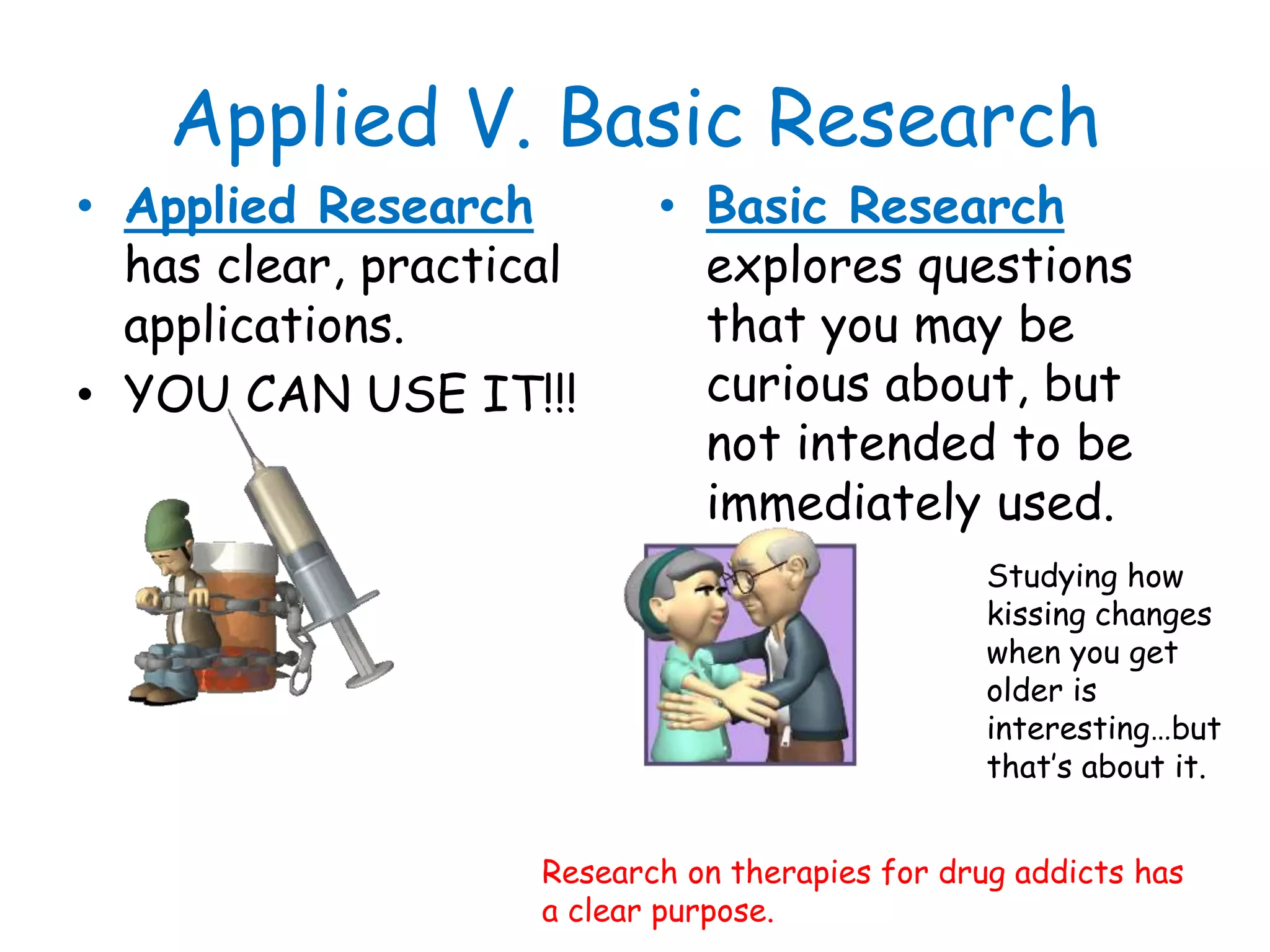
Applied V. Basic Research
• Applied Research
has clear, practical
applications.
• YOU CAN USE IT!!!
• Basic Research
explores questions
that you may be
curious about, but
not intended to be
immediately used.
Research on therapies for drug addicts has
a clear purpose.
Studying how
kissing changes
when you get
older is
interesting…but
that’s about it.
Who will be researched?
• Control Group
• Group that does
not receive the
test variable
• Experimental Group
• The group in
an experiment
that receives
the variable
being tested
Sampling
• Identify the
population you want
to study.
• The sample must be
representative of
the population you
want to study.
• GET A RANDOM
SAMPLE.
• Stratified Sampling
Random Assignment
• Once you have a
random sample,
randomly assigning
them into two groups
helps control for
confounding variables.
• Experimental Group v.
Control Group.
• Group Matching
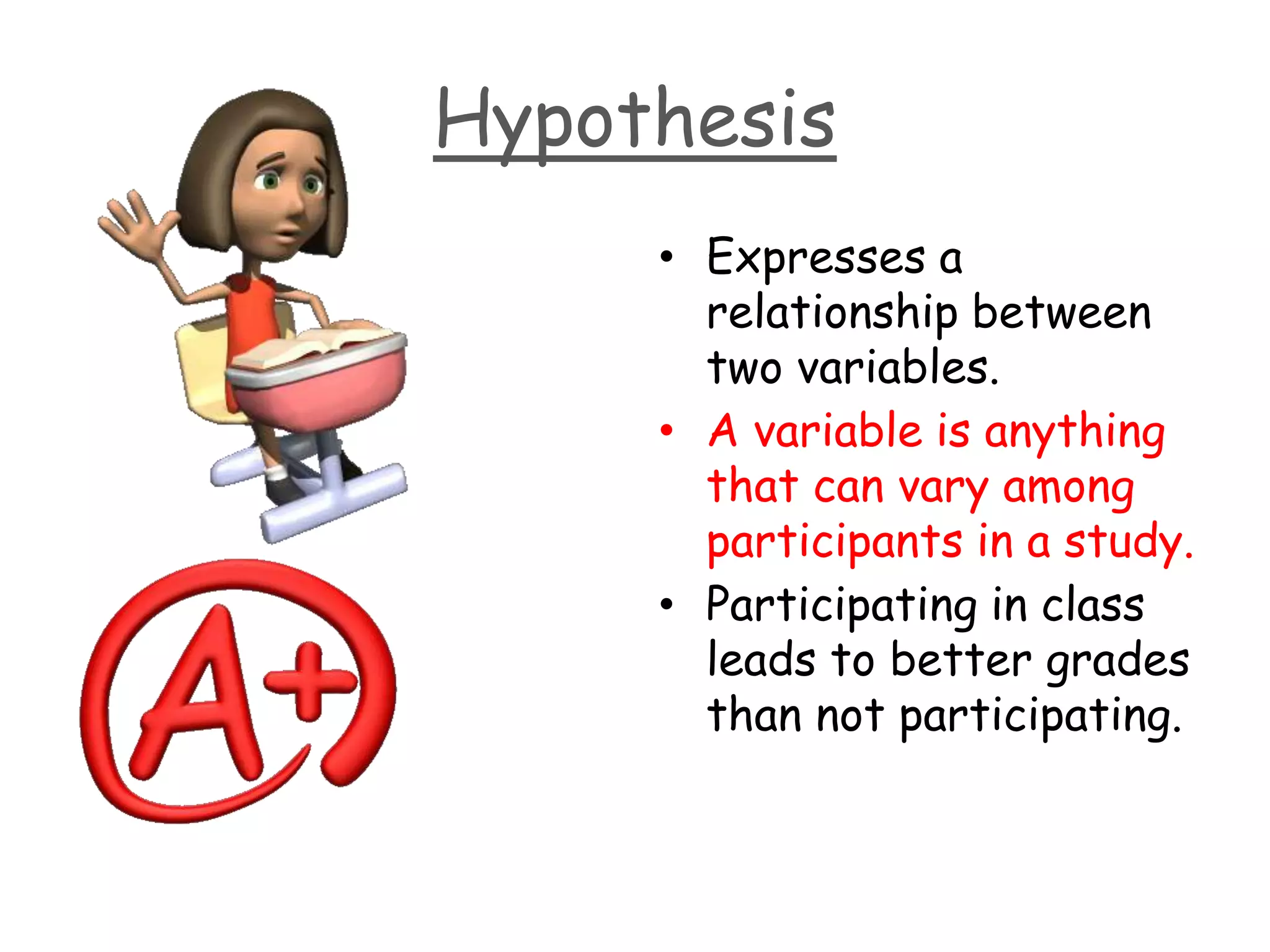
Hypothesis
• Expresses a
relationship between
two variables.
• A variable is anything
that can vary among
participants in a study.
• Participating in class
leads to better grades
than not participating.
Clever Hans
• Clever Hans the horse could do simple math and spell out the answers to simple
questions. He wasn’t always correct, but he was most of the time.
• While a team of scientists, veterinarians, zoologists and circus trainers could not
figure out how Hans was correctly answer the questions, Oskar Pfungst, a
psychologist did. What did he discover?
Hans’ Secret
• While Hans could not do math or correctly answer questions
on his own, he was very perceptive.
• Hans was picking up on subtle body language given off by his
owner who asked the questions.
• When the owner was hidden from view, suddenly Hans could
not answer the questions correctly.
• How does this story relate to methodology?

AP Psych ch. 1 (part #1)

  • 1.
    Research Methods It isactually way more exciting than it sounds!!!!
  • 2.
    Why do wehave to learn this stuff? Psychology is first and foremost a science. Thus it is based in research.
  • 4.
    Who does what? •Psychologist: studies patients, tests disorders, talks and counsels • Psychiatrist : works inside a branch of medicine dealing with psychological disorders • Provides medical (drug) treatment • http://www.diffen.com/difference/Psychiatrist_vs_Psychologist
  • 5.
    Why do weneed research? • Why? Because just asking people how/why they felt and acted the way they did can be misleading. • Common sense isn’t all it is cracked up to be.
  • 7.
    • Before wedelve into how to do research, you should be aware of three hurdles that tend to skew our logic. 1.Hindsight Bias 2.Overconfidence 3.The Barnum Effect
  • 8.
    Hindsight Bias • Thetendency to believe, after learning the outcome, that you knew it all along. Monday Morning Quarterbacking!!! After the Chris Brown/Rihanna incident….my friend said she knew Chris Brown was a violent kid!!! Did she really?
  • 10.
    Overconfidence • We tendto think we know more than we do. • 82% of U.S. drivers consider themselves to be in the top 30% of their group in terms of safety. • 81% of new business owners felt they had an excellent chance of their businesses succeeding. When asked about the success of their peers, the answer was only 39%. (Now that's overconfidence!!!)
  • 12.
    The Barnum Effect •It is the tendency for people to accept very general or vague characterizations of themselves and take them to be accurate.
  • 14.
  • 15.
    Applied V. BasicResearch • Applied Research has clear, practical applications. • YOU CAN USE IT!!! • Basic Research explores questions that you may be curious about, but not intended to be immediately used. Research on therapies for drug addicts has a clear purpose. Studying how kissing changes when you get older is interesting…but that’s about it.
  • 16.
    Who will beresearched? • Control Group • Group that does not receive the test variable • Experimental Group • The group in an experiment that receives the variable being tested
  • 17.
    Sampling • Identify the populationyou want to study. • The sample must be representative of the population you want to study. • GET A RANDOM SAMPLE. • Stratified Sampling
  • 18.
    Random Assignment • Onceyou have a random sample, randomly assigning them into two groups helps control for confounding variables. • Experimental Group v. Control Group. • Group Matching
  • 19.
    Hypothesis • Expresses a relationshipbetween two variables. • A variable is anything that can vary among participants in a study. • Participating in class leads to better grades than not participating.
  • 20.
    Clever Hans • CleverHans the horse could do simple math and spell out the answers to simple questions. He wasn’t always correct, but he was most of the time. • While a team of scientists, veterinarians, zoologists and circus trainers could not figure out how Hans was correctly answer the questions, Oskar Pfungst, a psychologist did. What did he discover?
  • 21.
    Hans’ Secret • WhileHans could not do math or correctly answer questions on his own, he was very perceptive. • Hans was picking up on subtle body language given off by his owner who asked the questions. • When the owner was hidden from view, suddenly Hans could not answer the questions correctly. • How does this story relate to methodology?