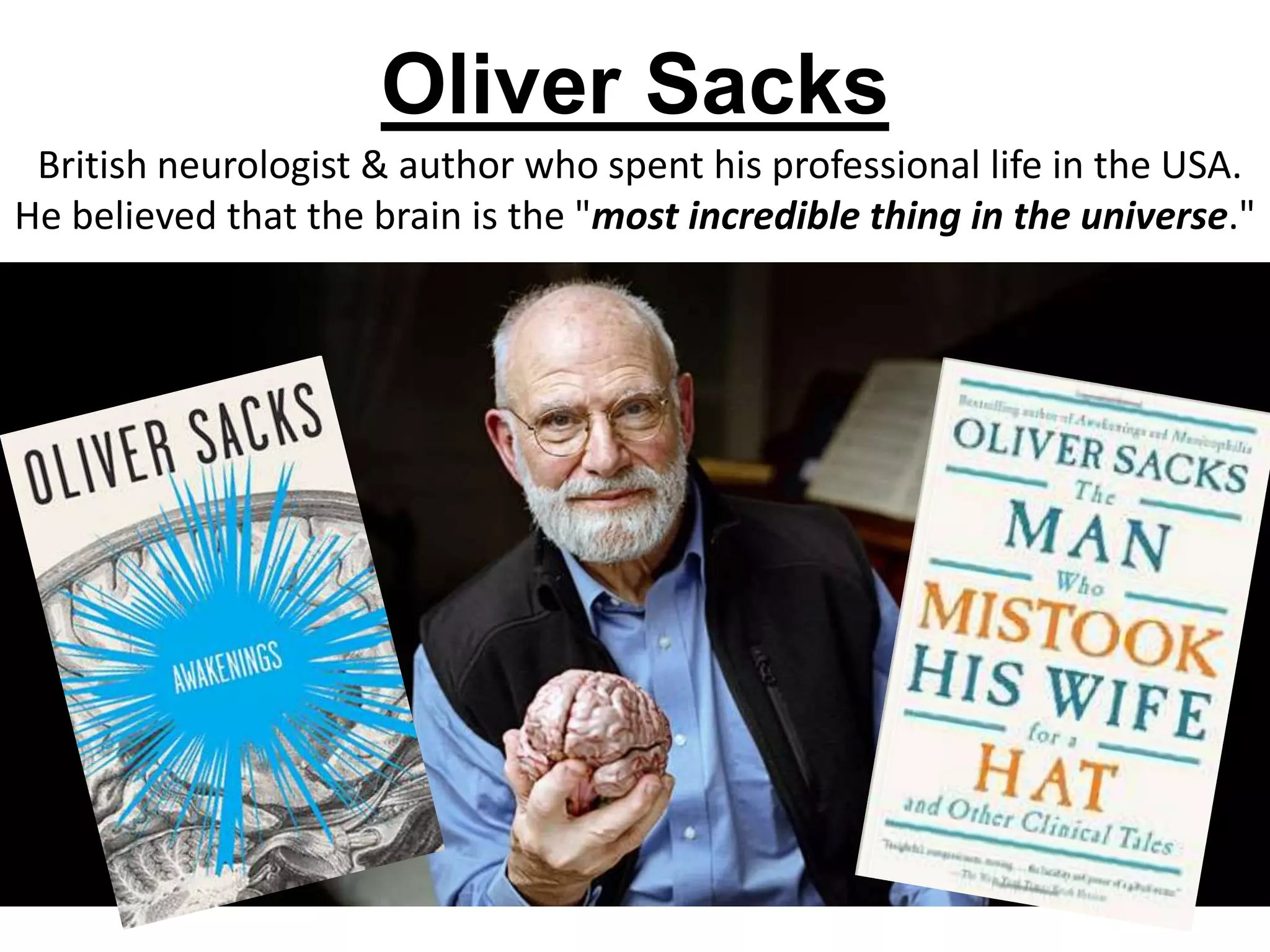
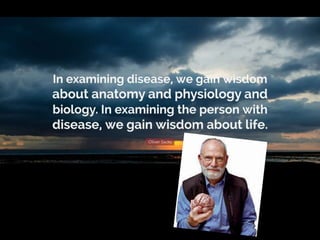
Oliver Sacks
British neurologist & author who spent his professional life in the USA.
He believed that the brain is the "most incredible thing in the universe."
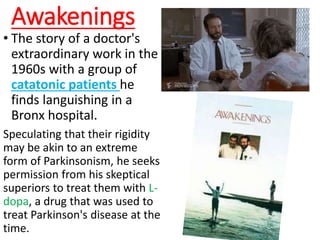
Awakenings
• The story of a doctor's
extraordinary work in the
1960s with a group of
catatonic patients he
finds languishing in a
Bronx hospital.
Speculating that their rigidity
may be akin to an extreme
form of Parkinsonism, he seeks
permission from his skeptical
superiors to treat them with L-
dopa, a drug that was used to
treat Parkinson's disease at the
time.
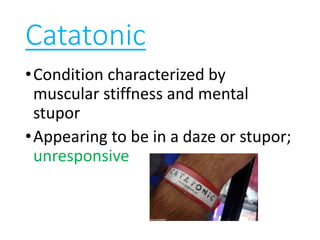
Catatonic
•Condition characterized by
muscular stiffness and mental
stupor
•Appearing to be in a daze or stupor;
unresponsive
True Story…
• Dr. Malcolm Sayer (portrayed by Robin Williams),
who, in 1969, discovered beneficial effects of the
drug L-Dopa.
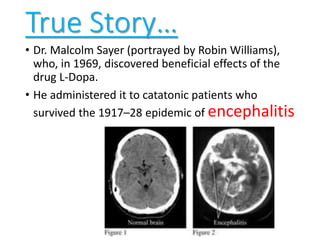
• He administered it to catatonic patients who
survived the 1917–28 epidemic of encephalitis
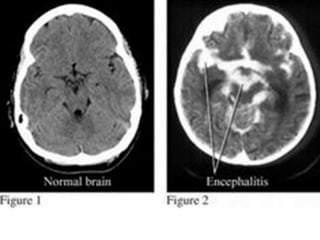
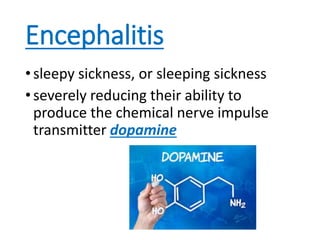
Encephalitis
•sleepy sickness, or sleeping sickness
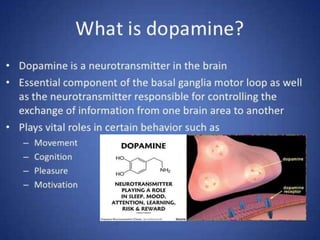
•severely reducing their ability to
produce the chemical nerve impulse
transmitter dopamine
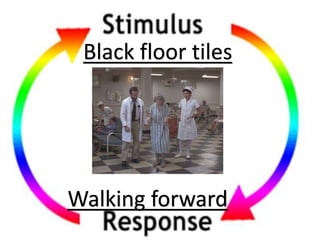
Black floor tiles
Walking forward
Film Case Study: Awakenings
•Writing
Assignment due
Friday:February
7th
• 3 paragraph response to essay
prompt of your choice
• Either handwritten or sent
electronically to
Kbolinsky@nasd.k12.pa.us

Awakenings

  • 1.
    Oliver Sacks British neurologist& author who spent his professional life in the USA. He believed that the brain is the "most incredible thing in the universe."
  • 2.
    Awakenings • The storyof a doctor's extraordinary work in the 1960s with a group of catatonic patients he finds languishing in a Bronx hospital. Speculating that their rigidity may be akin to an extreme form of Parkinsonism, he seeks permission from his skeptical superiors to treat them with L- dopa, a drug that was used to treat Parkinson's disease at the time.
  • 3.
    Catatonic •Condition characterized by muscularstiffness and mental stupor •Appearing to be in a daze or stupor; unresponsive
  • 4.
    True Story… • Dr.Malcolm Sayer (portrayed by Robin Williams), who, in 1969, discovered beneficial effects of the drug L-Dopa. • He administered it to catatonic patients who survived the 1917–28 epidemic of encephalitis
  • 6.
    Encephalitis •sleepy sickness, orsleeping sickness •severely reducing their ability to produce the chemical nerve impulse transmitter dopamine
  • 10.
  • 12.
    Film Case Study:Awakenings •Writing Assignment due Friday:February 7th • 3 paragraph response to essay prompt of your choice • Either handwritten or sent electronically to Kbolinsky@nasd.k12.pa.us