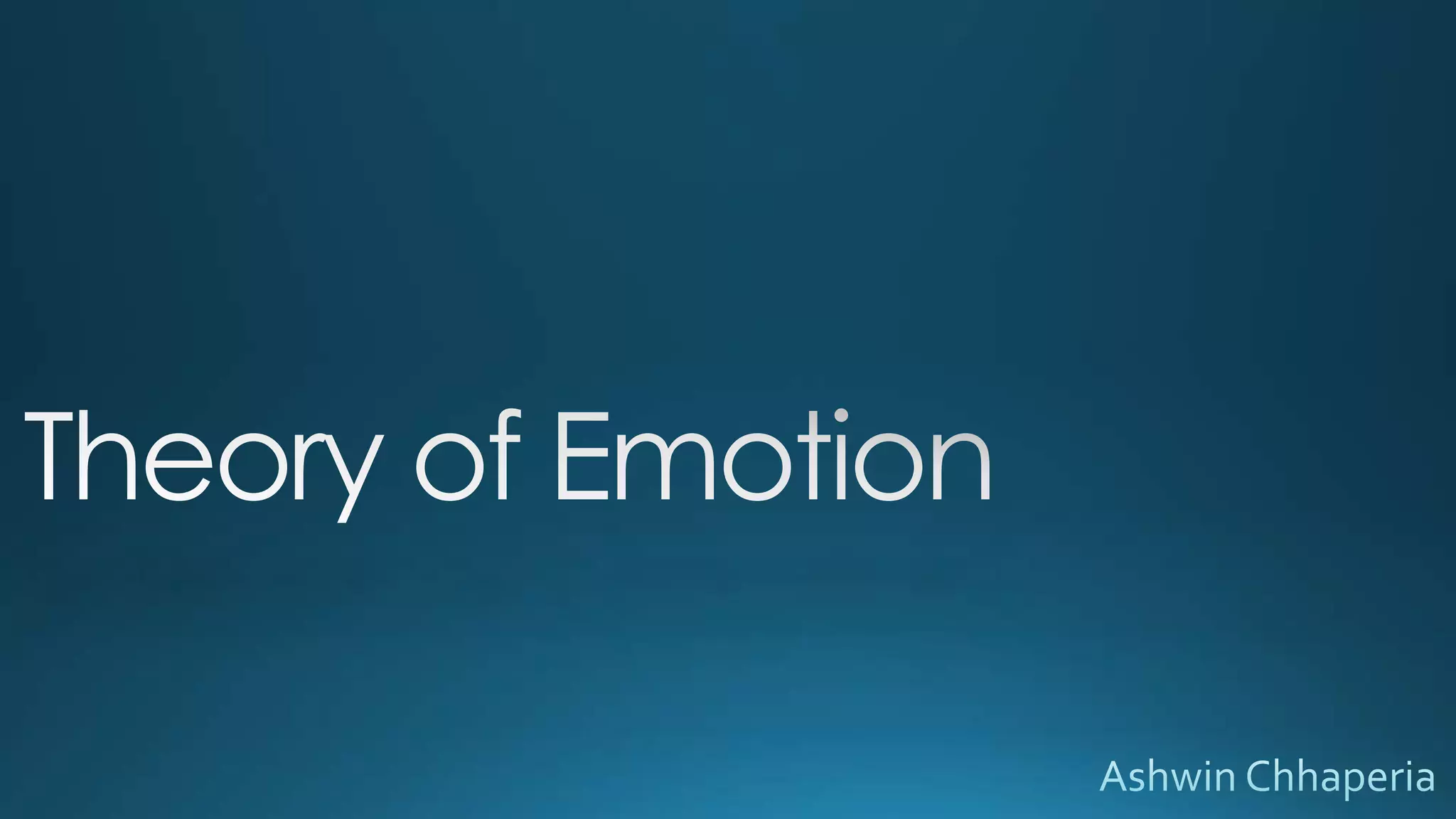
What is Emotion ? 
Emotion can be defined as a strong feeling deriving 
from one’s circumstances, mood, or relationships 
with others. 
Emotions have two components: 
• Physical reaction (rapid heartbeat, etc.) 
• Conscious experience or feeling (sadness, anger, 
etc.)
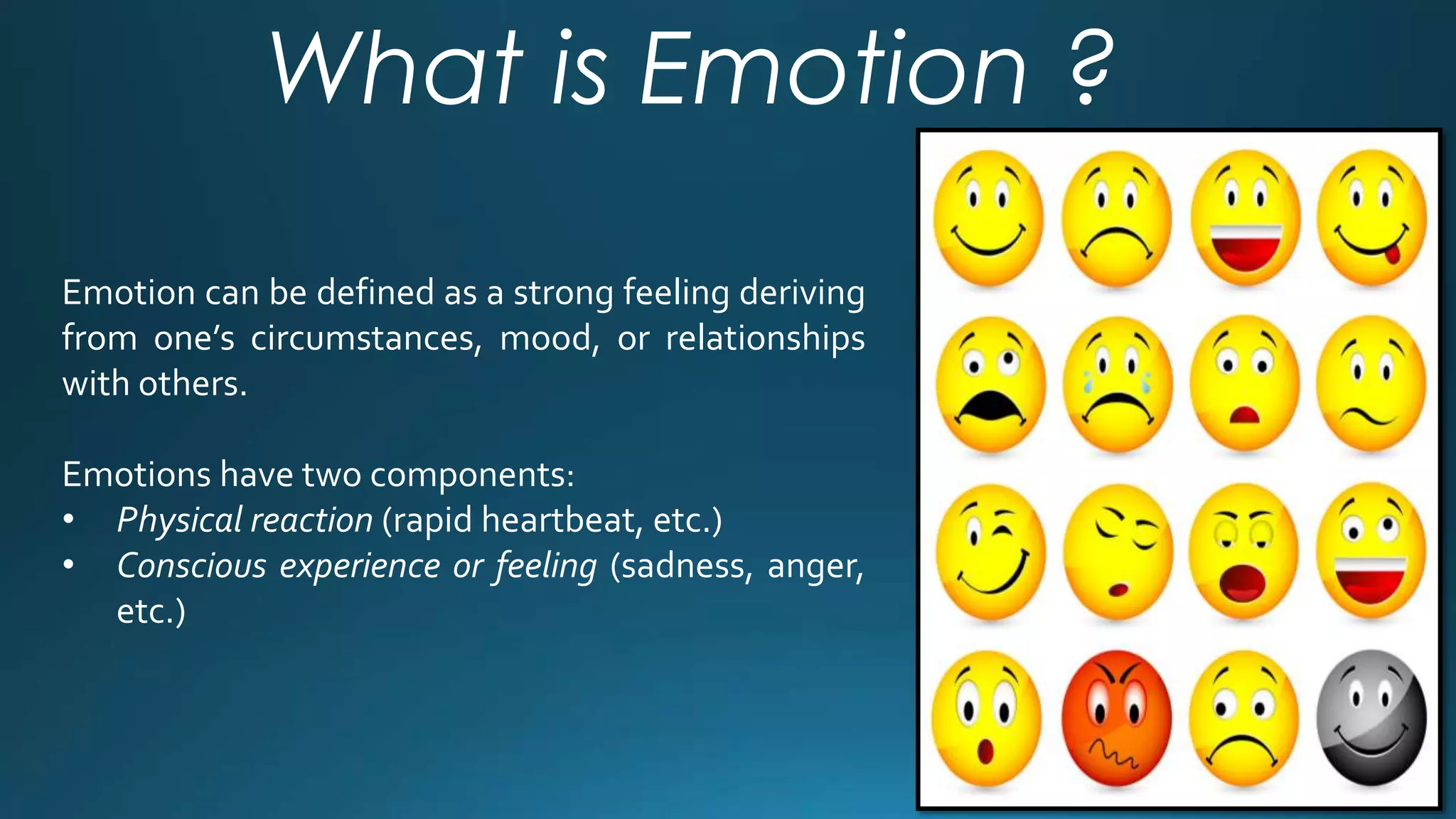
Theories of Emotion 
Does your heart beat faster because you are afraid… or 
are you afraid because you feel your heart beating faster?
James - Lange 
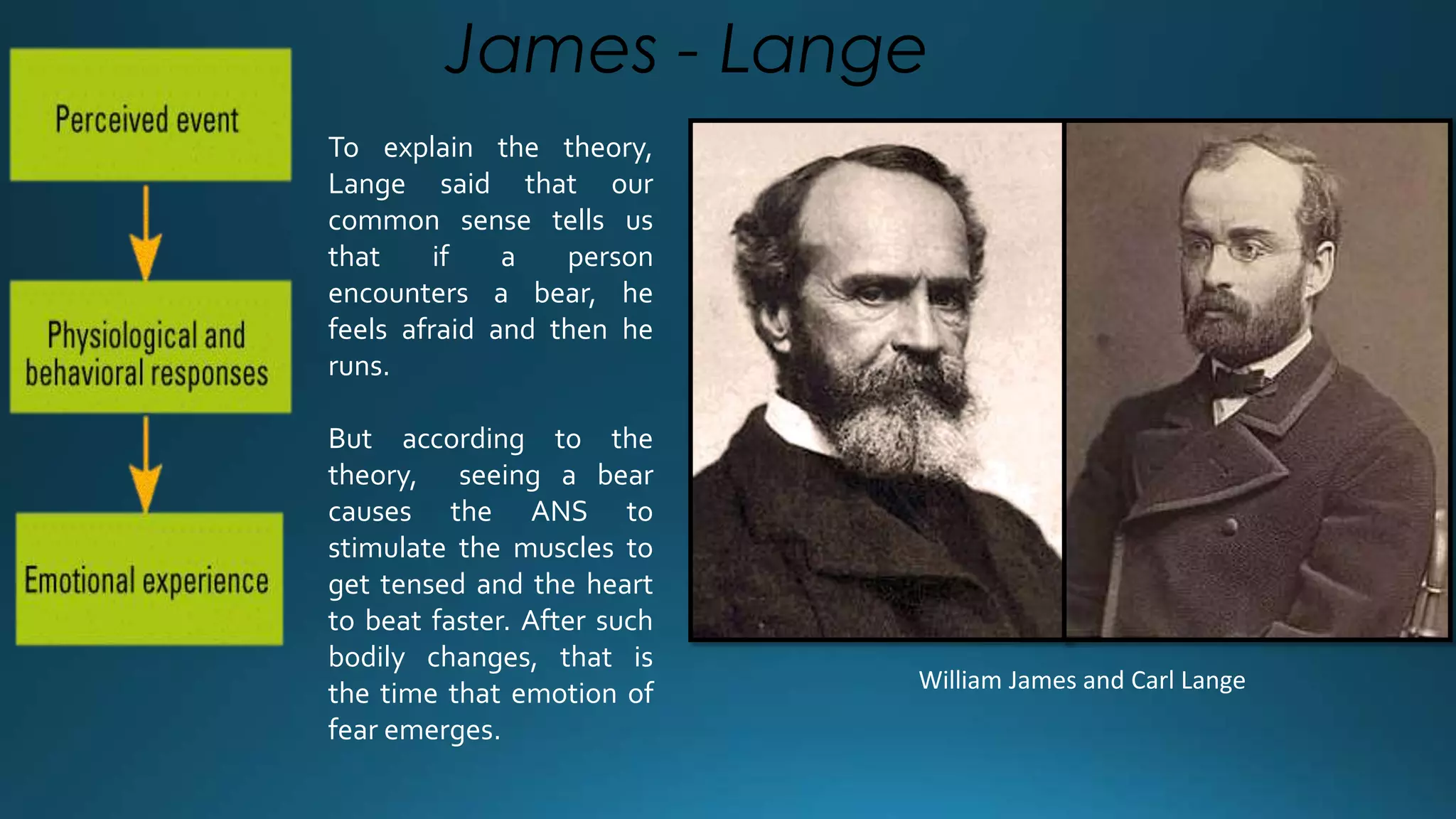
William James and Carl Lange 
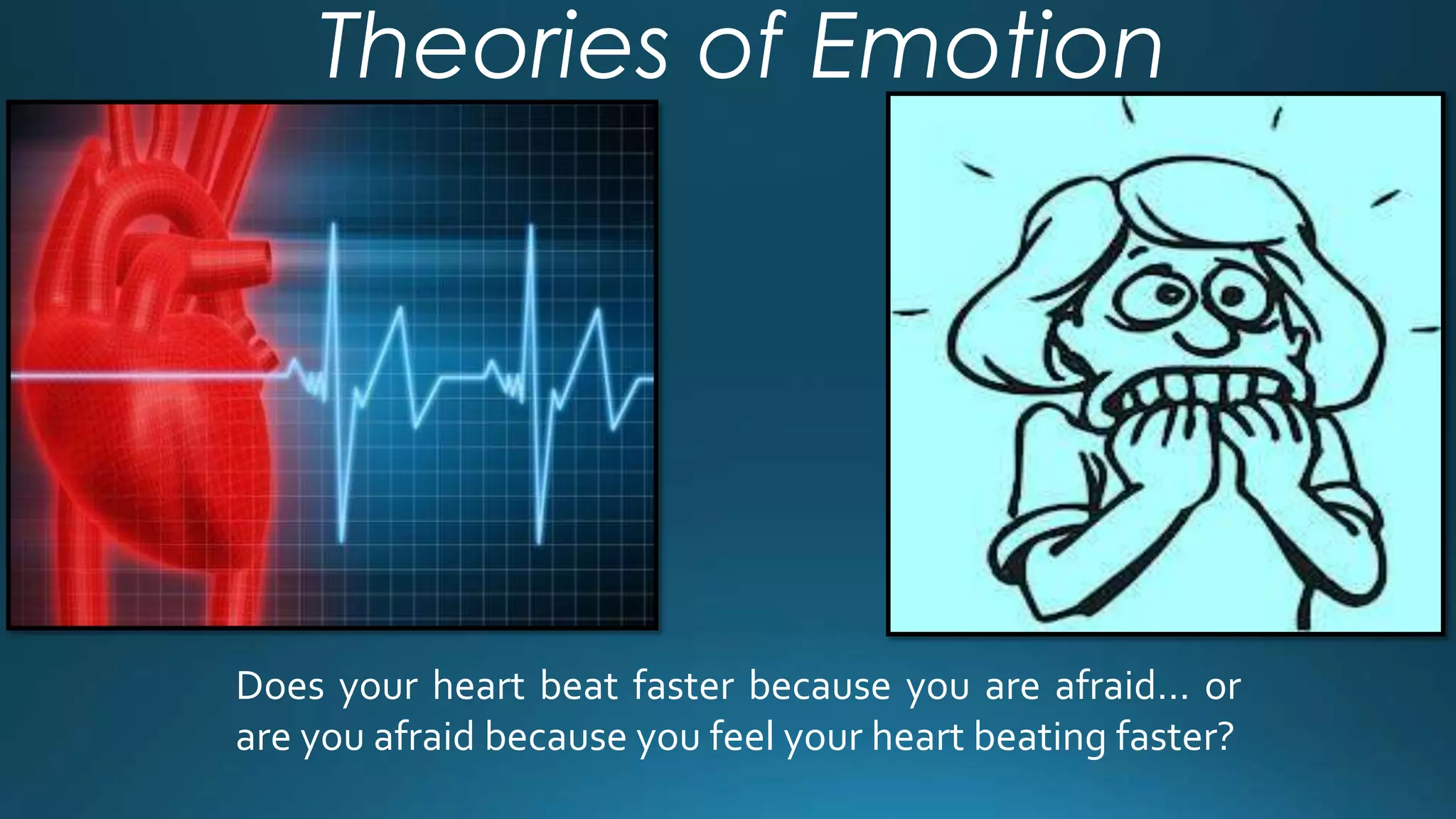
To explain the theory, 
Lange said that our 
common sense tells us 
that if a person 
encounters a bear, he 
feels afraid and then he 
runs. 
But according to the 
theory, seeing a bear 
causes the ANS to 
stimulate the muscles to 
get tensed and the heart 
to beat faster. After such 
bodily changes, that is 
the time that emotion of 
fear emerges.
Cannon - Bard 
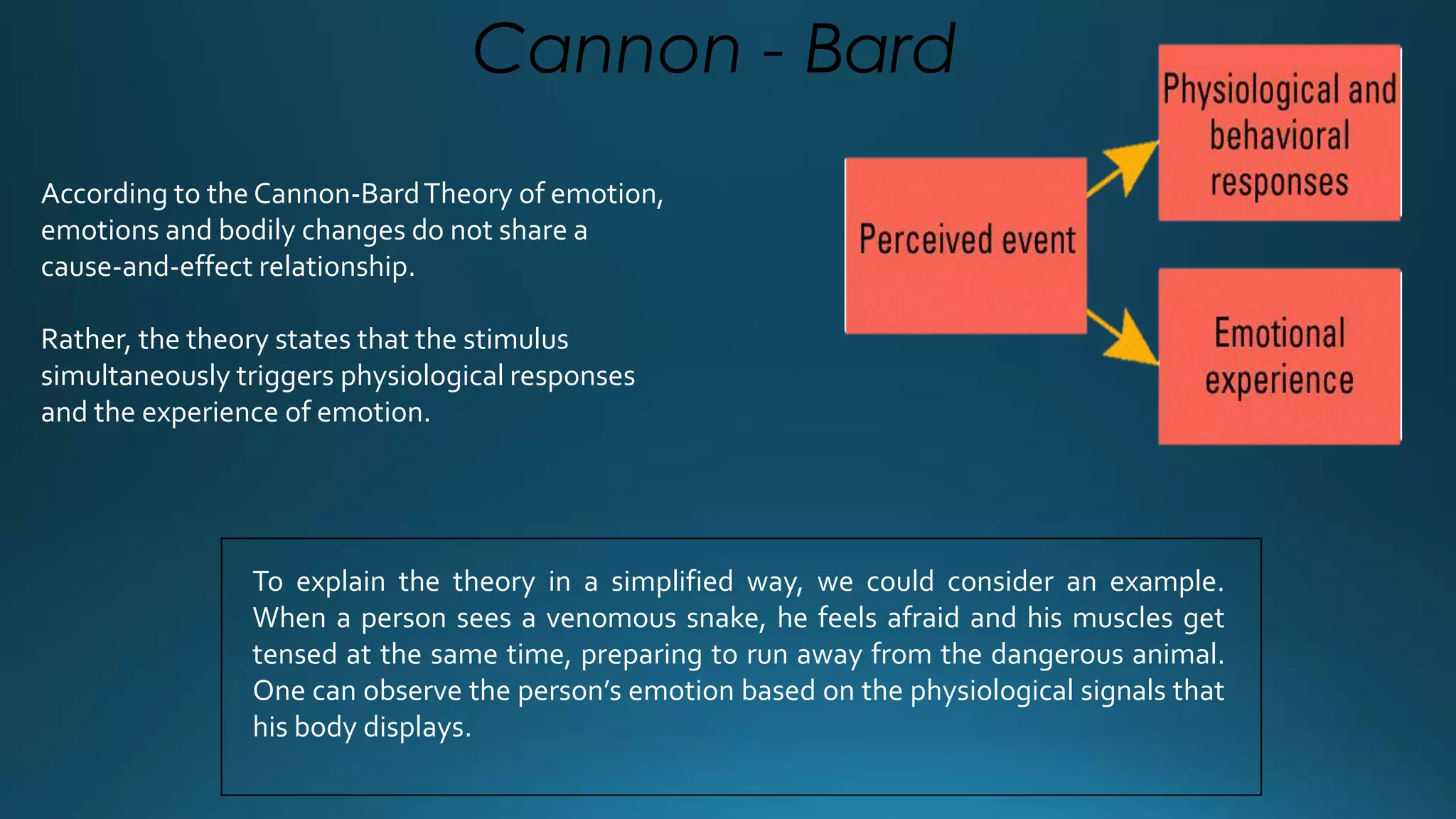
According to the Cannon-Bard Theory of emotion, 
emotions and bodily changes do not share a 
cause-and-effect relationship. 
Rather, the theory states that the stimulus 
simultaneously triggers physiological responses 
and the experience of emotion. 
To explain the theory in a simplified way, we could consider an example. 
When a person sees a venomous snake, he feels afraid and his muscles get 
tensed at the same time, preparing to run away from the dangerous animal. 
One can observe the person’s emotion based on the physiological signals that 
his body displays.
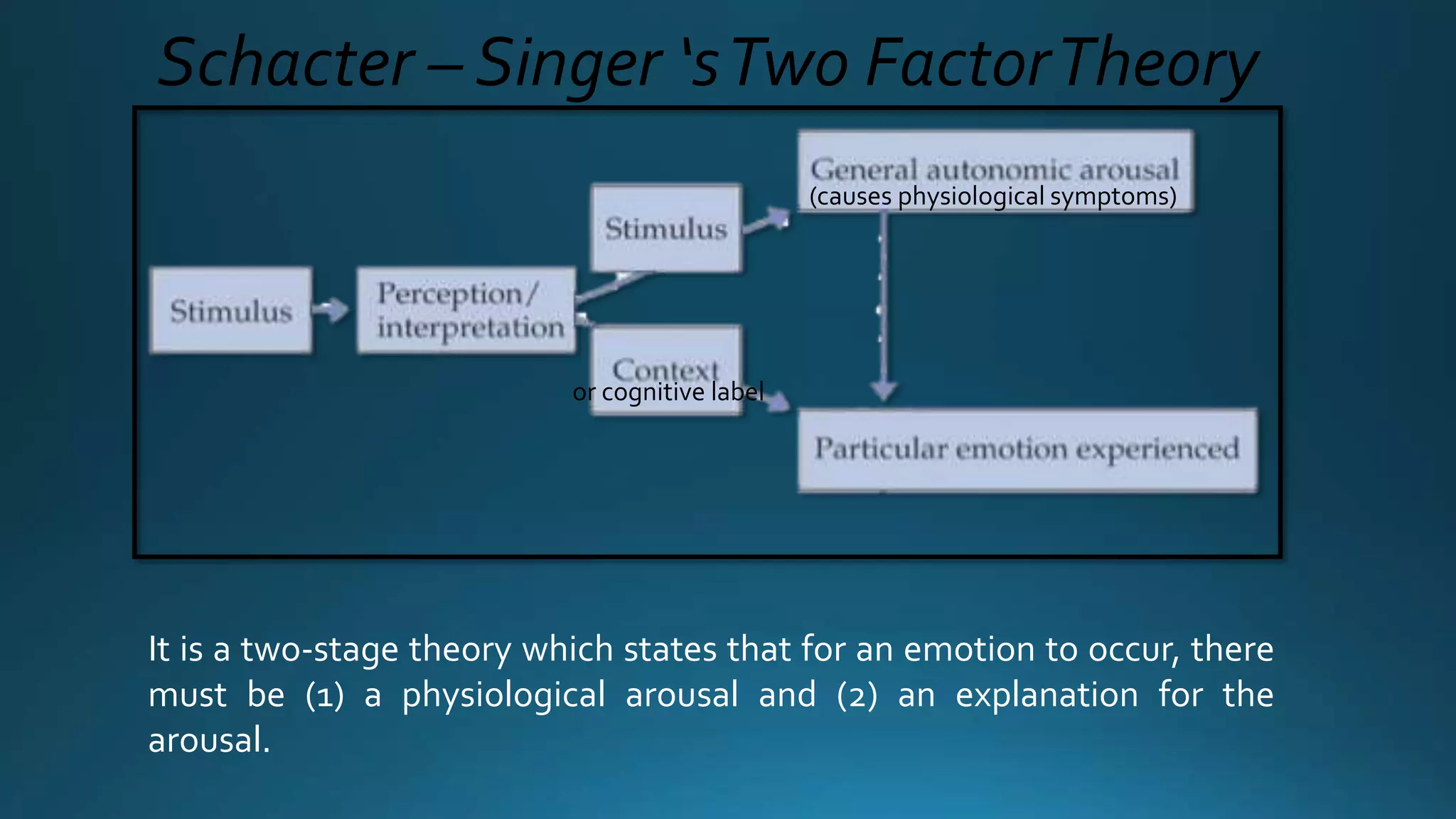
Schacter – Singer ‘s Two Factor Theory 
or cognitive label 
(causes physiological symptoms) 
It is a two-stage theory which states that for an emotion to occur, there 
must be (1) a physiological arousal and (2) an explanation for the 
arousal.
Example

Theory of emotion

  • 2.
    What is Emotion? Emotion can be defined as a strong feeling deriving from one’s circumstances, mood, or relationships with others. Emotions have two components: • Physical reaction (rapid heartbeat, etc.) • Conscious experience or feeling (sadness, anger, etc.)
  • 3.
    Theories of Emotion Does your heart beat faster because you are afraid… or are you afraid because you feel your heart beating faster?
  • 4.
    James - Lange William James and Carl Lange To explain the theory, Lange said that our common sense tells us that if a person encounters a bear, he feels afraid and then he runs. But according to the theory, seeing a bear causes the ANS to stimulate the muscles to get tensed and the heart to beat faster. After such bodily changes, that is the time that emotion of fear emerges.
  • 5.
    Cannon - Bard According to the Cannon-Bard Theory of emotion, emotions and bodily changes do not share a cause-and-effect relationship. Rather, the theory states that the stimulus simultaneously triggers physiological responses and the experience of emotion. To explain the theory in a simplified way, we could consider an example. When a person sees a venomous snake, he feels afraid and his muscles get tensed at the same time, preparing to run away from the dangerous animal. One can observe the person’s emotion based on the physiological signals that his body displays.
  • 6.
    Schacter – Singer‘s Two Factor Theory or cognitive label (causes physiological symptoms) It is a two-stage theory which states that for an emotion to occur, there must be (1) a physiological arousal and (2) an explanation for the arousal.
  • 7.