by John Henry Evans and Melissa Gordon
Student Learning Outcomes Students will feel more comfortable when given an essay topic Students will be able to organize their thoughts using prewriting techniques Students will understand what goes into a first draft Students will understand the difference between global and local revisions Students will be able to express their ideas in the best manner and order possible Students will be able to recognize grammar, spelling, and punctuation errors in their own writing.
 
magic! Writing is not
Stages of Writing Prewriting Drafting Revising Editing
Prewriting Prewriting is the process of coming up with ideas for your essay. This is not formal, polished writing. There are many prewriting techniques, but we will be discussing: Brainstorming Freewriting Clustering Outlining
Brainstorming Just think!
Freewriting Just write!
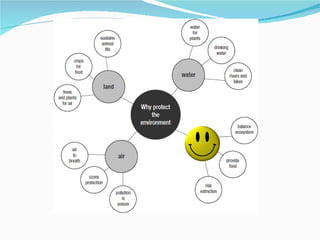
Clustering A way of narrowing your thoughts by connecting your ideas Great techniques for visual learners
 
Try it!
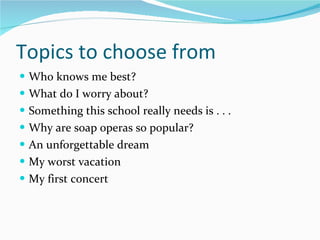
Topics to choose from Who knows me best? What do I worry about? Something this school really needs is . . . Why are soap operas so popular? An unforgettable dream My worst vacation My first concert
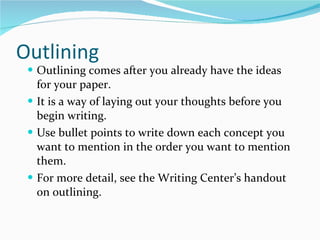
Outlining Outlining comes after you already have the ideas for your paper. It is a way of laying out your thoughts before you begin writing. Use bullet points to write down each concept you want to mention in the order you want to mention them. For more detail, see the Writing Center’s handout on outlining.
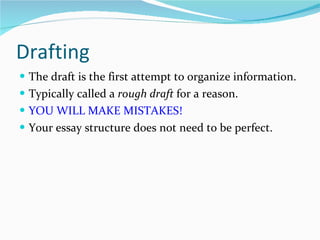
Drafting The draft is the first attempt to organize information. Typically called a  rough draft  for a reason. YOU WILL MAKE MISTAKES! Your essay structure does not need to be perfect. Starring Tat and Rodell!
Try it! (again!)
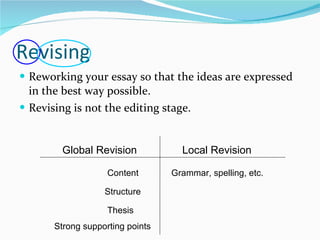
Revising Reworking your essay so that the ideas are expressed in the best way possible. Revising is not the editing stage. Global Revision Local Revision Content Structure Thesis Strong supporting points Grammar, spelling, etc.
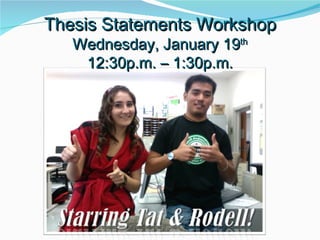
Thesis Statements Workshop Wednesday, January 19 th 12:30p.m. – 1:30p.m.
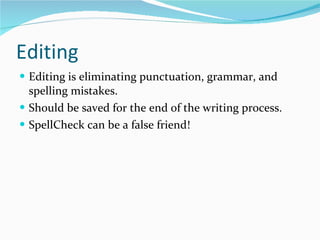
Editing Editing is eliminating punctuation, grammar, and spelling mistakes. Should be saved for the end of the writing process. SpellCheck can be a false friend!
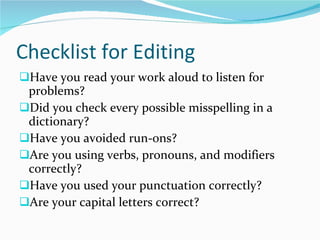
Checklist for Editing Have you read your work aloud to listen for problems? Did you check every possible misspelling in a dictionary? Have you avoided run-ons? Are you using verbs, pronouns, and modifiers correctly?  Have you used your punctuation correctly? Are your capital letters correct?
How did we do?

The Writing Process Powerpoint

  • 1.
    by John HenryEvans and Melissa Gordon
  • 2.
    Student Learning OutcomesStudents will feel more comfortable when given an essay topic Students will be able to organize their thoughts using prewriting techniques Students will understand what goes into a first draft Students will understand the difference between global and local revisions Students will be able to express their ideas in the best manner and order possible Students will be able to recognize grammar, spelling, and punctuation errors in their own writing.
  • 3.
  • 4.
  • 5.
    Stages of WritingPrewriting Drafting Revising Editing
  • 6.
    Prewriting Prewriting isthe process of coming up with ideas for your essay. This is not formal, polished writing. There are many prewriting techniques, but we will be discussing: Brainstorming Freewriting Clustering Outlining
  • 7.
  • 8.
  • 9.
    Clustering A wayof narrowing your thoughts by connecting your ideas Great techniques for visual learners
  • 10.
  • 11.
  • 12.
    Topics to choosefrom Who knows me best? What do I worry about? Something this school really needs is . . . Why are soap operas so popular? An unforgettable dream My worst vacation My first concert
  • 13.
    Outlining Outlining comesafter you already have the ideas for your paper. It is a way of laying out your thoughts before you begin writing. Use bullet points to write down each concept you want to mention in the order you want to mention them. For more detail, see the Writing Center’s handout on outlining.
  • 14.
    Drafting The draftis the first attempt to organize information. Typically called a rough draft for a reason. YOU WILL MAKE MISTAKES! Your essay structure does not need to be perfect. Starring Tat and Rodell!
  • 15.
  • 16.
    Revising Reworking youressay so that the ideas are expressed in the best way possible. Revising is not the editing stage. Global Revision Local Revision Content Structure Thesis Strong supporting points Grammar, spelling, etc.
  • 17.
    Thesis Statements WorkshopWednesday, January 19 th 12:30p.m. – 1:30p.m.
  • 18.
    Editing Editing iseliminating punctuation, grammar, and spelling mistakes. Should be saved for the end of the writing process. SpellCheck can be a false friend!
  • 19.
    Checklist for EditingHave you read your work aloud to listen for problems? Did you check every possible misspelling in a dictionary? Have you avoided run-ons? Are you using verbs, pronouns, and modifiers correctly? Have you used your punctuation correctly? Are your capital letters correct?
  • 20.