In-Class Essays
What is an in-class essay? 
An essay written in class, often referred to as an 
essay exam. 
The conditions for in-class essays vary. 
Some teachers will give you the prompt beforehand 
and give you time to prepare, while others won’t. 
The purpose of an in-class essay is usually to test 
your understanding of a certain subject and/or essay 
writing skills.
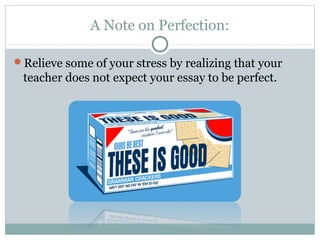
A Note on Perfection: 
Relieve some of your stress by realizing that your 
teacher does not expect your essay to be perfect.
In a regular essay you may have 10 days to prepare 
(prewrite, draft, revise, and edit) before turning in 
your final draft. This is 240 hours of preparation 
time. 
However, for an class essay, you often have 
between 1 to 2 hours to write and edit the essay. 
Therefore, time management is essential.
The in-class essay writing process: 
Prepare. 
Understand the prompt and material. 
Prewrite. 
Write. 
Proofread & briefly edit. 
Turn in!
Preparing the night before: 
Note: Don’t leave your preparation until the last 
minute. Give yourself time to prepare. 
If you know what the essay will be based on, make 
sure that you comfortably know the material. 
Refresh your mind by studying the material. 
Sleep well. 
Have pleasant dreams!
Preparing the day of the in-class essay: 
Eat a nutritious breakfast. 
Make time to quickly freshen up on your material 
before class. 
Be on time to class. 
You’ve been told all of these tips 
many times before, but they actually 
do work!
Relaxation Techniques: 
Breathing control relaxes tension; breathe easily and 
deeply. 
Think positively. 
Listen to calming music (The Mozart Effect). 
Drink warm tea (coffee has shown to release stress 
hormones).
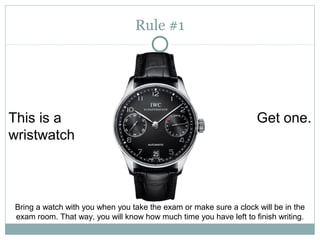
This is a 
wristwatch 
Get one. 
Rule #1 
Bring a watch with you when you take the exam or make sure a clock will be in the 
exam room. That way, you will know how much time you have left to finish writing.
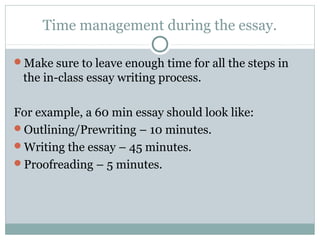
Time management during the essay. 
Make sure to leave enough time for all the steps in 
the in-class essay writing process. 
For example, a 60 min essay should look like: 
Outlining/Prewriting – 10 minutes. 
Writing the essay – 45 minutes. 
Proofreading – 5 minutes.
Understanding your prompt. 
Oftentimes, teachers are asking for multiple 
responses in one prompt. Make sure to address every 
area (ex. “Describe and analyze the plot and setting 
of…”—one must describe AND analyze both the plot 
and setting). 
Identify key terms (refer to handout).
Common Essay Prompt Terms 
THESE ARE TERMS THAT YOU WILL OFTEN SEE IN 
WRITING PROMPTS. LOOK AT THE EXPLANATIONS TO 
FIGURE OUT WHAT YOU ARE SUPPOSED TO DO.
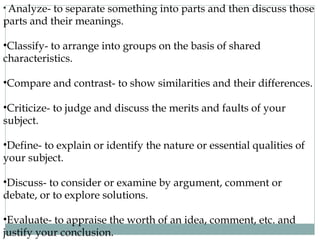
• Analyze- to separate something into parts and then discuss those 
parts and their meanings. 
•Classify- to arrange into groups on the basis of shared 
characteristics. 
•Compare and contrast- to show similarities and their differences. 
•Criticize- to judge and discuss the merits and faults of your 
subject. 
•Define- to explain or identify the nature or essential qualities of 
your subject. 
•Discuss- to consider or examine by argument, comment or 
debate, or to explore solutions. 
•Evaluate- to appraise the worth of an idea, comment, etc. and 
justify your conclusion.
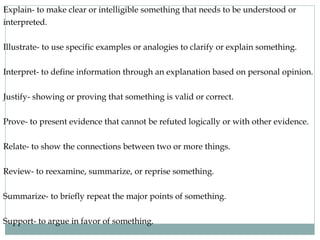
Explain- to make clear or intelligible something that needs to be understood or 
interpreted. 
Illustrate- to use specific examples or analogies to clarify or explain something. 
Interpret- to define information through an explanation based on personal opinion. 
Justify- showing or proving that something is valid or correct. 
Prove- to present evidence that cannot be refuted logically or with other evidence. 
Relate- to show the connections between two or more things. 
Review- to reexamine, summarize, or reprise something. 
Summarize- to briefly repeat the major points of something. 
Support- to argue in favor of something.
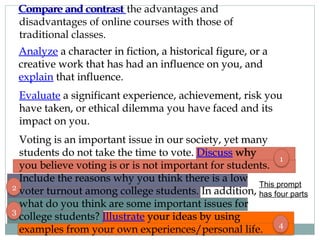
Analyze a character in fiction, a historical figure, or a 
creative work that has had an influence on you, and 
explain that influence. 
Evaluate a significant experience, achievement, risk you 
have taken, or ethical dilemma you have faced and its 
impact on you. 
4 
2 
3 
1 
Compare and contrast 
the advantages and 
disadvantages of online courses with those of 
traditional classes. 
Voting is an important issue in our society, yet many 
students do not take the time to vote. Discuss why 
you believe voting is or is not important for students. 
Include the reasons why you think there is a low 
voter turnout among college students. In addition, 
what do you think are some important issues for 
college students? Illustrate your ideas by using 
examples from your own experiences/personal life. 
This prompt 
has four parts
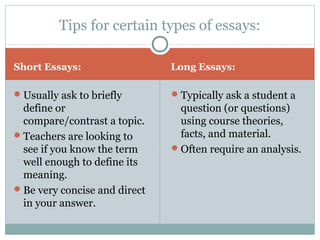
Tips for certain types of essays: 
Short Essays: Long Essays: 
Usually ask to briefly 
define or 
compare/contrast a topic. 
Teachers are looking to 
see if you know the term 
well enough to define its 
meaning. 
Be very concise and direct 
in your answer. 
Typically ask a student a 
question (or questions) 
using course theories, 
facts, and material. 
Often require an analysis.
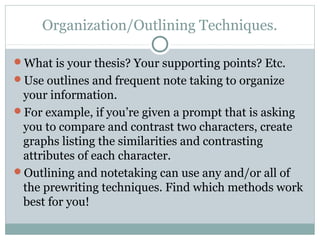
Organization/Outlining Techniques. 
What is your thesis? Your supporting points? Etc. 
Use outlines and frequent note taking to organize 
your information. 
For example, if you’re given a prompt that is asking 
you to compare and contrast two characters, create 
graphs listing the similarities and contrasting 
attributes of each character. 
Outlining and notetaking can use any and/or all of 
the prewriting techniques. Find which methods work 
best for you!
Thesis Statement: 
Developing a good thesis statement is a good place to 
begin writing your essay. 
Your thesis statement consists of your subject, 
opinion, and perhaps some supporting points. 
Examples: 
Prompt: Compare and contrast the reasons why the North and South 
fought the Civil War. 
While both Northerners and Southerners believed they fought against 
tyranny and oppression, Northerners focused on the oppression of 
slaves while Southerners defended their own right to self-government.
Incorporating Quotes: 
If your essay is literature-based, your teacher will 
want you to integrate quotes into your essay. 
Annotate your material prior to the in-class essay so 
that you will have important quotes already. 
Since you don’t know exactly what you will be 
writing the day of the exam, pick quotes that are 
close to the theme or quotes you feel are vital for the 
characters/storyline.
Proofreading: 
Resist the urge to completely rewrite your essay! 
Make sure to leave a little time at the end of your in-class 
essay to look over your work—a masterpiece 
with punctuation errors or missing words looks like 
less of a masterpiece.
Winning Essay Techniques 
Use keywords (from the prompt and from your material). 
That is, actually incorporate word-for-word the same 
language in the writing prompt into your thesis statement 
or introduction. This will help to keep you on track with the 
writing assignment and ensure that your instructor sees 
you followed the prompt. 
If you prewrite, turn in your prewriting with the essay. 
Relate concepts back to class material (ex. If you learned 
about setting in class, mention the setting). 
Students who can provide their own analysis typically get 
better grades than those who just repeat the class material.

In class essays w/o exercises

  • 1.
  • 2.
    What is anin-class essay? An essay written in class, often referred to as an essay exam. The conditions for in-class essays vary. Some teachers will give you the prompt beforehand and give you time to prepare, while others won’t. The purpose of an in-class essay is usually to test your understanding of a certain subject and/or essay writing skills.
  • 3.
    A Note onPerfection: Relieve some of your stress by realizing that your teacher does not expect your essay to be perfect.
  • 4.
    In a regularessay you may have 10 days to prepare (prewrite, draft, revise, and edit) before turning in your final draft. This is 240 hours of preparation time. However, for an class essay, you often have between 1 to 2 hours to write and edit the essay. Therefore, time management is essential.
  • 5.
    The in-class essaywriting process: Prepare. Understand the prompt and material. Prewrite. Write. Proofread & briefly edit. Turn in!
  • 6.
    Preparing the nightbefore: Note: Don’t leave your preparation until the last minute. Give yourself time to prepare. If you know what the essay will be based on, make sure that you comfortably know the material. Refresh your mind by studying the material. Sleep well. Have pleasant dreams!
  • 7.
    Preparing the dayof the in-class essay: Eat a nutritious breakfast. Make time to quickly freshen up on your material before class. Be on time to class. You’ve been told all of these tips many times before, but they actually do work!
  • 8.
    Relaxation Techniques: Breathingcontrol relaxes tension; breathe easily and deeply. Think positively. Listen to calming music (The Mozart Effect). Drink warm tea (coffee has shown to release stress hormones).
  • 9.
    This is a wristwatch Get one. Rule #1 Bring a watch with you when you take the exam or make sure a clock will be in the exam room. That way, you will know how much time you have left to finish writing.
  • 10.
    Time management duringthe essay. Make sure to leave enough time for all the steps in the in-class essay writing process. For example, a 60 min essay should look like: Outlining/Prewriting – 10 minutes. Writing the essay – 45 minutes. Proofreading – 5 minutes.
  • 11.
    Understanding your prompt. Oftentimes, teachers are asking for multiple responses in one prompt. Make sure to address every area (ex. “Describe and analyze the plot and setting of…”—one must describe AND analyze both the plot and setting). Identify key terms (refer to handout).
  • 12.
    Common Essay PromptTerms THESE ARE TERMS THAT YOU WILL OFTEN SEE IN WRITING PROMPTS. LOOK AT THE EXPLANATIONS TO FIGURE OUT WHAT YOU ARE SUPPOSED TO DO.
  • 13.
    • Analyze- toseparate something into parts and then discuss those parts and their meanings. •Classify- to arrange into groups on the basis of shared characteristics. •Compare and contrast- to show similarities and their differences. •Criticize- to judge and discuss the merits and faults of your subject. •Define- to explain or identify the nature or essential qualities of your subject. •Discuss- to consider or examine by argument, comment or debate, or to explore solutions. •Evaluate- to appraise the worth of an idea, comment, etc. and justify your conclusion.
  • 14.
    Explain- to makeclear or intelligible something that needs to be understood or interpreted. Illustrate- to use specific examples or analogies to clarify or explain something. Interpret- to define information through an explanation based on personal opinion. Justify- showing or proving that something is valid or correct. Prove- to present evidence that cannot be refuted logically or with other evidence. Relate- to show the connections between two or more things. Review- to reexamine, summarize, or reprise something. Summarize- to briefly repeat the major points of something. Support- to argue in favor of something.
  • 15.
    Analyze a characterin fiction, a historical figure, or a creative work that has had an influence on you, and explain that influence. Evaluate a significant experience, achievement, risk you have taken, or ethical dilemma you have faced and its impact on you. 4 2 3 1 Compare and contrast the advantages and disadvantages of online courses with those of traditional classes. Voting is an important issue in our society, yet many students do not take the time to vote. Discuss why you believe voting is or is not important for students. Include the reasons why you think there is a low voter turnout among college students. In addition, what do you think are some important issues for college students? Illustrate your ideas by using examples from your own experiences/personal life. This prompt has four parts
  • 16.
    Tips for certaintypes of essays: Short Essays: Long Essays: Usually ask to briefly define or compare/contrast a topic. Teachers are looking to see if you know the term well enough to define its meaning. Be very concise and direct in your answer. Typically ask a student a question (or questions) using course theories, facts, and material. Often require an analysis.
  • 17.
    Organization/Outlining Techniques. Whatis your thesis? Your supporting points? Etc. Use outlines and frequent note taking to organize your information. For example, if you’re given a prompt that is asking you to compare and contrast two characters, create graphs listing the similarities and contrasting attributes of each character. Outlining and notetaking can use any and/or all of the prewriting techniques. Find which methods work best for you!
  • 18.
    Thesis Statement: Developinga good thesis statement is a good place to begin writing your essay. Your thesis statement consists of your subject, opinion, and perhaps some supporting points. Examples: Prompt: Compare and contrast the reasons why the North and South fought the Civil War. While both Northerners and Southerners believed they fought against tyranny and oppression, Northerners focused on the oppression of slaves while Southerners defended their own right to self-government.
  • 19.
    Incorporating Quotes: Ifyour essay is literature-based, your teacher will want you to integrate quotes into your essay. Annotate your material prior to the in-class essay so that you will have important quotes already. Since you don’t know exactly what you will be writing the day of the exam, pick quotes that are close to the theme or quotes you feel are vital for the characters/storyline.
  • 20.
    Proofreading: Resist theurge to completely rewrite your essay! Make sure to leave a little time at the end of your in-class essay to look over your work—a masterpiece with punctuation errors or missing words looks like less of a masterpiece.
  • 21.
    Winning Essay Techniques Use keywords (from the prompt and from your material). That is, actually incorporate word-for-word the same language in the writing prompt into your thesis statement or introduction. This will help to keep you on track with the writing assignment and ensure that your instructor sees you followed the prompt. If you prewrite, turn in your prewriting with the essay. Relate concepts back to class material (ex. If you learned about setting in class, mention the setting). Students who can provide their own analysis typically get better grades than those who just repeat the class material.