The VAK Model
Bettina Alexandra Langheim

COMPETÈNCIES, RECURSOS I ESTRATÈGIES
D'APRENENTATGE DE L'ANGLÈS
Content
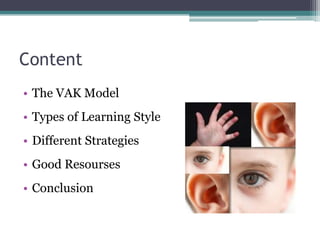
• The VAK Model
• Types of Learning Style

• Different Strategies
• Good Resourses
• Conclusion
What is the VAK Model?
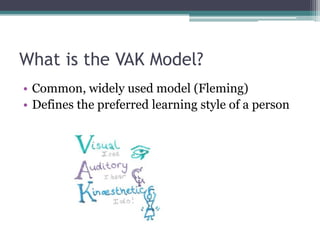
• Common, widely used model (Fleming)
• Defines the preferred learning style of a person
Learning Styles
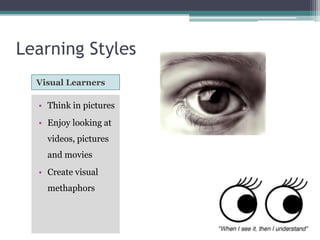
Visual Learners

• Think in pictures
• Enjoy looking at
videos, pictures
and movies
• Create visual
methaphors
Learning Styles
Learning Styles

• Express themselves

through movement
• Interact with their
environment

• Use body language to
express emotions
Different Strategies
Encourage visual learners to:

• Use colour to highlight important points
• Take notes
• Illustrate ideas as pictures
• Ask for written directions
• Visualise spelling of words
Different Strategies
Encourage auditory learners to:

• Read out aloud
• Recite information
• Use tunes or rhymes
• Listen to tapes
Different Strategies
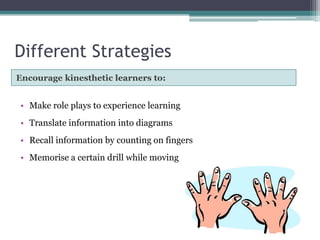
Encourage kinesthetic learners to:

• Make role plays to experience learning
• Translate information into diagrams
• Recall information by counting on fingers
• Memorise a certain drill while moving
Good Resourses
• Find out what type of learner YOU are!
http://eugenia.atspace.com/
http://www.brainboxx.co.uk/A3_ASPECTS/pages/VAK_quest.htm

My research websites:

http://www.vark-learn.com/english/page.asp?p=questionnaire
http://www.businessballs.com/vaklearningstylestest.htm
Conclusion
• Definition of one`s learning style makes the
learning process of a foreign language easier
• Offers good advice
• Some people have a mixed learning style
-> No problem!!!
“Thank you for your attention!”

The Vak Model

  • 1.
    The VAK Model BettinaAlexandra Langheim COMPETÈNCIES, RECURSOS I ESTRATÈGIES D'APRENENTATGE DE L'ANGLÈS
  • 2.
    Content • The VAKModel • Types of Learning Style • Different Strategies • Good Resourses • Conclusion
  • 3.
    What is theVAK Model? • Common, widely used model (Fleming) • Defines the preferred learning style of a person
  • 4.
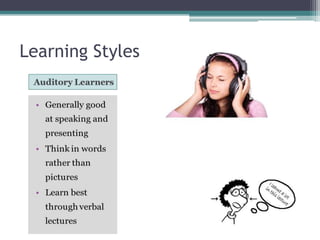
    Learning Styles Visual Learners •Think in pictures • Enjoy looking at videos, pictures and movies • Create visual methaphors
  • 5.
  • 6.
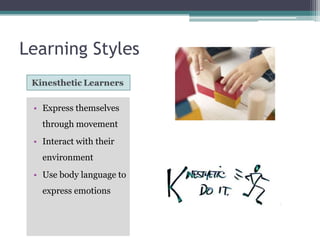
    Learning Styles • Expressthemselves through movement • Interact with their environment • Use body language to express emotions
  • 7.
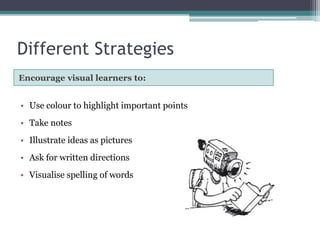
    Different Strategies Encourage visuallearners to: • Use colour to highlight important points • Take notes • Illustrate ideas as pictures • Ask for written directions • Visualise spelling of words
  • 8.
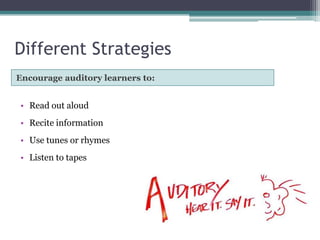
    Different Strategies Encourage auditorylearners to: • Read out aloud • Recite information • Use tunes or rhymes • Listen to tapes
  • 9.
    Different Strategies Encourage kinestheticlearners to: • Make role plays to experience learning • Translate information into diagrams • Recall information by counting on fingers • Memorise a certain drill while moving
  • 10.
    Good Resourses • Findout what type of learner YOU are! http://eugenia.atspace.com/ http://www.brainboxx.co.uk/A3_ASPECTS/pages/VAK_quest.htm My research websites: http://www.vark-learn.com/english/page.asp?p=questionnaire http://www.businessballs.com/vaklearningstylestest.htm
  • 11.
    Conclusion • Definition ofone`s learning style makes the learning process of a foreign language easier • Offers good advice • Some people have a mixed learning style -> No problem!!!
  • 12.
    “Thank you foryour attention!”