THE USE OF TECHNOLOGY IN THE K-8
      SCIENCE CURRICULUM.


            By: Sonny Sablan
      ED 480 Educational Technology
            Mr. John Jenkins
              Spring 2012
WHAT IS TECHNOLOGY?
   Technology is often used as the
    generic term to encompass all the
    technologies people develop and
    use in their lives. UNESCO, the
    United Nations Education, Social
    and Cultural Organisation, defines
    technology as:

      "...the know-how and creative
    processes that may assist people to
    utilise tools, resources and systems
    to solve problems and to enhance
    control over the natural and made
    environment in an endeavour to
    improve the human condition."
    (UNESCO, 1985).
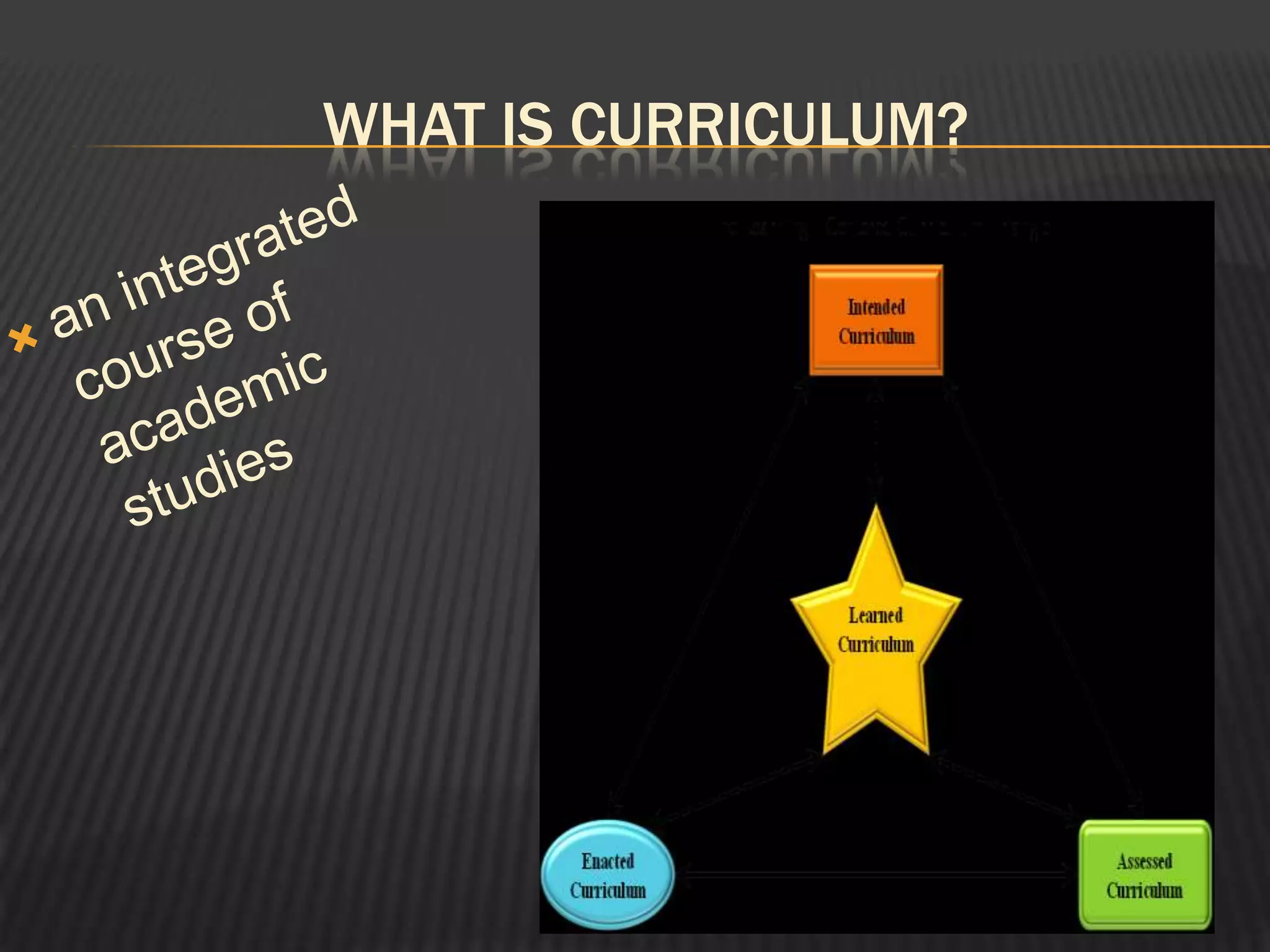
WHAT IS CURRICULUM?
INTEGRATING TECHNOLOGY
Effective technology
integration is achieved
when its use supports
curricular goals. It must
support four key levels of
learning.
 Active Engagement
 Participation in groups
 Frequent interaction and
   feedbacks
 Connection to real-world
   experts
USE OF TECHNOLOGY IN PREPARATION OF
               SCIENCE TEACHERS
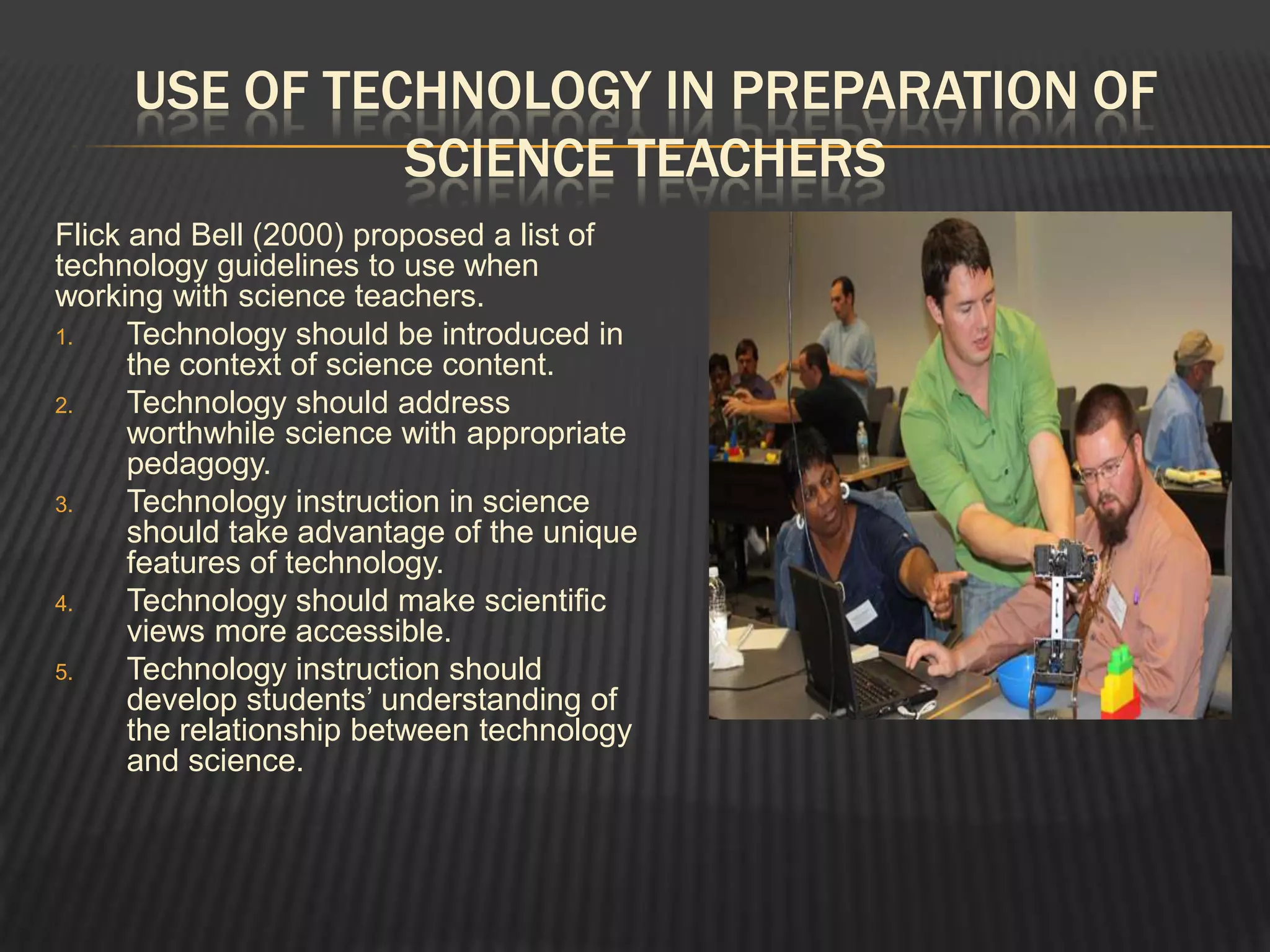
Flick and Bell (2000) proposed a list of
technology guidelines to use when
working with science teachers.
1.    Technology should be introduced in
      the context of science content.
2.    Technology should address
      worthwhile science with appropriate
      pedagogy.
3.    Technology instruction in science
      should take advantage of the unique
      features of technology.
4.    Technology should make scientific
      views more accessible.
5.    Technology instruction should
      develop students’ understanding of
      the relationship between technology
      and science.
TECHNOLOGY ENHANCE LEARNING IN SCIENCE
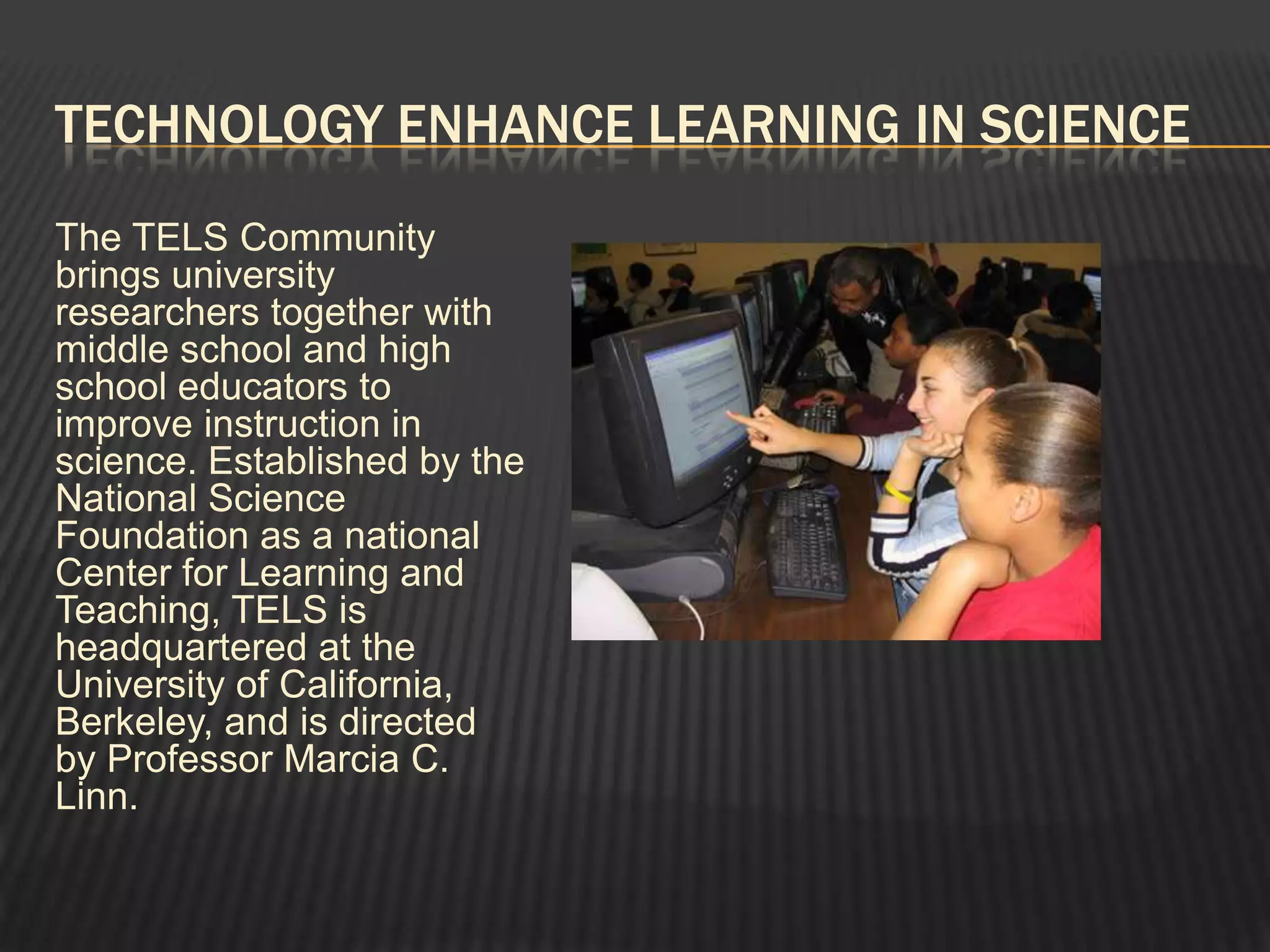
The TELS Community
brings university
researchers together with
middle school and high
school educators to
improve instruction in
science. Established by the
National Science
Foundation as a national
Center for Learning and
Teaching, TELS is
headquartered at the
University of California,
Berkeley, and is directed
by Professor Marcia C.
Linn.
TECHNOLOGY’S SIGNIFICANT CHANGE
   Change in student and teacher roles:
   The student is actively making choices about how to generate,
    obtain, manipulate, or display information.
   Increased motivation and self-esteem:
   A greater willingness to write or to work on computational
    skills.
   Technical Skills:
   Students, even at the elementary school level, are able to
    acquire an impressive level of skill with a broad range of
    computer software.
   More collaboration with peers :
   a great majority of teachers is an increased inclination on the
    part of students to work cooperatively and to provide peer
    tutoring.
TECHNOLOGY’S SIGNIFICANT CHANGE

   Increased use of outside resources:
   Teachers from 10 out of 17 classrooms observed at length cited
    increased use of outside resources as a benefit of using
    technology.
   Improved design skills and attention to
    audience:
   Experiences in developing the kinds of rich, multimedia products
    that can be produced with technology, particularly when the
    design is done collaboratively so that students experience their
    peers' reactions to their presentations, appear to support a
    greater awareness of audience needs and perspectives.
TECHNOLOGY IN SCIENCE

http://www.kidsastronomy.com/solar_system.htm

Check the web site to see what science and
technology looks like when put together.
HOW TO INTEGRATE TECHNOLOGY INTO A
        SCIENCE CLASSROOM
REFERENCES
   http://images.fastcompany.com/upload/6_MSIb.jpg
   http://www.pa.ash.org.au/tefa/wite.html
   http://great-
    premiertechnologies.blogspot.com/2010/05/what-is-
    technology.html
   http://topics.wisegeek.com/topics/curriculum.htm#
   http://alignguy.blogspot.com/
   http://www.edutopia.org/tech-integration
   http://faculty.ksu.edu.sa/ualturki/Digital%20Library/Prepari
    ng%20Tomorrow%E2%80%99s%20Science%20Teacher
    s%20to%20Use%20Technology%20An%20Example%20f
    rom%20the%20Field.pdf
REFERENCES

   http://www.eecs.umich.edu/cse/cs_connections/
    cs4hs_home.html
   http://budgetcrisis.berkeley.edu/?page_id=1639
   http://www2.ed.gov/pubs/EdReformStudies/EdT
    ech/effectsstudents.html
   http://www.kidsastronomy.com/solar_system.ht
    m
   http://www.youtube.com/watch?v=4hwJnLQ0Hh
    s

The use of technology in the k 8 science

  • 1.
    THE USE OFTECHNOLOGY IN THE K-8 SCIENCE CURRICULUM. By: Sonny Sablan ED 480 Educational Technology Mr. John Jenkins Spring 2012
  • 2.
    WHAT IS TECHNOLOGY?  Technology is often used as the generic term to encompass all the technologies people develop and use in their lives. UNESCO, the United Nations Education, Social and Cultural Organisation, defines technology as:  "...the know-how and creative processes that may assist people to utilise tools, resources and systems to solve problems and to enhance control over the natural and made environment in an endeavour to improve the human condition." (UNESCO, 1985).
  • 3.
  • 4.
    INTEGRATING TECHNOLOGY Effective technology integrationis achieved when its use supports curricular goals. It must support four key levels of learning.  Active Engagement  Participation in groups  Frequent interaction and feedbacks  Connection to real-world experts
  • 5.
    USE OF TECHNOLOGYIN PREPARATION OF SCIENCE TEACHERS Flick and Bell (2000) proposed a list of technology guidelines to use when working with science teachers. 1. Technology should be introduced in the context of science content. 2. Technology should address worthwhile science with appropriate pedagogy. 3. Technology instruction in science should take advantage of the unique features of technology. 4. Technology should make scientific views more accessible. 5. Technology instruction should develop students’ understanding of the relationship between technology and science.
  • 6.
    TECHNOLOGY ENHANCE LEARNINGIN SCIENCE The TELS Community brings university researchers together with middle school and high school educators to improve instruction in science. Established by the National Science Foundation as a national Center for Learning and Teaching, TELS is headquartered at the University of California, Berkeley, and is directed by Professor Marcia C. Linn.
  • 7.
    TECHNOLOGY’S SIGNIFICANT CHANGE  Change in student and teacher roles:  The student is actively making choices about how to generate, obtain, manipulate, or display information.  Increased motivation and self-esteem:  A greater willingness to write or to work on computational skills.  Technical Skills:  Students, even at the elementary school level, are able to acquire an impressive level of skill with a broad range of computer software.  More collaboration with peers :  a great majority of teachers is an increased inclination on the part of students to work cooperatively and to provide peer tutoring.
  • 8.
    TECHNOLOGY’S SIGNIFICANT CHANGE  Increased use of outside resources:  Teachers from 10 out of 17 classrooms observed at length cited increased use of outside resources as a benefit of using technology.  Improved design skills and attention to audience:  Experiences in developing the kinds of rich, multimedia products that can be produced with technology, particularly when the design is done collaboratively so that students experience their peers' reactions to their presentations, appear to support a greater awareness of audience needs and perspectives.
  • 9.
    TECHNOLOGY IN SCIENCE http://www.kidsastronomy.com/solar_system.htm Checkthe web site to see what science and technology looks like when put together.
  • 10.
    HOW TO INTEGRATETECHNOLOGY INTO A SCIENCE CLASSROOM
  • 11.
    REFERENCES  http://images.fastcompany.com/upload/6_MSIb.jpg  http://www.pa.ash.org.au/tefa/wite.html  http://great- premiertechnologies.blogspot.com/2010/05/what-is- technology.html  http://topics.wisegeek.com/topics/curriculum.htm#  http://alignguy.blogspot.com/  http://www.edutopia.org/tech-integration  http://faculty.ksu.edu.sa/ualturki/Digital%20Library/Prepari ng%20Tomorrow%E2%80%99s%20Science%20Teacher s%20to%20Use%20Technology%20An%20Example%20f rom%20the%20Field.pdf
  • 12.
    REFERENCES  http://www.eecs.umich.edu/cse/cs_connections/ cs4hs_home.html  http://budgetcrisis.berkeley.edu/?page_id=1639  http://www2.ed.gov/pubs/EdReformStudies/EdT ech/effectsstudents.html  http://www.kidsastronomy.com/solar_system.ht m  http://www.youtube.com/watch?v=4hwJnLQ0Hh s