The Three States of Matter Solids, Liquids & Gases
Matter  is anything which occupies  space  and has  mass . Three common states of Matter are  solid, liquid, and gas . The properties of these states can be explained in terms of the  kinetic theory of matter . Introduction
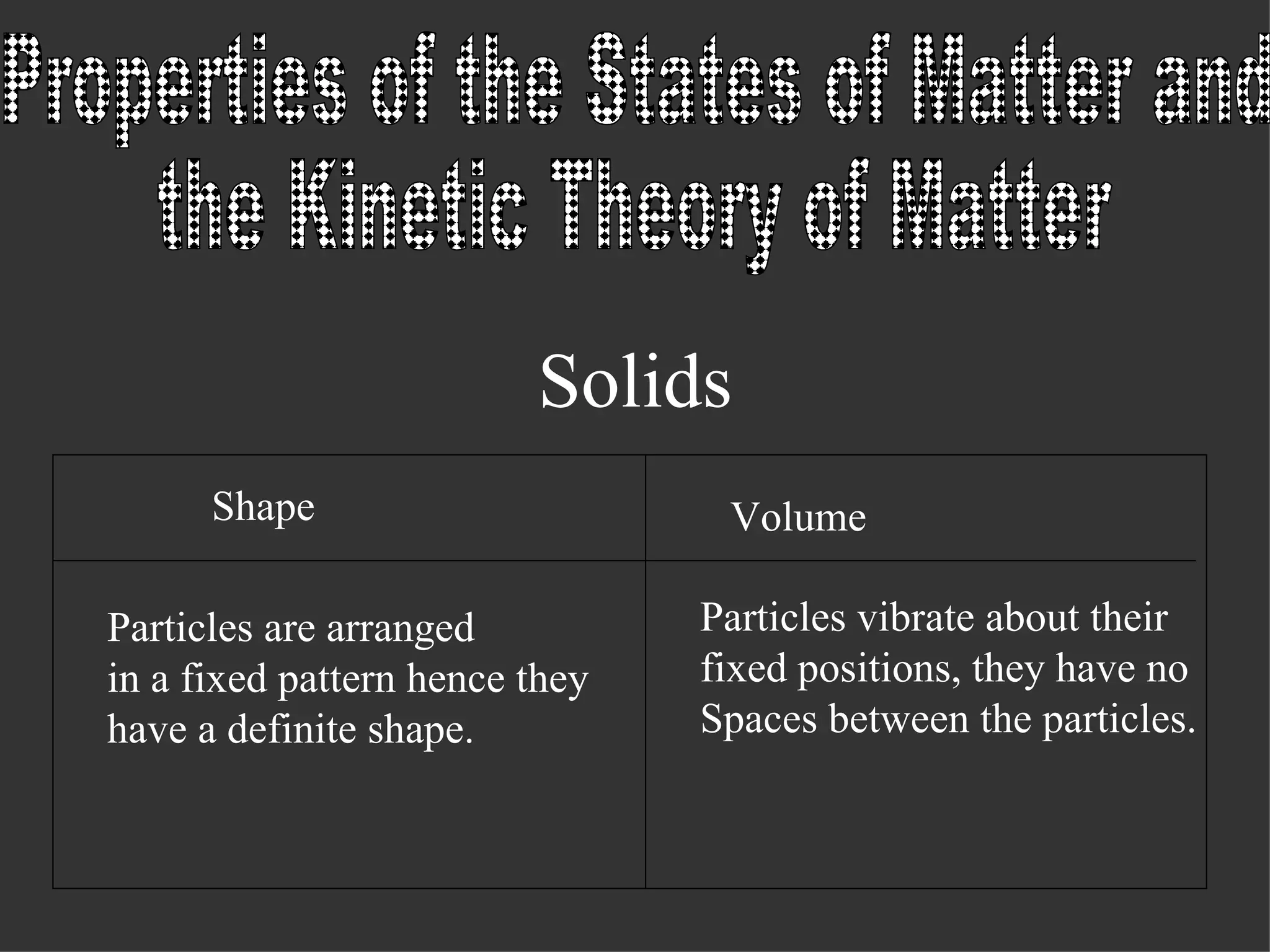
Matter’s made up of small particles (atoms or molecules)  The particles are in constant motion The Kinetic Theory of Matter
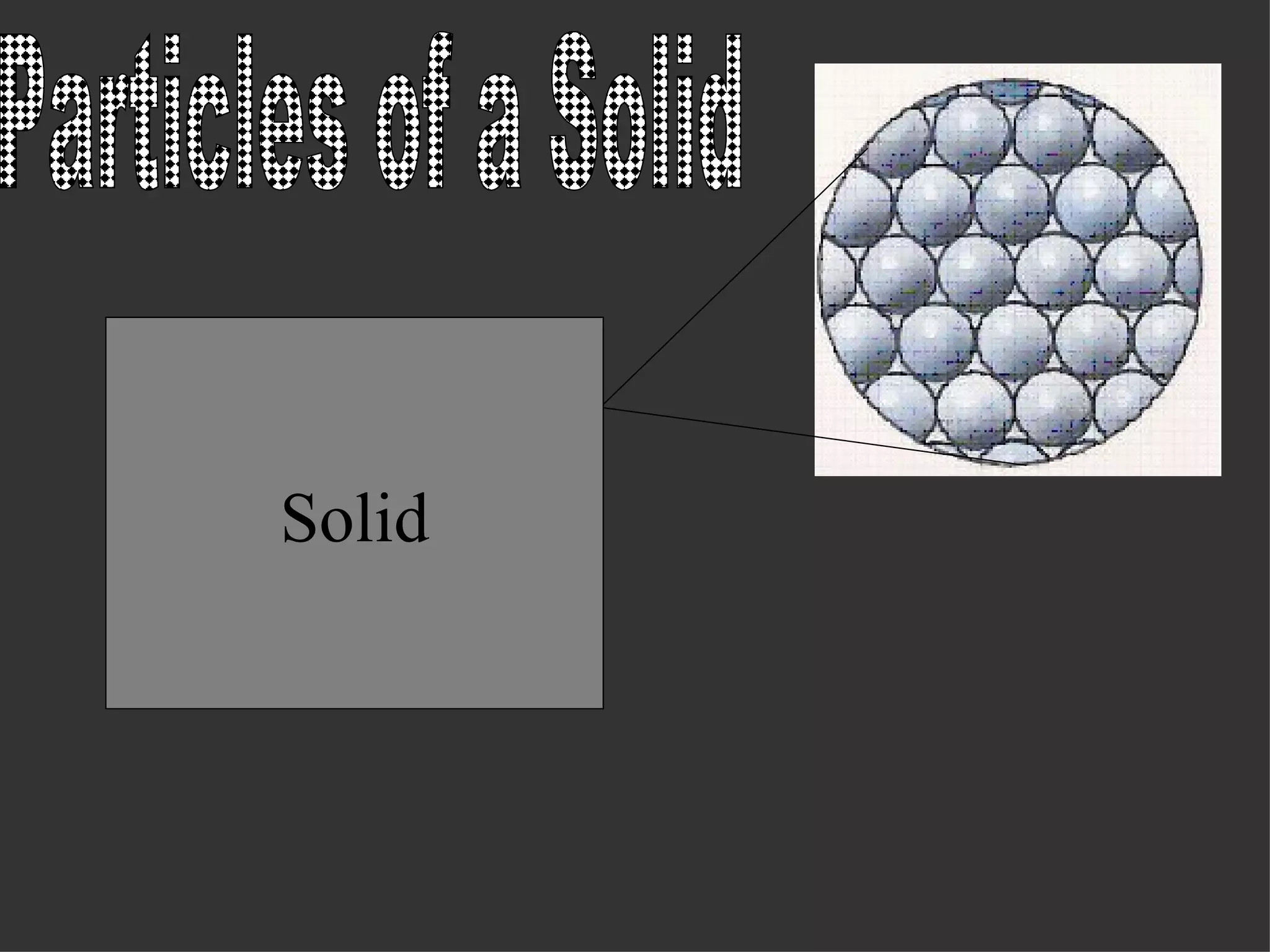
Solids Properties of the States of Matter and  the Kinetic Theory of Matter Shape Volume Particles are arranged in a fixed pattern hence they  have a definite shape. Particles vibrate about their fixed positions, they have no Spaces between the particles.
Particles of a Solid Solid
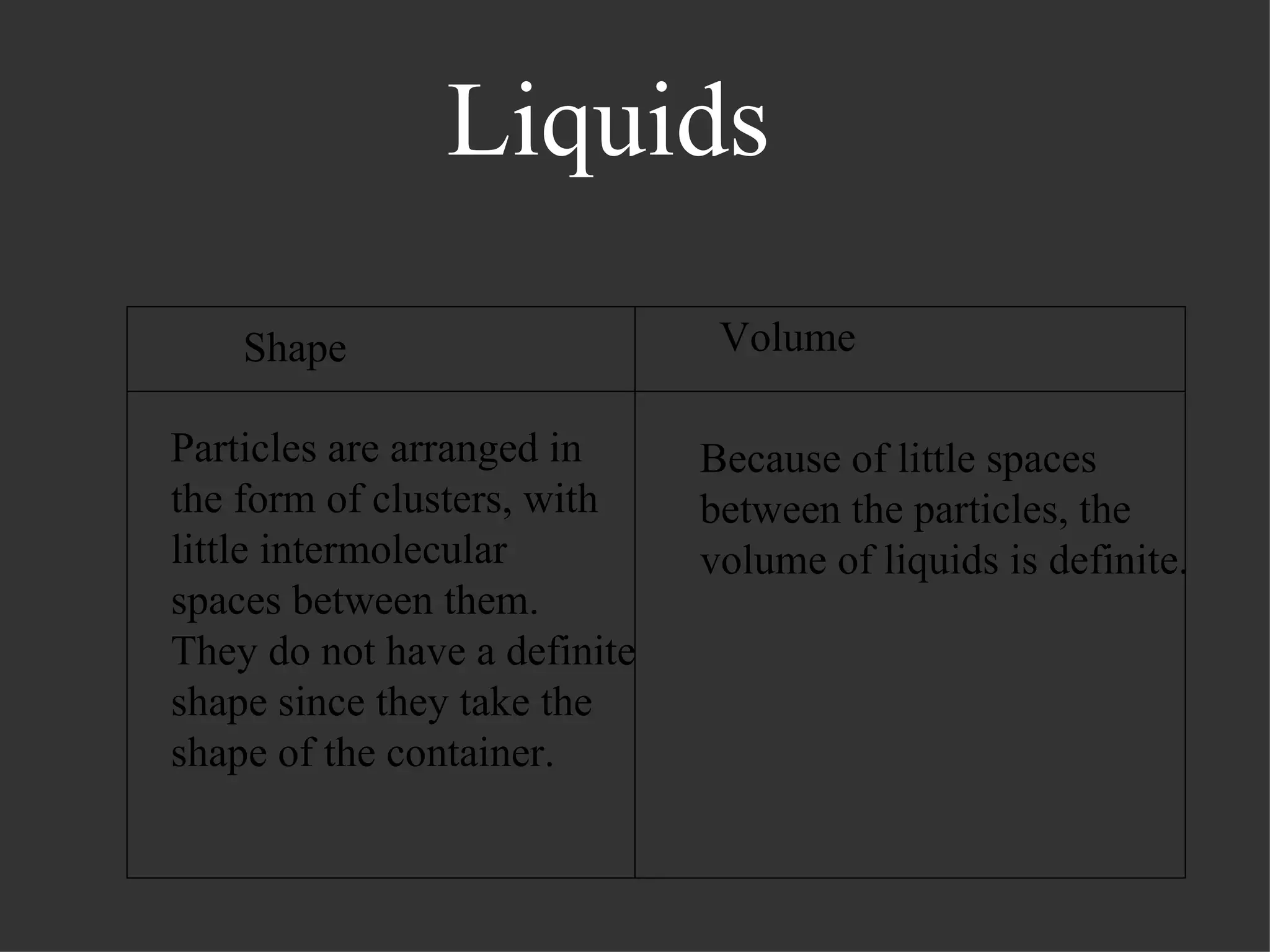
Liquids Shape Volume Particles are arranged in the form of clusters, with  little intermolecular  spaces between them.  They do not have a definite shape since they take the  shape of the container. Because of little spaces  between the particles, the volume of liquids is definite.
Particles of a Liquid
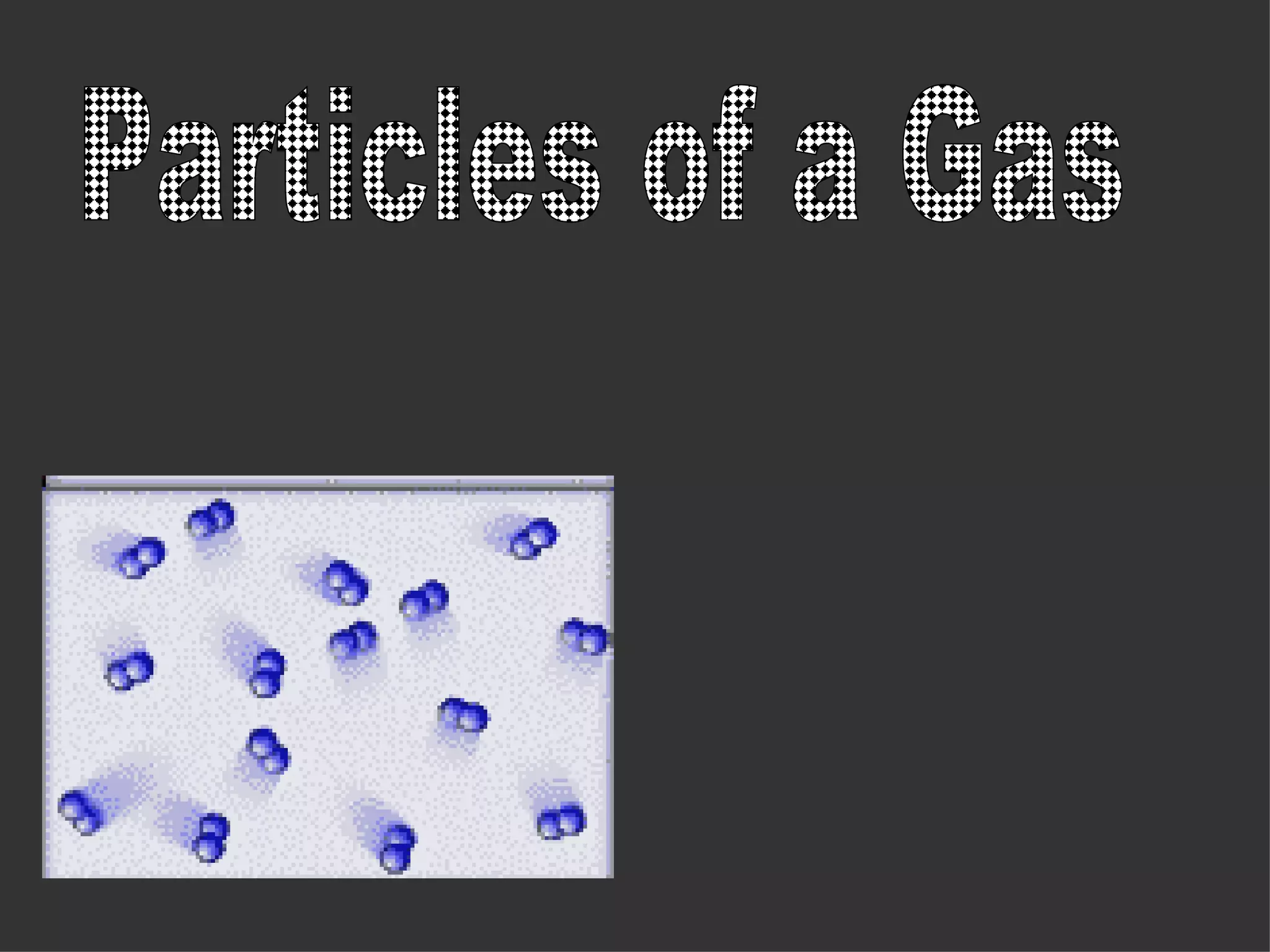
GASES Shape Volume Particles are spaced  wide apart, they occupy the shape of the container Since they move randomly  and occupy the shape of  the container, they have no  definite volume.
Particles of a Gas

The Three States Of Matter

  • 1.
    The Three Statesof Matter Solids, Liquids & Gases
  • 2.
    Matter isanything which occupies space and has mass . Three common states of Matter are solid, liquid, and gas . The properties of these states can be explained in terms of the kinetic theory of matter . Introduction
  • 3.
    Matter’s made upof small particles (atoms or molecules) The particles are in constant motion The Kinetic Theory of Matter
  • 4.
    Solids Properties ofthe States of Matter and the Kinetic Theory of Matter Shape Volume Particles are arranged in a fixed pattern hence they have a definite shape. Particles vibrate about their fixed positions, they have no Spaces between the particles.
  • 5.
    Particles of aSolid Solid
  • 6.
    Liquids Shape VolumeParticles are arranged in the form of clusters, with little intermolecular spaces between them. They do not have a definite shape since they take the shape of the container. Because of little spaces between the particles, the volume of liquids is definite.
  • 7.
  • 8.
    GASES Shape VolumeParticles are spaced wide apart, they occupy the shape of the container Since they move randomly and occupy the shape of the container, they have no definite volume.
  • 9.