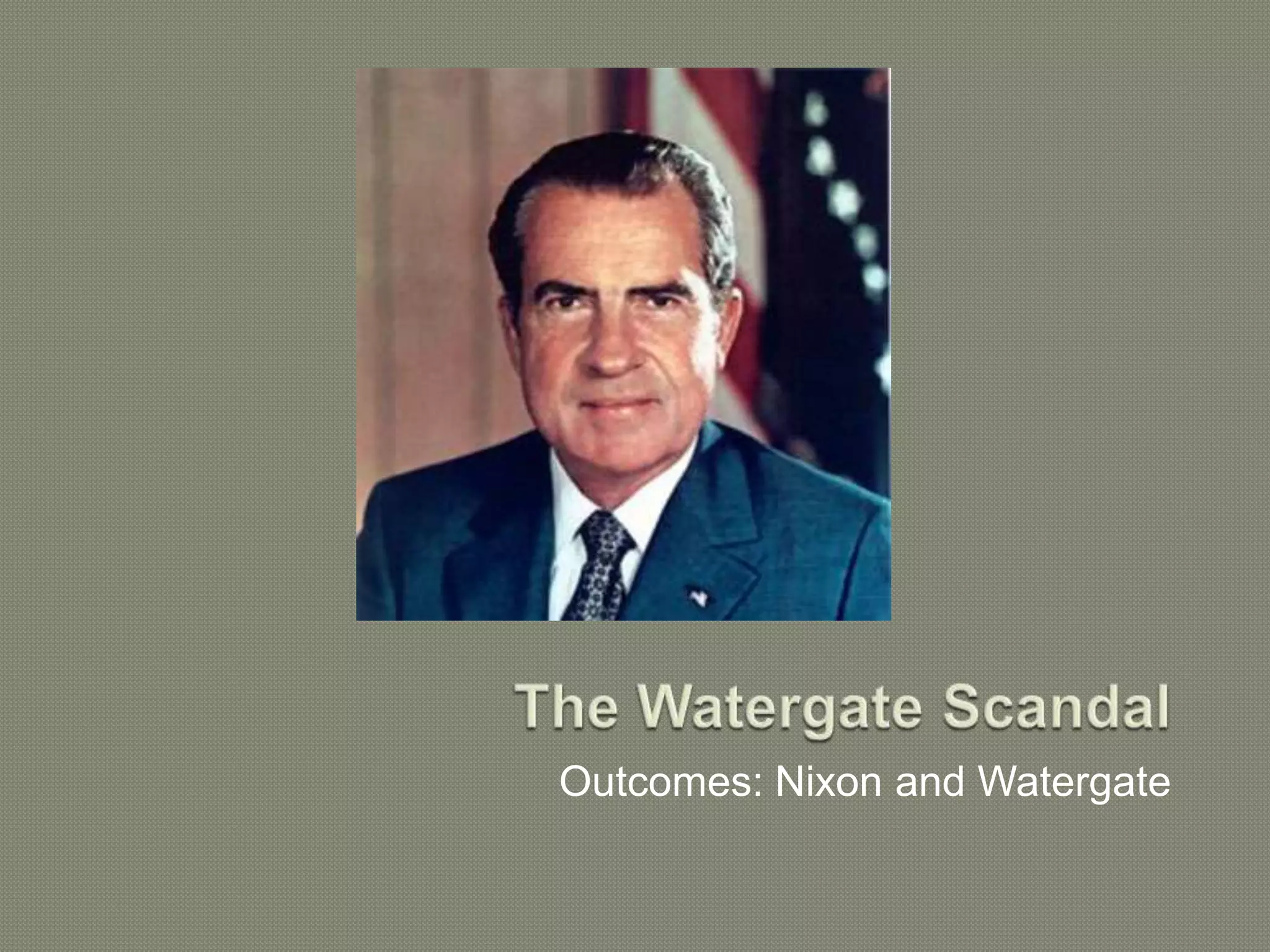
Outcomes: Nixon and Watergate
1. Nixon – The Man (1913-1994)
a. Self-Made Man
b. Political Path
i. 1946 – First elected to Congress
ii. 1950 – Won election to U.S. Senate from California
iii. 1952 – Became Vice President under Eisenhower
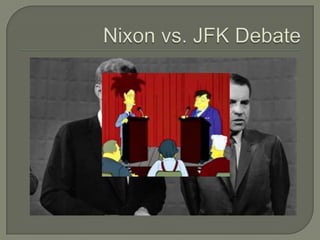
iv. 1960 – Lost Presidential Election to JFK (1st ever TV debate, close election)
v. 1963 – Lost bid to become Governor of California (all washed up?)
vi. 1968 – Won Presidential election over Hubert Humphrey of MN (close election)
2. Presidency (1969-1974)
a. Foreign Policy Successes led to Popularity
i. Ended the Vietnam War (Great Peacemaker) Setback = Cambodia invasion
ii. “Normalized” relations with China (Result of trip in Feb. 1972)
iii. Summit meeting with Leonid Brezhnev of Soviet Union (May 1972) (SALT)
iv. Détente reached with the two Communist powers
b. Plans for reelection (CRP formed)
i. Committee to Re-elect the President
c. 1972 – Landslide reelection over George McGovern (Lost only 1 state)
3. Watergate (senseless and unnecessary)
a. Background (June 17, 1972)
i. 5 arrested for breaking into Democratic campaign headquarters
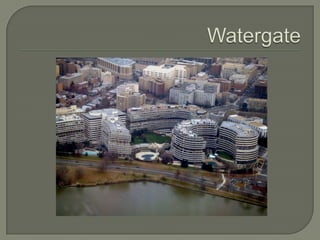
1. Watergate Hotel and Office Complex, Washington D.C.
2. All employed by CRP
i. 2 others implicated and arrested (both members of CRP) – a link to the
White House
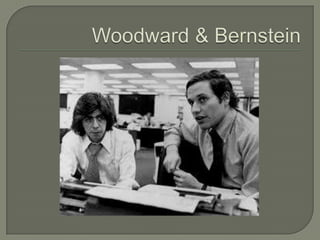
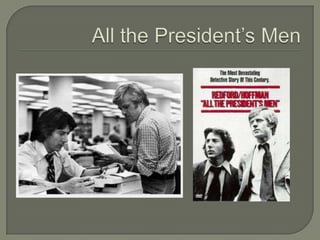
ii. Reporters B. Woodward & C. Bernstein (Wash. Post) kept suspicion alive
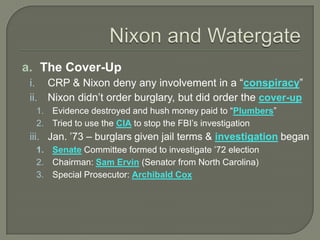
a. The Cover-Up
i. CRP & Nixon deny any involvement in a “conspiracy”
ii. Nixon didn’t order burglary, but did order the cover-up
1. Evidence destroyed and hush money paid to “Plumbers”
2. Tried to use the CIA to stop the FBI’s investigation
iii. Jan. ’73 – burglars given jail terms & investigation began
1. Senate Committee formed to investigate ’72 election
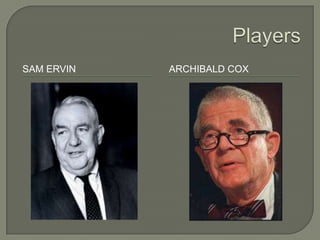
2. Chairman: Sam Ervin (Senator from North Carolina)
3. Special Prosecutor: Archibald Cox
SAM ERVIN ARCHIBALD COX
c. Fall From Power
i. May, ’73: Watergate hearings begin
ii. Alleged crimes: illegal campaign financing, political espionage, and
misuse of the IRS to harass political enemies.
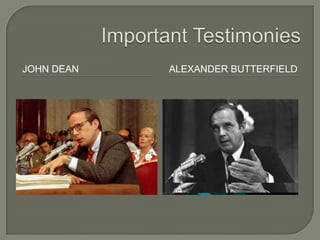
iii. June, ’73: John Dean testified that Nixon was involved & offered
clemency to those who would take the blame
iv. July, ’73: Oval Office Audio Tapes were discovered (All conversations since ’71)
v. Fight over tapes --> Nixon cites “Executive Privilege” vs. Cox’s subpoena
JOHN DEAN ALEXANDER BUTTERFIELD
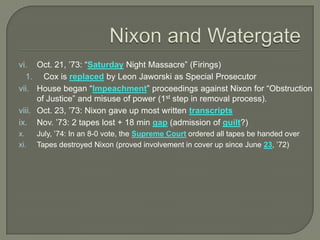
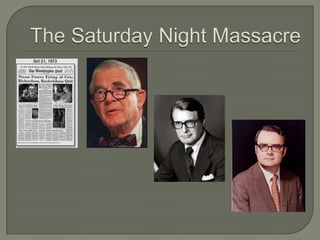
vi. Oct. 21, ’73: “Saturday Night Massacre” (Firings)
1. Cox is replaced by Leon Jaworski as Special Prosecutor
vii. House began “Impeachment” proceedings against Nixon for “Obstruction
of Justice” and misuse of power (1st step in removal process).
viii. Oct. 23, ’73: Nixon gave up most written transcripts
ix. Nov. ’73: 2 tapes lost + 18 min gap (admission of guilt?)
x. July, ’74: In an 8-0 vote, the Supreme Court ordered all tapes be handed over
xi. Tapes destroyed Nixon (proved involvement in cover up since June 23, ’72)
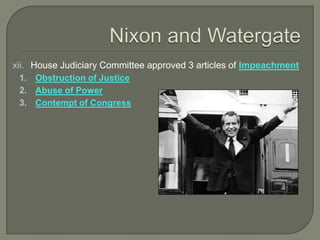
xii. House Judiciary Committee approved 3 articles of Impeachment
1. Obstruction of Justice
2. Abuse of Power
3. Contempt of Congress
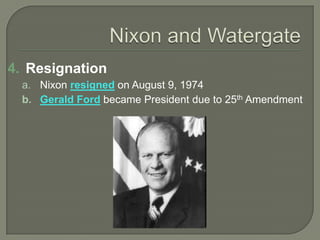
4. Resignation
a. Nixon resigned on August 9, 1974
b. Gerald Ford became President due to 25th Amendment
5. Impact & Consequences
a. Ford Granted Nixon a “full pardon” making Nixon immune to
criminal prosecution
b. Costly for Ford & Republicans
i. Ford committed “Political Suicide” (proven by ’74 and ’76 election results)
ii. Became known as the “Caretaker President”
c. Disrespect for government & its leaders to this day
d. Changes occurred in government:
i. More rules/restrictions on campaign financing
ii. More “watch-dog” groups formed to watch the government (accountability)
e. Hope for the U.S. --> The system worked & the Constitution survived.

Watergate notes

  • 1.
  • 2.
    1. Nixon –The Man (1913-1994) a. Self-Made Man b. Political Path i. 1946 – First elected to Congress ii. 1950 – Won election to U.S. Senate from California iii. 1952 – Became Vice President under Eisenhower iv. 1960 – Lost Presidential Election to JFK (1st ever TV debate, close election) v. 1963 – Lost bid to become Governor of California (all washed up?) vi. 1968 – Won Presidential election over Hubert Humphrey of MN (close election)
  • 4.
    2. Presidency (1969-1974) a.Foreign Policy Successes led to Popularity i. Ended the Vietnam War (Great Peacemaker) Setback = Cambodia invasion ii. “Normalized” relations with China (Result of trip in Feb. 1972) iii. Summit meeting with Leonid Brezhnev of Soviet Union (May 1972) (SALT) iv. Détente reached with the two Communist powers
  • 5.
    b. Plans forreelection (CRP formed) i. Committee to Re-elect the President c. 1972 – Landslide reelection over George McGovern (Lost only 1 state)
  • 7.
    3. Watergate (senselessand unnecessary) a. Background (June 17, 1972) i. 5 arrested for breaking into Democratic campaign headquarters 1. Watergate Hotel and Office Complex, Washington D.C. 2. All employed by CRP i. 2 others implicated and arrested (both members of CRP) – a link to the White House ii. Reporters B. Woodward & C. Bernstein (Wash. Post) kept suspicion alive
  • 10.
    a. The Cover-Up i.CRP & Nixon deny any involvement in a “conspiracy” ii. Nixon didn’t order burglary, but did order the cover-up 1. Evidence destroyed and hush money paid to “Plumbers” 2. Tried to use the CIA to stop the FBI’s investigation iii. Jan. ’73 – burglars given jail terms & investigation began 1. Senate Committee formed to investigate ’72 election 2. Chairman: Sam Ervin (Senator from North Carolina) 3. Special Prosecutor: Archibald Cox
  • 11.
  • 12.
    c. Fall FromPower i. May, ’73: Watergate hearings begin ii. Alleged crimes: illegal campaign financing, political espionage, and misuse of the IRS to harass political enemies. iii. June, ’73: John Dean testified that Nixon was involved & offered clemency to those who would take the blame iv. July, ’73: Oval Office Audio Tapes were discovered (All conversations since ’71) v. Fight over tapes --> Nixon cites “Executive Privilege” vs. Cox’s subpoena
  • 13.
  • 14.
    vi. Oct. 21,’73: “Saturday Night Massacre” (Firings) 1. Cox is replaced by Leon Jaworski as Special Prosecutor vii. House began “Impeachment” proceedings against Nixon for “Obstruction of Justice” and misuse of power (1st step in removal process). viii. Oct. 23, ’73: Nixon gave up most written transcripts ix. Nov. ’73: 2 tapes lost + 18 min gap (admission of guilt?) x. July, ’74: In an 8-0 vote, the Supreme Court ordered all tapes be handed over xi. Tapes destroyed Nixon (proved involvement in cover up since June 23, ’72)
  • 16.
    xii. House JudiciaryCommittee approved 3 articles of Impeachment 1. Obstruction of Justice 2. Abuse of Power 3. Contempt of Congress
  • 17.
    4. Resignation a. Nixonresigned on August 9, 1974 b. Gerald Ford became President due to 25th Amendment
  • 18.
    5. Impact &Consequences a. Ford Granted Nixon a “full pardon” making Nixon immune to criminal prosecution b. Costly for Ford & Republicans i. Ford committed “Political Suicide” (proven by ’74 and ’76 election results) ii. Became known as the “Caretaker President” c. Disrespect for government & its leaders to this day
  • 19.
    d. Changes occurredin government: i. More rules/restrictions on campaign financing ii. More “watch-dog” groups formed to watch the government (accountability) e. Hope for the U.S. --> The system worked & the Constitution survived.