Downloaded 1,741 times


















![ RESPIRATORY--
Gaseous exchange [CO2, O2]
– Passive diffusion across a pressure gradient
– assisted by maternal hyperventilation [progesterone
effect] & fetal haemoglobin.
Oxygen supply to the fetus @ 8ml/kg/min is achieved
with cord blood flow of 165-330 ml/min.](https://image.slidesharecdn.com/theplacentaandfetalmembranes-150818091316-lva1-app6892/75/The-placenta-and-fetal-membranes-43-2048.jpg)


![Protein [polypeptides] Hormones
1. Human Chorionic Gonadotrophin –
- rises in 1st-early 2nd trimester, low levels after ~16 wks
- responsible for fetal adrenal cortex development
2. Human Chorionic Somatotrophin –
- fosters embryonic development by increasing fetal cell
glucose absorption and stimulating lipid and CHO
metabolism.](https://image.slidesharecdn.com/theplacentaandfetalmembranes-150818091316-lva1-app6892/75/The-placenta-and-fetal-membranes-49-2048.jpg)


![ Feto-placental unit is an allograft that defies the
foreign body tissue reaction. [Type IV cell-mediated
reaction]
Fetus not antigenically mature.](https://image.slidesharecdn.com/theplacentaandfetalmembranes-150818091316-lva1-app6892/75/The-placenta-and-fetal-membranes-53-2048.jpg)

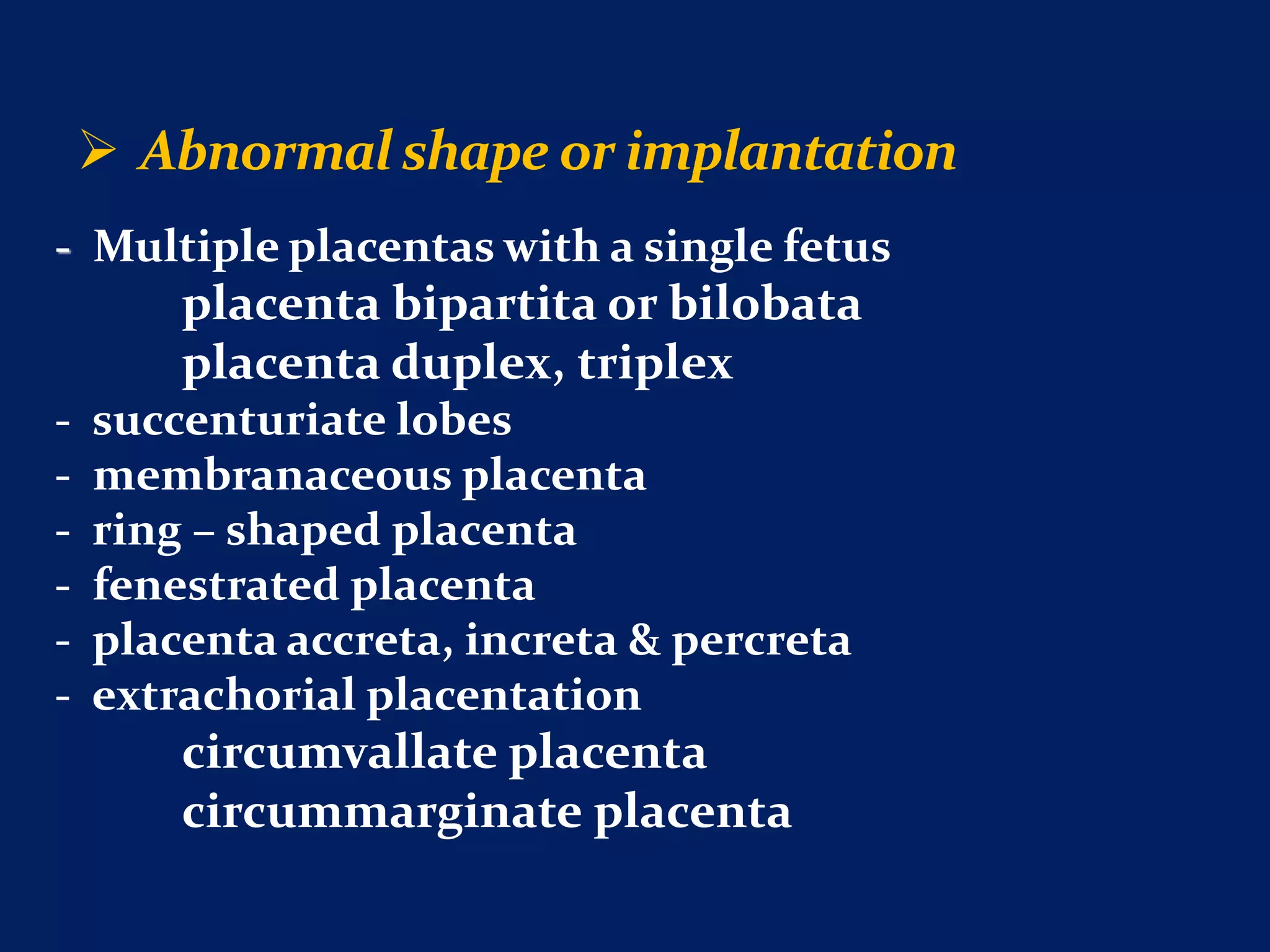
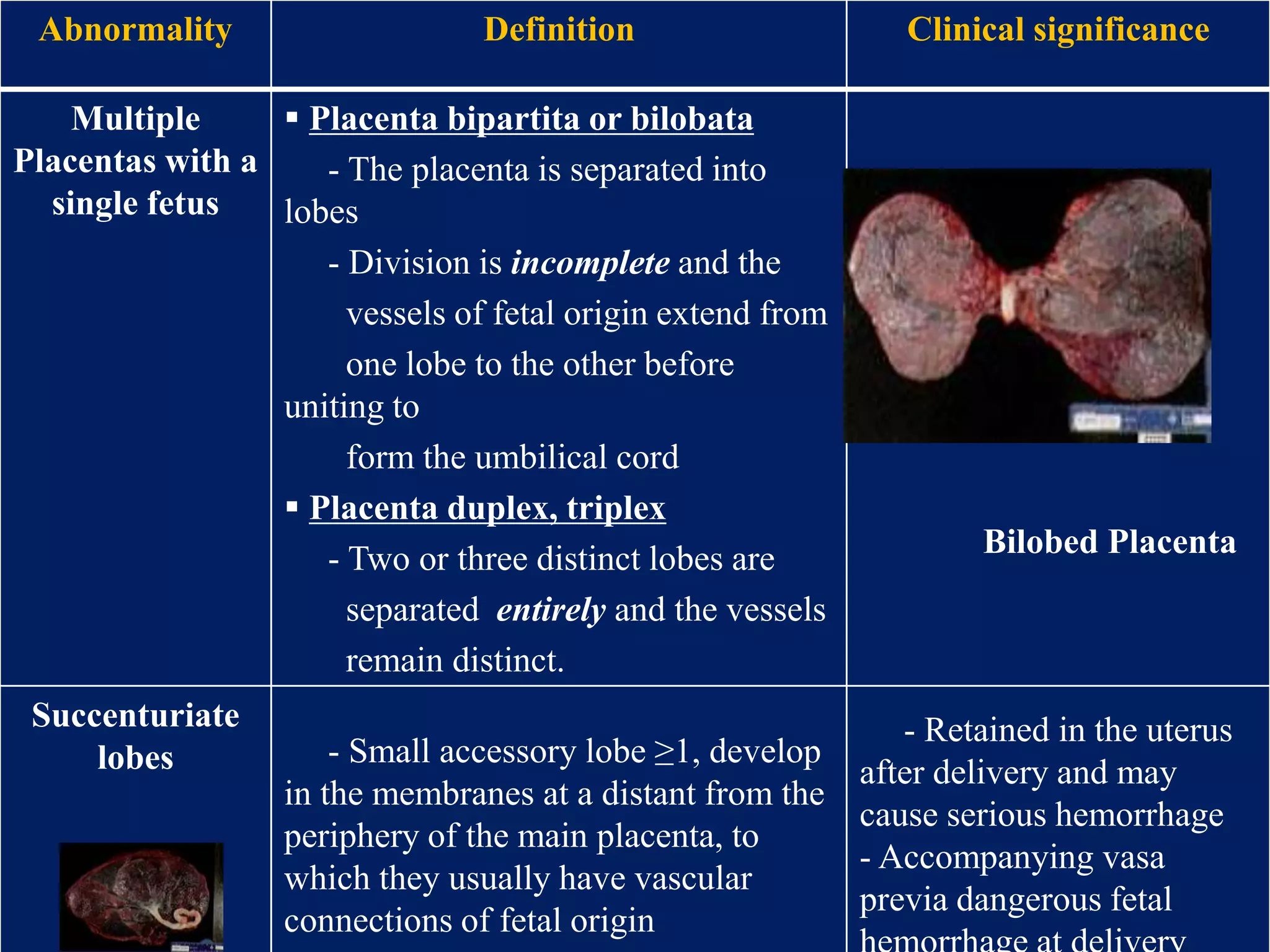

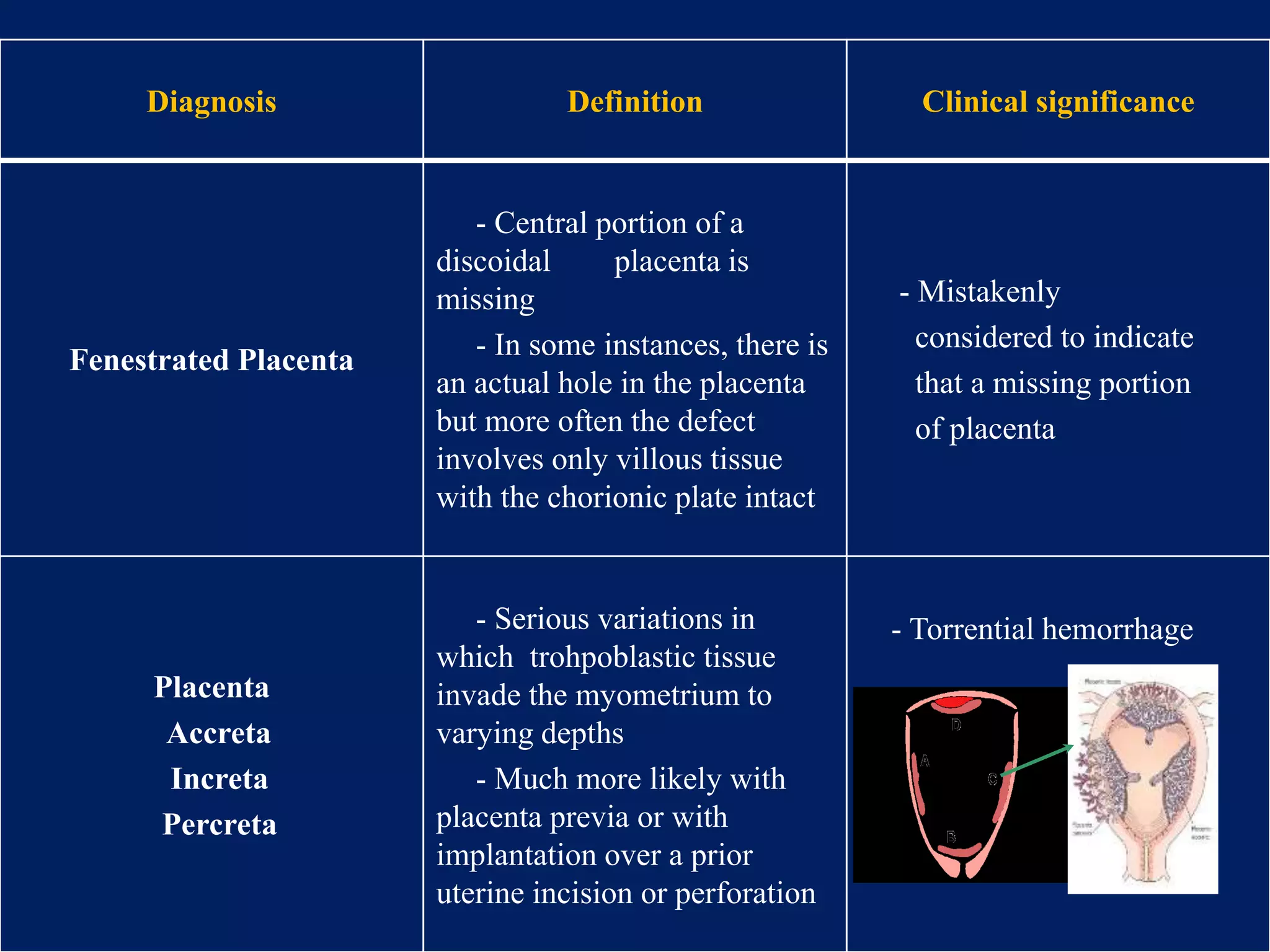

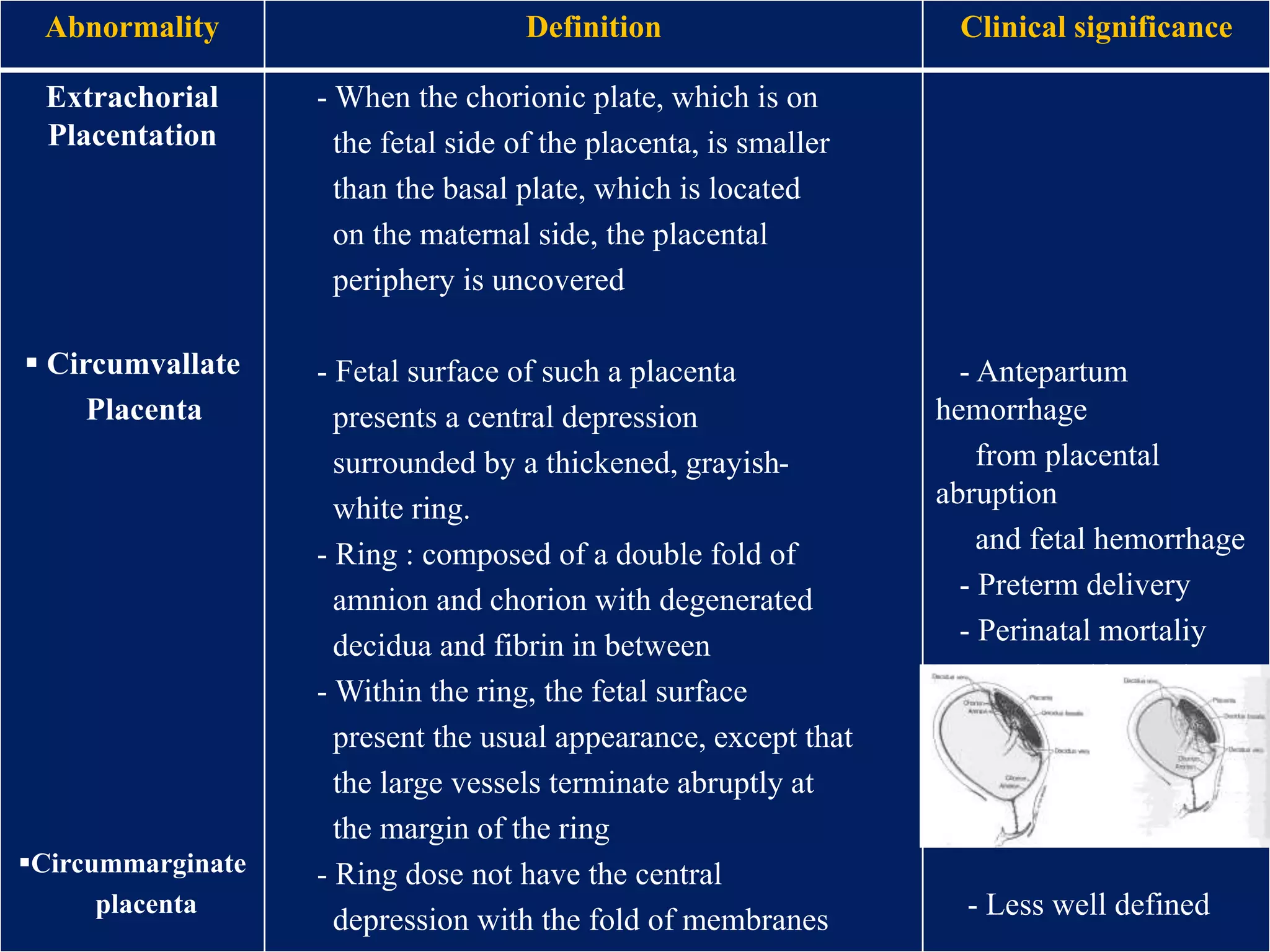


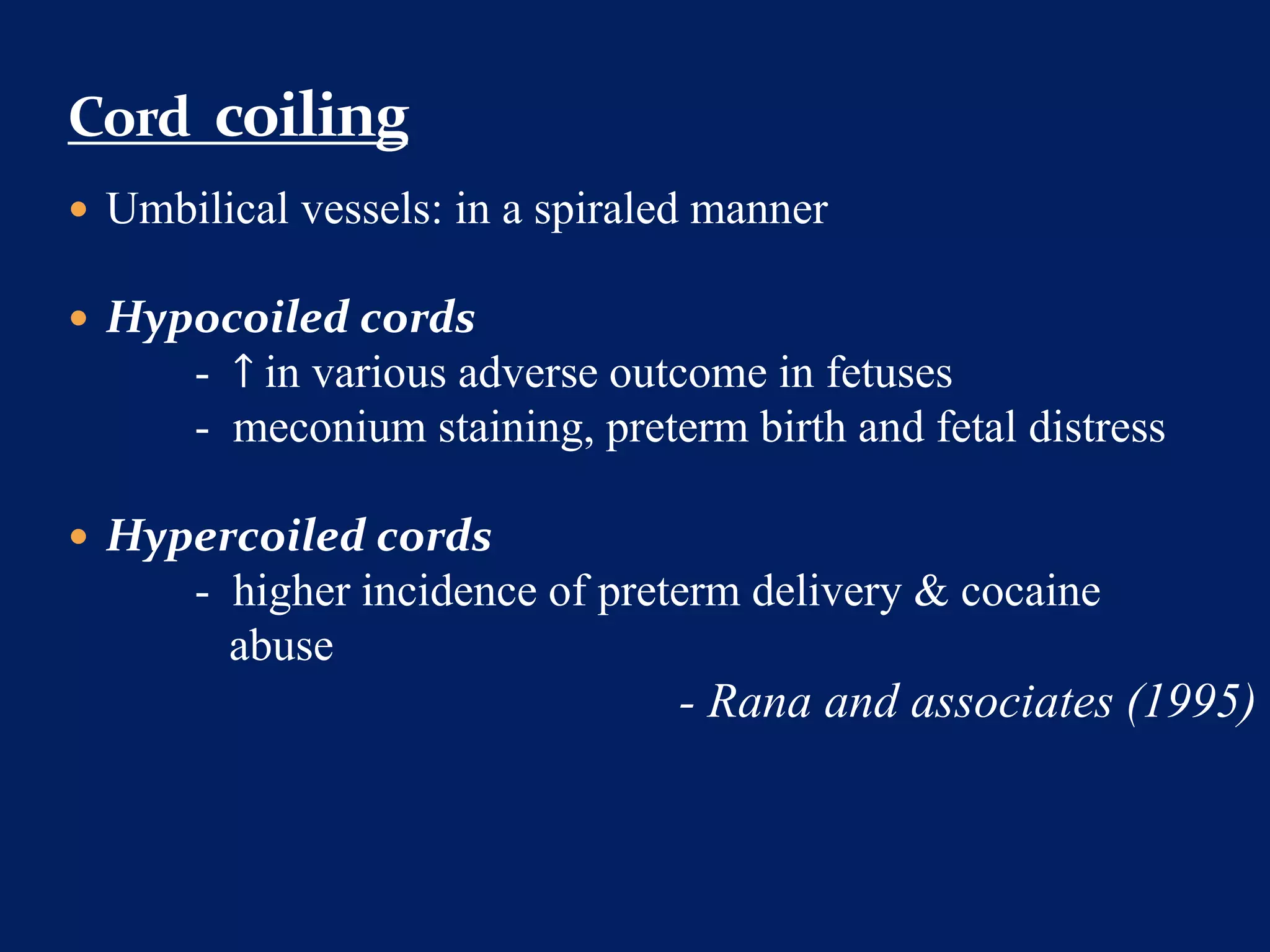


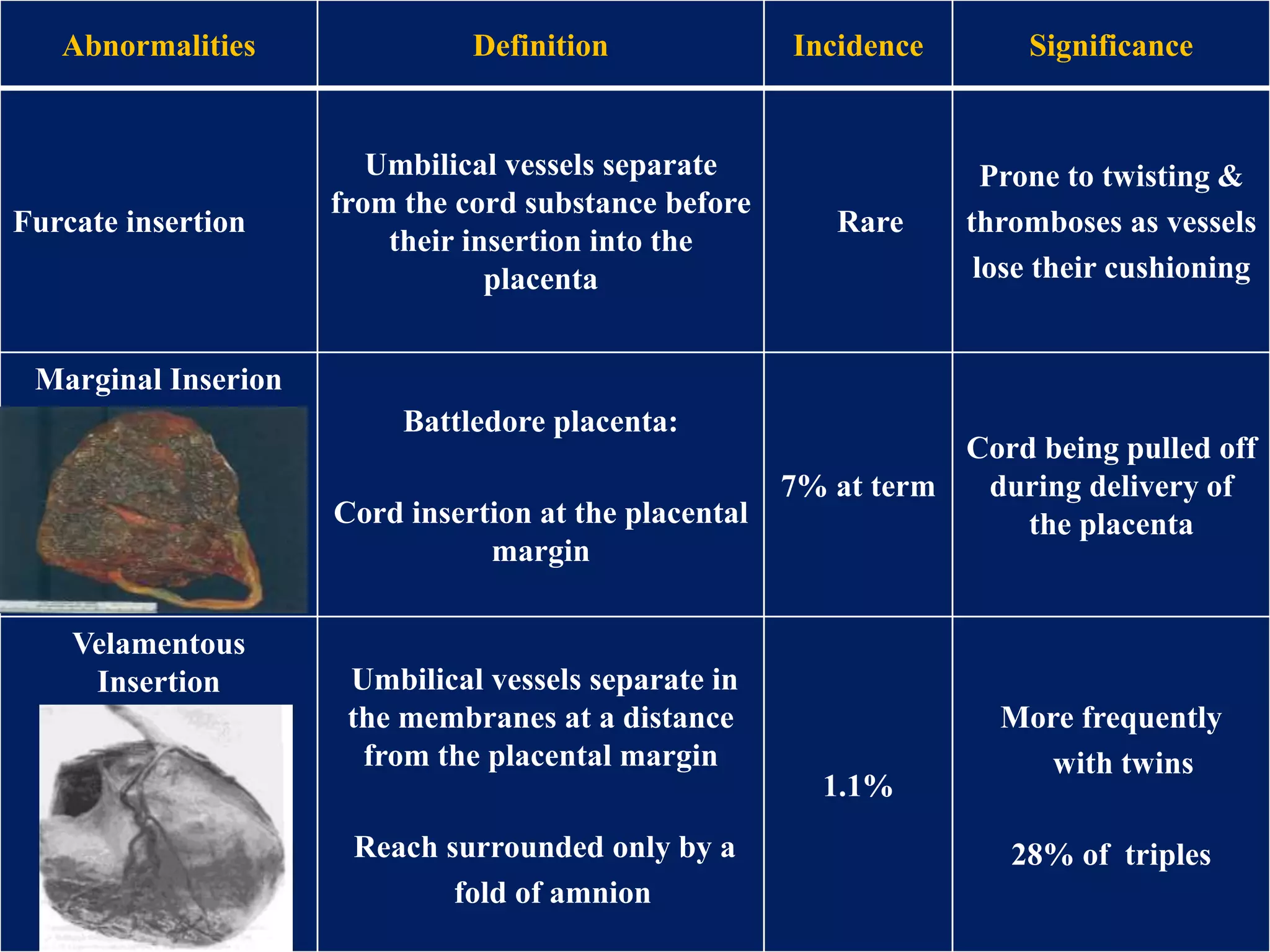


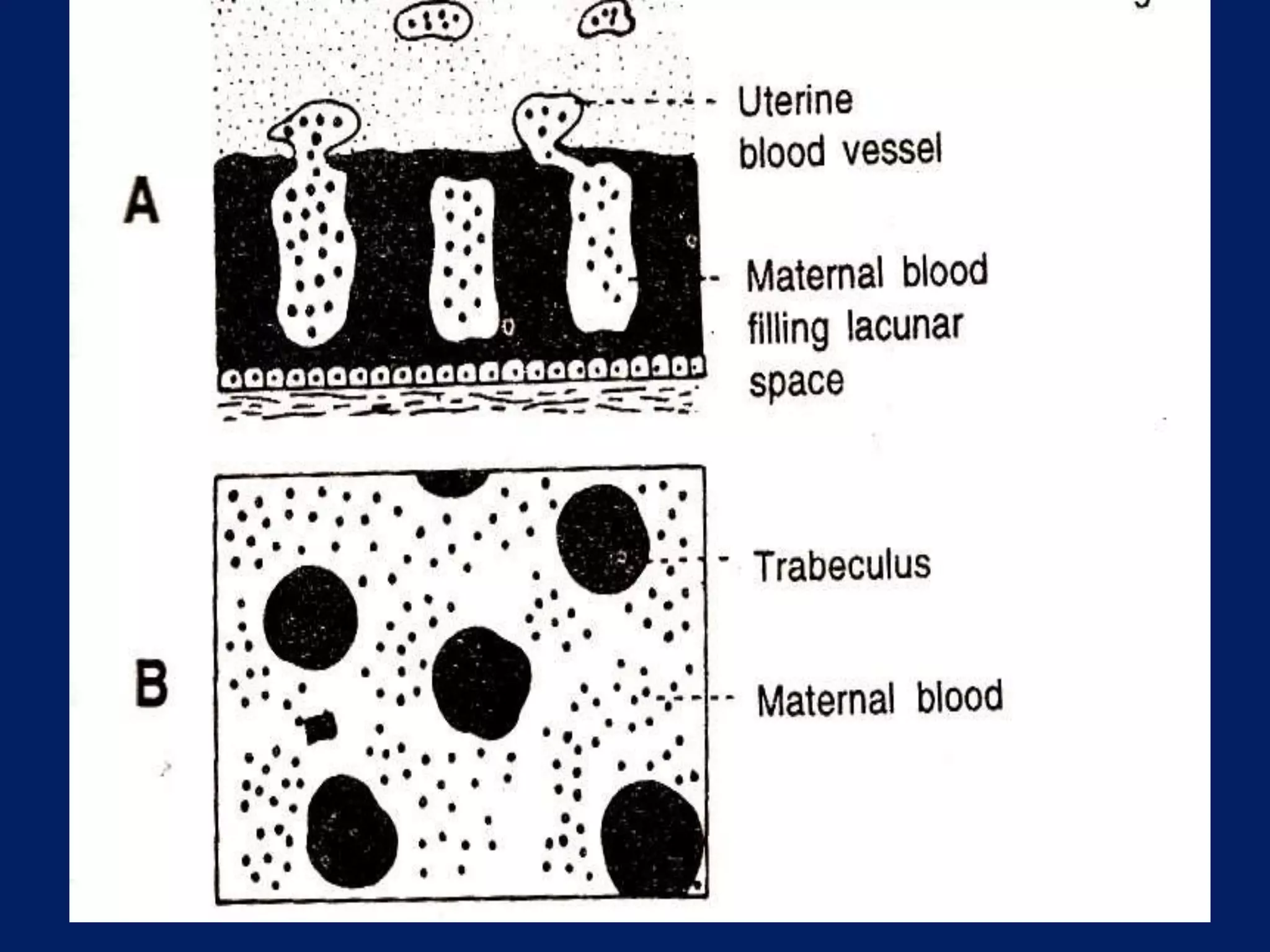
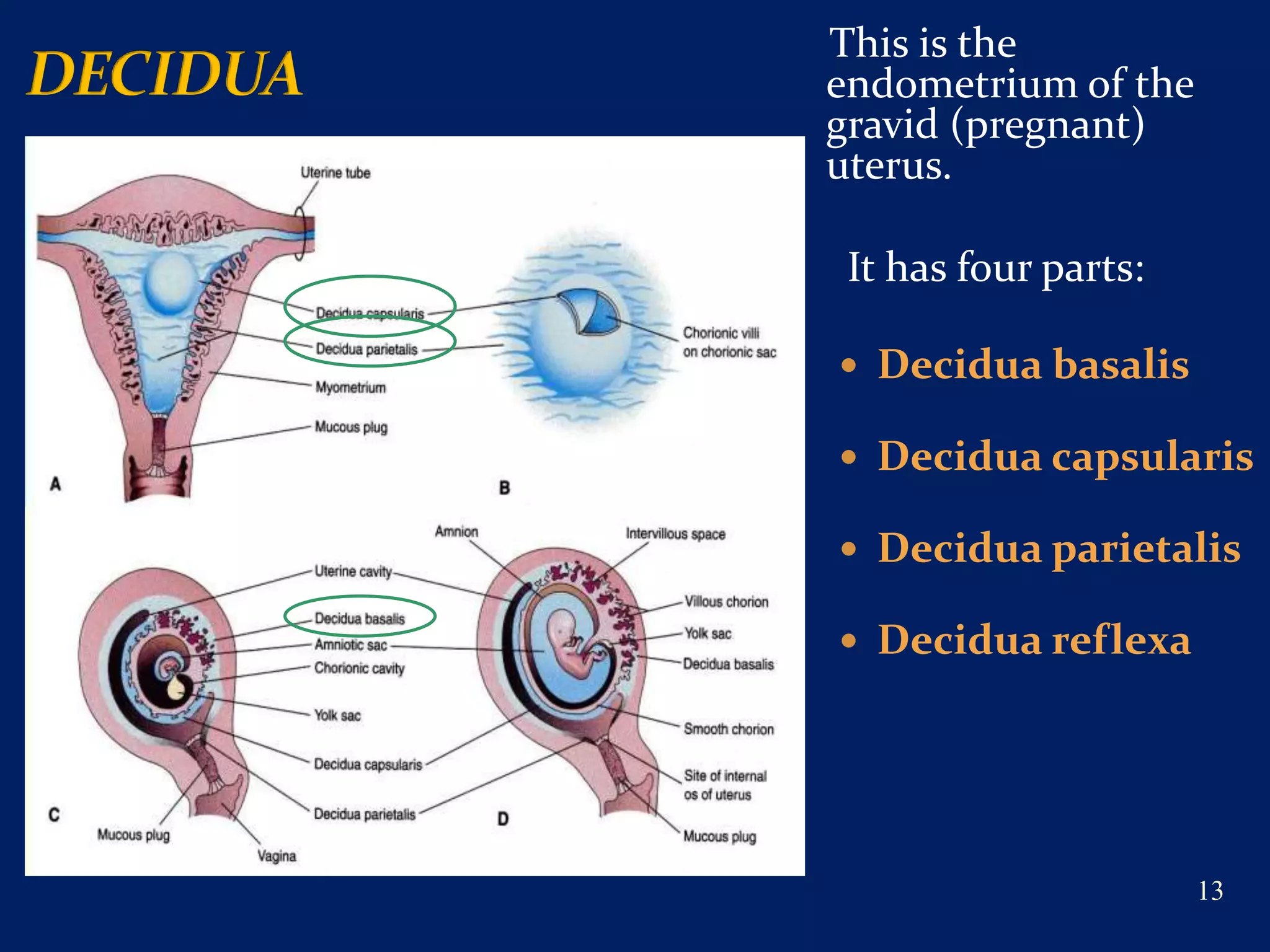
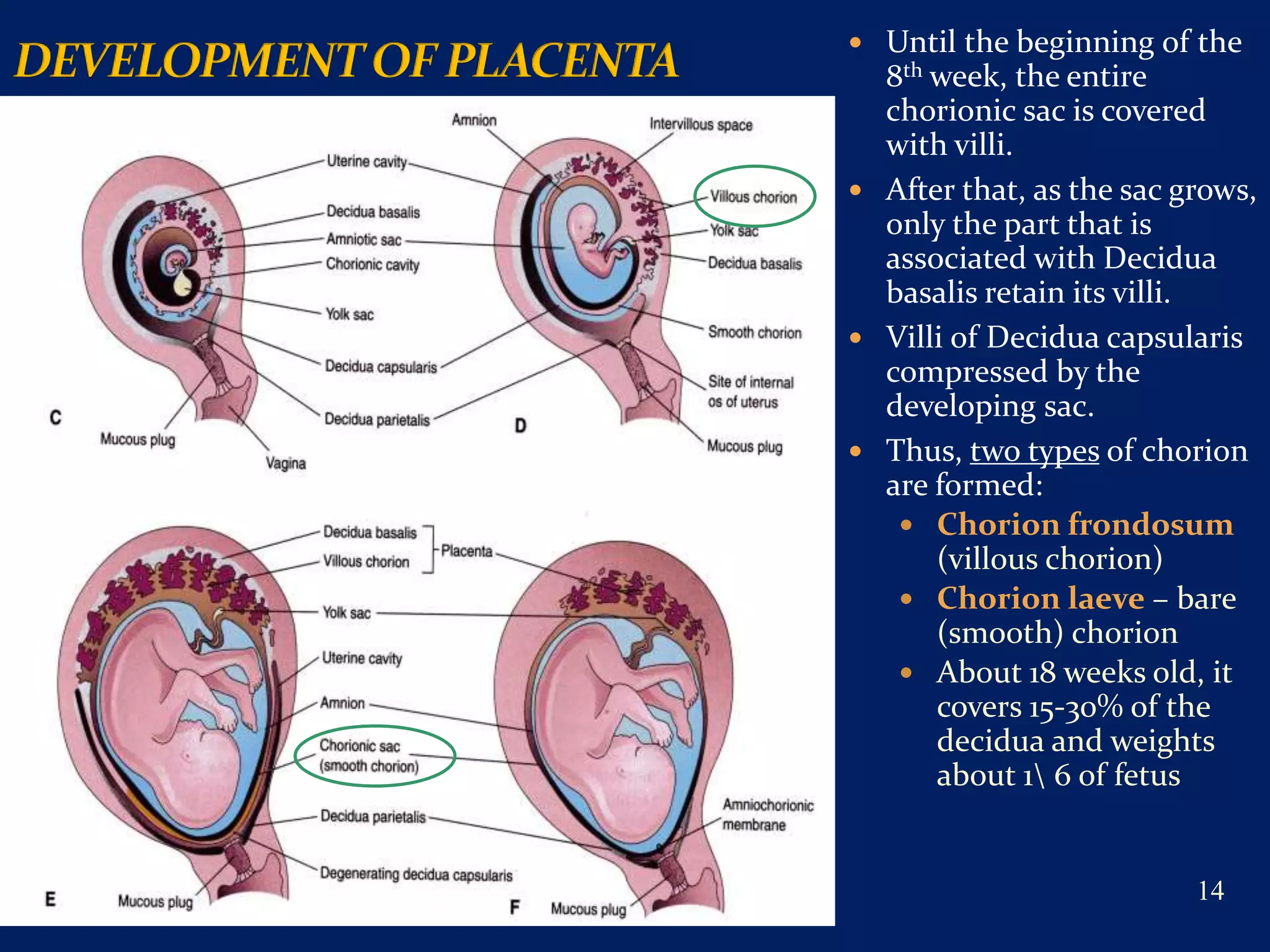
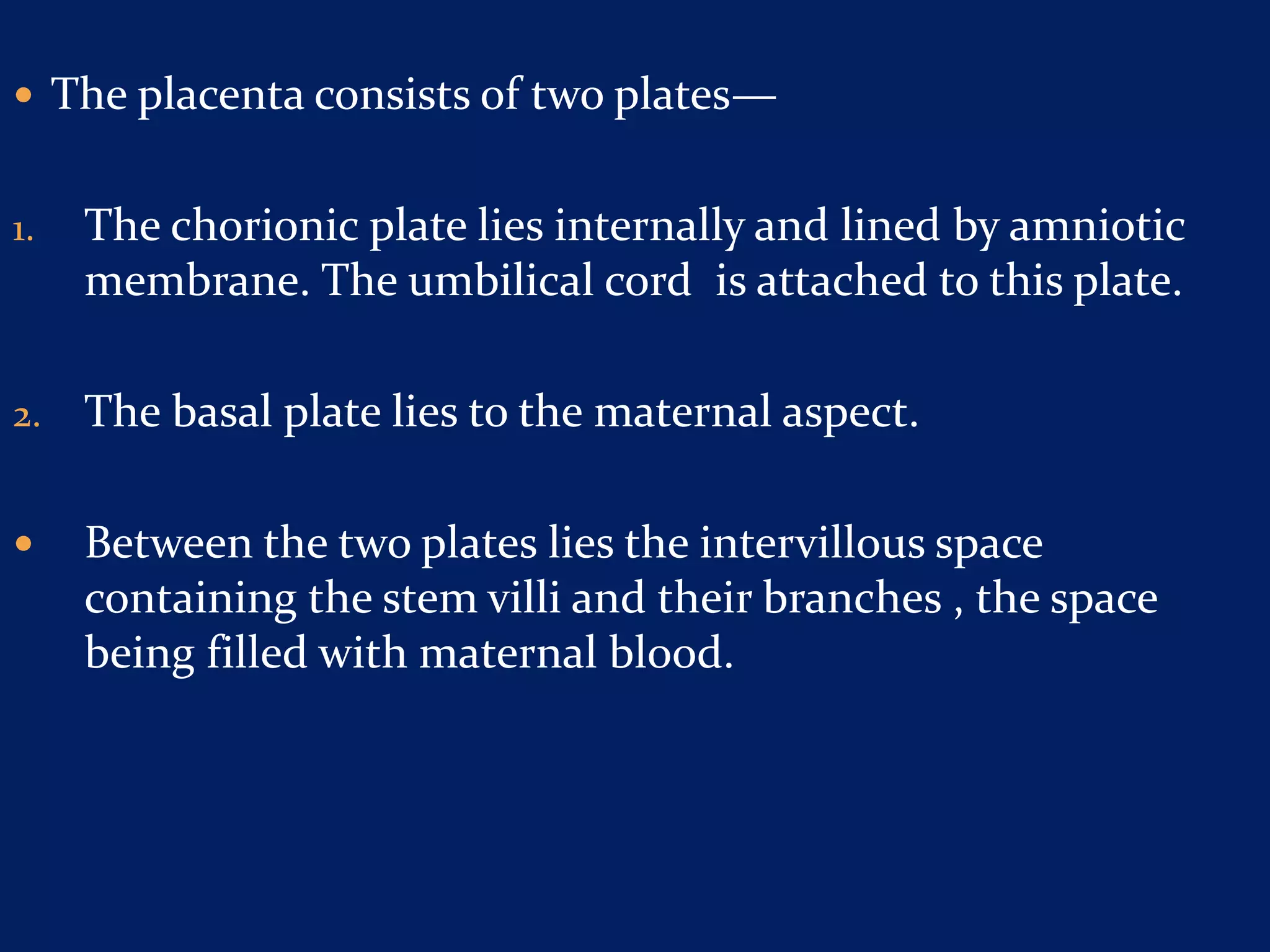
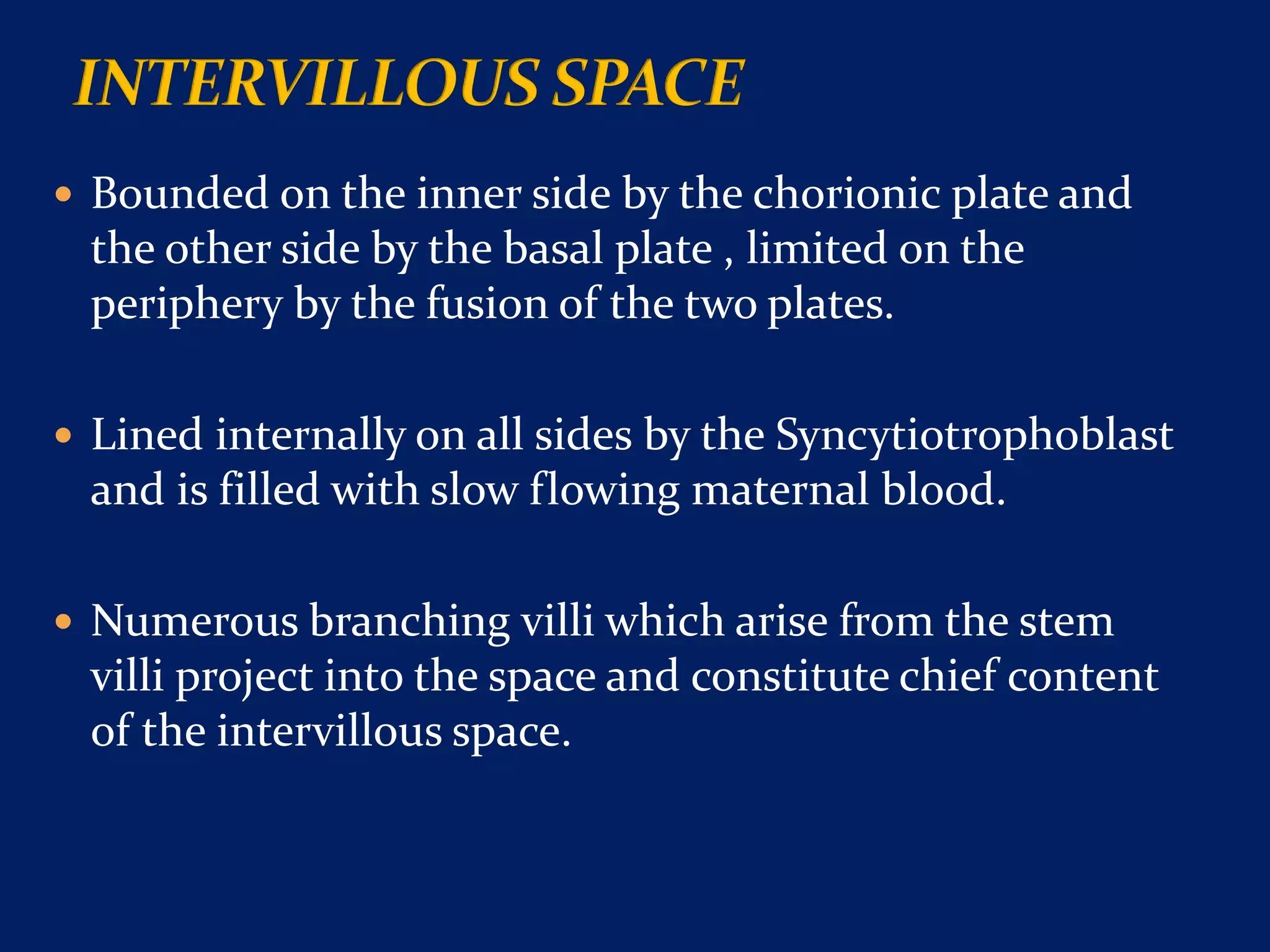
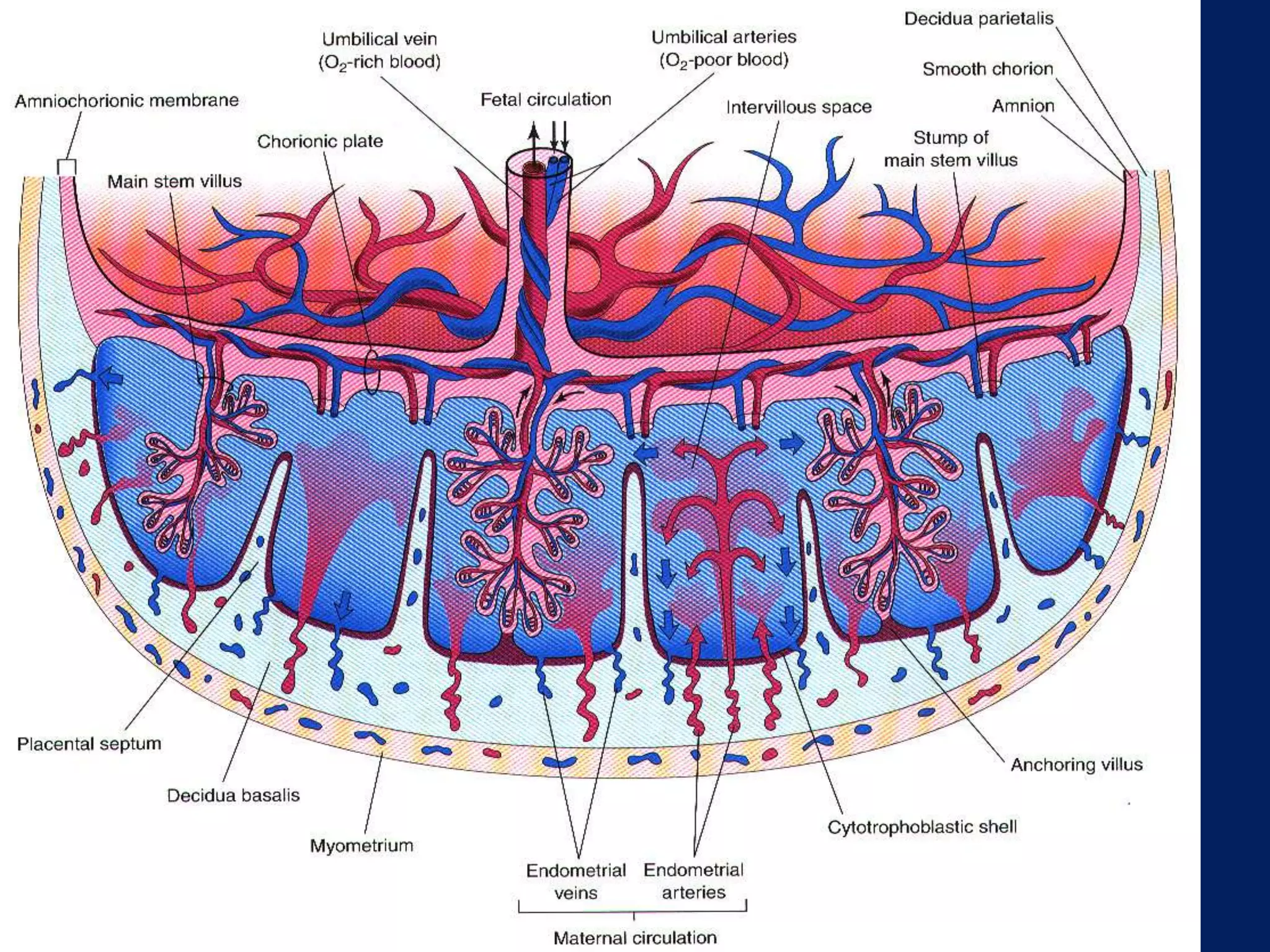
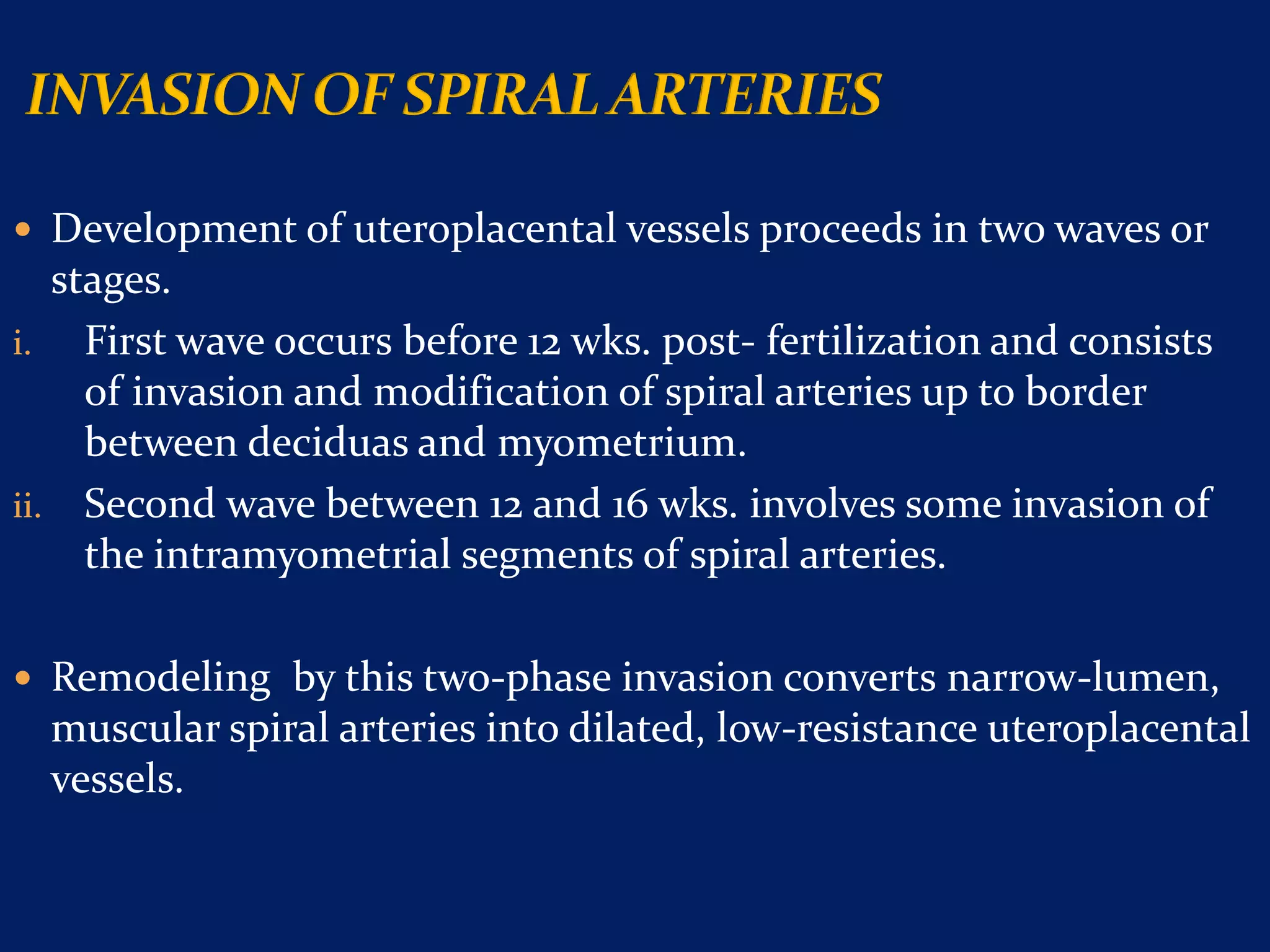
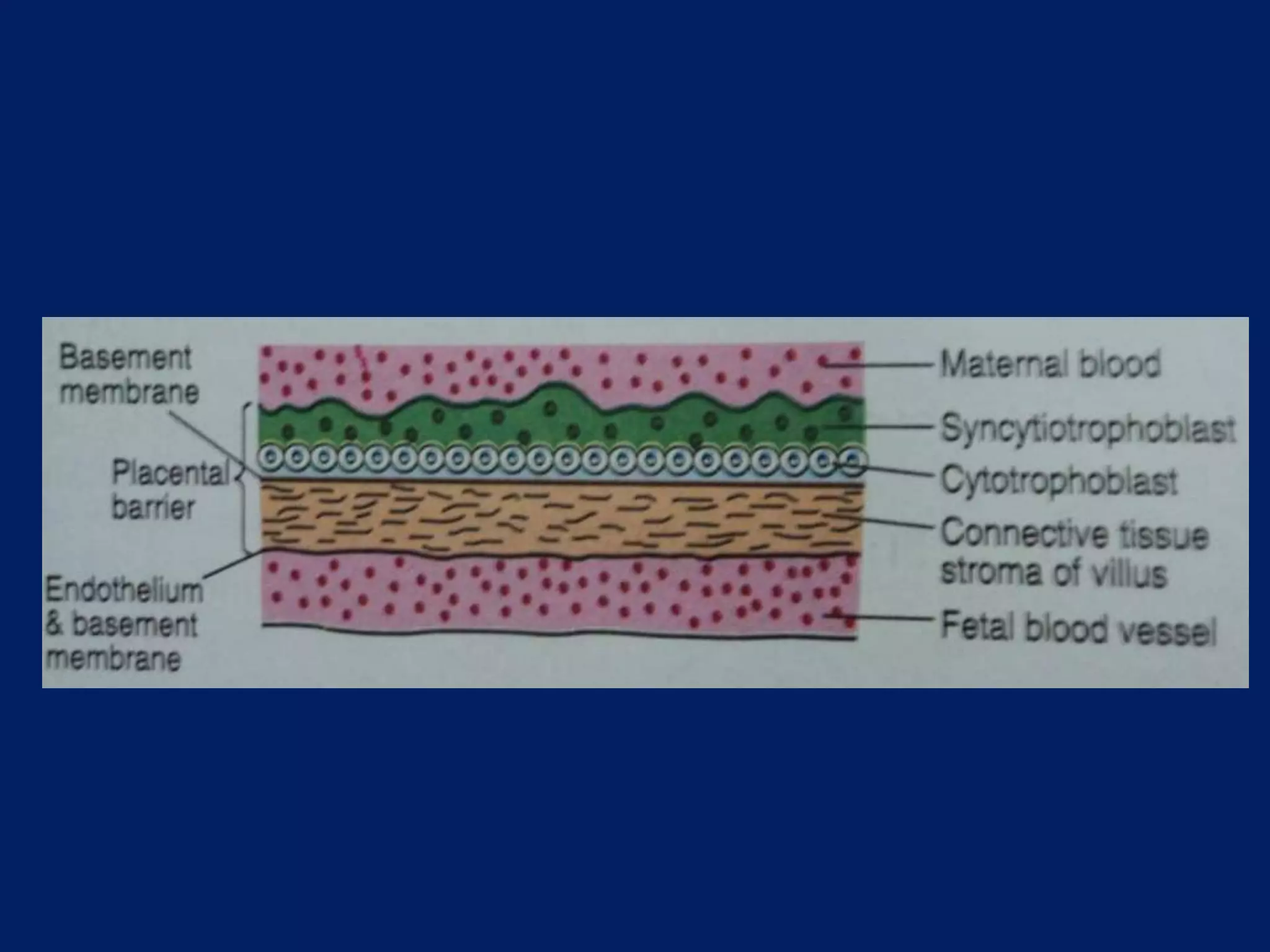
The human placenta is discoid, haemochorial, deciduate, and larynthine. It attaches to the uterine wall and connects the mother and fetus through the umbilical cord. The placenta undergoes development from implantation through the third trimester, forming the chorionic and basal plates separated by the intervillous space containing branching villi. The placenta acts as the site of nutrient, waste, and gas exchange between mother and fetus as well as producing important hormones. Various abnormalities can occur in placental shape, implantation, circulation or development that impact clinical outcomes.


