The Norman Conquest
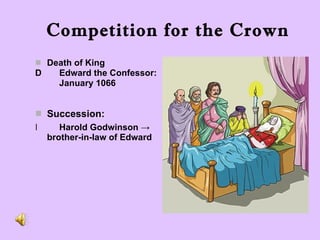
Competition for the Crown Death of King  Edward the Confessor: January 1066 Succession:  Harold Godwinson  ->  brother-in-law of Edward
Four Kings Edgar  The Aetheling Harold  Godwinson William, Duke Of Normandy Swegn Estrithson, King Of Denmark
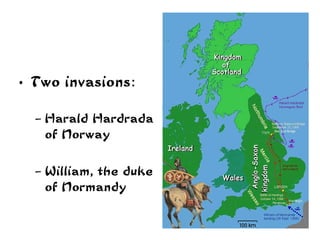
Two invasions : Harald Hardrada of Norway  William, the duke of Normandy
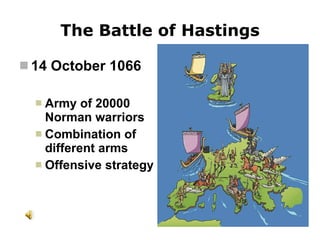
The Battle of Hastings 14 October 1066 Army of 20000 Norman warriors Combination of different arms Offensive strategy
The Church Controversy: Dead religion before the Norman Conquest? Normans and Britons – many things in common?
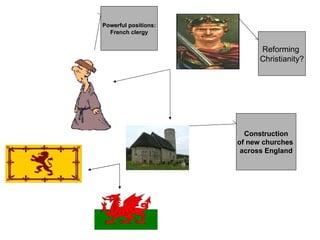
Reforming  Christianity? Powerful positions: French clergy Construction of new churches  across England
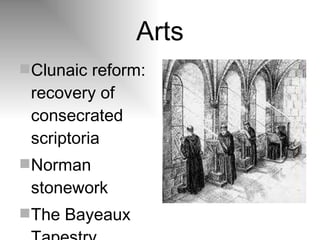
Arts Clunaic reform: recovery of consecrated scriptoria Norman stonework The Bayeaux Tapestry
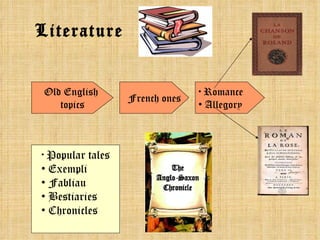
Literature Old English  topics French ones Romance Allegory Popular tales Exempli Fabliau Bestiaries Chronicles
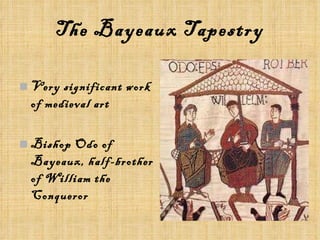
The Bayeaux Tapestry Very significant work of medieval art Bishop Odo of Bayeaux, half-brother of William the Conqueror
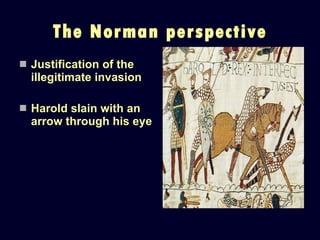
The Norman perspective Justification of the illegitimate invasion Harold slain with an arrow through his eye
English Romanesque Architecture 800AD – 1100 AD Origins: The Bizantine Empire New kind of buildings, materials and techniques
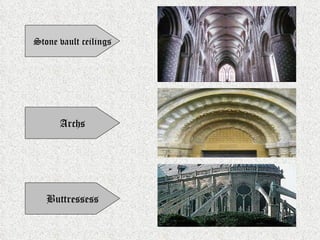
Stone vault ceilings Archs Buttressess
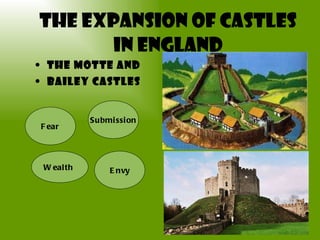
The expansion of castles in England The Motte and  Bailey Castles Fear Submission Wealth  Envy
Virtual tour of the Motte and Baley Castle http://www.timeref.com/3dindex.htm
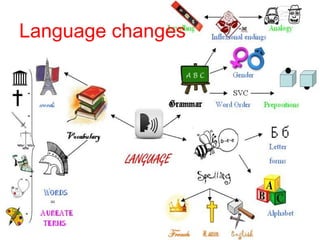
Language changes
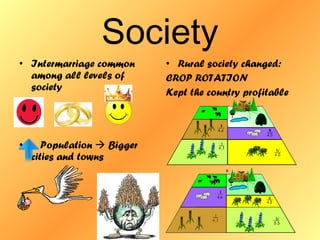
Society Intermarriage common among all levels of society Population    Bigger cities and towns Rural society changed: CROP ROTATION Kept the country profitable
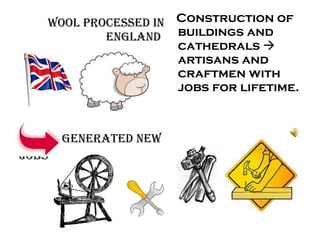
Wool processed in England   Generated new  jobs  Construction of buildings and cathedrals    artisans and craftmen with jobs for lifetime.


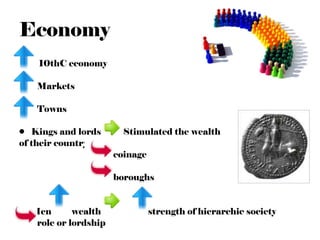
Economy 10thC economy Markets Towns Kings and lords  Stimulated the wealth of their country coinage boroughs Men  wealth  strength of hierarchic society  role or lordship
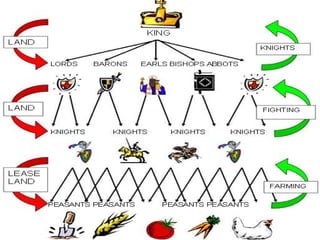
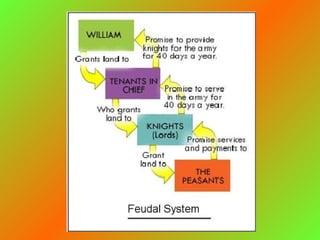
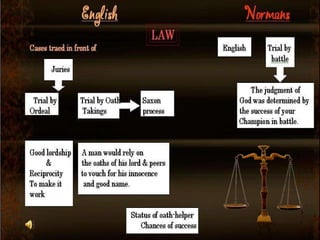
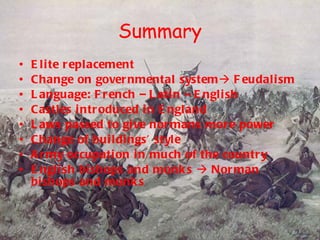
Summary Elite replacement Change on governmental system   Feudalism Language: French – Latin – English Castles introduced in England Laws passed to give normans more power Change of buildings’ style Army occupation in much of the country English bishops and monks    Norman bishops and monks
Questions   1.- Which of these were the consequences of the Norman Conquest? a)Introduction of French  b)Establishment of the monarchy c)Introduction of Feudalism c) All of these d) None of these 2.- After The Norman Conquest there was a linguistic change:  a)The common people started to speak French. b)The aristocracy and the clergy spoke Latin. c) Everyone took French as the daily language. d)None of these. 3.- The innovation in architecture was the proliferation of castles. T/F 4.- The English law system was the same as the Norman law system. T/F
Extra exercises To help you revise: http://www.schoolhistory.co.uk/lessons/1066_claims/diagram.htm  Quizz on the Feudal System: http://www.btinternet.com/~mrfield/Conquest/feudalism/fedud_recap.htm  Ordering Game of The Battle of Hastings http://www.schoolhistory.co.uk/year7links/1066/orderinghomework.pdf A 1066 word search http://www.schoolhistory.co.uk/year7links/1066/1066Search.PDF
Bibliography used www.SchoolHistory.co.uk www.passmorehistory.homestead.com   www.eyewitnesstohistory.com   http://geoffboxell.tripod.com/1066.htm   www.localhistories.org/middle.html http://en.wikipedia.org   www.essentialnormanconquest.com/encyclopedia.htm www.bbc.co.uk/history www.bbc.co.uk/history/british/architecture_01.shtml
Done by: Christina Munder Estelles and Armonía Hita Garrido

The norman conquest

  • 1.
    TheNorman Conquest
  • 2.
    Competition for theCrown Death of King Edward the Confessor: January 1066 Succession: Harold Godwinson -> brother-in-law of Edward
  • 3.
    Four Kings Edgar The Aetheling Harold Godwinson William, Duke Of Normandy Swegn Estrithson, King Of Denmark
  • 4.
    Two invasions :Harald Hardrada of Norway William, the duke of Normandy
  • 5.
    The Battle ofHastings 14 October 1066 Army of 20000 Norman warriors Combination of different arms Offensive strategy
  • 6.
    The Church Controversy:Dead religion before the Norman Conquest? Normans and Britons – many things in common?
  • 7.
    Reforming Christianity?Powerful positions: French clergy Construction of new churches across England
  • 8.
    Arts Clunaic reform:recovery of consecrated scriptoria Norman stonework The Bayeaux Tapestry
  • 9.
    Literature Old English topics French ones Romance Allegory Popular tales Exempli Fabliau Bestiaries Chronicles
  • 10.
    The Bayeaux TapestryVery significant work of medieval art Bishop Odo of Bayeaux, half-brother of William the Conqueror
  • 11.
    The Norman perspectiveJustification of the illegitimate invasion Harold slain with an arrow through his eye
  • 12.
    English Romanesque Architecture800AD – 1100 AD Origins: The Bizantine Empire New kind of buildings, materials and techniques
  • 13.
    Stone vault ceilingsArchs Buttressess
  • 14.
    The expansion ofcastles in England The Motte and Bailey Castles Fear Submission Wealth Envy
  • 15.
    Virtual tour ofthe Motte and Baley Castle http://www.timeref.com/3dindex.htm
  • 16.
  • 17.
    Society Intermarriage commonamong all levels of society Population  Bigger cities and towns Rural society changed: CROP ROTATION Kept the country profitable
  • 18.
    Wool processed inEngland Generated new jobs Construction of buildings and cathedrals  artisans and craftmen with jobs for lifetime.
  • 19.
  • 20.
  • 21.
  • 22.
    Economy 10thC economyMarkets Towns Kings and lords Stimulated the wealth of their country coinage boroughs Men wealth strength of hierarchic society role or lordship
  • 23.
    Summary Elite replacementChange on governmental system  Feudalism Language: French – Latin – English Castles introduced in England Laws passed to give normans more power Change of buildings’ style Army occupation in much of the country English bishops and monks  Norman bishops and monks
  • 24.
    Questions 1.- Which of these were the consequences of the Norman Conquest? a)Introduction of French b)Establishment of the monarchy c)Introduction of Feudalism c) All of these d) None of these 2.- After The Norman Conquest there was a linguistic change: a)The common people started to speak French. b)The aristocracy and the clergy spoke Latin. c) Everyone took French as the daily language. d)None of these. 3.- The innovation in architecture was the proliferation of castles. T/F 4.- The English law system was the same as the Norman law system. T/F
  • 25.
    Extra exercises Tohelp you revise: http://www.schoolhistory.co.uk/lessons/1066_claims/diagram.htm Quizz on the Feudal System: http://www.btinternet.com/~mrfield/Conquest/feudalism/fedud_recap.htm Ordering Game of The Battle of Hastings http://www.schoolhistory.co.uk/year7links/1066/orderinghomework.pdf A 1066 word search http://www.schoolhistory.co.uk/year7links/1066/1066Search.PDF
  • 26.
    Bibliography used www.SchoolHistory.co.ukwww.passmorehistory.homestead.com www.eyewitnesstohistory.com http://geoffboxell.tripod.com/1066.htm www.localhistories.org/middle.html http://en.wikipedia.org www.essentialnormanconquest.com/encyclopedia.htm www.bbc.co.uk/history www.bbc.co.uk/history/british/architecture_01.shtml
  • 27.
    Done by: ChristinaMunder Estelles and Armonía Hita Garrido