The Anglo-Saxon and
  Medieval Periods
       449-1485
Anglo Saxon Period
           449-1066
in 449 and continuing for several decades,
Angles, Saxons, Jutes and others begin
settling on Britain’s eastern and southern
shores.
eventually driven to seek refuge in
Cornwall and Wales, Scotland, and
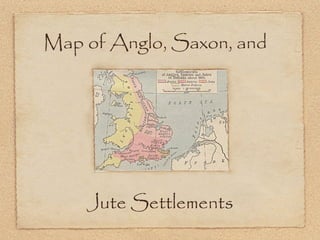
eventually organized themselves into 7 kingdoms
called the Heptarchy: Kent (Jutes); Sussex,
Wessex, and Essex (Saxons); and East
Anglia, Mercia, and Northumbria (Angles).

the Angles were dominant and the land became
known as Angle-land (England)

scholars still refer to the people and culture as
Anglo-Saxon
Map of Anglo, Saxon, and


    Jute Settlements
Anglo-Saxon Culture

early invaders were seafaring wanderers
   lives were bleak, violent, and short
   pagan religion
   believed in fate (wyrd)
   admired heroes who prevailed in battle
Christianity
 by the late 6th century they began
 accepting Christianity--this was an
 important civilizing force
 in 597 Augustine established a monastery
 at Canterbury.
 by 690 much of Britain was Christian
Danish Invasions
in the 790s the Danes (Vikings)came to
Northumbria
   came to loot the monasteries
   gained much control of northern and eastern
   England
   in the South they were halted by Alfred the
   Great
   Alfred forced them to agree to accept
   Christianity.
Kings of England
 1016–Canute (a Dane)
 1042–Edward the Confessor (his death
 leads to drama–he promised the throne to
 both Harold and William which then led to
 the Norman Conquest and Harold’s
 death)
The Medieval Period
1066-1485
like the Danes, the Normans had been
Viking raiders
after settling in Normandy, they adopted
French ways
this brings on the medieval (or middle) ages
William’s Influence
feudalism: a political and economic system
where the king owned all the land in the
kingdom
William kept a 1/4 for himself, granted 1/4
to the church, and parceled out the rest to
loyal nobles who either paid him or supplied
him with Knights and warriors
Social ladder: King, Baron, Knight, down
Other Rulers
Henry II–reformed judicial system,
establishing juries and a common law
Richard I (Richard the Lion-Hearted–spent
much of his reign fighting the Crusades
John–plotted against his brother Richard,
found there was no money, forced to sign
the Magna Carta (an early step towards
Democracy)
Henry III–Parliament established

Edward I–Parliament includes commoners
(eventually becomes House of Commons) as
well as barons (becomes House of Barons)

   growth of commoners power increased # of
   towns and led to the decline of feudalism

   also led to poor sanitary conditions and
   plagues!
The Hundred Years’
Began in 1337; ended in 1453 (100
years?)
long struggle between England and
France
Black Death occurred during this time
(wiped out 1/3 of England’s population)
England lost most of its French
War of the Roses
 two rival families claimed the throne: the house
 of York and the house of Lancaster
 House of York–symbol was white rose
 House of Lancaster–symbol was red rose
 Lancaster won and Henry the VII took the
 throne
 this event marks the end of the Middle Ages
 in England

Anglo-Saxon/Medieval slideshow

  • 1.
    The Anglo-Saxon and Medieval Periods 449-1485
  • 2.
    Anglo Saxon Period 449-1066 in 449 and continuing for several decades, Angles, Saxons, Jutes and others begin settling on Britain’s eastern and southern shores. eventually driven to seek refuge in Cornwall and Wales, Scotland, and
  • 3.
    eventually organized themselvesinto 7 kingdoms called the Heptarchy: Kent (Jutes); Sussex, Wessex, and Essex (Saxons); and East Anglia, Mercia, and Northumbria (Angles). the Angles were dominant and the land became known as Angle-land (England) scholars still refer to the people and culture as Anglo-Saxon
  • 4.
    Map of Anglo,Saxon, and Jute Settlements
  • 5.
    Anglo-Saxon Culture early invaderswere seafaring wanderers lives were bleak, violent, and short pagan religion believed in fate (wyrd) admired heroes who prevailed in battle
  • 6.
    Christianity by thelate 6th century they began accepting Christianity--this was an important civilizing force in 597 Augustine established a monastery at Canterbury. by 690 much of Britain was Christian
  • 7.
    Danish Invasions in the790s the Danes (Vikings)came to Northumbria came to loot the monasteries gained much control of northern and eastern England in the South they were halted by Alfred the Great Alfred forced them to agree to accept Christianity.
  • 8.
    Kings of England 1016–Canute (a Dane) 1042–Edward the Confessor (his death leads to drama–he promised the throne to both Harold and William which then led to the Norman Conquest and Harold’s death)
  • 9.
    The Medieval Period 1066-1485 likethe Danes, the Normans had been Viking raiders after settling in Normandy, they adopted French ways this brings on the medieval (or middle) ages
  • 10.
    William’s Influence feudalism: apolitical and economic system where the king owned all the land in the kingdom William kept a 1/4 for himself, granted 1/4 to the church, and parceled out the rest to loyal nobles who either paid him or supplied him with Knights and warriors Social ladder: King, Baron, Knight, down
  • 11.
    Other Rulers Henry II–reformedjudicial system, establishing juries and a common law Richard I (Richard the Lion-Hearted–spent much of his reign fighting the Crusades John–plotted against his brother Richard, found there was no money, forced to sign the Magna Carta (an early step towards Democracy)
  • 12.
    Henry III–Parliament established EdwardI–Parliament includes commoners (eventually becomes House of Commons) as well as barons (becomes House of Barons) growth of commoners power increased # of towns and led to the decline of feudalism also led to poor sanitary conditions and plagues!
  • 13.
    The Hundred Years’ Beganin 1337; ended in 1453 (100 years?) long struggle between England and France Black Death occurred during this time (wiped out 1/3 of England’s population) England lost most of its French
  • 14.
    War of theRoses two rival families claimed the throne: the house of York and the house of Lancaster House of York–symbol was white rose House of Lancaster–symbol was red rose Lancaster won and Henry the VII took the throne this event marks the end of the Middle Ages in England