Normanization of England
Presented by: Presented to:
Chandan datta(12216007) Keya Chakraborty
Sathi afroz(12216004) Lecturer
Farhana mosharof(12216010) Department of English
Umme kulsum(12216001) University of Asia Pacific
Fauzia akter Bippi(12216013)
Semester 1/2(spring)
Department of English
University of Asia Pacific
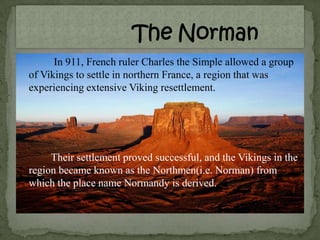
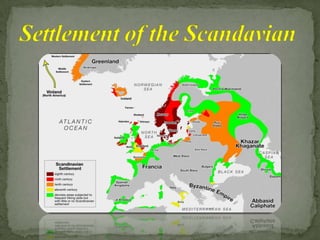
In 911, French ruler Charles the Simple allowed a group
of Vikings to settle in northern France, a region that was
experiencing extensive Viking resettlement.
Their settlement proved successful, and the Vikings in the
region became known as the Northmen(i.e. Norman) from
which the place name Normandy is derived.
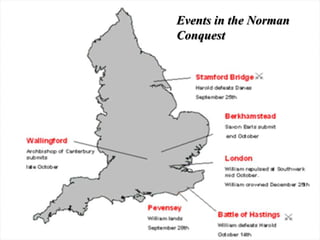
Events in the Norman
Conquest
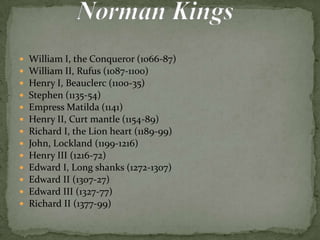
 William I, the Conqueror (1066-87)
 William II, Rufus (1087-1100)
 Henry I, Beauclerc (1100-35)
 Stephen (1135-54)
 Empress Matilda (1141)
 Henry II, Curt mantle (1154-89)
 Richard I, the Lion heart (1189-99)
 John, Lockland (1199-1216)
 Henry III (1216-72)
 Edward I, Long shanks (1272-1307)
 Edward II (1307-27)
 Edward III (1327-77)
 Richard II (1377-99)
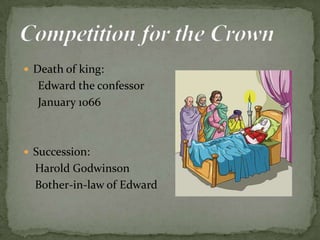
 Death of king:
Edward the confessor
January 1066
 Succession:
Harold Godwinson
Bother-in-law of Edward
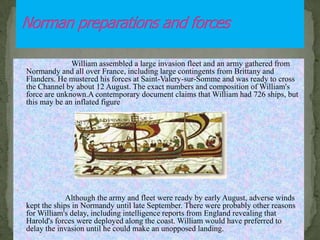
William assembled a large invasion fleet and an army gathered from
Normandy and all over France, including large contingents from Brittany and
Flanders. He mustered his forces at Saint-Valery-sur-Somme and was ready to cross
the Channel by about 12 August. The exact numbers and composition of William's
force are unknown.A contemporary document claims that William had 726 ships, but
this may be an inflated figure
.
Although the army and fleet were ready by early August, adverse winds
kept the ships in Normandy until late September. There were probably other reasons
for William's delay, including intelligence reports from England revealing that
Harold's forces were deployed along the coast. William would have preferred to
delay the invasion until he could make an unopposed landing.
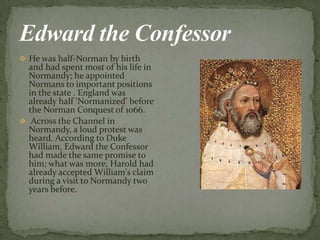
 He was half-Norman by birth
and had spent most of his life in
Normandy; he appointed
Normans to important positions
in the state . England was
already half 'Normanized' before
the Norman Conquest of 1066.
 Across the Channel in
Normandy, а loud protest was
heard. According to Duke
William, Edward the Confessor
had made the same promise to
him; what was more, Harold had
already accepted William's claim
during а visit to Normandy two
years before.
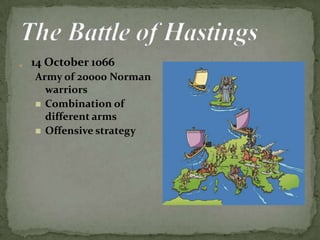
„ 14 October 1066
Army of 20000 Norman
warriors
 Combination of
different arms
 Offensive strategy
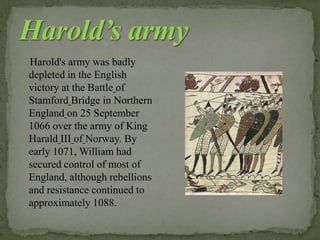
Harold's army was badly
depleted in the English
victory at the Battle of
Stamford Bridge in Northern
England on 25 September
1066 over the army of King
Harald III of Norway. By
early 1071, William had
secured control of most of
England, although rebellions
and resistance continued to
approximately 1088.
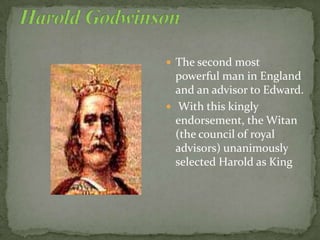
 The second most
powerful man in England
and an advisor to Edward.
 With this kingly
endorsement, the Witan
(the council of royal
advisors) unanimously
selected Harold as King
 Hardrada of Norway struck first. In mid September,
Hardrada's invasion force landed on the Northern English
coast.
 Defeated by Harold
 Resting after his victory, Harold received word of
William's landing near Hastings.
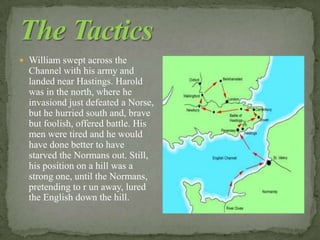
 William swept across the
Channel with his army and
landed near Hastings. Harold
was in the north, where he
invasiond just defeated а Norse,
but he hurried south and, brave
but foolish, offered battle. His
men were tired and he would
have done better to have
starved the Normans out. Still,
his position on а hill was а
strong one, until the Normans,
pretending to r un away, lured
the English down the hill.
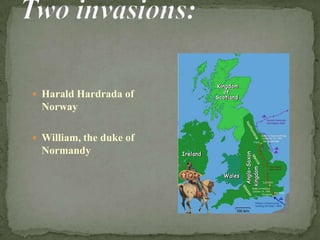
 Harald Hardrada of
Norway
 William, the duke of
Normandy
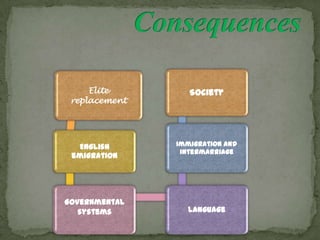
Elite
replacement
English
emigration
Governmental
systems Language
Immigration and
intermarriage
Society
Elite replacement
 Near-total elimination of the old English aristocracy.
 Loss of English control over the Catholic Church in
England.
 Natives purged from high governmental and
ecclesiastical office, replaced by Normans
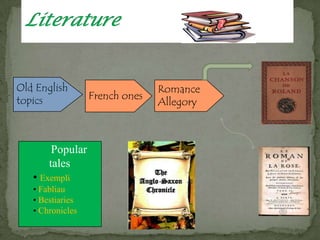
Old English
topics French ones
Romance
Allegory
Popular
tales
• Exempli
• Fabliau
• Bestiaries
• Chronicles
 Intermarriage common among all levels of society
 Population  Bigger cities and townsRural
 Society changed.
 Kept the country profitable
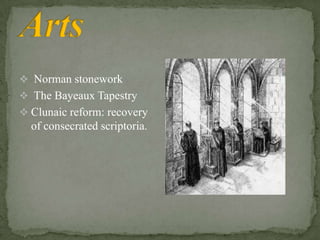
 Norman stonework
 The Bayeaux Tapestry
 Clunaic reform: recovery
of consecrated scriptoria.
Before the Normans arrived, Anglo-Saxon
governmental systems were more sophisticated than
their counterparts in Normandy. All of England was
divided into administrative units called shires, with
subdivisions; the royal court was the centre of
government, and royal courts existed to secure the
rights of free men. Shires were run by officials known
as shire reeves or sheriffs. England had a permanent
treasury at Winchester before William's conquest.
 One of the most obvious changes was the introduction of
Anglo-Norman, a northern dialect of Old French, as the
language of the classes in England, displacing Old
English. This predominance was further reinforced and
complicated in the mid-twelfth century by an influx of
followers of the Angevin dynasty, speaking a more
mainstream dialect of French.
 800AD – 1100 AD
 Origins: The Bizantine
Empire
 New kind of buildings,
materials and techniques
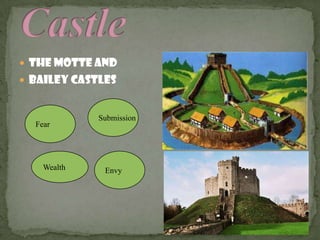
 The Motte and
 Bailey Castles
Fear
Submission
Wealth Envy
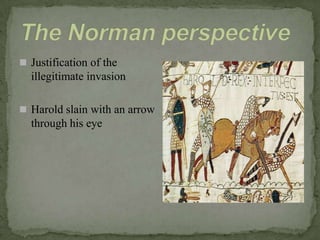
 Justification of the
illegitimate invasion
 Harold slain with an arrow
through his eye
 Elite replacement
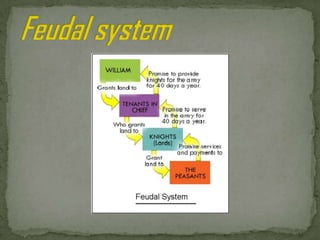
 Change on governmental system Feudalism
 Language: Crenchó – Latin – English
 Castles introduced in England
 Laws passed to give normans more power
 Change of buildings’ style
 Army occupation in much of the country
 English bishops and monks  Norman bishops and
monks
The Norman Conquest was the last successful invasion of
England by a foreign claimant. Others have tried – such as
the Spanish, the French, the Germans – are failed. We can
therefore look back on the Norman Conquest as helping to
shape the England of the present. The importance of 1066
is seen in the permanence of those changes.
Norman conquest (3)

Norman conquest (3)

  • 1.
    Normanization of England Presentedby: Presented to: Chandan datta(12216007) Keya Chakraborty Sathi afroz(12216004) Lecturer Farhana mosharof(12216010) Department of English Umme kulsum(12216001) University of Asia Pacific Fauzia akter Bippi(12216013) Semester 1/2(spring) Department of English University of Asia Pacific
  • 2.
    In 911, Frenchruler Charles the Simple allowed a group of Vikings to settle in northern France, a region that was experiencing extensive Viking resettlement. Their settlement proved successful, and the Vikings in the region became known as the Northmen(i.e. Norman) from which the place name Normandy is derived.
  • 4.
    Events in theNorman Conquest
  • 5.
     William I,the Conqueror (1066-87)  William II, Rufus (1087-1100)  Henry I, Beauclerc (1100-35)  Stephen (1135-54)  Empress Matilda (1141)  Henry II, Curt mantle (1154-89)  Richard I, the Lion heart (1189-99)  John, Lockland (1199-1216)  Henry III (1216-72)  Edward I, Long shanks (1272-1307)  Edward II (1307-27)  Edward III (1327-77)  Richard II (1377-99)
  • 6.
     Death ofking: Edward the confessor January 1066  Succession: Harold Godwinson Bother-in-law of Edward
  • 7.
    William assembled alarge invasion fleet and an army gathered from Normandy and all over France, including large contingents from Brittany and Flanders. He mustered his forces at Saint-Valery-sur-Somme and was ready to cross the Channel by about 12 August. The exact numbers and composition of William's force are unknown.A contemporary document claims that William had 726 ships, but this may be an inflated figure . Although the army and fleet were ready by early August, adverse winds kept the ships in Normandy until late September. There were probably other reasons for William's delay, including intelligence reports from England revealing that Harold's forces were deployed along the coast. William would have preferred to delay the invasion until he could make an unopposed landing.
  • 8.
     He washalf-Norman by birth and had spent most of his life in Normandy; he appointed Normans to important positions in the state . England was already half 'Normanized' before the Norman Conquest of 1066.  Across the Channel in Normandy, а loud protest was heard. According to Duke William, Edward the Confessor had made the same promise to him; what was more, Harold had already accepted William's claim during а visit to Normandy two years before.
  • 9.
    „ 14 October1066 Army of 20000 Norman warriors  Combination of different arms  Offensive strategy
  • 10.
    Harold's army wasbadly depleted in the English victory at the Battle of Stamford Bridge in Northern England on 25 September 1066 over the army of King Harald III of Norway. By early 1071, William had secured control of most of England, although rebellions and resistance continued to approximately 1088.
  • 11.
     The secondmost powerful man in England and an advisor to Edward.  With this kingly endorsement, the Witan (the council of royal advisors) unanimously selected Harold as King
  • 12.
     Hardrada ofNorway struck first. In mid September, Hardrada's invasion force landed on the Northern English coast.  Defeated by Harold  Resting after his victory, Harold received word of William's landing near Hastings.
  • 13.
     William sweptacross the Channel with his army and landed near Hastings. Harold was in the north, where he invasiond just defeated а Norse, but he hurried south and, brave but foolish, offered battle. His men were tired and he would have done better to have starved the Normans out. Still, his position on а hill was а strong one, until the Normans, pretending to r un away, lured the English down the hill.
  • 14.
     Harald Hardradaof Norway  William, the duke of Normandy
  • 15.
  • 16.
    Elite replacement  Near-totalelimination of the old English aristocracy.  Loss of English control over the Catholic Church in England.  Natives purged from high governmental and ecclesiastical office, replaced by Normans
  • 17.
    Old English topics Frenchones Romance Allegory Popular tales • Exempli • Fabliau • Bestiaries • Chronicles
  • 18.
     Intermarriage commonamong all levels of society  Population  Bigger cities and townsRural  Society changed.  Kept the country profitable
  • 19.
     Norman stonework The Bayeaux Tapestry  Clunaic reform: recovery of consecrated scriptoria.
  • 20.
    Before the Normansarrived, Anglo-Saxon governmental systems were more sophisticated than their counterparts in Normandy. All of England was divided into administrative units called shires, with subdivisions; the royal court was the centre of government, and royal courts existed to secure the rights of free men. Shires were run by officials known as shire reeves or sheriffs. England had a permanent treasury at Winchester before William's conquest.
  • 22.
     One ofthe most obvious changes was the introduction of Anglo-Norman, a northern dialect of Old French, as the language of the classes in England, displacing Old English. This predominance was further reinforced and complicated in the mid-twelfth century by an influx of followers of the Angevin dynasty, speaking a more mainstream dialect of French.
  • 23.
     800AD –1100 AD  Origins: The Bizantine Empire  New kind of buildings, materials and techniques
  • 24.
     The Motteand  Bailey Castles Fear Submission Wealth Envy
  • 25.
     Justification ofthe illegitimate invasion  Harold slain with an arrow through his eye
  • 26.
     Elite replacement Change on governmental system Feudalism  Language: Crenchó – Latin – English  Castles introduced in England  Laws passed to give normans more power  Change of buildings’ style  Army occupation in much of the country  English bishops and monks  Norman bishops and monks
  • 27.
    The Norman Conquestwas the last successful invasion of England by a foreign claimant. Others have tried – such as the Spanish, the French, the Germans – are failed. We can therefore look back on the Norman Conquest as helping to shape the England of the present. The importance of 1066 is seen in the permanence of those changes.