The Next Generation (of) IT
A guide to the enterprise IT revolution

Uwe Friedrichsen, codecentric AG, 2012-2014
@ufried
Uwe Friedrichsen | uwe.friedrichsen@codecentric.de | http://slideshare.net/ufried | http://ufried.tumblr.com
Once upon a time …
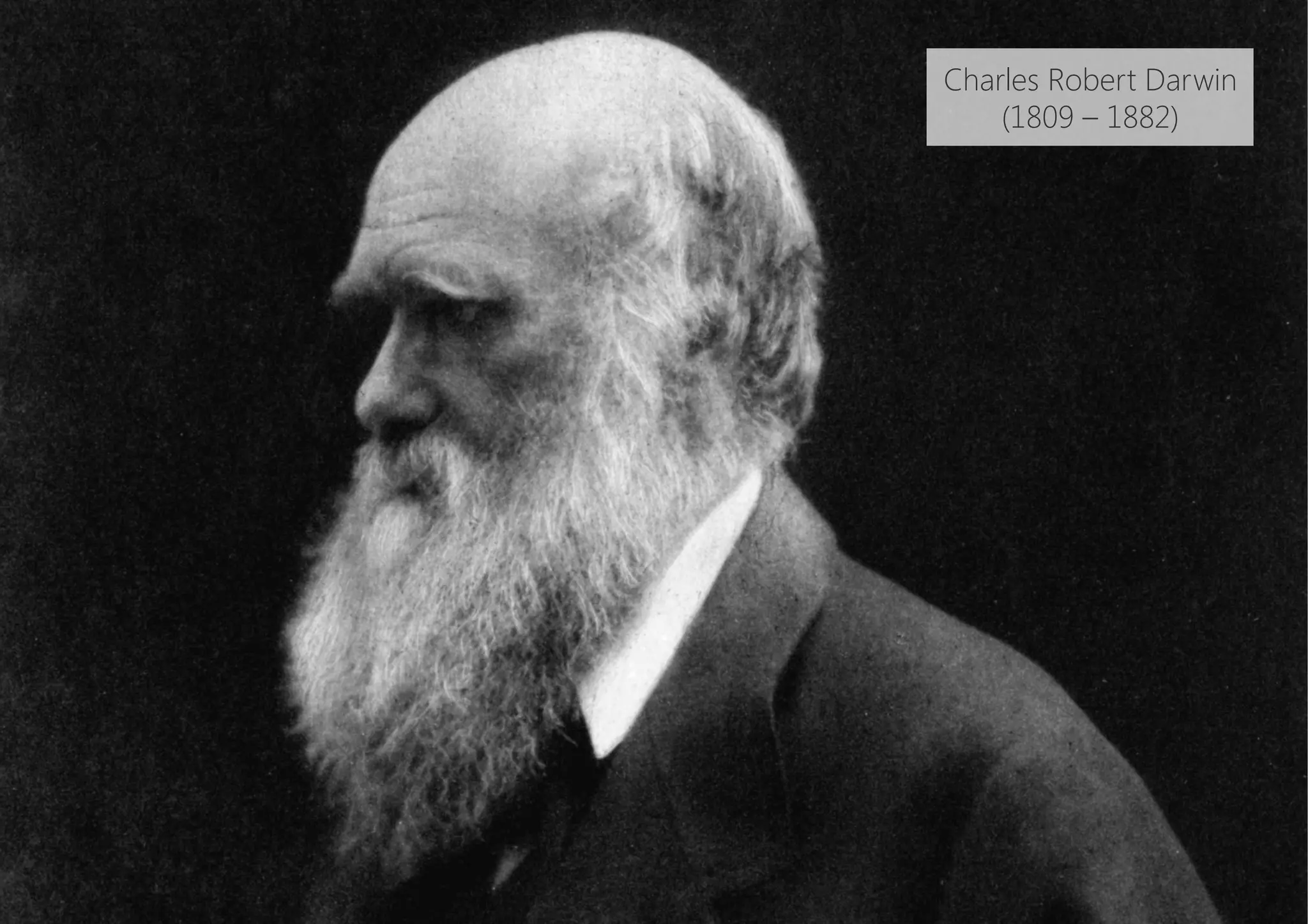
Charles Robert Darwin
(1809 – 1882)
„Survival of the Fittest“
fitness (ˈfɪtnɪs), n

1.  the state of being fit
2.  (Biology) biology
a.  the degree of adaptation of an organism to its
environment, determined by its genetic constitution
b.  the ability of an organism to produce viable offspring
capable of surviving to the next generation

Collins English Dictionary – Complete and Unabridged © HarperCollins Publishers
1991, 1994, 1998, 2000, 2003


http://www.thefreedictionary.com/fitness
Economic Darwinism
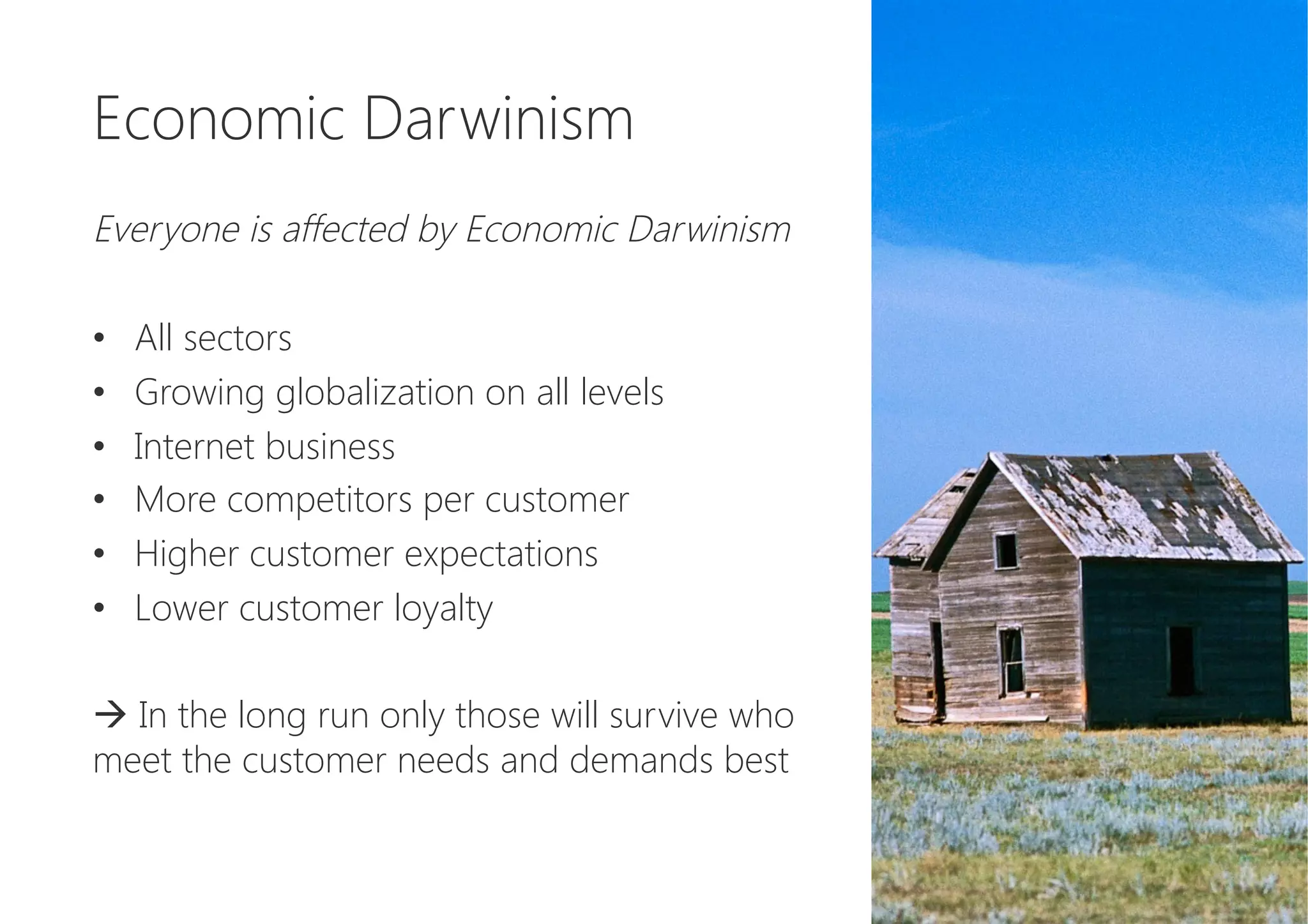
Economic Darwinism

Everyone is affected by Economic Darwinism

•  All sectors
•  Growing globalization on all levels
•  Internet business
•  More competitors per customer
•  Higher customer expectations
•  Lower customer loyalty

à In the long run only those will survive who
meet the customer needs and demands best
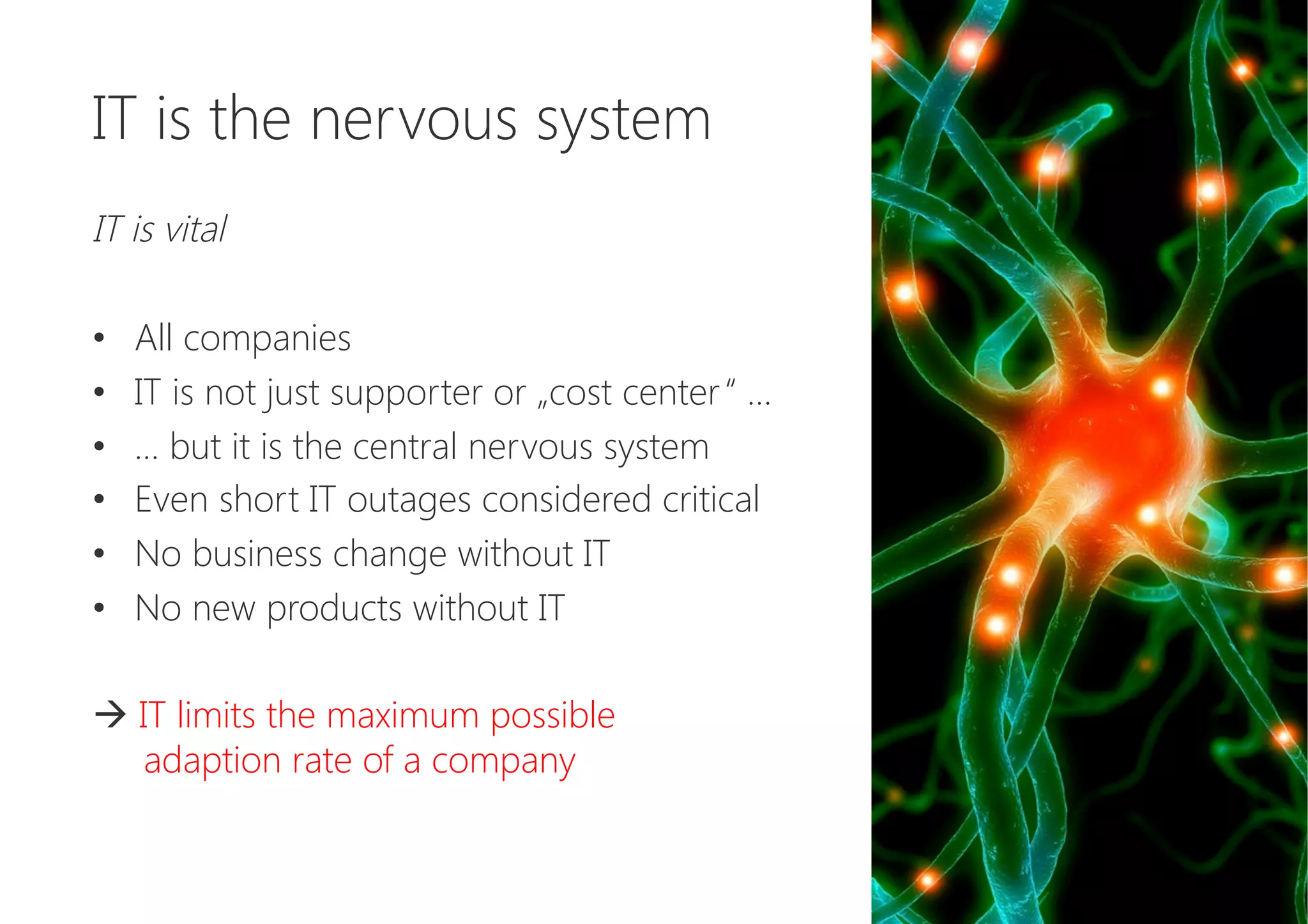
IT is the nervous system

IT is vital

•  All companies
•  IT is not just supporter or „cost center“ …
•  … but it is the central nervous system
•  Even short IT outages considered critical
•  No business change without IT
•  No new products without IT

à IT limits the maximum possible

adaption rate of a company
IT is a key success factor for belonging to
the survivors of the economic darwinism
What business needs from IT …
How IT serves business …
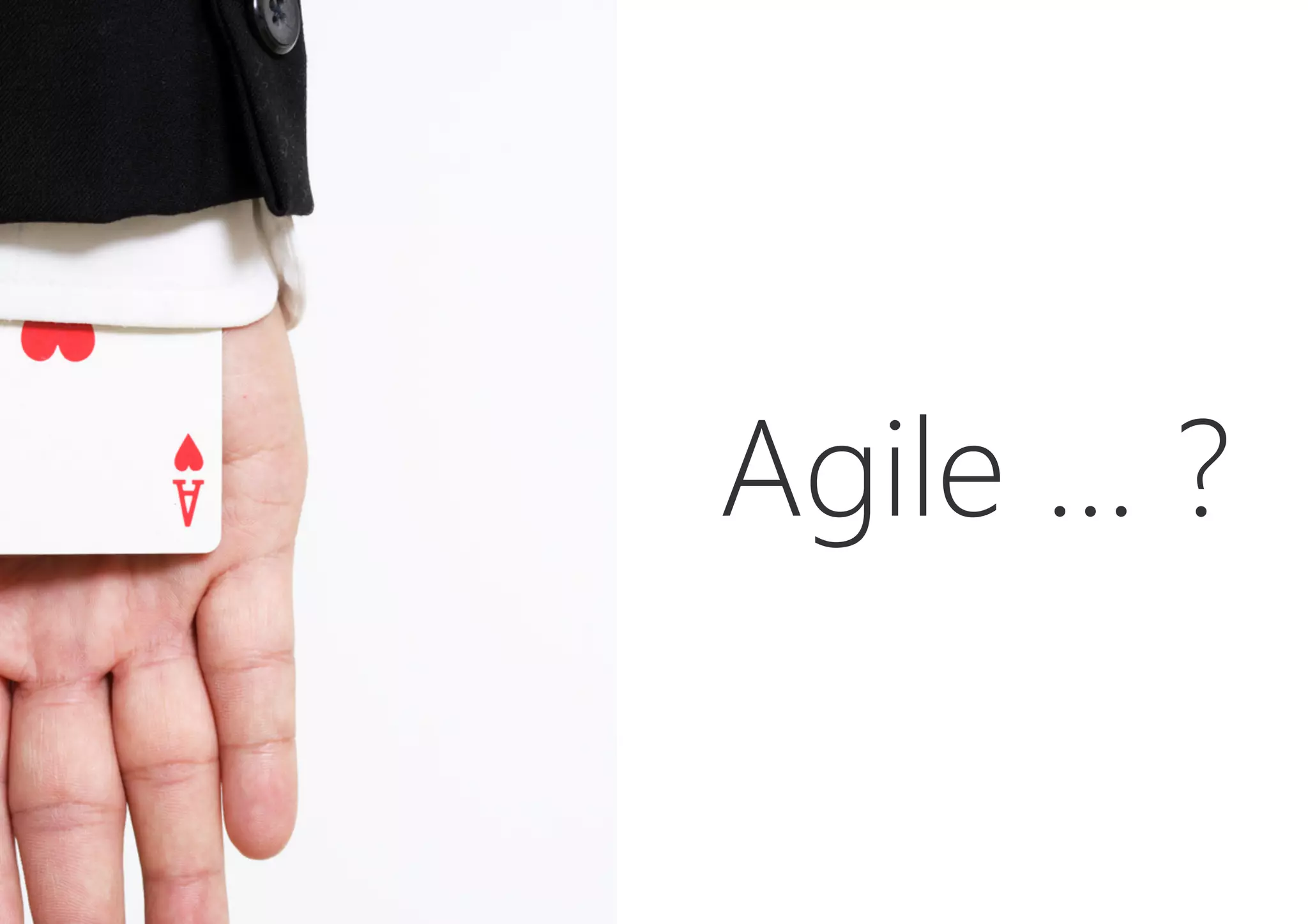
Agile !
… ?
Source: Dein Freund der Baum
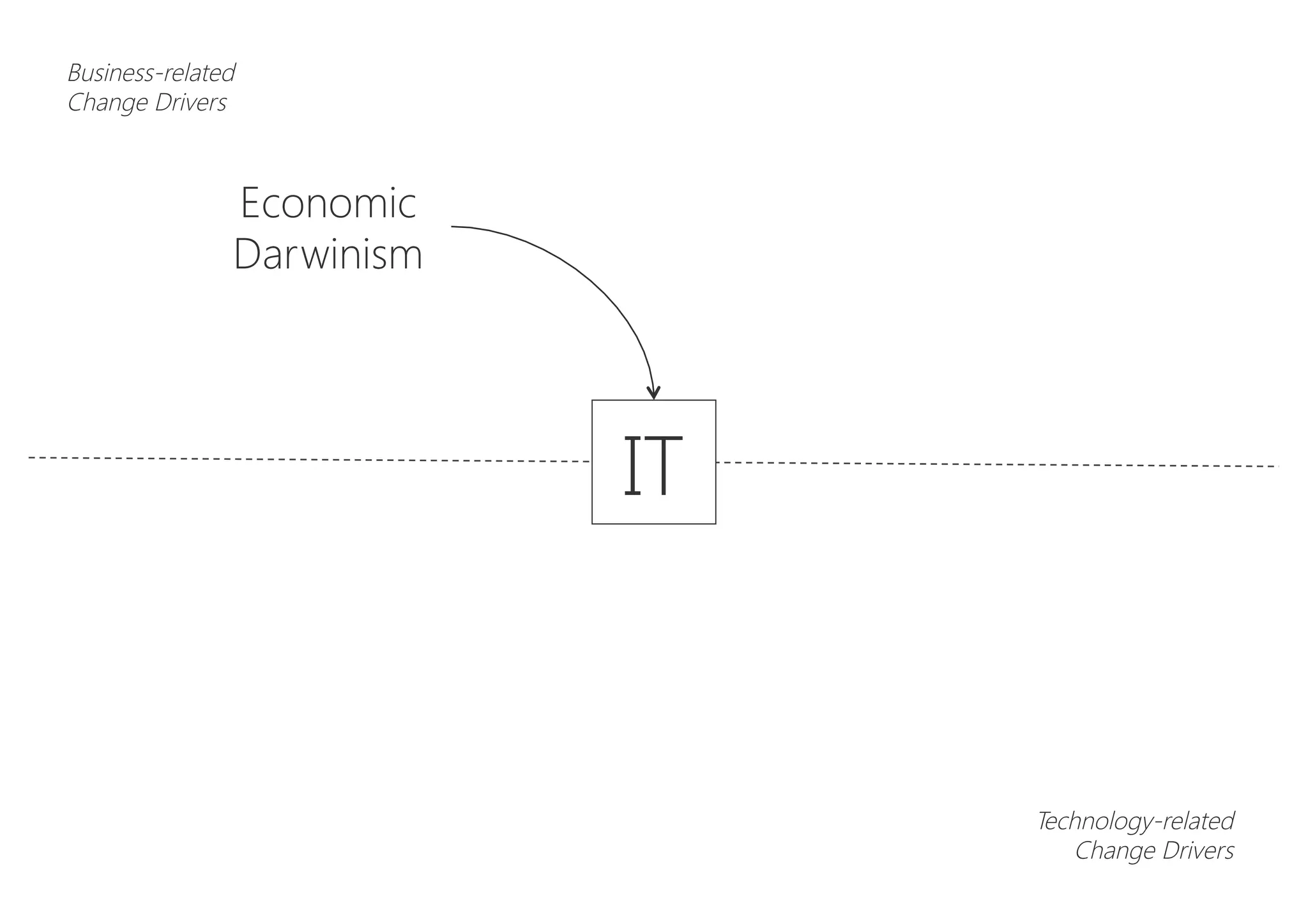
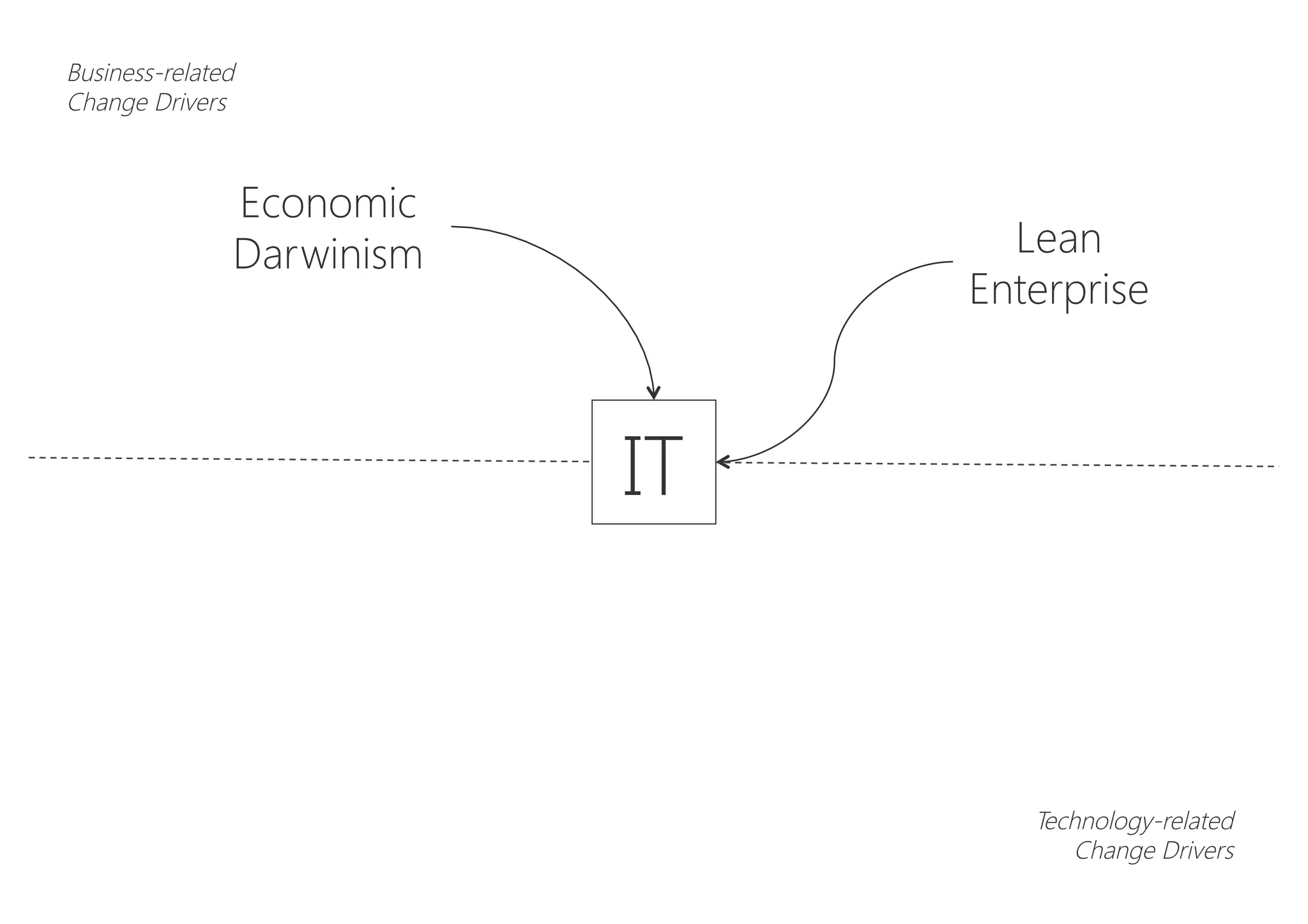
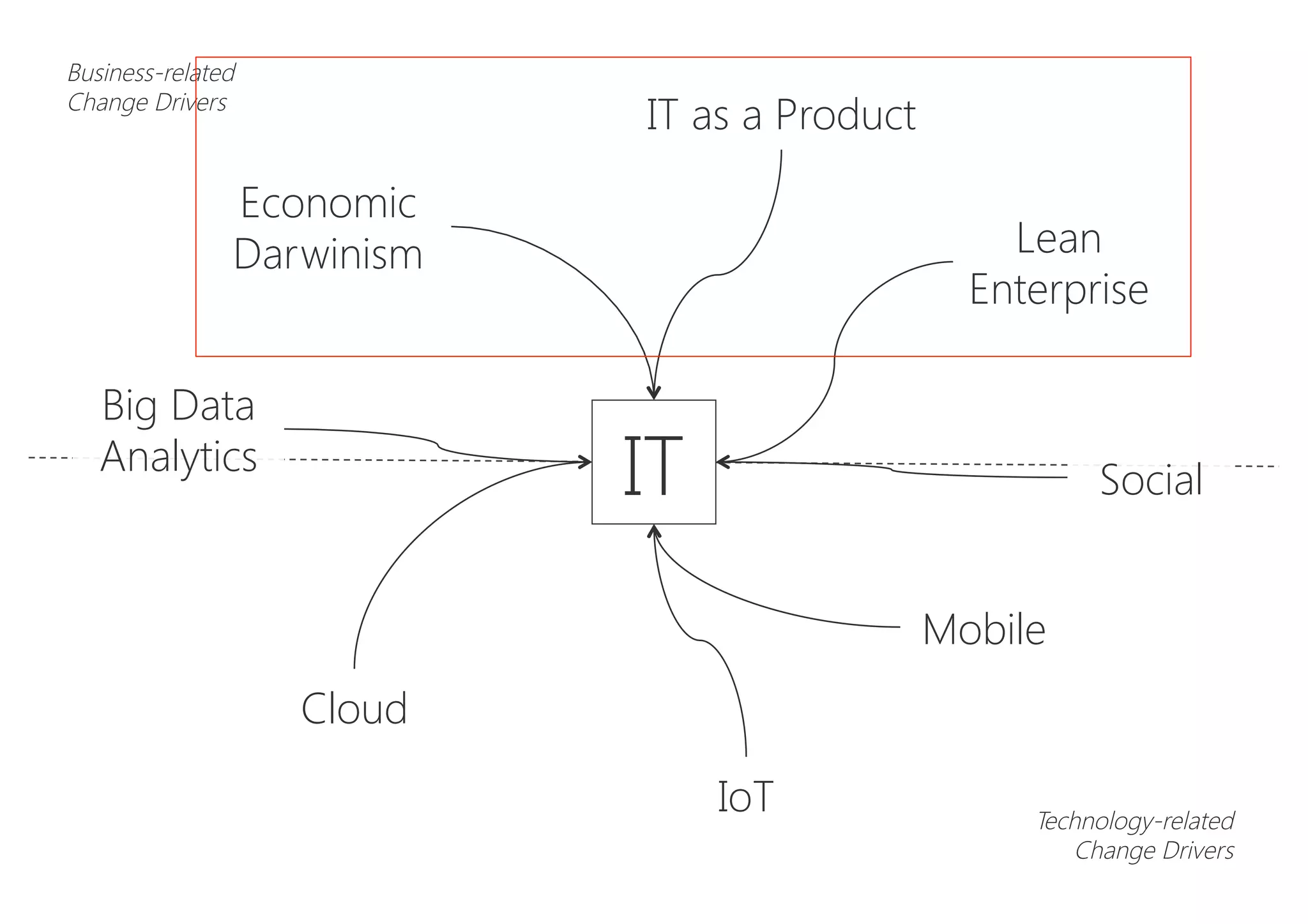
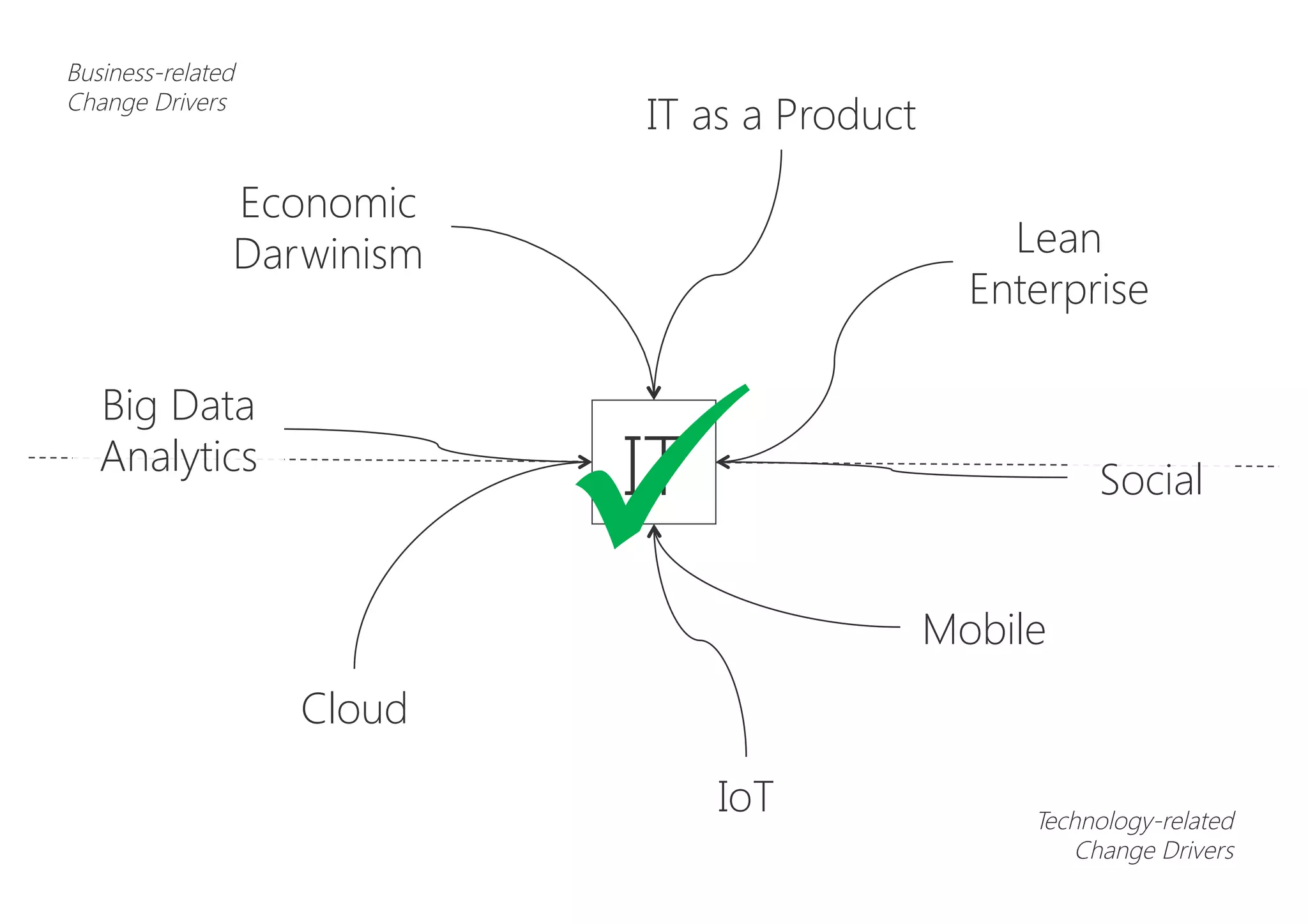
Economic
Darwinism
Business-related
Change Drivers
IT
Technology-related
Change Drivers
But there is more …
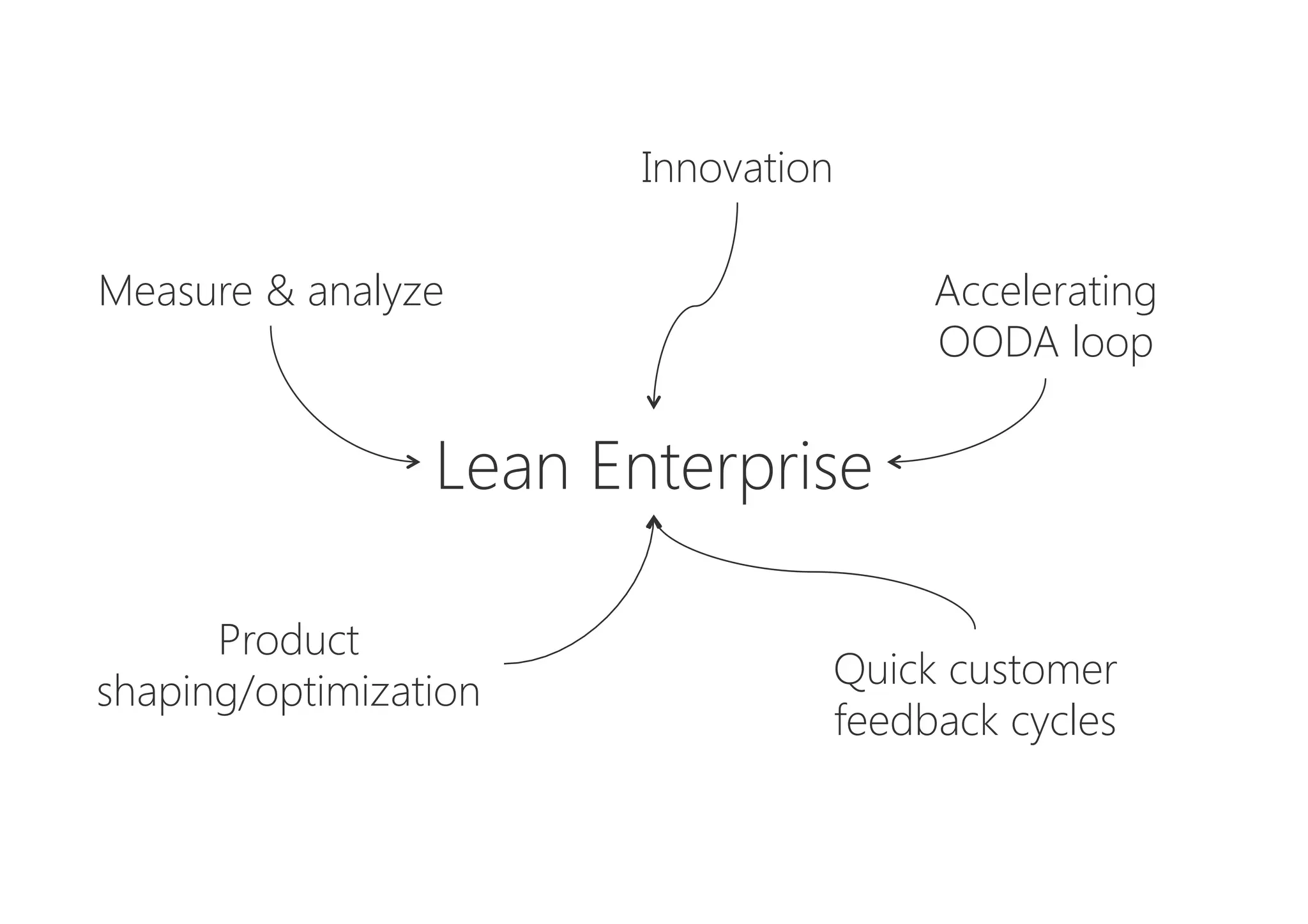
Lean Enterprise
Product

shaping/optimization
Innovation
Measure & analyze
 Accelerating
OODA loop
Quick customer
feedback cycles
Economic
Darwinism
Business-related
Change Drivers
Lean
Enterprise
IT
Technology-related
Change Drivers
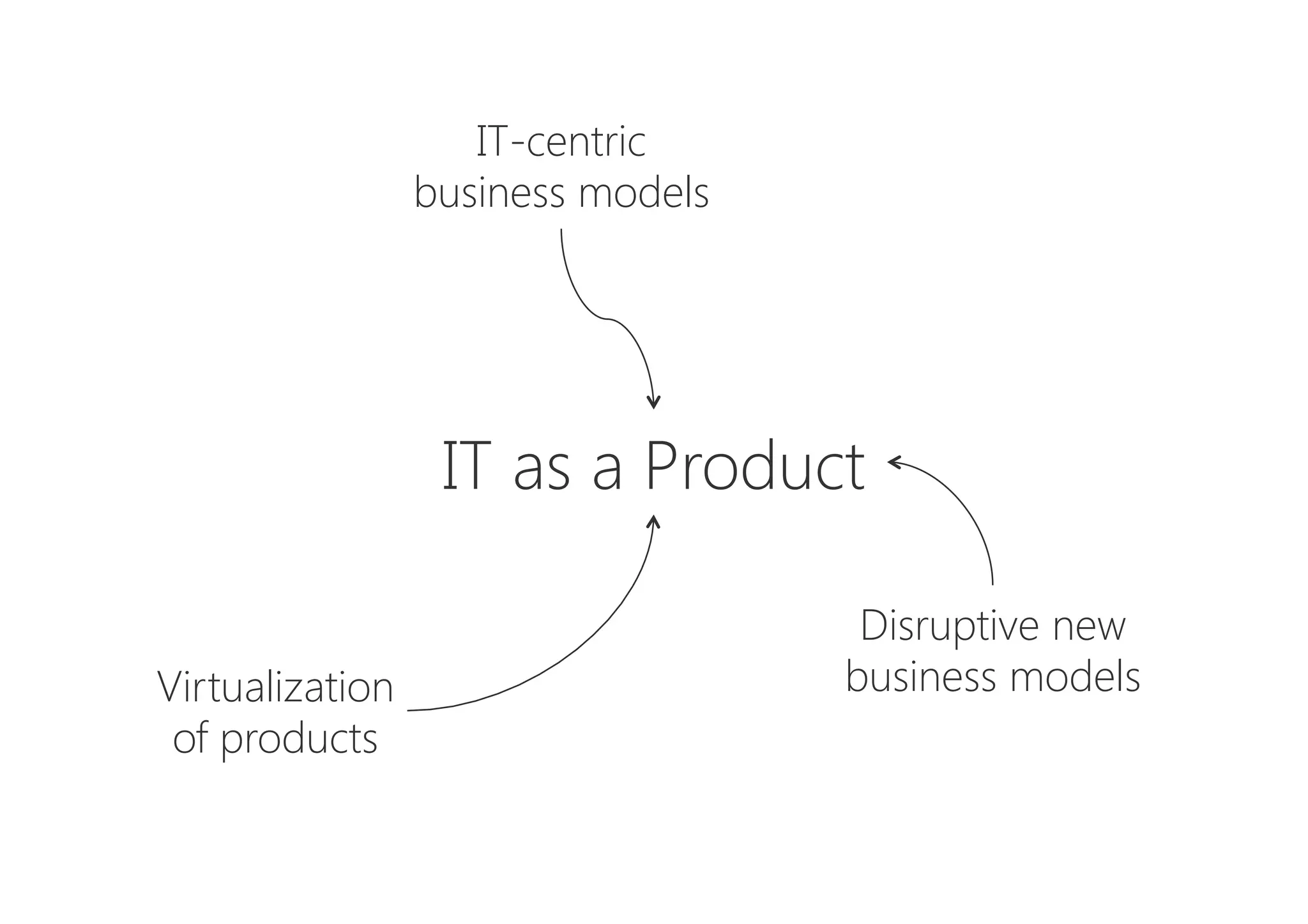
IT as a Product
Virtualization
of products
IT-centric
business models
Disruptive new
business models
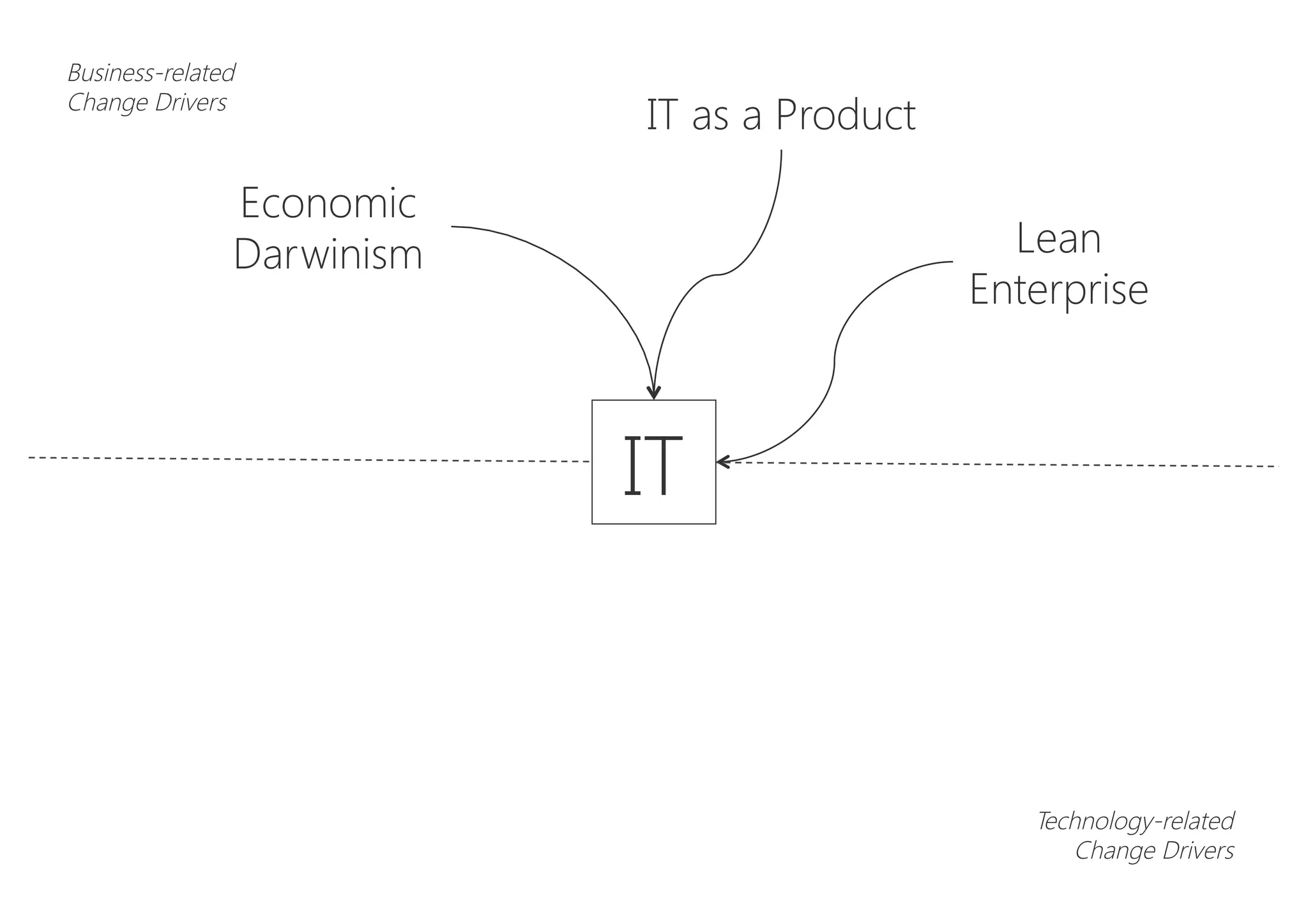
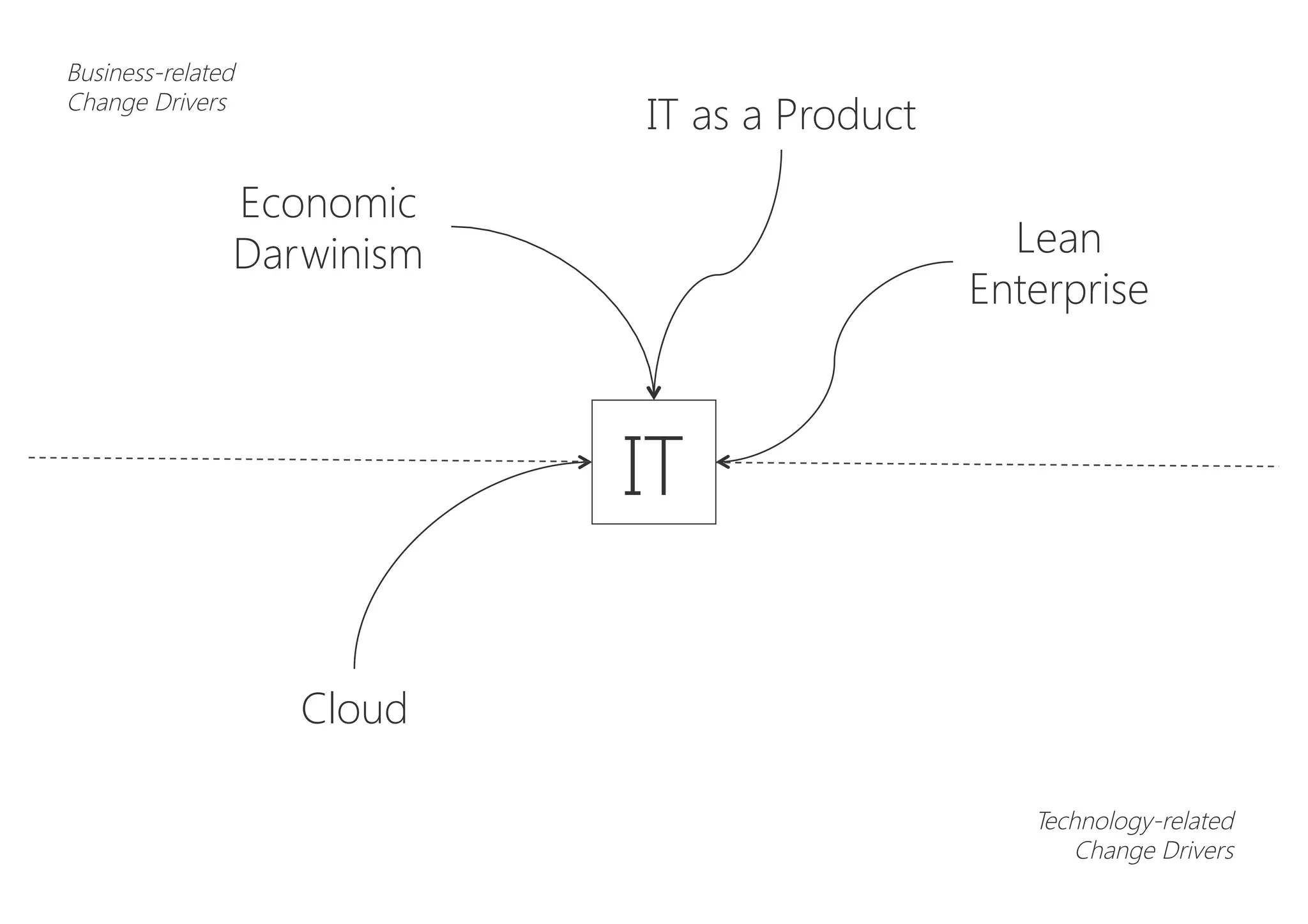
Economic
Darwinism
Business-related
Change Drivers
Lean
Enterprise
IT as a Product
IT
Technology-related
Change Drivers
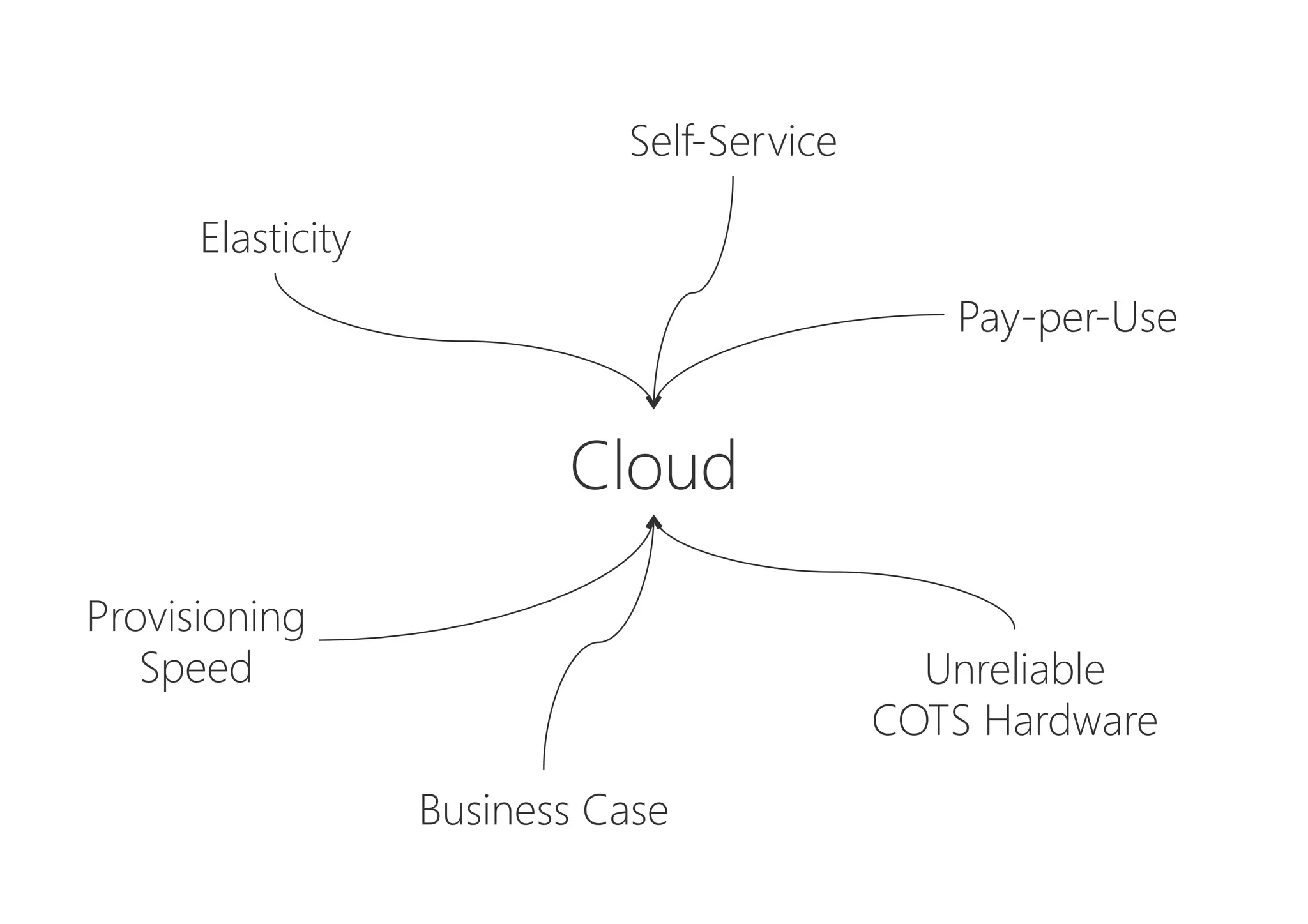
Pay-per-Use
Business Case
Self-Service
Cloud
Elasticity
Unreliable

COTS Hardware
Provisioning
Speed
Economic
Darwinism
Business-related
Change Drivers
Lean
Enterprise
IT as a Product
Cloud
IT
Technology-related
Change Drivers
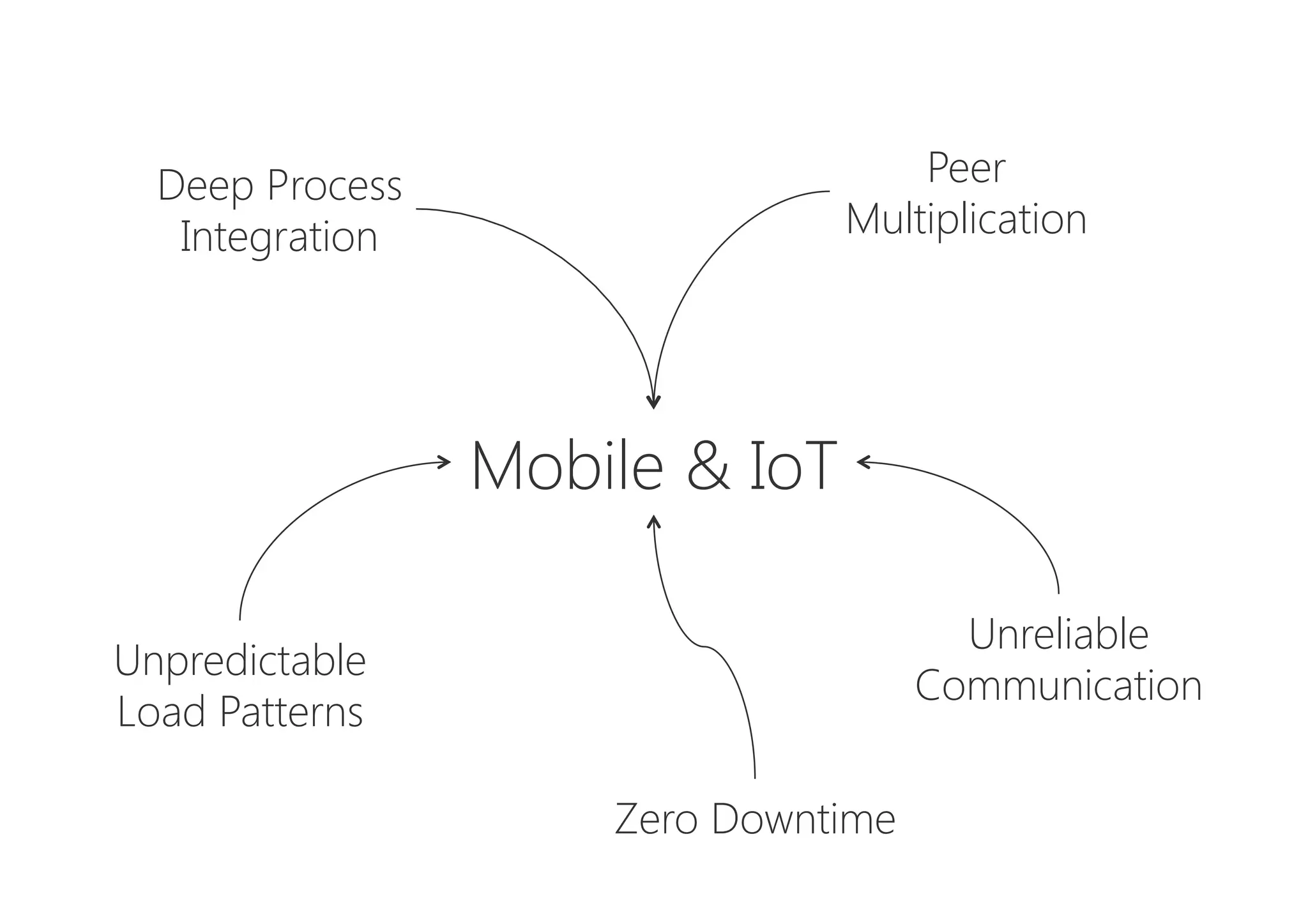
Zero Downtime
Peer
Multiplication 
Mobile & IoT
Deep Process
Integration
Unreliable

Communication
Unpredictable
Load Patterns
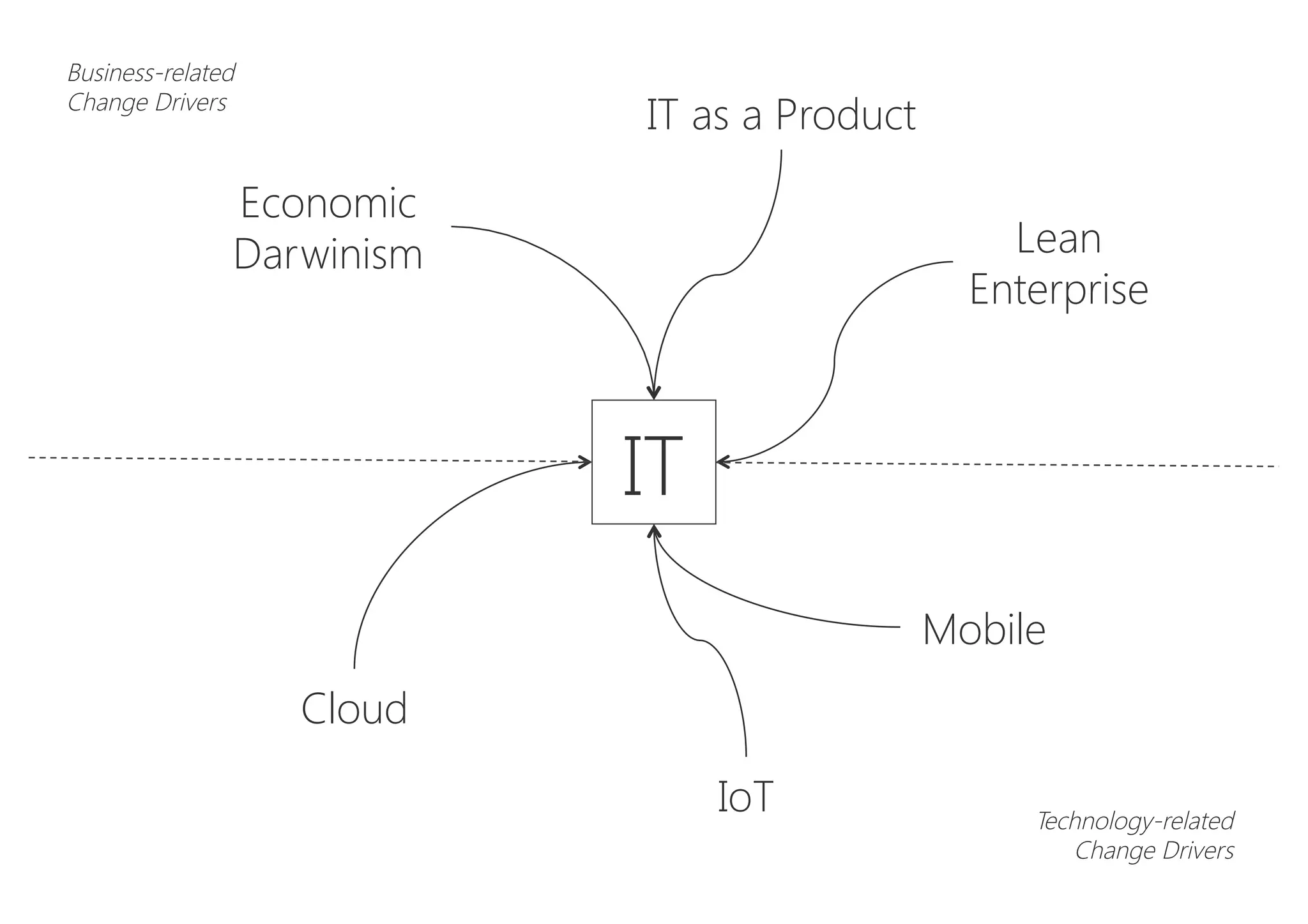
Economic
Darwinism
Business-related
Change Drivers
Lean
Enterprise
IT as a Product
Cloud
IoT
Mobile
IT
Technology-related
Change Drivers
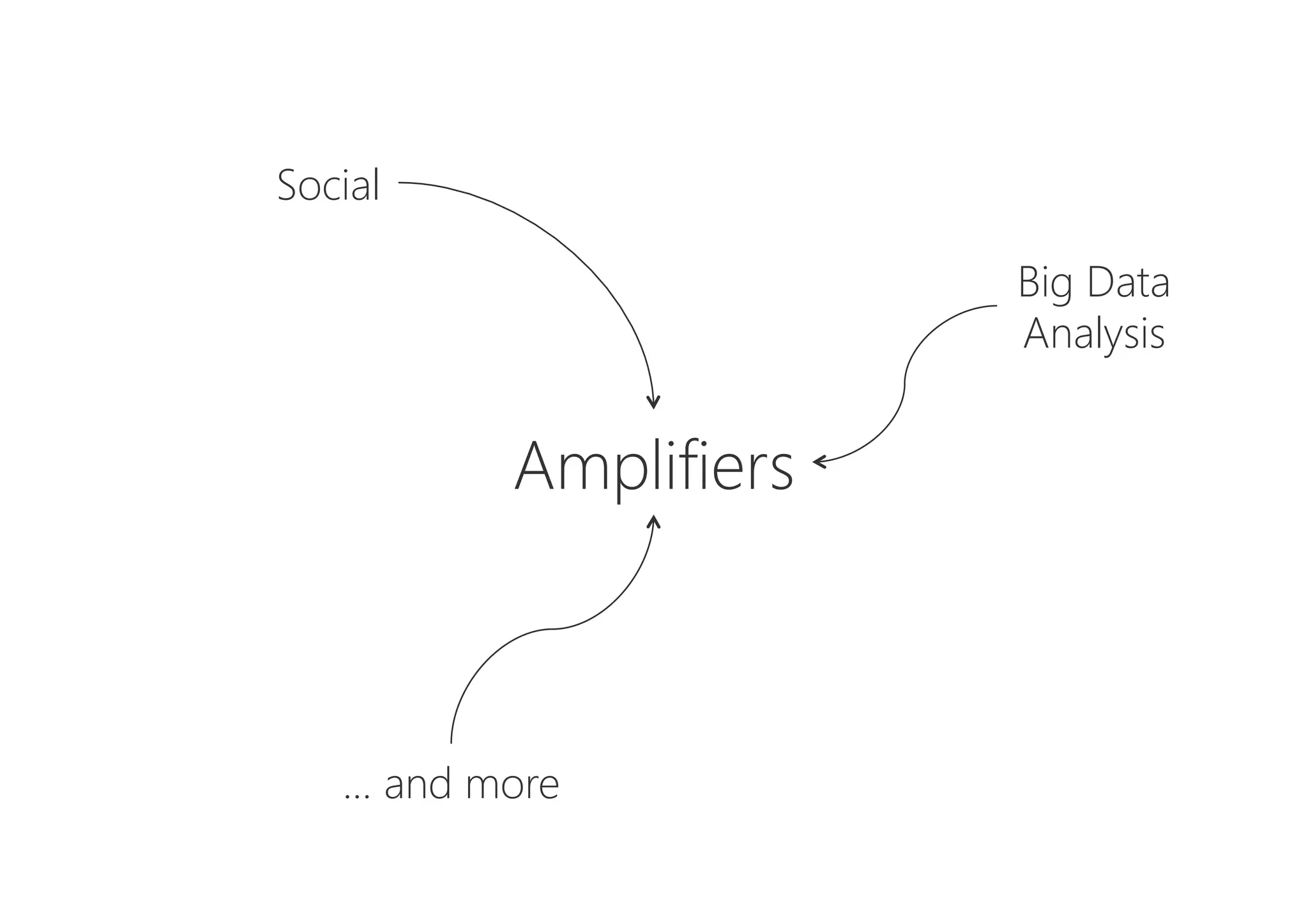
… and more
Big Data
Analysis
Amplifiers
Social
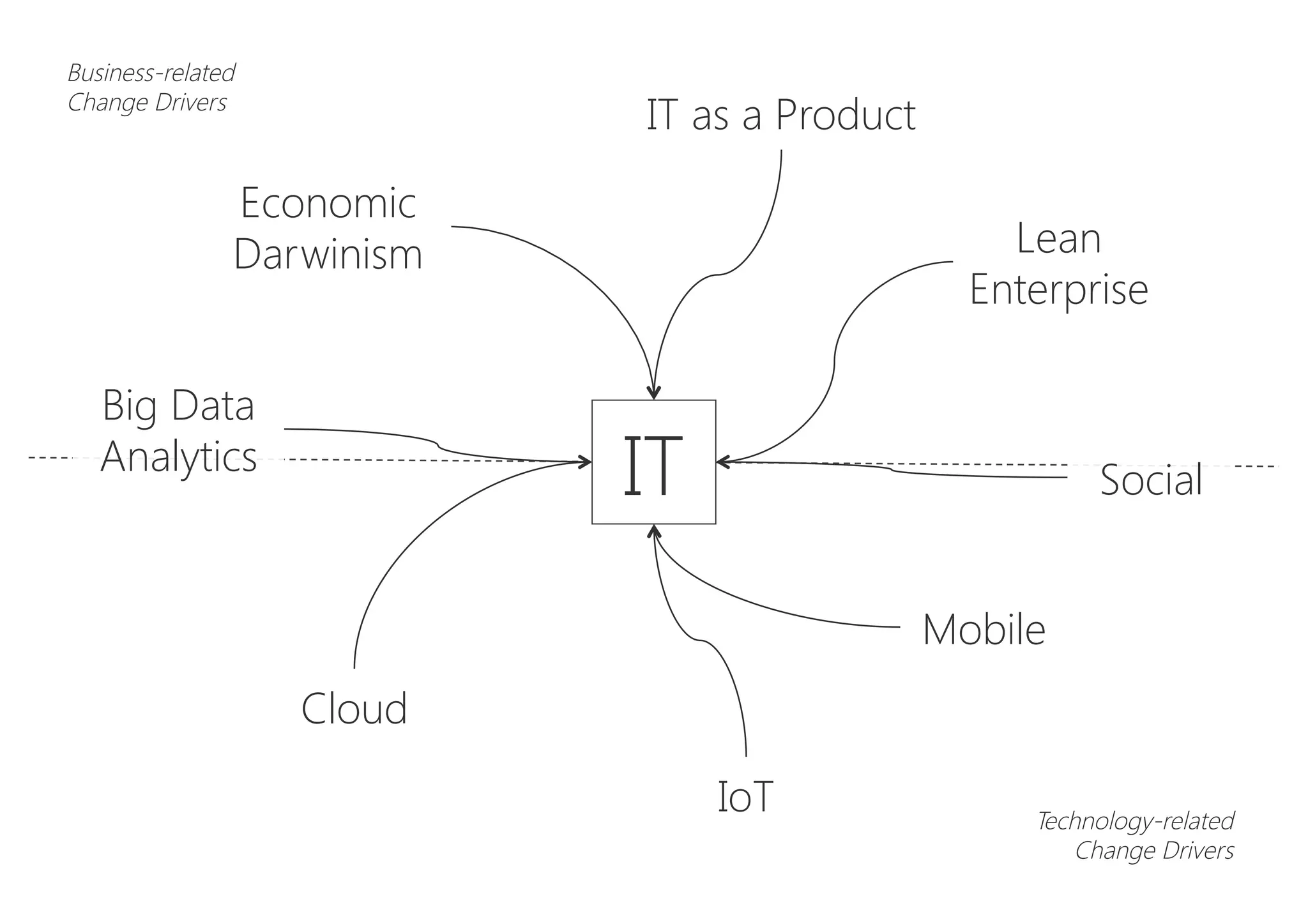
Economic
Darwinism
Business-related
Change Drivers
Lean
Enterprise
IT as a Product
Cloud
IoT
Mobile
IT
Big Data
Analytics
Social
Technology-related
Change Drivers
What has traditional IT to offer

to respond to those challenges?
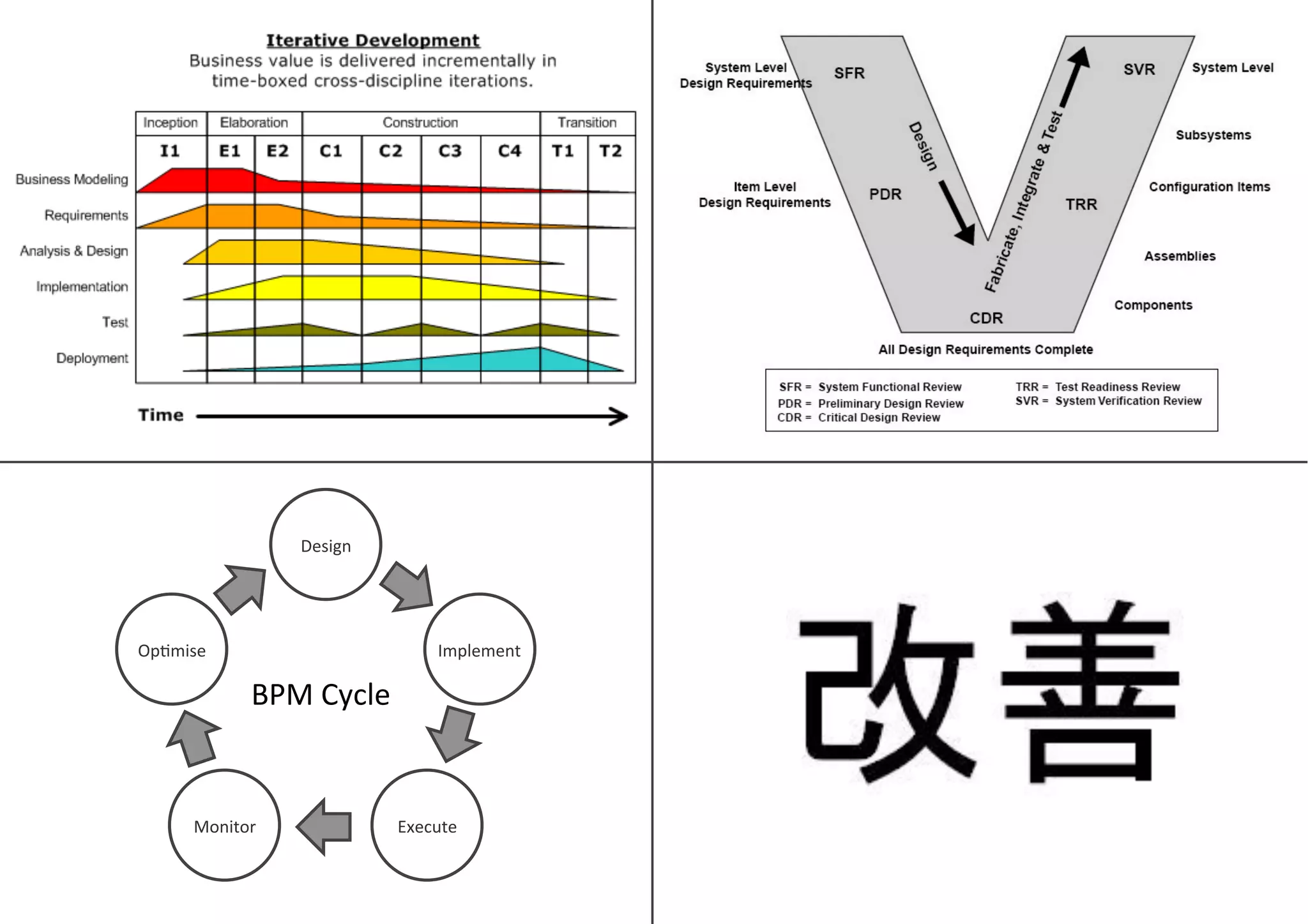
Design	
  
Implement	
  
Execute	
  Monitor	
  
Op5mise	
  
BPM	
  Cycle	
  
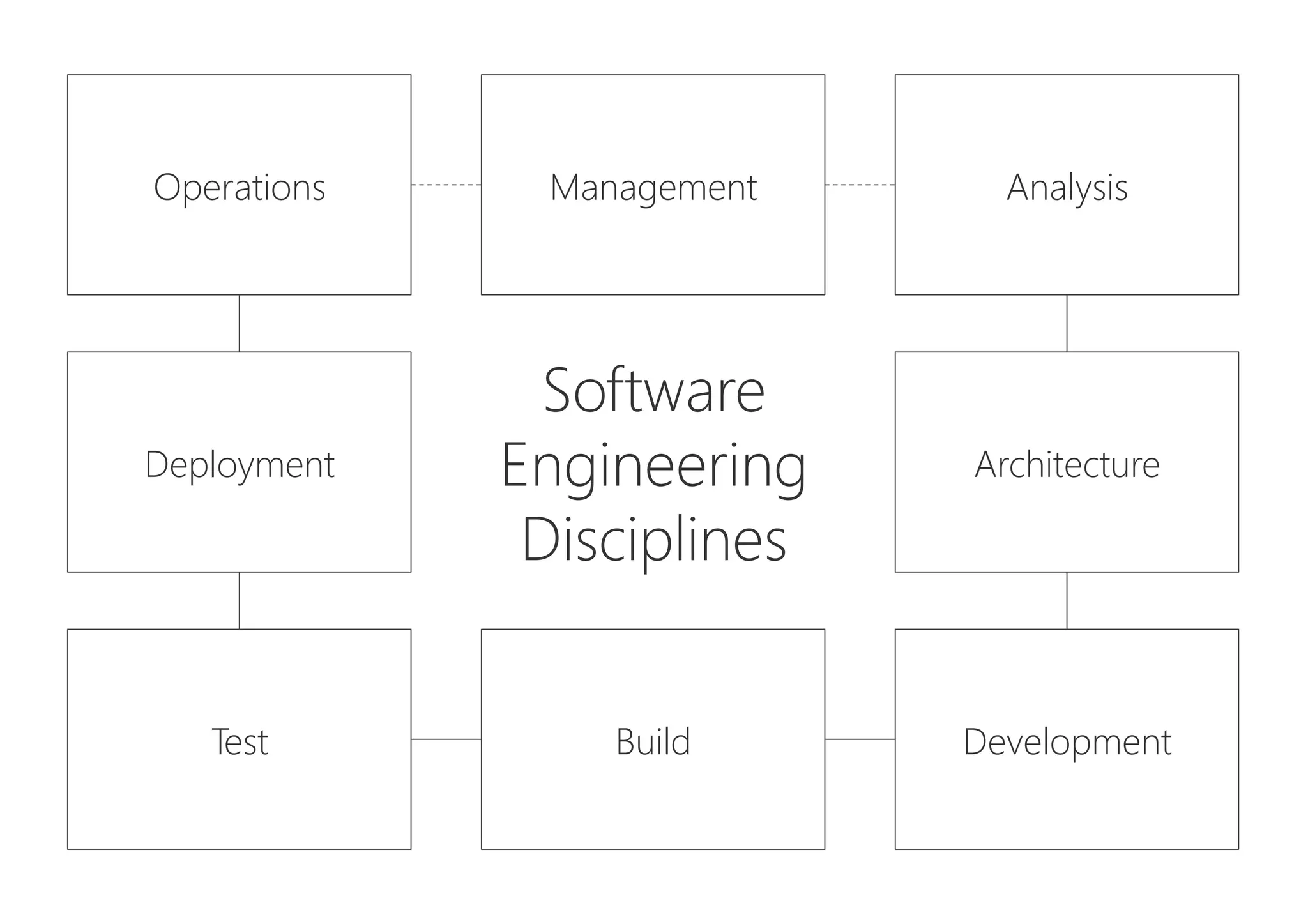
Analysis
Software
Engineering
Disciplines
Architecture
Development
Build
Test
Deployment
Operations
 Management
So, that should be easy for IT, right?
Then, why the @$#%! … ?
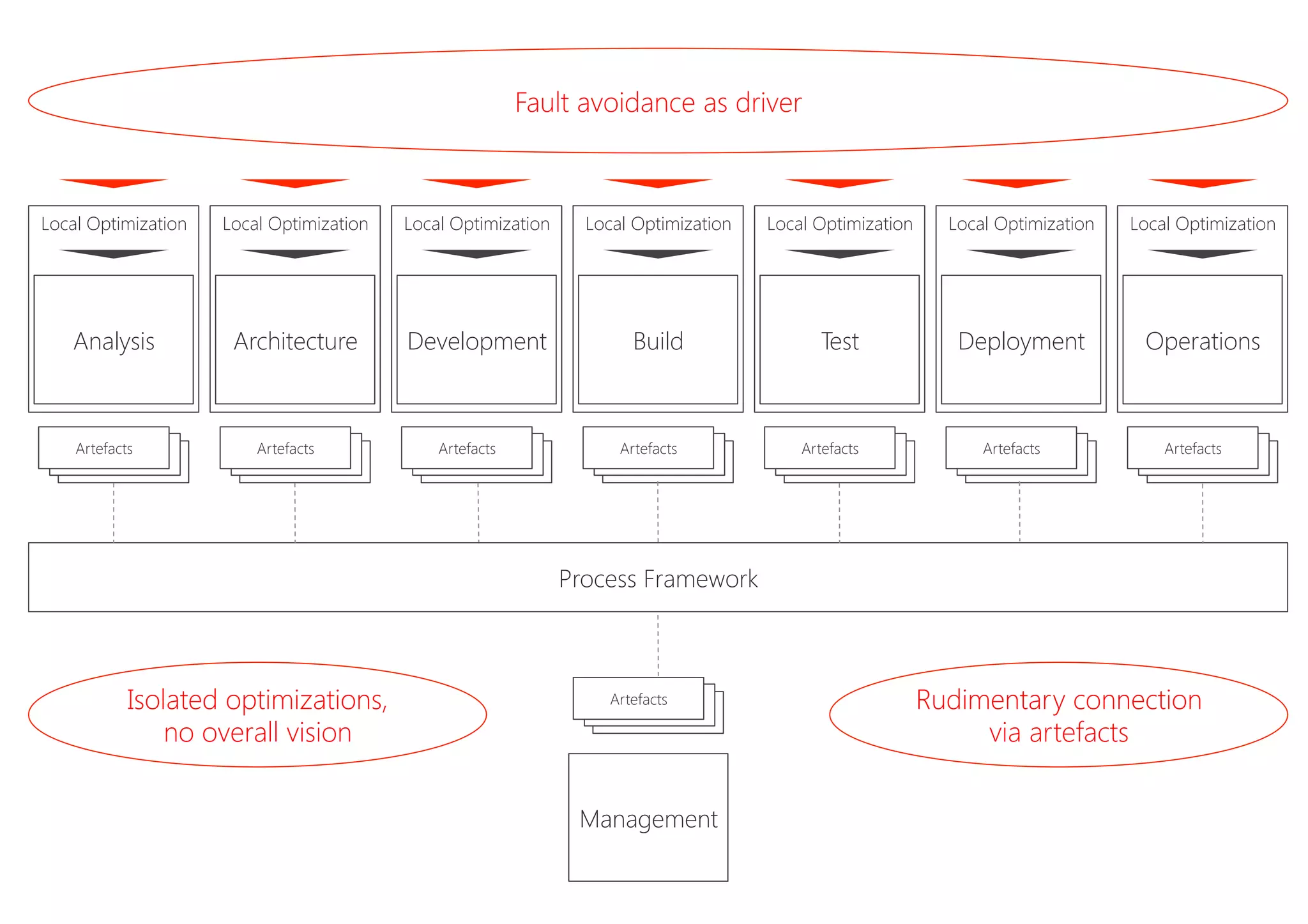
We base our optimization efforts

on the wrong goals and principles
Analysis
 Architecture
 Development
 Build
 Test
 Deployment
 Operations
Management
Local Optimization
Local Optimization
 Local Optimization
 Local Optimization
 Local Optimization
 Local Optimization
Local Optimization
Rudimentary connection
via artefacts
Isolated optimizations,
no overall vision
Fault avoidance as driver
Artefacts
Process Framework
Artefacts
 Artefacts
 Artefacts
 Artefacts
 Artefacts
 Artefacts
Artefacts
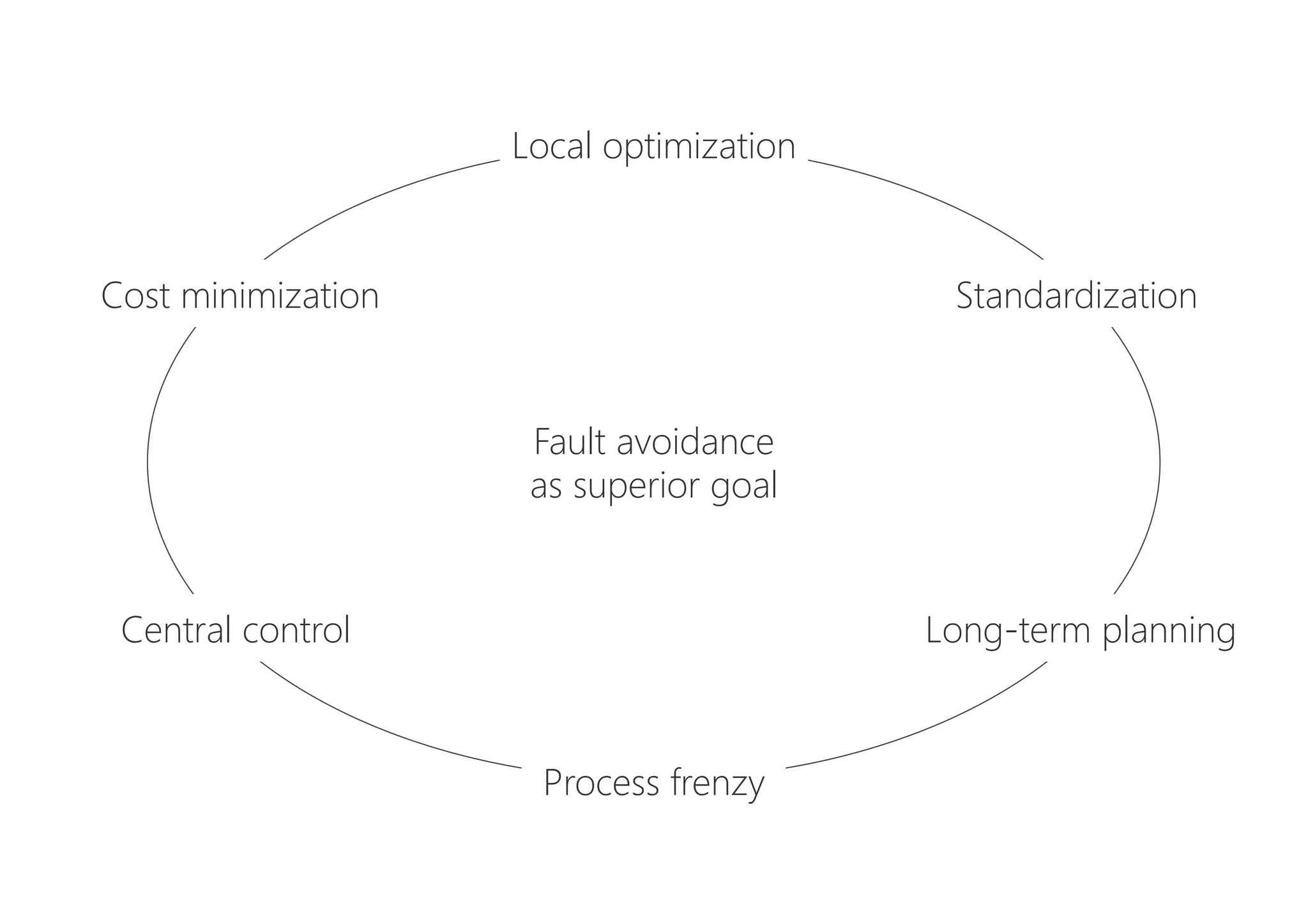
Fault avoidance
as superior goal
Local optimization
Cost minimization
Process frenzy
Long-term planning
Central control
Standardization
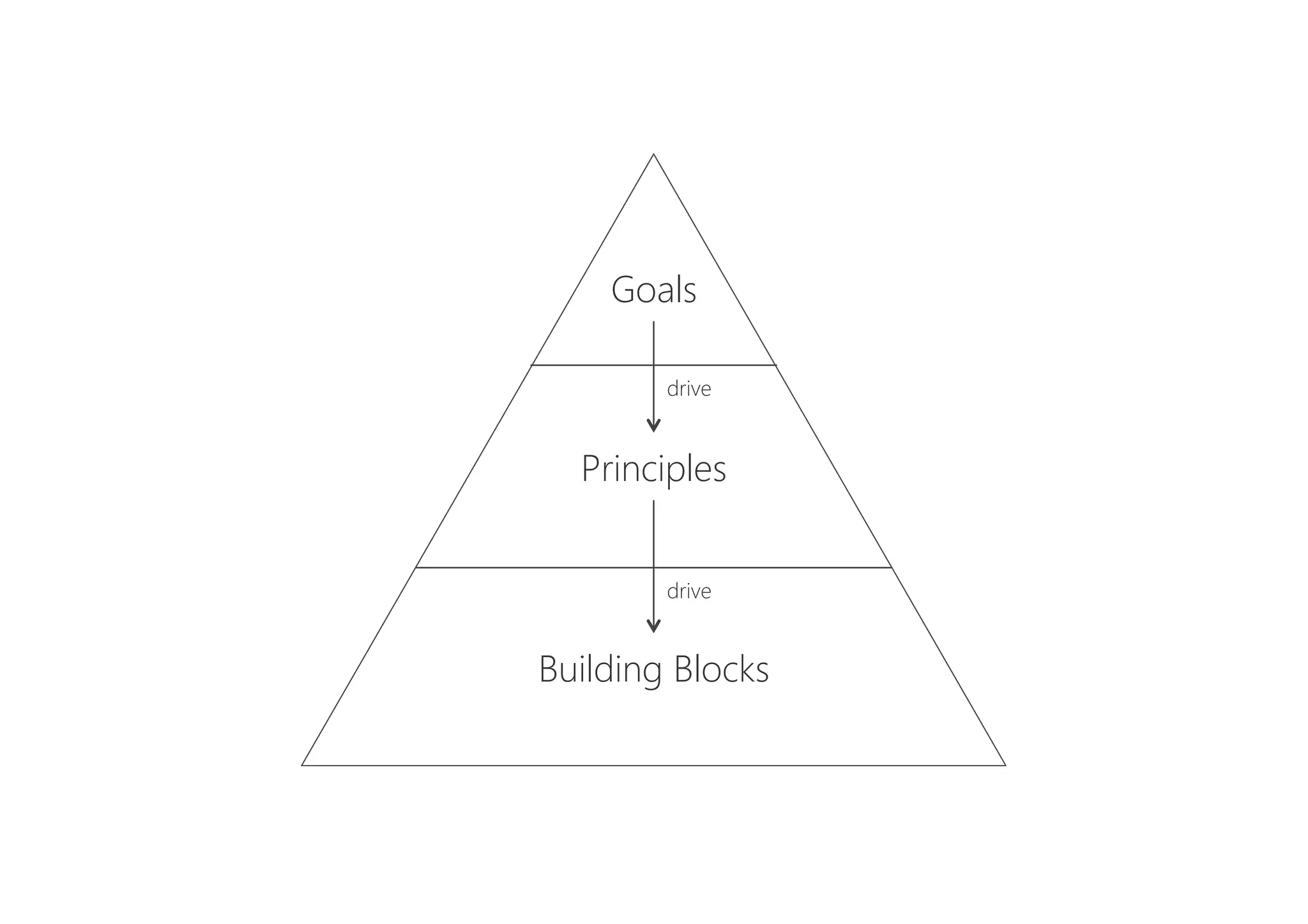
Goals
drive
Principles
drive
Building Blocks
What are the new goals?
Economic
Darwinism
Business-related
Change Drivers
Lean
Enterprise
IT as a Product
Cloud
IoT
Mobile
IT
Big Data
Analytics
Social
Technology-related
Change Drivers
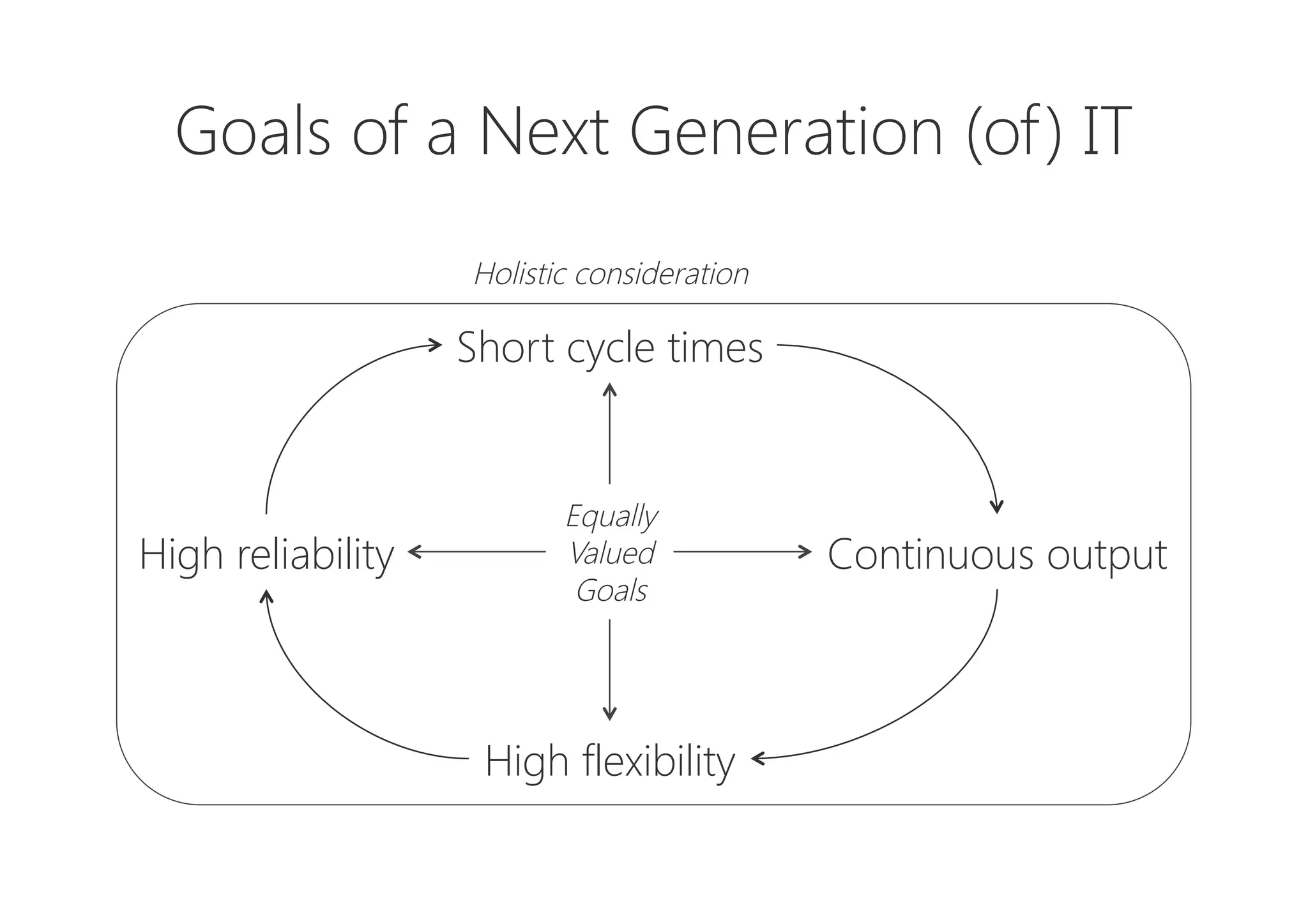
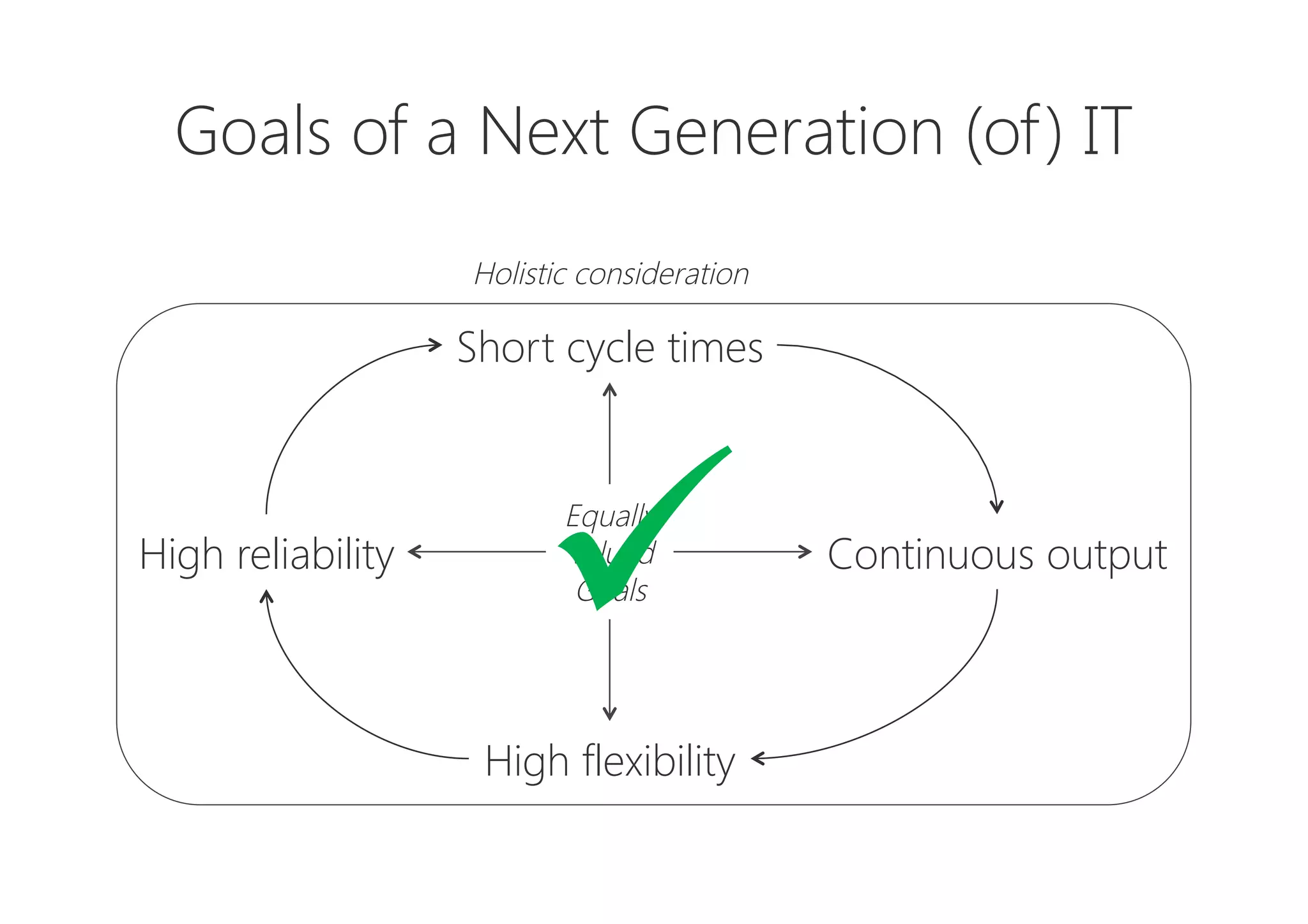
Short cycle times
Continuous output
High flexibility
High reliability
Equally
Valued
Goals
Holistic consideration
Goals of a Next Generation (of) IT
Where can we learn how to implement it?
Let’s learn from the wild ones
Economic
Darwinism
Business-related
Change Drivers
Lean
Enterprise
IT as a Product
Cloud
IoT
Mobile
IT
Big Data
Analytics
Social
Technology-related
Change Drivers
ü
Short cycle times
Continuous output
High flexibility
High reliability
Equally
Valued
Goals
Holistic consideration
Goals of a Next Generation (of) IT
ü
What are the new principles?
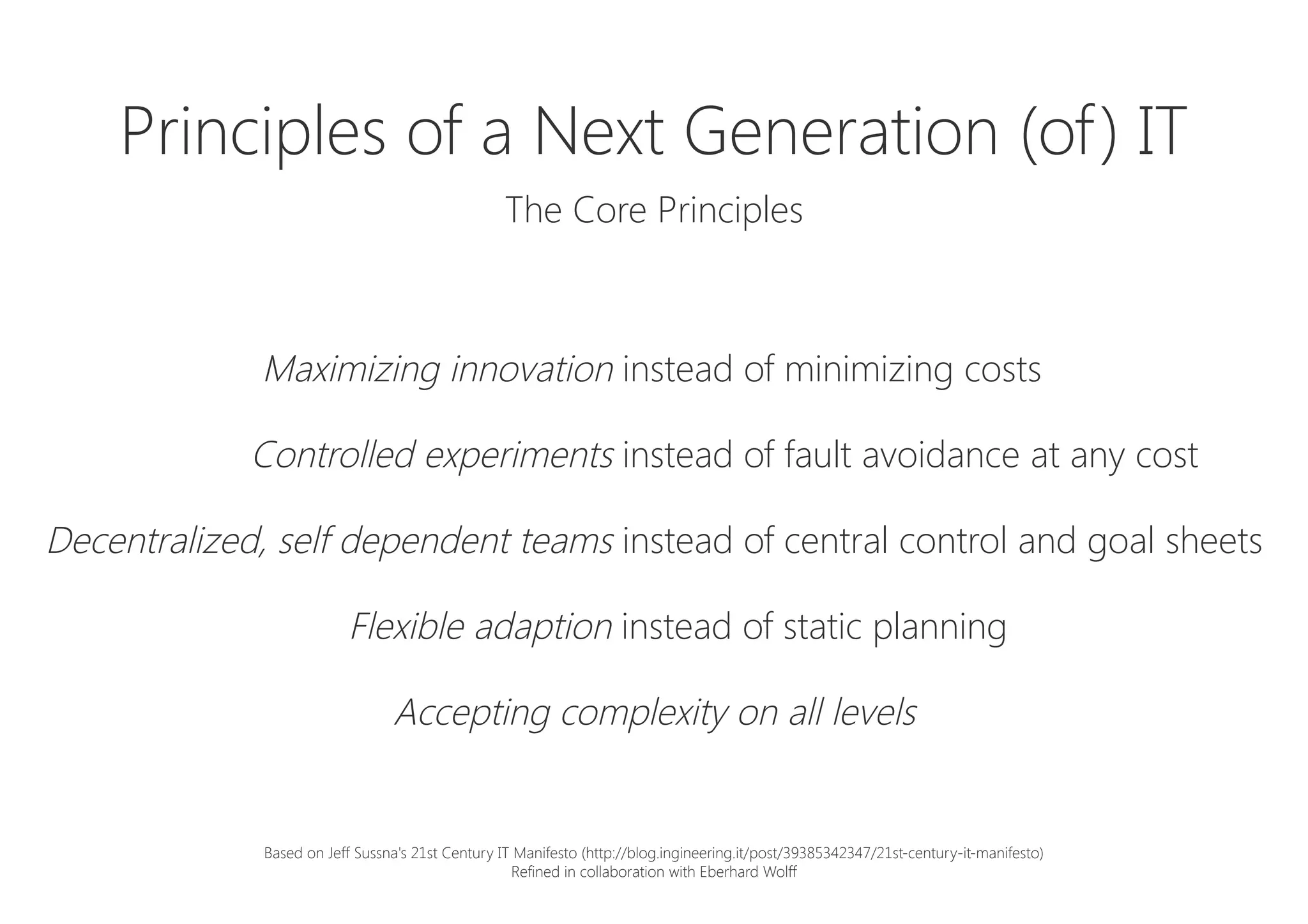
Principles of a Next Generation (of) IT

The Core Principles
Maximizing innovation instead of minimizing costs
Controlled experiments instead of fault avoidance at any cost
Decentralized, self dependent teams instead of central control and goal sheets
Flexible adaption instead of static planning
Accepting complexity on all levels
Based on Jeff Sussna's 21st Century IT Manifesto (http://blog.ingineering.it/post/39385342347/21st-century-it-manifesto)
Refined in collaboration with Eberhard Wolff
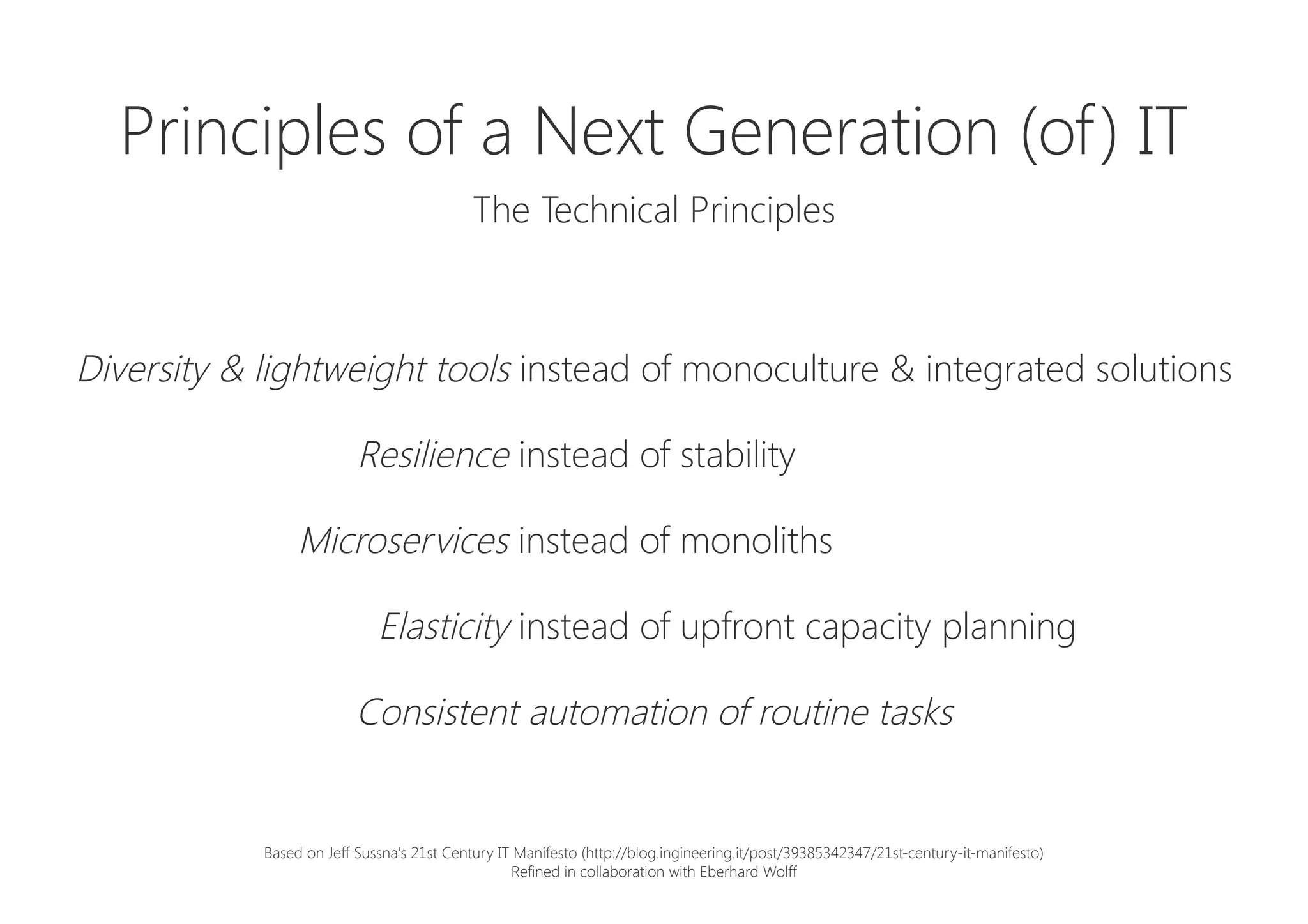
Principles of a Next Generation (of) IT

The Technical Principles
Diversity & lightweight tools instead of monoculture & integrated solutions
Resilience instead of stability
Microservices instead of monoliths
Elasticity instead of upfront capacity planning
Consistent automation of routine tasks
Based on Jeff Sussna's 21st Century IT Manifesto (http://blog.ingineering.it/post/39385342347/21st-century-it-manifesto)
Refined in collaboration with Eberhard Wolff
And what are the building blocks?
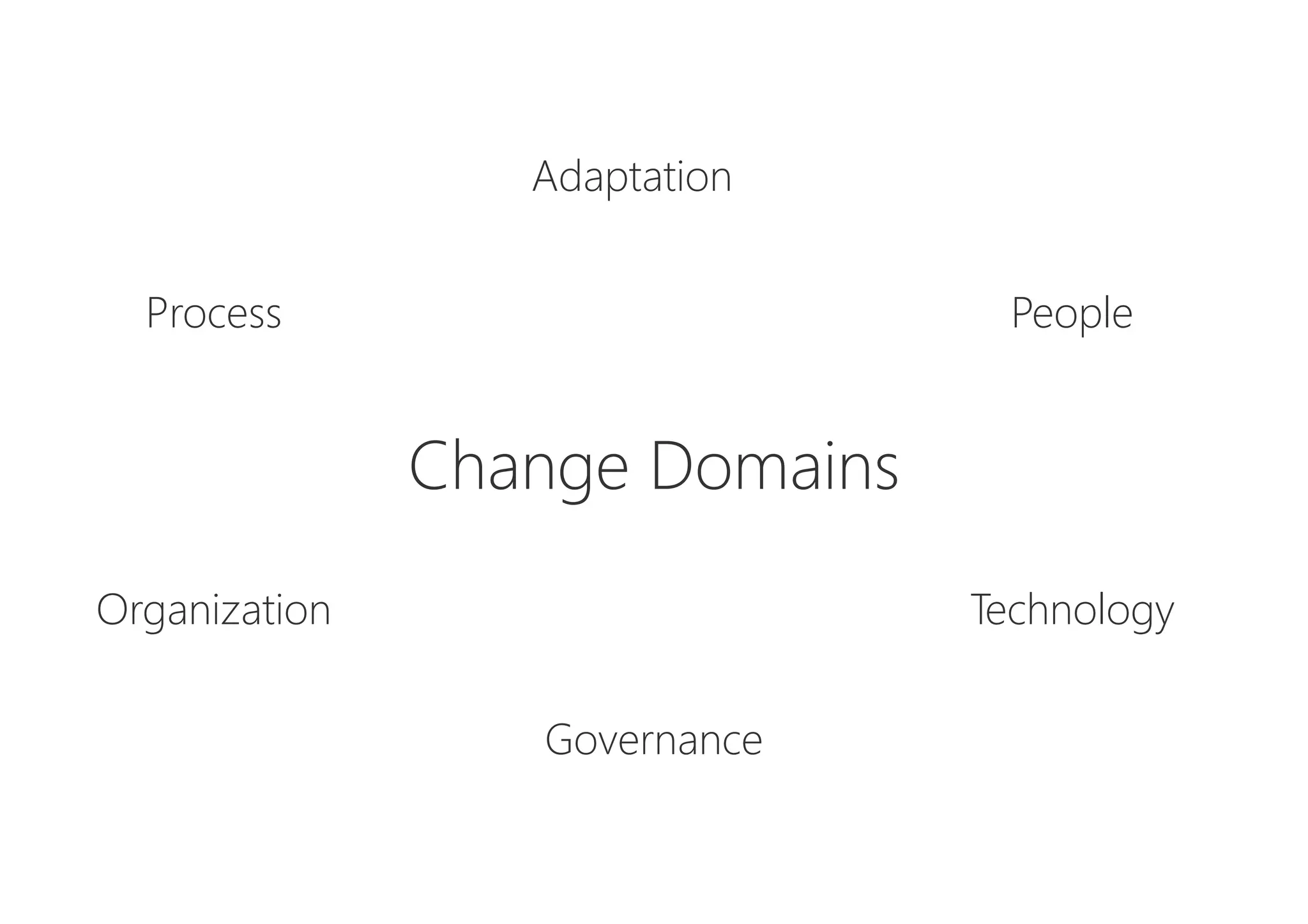
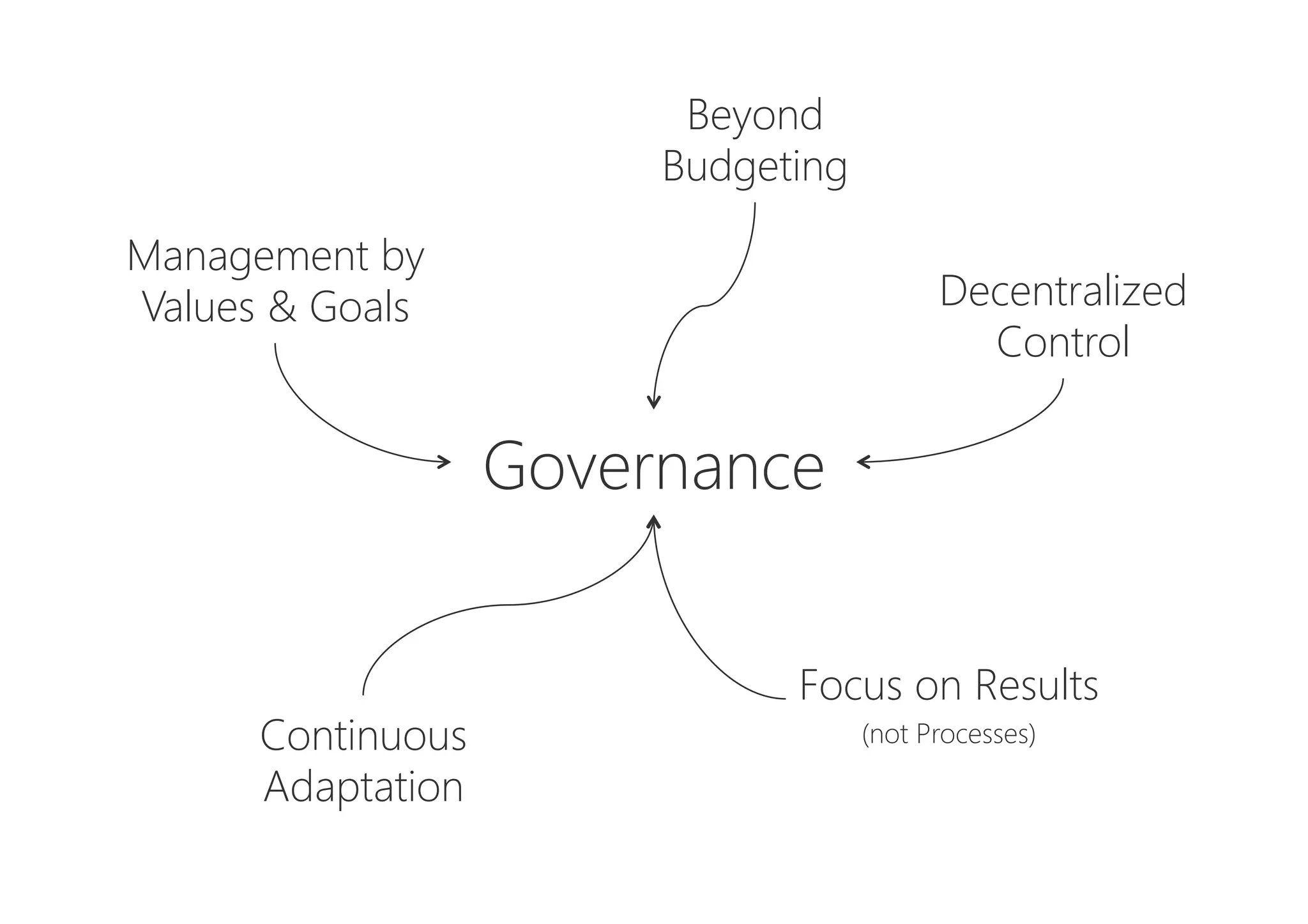
Governance
Organization
Process
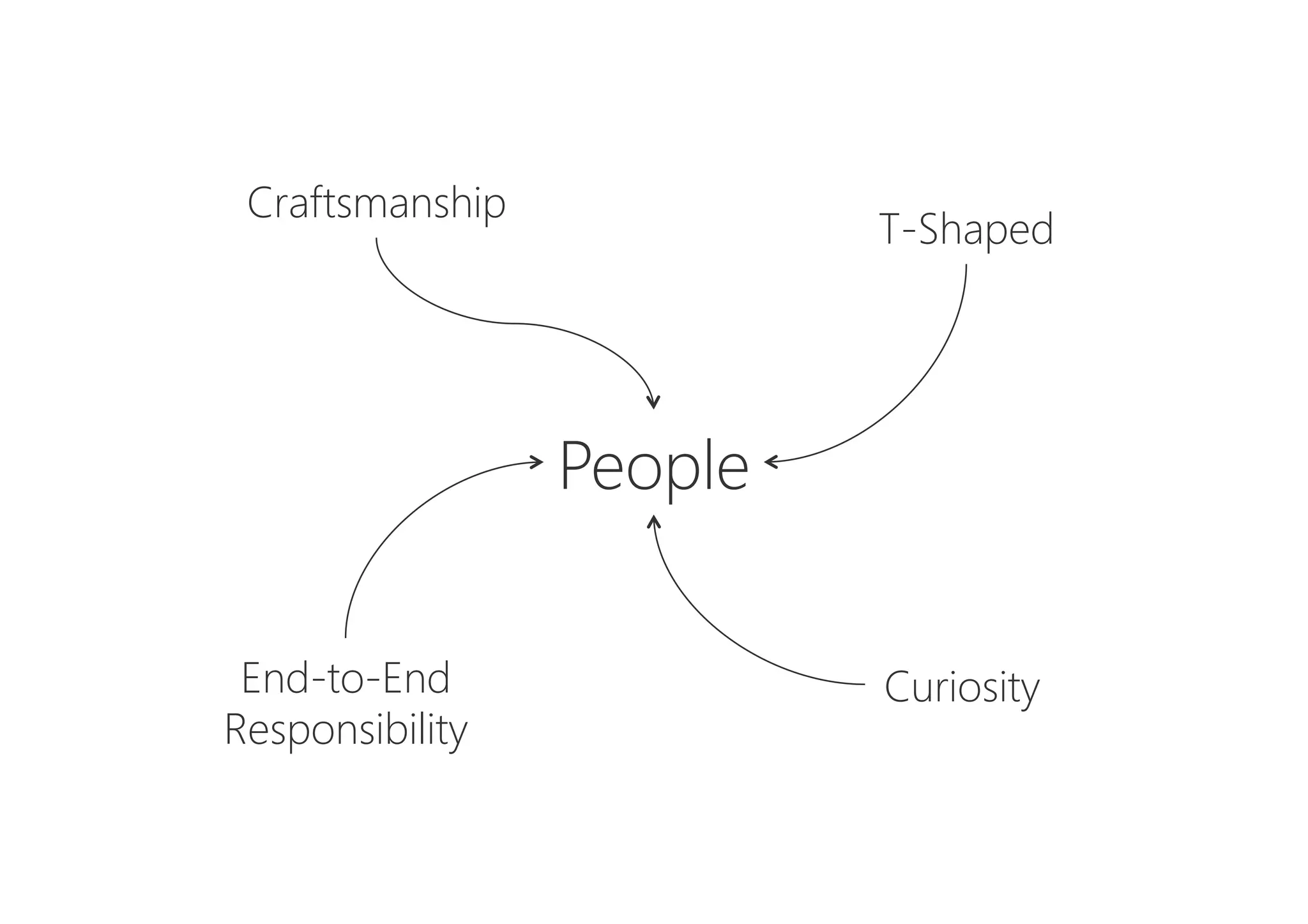
 People
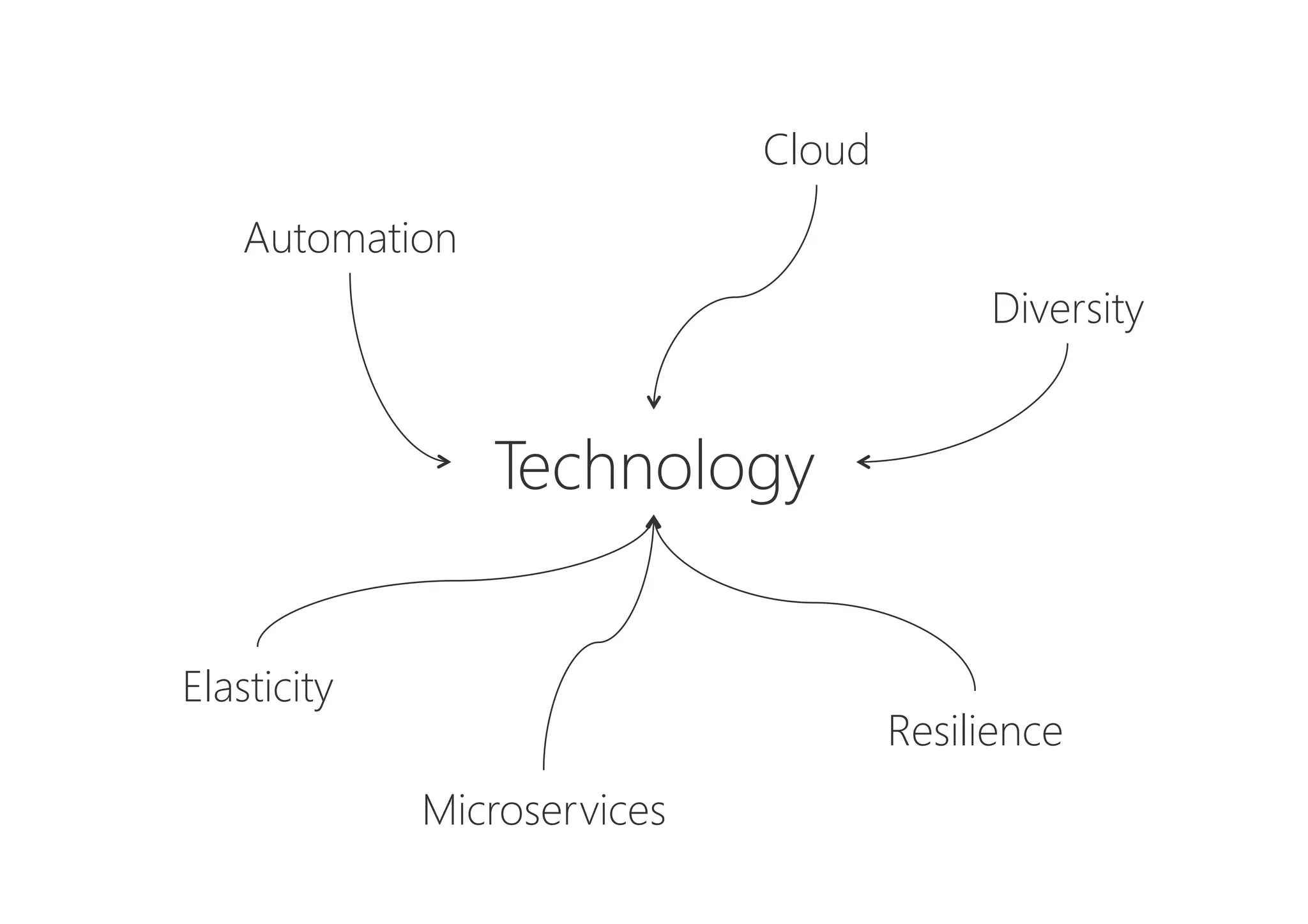
Technology
Change Domains
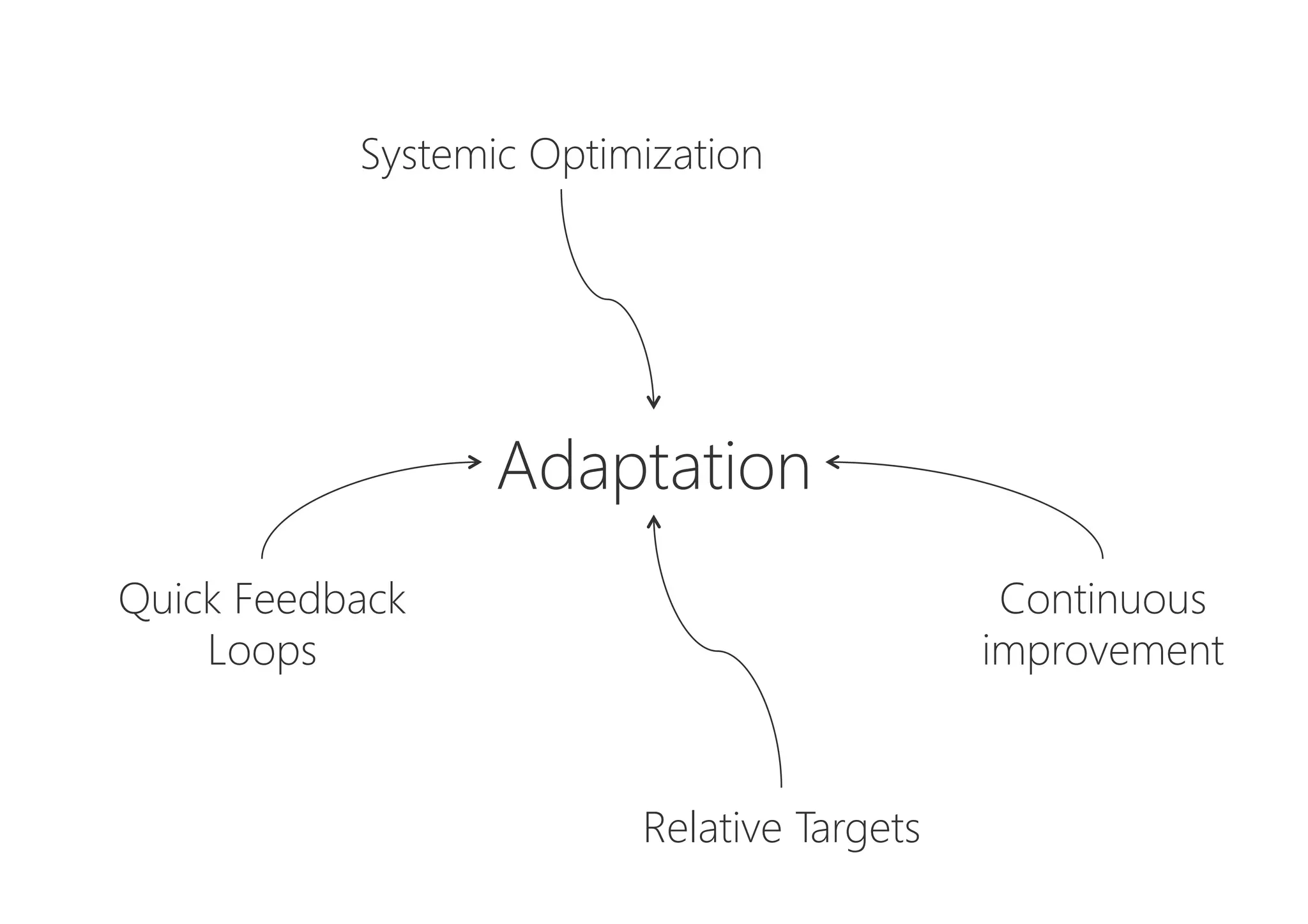
Adaptation
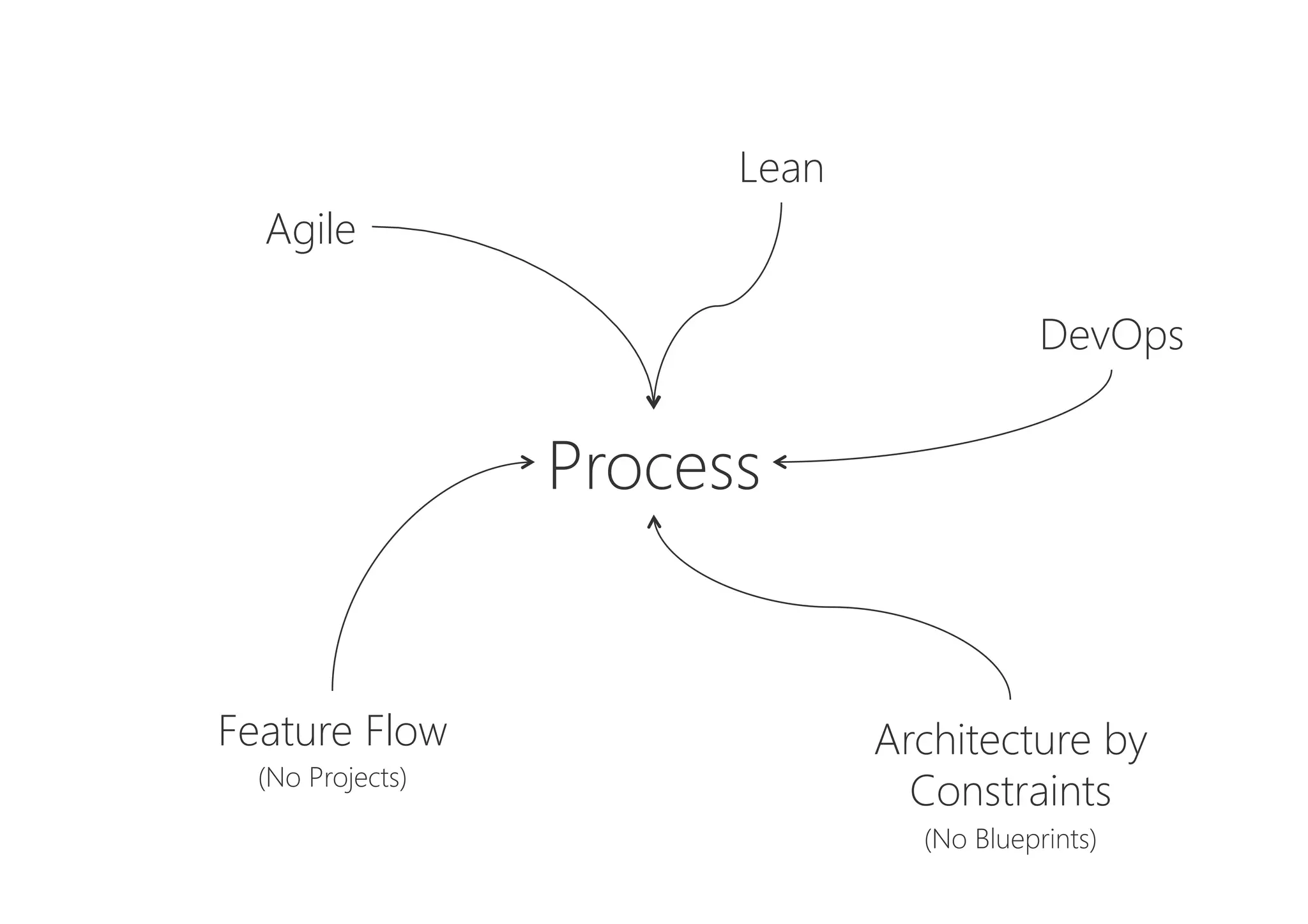
Feature Flow
(No Projects)
Lean
Agile
DevOps
Architecture by
Constraints
(No Blueprints)
Process
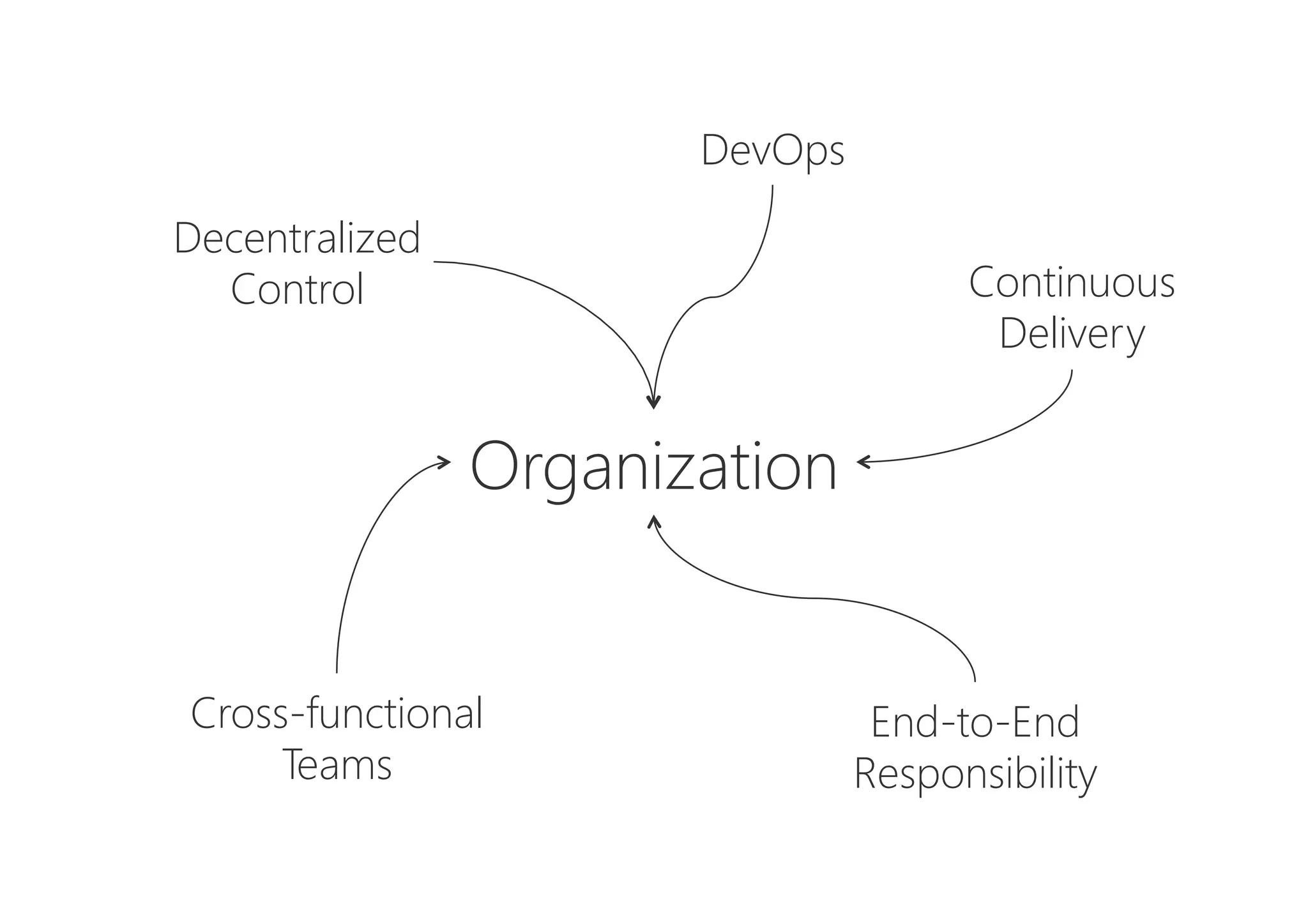
End-to-End
Responsibility
Decentralized
Control
Organization
Continuous
Delivery
DevOps
Cross-functional
Teams
End-to-End
Responsibility
Craftsmanship
People
T-Shaped
Curiosity
Microservices
Cloud
Technology
Automation
Elasticity
Resilience
Diversity
Decentralized
Control
Management by
Values & Goals
Governance
Beyond
Budgeting
Focus on Results
(not Processes)
Continuous
Adaptation
Relative Targets
Quick Feedback
Loops
Adaptation
Systemic Optimization
Continuous
improvement
So well, and what do we get from this?
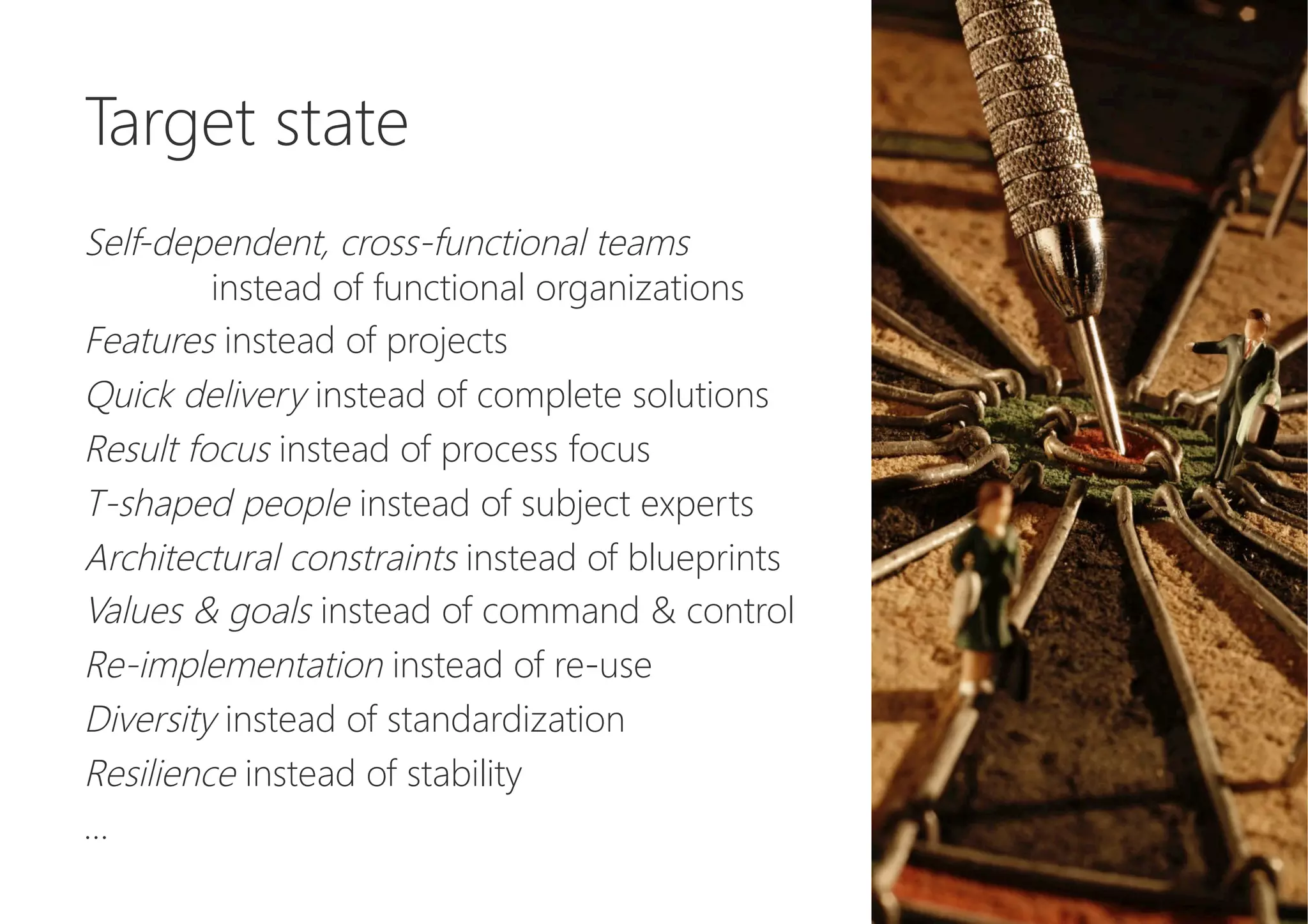
Target state

Self-dependent, cross-functional teams


instead of functional organizations
Features instead of projects
Quick delivery instead of complete solutions
Result focus instead of process focus
T-shaped people instead of subject experts
Architectural constraints instead of blueprints
Values & goals instead of command & control
Re-implementation instead of re-use
Diversity instead of standardization
Resilience instead of stability
…
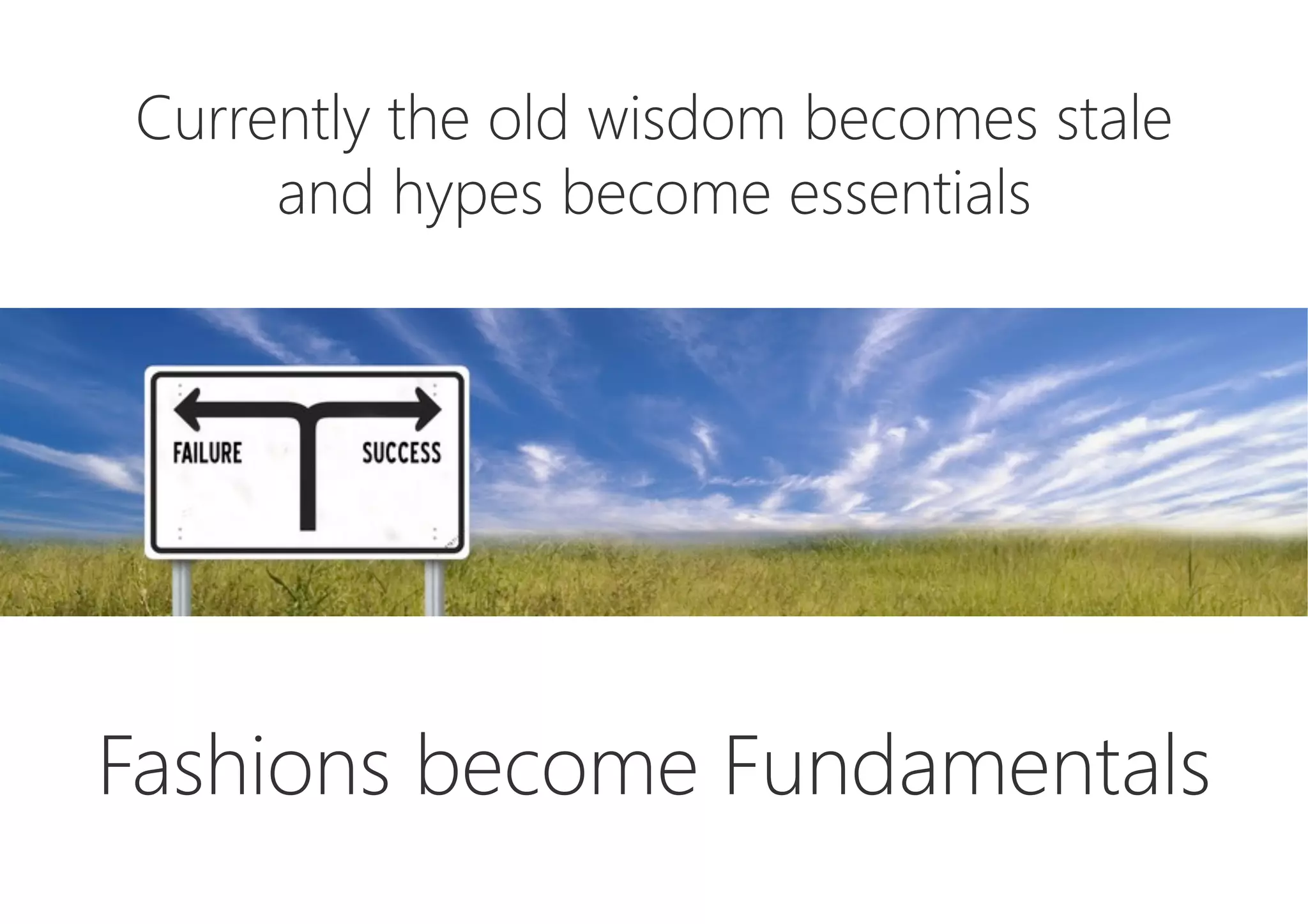
Currently the old wisdom becomes stale
and hypes become essentials


Fashions become Fundamentals
It’s the most disruptive and exciting change

we have seen in IT for many years


Join the IT revolution!
@ufried
Uwe Friedrichsen | uwe.friedrichsen@codecentric.de | http://slideshare.net/ufried | http://ufried.tumblr.com
The Next Generation (of) IT

The Next Generation (of) IT