THE NEXT DISRUPTIVE
TECHNOLOGY
HOW AUTONOMOUS CARS WILL FUNDAMENTALLY RESHAPE OUR
CITIES, AND WHY IT SHOULD MATTER TO YOU.
Jason Sudy, AICP
Founder, Principal
Side Street Planning
Justin Robbins, AICP
Senior Planner
OHM Advisors
Rick Stein, AICP
Founder, Principal
Urban Decision Group
TODAY’S MESSAGE:
AS A PLANNING-RELATED
PROFESSIONAL:
• WHAT SHOULD YOU BE DOING TODAY?
• WHAT WILL YOU HAVE TO UNDERSTAND IN THE NEXT FEW YEARS?
• HOW DO WE PREPARE FOR THE FUTURE?
• WE MUST BE THINKING ABOUT THIS NOW!
HISTORY OF CITY
DEVELOPMENT
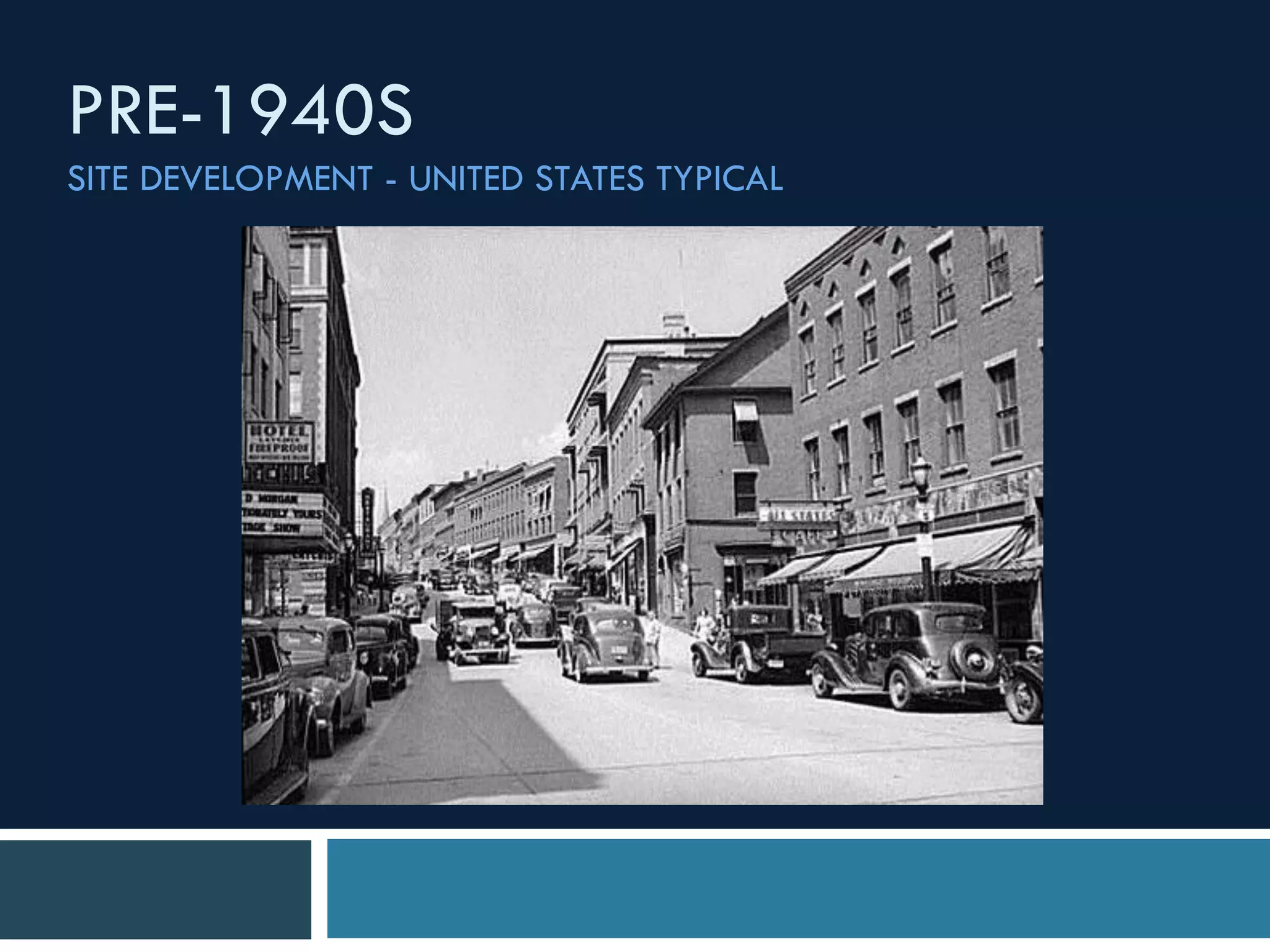
PRE-1940S
SITE DEVELOPMENT - UNITED STATES TYPICAL
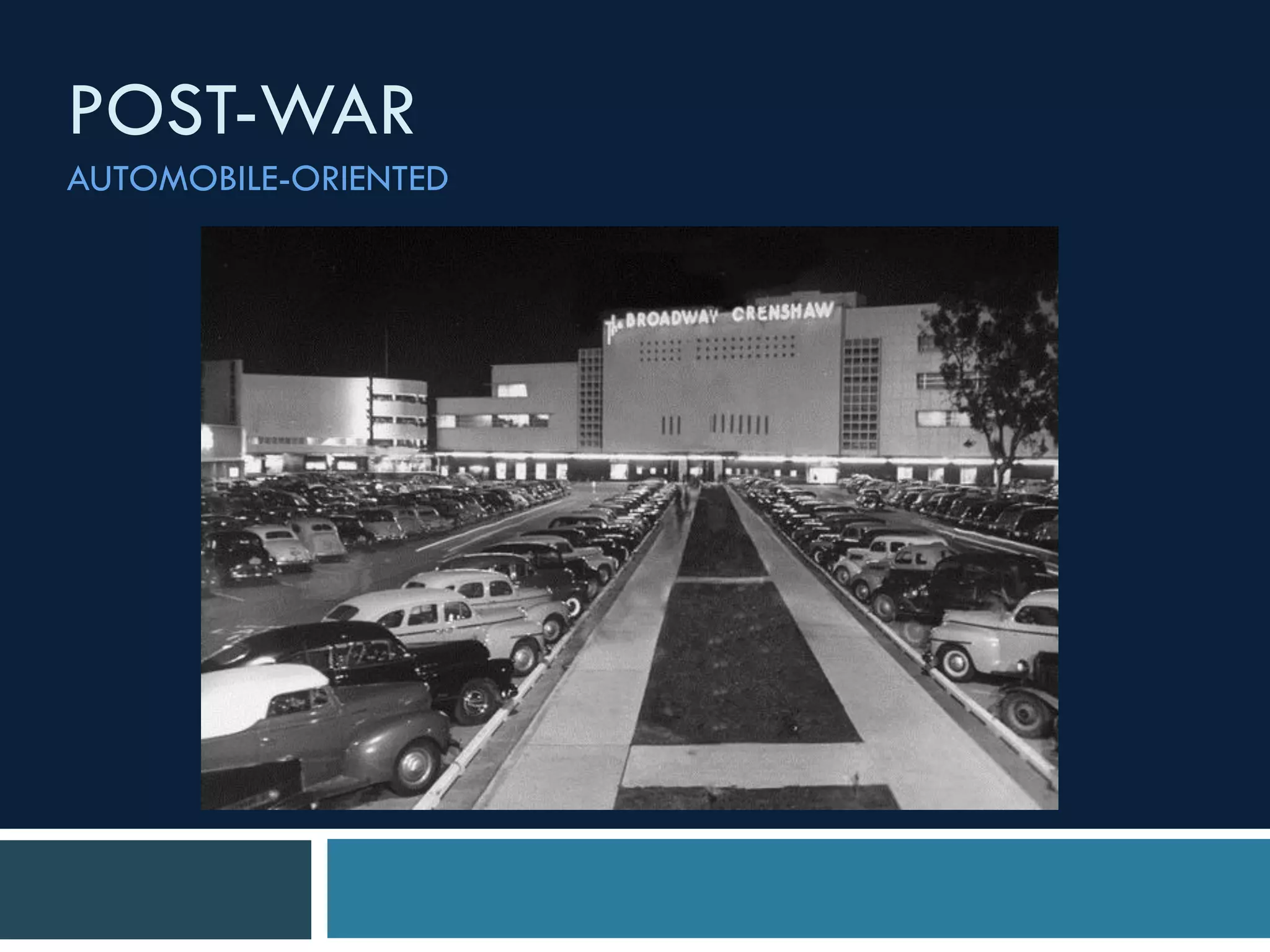
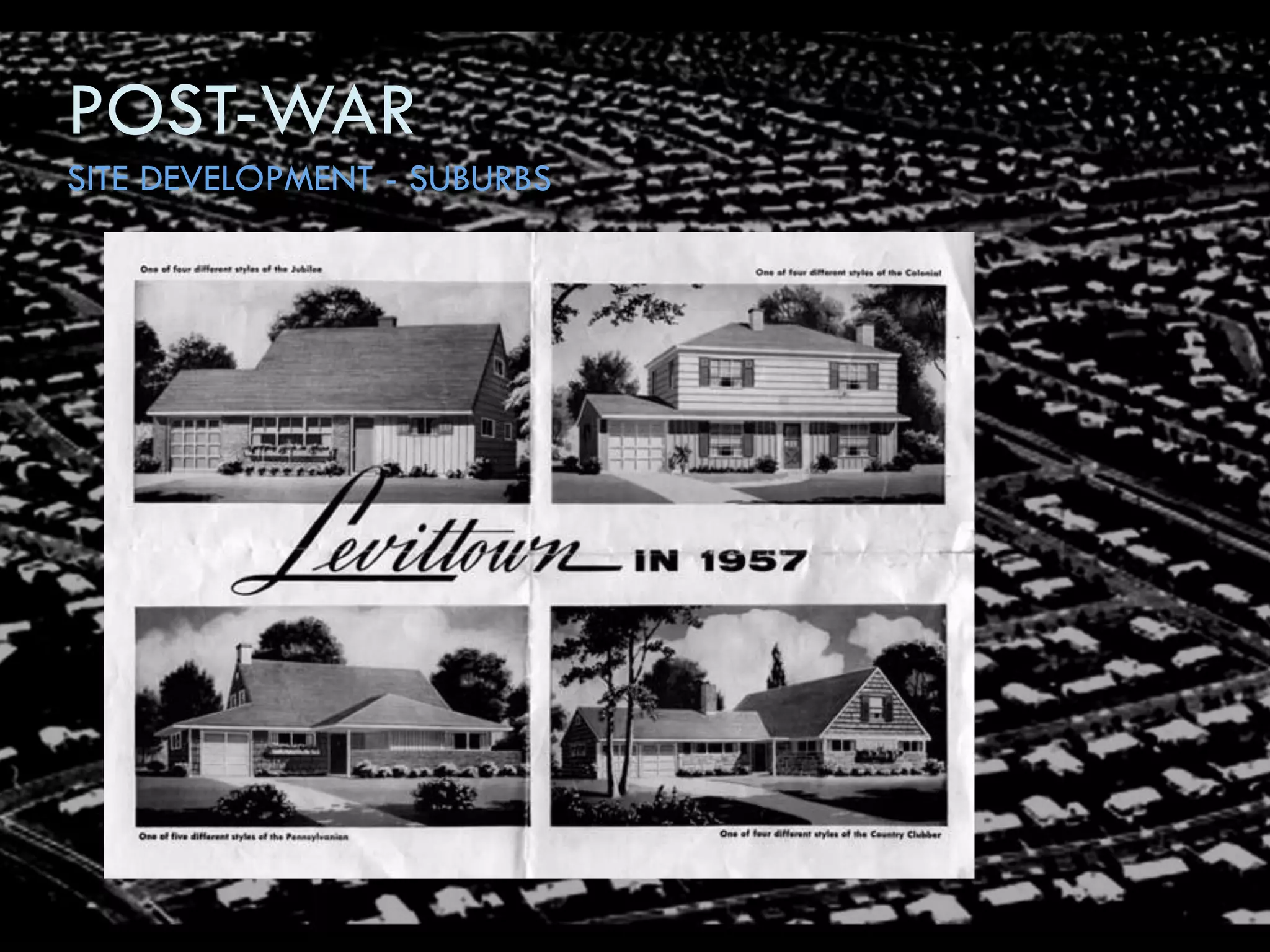
POST-WAR
AUTOMOBILE-ORIENTED
POST-WAR
SITE DEVELOPMENT - SUBURBS
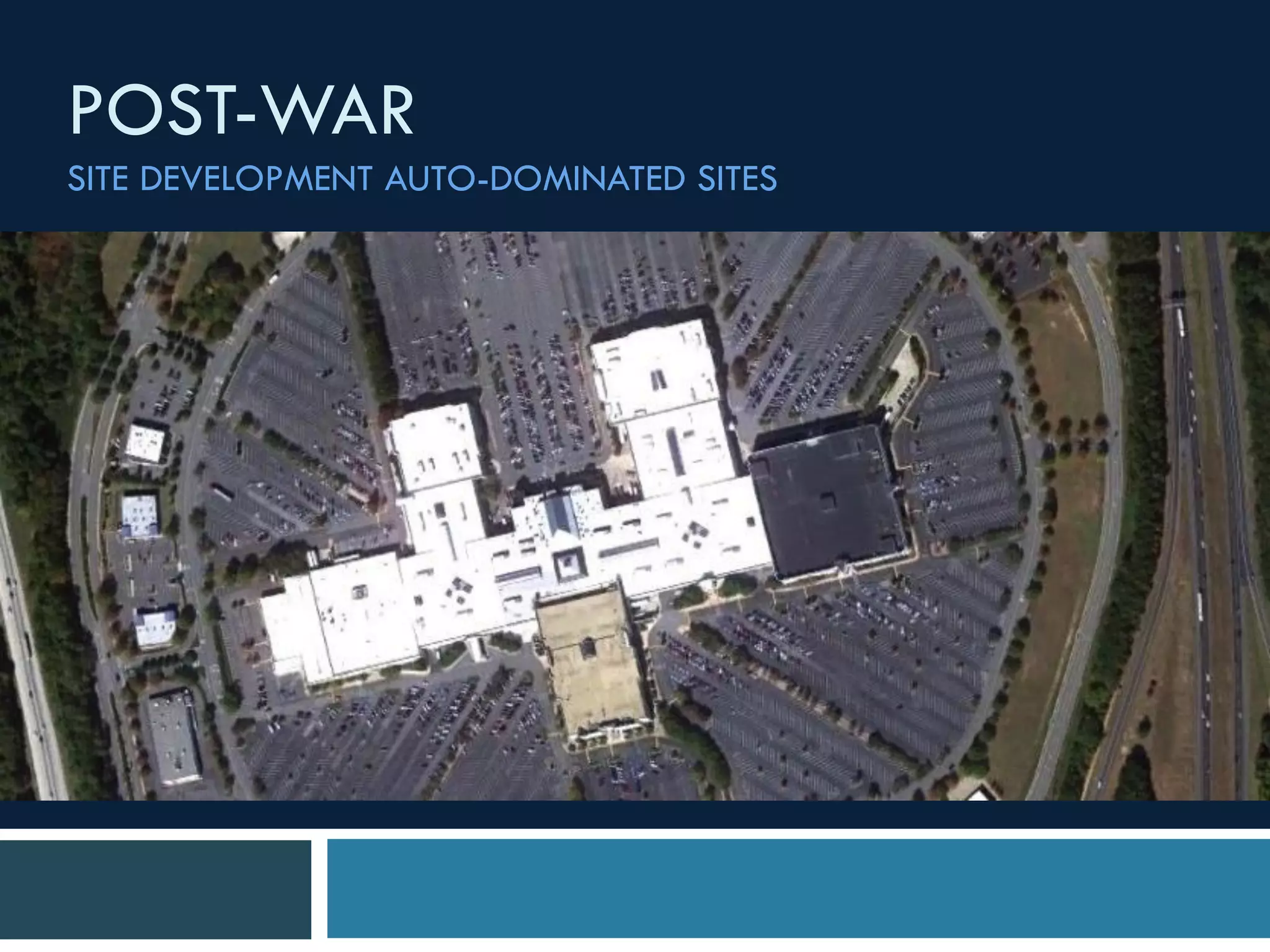
POST-WAR
SITE DEVELOPMENT AUTO-DOMINATED SITES
• ROADWAY NETWORKS
• NEIGHBORHOOD PLANNING
• SITE DESIGN
THIS IS OUR CHANCE…
TO UNDO OUR PAST MISTAKES.
HOW WILL THIS IMPACT…
EVERYTHING?
• Insurance industry
• Health insurance – drastically fewer
accidents and youth deaths
• Need for increased communications
technology
• Hacking dangers of on-board
computers
• Overall economy
• Lost industries
• Land prices re-evaluated when parking
demand shrinks
• Automotive industry
• Public transportation
• Commercial drivers
• Taxi & Uber
• Bus and train
• Commercial hauling
• Automotive companies –
volume of vehicles needed per
year?
• Automotive workers – volume
of vehicles needed per year?
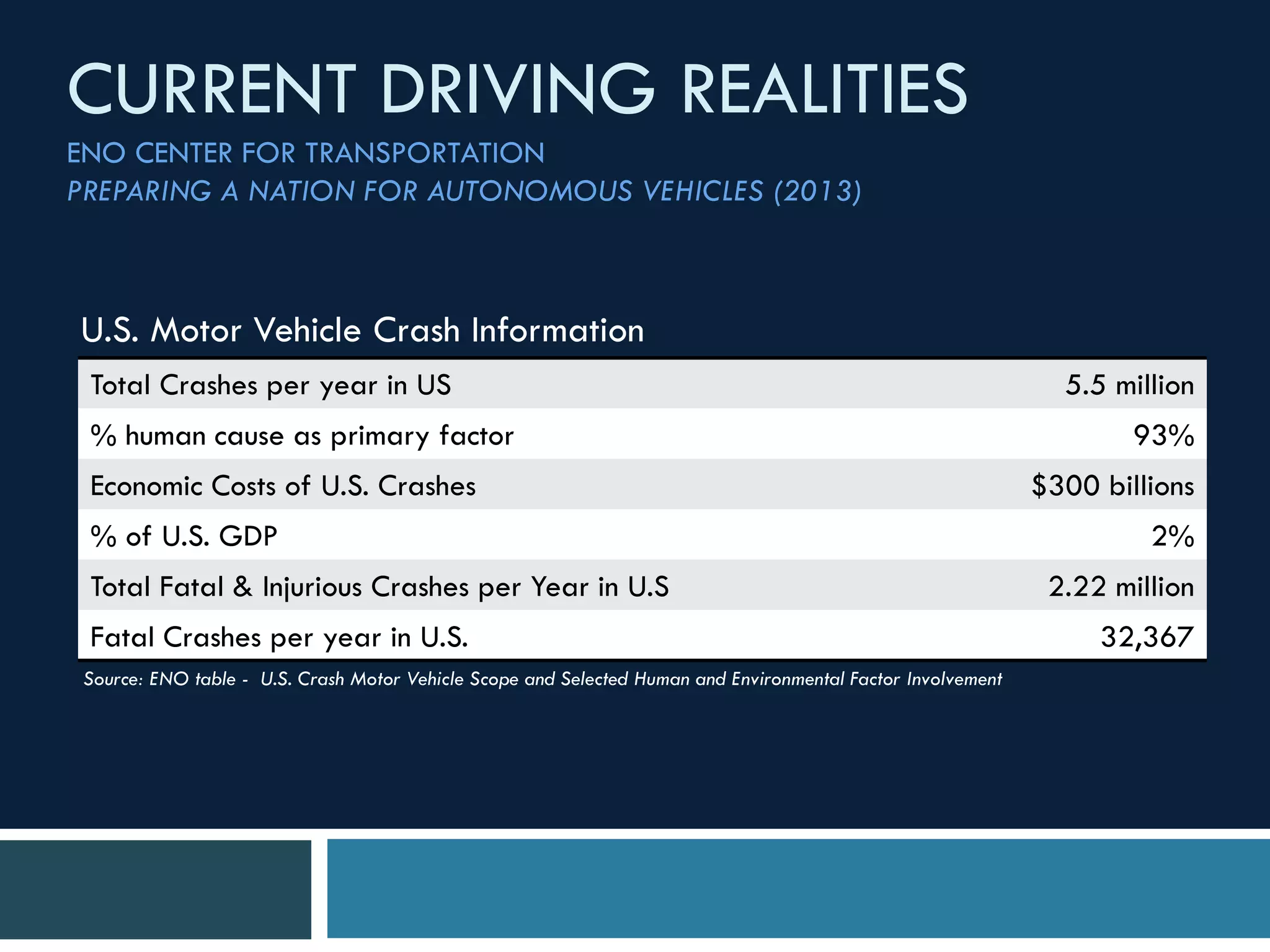
U.S. Motor Vehicle Crash Information
CURRENT DRIVING REALITIES
ENO CENTER FOR TRANSPORTATION
PREPARING A NATION FOR AUTONOMOUS VEHICLES (2013)
Total Crashes per year in US 5.5 million
% human cause as primary factor 93%
Economic Costs of U.S. Crashes $300 billions
% of U.S. GDP 2%
Total Fatal & Injurious Crashes per Year in U.S 2.22 million
Fatal Crashes per year in U.S. 32,367
Source: ENO table - U.S. Crash Motor Vehicle Scope and Selected Human and Environmental Factor Involvement
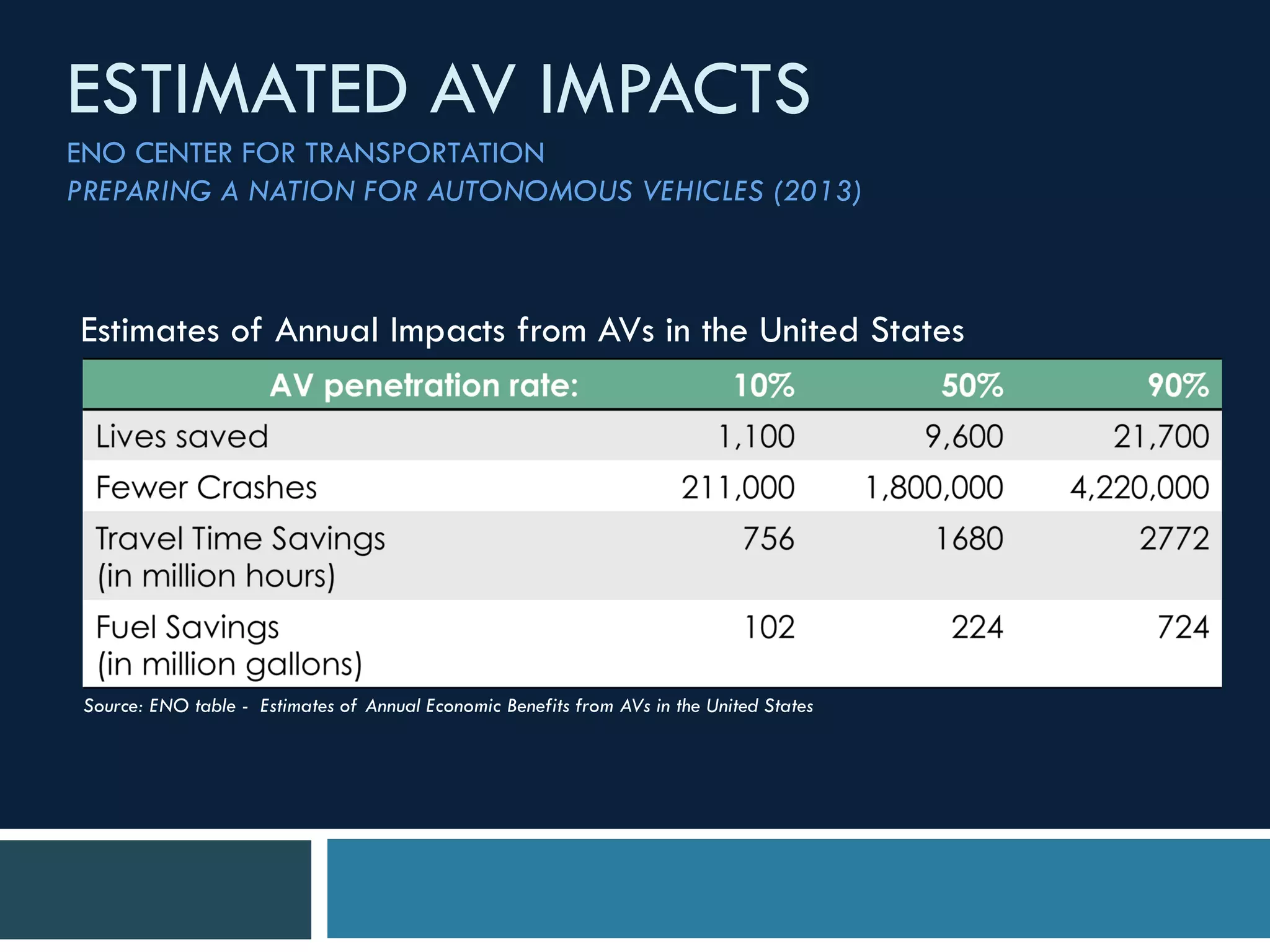
Estimates of Annual Impacts from AVs in the United States
ESTIMATED AV IMPACTS
ENO CENTER FOR TRANSPORTATION
PREPARING A NATION FOR AUTONOMOUS VEHICLES (2013)
Source: ENO table - Estimates of Annual Economic Benefits from AVs in the United States
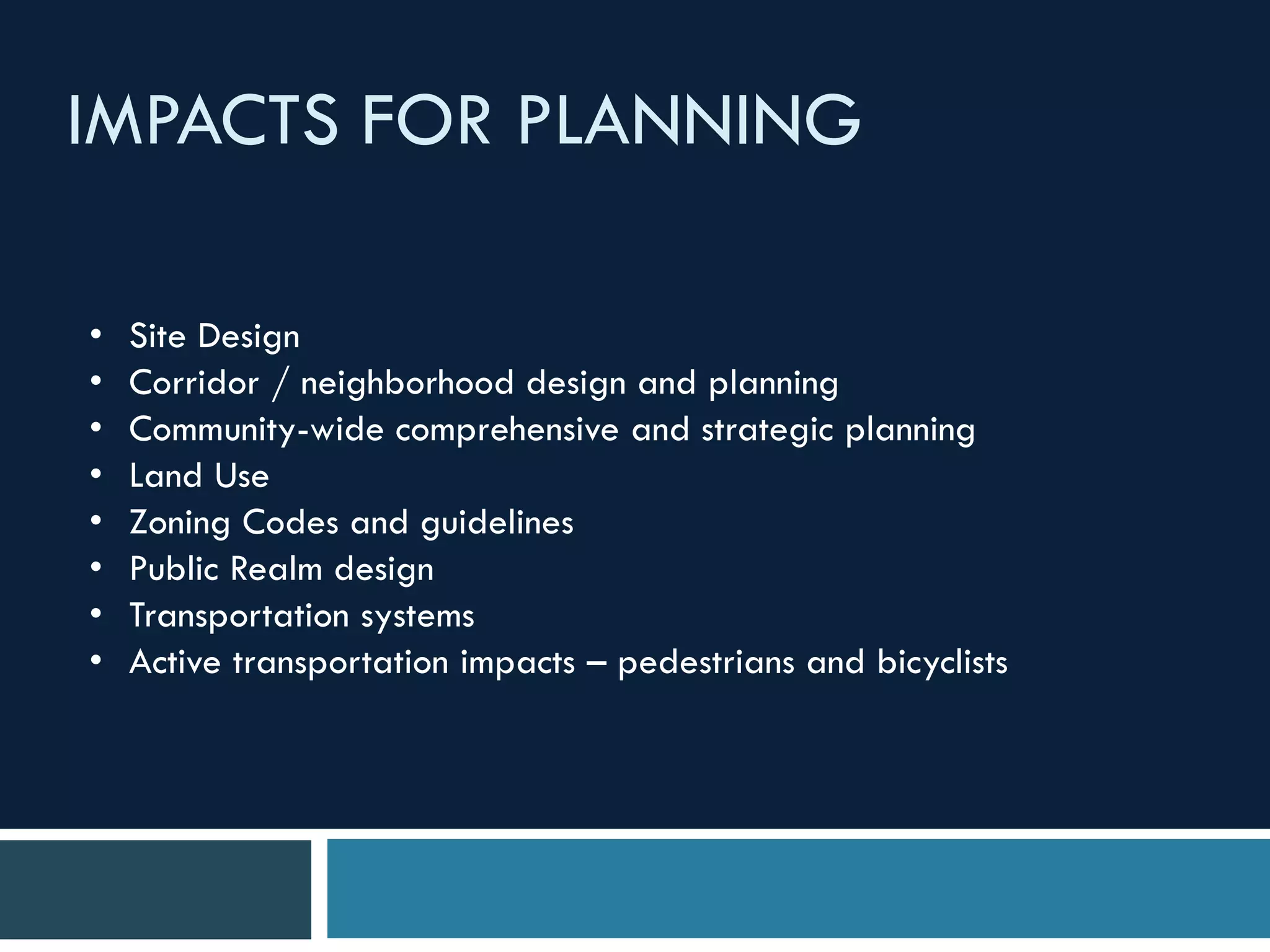
IMPACTS FOR PLANNING
• Site Design
• Corridor / neighborhood design and planning
• Community-wide comprehensive and strategic planning
• Land Use
• Zoning Codes and guidelines
• Public Realm design
• Transportation systems
• Active transportation impacts – pedestrians and bicyclists
POTENTIAL UNKNOWNS
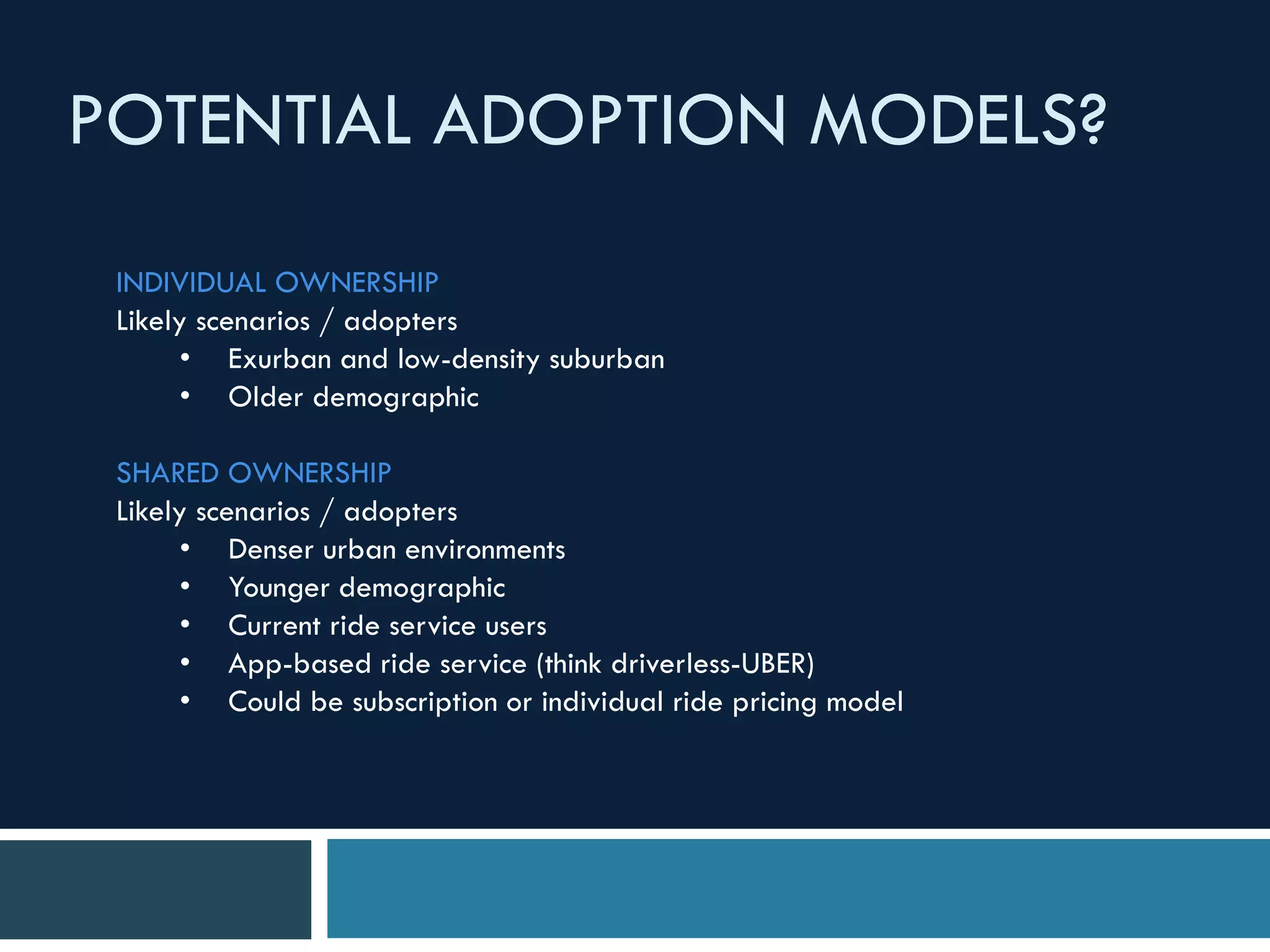
POTENTIAL ADOPTION MODELS?
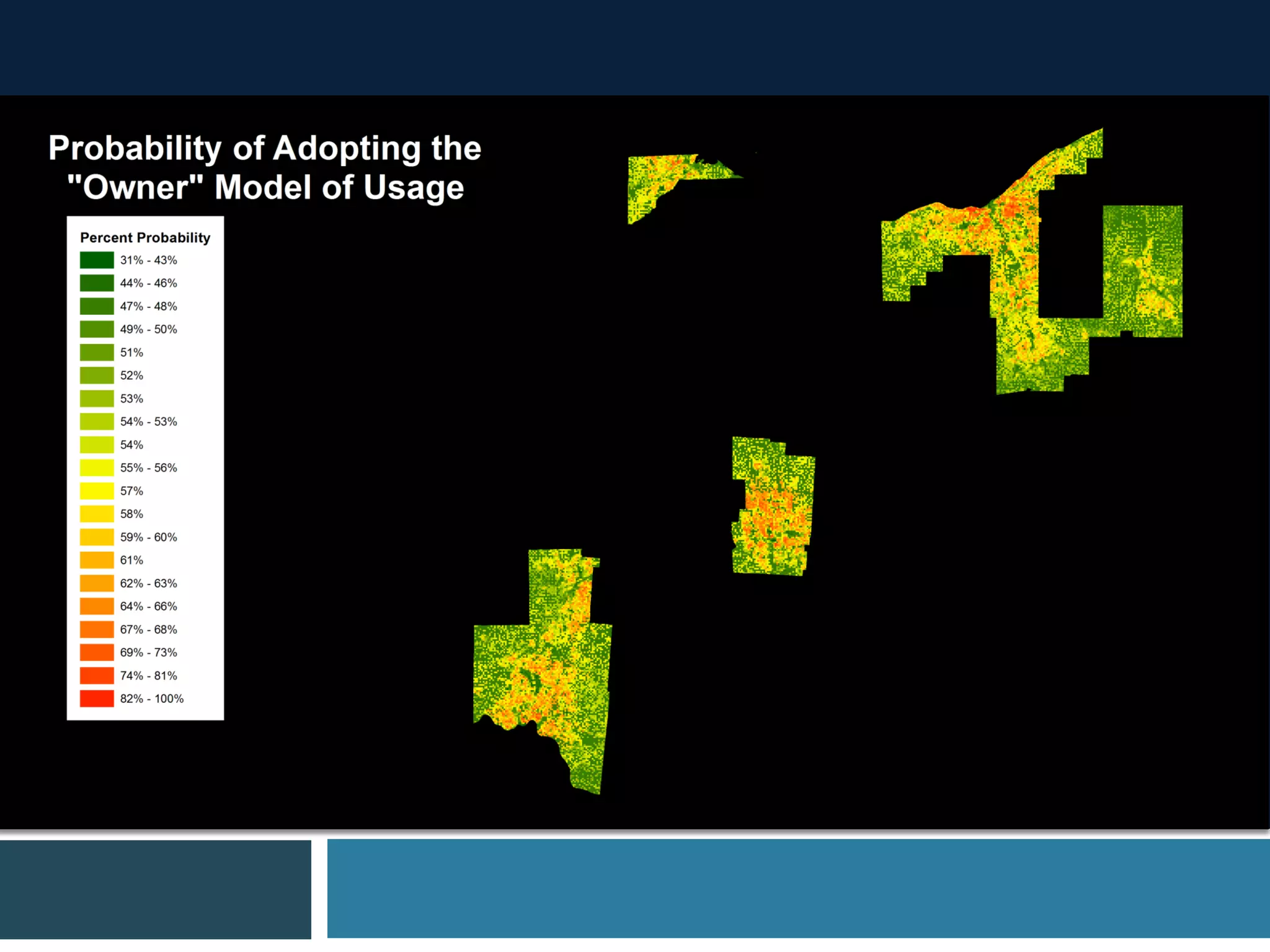
INDIVIDUAL OWNERSHIP
Likely scenarios / adopters
• Exurban and low-density suburban
• Older demographic
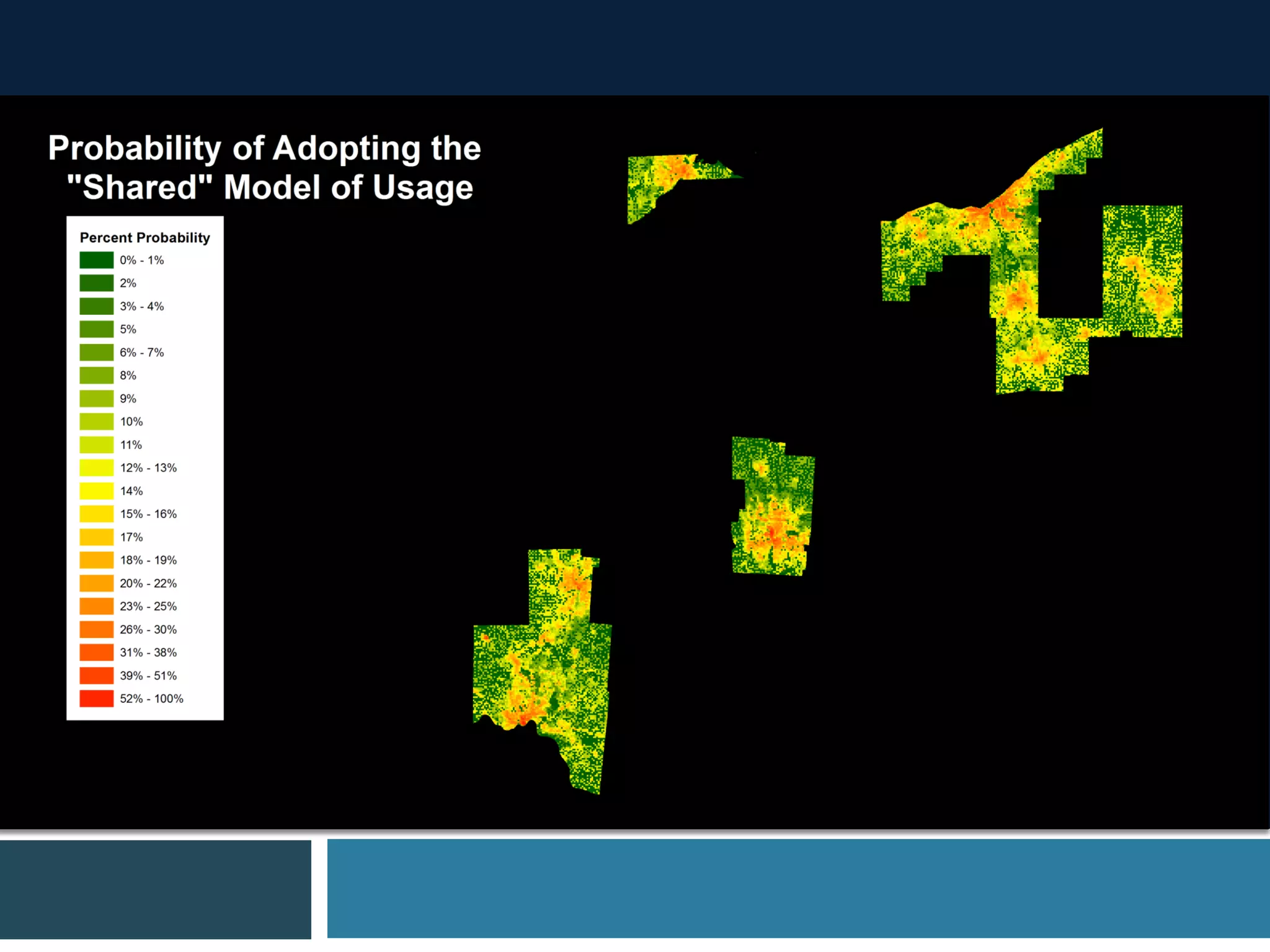
SHARED OWNERSHIP
Likely scenarios / adopters
• Denser urban environments
• Younger demographic
• Current ride service users
• App-based ride service (think driverless-UBER)
• Could be subscription or individual ride pricing model
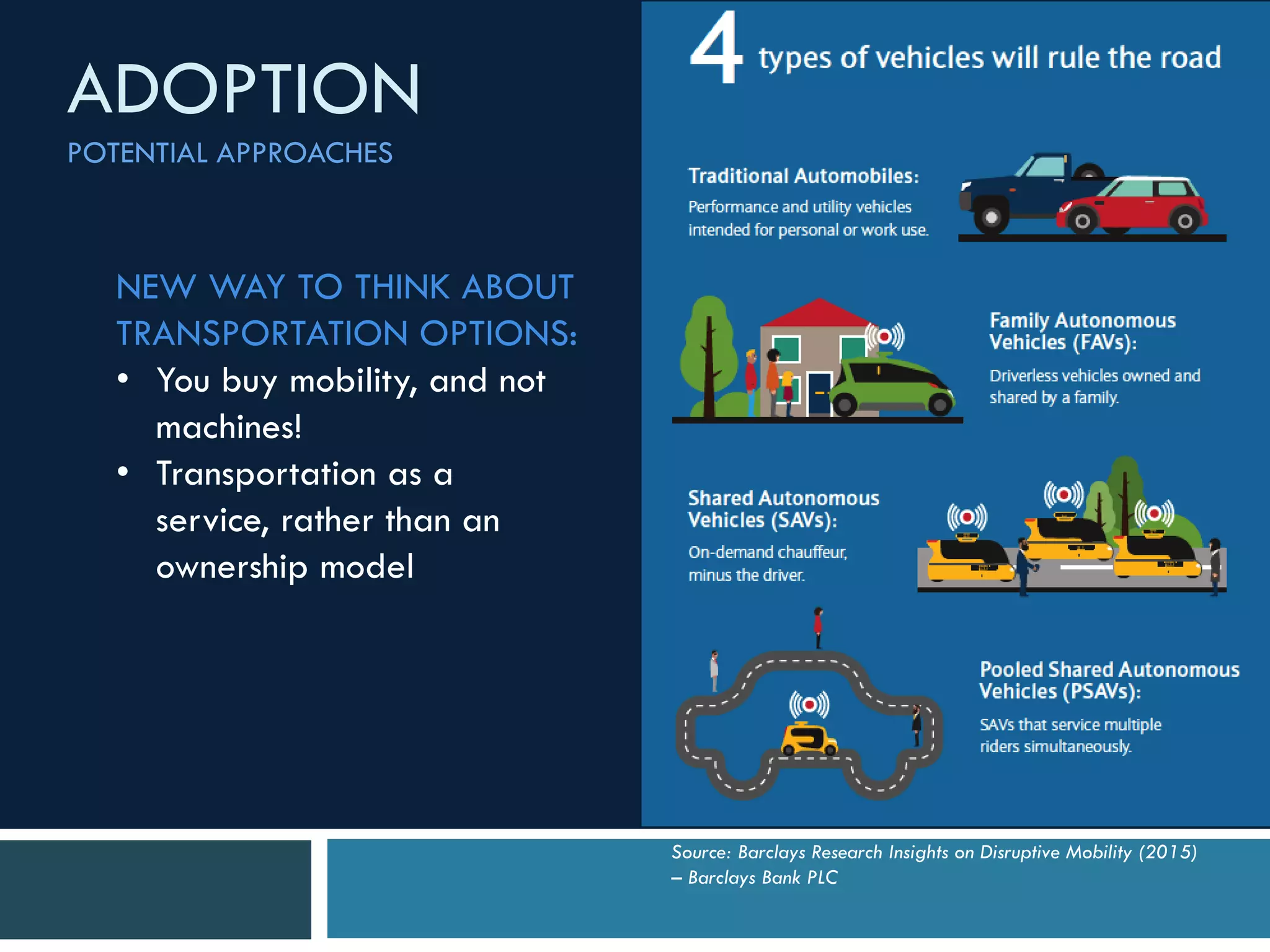
NEW WAY TO THINK ABOUT
TRANSPORTATION OPTIONS:
• You buy mobility, and not
machines!
• Transportation as a
service, rather than an
ownership model
ADOPTION
POTENTIAL APPROACHES
Source: Barclays Research Insights on Disruptive Mobility (2015)
– Barclays Bank PLC
WHERE AND HOW FAST
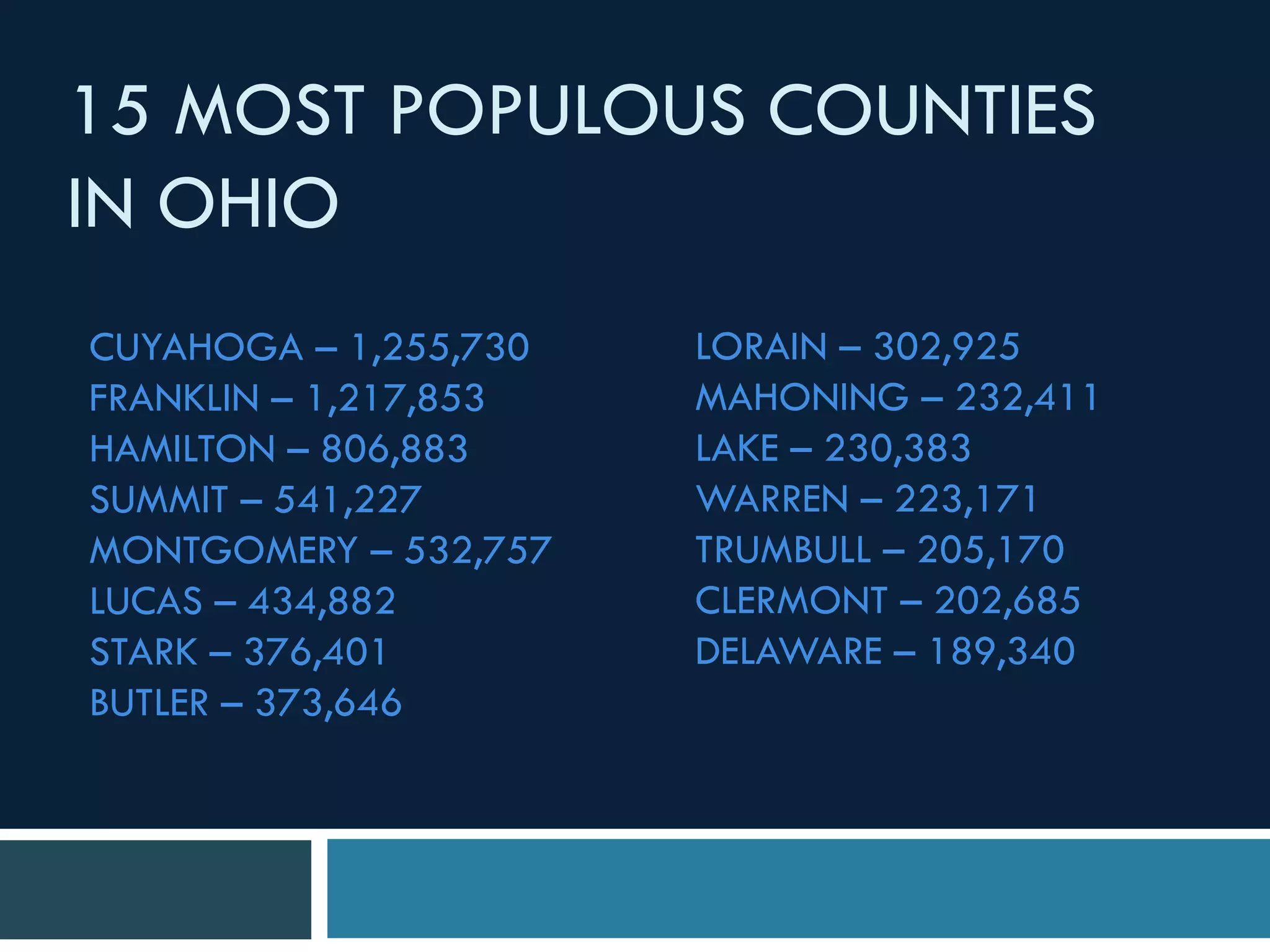
CUYAHOGA – 1,255,730
FRANKLIN – 1,217,853
HAMILTON – 806,883
SUMMIT – 541,227
MONTGOMERY – 532,757
LUCAS – 434,882
STARK – 376,401
BUTLER – 373,646
15 MOST POPULOUS COUNTIES
IN OHIO
LORAIN – 302,925
MAHONING – 232,411
LAKE – 230,383
WARREN – 223,171
TRUMBULL – 205,170
CLERMONT – 202,685
DELAWARE – 189,340
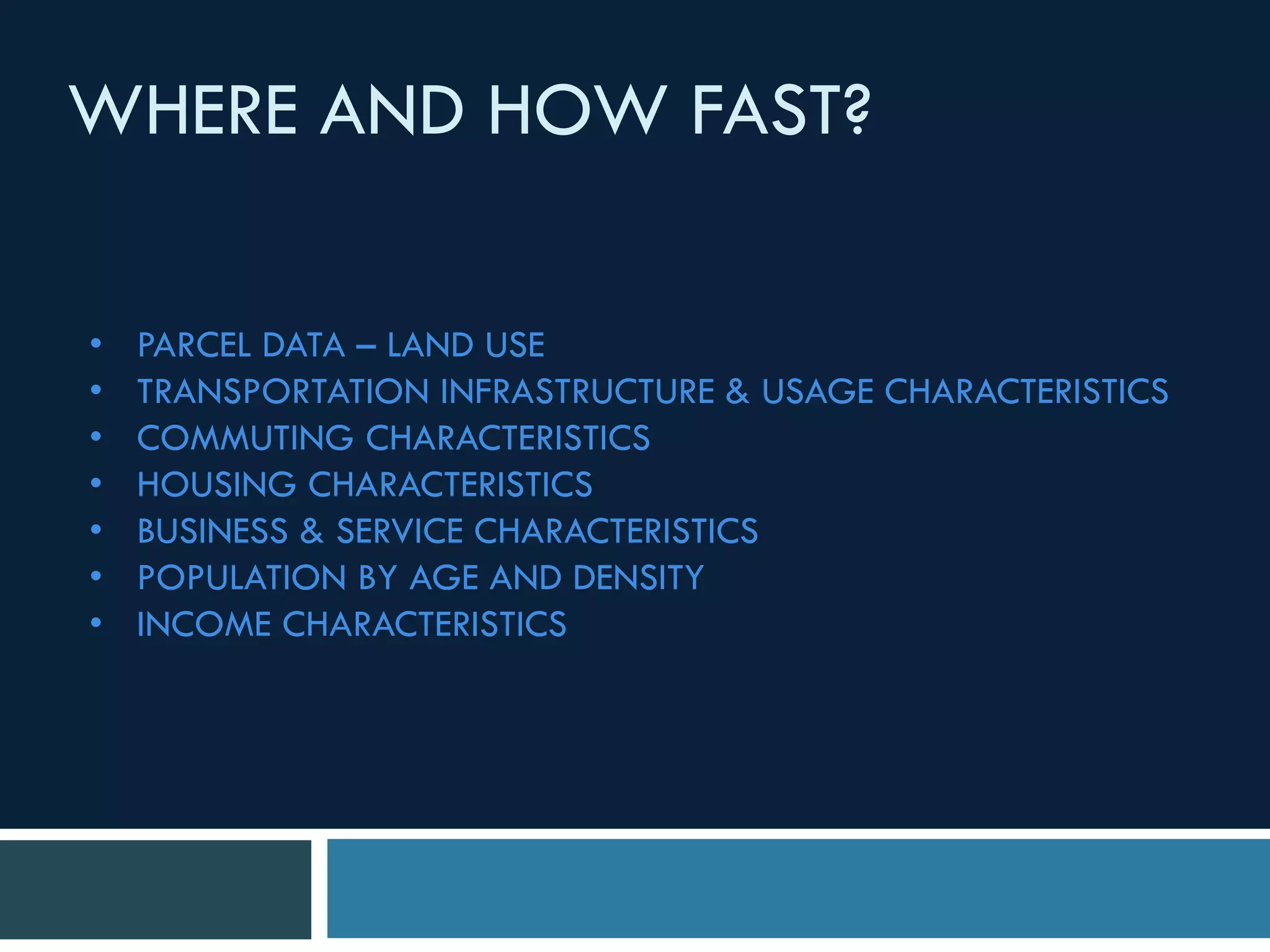
• PARCEL DATA – LAND USE
• TRANSPORTATION INFRASTRUCTURE & USAGE CHARACTERISTICS
• COMMUTING CHARACTERISTICS
• HOUSING CHARACTERISTICS
• BUSINESS & SERVICE CHARACTERISTICS
• POPULATION BY AGE AND DENSITY
• INCOME CHARACTERISTICS
WHERE AND HOW FAST?
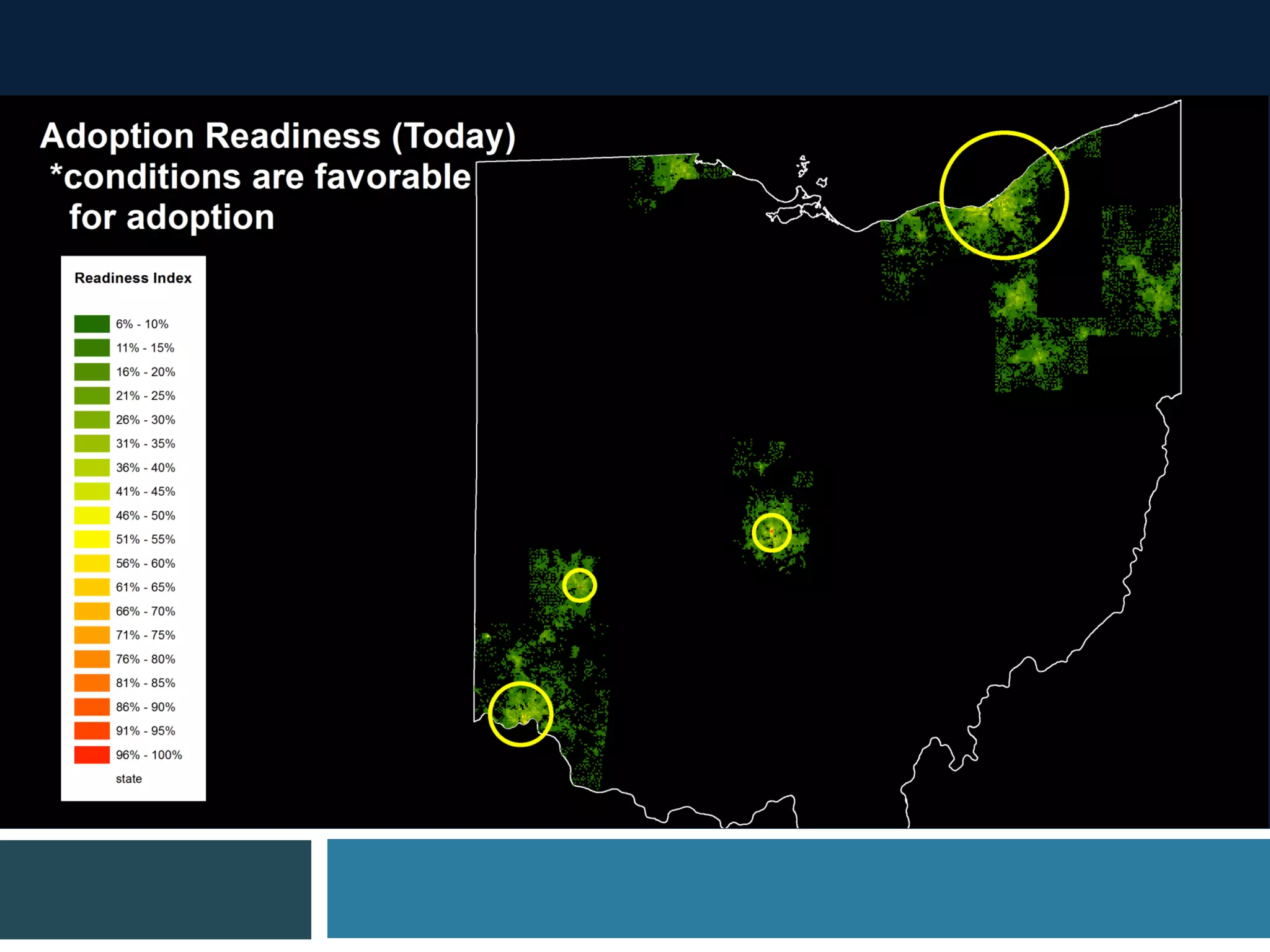
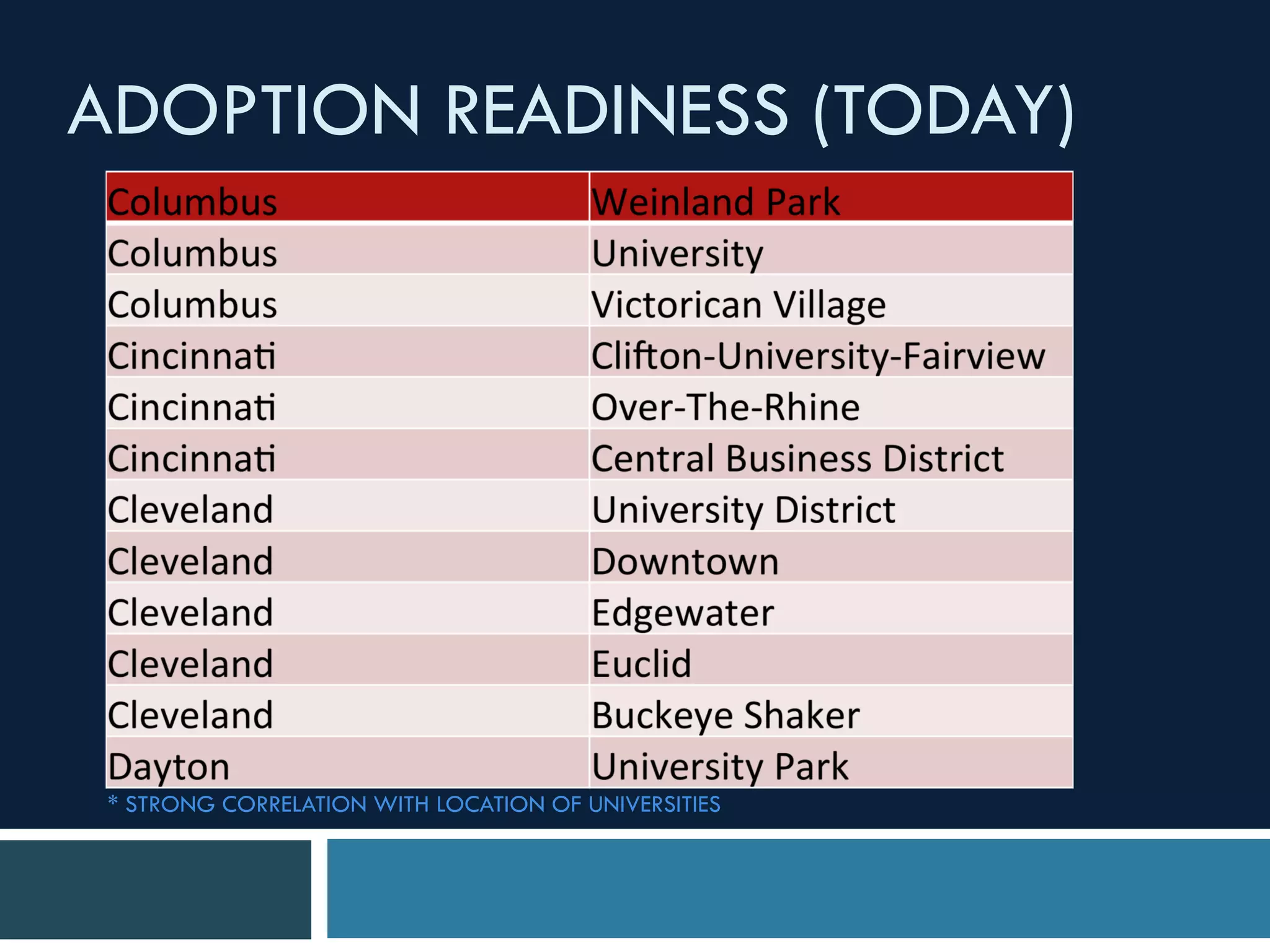
* STRONG CORRELATION WITH LOCATION OF UNIVERSITIES
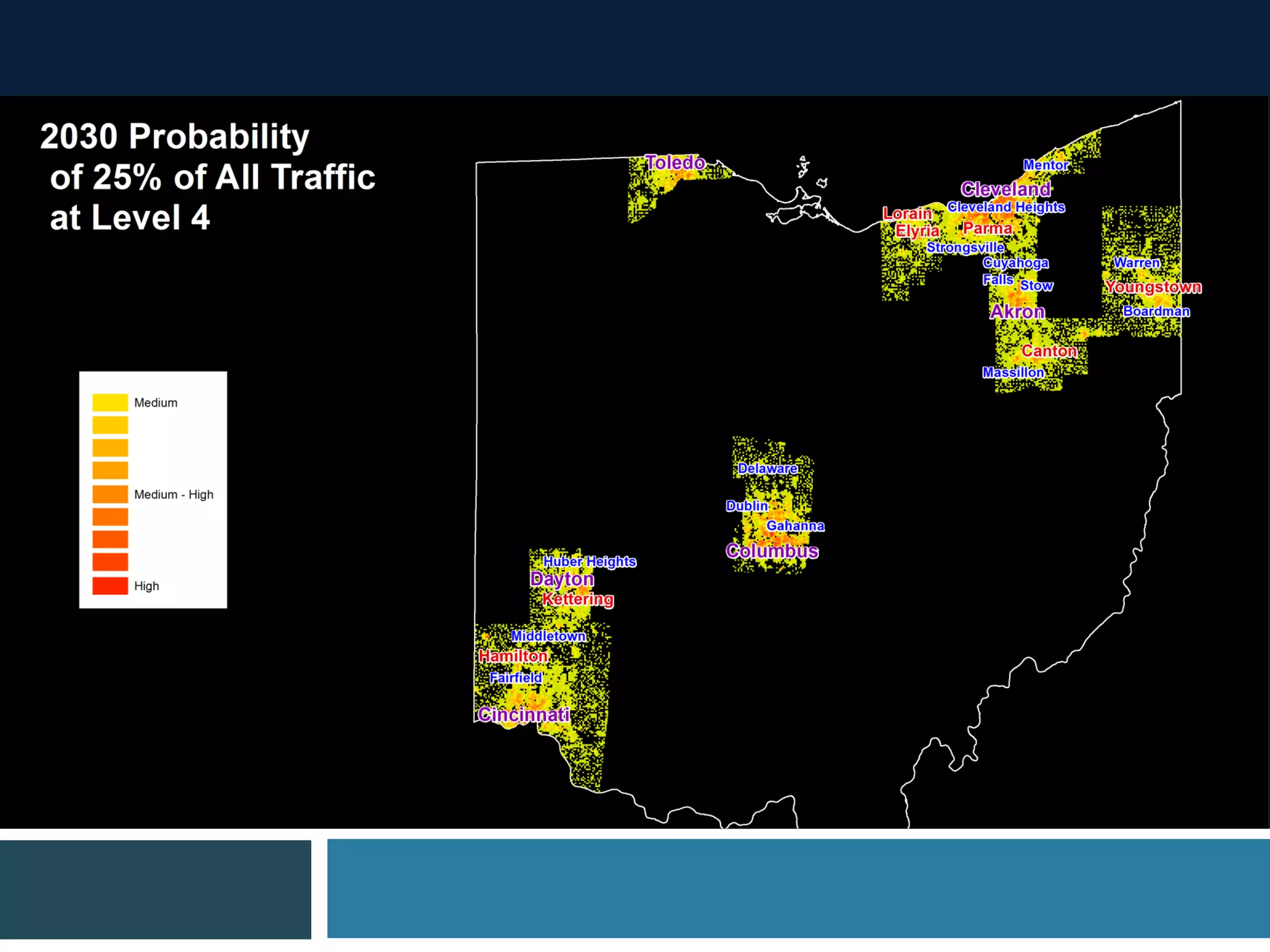
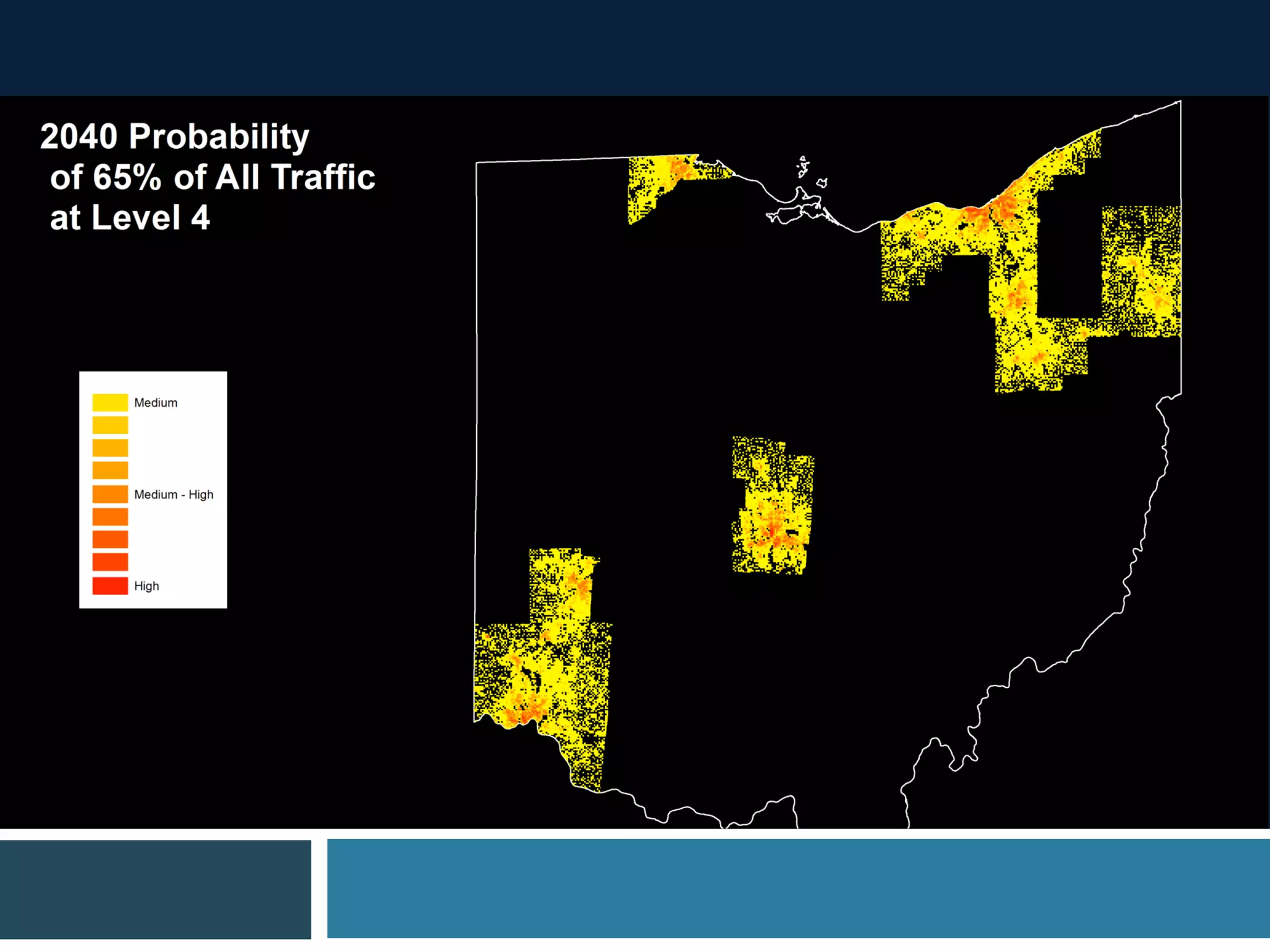
ADOPTION READINESS (TODAY)
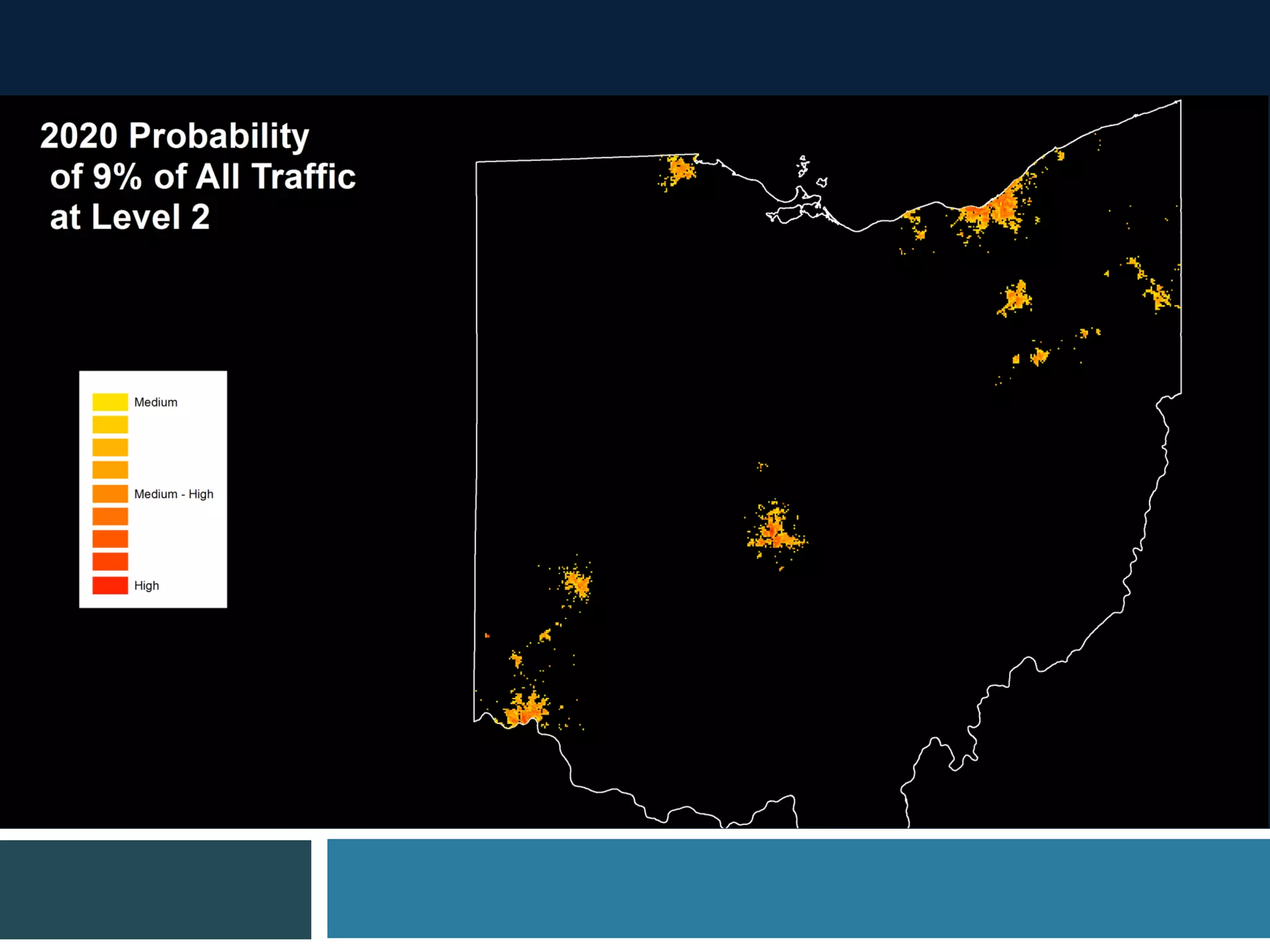
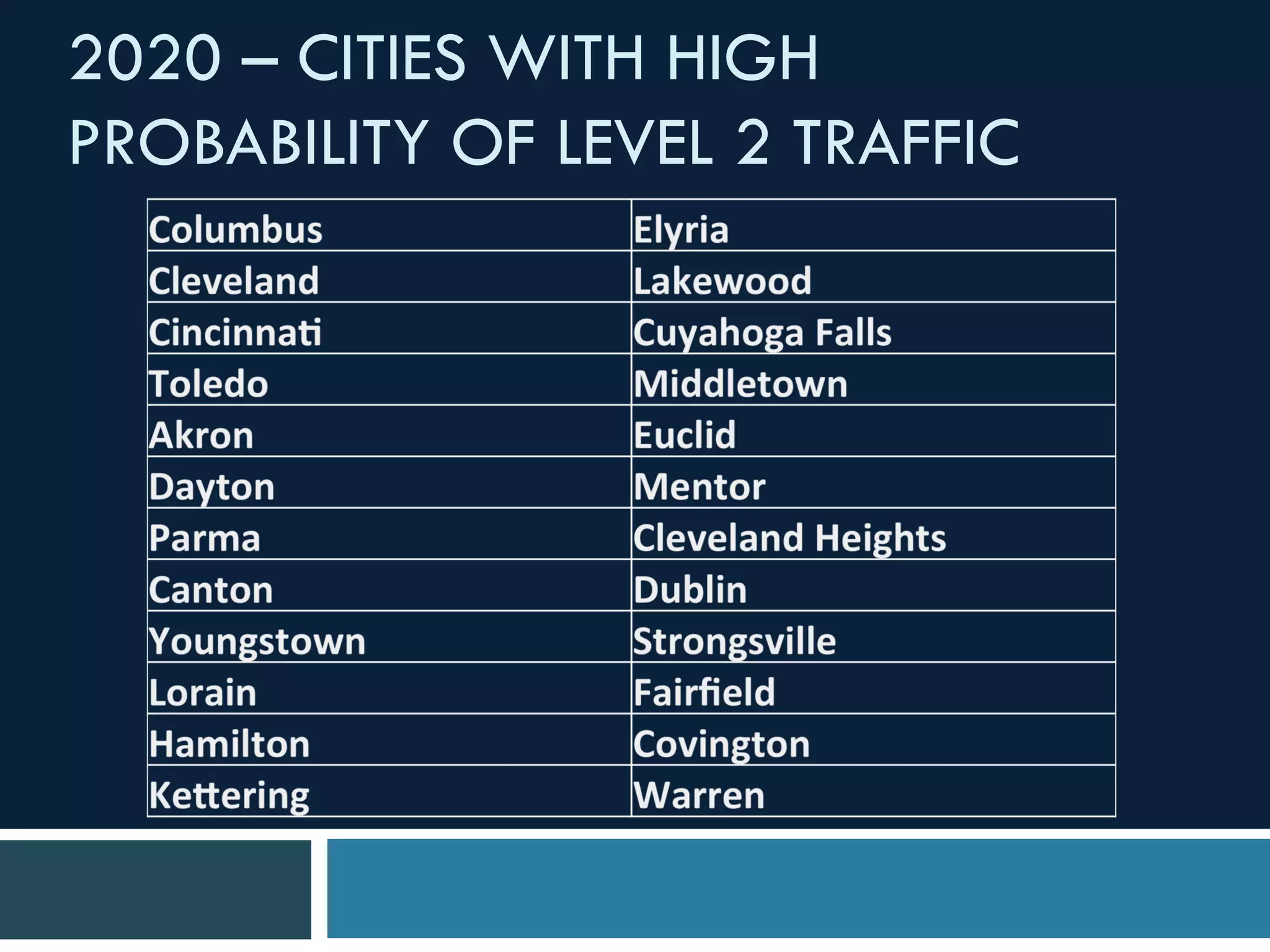
2020 – CITIES WITH HIGH
PROBABILITY OF LEVEL 2 TRAFFIC
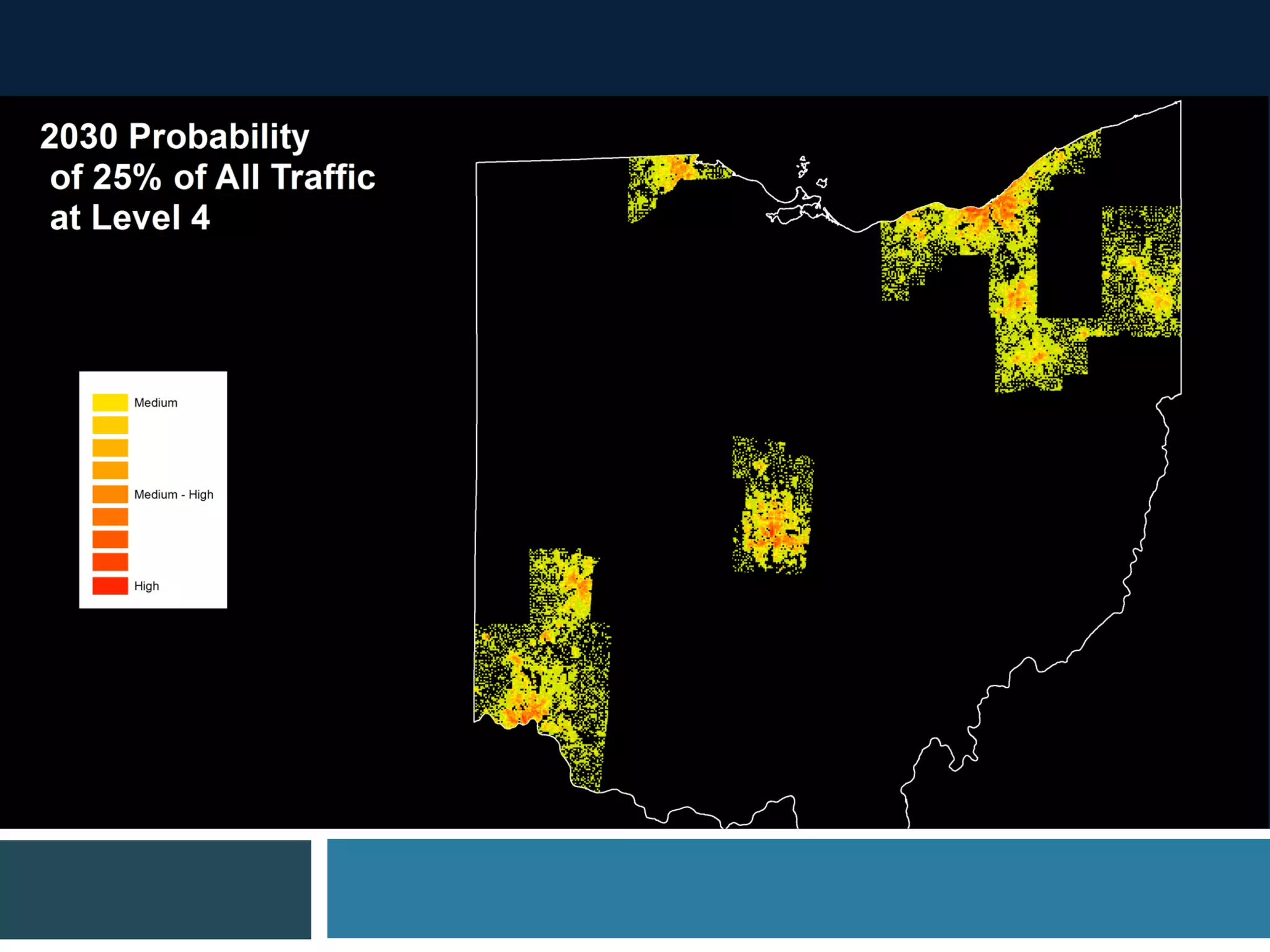
• OWNERSHIP MODEL MORE WIDELY ADOPTED ON A
GEOGRAPHIC SCALE
• SHARED MODEL LIKELY TO HAVE MORE USERS (LONG-TERM)
• HYBRID OF THE MODELS IS MOST LIKELY OUTCOME
IMPACTS
TYPICAL DEVELOPMENT “RULES”
TYPICAL DEVELOPMENT STANDARDS:
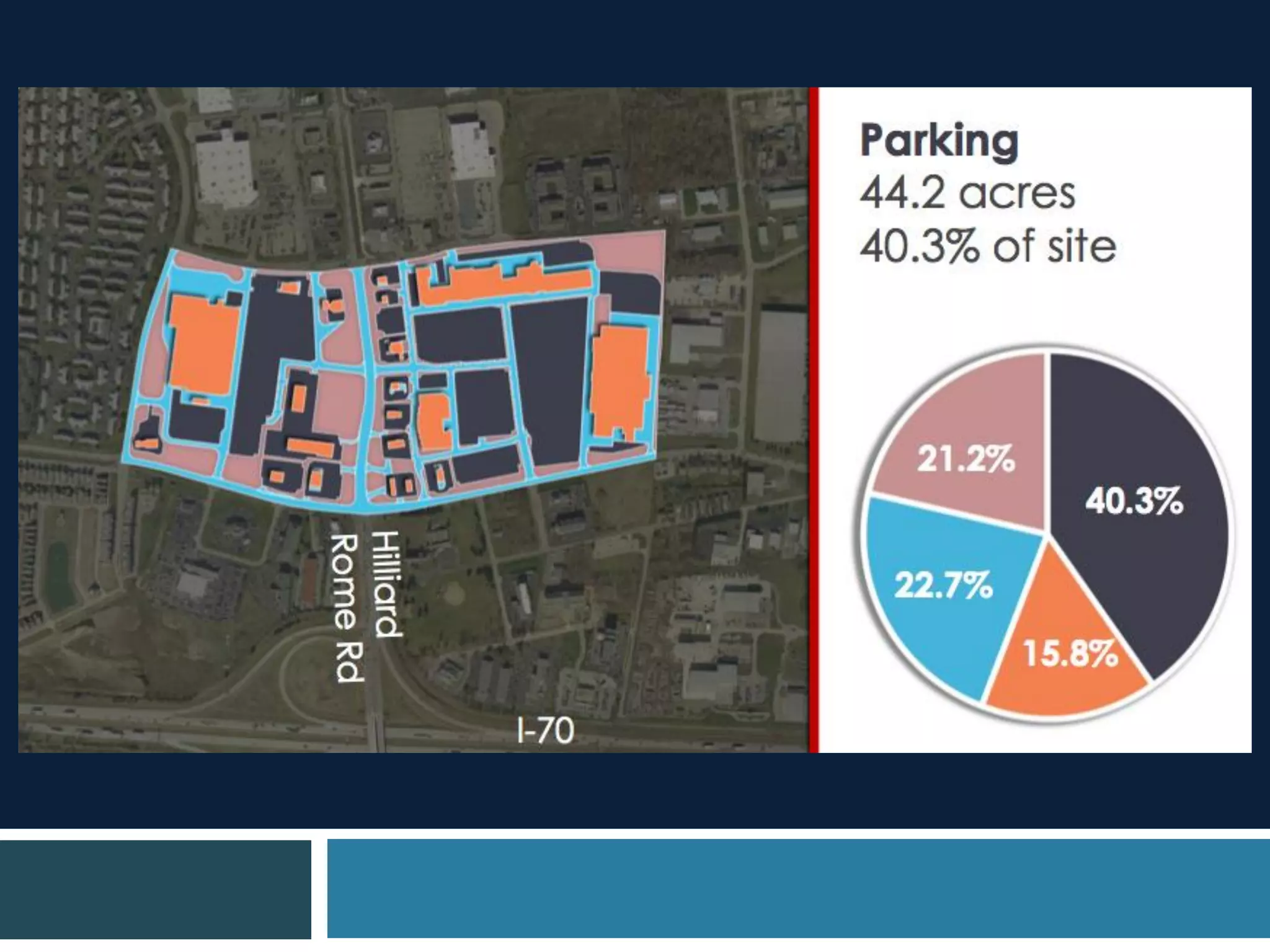
• 3-5 parking spaces per 1,000 square feet
• Results in 40% of land needed for surface parking
• Expect to get 10,000 square feet of commercial floor area per acre.
• Other 33,000 s.f. of site area used for parking, circulation, storm,
setbacks.
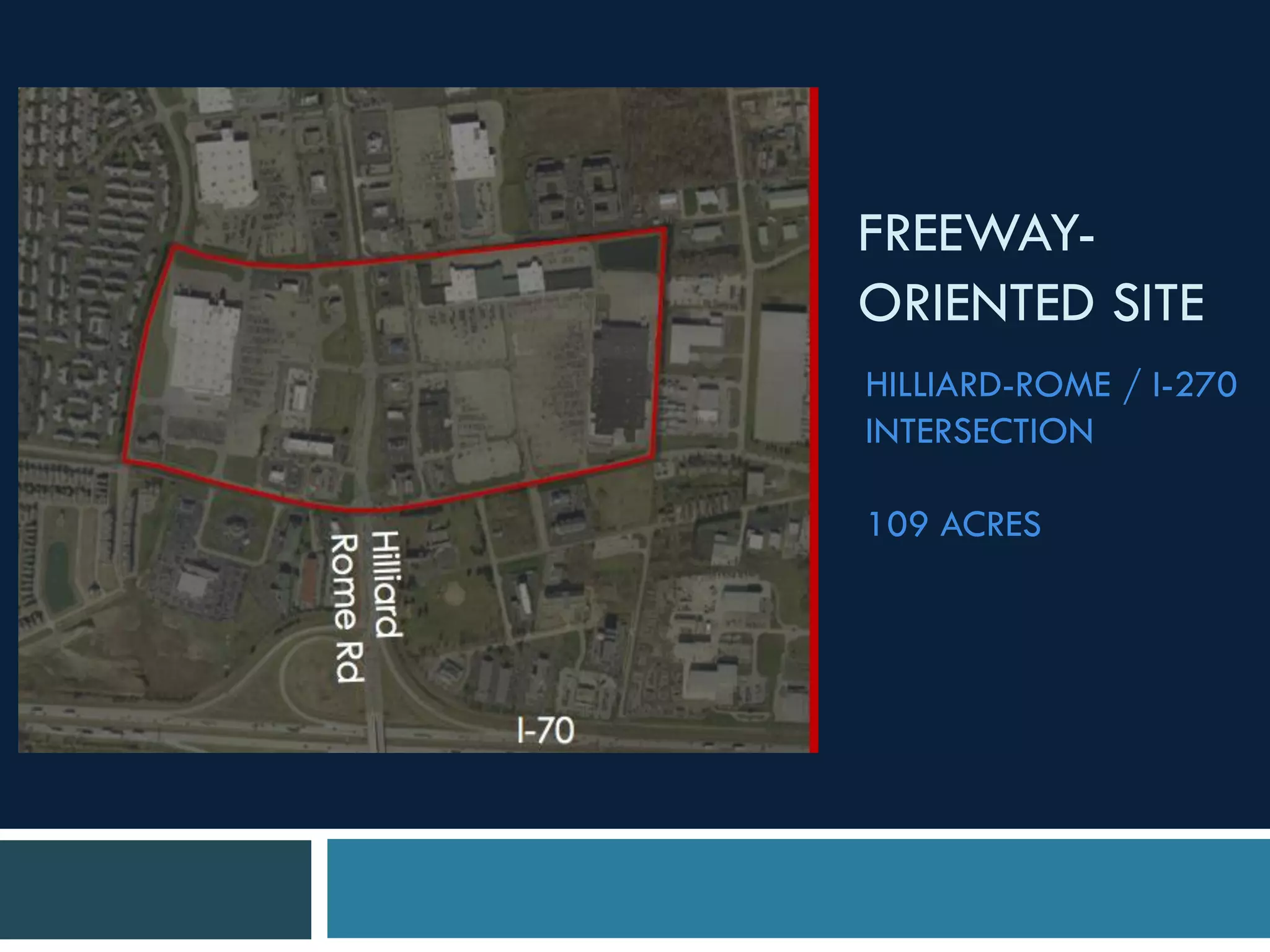
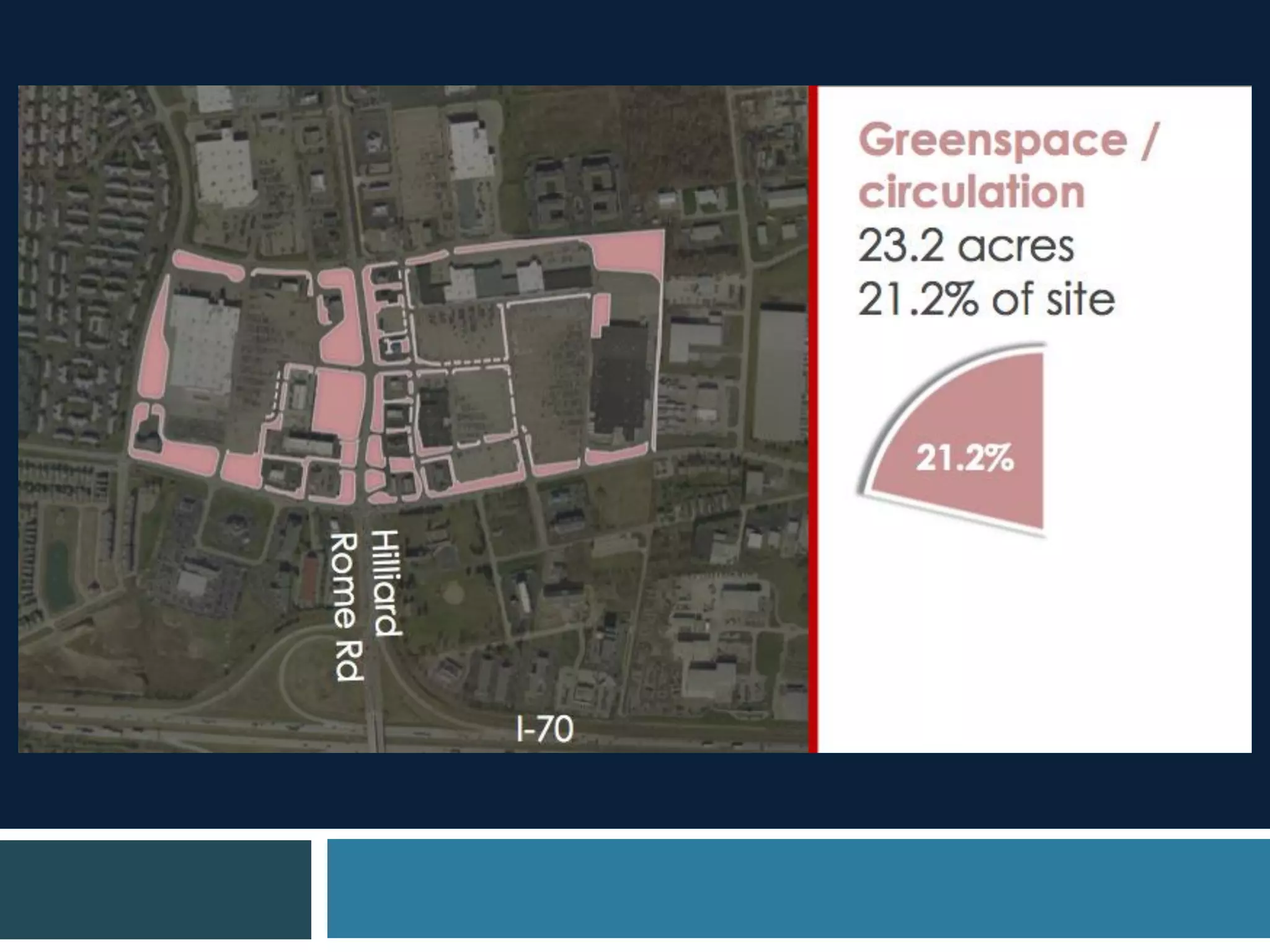
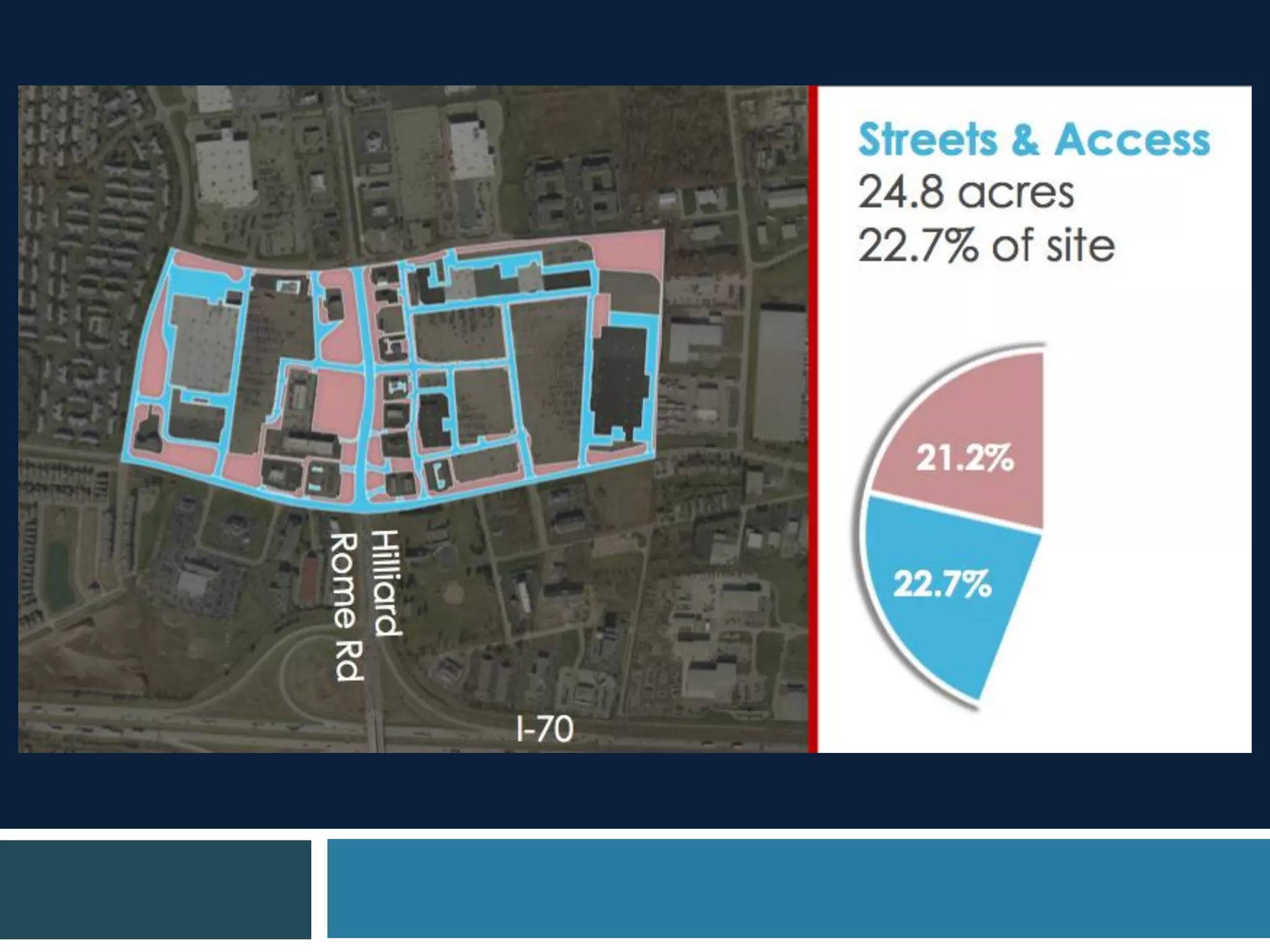
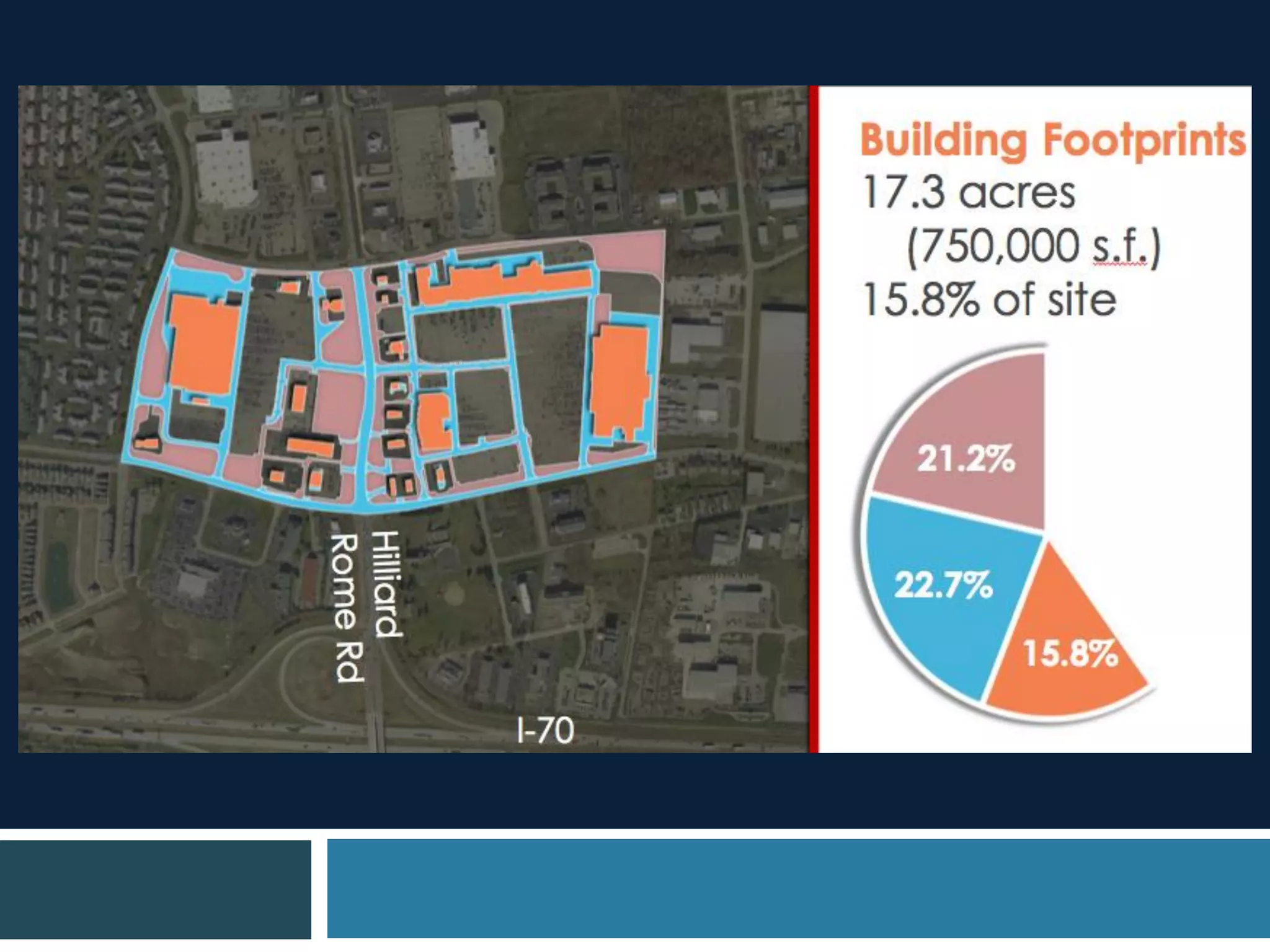
HILLIARD-ROME / I-270
INTERSECTION
109 ACRES
FREEWAY-
ORIENTED SITE
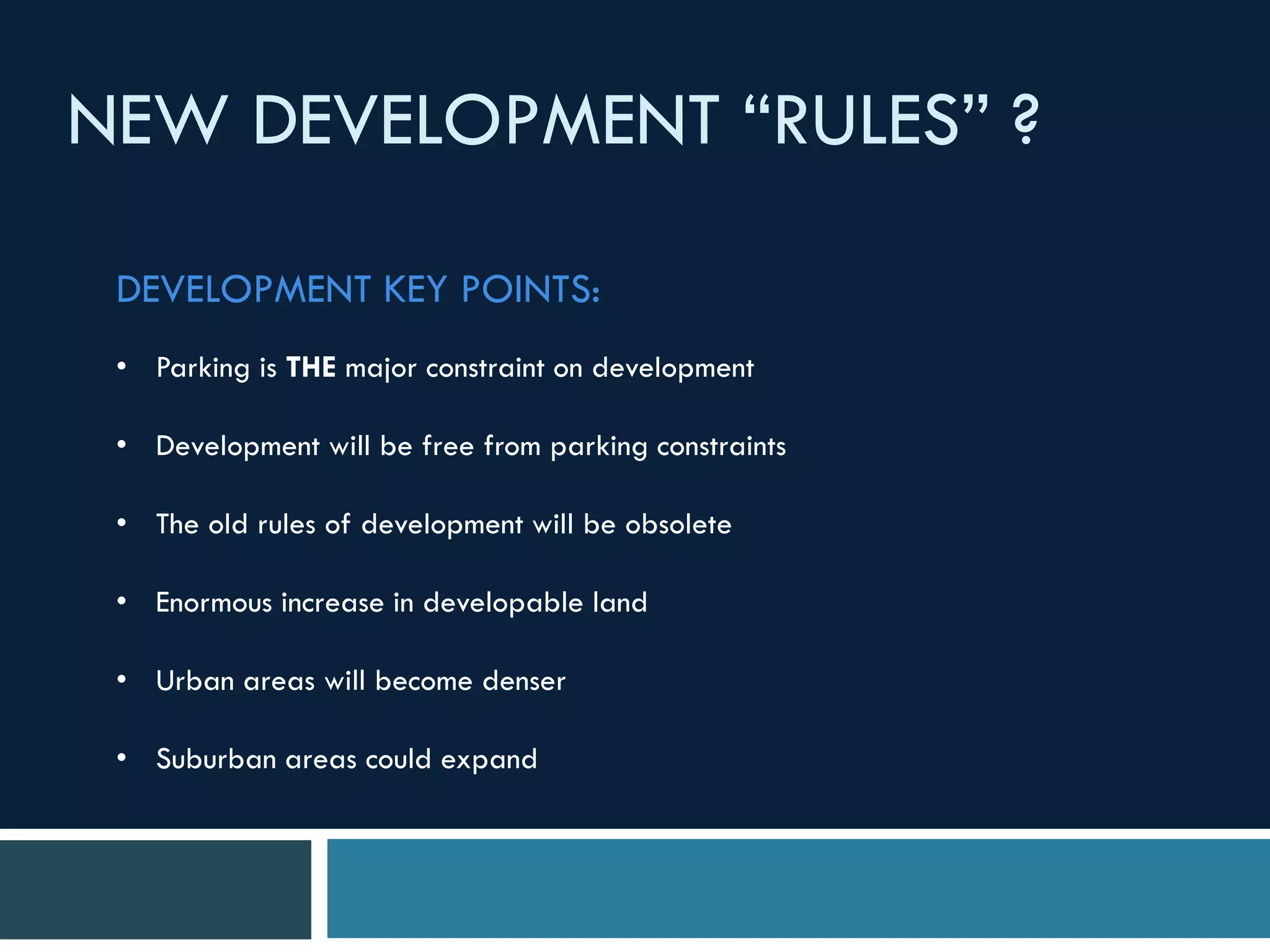
NEW DEVELOPMENT “RULES” ?
DEVELOPMENT KEY POINTS:
• Parking is THE major constraint on development
• Development will be free from parking constraints
• The old rules of development will be obsolete
• Enormous increase in developable land
• Urban areas will become denser
• Suburban areas could expand
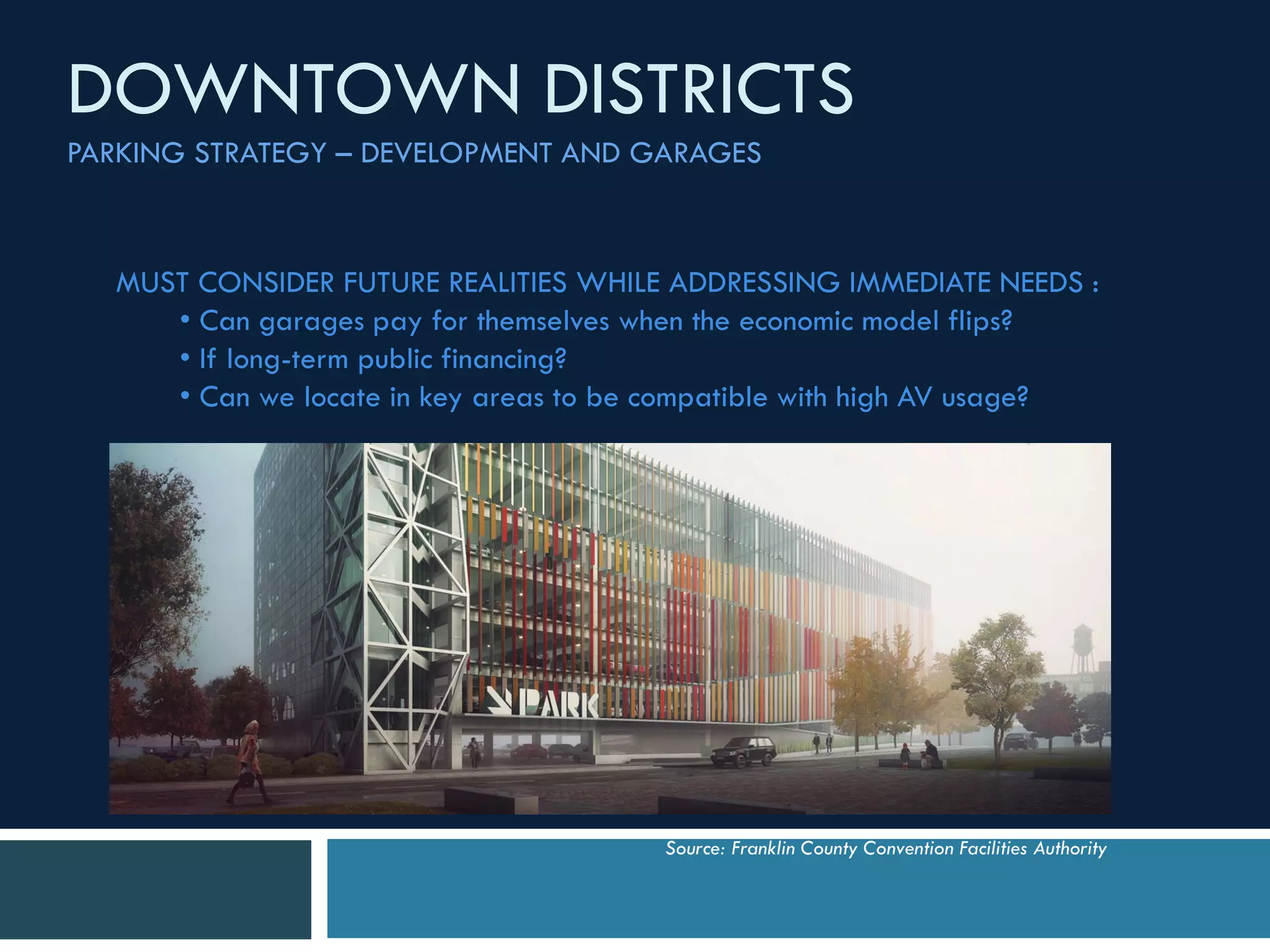
MUST CONSIDER FUTURE REALITIES WHILE ADDRESSING IMMEDIATE NEEDS :
• Can garages pay for themselves when the economic model flips?
• If long-term public financing?
• Can we locate in key areas to be compatible with high AV usage?
DOWNTOWN DISTRICTS
PARKING STRATEGY – DEVELOPMENT AND GARAGES
Source: Franklin County Convention Facilities Authority
• TYPICAL URBAN NEIGHBORHOOD STREET
• ON-STREET PARKING SPACES IN 8-9 FOOT LANE
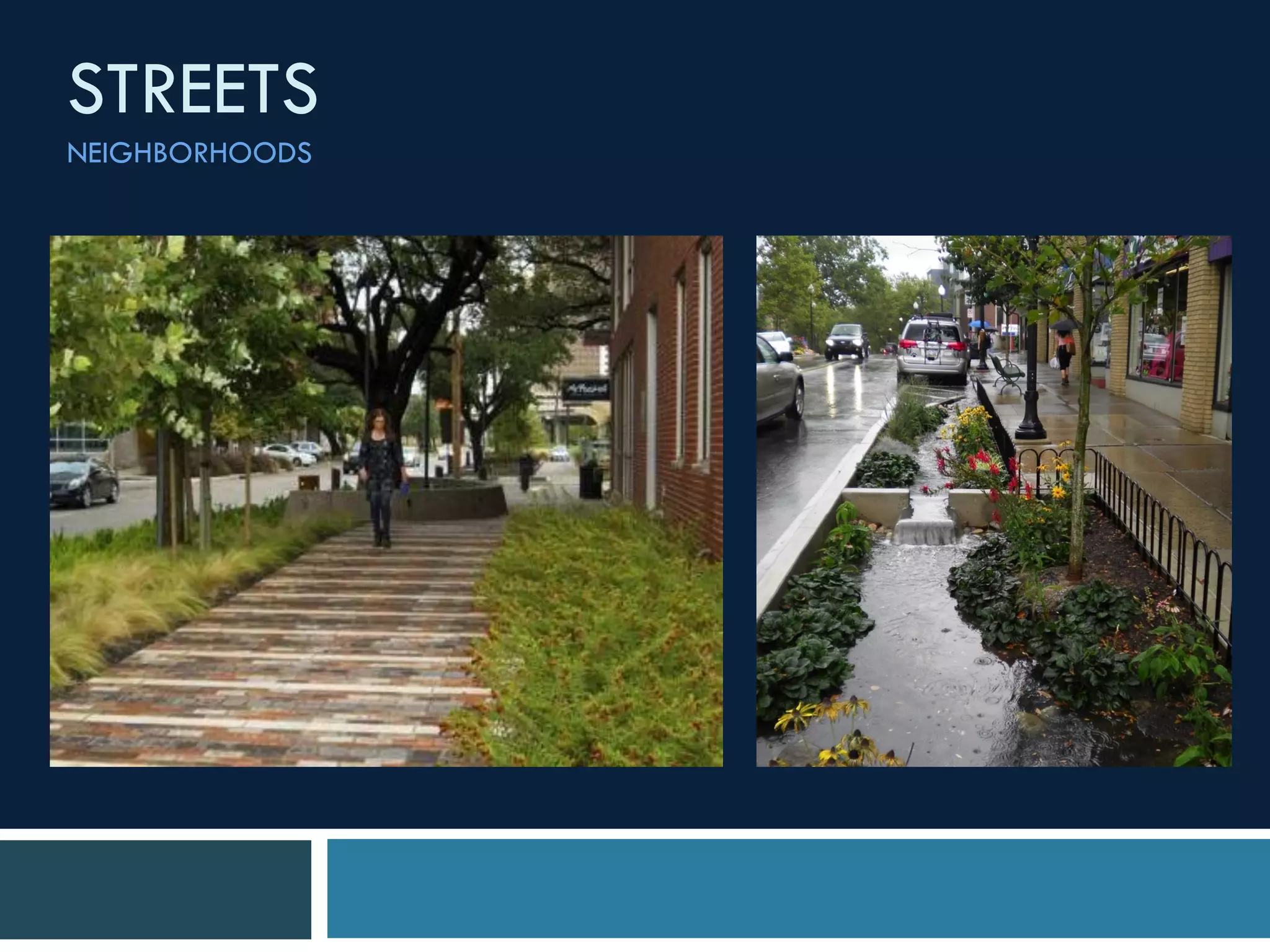
• IF LITTLE OR NO ON-STREET PARKING NEEDED, REPURPOSE
STREETS:
• Stormwater controls
• Recreation
• Narrowing
• Buildable?
STREETS
NEIGHBORHOODS
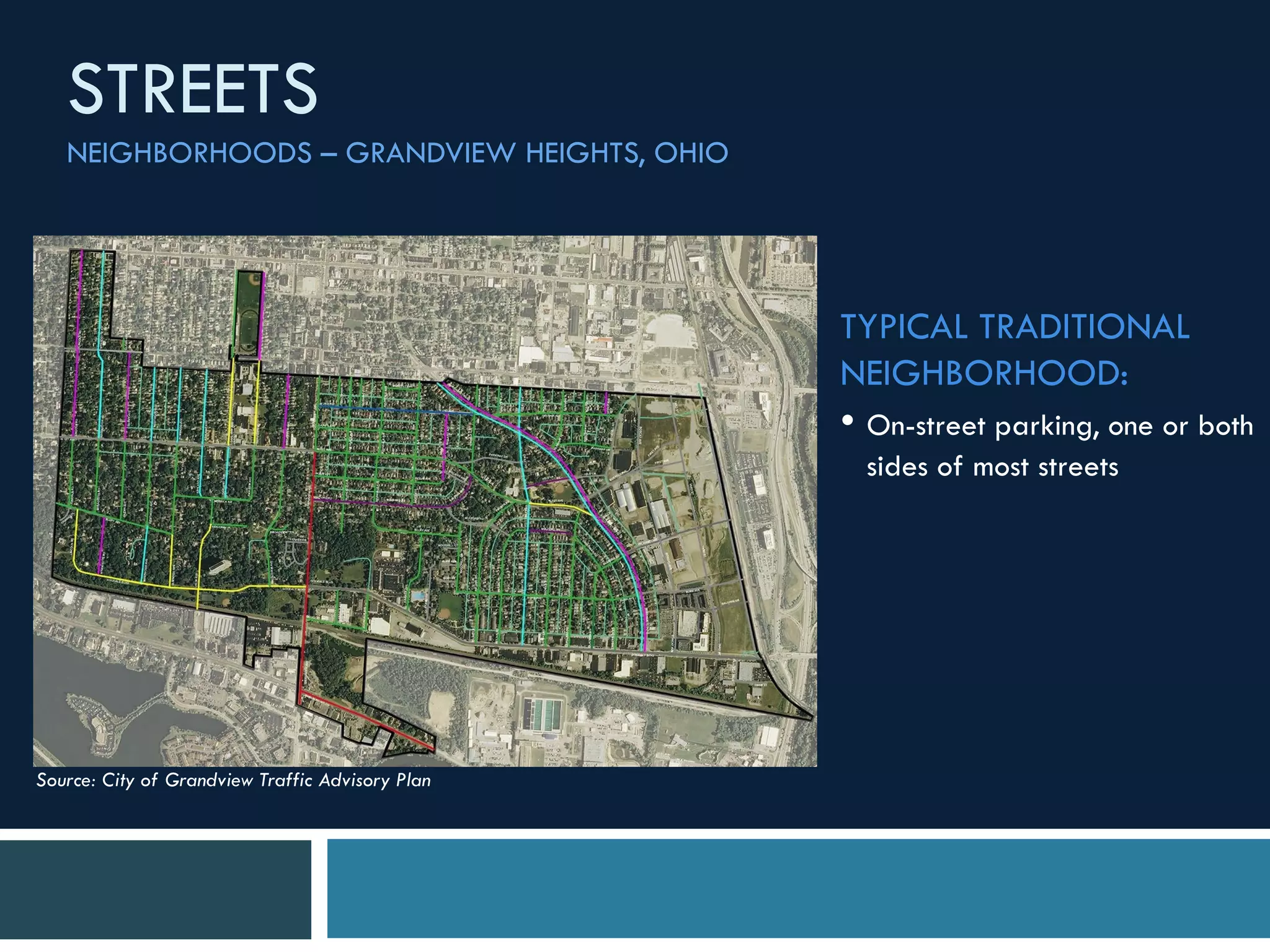
• TYPICAL TRADITIONAL
NEIGHBORHOOD:
• On-street parking, one or both
sides of most streets
STREETS
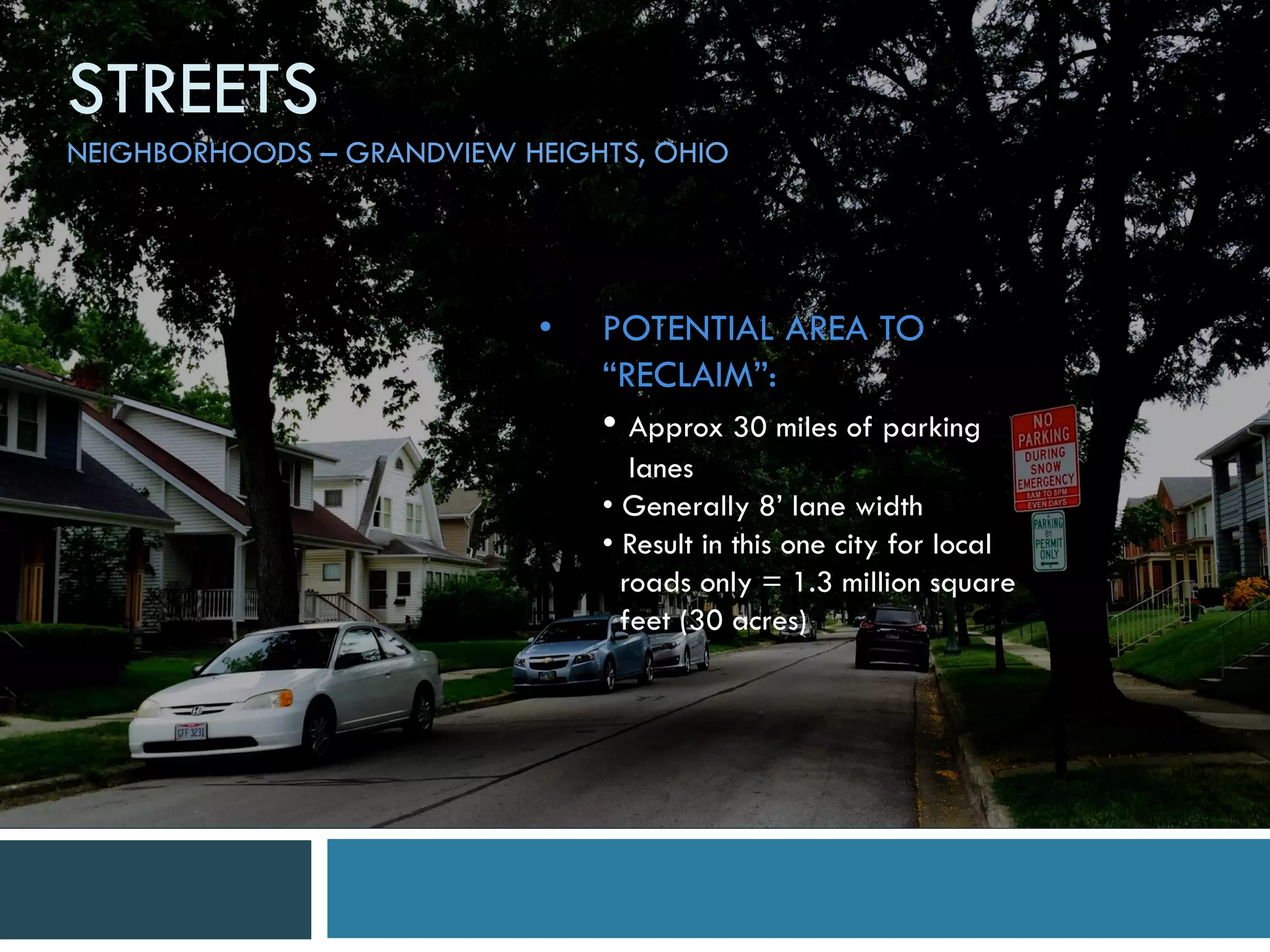
NEIGHBORHOODS – GRANDVIEW HEIGHTS, OHIO
Source: City of Grandview Traffic Advisory Plan
• POTENTIAL AREA TO
“RECLAIM”:
• Approx 30 miles of parking
lanes
• Generally 8’ lane width
• Result in this one city for local
roads only = 1.3 million square
feet (30 acres)
STREETS
NEIGHBORHOODS – GRANDVIEW HEIGHTS, OHIO
STREETS
NEIGHBORHOODS
WHAT SHOULD PLANNERS
BE DOING?
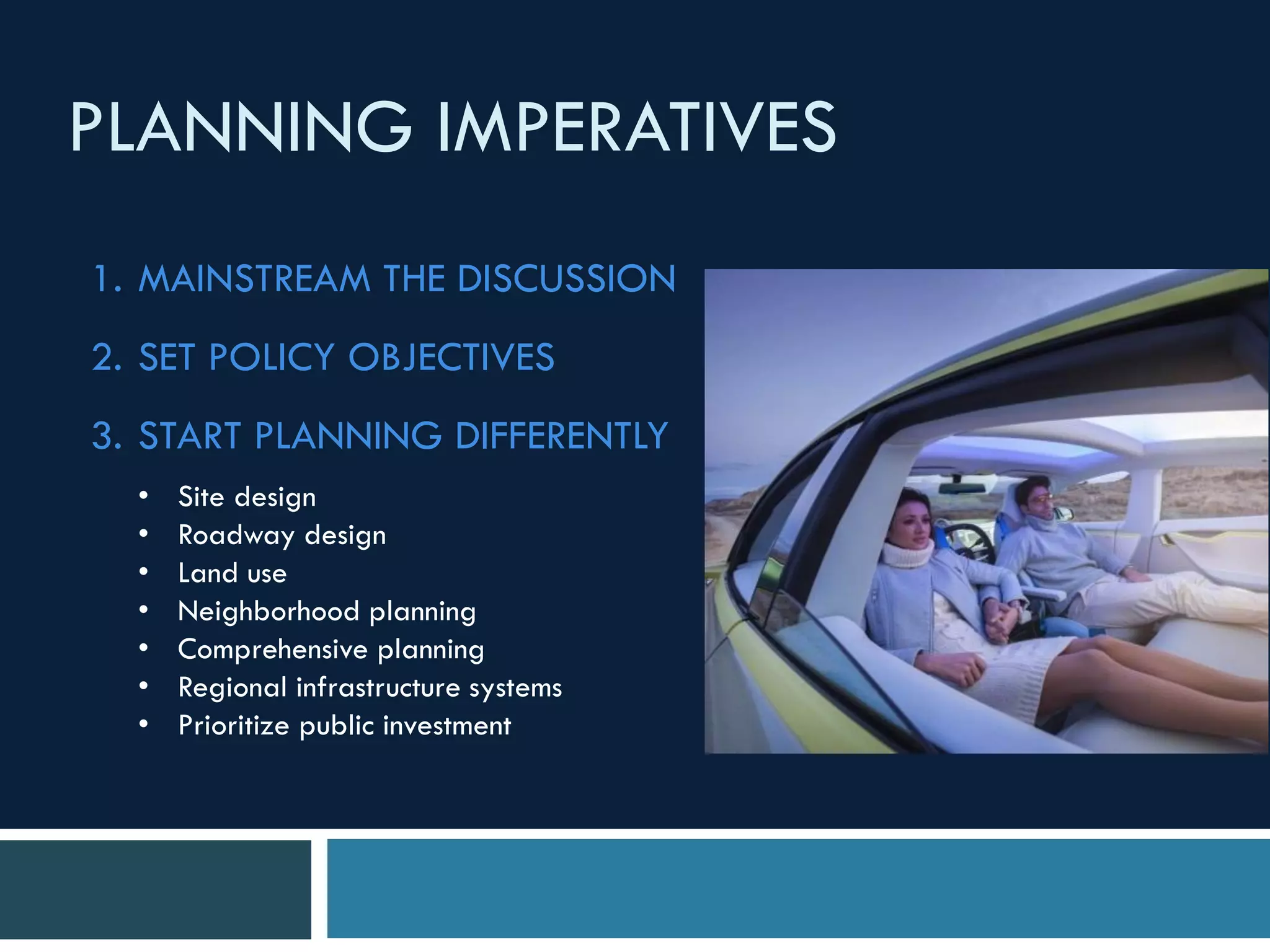
1. MAINSTREAM THE DISCUSSION
2. SET POLICY OBJECTIVES
3. START PLANNING DIFFERENTLY
• Site design
• Roadway design
• Land use
• Neighborhood planning
• Comprehensive planning
• Regional infrastructure systems
• Prioritize public investment
PLANNING IMPERATIVES
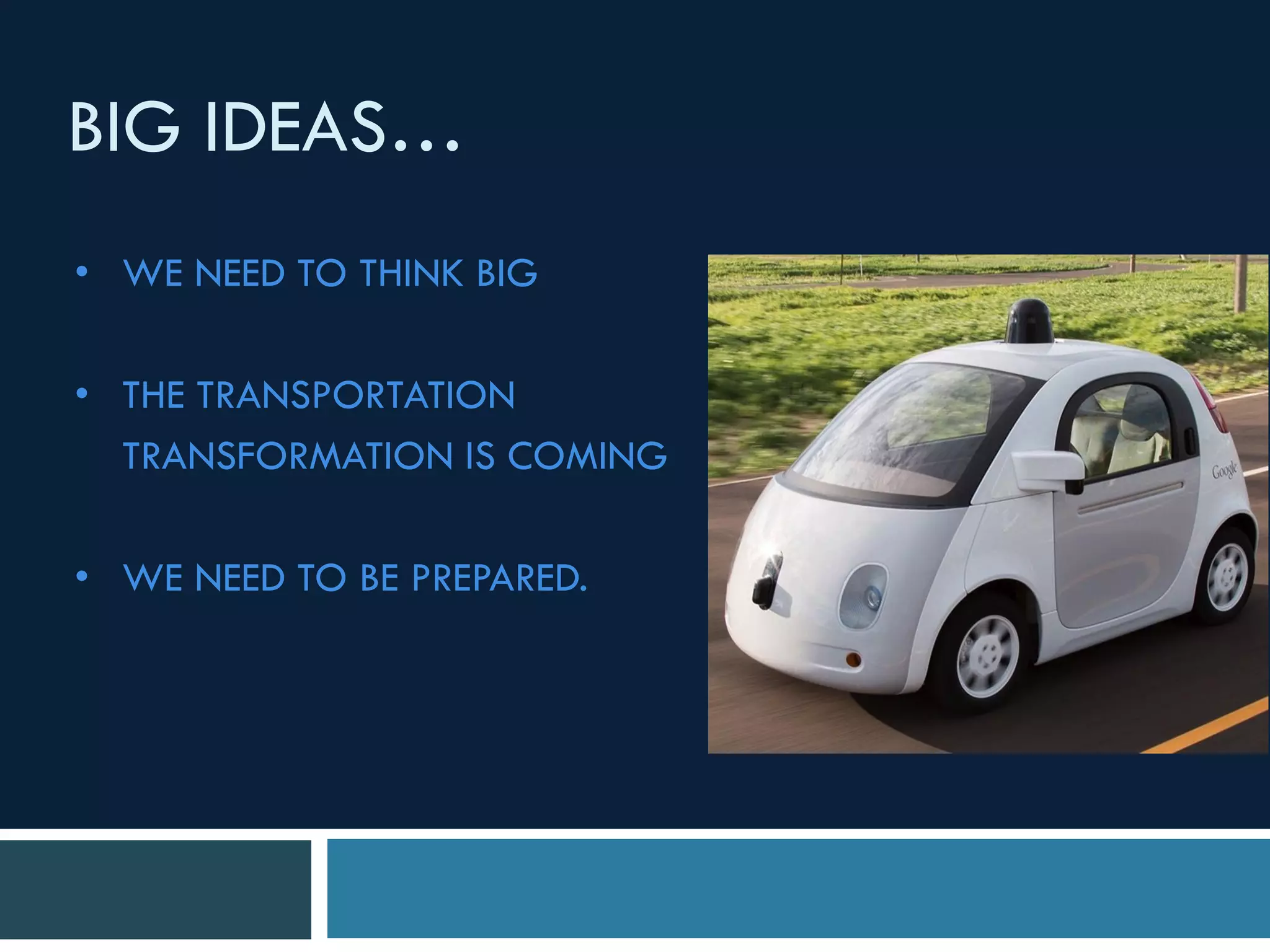
• WE NEED TO THINK BIG
• THE TRANSPORTATION
TRANSFORMATION IS COMING
• WE NEED TO BE PREPARED.
BIG IDEAS…
THANK YOU.
QUESTIONS?

The Next Distruptive Technology

  • 1.
    THE NEXT DISRUPTIVE TECHNOLOGY HOWAUTONOMOUS CARS WILL FUNDAMENTALLY RESHAPE OUR CITIES, AND WHY IT SHOULD MATTER TO YOU.
  • 2.
    Jason Sudy, AICP Founder,Principal Side Street Planning Justin Robbins, AICP Senior Planner OHM Advisors Rick Stein, AICP Founder, Principal Urban Decision Group
  • 3.
  • 4.
    AS A PLANNING-RELATED PROFESSIONAL: •WHAT SHOULD YOU BE DOING TODAY? • WHAT WILL YOU HAVE TO UNDERSTAND IN THE NEXT FEW YEARS? • HOW DO WE PREPARE FOR THE FUTURE? • WE MUST BE THINKING ABOUT THIS NOW!
  • 5.
  • 6.
    PRE-1940S SITE DEVELOPMENT -UNITED STATES TYPICAL
  • 7.
  • 8.
  • 9.
  • 10.
    • ROADWAY NETWORKS •NEIGHBORHOOD PLANNING • SITE DESIGN THIS IS OUR CHANCE… TO UNDO OUR PAST MISTAKES.
  • 11.
    HOW WILL THISIMPACT… EVERYTHING? • Insurance industry • Health insurance – drastically fewer accidents and youth deaths • Need for increased communications technology • Hacking dangers of on-board computers • Overall economy • Lost industries • Land prices re-evaluated when parking demand shrinks • Automotive industry • Public transportation • Commercial drivers • Taxi & Uber • Bus and train • Commercial hauling • Automotive companies – volume of vehicles needed per year? • Automotive workers – volume of vehicles needed per year?
  • 12.
    U.S. Motor VehicleCrash Information CURRENT DRIVING REALITIES ENO CENTER FOR TRANSPORTATION PREPARING A NATION FOR AUTONOMOUS VEHICLES (2013) Total Crashes per year in US 5.5 million % human cause as primary factor 93% Economic Costs of U.S. Crashes $300 billions % of U.S. GDP 2% Total Fatal & Injurious Crashes per Year in U.S 2.22 million Fatal Crashes per year in U.S. 32,367 Source: ENO table - U.S. Crash Motor Vehicle Scope and Selected Human and Environmental Factor Involvement
  • 13.
    Estimates of AnnualImpacts from AVs in the United States ESTIMATED AV IMPACTS ENO CENTER FOR TRANSPORTATION PREPARING A NATION FOR AUTONOMOUS VEHICLES (2013) Source: ENO table - Estimates of Annual Economic Benefits from AVs in the United States
  • 14.
    IMPACTS FOR PLANNING •Site Design • Corridor / neighborhood design and planning • Community-wide comprehensive and strategic planning • Land Use • Zoning Codes and guidelines • Public Realm design • Transportation systems • Active transportation impacts – pedestrians and bicyclists
  • 15.
  • 16.
    POTENTIAL ADOPTION MODELS? INDIVIDUALOWNERSHIP Likely scenarios / adopters • Exurban and low-density suburban • Older demographic SHARED OWNERSHIP Likely scenarios / adopters • Denser urban environments • Younger demographic • Current ride service users • App-based ride service (think driverless-UBER) • Could be subscription or individual ride pricing model
  • 17.
    NEW WAY TOTHINK ABOUT TRANSPORTATION OPTIONS: • You buy mobility, and not machines! • Transportation as a service, rather than an ownership model ADOPTION POTENTIAL APPROACHES Source: Barclays Research Insights on Disruptive Mobility (2015) – Barclays Bank PLC
  • 18.
  • 19.
    CUYAHOGA – 1,255,730 FRANKLIN– 1,217,853 HAMILTON – 806,883 SUMMIT – 541,227 MONTGOMERY – 532,757 LUCAS – 434,882 STARK – 376,401 BUTLER – 373,646 15 MOST POPULOUS COUNTIES IN OHIO LORAIN – 302,925 MAHONING – 232,411 LAKE – 230,383 WARREN – 223,171 TRUMBULL – 205,170 CLERMONT – 202,685 DELAWARE – 189,340
  • 20.
    • PARCEL DATA– LAND USE • TRANSPORTATION INFRASTRUCTURE & USAGE CHARACTERISTICS • COMMUTING CHARACTERISTICS • HOUSING CHARACTERISTICS • BUSINESS & SERVICE CHARACTERISTICS • POPULATION BY AGE AND DENSITY • INCOME CHARACTERISTICS WHERE AND HOW FAST?
  • 22.
    * STRONG CORRELATIONWITH LOCATION OF UNIVERSITIES ADOPTION READINESS (TODAY)
  • 24.
    2020 – CITIESWITH HIGH PROBABILITY OF LEVEL 2 TRAFFIC
  • 30.
    • OWNERSHIP MODELMORE WIDELY ADOPTED ON A GEOGRAPHIC SCALE • SHARED MODEL LIKELY TO HAVE MORE USERS (LONG-TERM) • HYBRID OF THE MODELS IS MOST LIKELY OUTCOME
  • 31.
  • 32.
    TYPICAL DEVELOPMENT “RULES” TYPICALDEVELOPMENT STANDARDS: • 3-5 parking spaces per 1,000 square feet • Results in 40% of land needed for surface parking • Expect to get 10,000 square feet of commercial floor area per acre. • Other 33,000 s.f. of site area used for parking, circulation, storm, setbacks.
  • 33.
    HILLIARD-ROME / I-270 INTERSECTION 109ACRES FREEWAY- ORIENTED SITE
  • 38.
    NEW DEVELOPMENT “RULES”? DEVELOPMENT KEY POINTS: • Parking is THE major constraint on development • Development will be free from parking constraints • The old rules of development will be obsolete • Enormous increase in developable land • Urban areas will become denser • Suburban areas could expand
  • 39.
    MUST CONSIDER FUTUREREALITIES WHILE ADDRESSING IMMEDIATE NEEDS : • Can garages pay for themselves when the economic model flips? • If long-term public financing? • Can we locate in key areas to be compatible with high AV usage? DOWNTOWN DISTRICTS PARKING STRATEGY – DEVELOPMENT AND GARAGES Source: Franklin County Convention Facilities Authority
  • 40.
    • TYPICAL URBANNEIGHBORHOOD STREET • ON-STREET PARKING SPACES IN 8-9 FOOT LANE • IF LITTLE OR NO ON-STREET PARKING NEEDED, REPURPOSE STREETS: • Stormwater controls • Recreation • Narrowing • Buildable? STREETS NEIGHBORHOODS
  • 41.
    • TYPICAL TRADITIONAL NEIGHBORHOOD: •On-street parking, one or both sides of most streets STREETS NEIGHBORHOODS – GRANDVIEW HEIGHTS, OHIO Source: City of Grandview Traffic Advisory Plan
  • 42.
    • POTENTIAL AREATO “RECLAIM”: • Approx 30 miles of parking lanes • Generally 8’ lane width • Result in this one city for local roads only = 1.3 million square feet (30 acres) STREETS NEIGHBORHOODS – GRANDVIEW HEIGHTS, OHIO
  • 43.
  • 44.
  • 45.
    1. MAINSTREAM THEDISCUSSION 2. SET POLICY OBJECTIVES 3. START PLANNING DIFFERENTLY • Site design • Roadway design • Land use • Neighborhood planning • Comprehensive planning • Regional infrastructure systems • Prioritize public investment PLANNING IMPERATIVES
  • 46.
    • WE NEEDTO THINK BIG • THE TRANSPORTATION TRANSFORMATION IS COMING • WE NEED TO BE PREPARED. BIG IDEAS…
  • 47.