
The Nervous System ระบบประสาท
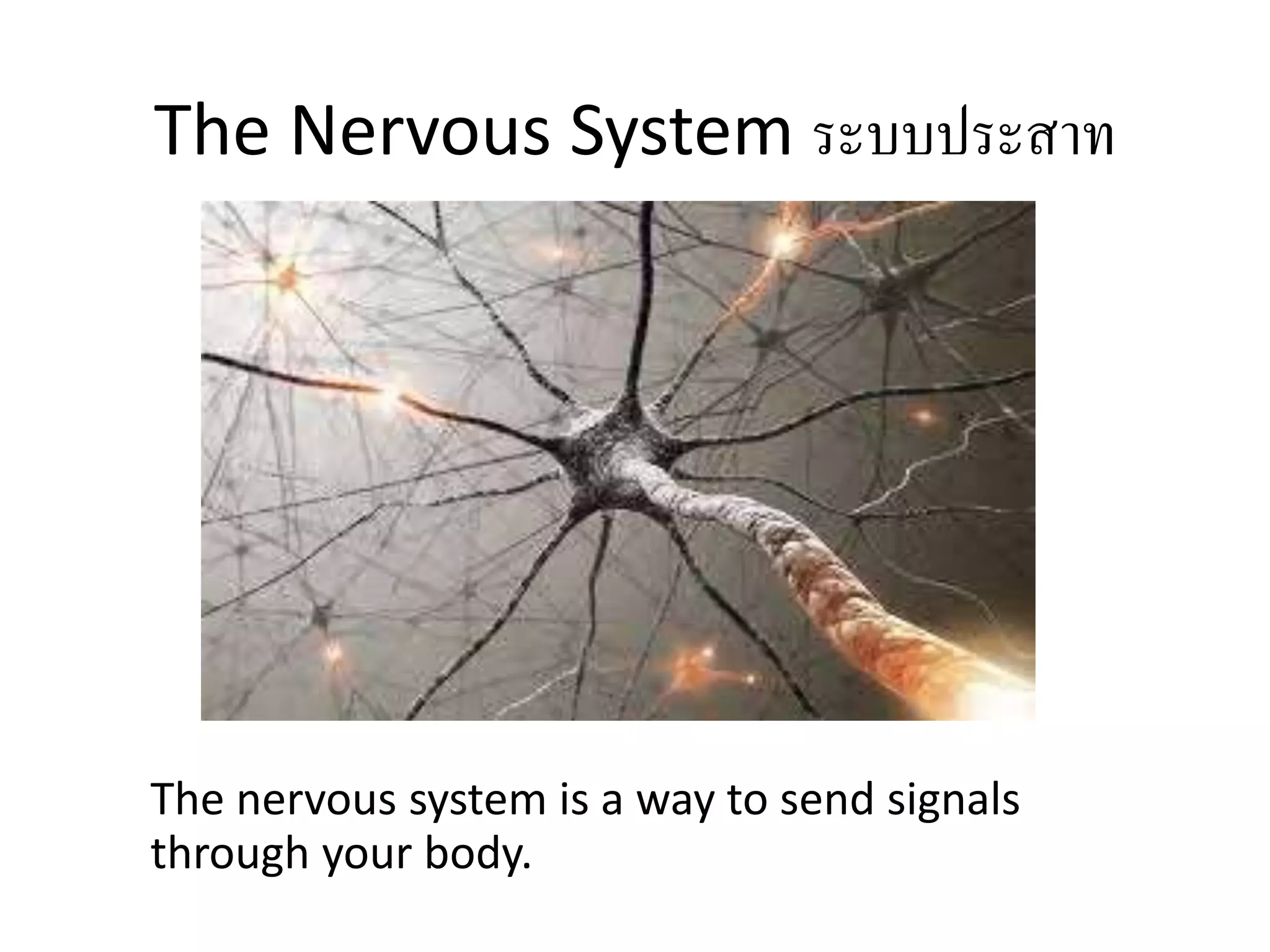
The nervous system is a way to send signals
through your body.
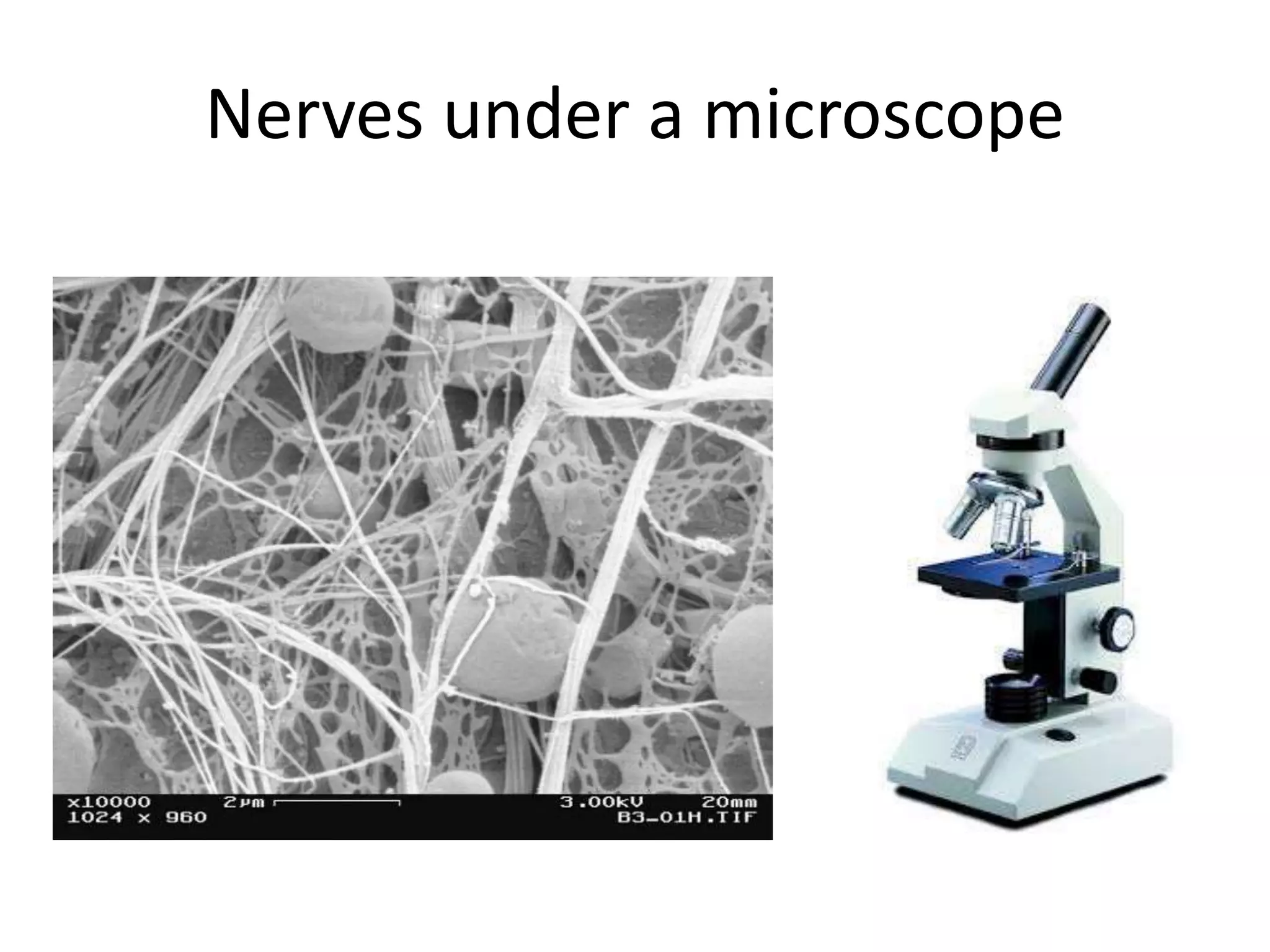
Nerves under a microscope
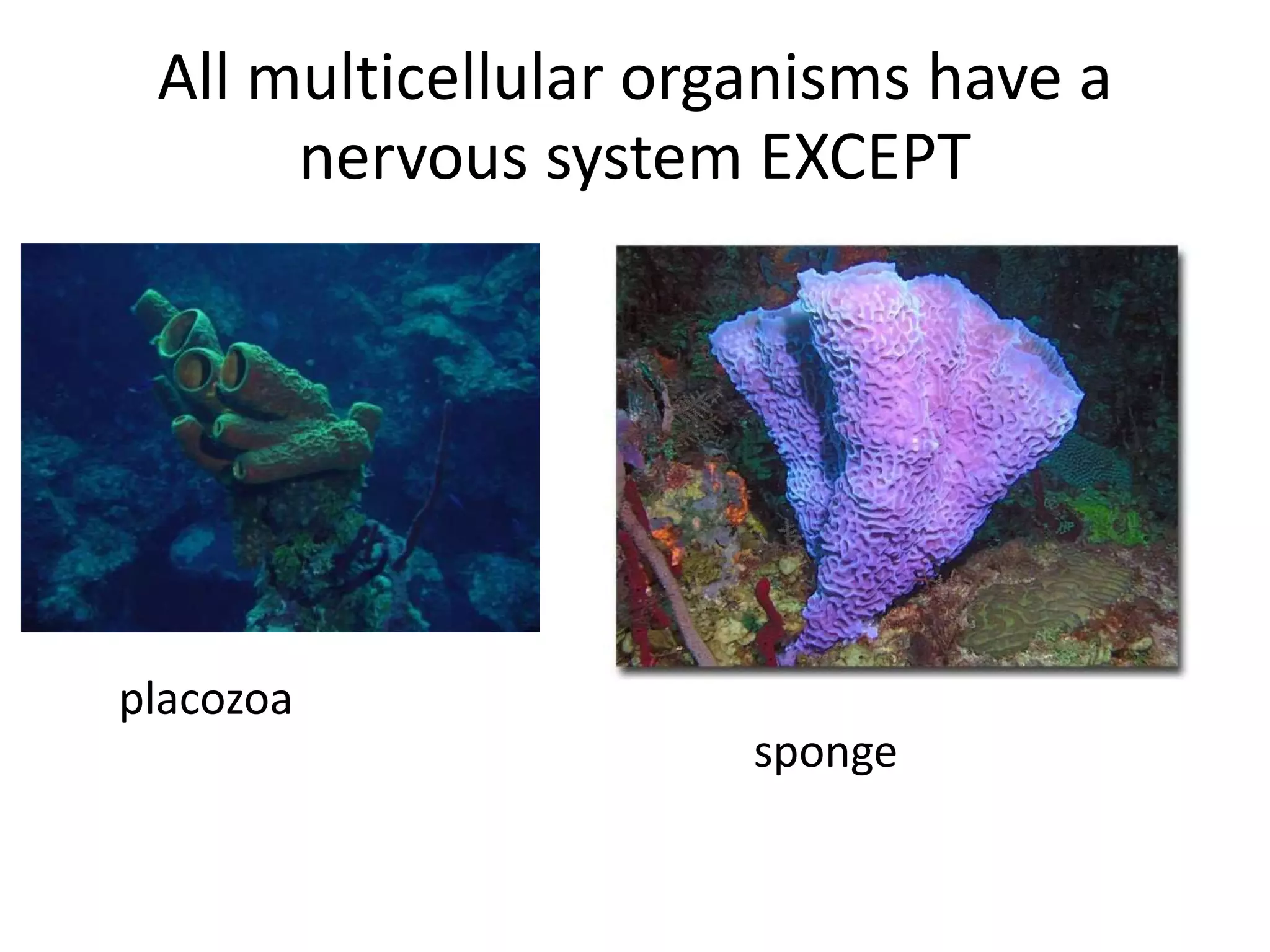
All multicellular organisms have a
nervous system EXCEPT
placozoa
sponge
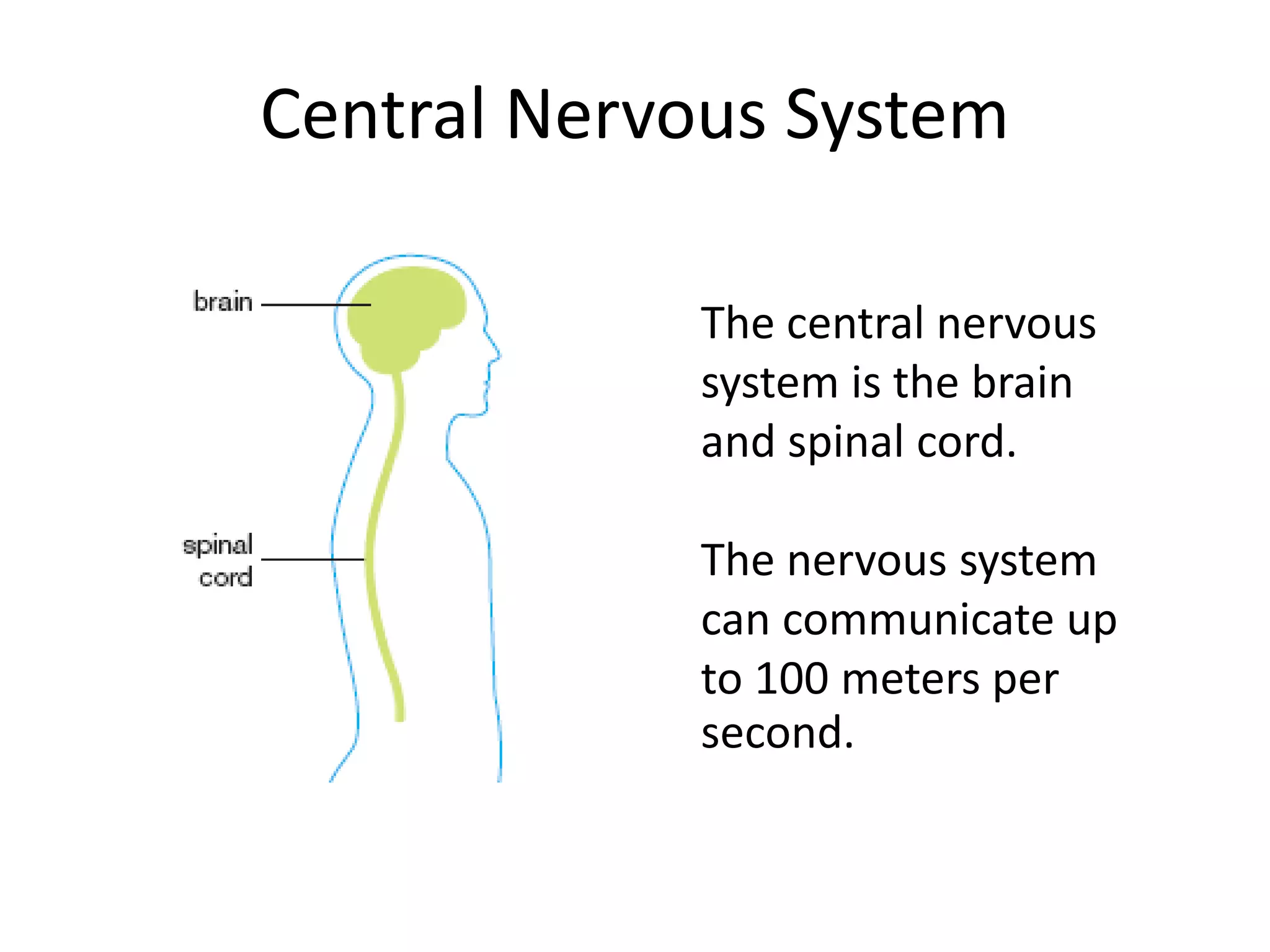
Central Nervous System
The central nervous
system is the brain
and spinal cord.
The nervous system
can communicate up
to 100 meters per
second.
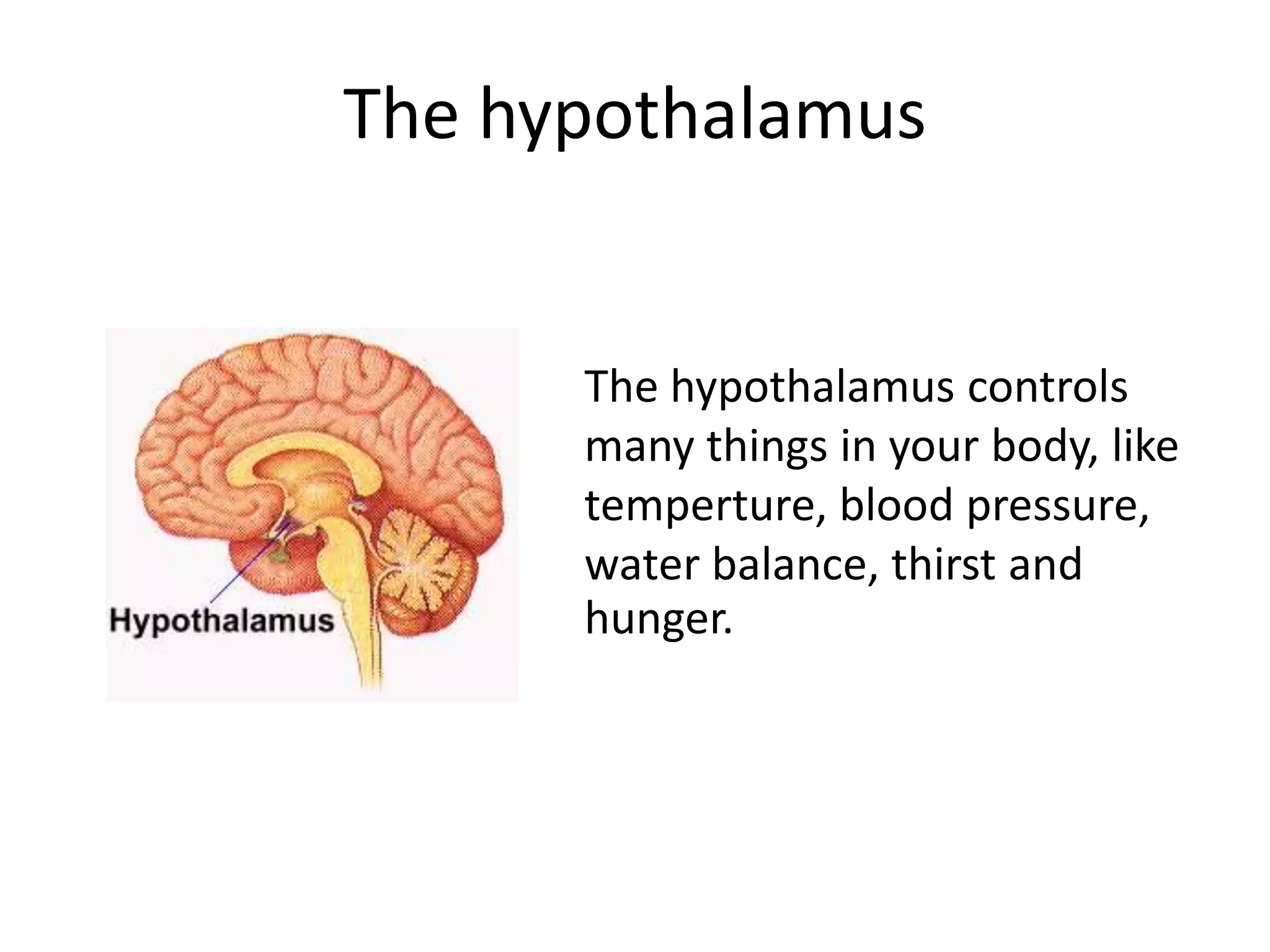
The hypothalamus
The hypothalamus controls
many things in your body, like
temperture, blood pressure,
water balance, thirst and
hunger.
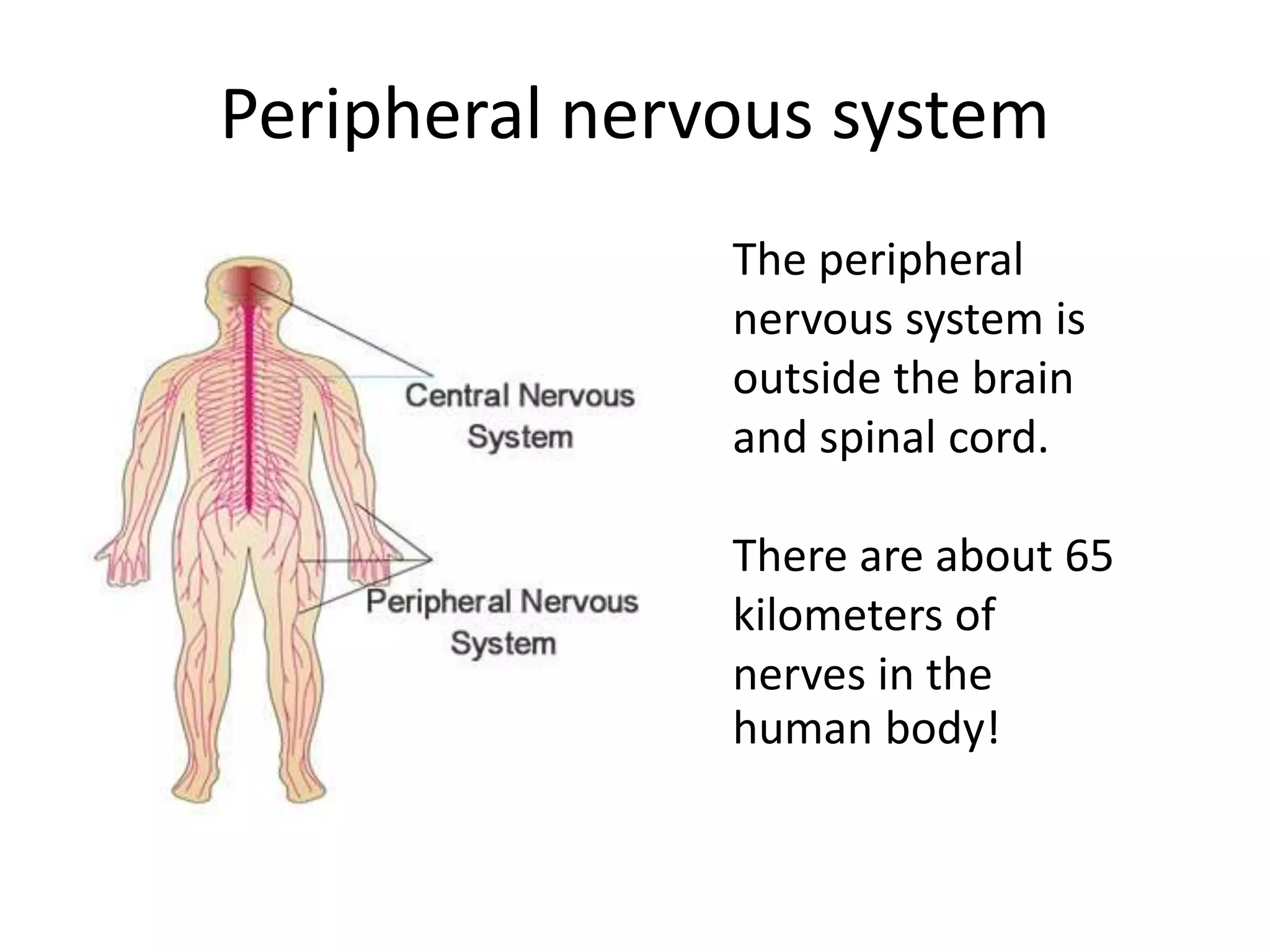
Peripheral nervous system
The peripheral
nervous system is
outside the brain
and spinal cord.
There are about 65
kilometers of
nerves in the
human body!
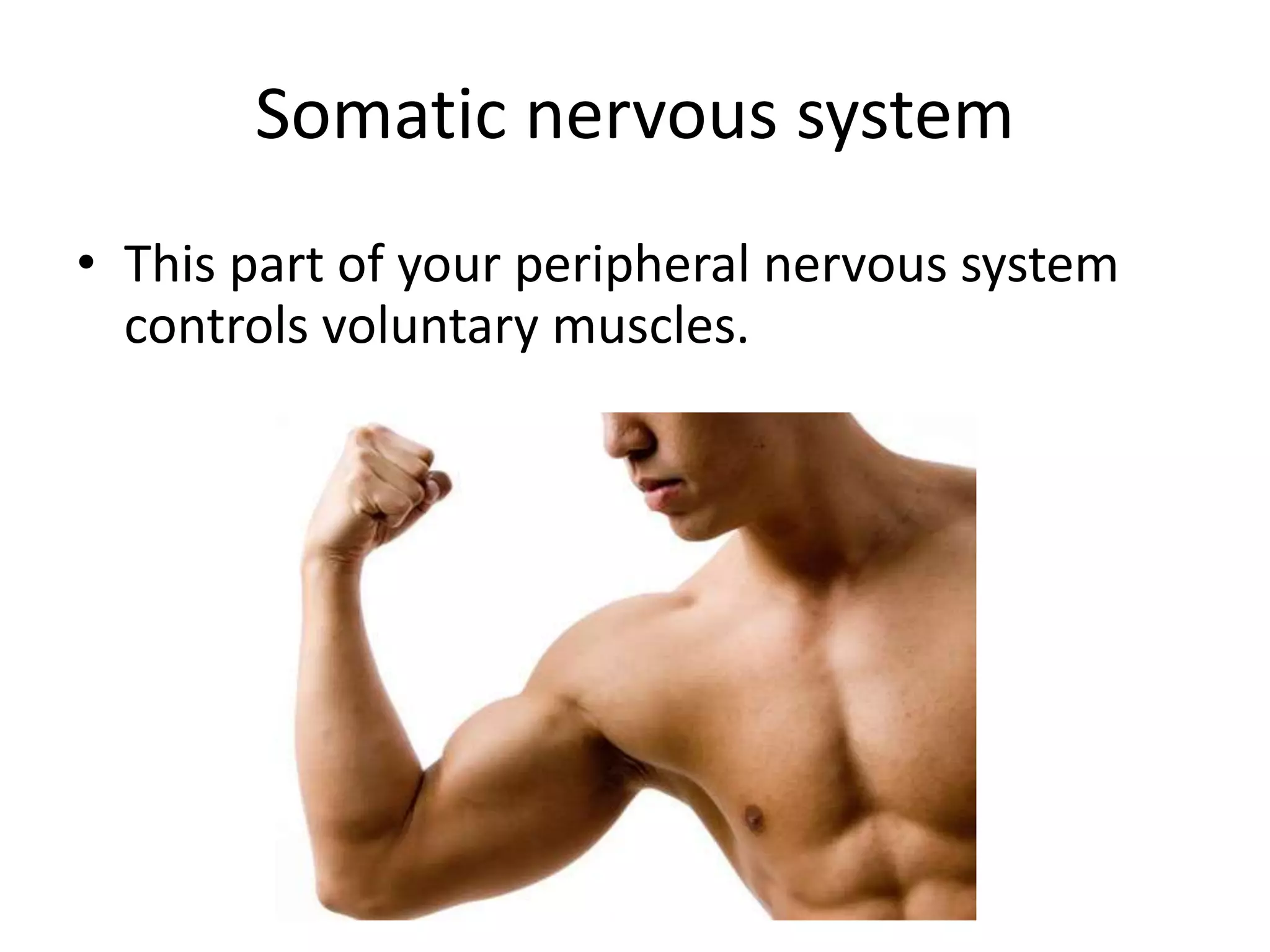
Somatic nervous system
• This part of your peripheral nervous system
controls voluntary muscles.
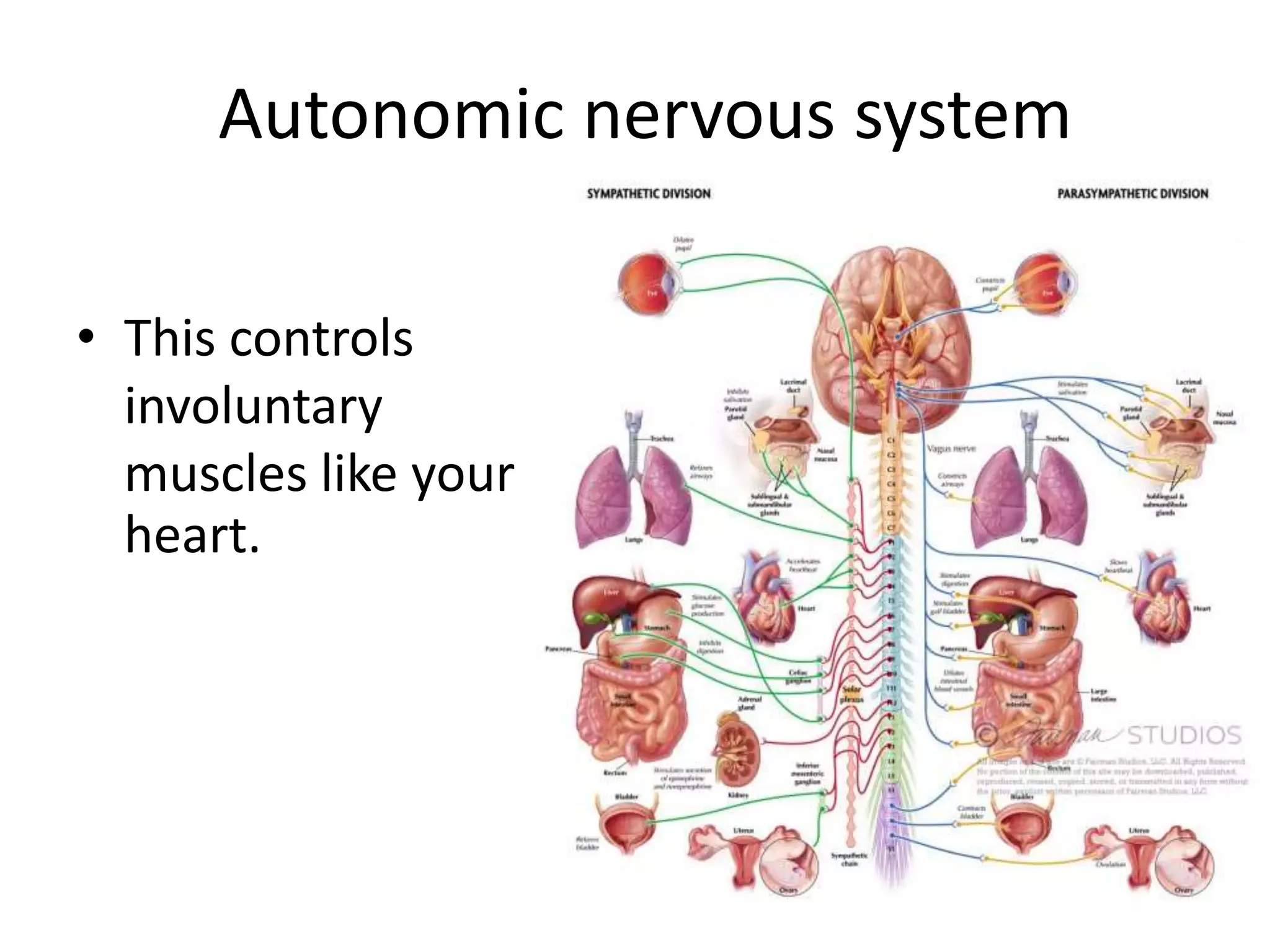
Autonomic nervous system
• This controls
involuntary
muscles like your
heart.
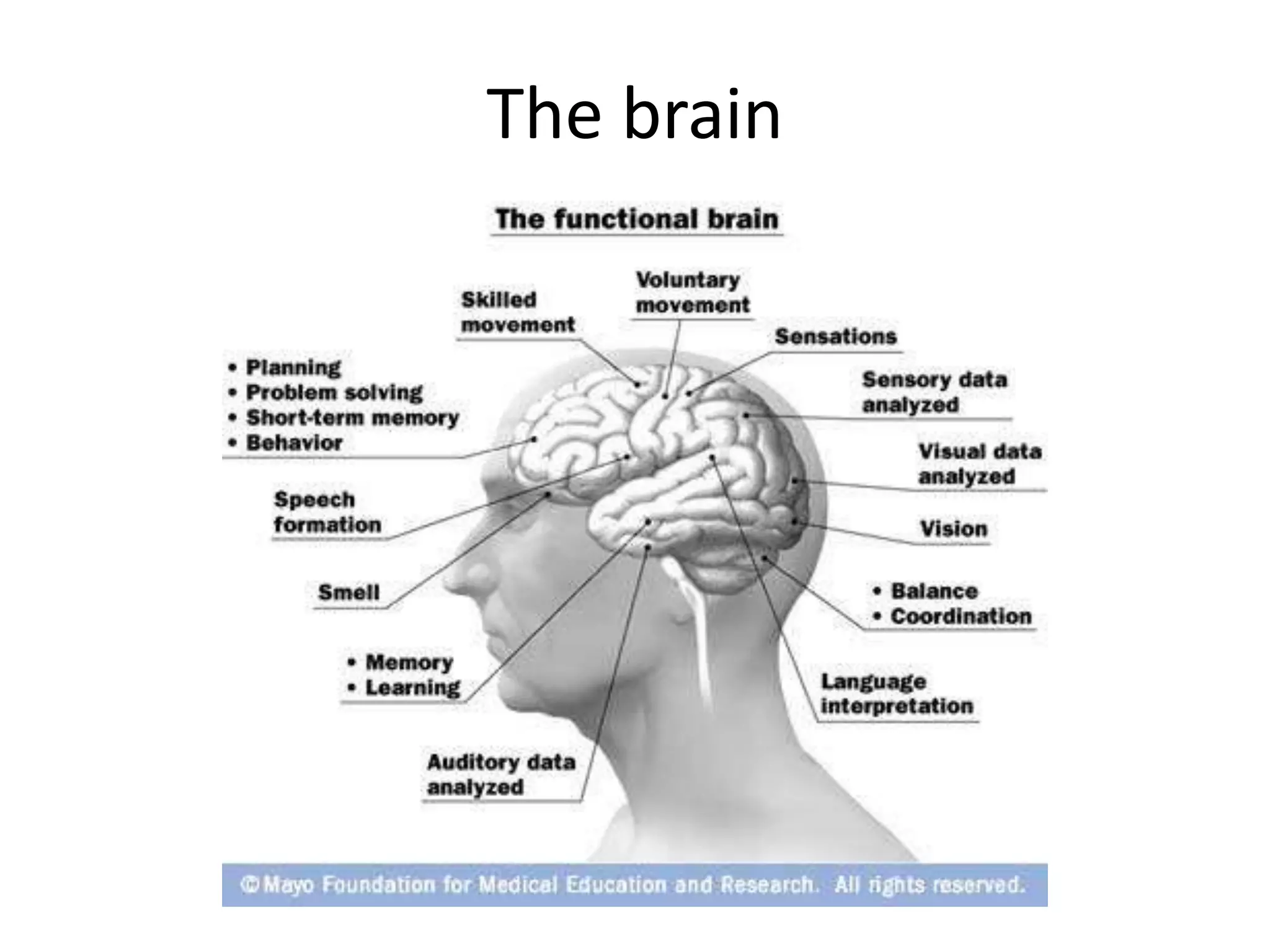
The brain
The brain
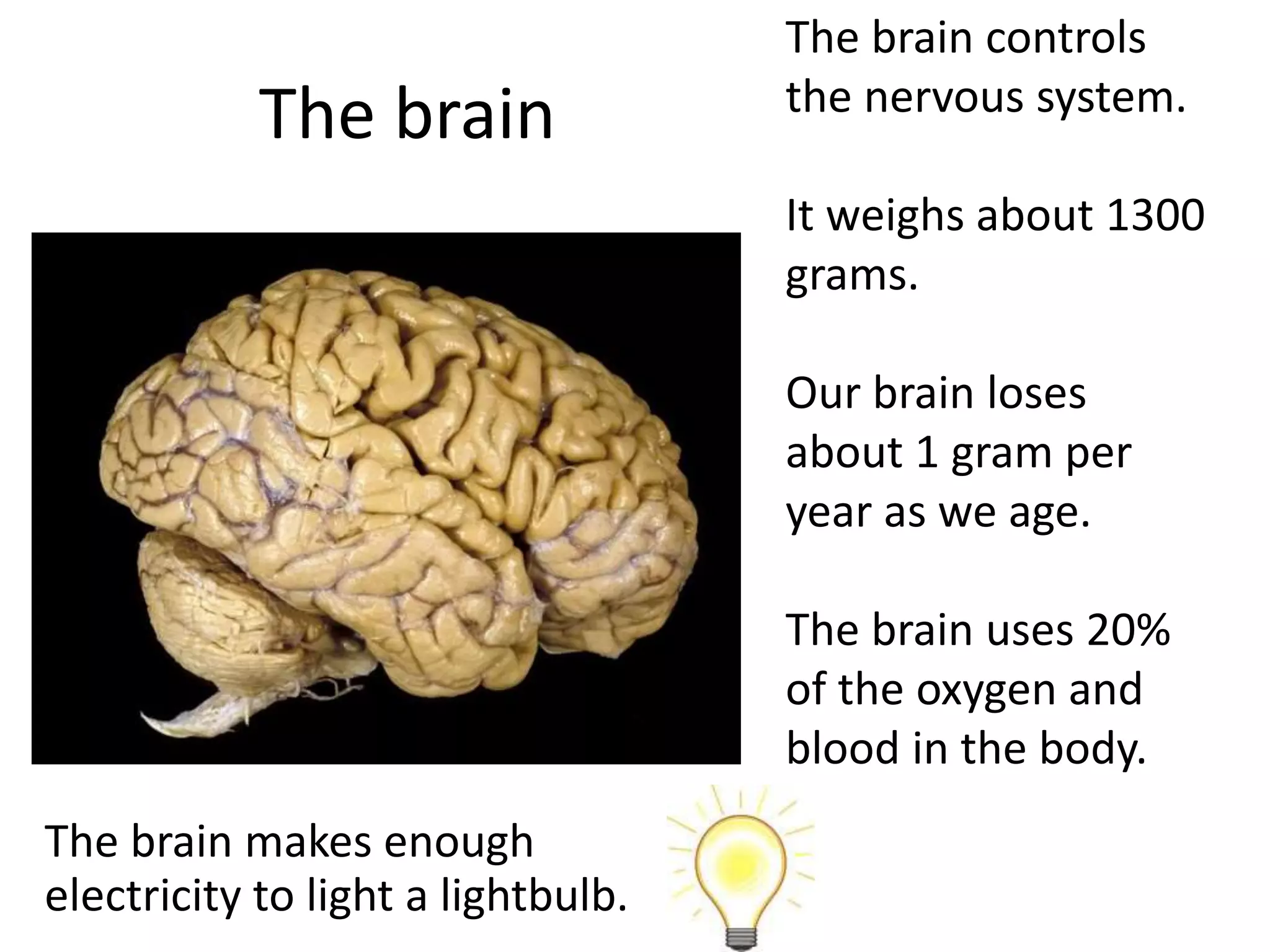
The brain controls
the nervous system.
It weighs about 1300
grams.
Our brain loses
about 1 gram per
year as we age.
The brain uses 20%
of the oxygen and
blood in the body.
The brain makes enough
electricity to light a lightbulb.
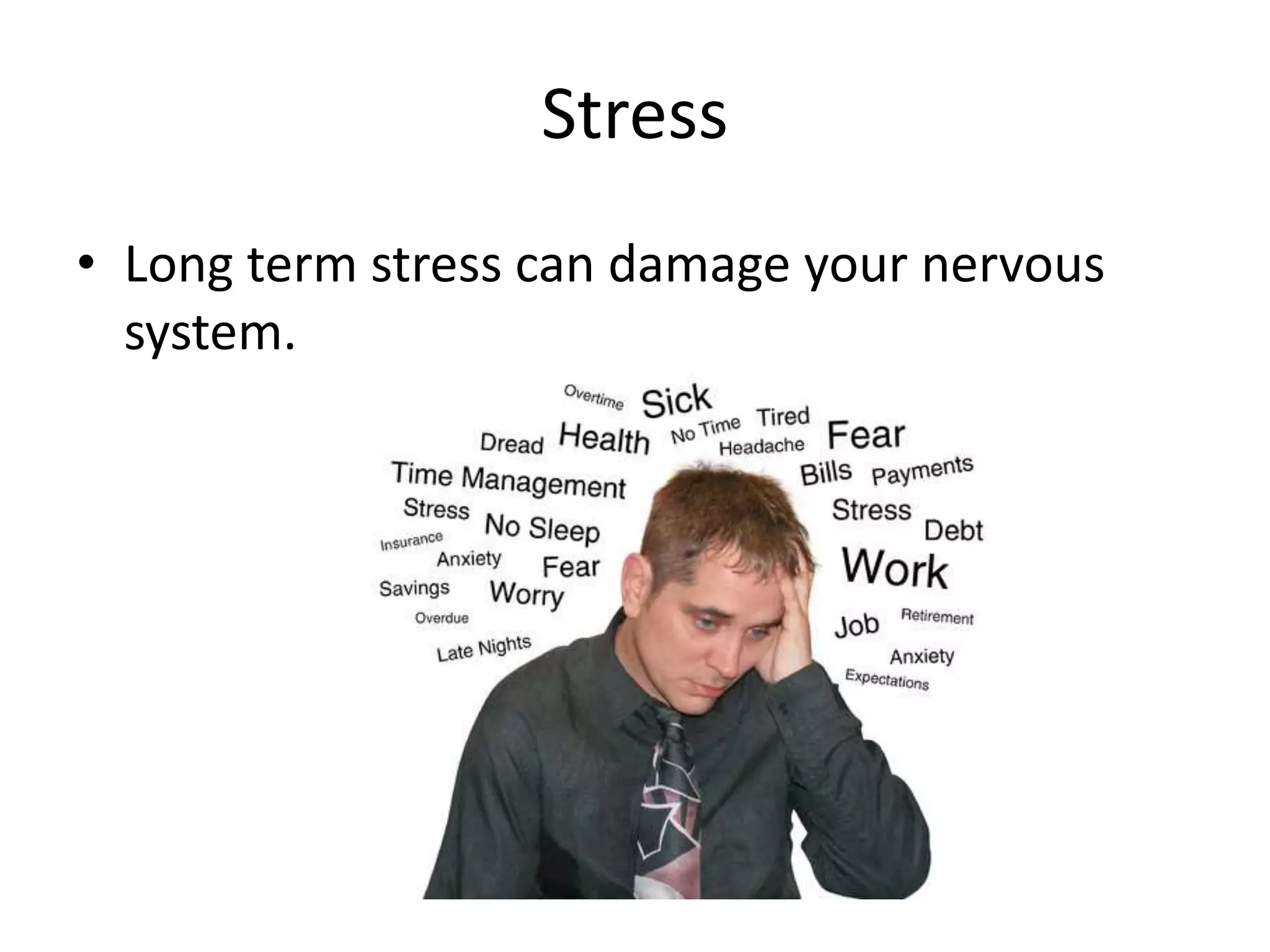
Stress
• Long term stress can damage your nervous
system.
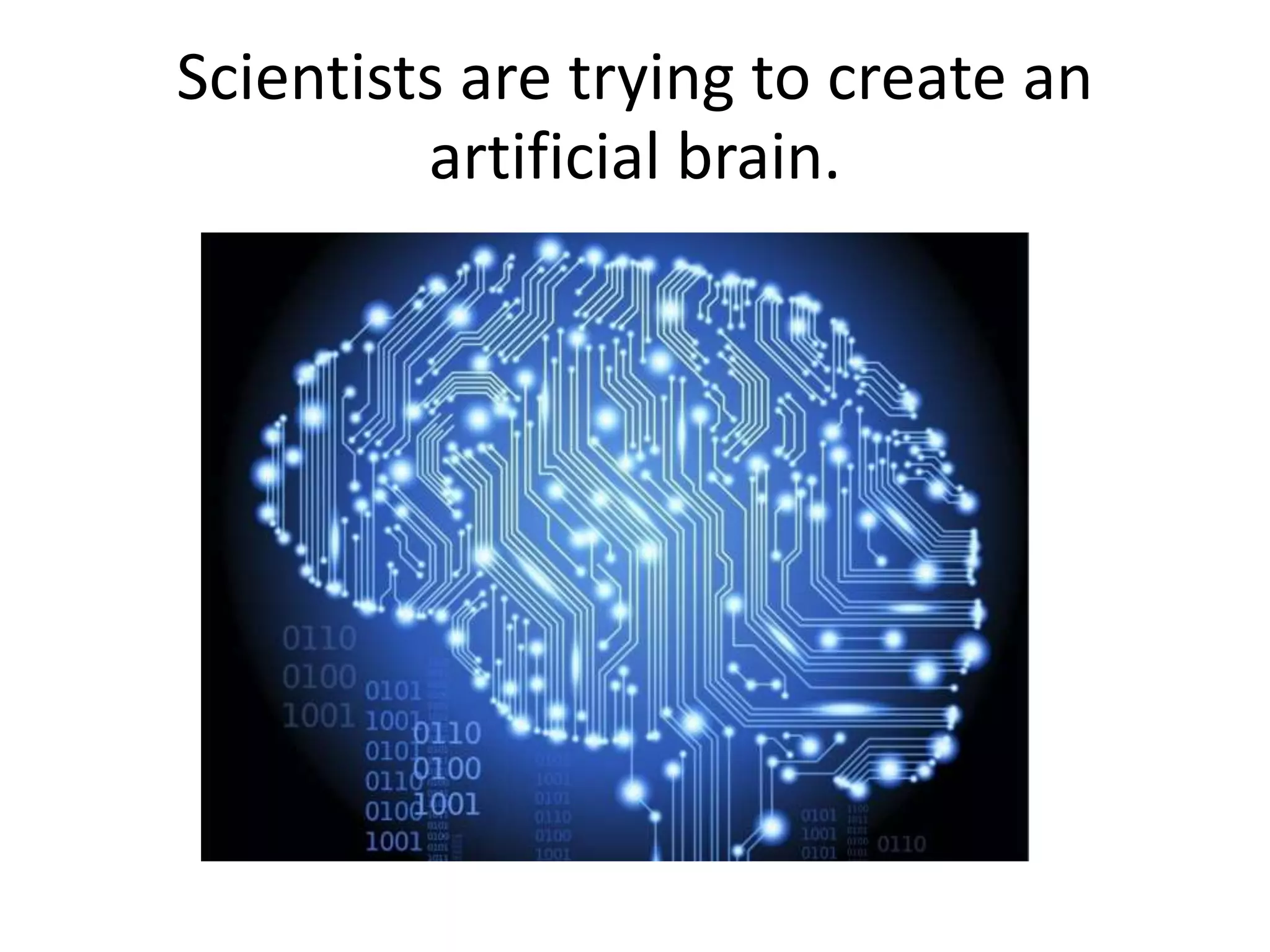
Scientists are trying to create an
artificial brain.
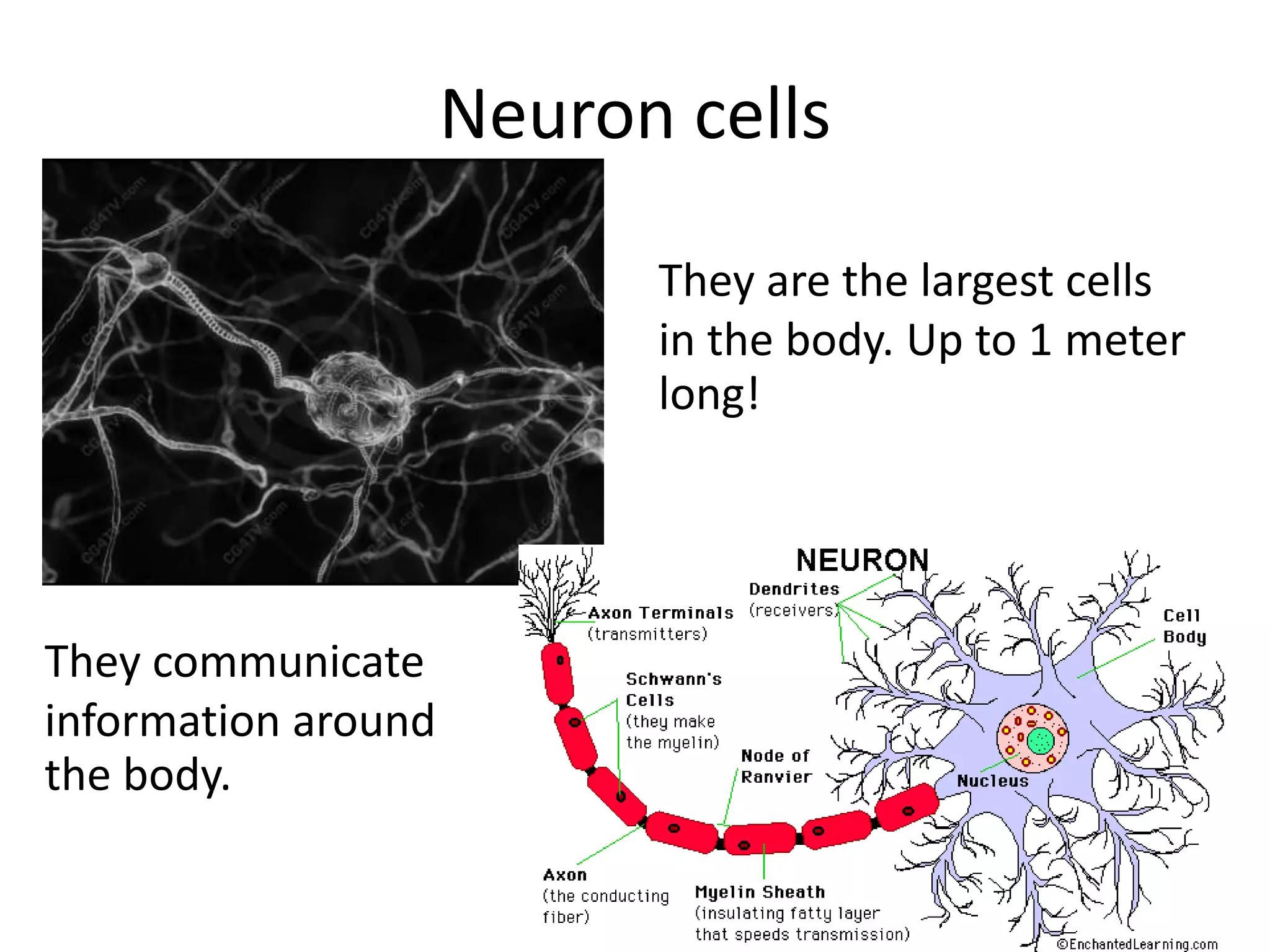
Neuron cells
They are the largest cells
in the body. Up to 1 meter
long!
They communicate
information around
the body.
Sensory and motor nerves
• Sensory nerves receive information and send
it to the brain.
• Motor nerves send information from the brain
to the muscles.
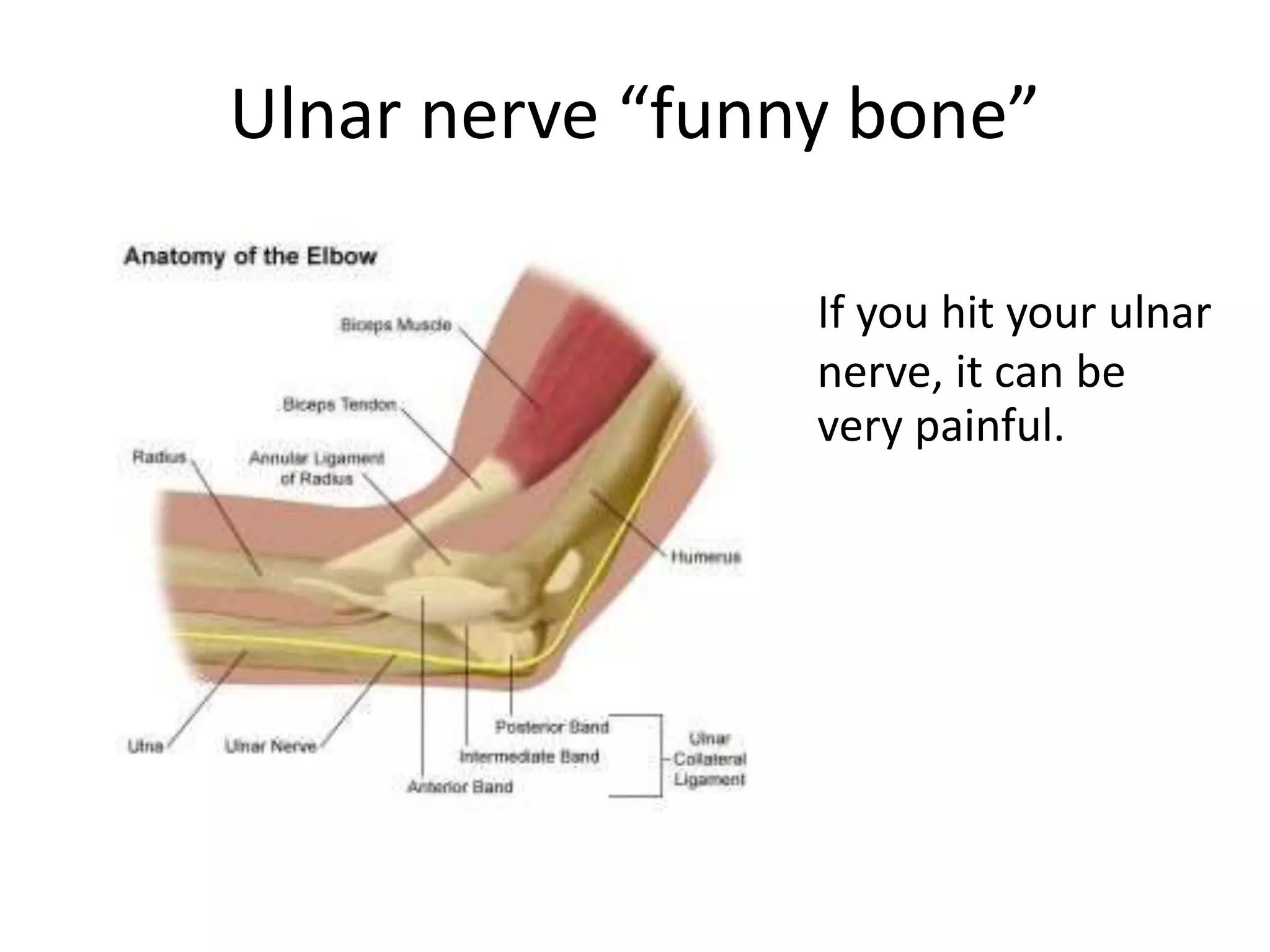
Ulnar nerve “funny bone”
If you hit your ulnar
nerve, it can be
very painful.
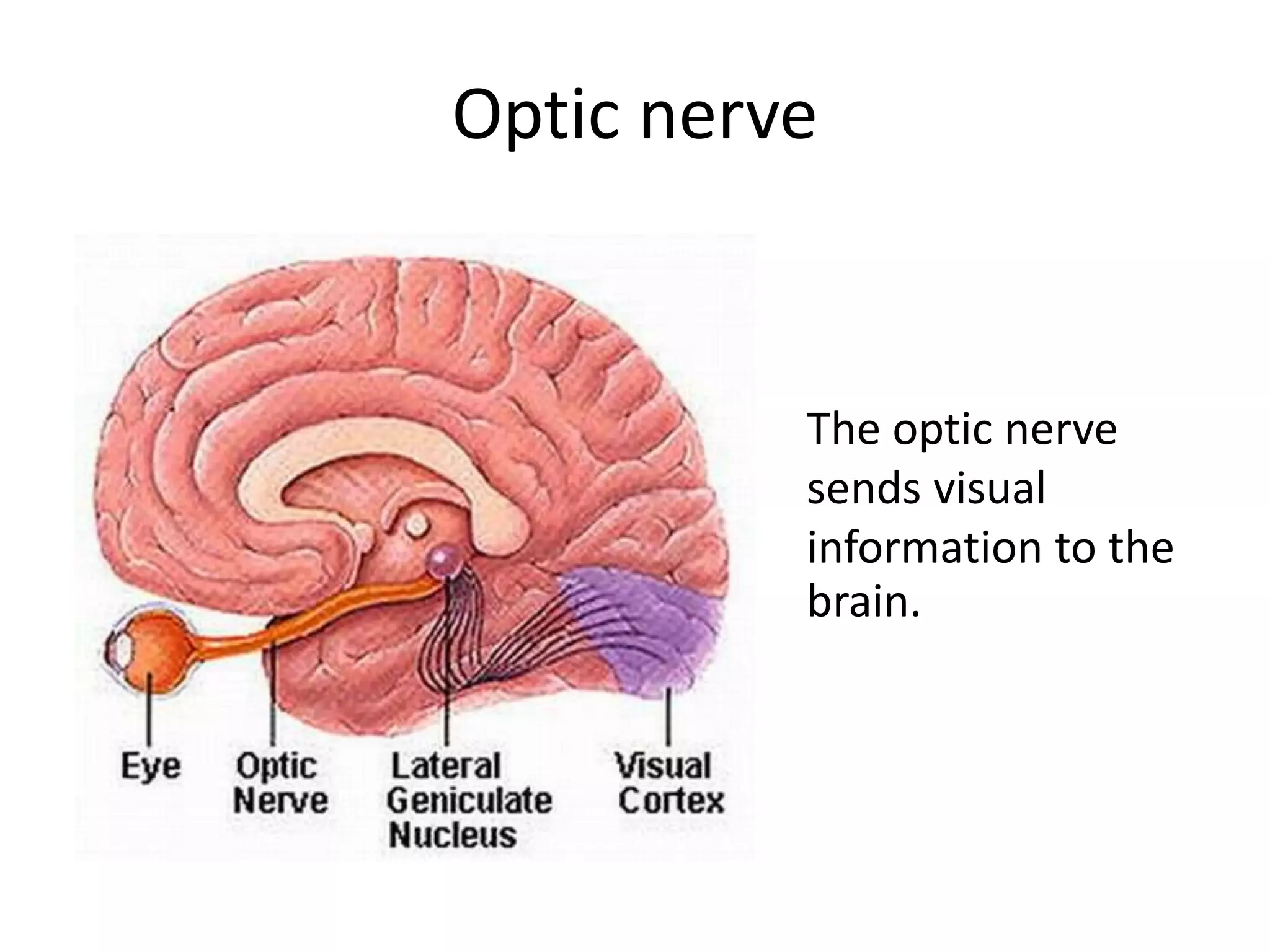
Optic nerve
The optic nerve
sends visual
information to the
brain.
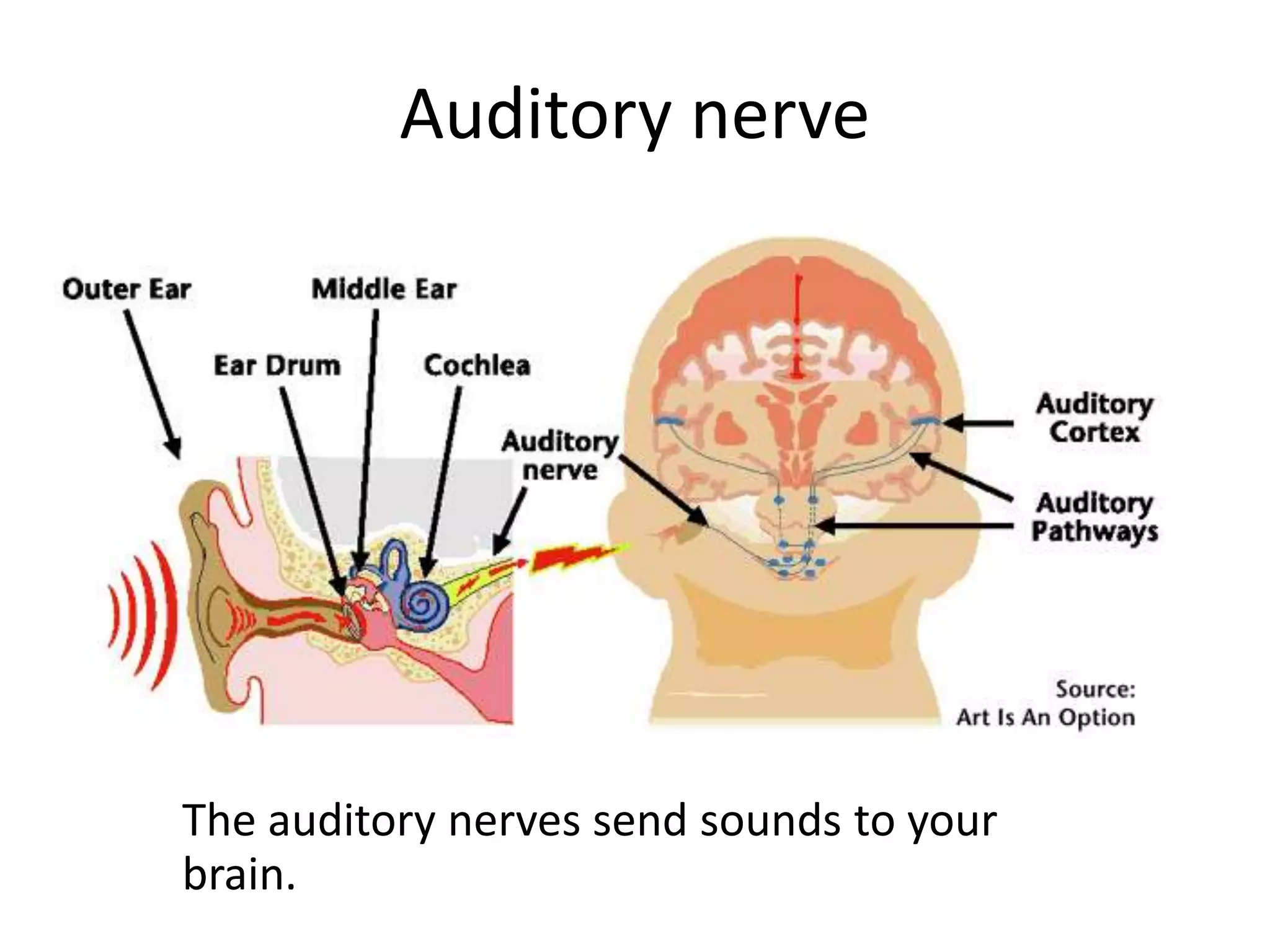
Auditory nerve
The auditory nerves send sounds to your
brain.
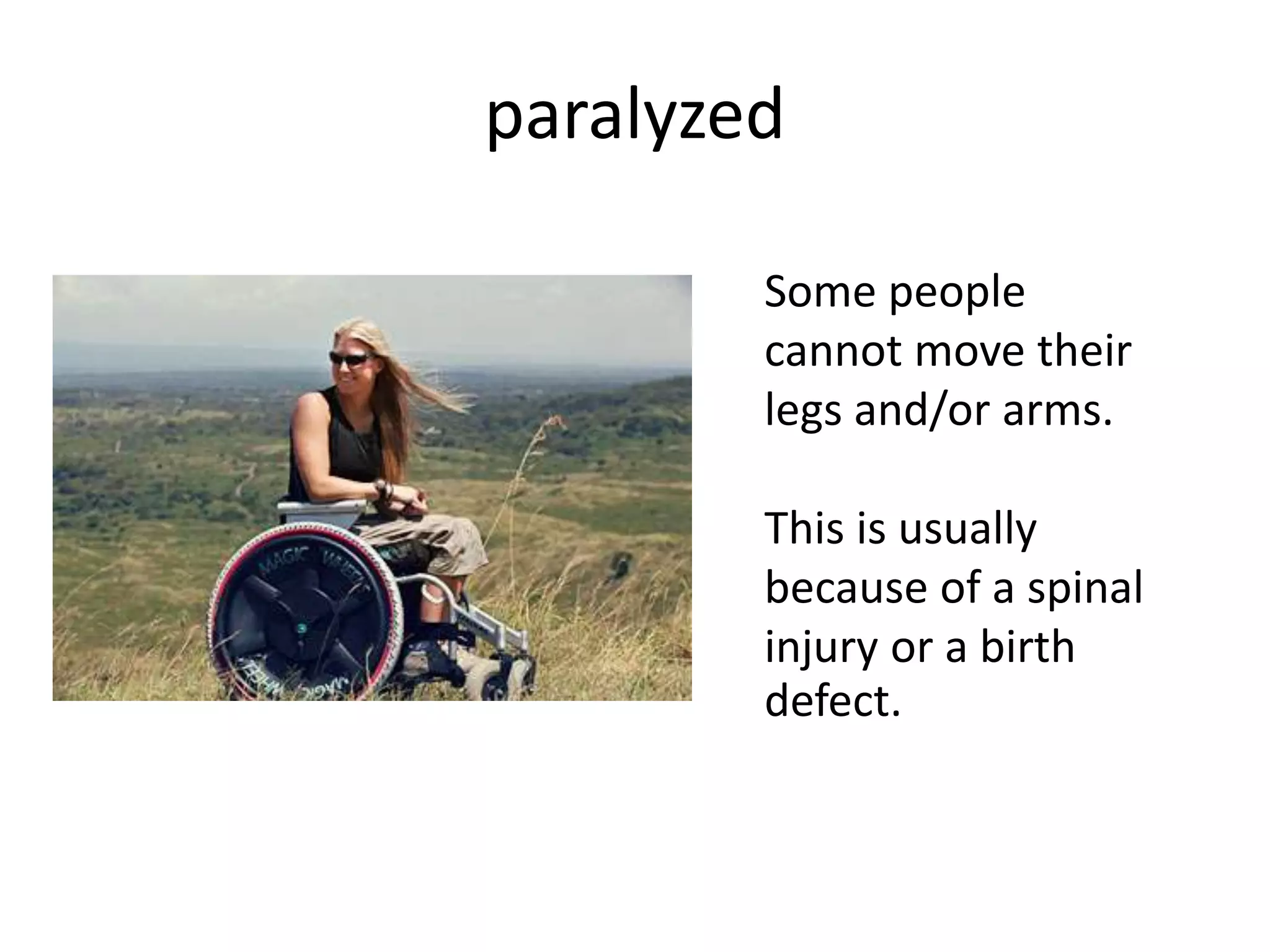
paralyzed
Some people
cannot move their
legs and/or arms.
This is usually
because of a spinal
injury or a birth
defect.
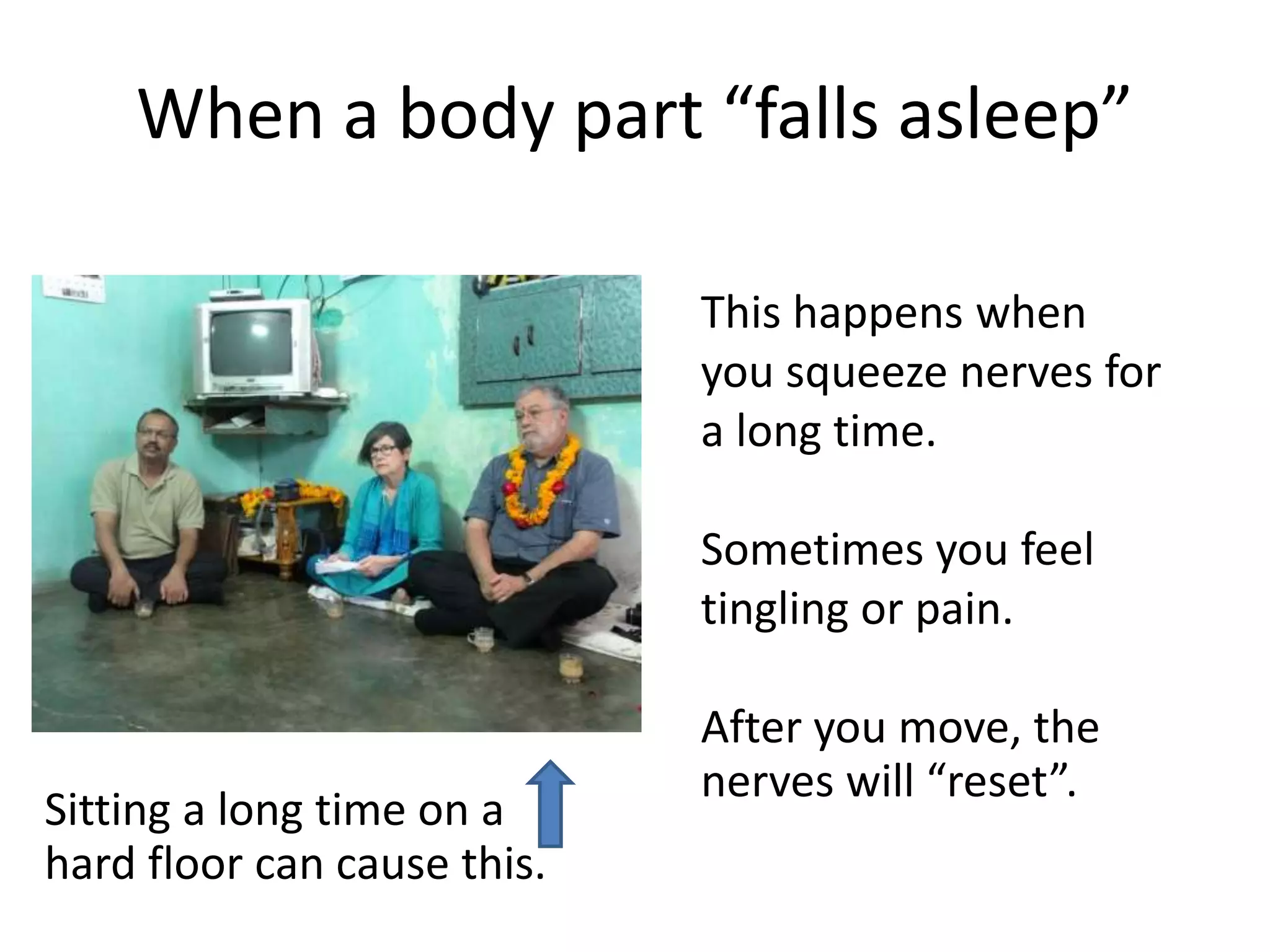
When a body part “falls asleep”
This happens when
you squeeze nerves for
a long time.
Sometimes you feel
tingling or pain.
After you move, the
nerves will “reset”.
Sitting a long time on a
hard floor can cause this.
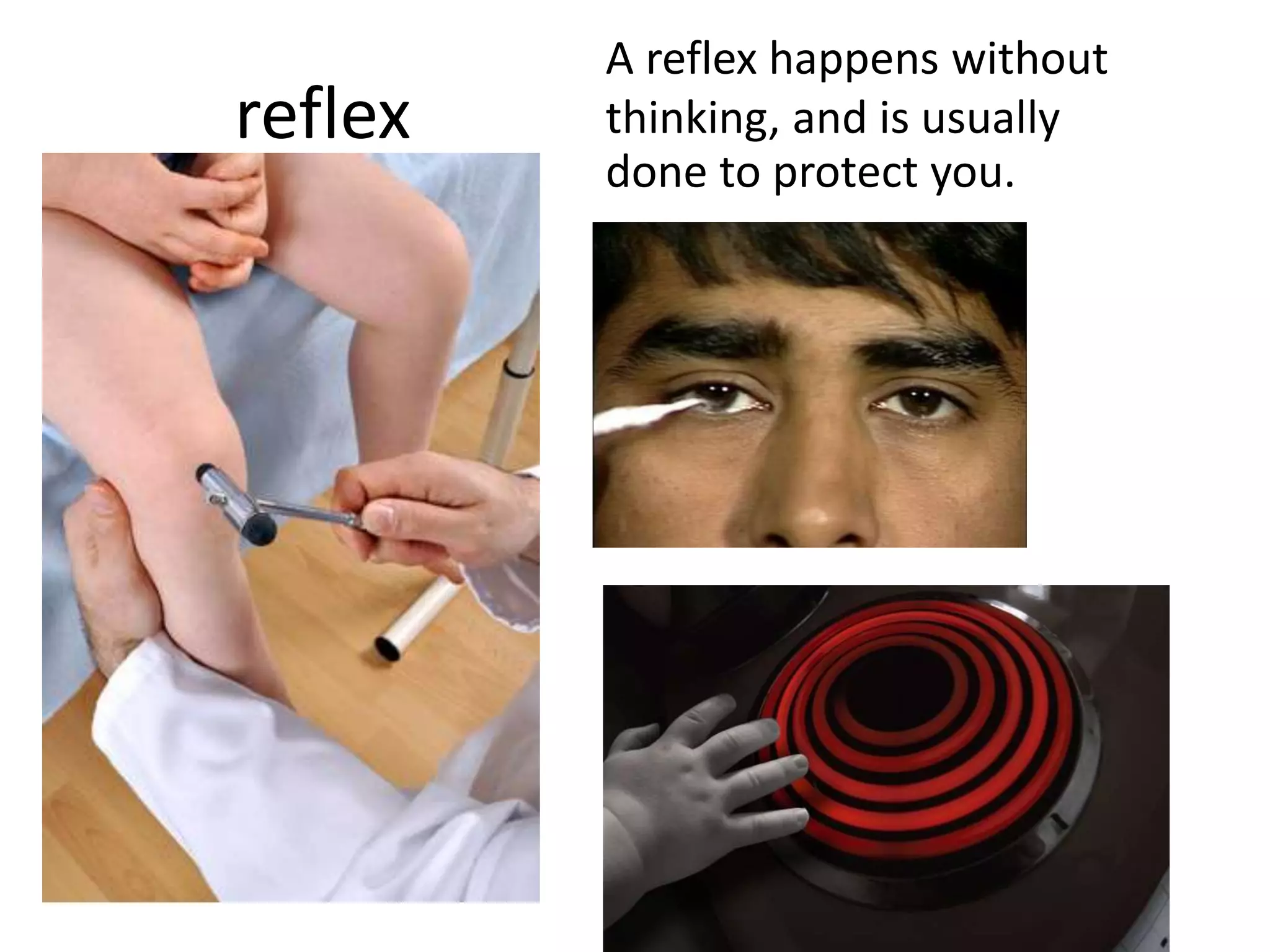
reflex
A reflex happens without
thinking, and is usually
done to protect you.
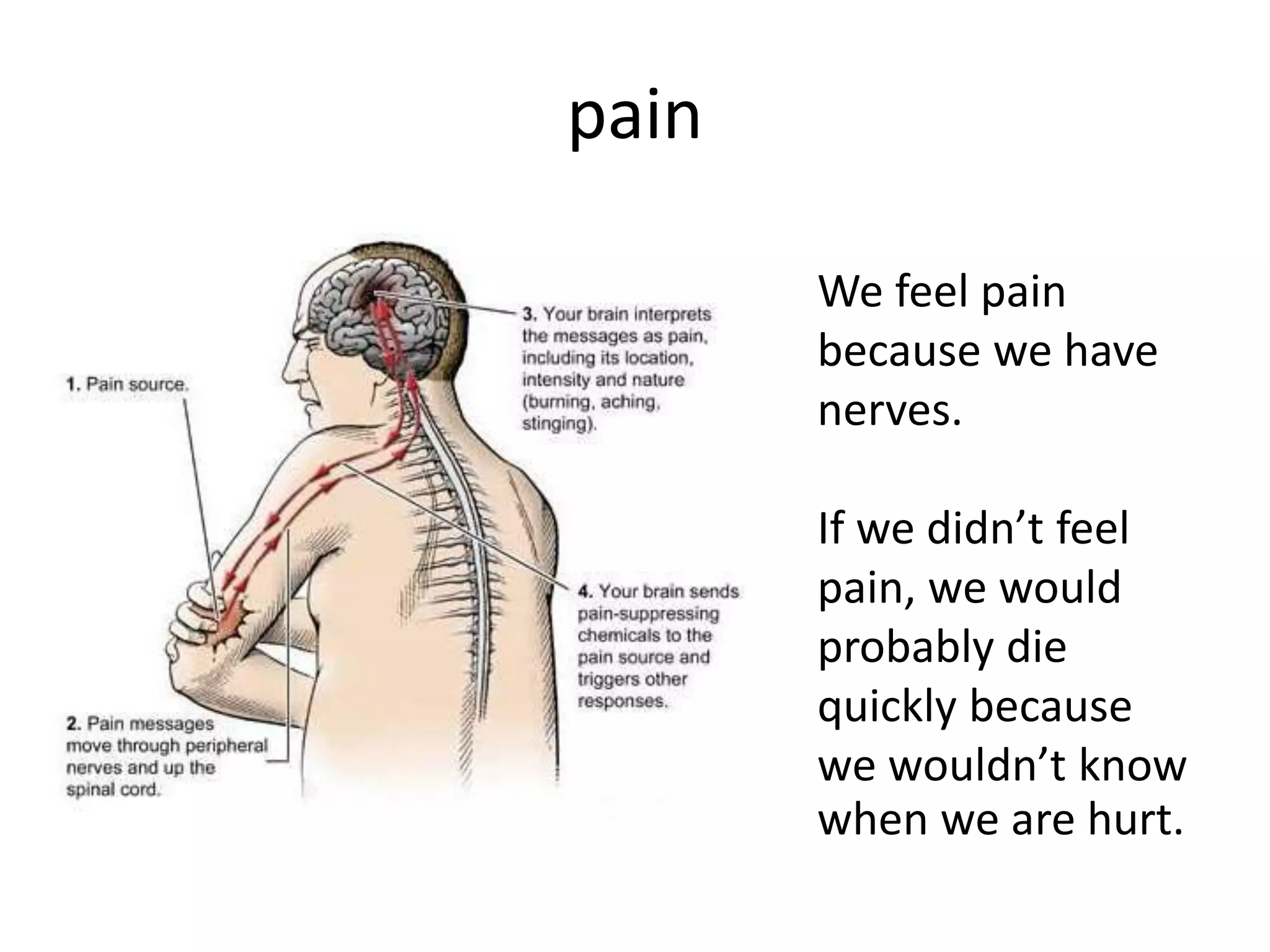
pain
We feel pain
because we have
nerves.
If we didn’t feel
pain, we would
probably die
quickly because
we wouldn’t know
when we are hurt.
“You’ve got a lot of nerve!”
• This means that someone is being an arrogant
หยิ่ง jerk.
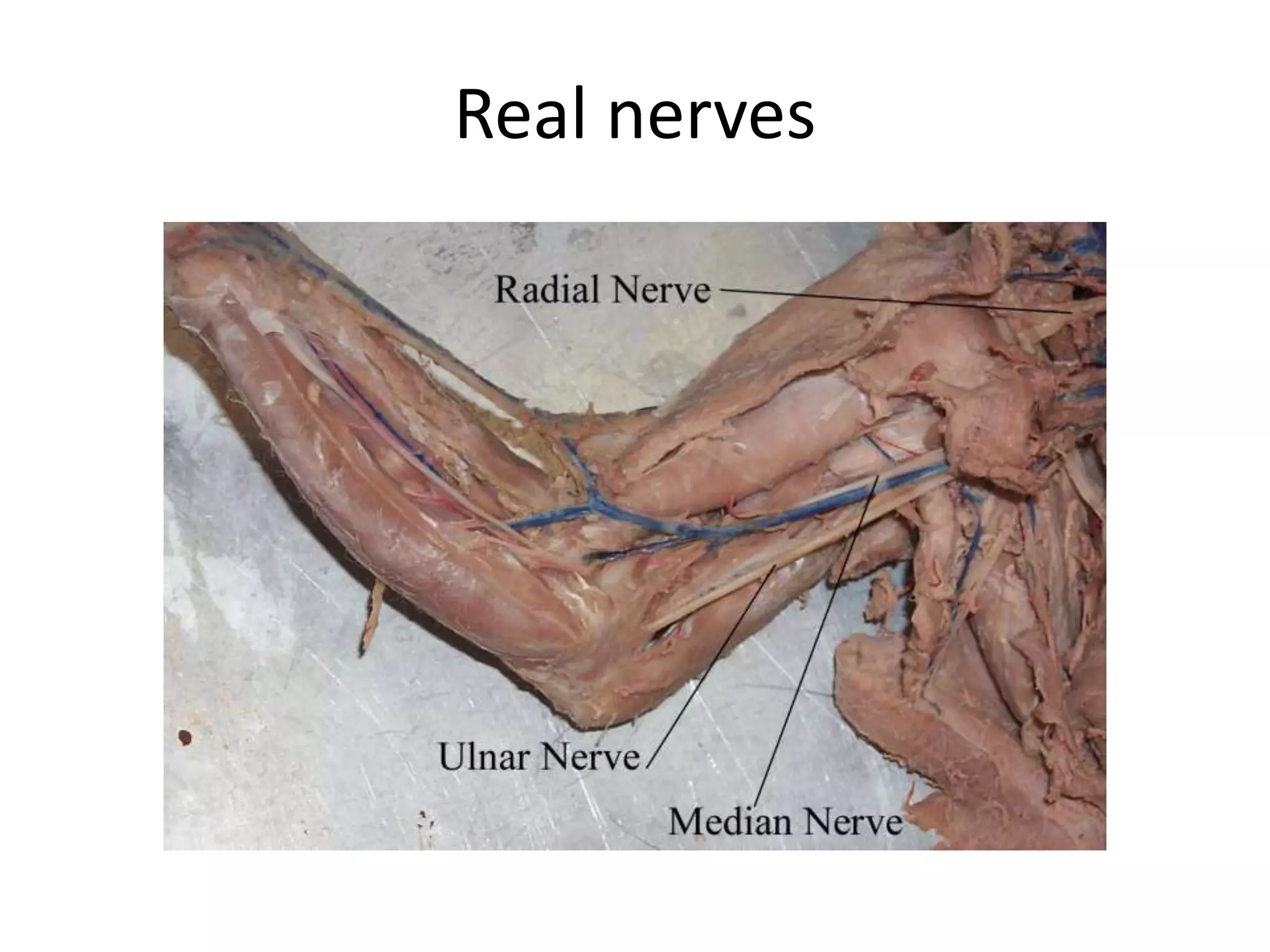
Real nerves
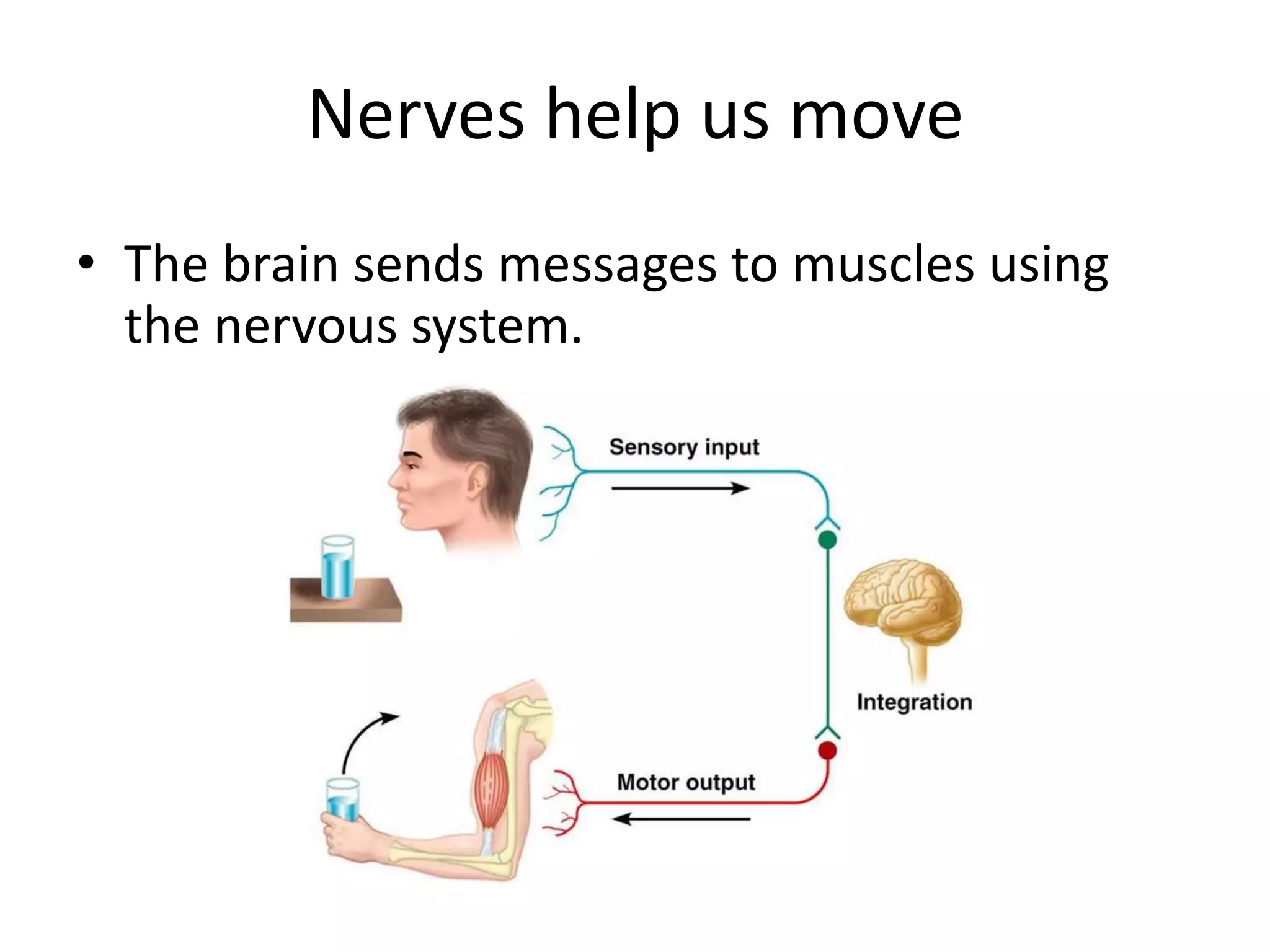
Nerves help us move
• The brain sends messages to muscles using
the nervous system.
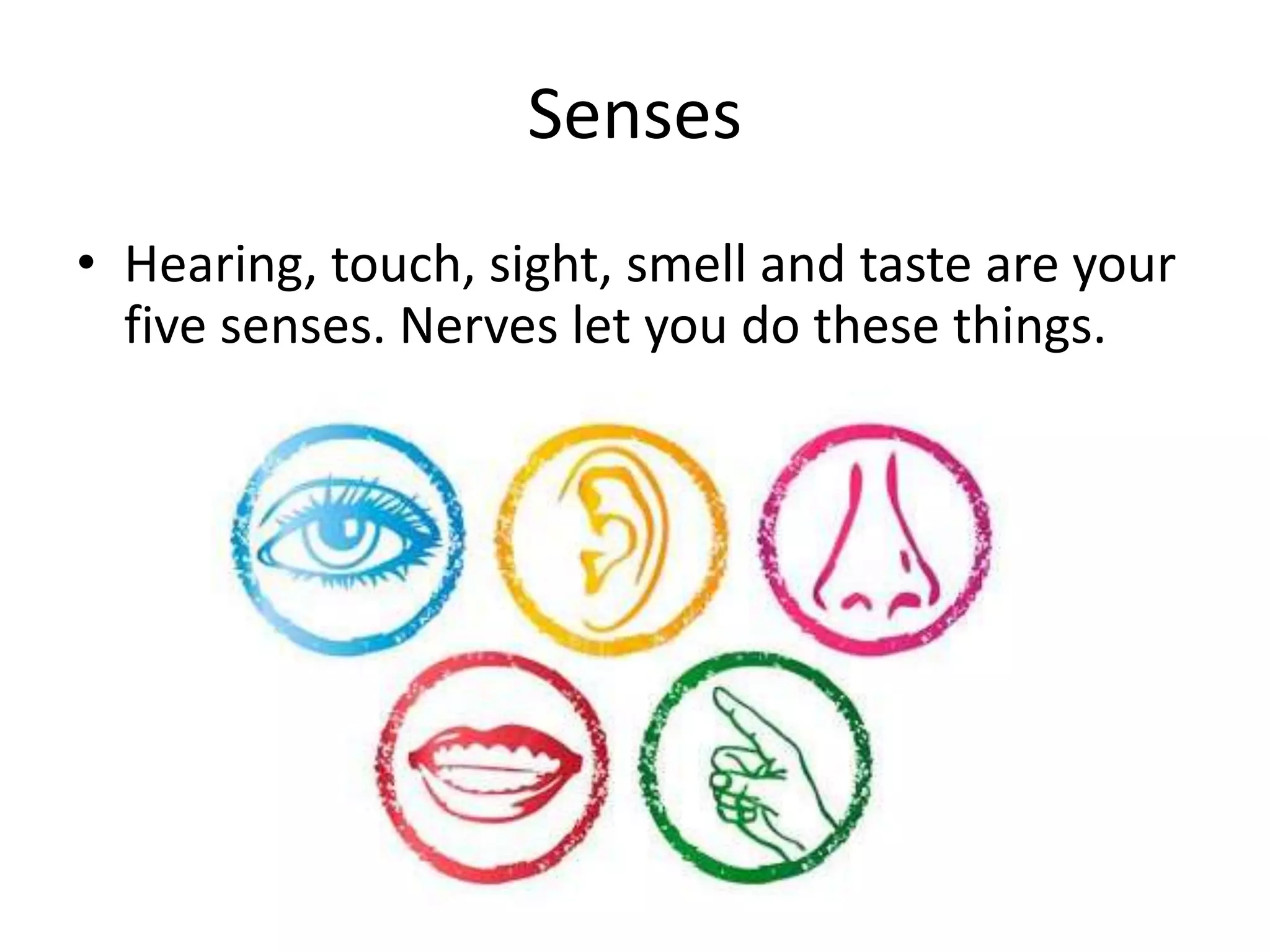
Senses
• Hearing, touch, sight, smell and taste are your
five senses. Nerves let you do these things.
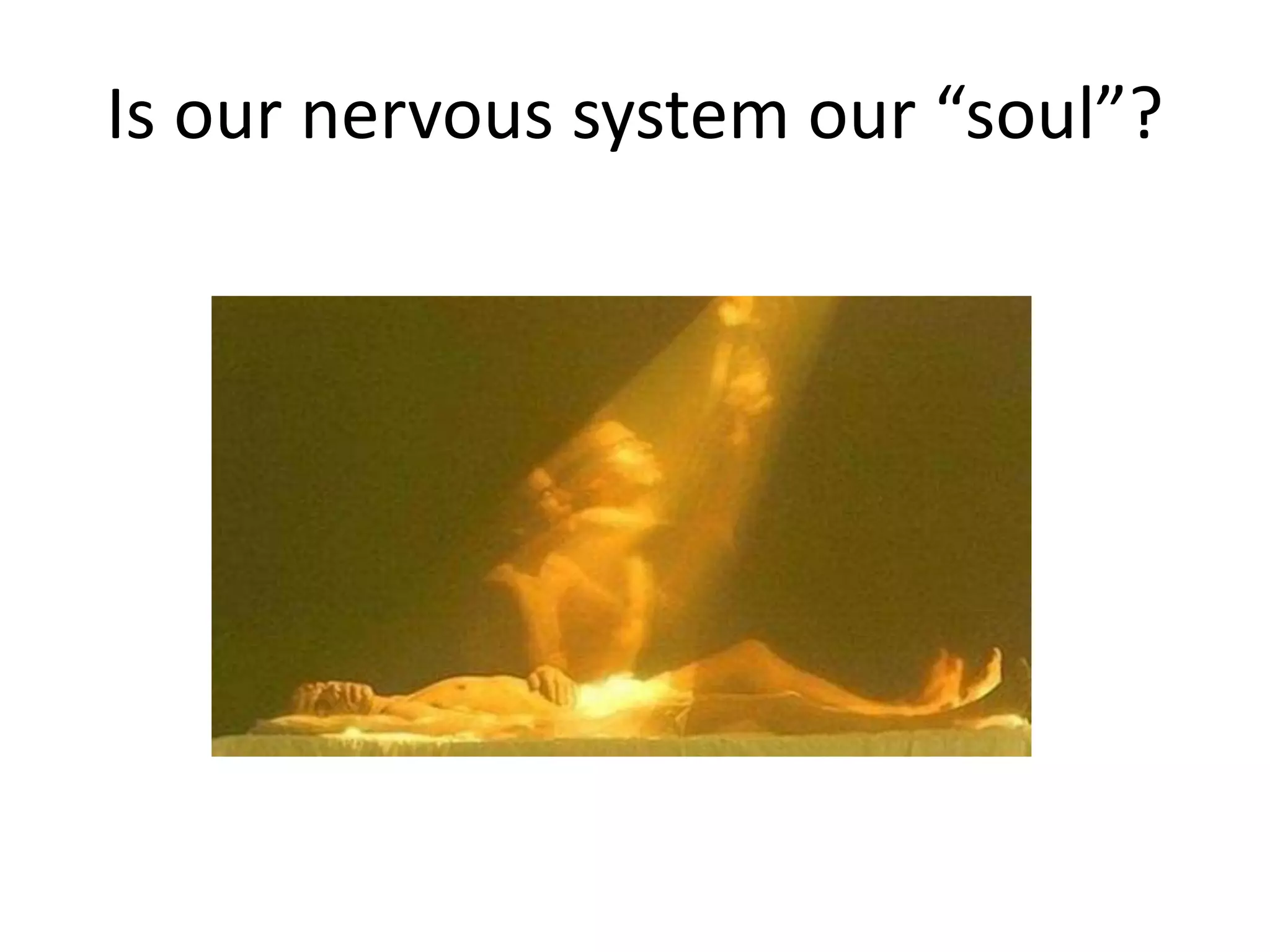
Is our nervous system our “soul”?
Questions
• What are our five senses?
• What are some things nerves do?
• What can happen if the nerves in your spinal cord
are damaged?
• What nerves let us see and hear?
• What power do our nerves use to communicate?
• What are the two main parts of the central
nervous system?

The nervous system

  • 1.
    The Nervous Systemระบบประสาท The nervous system is a way to send signals through your body.
  • 2.
    Nerves under amicroscope
  • 3.
    All multicellular organismshave a nervous system EXCEPT placozoa sponge
  • 4.
    Central Nervous System Thecentral nervous system is the brain and spinal cord. The nervous system can communicate up to 100 meters per second.
  • 5.
    The hypothalamus The hypothalamuscontrols many things in your body, like temperture, blood pressure, water balance, thirst and hunger.
  • 6.
    Peripheral nervous system Theperipheral nervous system is outside the brain and spinal cord. There are about 65 kilometers of nerves in the human body!
  • 7.
    Somatic nervous system •This part of your peripheral nervous system controls voluntary muscles.
  • 8.
    Autonomic nervous system •This controls involuntary muscles like your heart.
  • 9.
  • 10.
    The brain The braincontrols the nervous system. It weighs about 1300 grams. Our brain loses about 1 gram per year as we age. The brain uses 20% of the oxygen and blood in the body. The brain makes enough electricity to light a lightbulb.
  • 11.
    Stress • Long termstress can damage your nervous system.
  • 12.
    Scientists are tryingto create an artificial brain.
  • 13.
    Neuron cells They arethe largest cells in the body. Up to 1 meter long! They communicate information around the body.
  • 14.
    Sensory and motornerves • Sensory nerves receive information and send it to the brain. • Motor nerves send information from the brain to the muscles.
  • 15.
    Ulnar nerve “funnybone” If you hit your ulnar nerve, it can be very painful.
  • 16.
    Optic nerve The opticnerve sends visual information to the brain.
  • 17.
    Auditory nerve The auditorynerves send sounds to your brain.
  • 18.
    paralyzed Some people cannot movetheir legs and/or arms. This is usually because of a spinal injury or a birth defect.
  • 19.
    When a bodypart “falls asleep” This happens when you squeeze nerves for a long time. Sometimes you feel tingling or pain. After you move, the nerves will “reset”. Sitting a long time on a hard floor can cause this.
  • 20.
    reflex A reflex happenswithout thinking, and is usually done to protect you.
  • 21.
    pain We feel pain becausewe have nerves. If we didn’t feel pain, we would probably die quickly because we wouldn’t know when we are hurt.
  • 22.
    “You’ve got alot of nerve!” • This means that someone is being an arrogant หยิ่ง jerk.
  • 23.
  • 24.
    Nerves help usmove • The brain sends messages to muscles using the nervous system.
  • 25.
    Senses • Hearing, touch,sight, smell and taste are your five senses. Nerves let you do these things.
  • 26.
    Is our nervoussystem our “soul”?
  • 27.
    Questions • What areour five senses? • What are some things nerves do? • What can happen if the nerves in your spinal cord are damaged? • What nerves let us see and hear? • What power do our nerves use to communicate? • What are the two main parts of the central nervous system?