Risk
Management
The Need
Alaleh Mani
2013
Definition and source of Risk
Risk= Unexpected variable of price or earning.
Business Risk:
 Management decision making risk.
Business Strategy risk
Macroeconomic risk
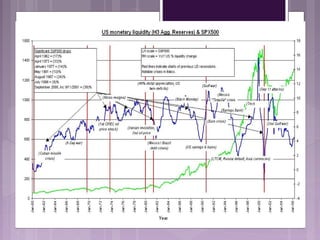
Extreme Market Movement
Events caused volatility which resulted in financial
losses and raised the need for the Risk
Management:
1971 Exchange rate broke
1973 Oil shock
1987 Black Monday
1989 Japanese bubble
1997 Asian contagion
1998 Russian default
2001 September 11
2007 Credit crisis
Globalization / Deregulation
These two factors increased the importance of risk
management:
Deregulation in banks caused interest rate
sensitivity.
Globalization caused more exposure to currency
exchange.
Some related definition
 Derivatives: a zero sum game
 Leverage: allow Derivatives to be a useful hedging
instrument due to:
1. Limited initial cash outlay
2. low transaction cost.
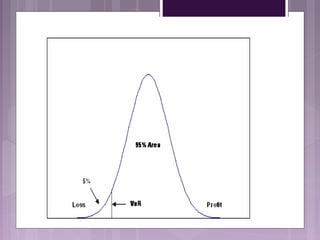
 Value at risk: Maximum of loss over time with at
level of confidence.
VAR is an statistical measure:
1. Historical VAR
2. Delta-normal VAR
3. Monte Carlo VAR
VAR
 VAR is ex-ante measure
 VAR is difficult to calculate
 VAR is comparable across different business.
 VAR is for risk budgeting
Other Risk management tools
 Stop- loss limit:
After loss occurred Co. eliminates the position to limit
the loss.
Ex-post ,Aggregated, easy to calculate.
 Notional limits:
limit the notional amount
 Exposure limits:
limit the risk factor though it is hard to calculate
Exposures:
Factors fail to measure to qualify the volatility of
factors and the correlation between them
1.Duration for interest rate :effect interest rate
changes on bond price
2.Beta for Equity Market
3.Delta for Option
Valuation
 The process of discounting future expected value
of an asset to determine the current price
 E(value)= mean of distribution of possible value
VAR explain the future distribution.
 Derivatives valuation : risk neutral pricing to
prevent the persistence of arbitrage situations.
Types of Major Risk
 Market Risk
 Liquidity Risk
 Credit Risk
 Operational Risk
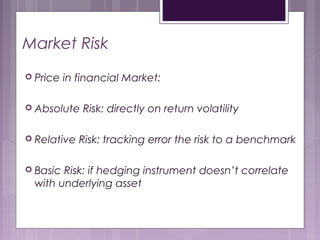
Market Risk
 Price volatility in financial Market:
 Absolute Risk: directly on return volatility
 Relative Risk: tracking error the risk to a benchmark
 Basic Risk: if hedging instrument doesn’t correlate
with underlying asset
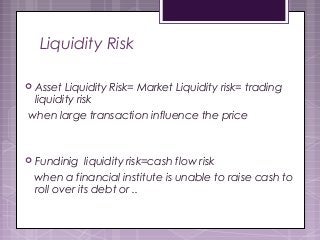
Liquidity Risk
 Asset Liquidity Risk= Market Liquidity risk= trading
liquidity risk
when large transaction influence the price
 Fundinig liquidity risk=cash flow risk
when a financial institute is unable to raise cash to
roll over its debt or ..
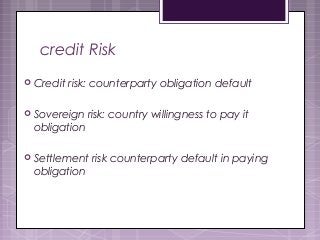
credit Risk
 Credit risk: counterparty obligation default
 Sovereign risk: country willingness to pay it
obligation
 Settlement risk counterparty default in paying
obligation
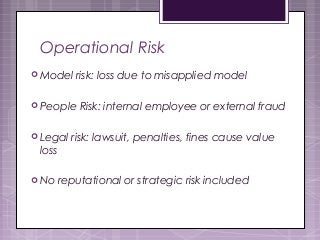
Operational Risk
 Model risk: loss due to misapplied model
 People Risk: internal employee or external fraud
 Legal risk: lawsuit, penalties, fines cause value
loss
 No reputational or strategic risk included

The need risk

  • 1.
  • 2.
    Definition and sourceof Risk Risk= Unexpected variable of price or earning. Business Risk:  Management decision making risk. Business Strategy risk Macroeconomic risk
  • 3.
    Extreme Market Movement Eventscaused volatility which resulted in financial losses and raised the need for the Risk Management: 1971 Exchange rate broke 1973 Oil shock 1987 Black Monday 1989 Japanese bubble 1997 Asian contagion 1998 Russian default 2001 September 11 2007 Credit crisis
  • 5.
    Globalization / Deregulation Thesetwo factors increased the importance of risk management: Deregulation in banks caused interest rate sensitivity. Globalization caused more exposure to currency exchange.
  • 6.
    Some related definition Derivatives: a zero sum game  Leverage: allow Derivatives to be a useful hedging instrument due to: 1. Limited initial cash outlay 2. low transaction cost.  Value at risk: Maximum of loss over time with at level of confidence. VAR is an statistical measure: 1. Historical VAR 2. Delta-normal VAR 3. Monte Carlo VAR
  • 8.
    VAR  VAR isex-ante measure  VAR is difficult to calculate  VAR is comparable across different business.  VAR is for risk budgeting
  • 9.
    Other Risk managementtools  Stop- loss limit: After loss occurred Co. eliminates the position to limit the loss. Ex-post ,Aggregated, easy to calculate.  Notional limits: limit the notional amount  Exposure limits: limit the risk factor though it is hard to calculate
  • 10.
    Exposures: Factors fail tomeasure to qualify the volatility of factors and the correlation between them 1.Duration for interest rate :effect interest rate changes on bond price 2.Beta for Equity Market 3.Delta for Option
  • 11.
    Valuation  The processof discounting future expected value of an asset to determine the current price  E(value)= mean of distribution of possible value VAR explain the future distribution.  Derivatives valuation : risk neutral pricing to prevent the persistence of arbitrage situations.
  • 12.
    Types of MajorRisk  Market Risk  Liquidity Risk  Credit Risk  Operational Risk
  • 13.
    Market Risk  Pricevolatility in financial Market:  Absolute Risk: directly on return volatility  Relative Risk: tracking error the risk to a benchmark  Basic Risk: if hedging instrument doesn’t correlate with underlying asset
  • 14.
    Liquidity Risk  AssetLiquidity Risk= Market Liquidity risk= trading liquidity risk when large transaction influence the price  Fundinig liquidity risk=cash flow risk when a financial institute is unable to raise cash to roll over its debt or ..
  • 15.
    credit Risk  Creditrisk: counterparty obligation default  Sovereign risk: country willingness to pay it obligation  Settlement risk counterparty default in paying obligation
  • 16.
    Operational Risk  Modelrisk: loss due to misapplied model  People Risk: internal employee or external fraud  Legal risk: lawsuit, penalties, fines cause value loss  No reputational or strategic risk included