MORALISTIC APPROACH
Mrs. M. Annalakshmi
Asst. Professor, English
A tendency—rather than a recognized school—within
Literary criticism to judge literary works according to
moral rather than formal principles.
– Judging literary works by their ethical teachings and by
their effects on readers.
– Literature that is ethically sound and encourages virtue
is praised
– Literature that misguides and corrupts is condemned.
MORALISTIC APPROACH-INTRODUCTION
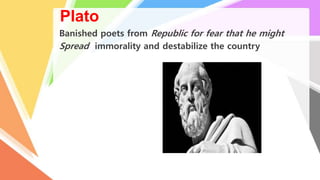
Plato
Banished poets from Republic for fear that he might
Spread immorality and destabilize the country
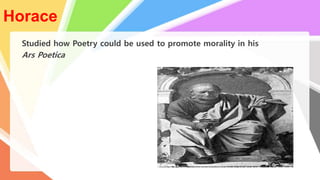
Horace
Studied how Poetry could be used to promote morality in his
Ars Poetica
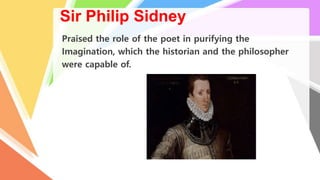
Sir Philip Sidney
Praised the role of the poet in purifying the
Imagination, which the historian and the philosopher
were capable of.
Dr. Johnson
Was a stern upholder of morality and attacked Shakespeare for
his slip shod treatment of moral values.
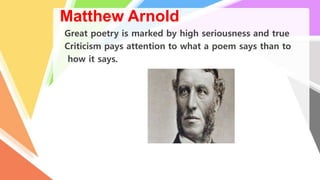
Matthew Arnold
Great poetry is marked by high seriousness and true
Criticism pays attention to what a poem says than to
how it says.
Humanists
(order, restraint, discipline)
Major intellectual movement of the Renaissance
– Proponents of humanism believed that a body of learning,
humanistic studies (studia humanitatis), consisting of the study
and imitation of the classical culture of ancient Rome and
Greece, would produce a cultural rebirth after what they saw as the
decadent and “barbarous” learning of the Middle Ages.
– Humanism was characterized by lots of creativity and interest in the
Arts and Humanities brought about by increased scientific
knowledge, a renewed approach to ancient Greek-Latin texts
Humanists
Neo Humanists
Renaissance Humanists
Neo Humanism
Opposed Naturalism
Opposed Romanticism
Moral earnestness & aesthetic sensitivity
20th Century Critical Movement
Paul Elmer More- Shelburne Essays
Irving Babbit- Literature and the
American College
Neo Humanists
Norman Forester
Harry Hayden Clark
G.R. Elliot
Robert Shafer
Frank Jewett Mather
Gorham Munson
Stuart Sherman Pratt
Religious Humanism
T.E. Hume
Religion & morality
T.S. Eliot- Christian Humanist
Edmund Fuller
Hyatt Waggoner
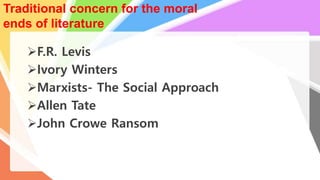
Traditional concern for the moral
ends of literature
F.R. Levis
Ivory Winters
Marxists- The Social Approach
Allen Tate
John Crowe Ransom
THANK YOU

The Moralistic approach

  • 1.
    MORALISTIC APPROACH Mrs. M.Annalakshmi Asst. Professor, English
  • 2.
    A tendency—rather thana recognized school—within Literary criticism to judge literary works according to moral rather than formal principles. – Judging literary works by their ethical teachings and by their effects on readers. – Literature that is ethically sound and encourages virtue is praised – Literature that misguides and corrupts is condemned. MORALISTIC APPROACH-INTRODUCTION
  • 3.
    Plato Banished poets fromRepublic for fear that he might Spread immorality and destabilize the country
  • 4.
    Horace Studied how Poetrycould be used to promote morality in his Ars Poetica
  • 5.
    Sir Philip Sidney Praisedthe role of the poet in purifying the Imagination, which the historian and the philosopher were capable of.
  • 6.
    Dr. Johnson Was astern upholder of morality and attacked Shakespeare for his slip shod treatment of moral values.
  • 7.
    Matthew Arnold Great poetryis marked by high seriousness and true Criticism pays attention to what a poem says than to how it says.
  • 8.
    Humanists (order, restraint, discipline) Majorintellectual movement of the Renaissance – Proponents of humanism believed that a body of learning, humanistic studies (studia humanitatis), consisting of the study and imitation of the classical culture of ancient Rome and Greece, would produce a cultural rebirth after what they saw as the decadent and “barbarous” learning of the Middle Ages. – Humanism was characterized by lots of creativity and interest in the Arts and Humanities brought about by increased scientific knowledge, a renewed approach to ancient Greek-Latin texts
  • 9.
  • 10.
    Neo Humanism Opposed Naturalism OpposedRomanticism Moral earnestness & aesthetic sensitivity
  • 11.
    20th Century CriticalMovement Paul Elmer More- Shelburne Essays Irving Babbit- Literature and the American College
  • 12.
    Neo Humanists Norman Forester HarryHayden Clark G.R. Elliot Robert Shafer Frank Jewett Mather Gorham Munson Stuart Sherman Pratt
  • 13.
    Religious Humanism T.E. Hume Religion& morality T.S. Eliot- Christian Humanist Edmund Fuller Hyatt Waggoner
  • 14.
    Traditional concern forthe moral ends of literature F.R. Levis Ivory Winters Marxists- The Social Approach Allen Tate John Crowe Ransom
  • 15.