MORALISTIC APPROACH
Dr. T. Lilly Golda
Assistant Professor of English
A.P.C. Mahalaxmi College for Women
Thoothukudi
MORALISTIC APPROACH
– A tendency—rather than a recognized school—within literary
criticism to judge literary works according to moral rather than
formal principles.
– Judging literary works by their ethical teachings and by their
effects on readers.
– Literature that is ethically sound and encourages virtue is
praised
– Literature that misguides and corrupts is condemned.
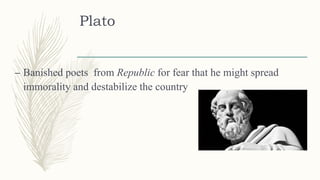
Plato
– Banished poets from Republic for fear that he might spread
immorality and destabilize the country
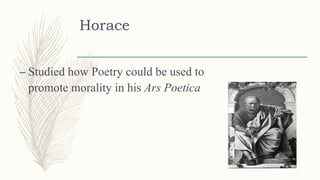
Horace
– Studied how Poetry could be used to
promote morality in his Ars Poetica
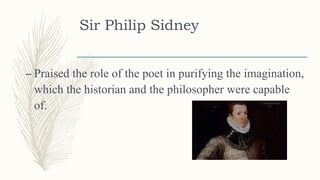
Sir Philip Sidney
– Praised the role of the poet in purifying the imagination,
which the historian and the philosopher were capable
of.
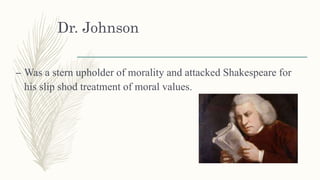
Dr. Johnson
– Was a stern upholder of morality and attacked Shakespeare for
his slip shod treatment of moral values.
Matthew Arnold
– Great poetry is marked by high seriousness and true criticism
pays attention to what a poem says than to how it says.
Humanists
(order, restraint, discipline)
– Major intellectual movement of the Renaissance.
– Proponents of humanism believed that a body of learning, humanistic studies
(studia humanitatis), consisting of the study and imitation of the classical
culture of ancient Rome and Greece, would produce a cultural rebirth after
what they saw as the decadent and “barbarous” learning of the Middle Ages.
– Humanism was characterised by lots of creativity and interest in the Arts and
Humanities brought about by increased scientific knowledge, a renewed
approach to ancient Greek-Latin texts
Humanists
– Neo Humanists
– Renaissance Humanists
Neo Humanism
–Opposed Naturalism
–Opposed Romanticism
–Moral earnestness & aesthetic sensitivity
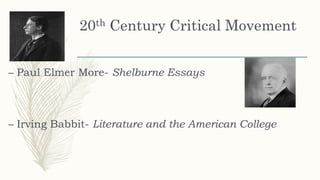
20th Century Critical Movement
– Paul Elmer More- Shelburne Essays
– Irving Babbit- Literature and the American College
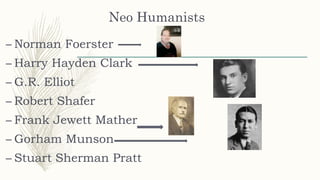
Neo Humanists
– Norman Foerster
– Harry Hayden Clark
– G.R. Elliot
– Robert Shafer
– Frank Jewett Mather
– Gorham Munson
– Stuart Sherman Pratt
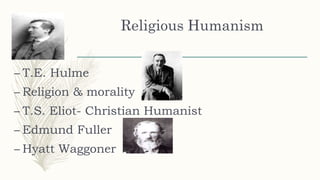
Religious Humanism
– T.E. Hulme
– Religion & morality
– T.S. Eliot- Christian Humanist
– Edmund Fuller
– Hyatt Waggoner
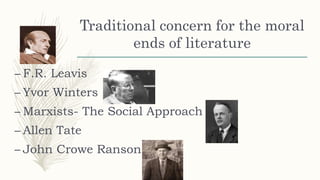
Traditional concern for the moral
ends of literature
– F.R. Leavis
– Yvor Winters
– Marxists- The Social Approach
– Allen Tate
– John Crowe Ranson

Moralistic approach

  • 1.
    MORALISTIC APPROACH Dr. T.Lilly Golda Assistant Professor of English A.P.C. Mahalaxmi College for Women Thoothukudi
  • 2.
    MORALISTIC APPROACH – Atendency—rather than a recognized school—within literary criticism to judge literary works according to moral rather than formal principles. – Judging literary works by their ethical teachings and by their effects on readers. – Literature that is ethically sound and encourages virtue is praised – Literature that misguides and corrupts is condemned.
  • 3.
    Plato – Banished poetsfrom Republic for fear that he might spread immorality and destabilize the country
  • 4.
    Horace – Studied howPoetry could be used to promote morality in his Ars Poetica
  • 5.
    Sir Philip Sidney –Praised the role of the poet in purifying the imagination, which the historian and the philosopher were capable of.
  • 6.
    Dr. Johnson – Wasa stern upholder of morality and attacked Shakespeare for his slip shod treatment of moral values.
  • 7.
    Matthew Arnold – Greatpoetry is marked by high seriousness and true criticism pays attention to what a poem says than to how it says.
  • 8.
    Humanists (order, restraint, discipline) –Major intellectual movement of the Renaissance. – Proponents of humanism believed that a body of learning, humanistic studies (studia humanitatis), consisting of the study and imitation of the classical culture of ancient Rome and Greece, would produce a cultural rebirth after what they saw as the decadent and “barbarous” learning of the Middle Ages. – Humanism was characterised by lots of creativity and interest in the Arts and Humanities brought about by increased scientific knowledge, a renewed approach to ancient Greek-Latin texts
  • 9.
    Humanists – Neo Humanists –Renaissance Humanists
  • 10.
    Neo Humanism –Opposed Naturalism –OpposedRomanticism –Moral earnestness & aesthetic sensitivity
  • 11.
    20th Century CriticalMovement – Paul Elmer More- Shelburne Essays – Irving Babbit- Literature and the American College
  • 12.
    Neo Humanists – NormanFoerster – Harry Hayden Clark – G.R. Elliot – Robert Shafer – Frank Jewett Mather – Gorham Munson – Stuart Sherman Pratt
  • 13.
    Religious Humanism – T.E.Hulme – Religion & morality – T.S. Eliot- Christian Humanist – Edmund Fuller – Hyatt Waggoner
  • 14.
    Traditional concern forthe moral ends of literature – F.R. Leavis – Yvor Winters – Marxists- The Social Approach – Allen Tate – John Crowe Ranson