The Learning Cycle
By: Dr. Roger Bybee and the Biological Science Curriculum Study (BSCS)
Prepared by: Juniel Tumampos
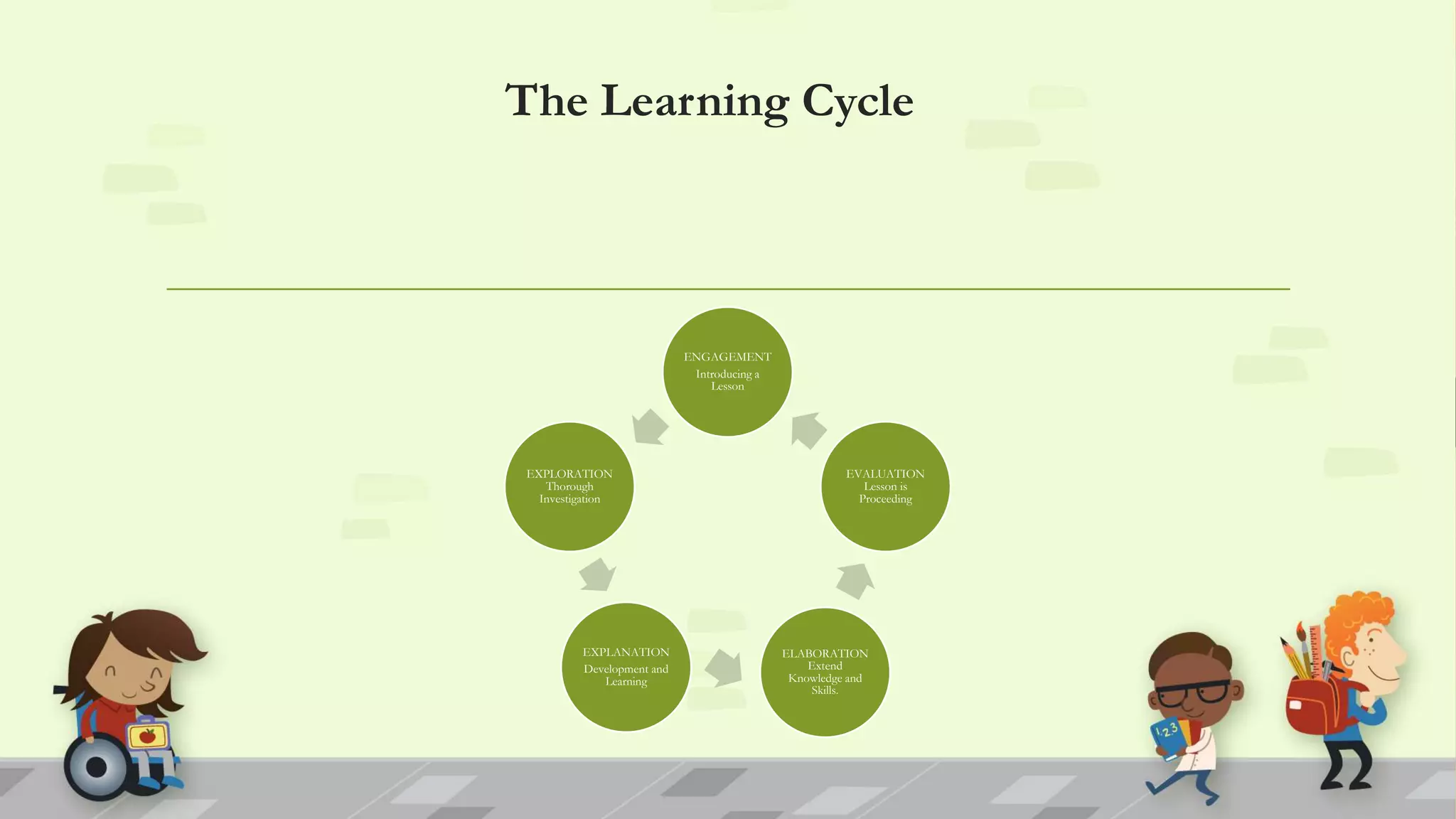
The Learning Cycle
ENGAGEMENT
Introducing a
Lesson
EVALUATION
Lesson is
Proceeding
ELABORATION
Extend
Knowledge and
Skills.
EXPLANATION
Development and
Learning
EXPLORATION
Thorough
Investigation
A DESCRIPTION OF THE FIVE E’s
INSTRUCTIONAL MODEL
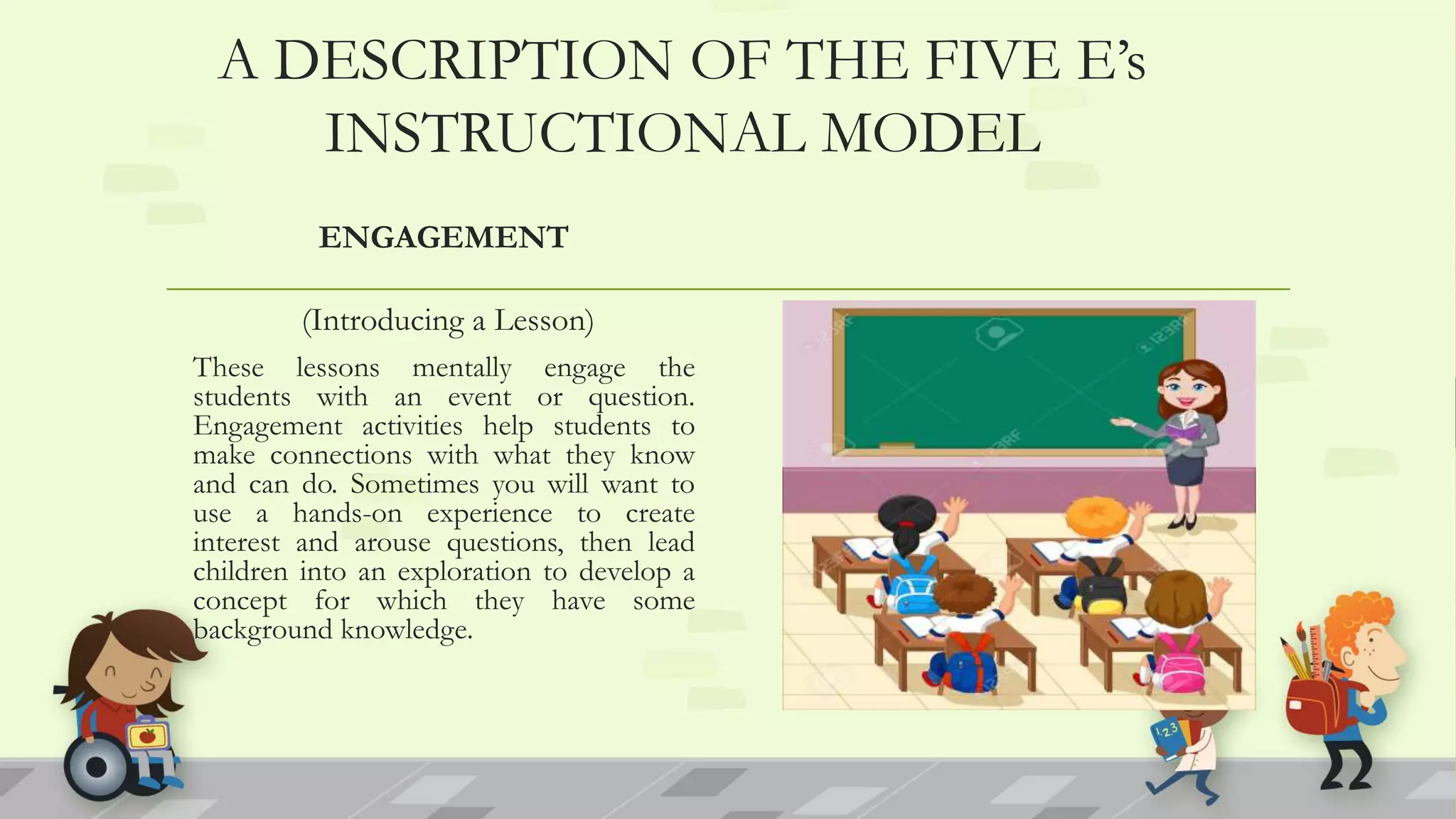
ENGAGEMENT
(Introducing a Lesson)
These lessons mentally engage the
students with an event or question.
Engagement activities help students to
make connections with what they know
and can do. Sometimes you will want to
use a hands-on experience to create
interest and arouse questions, then lead
children into an exploration to develop a
concept for which they have some
background knowledge.
A DESCRIPTION OF THE FIVE E’s
INSTRUCTIONAL MODEL
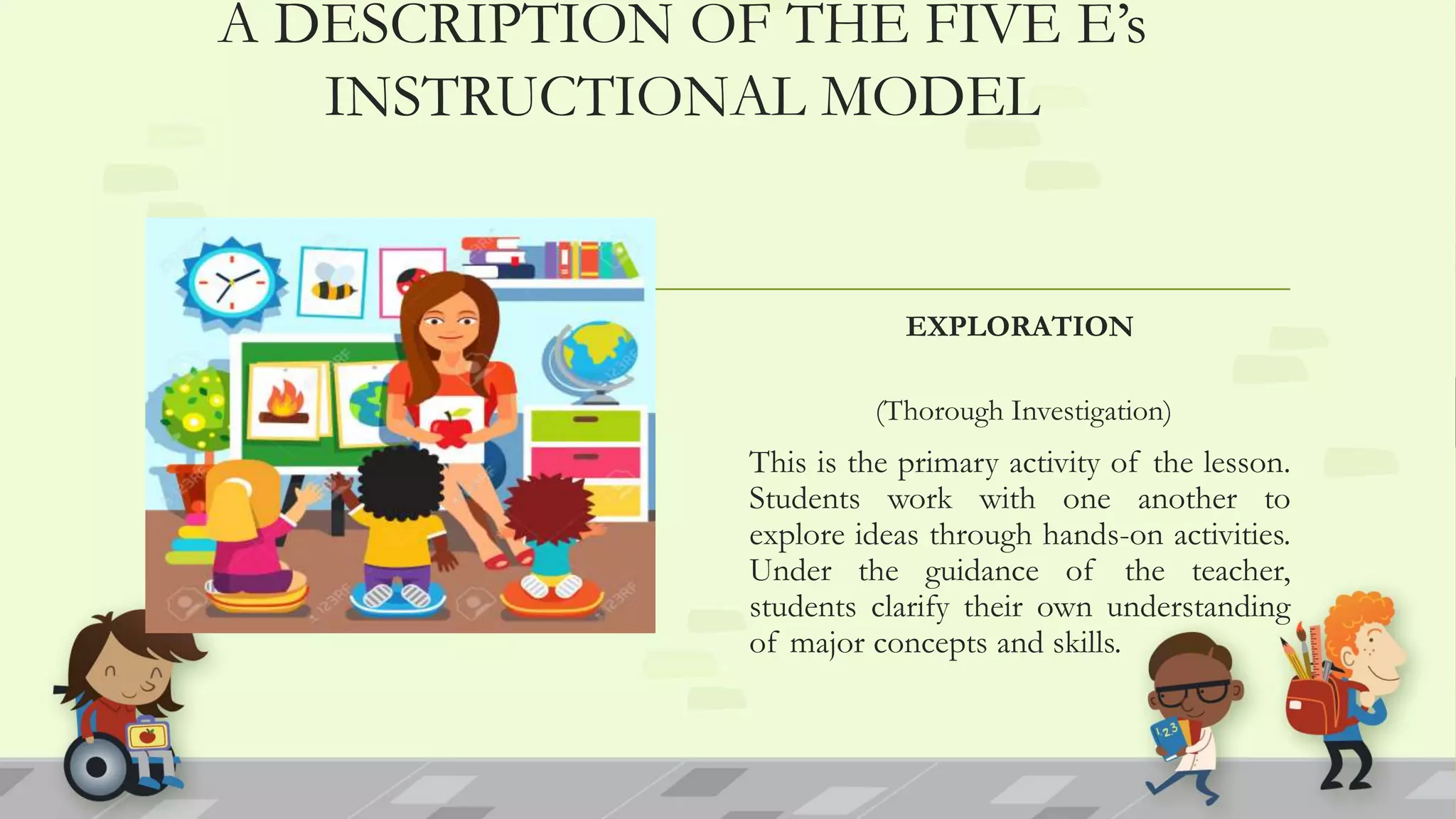
EXPLORATION
(Thorough Investigation)
This is the primary activity of the lesson.
Students work with one another to
explore ideas through hands-on activities.
Under the guidance of the teacher,
students clarify their own understanding
of major concepts and skills.
A DESCRIPTION OF THE FIVE E’s
INSTRUCTIONAL MODEL
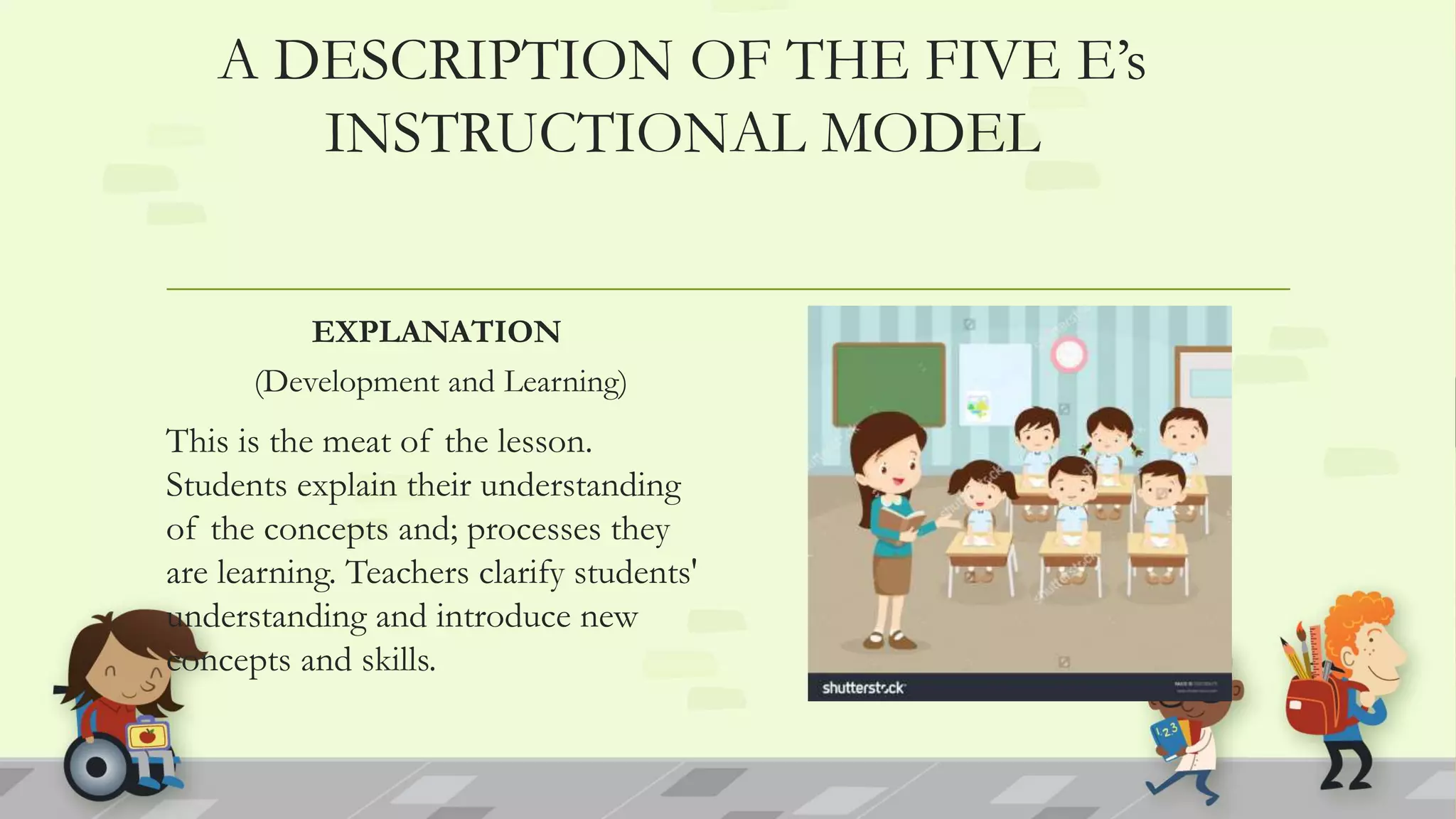
EXPLANATION
(Development and Learning)
This is the meat of the lesson.
Students explain their understanding
of the concepts and; processes they
are learning. Teachers clarify students'
understanding and introduce new
concepts and skills.
A DESCRIPTION OF THE FIVE E’s
INSTRUCTIONAL MODEL
ELABORATION
(Extend Knowledge and Skills.)
These lessons challenge students to
apply what they have learned, and
build on the students' understanding
of concepts to extend their
knowledge and skills.
A DESCRIPTION OF THE FIVE E’s
INSTRUCTIONAL MODEL
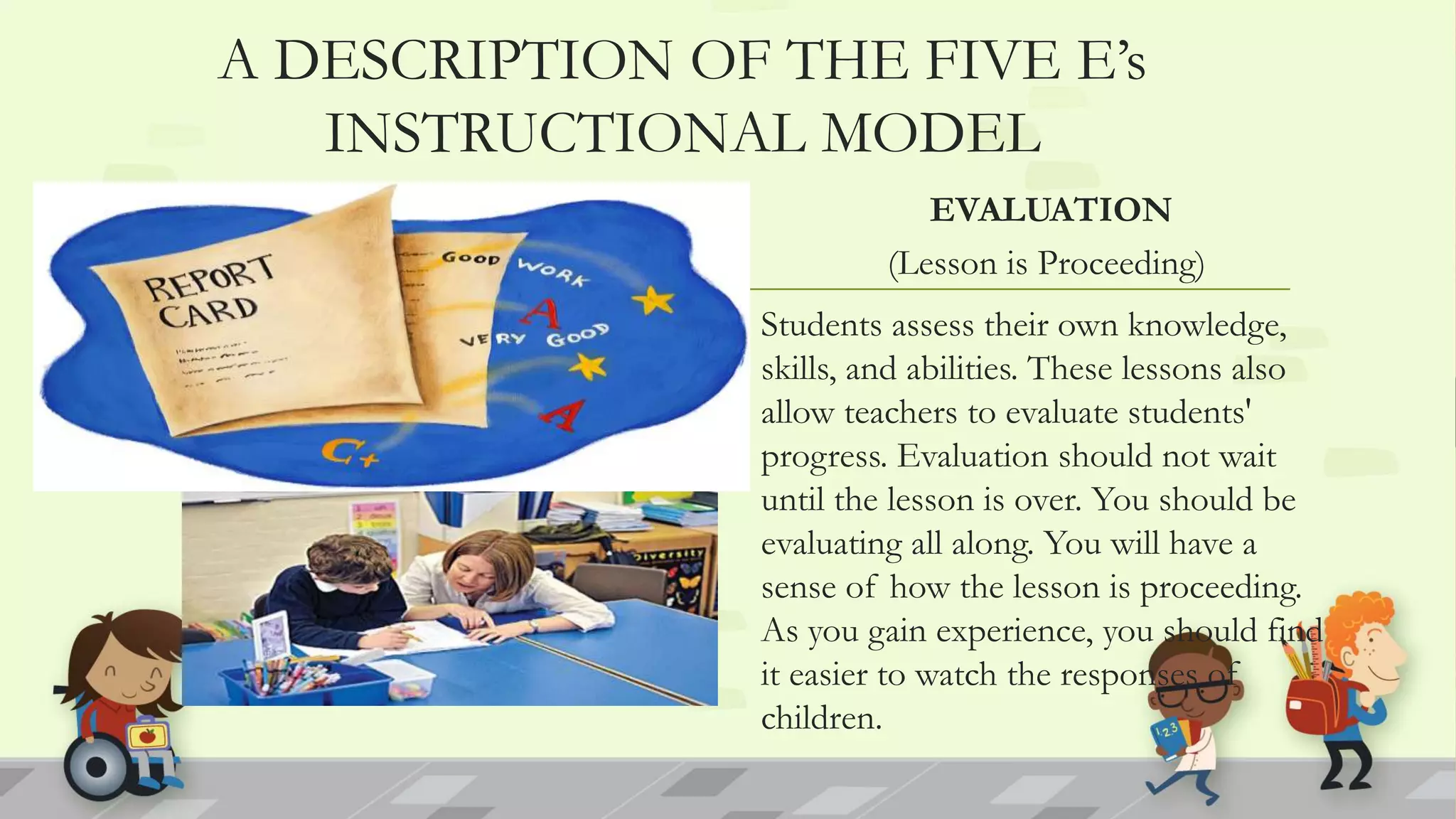
EVALUATION
(Lesson is Proceeding)
Students assess their own knowledge,
skills, and abilities. These lessons also
allow teachers to evaluate students'
progress. Evaluation should not wait
until the lesson is over. You should be
evaluating all along. You will have a
sense of how the lesson is proceeding.
As you gain experience, you should find
it easier to watch the responses of
children.
References:
Bybee, R. & Landes, N. M. (1990). Science for life and living: An
elementary school science program from biological sciences
curriculum study.
The American Biology Teacher 52(2). 92-98.
Fuller, Robert G. (2002)
A Love of Discovery: Science Education, the Second Career of
Robert Karplus (Innovations in Science Education and Technology).
Plenum Pub. Corp.
National Research Council. (1996). National science education
standards. Washington D.C.: National Academy Press.

The learning cycle

  • 1.
    The Learning Cycle By:Dr. Roger Bybee and the Biological Science Curriculum Study (BSCS) Prepared by: Juniel Tumampos
  • 2.
    The Learning Cycle ENGAGEMENT Introducinga Lesson EVALUATION Lesson is Proceeding ELABORATION Extend Knowledge and Skills. EXPLANATION Development and Learning EXPLORATION Thorough Investigation
  • 3.
    A DESCRIPTION OFTHE FIVE E’s INSTRUCTIONAL MODEL ENGAGEMENT (Introducing a Lesson) These lessons mentally engage the students with an event or question. Engagement activities help students to make connections with what they know and can do. Sometimes you will want to use a hands-on experience to create interest and arouse questions, then lead children into an exploration to develop a concept for which they have some background knowledge.
  • 4.
    A DESCRIPTION OFTHE FIVE E’s INSTRUCTIONAL MODEL EXPLORATION (Thorough Investigation) This is the primary activity of the lesson. Students work with one another to explore ideas through hands-on activities. Under the guidance of the teacher, students clarify their own understanding of major concepts and skills.
  • 5.
    A DESCRIPTION OFTHE FIVE E’s INSTRUCTIONAL MODEL EXPLANATION (Development and Learning) This is the meat of the lesson. Students explain their understanding of the concepts and; processes they are learning. Teachers clarify students' understanding and introduce new concepts and skills.
  • 6.
    A DESCRIPTION OFTHE FIVE E’s INSTRUCTIONAL MODEL ELABORATION (Extend Knowledge and Skills.) These lessons challenge students to apply what they have learned, and build on the students' understanding of concepts to extend their knowledge and skills.
  • 7.
    A DESCRIPTION OFTHE FIVE E’s INSTRUCTIONAL MODEL EVALUATION (Lesson is Proceeding) Students assess their own knowledge, skills, and abilities. These lessons also allow teachers to evaluate students' progress. Evaluation should not wait until the lesson is over. You should be evaluating all along. You will have a sense of how the lesson is proceeding. As you gain experience, you should find it easier to watch the responses of children.
  • 8.
    References: Bybee, R. &Landes, N. M. (1990). Science for life and living: An elementary school science program from biological sciences curriculum study. The American Biology Teacher 52(2). 92-98. Fuller, Robert G. (2002) A Love of Discovery: Science Education, the Second Career of Robert Karplus (Innovations in Science Education and Technology). Plenum Pub. Corp. National Research Council. (1996). National science education standards. Washington D.C.: National Academy Press.

Editor's Notes

  • #3 NOTE: To change images on this slide, select a picture and delete it. Then click the Insert Picture icon in the placeholder to insert your own image.
  • #4 NOTE: To change images on this slide, select a picture and delete it. Then click the Insert Picture icon in the placeholder to insert your own image.
  • #5 NOTE: To change images on this slide, select a picture and delete it. Then click the Insert Picture icon in the placeholder to insert your own image.
  • #6 NOTE: To change images on this slide, select a picture and delete it. Then click the Insert Picture icon in the placeholder to insert your own image.
  • #7 NOTE: To change images on this slide, select a picture and delete it. Then click the Insert Picture icon in the placeholder to insert your own image.
  • #8 NOTE: To change images on this slide, select a picture and delete it. Then click the Insert Picture icon in the placeholder to insert your own image.