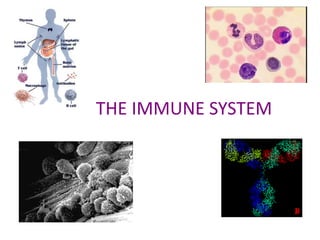
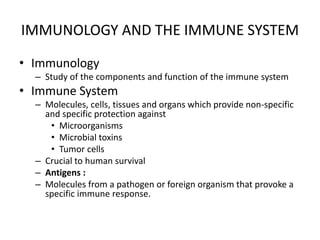
THE IMMUNE SYSTEM
IMMUNOLOGY AND THE IMMUNE SYSTEM
• Immunology
– Study of the components and function of the immune system
• Immune System
– Molecules, cells, tissues and organs which provide non-specific
and specific protection against
• Microorganisms
• Microbial toxins
• Tumor cells
– Crucial to human survival
– Antigens :
– Molecules from a pathogen or foreign organism that provoke a
specific immune response.
The Invaders . . .
• Bacteria
• Viruses
• parasites
such as fungi,
protista, &
worms
worm trichura.jpg
http://www.hhs.gov/asphep/presentation/images/bacteria.jpg
http://www.skidmore.edu/academics/biology/plant_bio/lab13.FUNGI.html
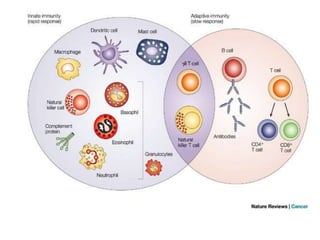
Types Of Immune System
• Immune response
– Innate (non-specific)
– Adaptive (specific)
• Primary
• Secondary
• These two systems perform many of their functions
by cooperative interactions
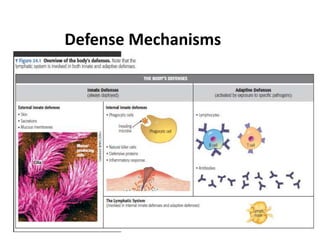
Defense Mechanisms
Chapter 21, Immune System 6
Immunity: Innate (nonspecific)
• immunity an organism is born with.
• system responds quickly and consists of:
– First line of defense – intact skin and mucosae
prevent entry of microorganisms
– Second line of defense – antimicrobial proteins,
phagocytes, and other cells
• Inhibit spread of invaders throughout the body
• Inflammation is its hallmark and most important
mechanism
Chapter 21, Immune System 7
Immunity: Adaptive (specific) defense
system
– Third line of defense – mounts attack against
particular foreign substance.
– Immunity that an organism develops during life
time.
– Develops only after exposure to including agents
such as microbs, toxins, or other foreign
substances.
• Takes longer to react than the innate system
• Works in conjunction with the innate system
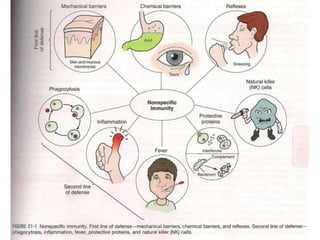
First line of defenses / innate immune
system
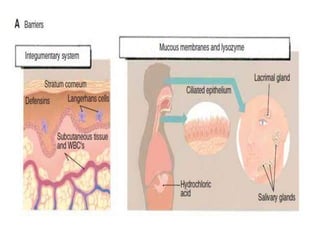
• The body’s 1st line of defense against pathogens uses mostly
physical and chemical barriers such as :
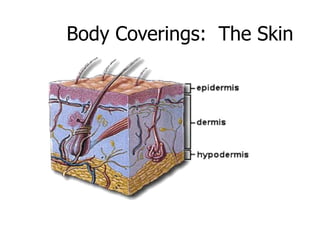
• Skin- acts as a barrier to invasion
• Sweat- has chemicals which can kill different pathogens.
• Tears – have lysozymes which has powerful digestive abilities
that render antigens harmless .
• Saliva – also has lysozymes
• Mucus – can trap pathogens, which are than sneezed,
coughed, washed away, or destroyed by chemicals
• Stomach acids – destroys pathogens .
Body Coverings: The Skin
Chapter 21, Immune System 11
Epithelial Chemical Barriers
• Epithelial membranes produce protective
chemicals that destroy microorganisms
– Skin acidity (pH of 3 to 5) inhibits bacterial growth
– Sebum contains chemicals toxic to bacteria
– Stomach mucosae secrete concentrated HCl and
protein-digesting enzymes
– Saliva and lacrimal fluid contain lysozyme
– Mucus traps microorganisms that enter the
digestive and respiratory systems
Chapter 21, Immune System 12
Respiratory Tract Mucosae
• Mucus-coated hairs in the nose trap inhaled
particles
• Mucosa of the upper respiratory tract is
ciliated
– Cilia sweep dust- and bacteria-laden mucus away
from lower respiratory passages
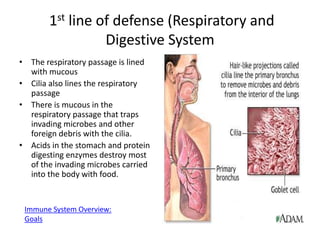
1st line of defense (Respiratory and
Digestive System
• The respiratory passage is lined
with mucous
• Cilia also lines the respiratory
passage
• There is mucous in the
respiratory passage that traps
invading microbes and other
foreign debris with the cilia.
• Acids in the stomach and protein
digesting enzymes destroy most
of the invading microbes carried
into the body with food.
Immune System Overview:
Goals
Second line of defense
• If a pathogen is able to get past the body’s
first line of defense, and an infection starts ,
the body can rely on it’s second line of
defense .
Chapter 21, Immune System 17
Internal Defenses (Second Line of
Defense)
• The body uses nonspecific cellular and chemical
devices to protect itself
1. Phagocytes
2. natural killer (NK) cells
3. Inflammatory response enlists macrophages, mast
cells, WBCs, and chemicals
4. Antimicrobial proteins in blood and tissue fluid
• Harmful substances are identified by surface
carbohydrates unique to infectious organisms
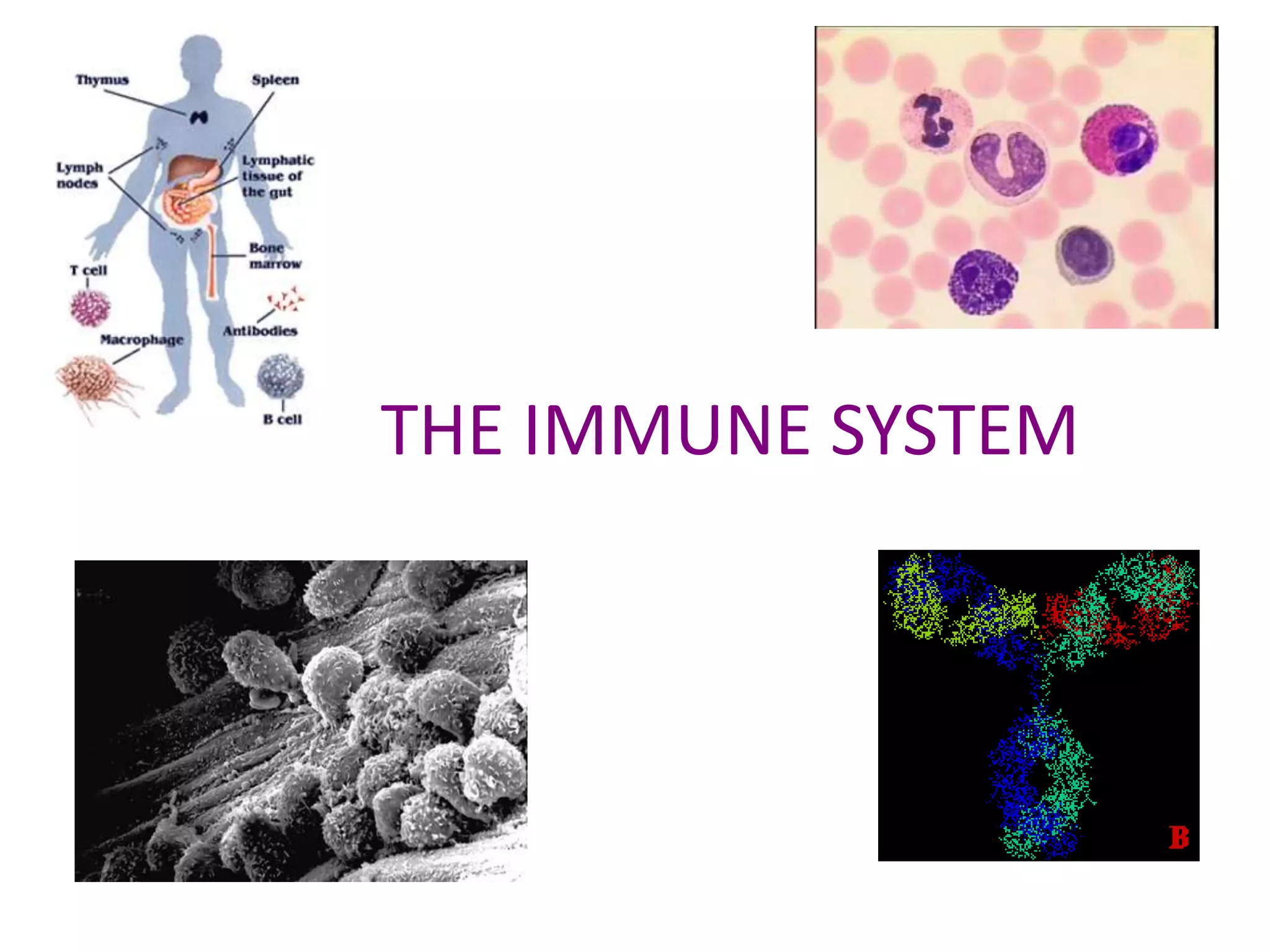
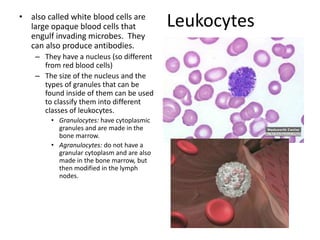
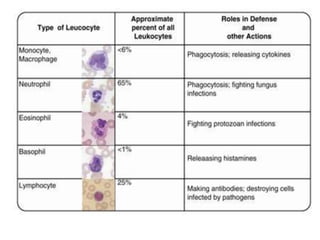
Leukocytes• also called white blood cells are
large opaque blood cells that
engulf invading microbes. They
can also produce antibodies.
– They have a nucleus (so different
from red blood cells)
– The size of the nucleus and the
types of granules that can be
found inside of them can be used
to classify them into different
classes of leukocytes.
• Granulocytes: have cytoplasmic
granules and are made in the
bone marrow.
• Agranulocytes: do not have a
granular cytoplasm and are also
made in the bone marrow, but
then modified in the lymph
nodes.
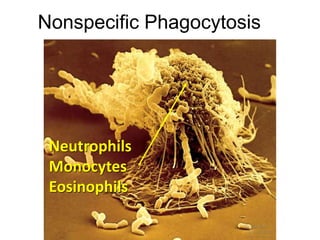
Nonspecific Phagocytosis
Neutrophils
Monocytes
Eosinophils
Chapter 21, Immune System 20
1. Phagocytes
• Macrophages are the chief phagocytic cells
• Free macrophages wander throughout a region in search
of cellular debris
• Kupffer cells (liver) and microglia (brain) are fixed
macrophages
• Neutrophils become phagocytic when encountering
infectious material
• Eosinophils are weakly phagocytic against parasitic
worms
• Mast cells bind and ingest a wide range of bacteria
Chapter 21, Immune System 22
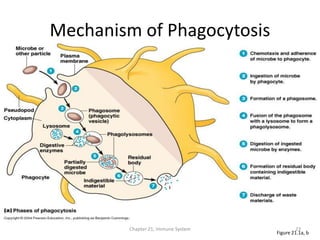
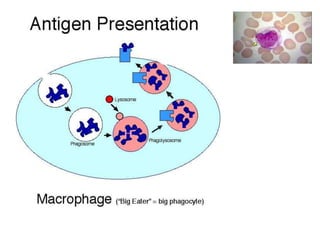
Mechanism of Phagocytosis
• Microbes adhere to the phagocyte
• Pseudopods engulf the particle (antigen) into
a phagosome
• Phagosomes fuse with a lysosome to form a
phagolysosome
• Invaders in the phagolysosome are digested
by proteolytic enzymes
• Indigestible and residual material is removed
by exocytosis
Chapter 21, Immune System 23
Mechanism of Phagocytosis
Figure 21.1a, b
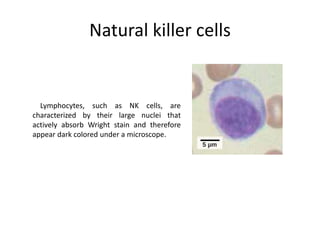
Natural killer cells
Lymphocytes, such as NK cells, are
characterized by their large nuclei that
actively absorb Wright stain and therefore
appear dark colored under a microscope.
Chapter 21, Immune System 25
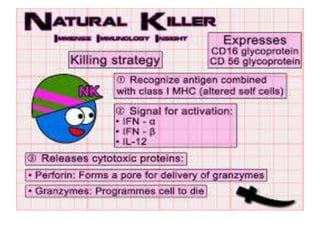
2. Natural Killer (NK) Cells
• Cells that can lyse and kill cancer cells and virus-infected
cells
• Natural killer cells:
– Are a small, distinct group of large granular lymphocytes
– React nonspecifically and eliminate cancerous and virus-
infected cells
– Kill their target cells by releasing perforins and other
cytolytic chemicals
– Secrete potent chemicals that enhance the
inflammatory response
Chapter 21, Immune System 27
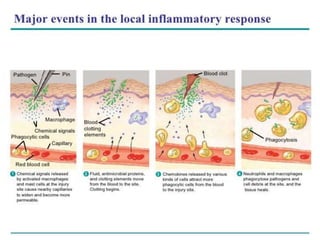
3. Inflammation: Tissue Response to
Injury
• The inflammatory response is triggered
whenever body tissues are injured
– Prevents the spread of damaging agents to nearby
tissues
– Disposes of cell debris and pathogens
– Sets the stage for repair processes
• The four cardinal signs of acute inflammation
are redness, heat, swelling, and pain
Inflammatory Response
Histamine &
prostaglandins
released
Capillaries dilate
Clotting begins
Chemotactic
factors attract
phagocytic cells
Phagocytes
consume
pathogens & cell
debris
Chapter 21, Immune System 29
4. Antimicrobial Proteins
• Enhance the innate defenses by:
– Attacking microorganisms directly
– Hindering microorganisms’ ability to reproduce
• The most important antimicrobial proteins
are:
– Interferon
– Complement proteins
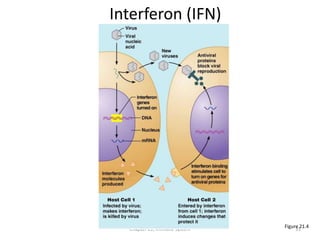
Interferon
• Protein secreted by a cell currently infected by a virus
• Interferon warns the neighboring cells of the impending viral
infection
• The neighboring cells synthesize proteins that will block the
virus from hijacking the cell DNA replication machinery
Chapter 21, Immune System 31
Interferon (IFN)
Figure 21.4
Chapter 21, Immune System 32
• Complement helps destroy pathogens
• in three ways:
• 1. Enhanced inflammation.
• Complement proteins are
• involved in and amplify the inflammatory response
• because certain ones can bind to mast cells (type of
• white blood cell in tissues) and trigger histamine
• release, and others can attract phagocytes to the
scene.
• 2.
Complement Pathways
Chapter 21, Immune System 33
2.Some complement proteins bind to the surface of
pathogens already coated with antibodies, which
ensures that the pathogens will be phagocytized by a
neutrophil or macrophage.
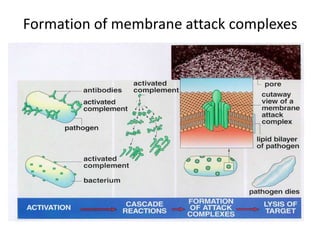
3. Certain other complement proteins join to form a
membrane attack complex that produces holes in the
surface of some bacteria and viruses. Fluids and salts
then enter the bacterial cell or virus to the point that it
bursts .
Complement systems
Formation of membrane attack complexes
Chapter 21, Immune System 35
• Abnormally high body temperature in
response to invading microorganisms
• The body’s thermostat is reset upwards in
response to pyrogens, chemicals secreted by
leukocytes and macrophages exposed to
bacteria and other foreign substances
Fever
Chapter 21, Immune System 36
• High fevers are dangerous as they can
denature enzymes
• Moderate fever can be beneficial, as it causes:
– The liver and spleen to sequester iron and zinc
(needed by microorganisms)
– An increase in the metabolic rate, which speeds
up tissue repair
Fever
Adaptive Immunity
• Immunity that an organism develops during
lifetime
• Develops after exposure to antigens
• Invovles the activity of lymphocytes
• Includes 3rd line of defense
Adaptive Immunity (Specific immunity)
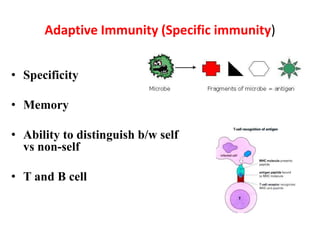
• Specificity
• Memory
• Ability to distinguish b/w self
vs non-self
• T and B cell
Types of Adaptive Immunity
1. Antibody-Mediated Immunity (AMI) or
Humoral Immunity
– B lymphocytes
2. Cell-Mediated Immunity (CMI) or Cellular
Immunity
– T lymphocytes
Note: B and T cells ……..blood, lymph, lymphoid
tissues such as spleen, lymph nodes etc.
Cell-Mediated Immune Response
• T cells
• Immune resoponse to infected cells
( viruses, bacteria and parasites (Pathogens) within
cells)
• Defense against cancer and transplant cells
Chapter 21, Immune System 40
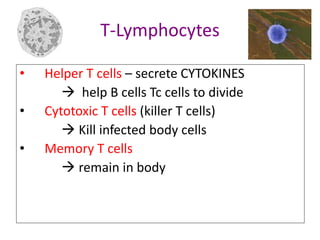
T-Lymphocytes
• Helper T cells – secrete CYTOKINES
 help B cells Tc cells to divide
• Cytotoxic T cells (killer T cells)
 Kill infected body cells
• Memory T cells
 remain in body
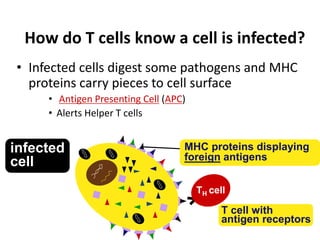
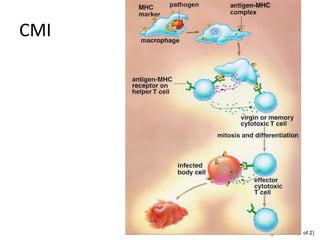
How do T cells know a cell is infected?
• Infected cells digest some pathogens and MHC
proteins carry pieces to cell surface
• Antigen Presenting Cell (APC)
• Alerts Helper T cells
MHC proteins displaying
foreign antigens
infected
cell
T cell with
antigen receptors
TH cell
Macrophages
Antigen-Presenting Cells
– B cells
– Dendritic cells
– macrophages
Helper T Cells (TH)
• bind to other white blood cells that have
previously encountered an antigen
– stimulate proliferation of other T cells
– Stimulate B cells that have already become bound
to antigen
• Without TH, there is no immune response
Chapter 21, Immune System 45
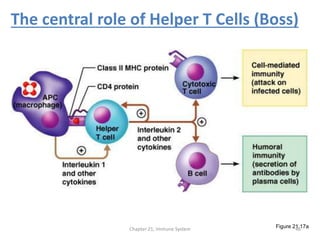
The central role of Helper T Cells (Boss)
Chapter 21, Immune System 46Figure 21.17a
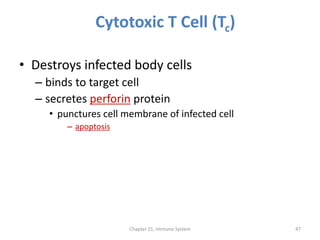
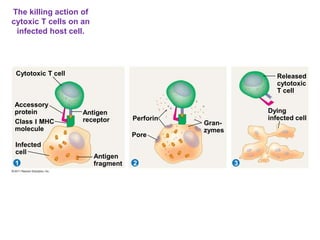
Cytotoxic T Cell (Tc)
• Destroys infected body cells
– binds to target cell
– secretes perforin protein
• punctures cell membrane of infected cell
– apoptosis
Chapter 21, Immune System 47
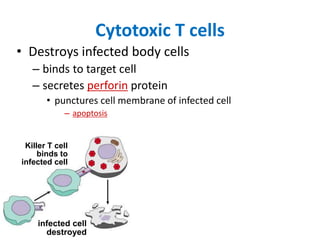
Cytotoxic T cells
Killer T cell
binds to
infected cell
• Destroys infected body cells
– binds to target cell
– secretes perforin protein
• punctures cell membrane of infected cell
– apoptosis
infected cell
destroyed
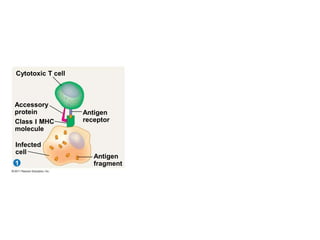
Cytotoxic T cell
1
Accessory
protein
Class I MHC
molecule
Infected
cell
Antigen
receptor
Antigen
fragment
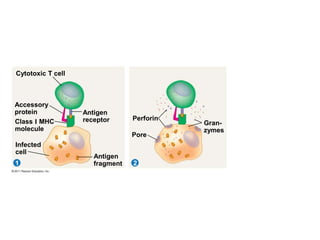
Cytotoxic T cell
1 2
Accessory
protein
Class I MHC
molecule
Infected
cell
Antigen
receptor
Antigen
fragment
Perforin
Pore
Gran-
zymes
The killing action of
cytoxic T cells on an
infected host cell.
Cytotoxic T cell
31 2
Accessory
protein
Class I MHC
molecule
Infected
cell
Antigen
receptor
Antigen
fragment
Perforin
Pore
Gran-
zymes
Released
cytotoxic
T cell
Dying
infected cell
Figure 23.11 (1 of 2)
CMI
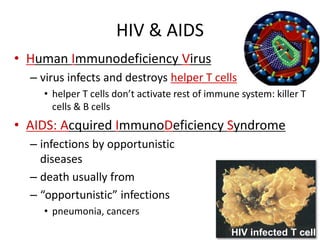
• Human Immunodeficiency Virus
– virus infects and destroys helper T cells
• helper T cells don’t activate rest of immune system: killer T
cells & B cells
• AIDS: Acquired ImmunoDeficiency Syndrome
– infections by opportunistic
diseases
– death usually from
– “opportunistic” infections
• pneumonia, cancers
HIV & AIDS
HIV infected T cell
ANTIBODY-MEDIATED (HUMORAL) IMMUNITY
• targets extracellular microorganisms (Bacteria
and viruses circulating in the blood)
• B-lymphocytes (B cells)……….Antibodies
• Antibodies… extracellular fluids and surface of B
cells
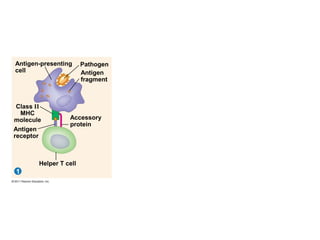
Pathogen
1
Antigen-presenting
cell Antigen
fragment
Class II
MHC
molecule
Antigen
receptor
Accessory
protein
Helper T cell
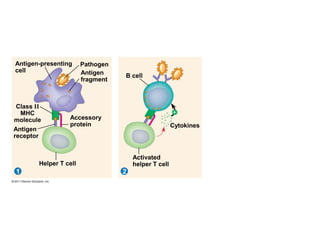
Pathogen
1 2
Antigen-presenting
cell Antigen
fragment
Class II
MHC
molecule
Antigen
receptor
Accessory
protein
Helper T cell
B cell
Cytokines
Activated
helper T cell

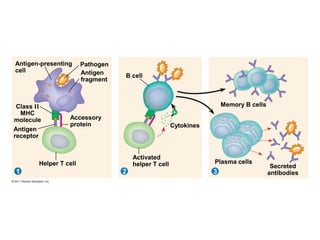
Pathogen
31 2
Antigen-presenting
cell Antigen
fragment
Class II
MHC
molecule
Antigen
receptor
Accessory
protein
Helper T cell
B cell
Cytokines
Activated
helper T cell
Memory B cells
Plasma cells
Secreted
antibodies

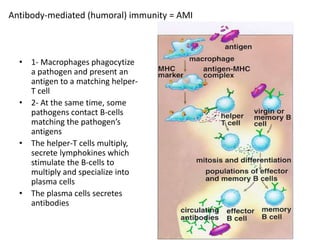
Antibody-mediated (humoral) immunity = AMI
• 1- Macrophages phagocytize
a pathogen and present an
antigen to a matching helper-
T cell
• 2- At the same time, some
pathogens contact B-cells
matching the pathogen’s
antigens
• The helper-T cells multiply,
secrete lymphokines which
stimulate the B-cells to
multiply and specialize into
plasma cells
• The plasma cells secretes
antibodies
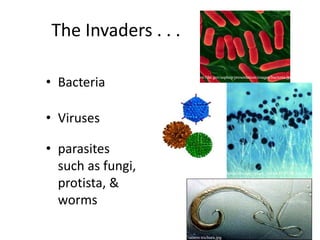
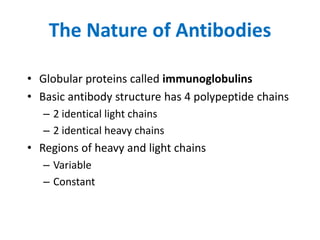
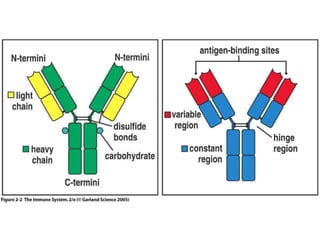
The Nature of Antibodies
• Globular proteins called immunoglobulins
• Basic antibody structure has 4 polypeptide chains
– 2 identical light chains
– 2 identical heavy chains
• Regions of heavy and light chains
– Variable
– Constant
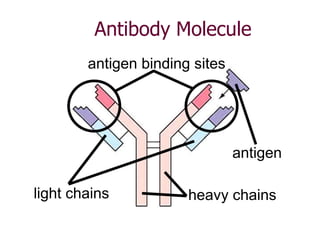
Antibody Molecule
antigen binding sites
antigen
light chains heavy chains
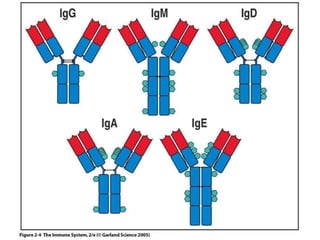
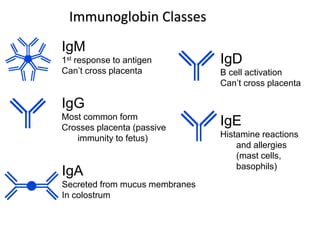
Immunoglobin Classes
IgM
1st response to antigen
Can’t cross placenta
IgG
Most common form
Crosses placenta (passive
immunity to fetus)
IgA
Secreted from mucus membranes
In colostrum
IgD
B cell activation
Can’t cross placenta
IgE
Histamine reactions
and allergies
(mast cells,
basophils)
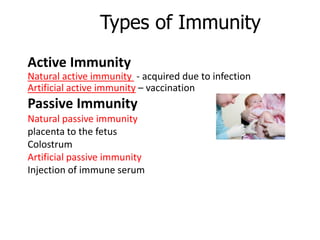
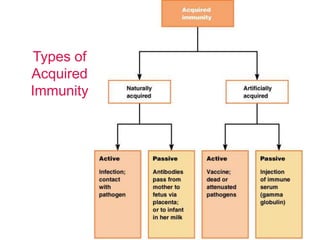
Types of Immunity
Active Immunity
Natural active immunity - acquired due to infection
Artificial active immunity – vaccination
Passive Immunity
Natural passive immunity
placenta to the fetus
Colostrum
Artificial passive immunity
Injection of immune serum
Types of
Acquired
Immunity
Summary
67
QUESTIONS PLEASE

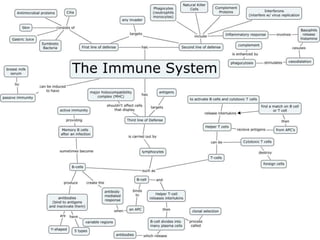
The immune system

  • 1.
  • 2.
    IMMUNOLOGY AND THEIMMUNE SYSTEM • Immunology – Study of the components and function of the immune system • Immune System – Molecules, cells, tissues and organs which provide non-specific and specific protection against • Microorganisms • Microbial toxins • Tumor cells – Crucial to human survival – Antigens : – Molecules from a pathogen or foreign organism that provoke a specific immune response.
  • 3.
    The Invaders .. . • Bacteria • Viruses • parasites such as fungi, protista, & worms worm trichura.jpg http://www.hhs.gov/asphep/presentation/images/bacteria.jpg http://www.skidmore.edu/academics/biology/plant_bio/lab13.FUNGI.html
  • 4.
    Types Of ImmuneSystem • Immune response – Innate (non-specific) – Adaptive (specific) • Primary • Secondary • These two systems perform many of their functions by cooperative interactions
  • 5.
  • 6.
    Chapter 21, ImmuneSystem 6 Immunity: Innate (nonspecific) • immunity an organism is born with. • system responds quickly and consists of: – First line of defense – intact skin and mucosae prevent entry of microorganisms – Second line of defense – antimicrobial proteins, phagocytes, and other cells • Inhibit spread of invaders throughout the body • Inflammation is its hallmark and most important mechanism
  • 7.
    Chapter 21, ImmuneSystem 7 Immunity: Adaptive (specific) defense system – Third line of defense – mounts attack against particular foreign substance. – Immunity that an organism develops during life time. – Develops only after exposure to including agents such as microbs, toxins, or other foreign substances. • Takes longer to react than the innate system • Works in conjunction with the innate system
  • 8.
    First line ofdefenses / innate immune system • The body’s 1st line of defense against pathogens uses mostly physical and chemical barriers such as : • Skin- acts as a barrier to invasion • Sweat- has chemicals which can kill different pathogens. • Tears – have lysozymes which has powerful digestive abilities that render antigens harmless . • Saliva – also has lysozymes • Mucus – can trap pathogens, which are than sneezed, coughed, washed away, or destroyed by chemicals • Stomach acids – destroys pathogens .
  • 10.
  • 11.
    Chapter 21, ImmuneSystem 11 Epithelial Chemical Barriers • Epithelial membranes produce protective chemicals that destroy microorganisms – Skin acidity (pH of 3 to 5) inhibits bacterial growth – Sebum contains chemicals toxic to bacteria – Stomach mucosae secrete concentrated HCl and protein-digesting enzymes – Saliva and lacrimal fluid contain lysozyme – Mucus traps microorganisms that enter the digestive and respiratory systems
  • 12.
    Chapter 21, ImmuneSystem 12 Respiratory Tract Mucosae • Mucus-coated hairs in the nose trap inhaled particles • Mucosa of the upper respiratory tract is ciliated – Cilia sweep dust- and bacteria-laden mucus away from lower respiratory passages
  • 13.
    1st line ofdefense (Respiratory and Digestive System • The respiratory passage is lined with mucous • Cilia also lines the respiratory passage • There is mucous in the respiratory passage that traps invading microbes and other foreign debris with the cilia. • Acids in the stomach and protein digesting enzymes destroy most of the invading microbes carried into the body with food. Immune System Overview: Goals
  • 15.
    Second line ofdefense • If a pathogen is able to get past the body’s first line of defense, and an infection starts , the body can rely on it’s second line of defense .
  • 17.
    Chapter 21, ImmuneSystem 17 Internal Defenses (Second Line of Defense) • The body uses nonspecific cellular and chemical devices to protect itself 1. Phagocytes 2. natural killer (NK) cells 3. Inflammatory response enlists macrophages, mast cells, WBCs, and chemicals 4. Antimicrobial proteins in blood and tissue fluid • Harmful substances are identified by surface carbohydrates unique to infectious organisms
  • 18.
    Leukocytes• also calledwhite blood cells are large opaque blood cells that engulf invading microbes. They can also produce antibodies. – They have a nucleus (so different from red blood cells) – The size of the nucleus and the types of granules that can be found inside of them can be used to classify them into different classes of leukocytes. • Granulocytes: have cytoplasmic granules and are made in the bone marrow. • Agranulocytes: do not have a granular cytoplasm and are also made in the bone marrow, but then modified in the lymph nodes.
  • 19.
  • 20.
    Chapter 21, ImmuneSystem 20 1. Phagocytes • Macrophages are the chief phagocytic cells • Free macrophages wander throughout a region in search of cellular debris • Kupffer cells (liver) and microglia (brain) are fixed macrophages • Neutrophils become phagocytic when encountering infectious material • Eosinophils are weakly phagocytic against parasitic worms • Mast cells bind and ingest a wide range of bacteria
  • 22.
    Chapter 21, ImmuneSystem 22 Mechanism of Phagocytosis • Microbes adhere to the phagocyte • Pseudopods engulf the particle (antigen) into a phagosome • Phagosomes fuse with a lysosome to form a phagolysosome • Invaders in the phagolysosome are digested by proteolytic enzymes • Indigestible and residual material is removed by exocytosis
  • 23.
    Chapter 21, ImmuneSystem 23 Mechanism of Phagocytosis Figure 21.1a, b
  • 24.
    Natural killer cells Lymphocytes,such as NK cells, are characterized by their large nuclei that actively absorb Wright stain and therefore appear dark colored under a microscope.
  • 25.
    Chapter 21, ImmuneSystem 25 2. Natural Killer (NK) Cells • Cells that can lyse and kill cancer cells and virus-infected cells • Natural killer cells: – Are a small, distinct group of large granular lymphocytes – React nonspecifically and eliminate cancerous and virus- infected cells – Kill their target cells by releasing perforins and other cytolytic chemicals – Secrete potent chemicals that enhance the inflammatory response
  • 27.
    Chapter 21, ImmuneSystem 27 3. Inflammation: Tissue Response to Injury • The inflammatory response is triggered whenever body tissues are injured – Prevents the spread of damaging agents to nearby tissues – Disposes of cell debris and pathogens – Sets the stage for repair processes • The four cardinal signs of acute inflammation are redness, heat, swelling, and pain
  • 28.
    Inflammatory Response Histamine & prostaglandins released Capillariesdilate Clotting begins Chemotactic factors attract phagocytic cells Phagocytes consume pathogens & cell debris
  • 29.
    Chapter 21, ImmuneSystem 29 4. Antimicrobial Proteins • Enhance the innate defenses by: – Attacking microorganisms directly – Hindering microorganisms’ ability to reproduce • The most important antimicrobial proteins are: – Interferon – Complement proteins
  • 30.
    Interferon • Protein secretedby a cell currently infected by a virus • Interferon warns the neighboring cells of the impending viral infection • The neighboring cells synthesize proteins that will block the virus from hijacking the cell DNA replication machinery
  • 31.
    Chapter 21, ImmuneSystem 31 Interferon (IFN) Figure 21.4
  • 32.
    Chapter 21, ImmuneSystem 32 • Complement helps destroy pathogens • in three ways: • 1. Enhanced inflammation. • Complement proteins are • involved in and amplify the inflammatory response • because certain ones can bind to mast cells (type of • white blood cell in tissues) and trigger histamine • release, and others can attract phagocytes to the scene. • 2. Complement Pathways
  • 33.
    Chapter 21, ImmuneSystem 33 2.Some complement proteins bind to the surface of pathogens already coated with antibodies, which ensures that the pathogens will be phagocytized by a neutrophil or macrophage. 3. Certain other complement proteins join to form a membrane attack complex that produces holes in the surface of some bacteria and viruses. Fluids and salts then enter the bacterial cell or virus to the point that it bursts . Complement systems
  • 34.
    Formation of membraneattack complexes
  • 35.
    Chapter 21, ImmuneSystem 35 • Abnormally high body temperature in response to invading microorganisms • The body’s thermostat is reset upwards in response to pyrogens, chemicals secreted by leukocytes and macrophages exposed to bacteria and other foreign substances Fever
  • 36.
    Chapter 21, ImmuneSystem 36 • High fevers are dangerous as they can denature enzymes • Moderate fever can be beneficial, as it causes: – The liver and spleen to sequester iron and zinc (needed by microorganisms) – An increase in the metabolic rate, which speeds up tissue repair Fever
  • 37.
    Adaptive Immunity • Immunitythat an organism develops during lifetime • Develops after exposure to antigens • Invovles the activity of lymphocytes • Includes 3rd line of defense
  • 38.
    Adaptive Immunity (Specificimmunity) • Specificity • Memory • Ability to distinguish b/w self vs non-self • T and B cell
  • 39.
    Types of AdaptiveImmunity 1. Antibody-Mediated Immunity (AMI) or Humoral Immunity – B lymphocytes 2. Cell-Mediated Immunity (CMI) or Cellular Immunity – T lymphocytes Note: B and T cells ……..blood, lymph, lymphoid tissues such as spleen, lymph nodes etc.
  • 40.
    Cell-Mediated Immune Response •T cells • Immune resoponse to infected cells ( viruses, bacteria and parasites (Pathogens) within cells) • Defense against cancer and transplant cells Chapter 21, Immune System 40
  • 41.
    T-Lymphocytes • Helper Tcells – secrete CYTOKINES  help B cells Tc cells to divide • Cytotoxic T cells (killer T cells)  Kill infected body cells • Memory T cells  remain in body
  • 42.
    How do Tcells know a cell is infected? • Infected cells digest some pathogens and MHC proteins carry pieces to cell surface • Antigen Presenting Cell (APC) • Alerts Helper T cells MHC proteins displaying foreign antigens infected cell T cell with antigen receptors TH cell
  • 43.
  • 44.
    Antigen-Presenting Cells – Bcells – Dendritic cells – macrophages
  • 45.
    Helper T Cells(TH) • bind to other white blood cells that have previously encountered an antigen – stimulate proliferation of other T cells – Stimulate B cells that have already become bound to antigen • Without TH, there is no immune response Chapter 21, Immune System 45
  • 46.
    The central roleof Helper T Cells (Boss) Chapter 21, Immune System 46Figure 21.17a
  • 47.
    Cytotoxic T Cell(Tc) • Destroys infected body cells – binds to target cell – secretes perforin protein • punctures cell membrane of infected cell – apoptosis Chapter 21, Immune System 47
  • 48.
    Cytotoxic T cells KillerT cell binds to infected cell • Destroys infected body cells – binds to target cell – secretes perforin protein • punctures cell membrane of infected cell – apoptosis infected cell destroyed
  • 49.
    Cytotoxic T cell 1 Accessory protein ClassI MHC molecule Infected cell Antigen receptor Antigen fragment
  • 50.
    Cytotoxic T cell 12 Accessory protein Class I MHC molecule Infected cell Antigen receptor Antigen fragment Perforin Pore Gran- zymes
  • 51.
    The killing actionof cytoxic T cells on an infected host cell. Cytotoxic T cell 31 2 Accessory protein Class I MHC molecule Infected cell Antigen receptor Antigen fragment Perforin Pore Gran- zymes Released cytotoxic T cell Dying infected cell
  • 52.
    Figure 23.11 (1of 2) CMI
  • 53.
    • Human ImmunodeficiencyVirus – virus infects and destroys helper T cells • helper T cells don’t activate rest of immune system: killer T cells & B cells • AIDS: Acquired ImmunoDeficiency Syndrome – infections by opportunistic diseases – death usually from – “opportunistic” infections • pneumonia, cancers HIV & AIDS HIV infected T cell
  • 54.
    ANTIBODY-MEDIATED (HUMORAL) IMMUNITY •targets extracellular microorganisms (Bacteria and viruses circulating in the blood) • B-lymphocytes (B cells)……….Antibodies • Antibodies… extracellular fluids and surface of B cells
  • 55.
  • 56.
    Pathogen 1 2 Antigen-presenting cell Antigen fragment ClassII MHC molecule Antigen receptor Accessory protein Helper T cell B cell Cytokines Activated helper T cell 
  • 57.
    Pathogen 31 2 Antigen-presenting cell Antigen fragment ClassII MHC molecule Antigen receptor Accessory protein Helper T cell B cell Cytokines Activated helper T cell Memory B cells Plasma cells Secreted antibodies 
  • 58.
    Antibody-mediated (humoral) immunity= AMI • 1- Macrophages phagocytize a pathogen and present an antigen to a matching helper- T cell • 2- At the same time, some pathogens contact B-cells matching the pathogen’s antigens • The helper-T cells multiply, secrete lymphokines which stimulate the B-cells to multiply and specialize into plasma cells • The plasma cells secretes antibodies
  • 59.
    The Nature ofAntibodies • Globular proteins called immunoglobulins • Basic antibody structure has 4 polypeptide chains – 2 identical light chains – 2 identical heavy chains • Regions of heavy and light chains – Variable – Constant
  • 61.
    Antibody Molecule antigen bindingsites antigen light chains heavy chains
  • 63.
    Immunoglobin Classes IgM 1st responseto antigen Can’t cross placenta IgG Most common form Crosses placenta (passive immunity to fetus) IgA Secreted from mucus membranes In colostrum IgD B cell activation Can’t cross placenta IgE Histamine reactions and allergies (mast cells, basophils)
  • 64.
    Types of Immunity ActiveImmunity Natural active immunity - acquired due to infection Artificial active immunity – vaccination Passive Immunity Natural passive immunity placenta to the fetus Colostrum Artificial passive immunity Injection of immune serum
  • 65.
  • 66.
  • 67.