Copyright © 2008 Pearson Education, Inc., publishing as Pearson Benjamin Cummings
Chapter 43: The Immune System
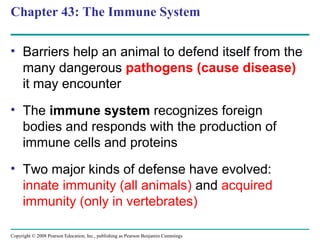
• Barriers help an animal to defend itself from the
many dangerous pathogens (cause disease)
it may encounter
• The immune system recognizes foreign
bodies and responds with the production of
immune cells and proteins
• Two major kinds of defense have evolved:
innate immunity (all animals) and acquired
immunity (only in vertebrates)
Fig. 43-1
1.5 µm
Copyright © 2008 Pearson Education, Inc., publishing as Pearson Benjamin Cummings
• Innate immunity is present before any exposure
to pathogens and is effective from the time of birth
• It involves nonspecific responses to pathogens
• Innate immunity consists of external barriers plus
internal cellular and chemical defenses
• Acquired immunity, or adaptive immunity,
develops after exposure to agents such as
microbes, toxins, or other foreign substances
• It involves a very specific response to pathogens
Copyright © 2008 Pearson Education, Inc., publishing as Pearson Benjamin Cummings
Figure 43.2
INNATE IMMUNITY
(all animals)
• Recognition of traits
shared by broad
ranges of pathogens,
using a small set of
receptors
• Rapid response
Barrier defenses:
Skin
Mucous membranes
Secretions
Internal defenses:
Phagocytic cells
Natural killer cells
Antimicrobial proteins
Inflammatory response
Humoral response:
Antibodies defend against
infection in body fluids.
Cell-mediated response:
Cytotoxic cells defend
against infection in body
cells.
• Recognition of traits
specific to particular
pathogens, using a
vast array of
receptors
• Slower response
ADAPTIVE IMMUNITY
(vertebrates only)
Pathogens
(such as bacteria,
fungi, and viruses)
Copyright © 2008 Pearson Education, Inc., publishing as Pearson Benjamin Cummings
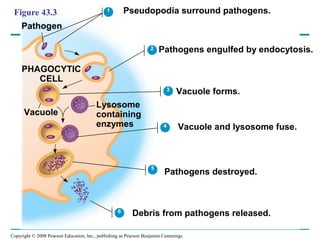
Figure 43.3 Pseudopodia surround pathogens.
Pathogens engulfed by endocytosis.
Vacuole forms.
Vacuole and lysosome fuse.
Pathogens destroyed.
Debris from pathogens released.
Pathogen
Lysosome
containing
enzymes
Vacuole
PHAGOCYTIC
CELL
1
2
5
6
4
3
Copyright © 2008 Pearson Education, Inc., publishing as Pearson Benjamin Cummings
• The immune system recognizes bacteria and
fungi by structures on their cell walls
• An immune response varies with the class of
pathogen encountered
Copyright © 2008 Pearson Education, Inc., publishing as Pearson Benjamin Cummings
Figure 43.5
100
75
50
25
0 24 48 72 96 120
0
100
75
50
25
0 24 48 72 96 120
0
Hours post-infection
Fruit fly survival after infection by N. crassa fungi
%survival
Fruit fly survival after infection by M. luteus bacteria
%survival
Wild type
Wild type
Mutant +
defensin
Mutant + defensin
Mutant + drosomycin
Mutant +
drosomycin
Mutant
Mutant
Copyright © 2008 Pearson Education, Inc., publishing as Pearson Benjamin Cummings
Innate Immunity of Vertebrates
• The immune system of mammals is the best
understood of the vertebrates
• Innate defenses include barrier defenses,
phagocytosis, antimicrobial peptides
• Additional defenses are unique to vertebrates:
the inflammatory response and natural killer
cells
Copyright © 2008 Pearson Education, Inc., publishing as Pearson Benjamin Cummings
Barrier Defenses
• Barrier defenses include the skin and mucous
membranes of the respiratory, urinary, and
reproductive tracts
• Mucus traps and allows for the removal of
microbes
• Many body fluids including saliva, mucus, and
tears are hostile to microbes
• The low pH of skin and the digestive system
prevents growth of microbes
Copyright © 2008 Pearson Education, Inc., publishing as Pearson Benjamin Cummings
Cellular Innate Defenses
• White blood cells (leukocytes) engulf
pathogens in the body
• Groups of pathogens are recognized by TLR,
Toll-like receptors
• TLRs recognize fragments of molecules
characteristic of a set of pathogens
Copyright © 2008 Pearson Education, Inc., publishing as Pearson Benjamin Cummings
Figure 43.6 EXTRACELLULAR
FLUID Lipopolysaccharide
Helper
protein
PHAGOCYTIC CELL
TLR4
FlagellinFlagellin
TLR5
CpG
DNA
VESICLE
dsRNA
TLR3
Innate immune
responses
TLR9
Copyright © 2008 Pearson Education, Inc., publishing as Pearson Benjamin Cummings
• A white blood cell engulfs a microbe, then
fuses with a lysosome to destroy the microbe
• There are different types of phagocytic cells:
– Neutrophils engulf and destroy microbes
– Macrophages are part of the lymphatic
system and are found throughout the body
– Eosinophils discharge destructive enzymes
– Dendritic cells stimulate development of
acquired immunity
Copyright © 2008 Pearson Education, Inc., publishing as Pearson Benjamin Cummings
Figure 43.7
Thymus
Peyer’s
patches
(in small
intestine)
Appendix
(cecum)
Lymph
nodes
Spleen
Lymphatic
vessels
Tonsils
Adenoid
Tissue
cells
Lymphatic
vessel
Lymphatic
vessel
Lymph
node
Masses of
defensive cells
Blood
capillary
Interstitial fluid
Copyright © 2008 Pearson Education, Inc., publishing as Pearson Benjamin Cummings
Antimicrobial Peptides and Proteins
• Peptides and proteins function in innate
defense by attacking microbes directly or
impeding their reproduction
• Interferon proteins provide innate defense
against viruses and help activate macrophages
• About 30 proteins make up the complement
system, which causes lysis of invading cells
and helps trigger inflammation
Copyright © 2008 Pearson Education, Inc., publishing as Pearson Benjamin Cummings
Figure 43.8-3
1 2 3Histamines and cytokines
released. Capillaries dilate.
Antimicrobial
peptides enter tissue.
Neutrophils are
recruited.
Neutrophils
digest pathogens
and cell debris.
Tissue heals.
Neutrophil
Red blood cells
Capillary
Macro-
phage
Signaling
moleculesMast
cell
Pathogen Splinter
Movement
of fluid
Phagocytosis
Copyright © 2008 Pearson Education, Inc., publishing as Pearson Benjamin Cummings
• Inflammation can be either local or systemic
(throughout the body)
• Fever is a systemic inflammatory response
triggered by pyrogens released by
macrophages, and toxins from pathogens
• Septic shock is a life-threatening condition
caused by an overwhelming inflammatory
response
Copyright © 2008 Pearson Education, Inc., publishing as Pearson Benjamin Cummings
Inflammatory Responses
• Following an injury, mast cells release
histamine, which promotes changes in blood
vessels; this is part of the inflammatory
response
• These changes increase local blood supply
and allow more phagocytes and antimicrobial
proteins to enter tissues
• Pus, a fluid rich in white blood cells, dead
microbes, and cell debris, accumulates at the
site of inflammation
Copyright © 2008 Pearson Education, Inc., publishing as Pearson Benjamin Cummings
Concept 43.2: In acquired immunity, lymphocyte
receptors provide pathogen-specific recognition
• White blood cells called lymphocytes
recognize and respond to antigens, foreign
molecules
• Lymphocytes that mature in the thymus above
the heart are called T cells, and those that
mature in bone marrow are called B cells
• Cytokines are secreted by macrophages and
dendritic cells to recruit and activate
lymphocytes
Copyright © 2008 Pearson Education, Inc., publishing as Pearson Benjamin Cummings
Acquired Immunity: An Overview
• B cells and T cells have receptor proteins that
can bind to foreign molecules
• Each individual lymphocyte is specialized to
recognize a specific type of molecule
• An antigen is any foreign molecule to which a
lymphocyte responds (antibody generator)
• A single B cell or T cell has about 100,000
identical antigen receptors
Fig. 43-9
Antigen-
binding
site
Antigen-
binding site
Antigen-
binding
site
Disulfide
bridge
Variable
regions
Constant
regions
Transmembrane
region
Plasma
membrane
Light
chain
Heavy chains
T cell
α chain β chain
Disulfide bridge
Cytoplasm of T cell
(b) T cell receptor
Cytoplasm of B cell
a) B cell receptor
B cell
V
V
C
C
V
V
C C C C
VV
Copyright © 2008 Pearson Education, Inc., publishing as Pearson Benjamin Cummings
The Antigen Receptors of B Cells and T Cells
• B cell receptors bind to specific, intact
antigens
• The B cell receptor consists of two identical
heavy chains and two identical light chains
• The tips of the chains form a constant (C)
region, and each chain contains a variable (V)
region, so named because its amino acid
sequence varies extensively from one B cell to
another
Copyright © 2008 Pearson Education, Inc., publishing as Pearson Benjamin Cummings
Figure 43.10
Antigen
receptor Antibody
B cell
Antigen Epitope
Pathogen
Antibody A
Antibody B
Antibody C
Antigen
(a)
(b)
B cell antigen receptors and antibodies
Antigen receptor specificity
B cells give rise to
plasma cells, which
secrete proteins called
antibodies or
immunoglobulins
Copyright © 2008 Pearson Education, Inc., publishing as Pearson Benjamin Cummings
• Each T cell receptor consists of two different polypeptide
chains
• The tips of the chain form a variable (V) region; the rest is
a constant (C) region
• T cells can bind to an antigen that is free or on the surface
of a pathogen
• T cells bind to antigen fragments presented on a host cell.
These antigen fragments are bound to cell-surface proteins
called MHC molecules
• MHC molecules are so named because they are encoded
by a family of genes called the major histocompatibility
complex
Copyright © 2008 Pearson Education, Inc., publishing as Pearson Benjamin Cummings
The Role of the MHC
• In infected cells, MHC molecules bind and
transport antigen fragments to the cell surface,
a process called antigen presentation
• A nearby T cell can then detect the antigen
fragment displayed on the cell’s surface
• Depending on their source, peptide antigens
are handled by different classes of MHC
molecules
Copyright © 2008 Pearson Education, Inc., publishing as Pearson Benjamin Cummings
Figure 43.12
Displayed
antigen
fragment
MHC
molecule
Antigen
fragment
Pathogen
T cell
T cell antigen
receptor
Host cell
(a)
(b)
Top view
Antigen recognition by a T cell
A closer look at antigen presentation
Antigen
fragment
MHC
molecule
Host cell
Copyright © 2008 Pearson Education, Inc., publishing as Pearson Benjamin Cummings
• Class I MHC molecules are found on almost
all nucleated cells of the body
• They display peptide antigens to cytotoxic T
cells; they can kill any infected cell
• Class II MHC molecules are located mainly on
dendritic cells, macrophages, and B cells
• Dendritic cells, macrophages, and B cells are
antigen-presenting cells that display antigens
to cytotoxic T cells and helper T cells
Fig. 43-12
nfected cell
Antigen
ragment
Class I MHC
molecule
T cell
eceptor
(a)
Antigen
associates
with MHC
molecule
T cell
recognizes
combination
Cytotoxic T cell (b) Helper T cell
T cell
receptor
Class II MHC
molecule
Antigen
fragment
Antigen-
presenting
cell
Microbe
1
1
1
2
2
2
Copyright © 2008 Pearson Education, Inc., publishing as Pearson Benjamin Cummings
Lymphocyte Development
• The acquired immune system has three
important properties:
– Receptor diversity
– A lack of reactivity against host cells
(tolerance)
– Immunological memory
Copyright © 2008 Pearson Education, Inc., publishing as Pearson Benjamin Cummings
Generation of Lymphocyte Diversity by Gene
Rearrangement
• Differences in the variable region account for
specificity of antigen receptors
• The immunoglobulin (Ig) gene encodes one
chain of the B cell receptor
• Many different chains can be produced from
the same Ig chain gene by rearrangement of
the DNA
• Rearranged DNA is transcribed and translated
and the antigen receptor formed
Copyright © 2008 Pearson Education, Inc., publishing as Pearson Benjamin Cummings
Figure 43.13
1
2
3
4
DNA of
undifferentiated
B cell
DNA of
differentiated
B cell
pre-mRNA
mRNA
Recombination deletes DNA between
randomly selected V segment and J segment
Functional gene
Transcription of permanently
rearranged, functional gene
RNA processing
Translation
Light-chain
polypeptide
Variable
region
Constant
region
Antigen receptor
B cell
V
V
V37 V38
V39 V40 J1 J2 J3 J4 J5 Intron C
CV37 V38 V39 J5 Intron
CV39 J5 Intron
CCap J5 Poly-A tailV39
CV
C
V
V
C
C C
Copyright © 2008 Pearson Education, Inc., publishing as Pearson Benjamin Cummings
Origin of Self-Tolerance
• Antigen receptors are generated by random
rearrangement of DNA
• As lymphocytes mature in bone marrow or the
thymus, they are tested for self-reactivity
• Lymphocytes with receptors specific for the
body’s own molecules are destroyed by
apoptosis, or rendered nonfunctional
Copyright © 2008 Pearson Education, Inc., publishing as Pearson Benjamin Cummings
Amplifying Lymphocytes by Clonal Selection
• In the body there are few lymphocytes with
antigen receptors for any particular epitope
• The binding of a mature lymphocyte to an
antigen induces the lymphocyte to divide
rapidly
• This proliferation of lymphocytes is called
clonal selection
• Two types of clones are produced: short-lived
activated effector cells and long-lived
memory cells
Copyright © 2008 Pearson Education, Inc., publishing as Pearson Benjamin Cummings
Figure 43.14
B cells that
differ in
antigen
specificity
Antigen
Antigen
receptor
Memory cells
Antibody
Plasma cells
Copyright © 2008 Pearson Education, Inc., publishing as Pearson Benjamin Cummings
Figure 43.UN07
Cell division
and gene
rearrangement
Stem cell
Elimination of
self-reactive
B cells Antigen
Clonal
selection
Formation of
activated cell
populations
Antibody
Plasma cells
Memory B cells
Pathogen
Receptors bind to antigens
Copyright © 2008 Pearson Education, Inc., publishing as Pearson Benjamin Cummings
• The first exposure to a specific antigen
represents the primary immune response
• During this time, effector B cells called plasma
cells are generated, and T cells are activated
to their effector forms
• In the secondary immune response, memory
cells facilitate a faster, more efficient response
Copyright © 2008 Pearson Education, Inc., publishing as Pearson Benjamin Cummings
Figure 43.15
Primary immune
response to
antigen A
Secondary immune
response to
antigen A
Primary immune
response to
antigen B
Exposure
to antigen A
Exposure to
antigens A and B
Time (days)
Antibodies
to A
Antibodies
to B
Antibodyconcentration
(arbitraryunits)
104
103
100
101
102
0 7 14 21 28 35 42 49 56
Copyright © 2008 Pearson Education, Inc., publishing as Pearson Benjamin Cummings
Concept 43.3: Acquired immunity defends against
infection of body cells and fluids
• Acquired immunity has two branches: the
humoral immune response and the cell-
mediated immune response
• Humoral immune response involves
activation and clonal selection of B cells,
resulting in production of secreted antibodies
• Cell-mediated immune response involves
activation and clonal selection of cytotoxic T
cells
• Helper T cells aid both responses
Copyright © 2008 Pearson Education, Inc., publishing as Pearson Benjamin Cummings
Figure 43.20
+
+
+
+
+
+ + +
+
+
HUMORAL IMMUNE RESPONSE CELL-MEDIATED IMMUNE RESPONSE
Antigen (1st exposure)
Engulfed by
Antigen-
presenting cell
B cell Helper T cell
Cytotoxic
T cell
Key
Stimulates
Gives rise to
Memory
helper T cells
Plasma
cells
Memory
B cells
Memory
cytotoxic T cells
Active
cytotoxic T cells
Antigen (2nd exposure)
Secreted
antibodies
Defend against
extracellular pathogens
Defend against
intracellular pathogens
and cancer
Figure 43.16
Antigen-
presenting
cell
Pathogen Antigen
fragment
Antigen
receptor
Helper T cell
Class II
MHC
molecule
Accessory
protein
Cytokines
Clone of activated helper T cells
HUMORAL
IMMUNITY
(secretion of
antibodies
by plasma
cells)
CELL-
MEDIATED
IMMUNITY
(attack on
infected cells)
B cell Cytotoxic
T cell
Copyright © 2008 Pearson Education, Inc., publishing as Pearson Benjamin Cummings
Helper T Cells: A Response to Nearly All Antigens
• A surface protein called CD4 binds the class II
MHC molecule
• This binding keeps the helper T cell joined to
the antigen-presenting cell while activation
occurs
• Activated helper T cells secrete cytokines that
stimulate other lymphocytes
Fig. 43-17
Antigen-
presenting
cell
Peptide antigen
Cell-mediated
immunity
(attack on
infected cells)
Class II MHC molecule
CD4
TCR (T cell receptor)
Helper T cell
Humoral
immunity
(secretion of
antibodies by
plasma cells) Cytotoxic T cell
Cytokines
B cell
Bacterium
+
+ +
+
Copyright © 2008 Pearson Education, Inc., publishing as Pearson Benjamin Cummings
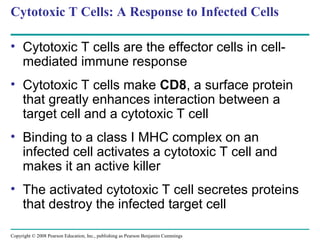
Cytotoxic T Cells: A Response to Infected Cells
• Cytotoxic T cells are the effector cells in cell-
mediated immune response
• Cytotoxic T cells make CD8, a surface protein
that greatly enhances interaction between a
target cell and a cytotoxic T cell
• Binding to a class I MHC complex on an
infected cell activates a cytotoxic T cell and
makes it an active killer
• The activated cytotoxic T cell secretes proteins
that destroy the infected target cell
Copyright © 2008 Pearson Education, Inc., publishing as Pearson Benjamin Cummings
Figure 43.17-3
1 2 3
Cytotoxic
T cell
Accessory
protein
Class I
MHC
molecule
Antigen
receptor
Infected
cell Antigen
fragment
Granzymes
Perforin
Pore
Released
cytotoxic
T cell
Dying
infected
cell
Copyright © 2008 Pearson Education, Inc., publishing as Pearson Benjamin Cummings
B Cells: A Response to Extracellular Pathogens
• The humoral response is characterized by
secretion of antibodies by B cells
• Activation of B cells is aided by cytokines and
antigen binding to helper T cells
• The class II MHC protein of the B cell then
presents an antigen fragment to a helper T cell, a
process that is critical to B cell activation
• Clonal selection of B cells generates antibody-
secreting plasma cells, the effector cells of
humoral immunity
Copyright © 2008 Pearson Education, Inc., publishing as Pearson Benjamin Cummings
Figure 43.18-3
1 2 3
Antigen-
presenting
cell
Pathogen
Antigen
fragments MHC
CD4Antigen
receptor
Helper T cell
Activated
helper T cell
Cytokines
B cell
Memory B cells
Plasma
cells
Secrete
antibodies
Five classes of
Antibody Proteins
Class of Immuno-
globulin (Antibody)
IgG
(monomer)
IgM
(pentamer)
J chain
IgA
(dimer)
IgE
(monomer)
IgD
(monomer)
Trans-
membrane
region
J chain
Secretory
component
Distribution Function
First Ig class
produced after
initial exposure to
antigen; then its
concentration in
the blood declines
Promotes neutraliza-
tion and cross-
linking of antigens;
very effective in
complement system
activation
Present in
secretions such
as tears, saliva,
mucus, and
breast milk
Only Ig class that
crosses placenta,
thus conferring
passive immunity
on fetus
Triggers release from
mast cells and
basophils of hista-
mine and other
chemicals that cause
allergic reactions
Present primarily
on surface of
B cells that have
not been exposed
to antigens
Acts as antigen
receptor in the
antigen-stimulated
proliferation and
differentiation of
B cells (clonal
selection)
Most abundant Ig
class in blood;
also present in
tissue fluids
Promotes opsoniza-
tion, neutralization,
and cross-linking of
antigens; less effec-
tive in activation of
complement system
than IgM
Provides localized
defense of mucous
membranes by
cross-linking and
neutralization of
antigens
Presence in breast
milk confers
passive immunity
on nursing infant
Present in blood
at low concen-
trations
Figure 43.19
(a) Neutralization (b) Opsonization (c) Activation of complement
system and pore formation
Antibody
Virus
Blocking of ability
of virus to bind to
a host cell
Promotion of
phagocytosis of
bacteria by
macrophages and
neutrophils
Pore formation allows
water and ions to rush
inside the foreign cell,
which swells and
eventually lyses.
Activation
of the
complement
system
Macrophage
Bacterium
Complement proteins Formation of
membrane
attack complex
Flow of water
and ions
Pore
AntigenForeign
cell
Problems from Immune System
1. transplant rejection
2. allergies
3. autoimmune disorders
Copyright © 2008 Pearson Education, Inc., publishing as Pearson Benjamin Cummings
Tissue and Organ Transplants
• MHC molecules are different among genetically
nonidentical individuals
• Differences in MHC molecules stimulate rejection of tissue
grafts and organ transplants
• Chances of successful transplantation increase if donor
and recipient MHC tissue types are well matched
• Immunosuppressive drugs facilitate transplantation
• Lymphocytes in bone marrow transplants may cause the
donor tissue to reject the recipient
Copyright © 2008 Pearson Education, Inc., publishing as Pearson Benjamin Cummings
Allergies
• Allergies are exaggerated (hypersensitive)
responses to antigens called allergens
• In localized allergies such as hay fever, IgE
antibodies produced after first exposure to an
allergen attach to receptors on mast cells
Copyright © 2008 Pearson Education, Inc., publishing as Pearson Benjamin Cummings
Figure 43.22
1
2
3
IgE
Mast
cell
Initial exposure
Allergen
(second exposure)
Subsequent
exposure
Cross-linking triggers
release of histamine
Vesicle
Histamine
Copyright © 2008 Pearson Education, Inc., publishing as Pearson Benjamin Cummings
• The next time the allergen enters the body, it
binds to mast cell–associated IgE molecules
• Mast cells release histamine and other
mediators that cause vascular changes leading
to typical allergy symptoms
• An acute allergic response can lead to
anaphylactic shock, a life-threatening reaction
that can occur within seconds of allergen
exposure
Copyright © 2008 Pearson Education, Inc., publishing as Pearson Benjamin Cummings
Autoimmune Diseases
• In individuals with autoimmune diseases, the
immune system loses tolerance for self and
turns against certain molecules of the body
• Autoimmune diseases include systemic lupus
erythematosus (antibodies against chromatin),
rheumatoid arthritis (antibodies against
ligaments) , insulin-dependent diabetes
mellitus (antibodies against beta cells of
pancreas), and multiple sclerosis (antibodies
against myelin sheath)
Copyright © 2008 Pearson Education, Inc., publishing as Pearson Benjamin Cummings
Figure 43.23
Copyright © 2008 Pearson Education, Inc., publishing as Pearson Benjamin Cummings
Exertion, Stress, and the Immune System
• Moderate exercise improves immune system
function
• Psychological stress has been shown to disrupt
hormonal, nervous, and immune systems
Copyright © 2008 Pearson Education, Inc., publishing as Pearson Benjamin Cummings
Antigenic Variation
• Through antigenic variation, some pathogens
are able to change epitope expression and
prevent recognition
• The human influenza virus mutates rapidly,
and new flu vaccines must be made each year
• Human viruses occasionally exchange genes
with the viruses of domesticated animals
• This poses a danger as human immune
systems are unable to recognize the new viral
strain
Fig. 43-25
Weeks after infection
Millionsofparasites
permLofblood Antibodies to
variant 1
appear
Antibodies to
variant 2
appear
Antibodies to
variant 3
appear
Variant 3Variant 2Variant 1
25 26 27 28
0
0.5
1.0
1.5
Copyright © 2008 Pearson Education, Inc., publishing as Pearson Benjamin Cummings
Latency
• Some viruses may remain in a host in an
inactive state called latency
• Herpes simplex viruses can be present in a
human host without causing symptoms
Copyright © 2008 Pearson Education, Inc., publishing as Pearson Benjamin Cummings
Attack on the Immune System: HIV
• Human immunodeficiency virus (HIV) infects
helper T cells
• The loss of helper T cells impairs both the
humoral and cell-mediated immune responses
and leads to AIDS
• HIV eludes the immune system because of
antigenic variation and an ability to remain
latent while integrated into host DNA
Copyright © 2008 Pearson Education, Inc., publishing as Pearson Benjamin Cummings
Figure 43.24 Latency AIDS
Relative anti-HIV antibody
concentration
Relative HIV
concentration
Helper T cell
concentration
Years after untreated infection
HelperTcellconcentration
inblood(cells/mm3
)
800
600
400
200
0
0 1 2 3 4 5 6 7 8 9 10
Copyright © 2008 Pearson Education, Inc., publishing as Pearson Benjamin Cummings
Cancer and Immunity
• The frequency of certain cancers increases when
adaptive immunity is inactivated
• 15–20% of all human cancers involve viruses
• The immune system can act as a defense against
viruses that cause cancer and cancer cells that
harbor viruses
• In 2006, a vaccine was released that acts against
human papillomavirus (HPV), a virus associated
with cervical cancer
Copyright © 2008 Pearson Education, Inc., publishing as Pearson Benjamin Cummings
You should now be able to:
1. Distinguish between innate and acquired immunity
2. Describe the inflammation response
4. Distinguish between the following pairs of terms: antigens and
antibodies; antigen and epitope; B lymphocytes and T lymphocytes;
antibodies and B cell receptors; primary and secondary immune
responses; humoral and cell-mediated response
5. Explain how B lymphocytes and T lymphocytes recognize specific
antigens
6. Explain why the antigen receptors of lymphocytes are tested for self-
reactivity
7. Describe clonal selection and distinguish between effector cells and
memory cells
8. Describe the cellular basis for immunological memory
9. Describe an allergic reaction, including the roles of IgE, mast cells,
and histamine

Chapter 43: Immunology

  • 1.
    Copyright © 2008Pearson Education, Inc., publishing as Pearson Benjamin Cummings Chapter 43: The Immune System • Barriers help an animal to defend itself from the many dangerous pathogens (cause disease) it may encounter • The immune system recognizes foreign bodies and responds with the production of immune cells and proteins • Two major kinds of defense have evolved: innate immunity (all animals) and acquired immunity (only in vertebrates)
  • 2.
  • 3.
    Copyright © 2008Pearson Education, Inc., publishing as Pearson Benjamin Cummings • Innate immunity is present before any exposure to pathogens and is effective from the time of birth • It involves nonspecific responses to pathogens • Innate immunity consists of external barriers plus internal cellular and chemical defenses • Acquired immunity, or adaptive immunity, develops after exposure to agents such as microbes, toxins, or other foreign substances • It involves a very specific response to pathogens
  • 4.
    Copyright © 2008Pearson Education, Inc., publishing as Pearson Benjamin Cummings Figure 43.2 INNATE IMMUNITY (all animals) • Recognition of traits shared by broad ranges of pathogens, using a small set of receptors • Rapid response Barrier defenses: Skin Mucous membranes Secretions Internal defenses: Phagocytic cells Natural killer cells Antimicrobial proteins Inflammatory response Humoral response: Antibodies defend against infection in body fluids. Cell-mediated response: Cytotoxic cells defend against infection in body cells. • Recognition of traits specific to particular pathogens, using a vast array of receptors • Slower response ADAPTIVE IMMUNITY (vertebrates only) Pathogens (such as bacteria, fungi, and viruses)
  • 5.
    Copyright © 2008Pearson Education, Inc., publishing as Pearson Benjamin Cummings Figure 43.3 Pseudopodia surround pathogens. Pathogens engulfed by endocytosis. Vacuole forms. Vacuole and lysosome fuse. Pathogens destroyed. Debris from pathogens released. Pathogen Lysosome containing enzymes Vacuole PHAGOCYTIC CELL 1 2 5 6 4 3
  • 6.
    Copyright © 2008Pearson Education, Inc., publishing as Pearson Benjamin Cummings • The immune system recognizes bacteria and fungi by structures on their cell walls • An immune response varies with the class of pathogen encountered
  • 7.
    Copyright © 2008Pearson Education, Inc., publishing as Pearson Benjamin Cummings Figure 43.5 100 75 50 25 0 24 48 72 96 120 0 100 75 50 25 0 24 48 72 96 120 0 Hours post-infection Hours post-infection Fruit fly survival after infection by N. crassa fungi %survival Fruit fly survival after infection by M. luteus bacteria %survival Wild type Wild type Mutant + defensin Mutant + defensin Mutant + drosomycin Mutant + drosomycin Mutant Mutant
  • 8.
    Copyright © 2008Pearson Education, Inc., publishing as Pearson Benjamin Cummings Innate Immunity of Vertebrates • The immune system of mammals is the best understood of the vertebrates • Innate defenses include barrier defenses, phagocytosis, antimicrobial peptides • Additional defenses are unique to vertebrates: the inflammatory response and natural killer cells
  • 9.
    Copyright © 2008Pearson Education, Inc., publishing as Pearson Benjamin Cummings Barrier Defenses • Barrier defenses include the skin and mucous membranes of the respiratory, urinary, and reproductive tracts • Mucus traps and allows for the removal of microbes • Many body fluids including saliva, mucus, and tears are hostile to microbes • The low pH of skin and the digestive system prevents growth of microbes
  • 10.
    Copyright © 2008Pearson Education, Inc., publishing as Pearson Benjamin Cummings Cellular Innate Defenses • White blood cells (leukocytes) engulf pathogens in the body • Groups of pathogens are recognized by TLR, Toll-like receptors • TLRs recognize fragments of molecules characteristic of a set of pathogens
  • 11.
    Copyright © 2008Pearson Education, Inc., publishing as Pearson Benjamin Cummings Figure 43.6 EXTRACELLULAR FLUID Lipopolysaccharide Helper protein PHAGOCYTIC CELL TLR4 FlagellinFlagellin TLR5 CpG DNA VESICLE dsRNA TLR3 Innate immune responses TLR9
  • 12.
    Copyright © 2008Pearson Education, Inc., publishing as Pearson Benjamin Cummings • A white blood cell engulfs a microbe, then fuses with a lysosome to destroy the microbe • There are different types of phagocytic cells: – Neutrophils engulf and destroy microbes – Macrophages are part of the lymphatic system and are found throughout the body – Eosinophils discharge destructive enzymes – Dendritic cells stimulate development of acquired immunity
  • 13.
    Copyright © 2008Pearson Education, Inc., publishing as Pearson Benjamin Cummings Figure 43.7 Thymus Peyer’s patches (in small intestine) Appendix (cecum) Lymph nodes Spleen Lymphatic vessels Tonsils Adenoid Tissue cells Lymphatic vessel Lymphatic vessel Lymph node Masses of defensive cells Blood capillary Interstitial fluid
  • 14.
    Copyright © 2008Pearson Education, Inc., publishing as Pearson Benjamin Cummings Antimicrobial Peptides and Proteins • Peptides and proteins function in innate defense by attacking microbes directly or impeding their reproduction • Interferon proteins provide innate defense against viruses and help activate macrophages • About 30 proteins make up the complement system, which causes lysis of invading cells and helps trigger inflammation
  • 15.
    Copyright © 2008Pearson Education, Inc., publishing as Pearson Benjamin Cummings Figure 43.8-3 1 2 3Histamines and cytokines released. Capillaries dilate. Antimicrobial peptides enter tissue. Neutrophils are recruited. Neutrophils digest pathogens and cell debris. Tissue heals. Neutrophil Red blood cells Capillary Macro- phage Signaling moleculesMast cell Pathogen Splinter Movement of fluid Phagocytosis
  • 16.
    Copyright © 2008Pearson Education, Inc., publishing as Pearson Benjamin Cummings • Inflammation can be either local or systemic (throughout the body) • Fever is a systemic inflammatory response triggered by pyrogens released by macrophages, and toxins from pathogens • Septic shock is a life-threatening condition caused by an overwhelming inflammatory response
  • 17.
    Copyright © 2008Pearson Education, Inc., publishing as Pearson Benjamin Cummings Inflammatory Responses • Following an injury, mast cells release histamine, which promotes changes in blood vessels; this is part of the inflammatory response • These changes increase local blood supply and allow more phagocytes and antimicrobial proteins to enter tissues • Pus, a fluid rich in white blood cells, dead microbes, and cell debris, accumulates at the site of inflammation
  • 18.
    Copyright © 2008Pearson Education, Inc., publishing as Pearson Benjamin Cummings Concept 43.2: In acquired immunity, lymphocyte receptors provide pathogen-specific recognition • White blood cells called lymphocytes recognize and respond to antigens, foreign molecules • Lymphocytes that mature in the thymus above the heart are called T cells, and those that mature in bone marrow are called B cells • Cytokines are secreted by macrophages and dendritic cells to recruit and activate lymphocytes
  • 19.
    Copyright © 2008Pearson Education, Inc., publishing as Pearson Benjamin Cummings Acquired Immunity: An Overview • B cells and T cells have receptor proteins that can bind to foreign molecules • Each individual lymphocyte is specialized to recognize a specific type of molecule • An antigen is any foreign molecule to which a lymphocyte responds (antibody generator) • A single B cell or T cell has about 100,000 identical antigen receptors
  • 20.
    Fig. 43-9 Antigen- binding site Antigen- binding site Antigen- binding site Disulfide bridge Variable regions Constant regions Transmembrane region Plasma membrane Light chain Heavychains T cell α chain β chain Disulfide bridge Cytoplasm of T cell (b) T cell receptor Cytoplasm of B cell a) B cell receptor B cell V V C C V V C C C C VV
  • 21.
    Copyright © 2008Pearson Education, Inc., publishing as Pearson Benjamin Cummings The Antigen Receptors of B Cells and T Cells • B cell receptors bind to specific, intact antigens • The B cell receptor consists of two identical heavy chains and two identical light chains • The tips of the chains form a constant (C) region, and each chain contains a variable (V) region, so named because its amino acid sequence varies extensively from one B cell to another
  • 22.
    Copyright © 2008Pearson Education, Inc., publishing as Pearson Benjamin Cummings Figure 43.10 Antigen receptor Antibody B cell Antigen Epitope Pathogen Antibody A Antibody B Antibody C Antigen (a) (b) B cell antigen receptors and antibodies Antigen receptor specificity B cells give rise to plasma cells, which secrete proteins called antibodies or immunoglobulins
  • 23.
    Copyright © 2008Pearson Education, Inc., publishing as Pearson Benjamin Cummings • Each T cell receptor consists of two different polypeptide chains • The tips of the chain form a variable (V) region; the rest is a constant (C) region • T cells can bind to an antigen that is free or on the surface of a pathogen • T cells bind to antigen fragments presented on a host cell. These antigen fragments are bound to cell-surface proteins called MHC molecules • MHC molecules are so named because they are encoded by a family of genes called the major histocompatibility complex
  • 24.
    Copyright © 2008Pearson Education, Inc., publishing as Pearson Benjamin Cummings The Role of the MHC • In infected cells, MHC molecules bind and transport antigen fragments to the cell surface, a process called antigen presentation • A nearby T cell can then detect the antigen fragment displayed on the cell’s surface • Depending on their source, peptide antigens are handled by different classes of MHC molecules
  • 25.
    Copyright © 2008Pearson Education, Inc., publishing as Pearson Benjamin Cummings Figure 43.12 Displayed antigen fragment MHC molecule Antigen fragment Pathogen T cell T cell antigen receptor Host cell (a) (b) Top view Antigen recognition by a T cell A closer look at antigen presentation Antigen fragment MHC molecule Host cell
  • 26.
    Copyright © 2008Pearson Education, Inc., publishing as Pearson Benjamin Cummings • Class I MHC molecules are found on almost all nucleated cells of the body • They display peptide antigens to cytotoxic T cells; they can kill any infected cell • Class II MHC molecules are located mainly on dendritic cells, macrophages, and B cells • Dendritic cells, macrophages, and B cells are antigen-presenting cells that display antigens to cytotoxic T cells and helper T cells
  • 27.
    Fig. 43-12 nfected cell Antigen ragment ClassI MHC molecule T cell eceptor (a) Antigen associates with MHC molecule T cell recognizes combination Cytotoxic T cell (b) Helper T cell T cell receptor Class II MHC molecule Antigen fragment Antigen- presenting cell Microbe 1 1 1 2 2 2
  • 28.
    Copyright © 2008Pearson Education, Inc., publishing as Pearson Benjamin Cummings Lymphocyte Development • The acquired immune system has three important properties: – Receptor diversity – A lack of reactivity against host cells (tolerance) – Immunological memory
  • 29.
    Copyright © 2008Pearson Education, Inc., publishing as Pearson Benjamin Cummings Generation of Lymphocyte Diversity by Gene Rearrangement • Differences in the variable region account for specificity of antigen receptors • The immunoglobulin (Ig) gene encodes one chain of the B cell receptor • Many different chains can be produced from the same Ig chain gene by rearrangement of the DNA • Rearranged DNA is transcribed and translated and the antigen receptor formed
  • 30.
    Copyright © 2008Pearson Education, Inc., publishing as Pearson Benjamin Cummings Figure 43.13 1 2 3 4 DNA of undifferentiated B cell DNA of differentiated B cell pre-mRNA mRNA Recombination deletes DNA between randomly selected V segment and J segment Functional gene Transcription of permanently rearranged, functional gene RNA processing Translation Light-chain polypeptide Variable region Constant region Antigen receptor B cell V V V37 V38 V39 V40 J1 J2 J3 J4 J5 Intron C CV37 V38 V39 J5 Intron CV39 J5 Intron CCap J5 Poly-A tailV39 CV C V V C C C
  • 31.
    Copyright © 2008Pearson Education, Inc., publishing as Pearson Benjamin Cummings Origin of Self-Tolerance • Antigen receptors are generated by random rearrangement of DNA • As lymphocytes mature in bone marrow or the thymus, they are tested for self-reactivity • Lymphocytes with receptors specific for the body’s own molecules are destroyed by apoptosis, or rendered nonfunctional
  • 32.
    Copyright © 2008Pearson Education, Inc., publishing as Pearson Benjamin Cummings Amplifying Lymphocytes by Clonal Selection • In the body there are few lymphocytes with antigen receptors for any particular epitope • The binding of a mature lymphocyte to an antigen induces the lymphocyte to divide rapidly • This proliferation of lymphocytes is called clonal selection • Two types of clones are produced: short-lived activated effector cells and long-lived memory cells
  • 33.
    Copyright © 2008Pearson Education, Inc., publishing as Pearson Benjamin Cummings Figure 43.14 B cells that differ in antigen specificity Antigen Antigen receptor Memory cells Antibody Plasma cells
  • 34.
    Copyright © 2008Pearson Education, Inc., publishing as Pearson Benjamin Cummings Figure 43.UN07 Cell division and gene rearrangement Stem cell Elimination of self-reactive B cells Antigen Clonal selection Formation of activated cell populations Antibody Plasma cells Memory B cells Pathogen Receptors bind to antigens
  • 35.
    Copyright © 2008Pearson Education, Inc., publishing as Pearson Benjamin Cummings • The first exposure to a specific antigen represents the primary immune response • During this time, effector B cells called plasma cells are generated, and T cells are activated to their effector forms • In the secondary immune response, memory cells facilitate a faster, more efficient response
  • 36.
    Copyright © 2008Pearson Education, Inc., publishing as Pearson Benjamin Cummings Figure 43.15 Primary immune response to antigen A Secondary immune response to antigen A Primary immune response to antigen B Exposure to antigen A Exposure to antigens A and B Time (days) Antibodies to A Antibodies to B Antibodyconcentration (arbitraryunits) 104 103 100 101 102 0 7 14 21 28 35 42 49 56
  • 37.
    Copyright © 2008Pearson Education, Inc., publishing as Pearson Benjamin Cummings Concept 43.3: Acquired immunity defends against infection of body cells and fluids • Acquired immunity has two branches: the humoral immune response and the cell- mediated immune response • Humoral immune response involves activation and clonal selection of B cells, resulting in production of secreted antibodies • Cell-mediated immune response involves activation and clonal selection of cytotoxic T cells • Helper T cells aid both responses
  • 38.
    Copyright © 2008Pearson Education, Inc., publishing as Pearson Benjamin Cummings Figure 43.20 + + + + + + + + + + HUMORAL IMMUNE RESPONSE CELL-MEDIATED IMMUNE RESPONSE Antigen (1st exposure) Engulfed by Antigen- presenting cell B cell Helper T cell Cytotoxic T cell Key Stimulates Gives rise to Memory helper T cells Plasma cells Memory B cells Memory cytotoxic T cells Active cytotoxic T cells Antigen (2nd exposure) Secreted antibodies Defend against extracellular pathogens Defend against intracellular pathogens and cancer
  • 39.
    Figure 43.16 Antigen- presenting cell Pathogen Antigen fragment Antigen receptor HelperT cell Class II MHC molecule Accessory protein Cytokines Clone of activated helper T cells HUMORAL IMMUNITY (secretion of antibodies by plasma cells) CELL- MEDIATED IMMUNITY (attack on infected cells) B cell Cytotoxic T cell
  • 40.
    Copyright © 2008Pearson Education, Inc., publishing as Pearson Benjamin Cummings Helper T Cells: A Response to Nearly All Antigens • A surface protein called CD4 binds the class II MHC molecule • This binding keeps the helper T cell joined to the antigen-presenting cell while activation occurs • Activated helper T cells secrete cytokines that stimulate other lymphocytes
  • 41.
    Fig. 43-17 Antigen- presenting cell Peptide antigen Cell-mediated immunity (attackon infected cells) Class II MHC molecule CD4 TCR (T cell receptor) Helper T cell Humoral immunity (secretion of antibodies by plasma cells) Cytotoxic T cell Cytokines B cell Bacterium + + + +
  • 42.
    Copyright © 2008Pearson Education, Inc., publishing as Pearson Benjamin Cummings Cytotoxic T Cells: A Response to Infected Cells • Cytotoxic T cells are the effector cells in cell- mediated immune response • Cytotoxic T cells make CD8, a surface protein that greatly enhances interaction between a target cell and a cytotoxic T cell • Binding to a class I MHC complex on an infected cell activates a cytotoxic T cell and makes it an active killer • The activated cytotoxic T cell secretes proteins that destroy the infected target cell
  • 43.
    Copyright © 2008Pearson Education, Inc., publishing as Pearson Benjamin Cummings Figure 43.17-3 1 2 3 Cytotoxic T cell Accessory protein Class I MHC molecule Antigen receptor Infected cell Antigen fragment Granzymes Perforin Pore Released cytotoxic T cell Dying infected cell
  • 44.
    Copyright © 2008Pearson Education, Inc., publishing as Pearson Benjamin Cummings B Cells: A Response to Extracellular Pathogens • The humoral response is characterized by secretion of antibodies by B cells • Activation of B cells is aided by cytokines and antigen binding to helper T cells • The class II MHC protein of the B cell then presents an antigen fragment to a helper T cell, a process that is critical to B cell activation • Clonal selection of B cells generates antibody- secreting plasma cells, the effector cells of humoral immunity
  • 45.
    Copyright © 2008Pearson Education, Inc., publishing as Pearson Benjamin Cummings Figure 43.18-3 1 2 3 Antigen- presenting cell Pathogen Antigen fragments MHC CD4Antigen receptor Helper T cell Activated helper T cell Cytokines B cell Memory B cells Plasma cells Secrete antibodies
  • 46.
    Five classes of AntibodyProteins Class of Immuno- globulin (Antibody) IgG (monomer) IgM (pentamer) J chain IgA (dimer) IgE (monomer) IgD (monomer) Trans- membrane region J chain Secretory component Distribution Function First Ig class produced after initial exposure to antigen; then its concentration in the blood declines Promotes neutraliza- tion and cross- linking of antigens; very effective in complement system activation Present in secretions such as tears, saliva, mucus, and breast milk Only Ig class that crosses placenta, thus conferring passive immunity on fetus Triggers release from mast cells and basophils of hista- mine and other chemicals that cause allergic reactions Present primarily on surface of B cells that have not been exposed to antigens Acts as antigen receptor in the antigen-stimulated proliferation and differentiation of B cells (clonal selection) Most abundant Ig class in blood; also present in tissue fluids Promotes opsoniza- tion, neutralization, and cross-linking of antigens; less effec- tive in activation of complement system than IgM Provides localized defense of mucous membranes by cross-linking and neutralization of antigens Presence in breast milk confers passive immunity on nursing infant Present in blood at low concen- trations
  • 47.
    Figure 43.19 (a) Neutralization(b) Opsonization (c) Activation of complement system and pore formation Antibody Virus Blocking of ability of virus to bind to a host cell Promotion of phagocytosis of bacteria by macrophages and neutrophils Pore formation allows water and ions to rush inside the foreign cell, which swells and eventually lyses. Activation of the complement system Macrophage Bacterium Complement proteins Formation of membrane attack complex Flow of water and ions Pore AntigenForeign cell
  • 48.
    Problems from ImmuneSystem 1. transplant rejection 2. allergies 3. autoimmune disorders
  • 49.
    Copyright © 2008Pearson Education, Inc., publishing as Pearson Benjamin Cummings Tissue and Organ Transplants • MHC molecules are different among genetically nonidentical individuals • Differences in MHC molecules stimulate rejection of tissue grafts and organ transplants • Chances of successful transplantation increase if donor and recipient MHC tissue types are well matched • Immunosuppressive drugs facilitate transplantation • Lymphocytes in bone marrow transplants may cause the donor tissue to reject the recipient
  • 50.
    Copyright © 2008Pearson Education, Inc., publishing as Pearson Benjamin Cummings Allergies • Allergies are exaggerated (hypersensitive) responses to antigens called allergens • In localized allergies such as hay fever, IgE antibodies produced after first exposure to an allergen attach to receptors on mast cells
  • 51.
    Copyright © 2008Pearson Education, Inc., publishing as Pearson Benjamin Cummings Figure 43.22 1 2 3 IgE Mast cell Initial exposure Allergen (second exposure) Subsequent exposure Cross-linking triggers release of histamine Vesicle Histamine
  • 52.
    Copyright © 2008Pearson Education, Inc., publishing as Pearson Benjamin Cummings • The next time the allergen enters the body, it binds to mast cell–associated IgE molecules • Mast cells release histamine and other mediators that cause vascular changes leading to typical allergy symptoms • An acute allergic response can lead to anaphylactic shock, a life-threatening reaction that can occur within seconds of allergen exposure
  • 53.
    Copyright © 2008Pearson Education, Inc., publishing as Pearson Benjamin Cummings Autoimmune Diseases • In individuals with autoimmune diseases, the immune system loses tolerance for self and turns against certain molecules of the body • Autoimmune diseases include systemic lupus erythematosus (antibodies against chromatin), rheumatoid arthritis (antibodies against ligaments) , insulin-dependent diabetes mellitus (antibodies against beta cells of pancreas), and multiple sclerosis (antibodies against myelin sheath)
  • 54.
    Copyright © 2008Pearson Education, Inc., publishing as Pearson Benjamin Cummings Figure 43.23
  • 55.
    Copyright © 2008Pearson Education, Inc., publishing as Pearson Benjamin Cummings Exertion, Stress, and the Immune System • Moderate exercise improves immune system function • Psychological stress has been shown to disrupt hormonal, nervous, and immune systems
  • 56.
    Copyright © 2008Pearson Education, Inc., publishing as Pearson Benjamin Cummings Antigenic Variation • Through antigenic variation, some pathogens are able to change epitope expression and prevent recognition • The human influenza virus mutates rapidly, and new flu vaccines must be made each year • Human viruses occasionally exchange genes with the viruses of domesticated animals • This poses a danger as human immune systems are unable to recognize the new viral strain
  • 57.
    Fig. 43-25 Weeks afterinfection Millionsofparasites permLofblood Antibodies to variant 1 appear Antibodies to variant 2 appear Antibodies to variant 3 appear Variant 3Variant 2Variant 1 25 26 27 28 0 0.5 1.0 1.5
  • 58.
    Copyright © 2008Pearson Education, Inc., publishing as Pearson Benjamin Cummings Latency • Some viruses may remain in a host in an inactive state called latency • Herpes simplex viruses can be present in a human host without causing symptoms
  • 59.
    Copyright © 2008Pearson Education, Inc., publishing as Pearson Benjamin Cummings Attack on the Immune System: HIV • Human immunodeficiency virus (HIV) infects helper T cells • The loss of helper T cells impairs both the humoral and cell-mediated immune responses and leads to AIDS • HIV eludes the immune system because of antigenic variation and an ability to remain latent while integrated into host DNA
  • 60.
    Copyright © 2008Pearson Education, Inc., publishing as Pearson Benjamin Cummings Figure 43.24 Latency AIDS Relative anti-HIV antibody concentration Relative HIV concentration Helper T cell concentration Years after untreated infection HelperTcellconcentration inblood(cells/mm3 ) 800 600 400 200 0 0 1 2 3 4 5 6 7 8 9 10
  • 61.
    Copyright © 2008Pearson Education, Inc., publishing as Pearson Benjamin Cummings Cancer and Immunity • The frequency of certain cancers increases when adaptive immunity is inactivated • 15–20% of all human cancers involve viruses • The immune system can act as a defense against viruses that cause cancer and cancer cells that harbor viruses • In 2006, a vaccine was released that acts against human papillomavirus (HPV), a virus associated with cervical cancer
  • 62.
    Copyright © 2008Pearson Education, Inc., publishing as Pearson Benjamin Cummings You should now be able to: 1. Distinguish between innate and acquired immunity 2. Describe the inflammation response 4. Distinguish between the following pairs of terms: antigens and antibodies; antigen and epitope; B lymphocytes and T lymphocytes; antibodies and B cell receptors; primary and secondary immune responses; humoral and cell-mediated response 5. Explain how B lymphocytes and T lymphocytes recognize specific antigens 6. Explain why the antigen receptors of lymphocytes are tested for self- reactivity 7. Describe clonal selection and distinguish between effector cells and memory cells 8. Describe the cellular basis for immunological memory 9. Describe an allergic reaction, including the roles of IgE, mast cells, and histamine

Editor's Notes

  • #3 Fig 43.1 How do immune cells of animals recognize foreign cells? For the Cell Biology Video Leukocyte Adhesion and Rolling, go to Animation and Video Files.
  • #5 Figure 43.2 Overview of animal immunity
  • #6 Figure 43.3 Phagocytosis
  • #8 Figure 43.5 Inquiry: Can a single antimicrobial peptide protect fruit flies against infection?
  • #12 Figure 43.6 TLR signaling
  • #14 Figure 43.7 The human lymphatic system
  • #16 Figure 43.8-3 Major events in a local inflammatory response (step 3)
  • #21 Figure 43.9 Antigen receptors on lymphocytes
  • #23 Figure 43.10 Antigen recognition by B cells and antibodies
  • #26 Figure 43.12 Antigen recognition by T cells
  • #28 Figure 43.12 The interaction of T cells with antigen-presenting cells
  • #31 Figure 43.13 Immunoglobulin (antibody) gene rearrangement
  • #34 Figure 43.14 Clonal selection of B cells
  • #35 Figure 43.UN07 Summary of key concepts: clonal selection
  • #37 Figure 43.15 The specificity of immunological memory
  • #39 Figure 43.20 An overview of the adaptive immune response
  • #40 Figure 43.16 The central role of helper T cells in humoral and cell-mediated immune responses
  • #42 Figure 43.17 The central role of helper T cells in humoral and cell-mediated immune responses
  • #44 Figure 43.17-3 The killing action of cytotoxic T cells on an infected host cell (step 3)
  • #46 Figure 43.18-3 Activation of a B cell in the humoral immune response (step 3)
  • #47 Figure 43.20 The five antibody, or immunoglobulin (Ig), classes
  • #48 Figure 43.19 Antibody-mediated mechanisms of antigen disposal
  • #52 Figure 43.22 Mast cells, IgE, and the allergic response
  • #55 Figure 43.23 X-ray of hands that are deformed by rheumatoid arthritis
  • #58 Figure 43.25 Antigenic variation in the parasite that causes sleeping sickness
  • #61 Figure 43.24 The progress of an untreated HIV infection