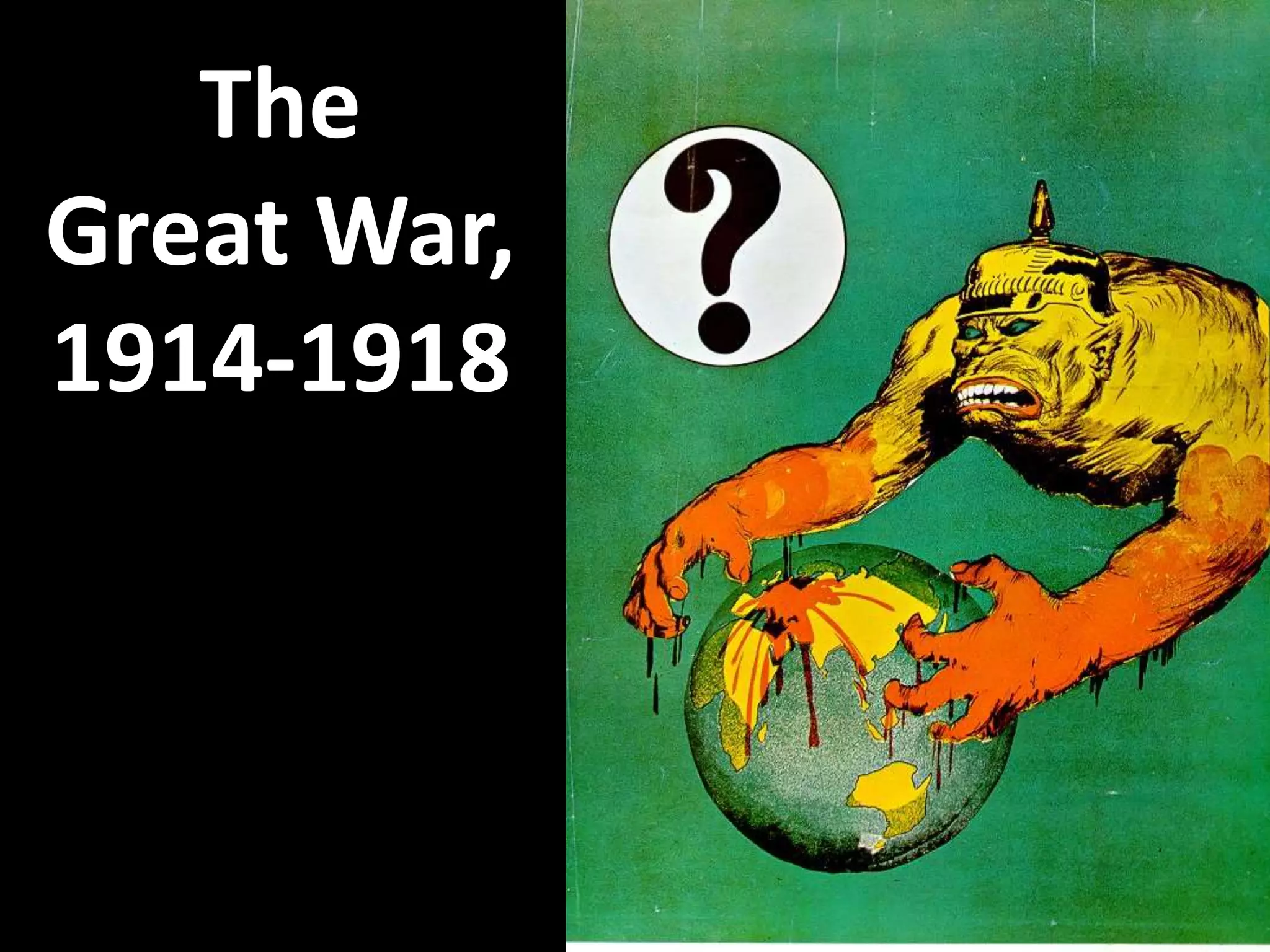
The
Great War,
1914-1918
Long-term Causes
of the First World War:
• Nationalism
• Industrialization
• Imperialism
• Militarism
• Alliances
The Great War was caused by four MAIN factors:
Militarism
Alliances
Imperialism and Industrialization
Nationalism
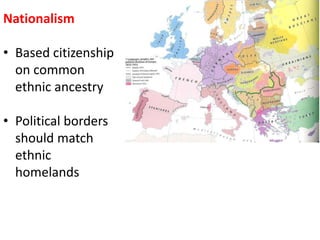
Nationalism
• Based citizenship
on common
ethnic ancestry
• Political borders
should match
ethnic
homelands
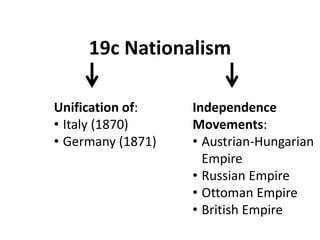
19c Nationalism
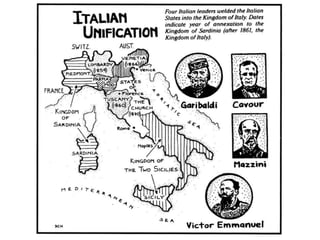
Unification of:
• Italy (1870)
• Germany (1871)
Independence
Movements:
• Austrian-Hungarian
Empire
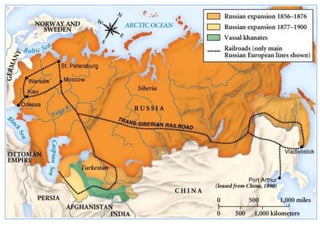
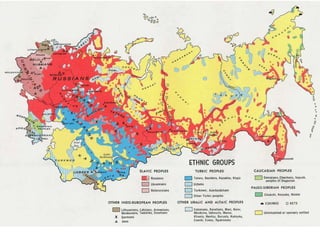
• Russian Empire
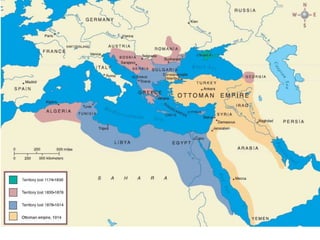
• Ottoman Empire
• British Empire
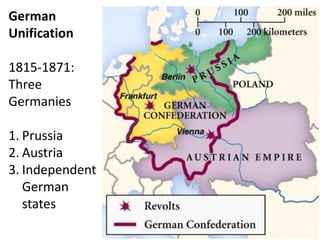
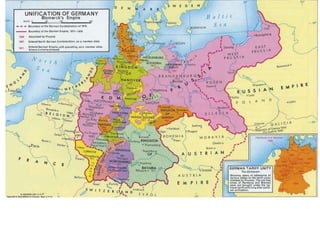
German
Unification
1815-1871:
Three
Germanies
1. Prussia
2. Austria
3. Independent
German
states
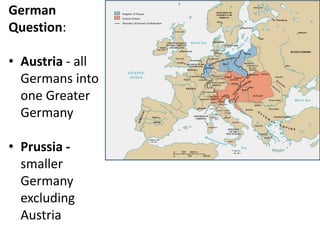
German
Question:
• Austria - all
Germans into
one Greater
Germany
• Prussia -
smaller
Germany
excluding
Austria
German Unification
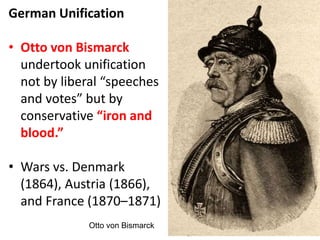
• Otto von Bismarck
undertook unification
not by liberal “speeches
and votes” but by
conservative “iron and
blood.”
• Wars vs. Denmark
(1864), Austria (1866),
and France (1870–1871)
Otto von Bismarck
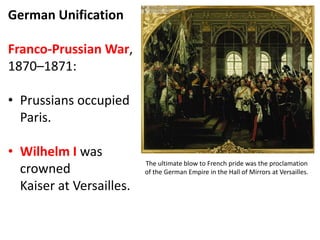
German Unification
Franco-Prussian War,
1870–1871:
• Prussians occupied
Paris.
• Wilhelm I was
crowned
Kaiser at Versailles.
The ultimate blow to French pride was the proclamation
of the German Empire in the Hall of Mirrors at Versailles.
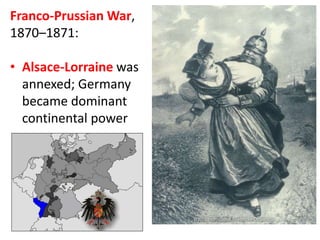
Franco-Prussian War,
1870–1871:
• Alsace-Lorraine was
annexed; Germany
became dominant
continental power
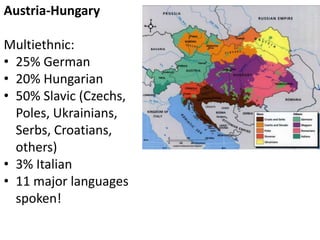
Austria-Hungary
Multiethnic:
• 25% German
• 20% Hungarian
• 50% Slavic (Czechs,
Poles, Ukrainians,
Serbs, Croatians,
others)
• 3% Italian
• 11 major languages
spoken!
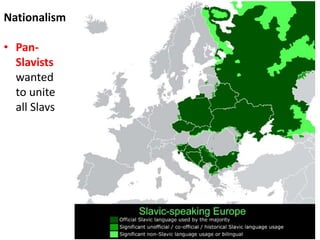
Nationalism
• Pan-
Slavists
wanted
to unite
all Slavs
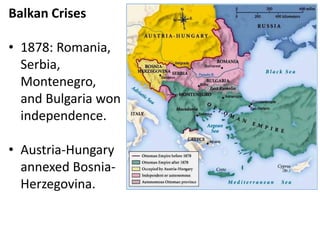
Balkan Crises
• 1878: Romania,
Serbia,
Montenegro,
and Bulgaria won
independence.
• Austria-Hungary
annexed Bosnia-
Herzegovina.
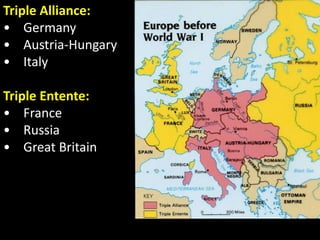
Triple Alliance:
• Germany
• Austria-Hungary
• Italy
Triple Entente:
• France
• Russia
• Great Britain
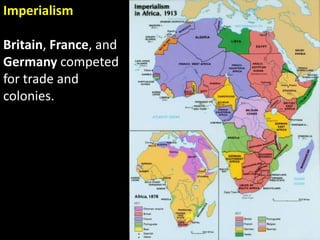
Imperialism
Britain, France, and
Germany competed
for trade and
colonies.
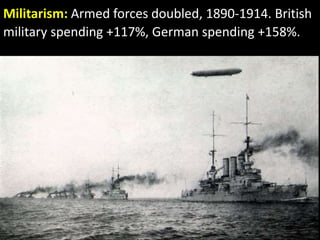
Militarism: Armed forces doubled, 1890-1914. British
military spending +117%, German spending +158%.
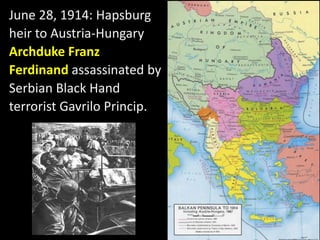
June 28, 1914: Hapsburg
heir to Austria-Hungary
Archduke Franz
Ferdinand assassinated by
Serbian Black Hand
terrorist Gavrilo Princip.
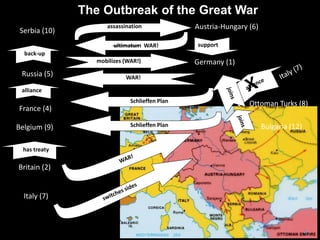
WAR!
Serbia (10)
Austria-Hungary (6)
Russia (5)
Germany (1)
France (4)
Belgium (9)
Britain (2)
Ottoman Turks (8)
Italy (7)
ultimatum
assassination
back-up
support
mobilizes (WAR!)
WAR!
Schlieffen Plan
Schlieffen Plan
has treaty
alliance
Bulgaria (12)
The Outbreak of the Great War
--------------
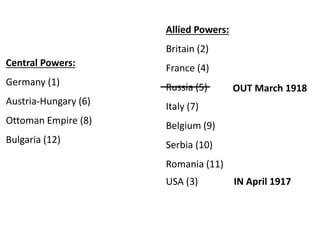
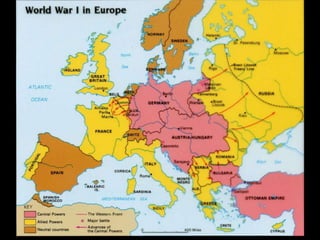
Allied Powers:
Britain (2)
France (4)
Russia (5)
Italy (7)
Belgium (9)
Serbia (10)
Romania (11)
Central Powers:
Germany (1)
Austria-Hungary (6)
Ottoman Empire (8)
Bulgaria (12)
USA (3) IN April 1917
________ OUT March 1918
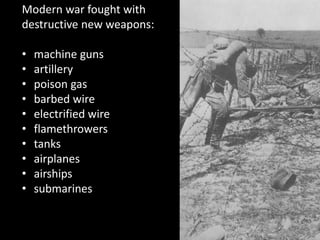
Modern war fought with
destructive new weapons:
• machine guns
• artillery
• poison gas
• barbed wire
• electrified wire
• flamethrowers
• tanks
• airplanes
• airships
• submarines
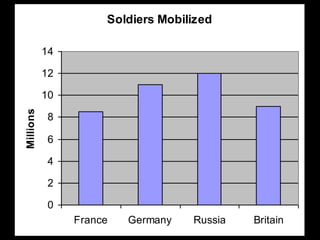
Soldiers Mobilized
0
2
4
6
8
10
12
14
France Germany Russia Britain
Millions
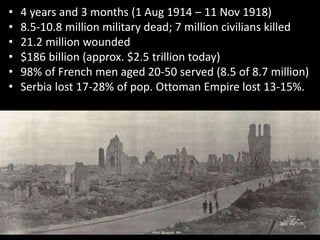
• 4 years and 3 months (1 Aug 1914 – 11 Nov 1918)
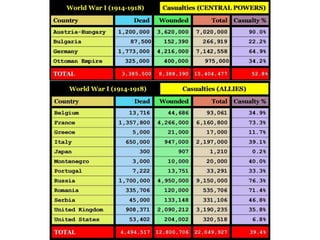
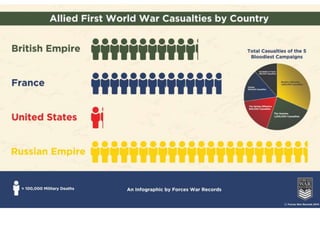
• 8.5-10.8 million military dead; 7 million civilians killed
• 21.2 million wounded
• $186 billion (approx. $2.5 trillion today)
• 98% of French men aged 20-50 served (8.5 of 8.7 million)
• Serbia lost 17-28% of pop. Ottoman Empire lost 13-15%.
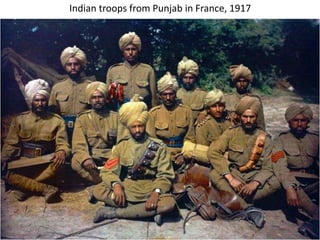
Indian troops from Punjab in France, 1917
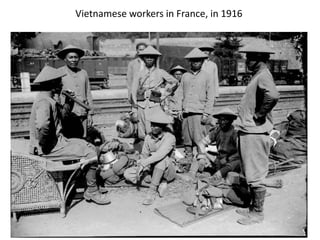
Vietnamese workers in France, in 1916
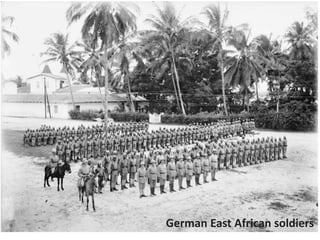
German East African soldiers
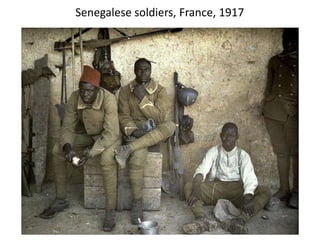
Senegalese soldiers, France, 1917
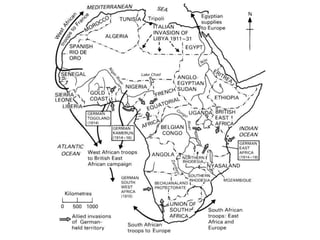
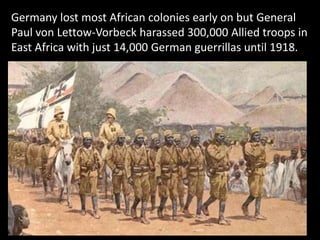
Germany lost most African colonies early on but General
Paul von Lettow-Vorbeck harassed 300,000 Allied troops in
East Africa with just 14,000 German guerrillas until 1918.
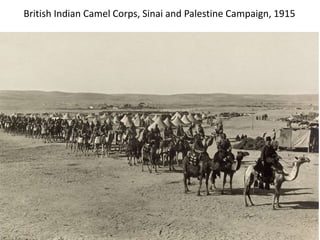
British Indian Camel Corps, Sinai and Palestine Campaign, 1915
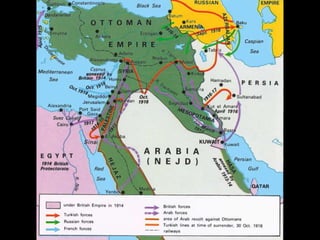
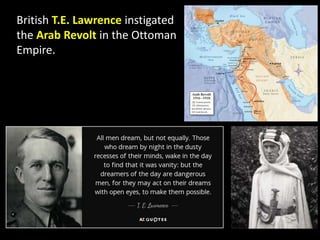
British T.E. Lawrence instigated
the Arab Revolt in the Ottoman
Empire.
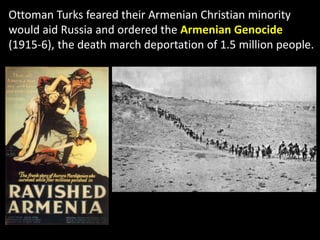
Ottoman Turks feared their Armenian Christian minority
would aid Russia and ordered the Armenian Genocide
(1915-6), the death march deportation of 1.5 million people.
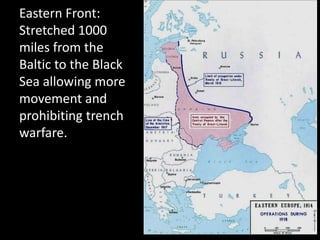
Eastern Front:
Stretched 1000
miles from the
Baltic to the Black
Sea allowing more
movement and
prohibiting trench
warfare.
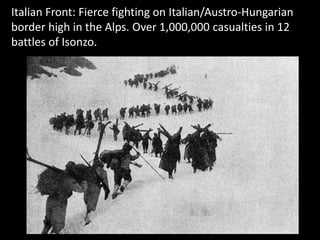
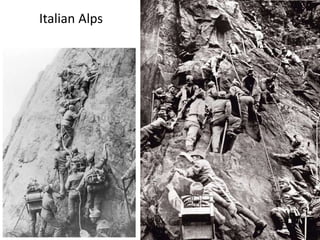
Italian Front: Fierce fighting on Italian/Austro-Hungarian
border high in the Alps. Over 1,000,000 casualties in 12
battles of Isonzo.
Italian Alps
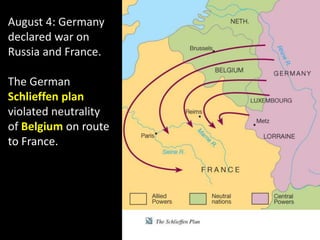
August 4: Germany
declared war on
Russia and France.
The German
Schlieffen plan
violated neutrality
of Belgium on route
to France.
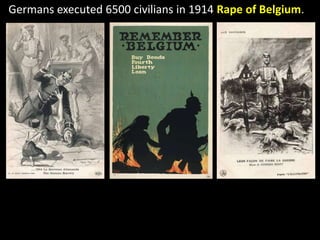
Germans executed 6500 civilians in 1914 Rape of Belgium.
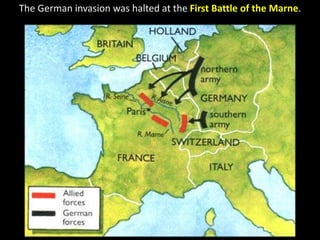
The German invasion was halted at the First Battle of the Marne.
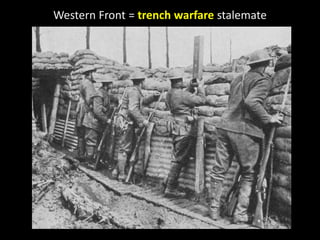
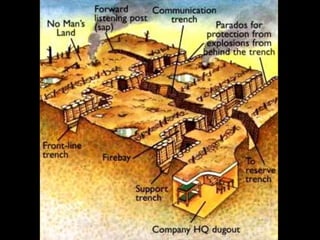
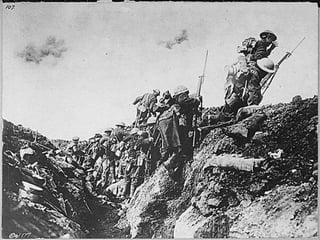
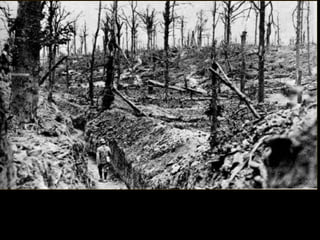
Western Front = trench warfare stalemate
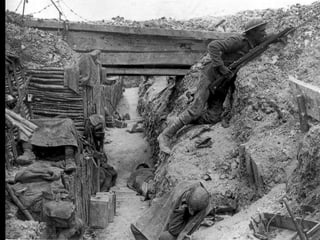
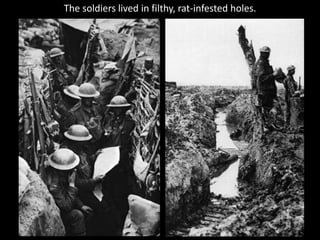
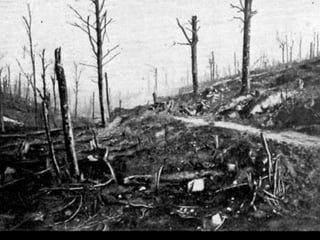
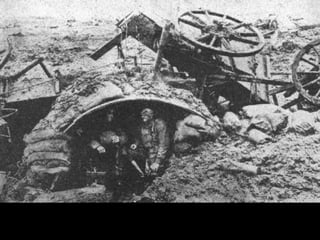
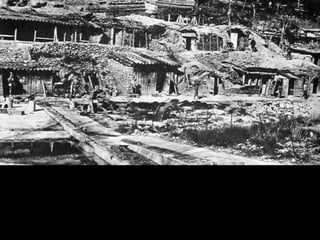
The soldiers lived in filthy, rat-infested holes.
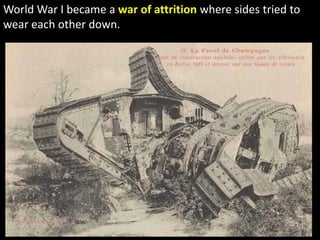
World War I became a war of attrition where sides tried to
wear each other down.
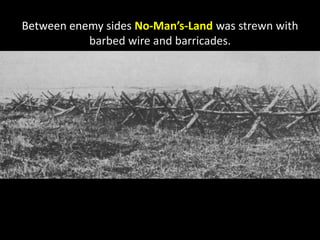
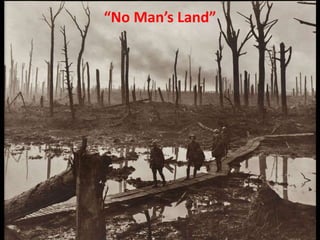
Between enemy sides No-Man’s-Land was strewn with
barbed wire and barricades.
“No Man’s Land”
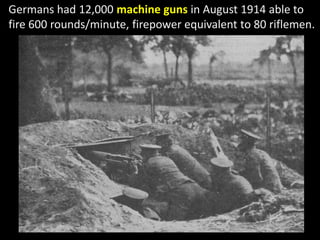
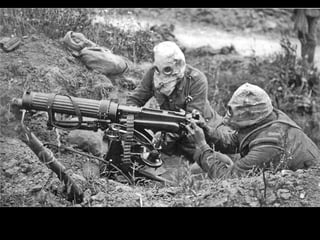
Germans had 12,000 machine guns in August 1914 able to
fire 600 rounds/minute, firepower equivalent to 80 riflemen.
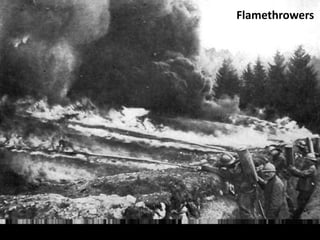
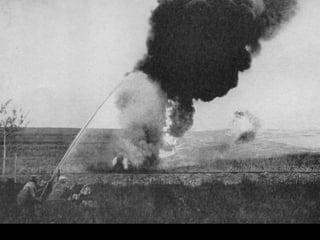
Flamethrowers
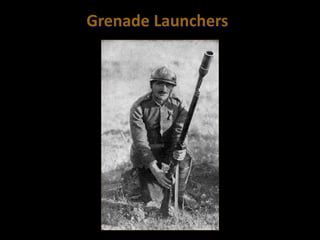
Grenade Launchers
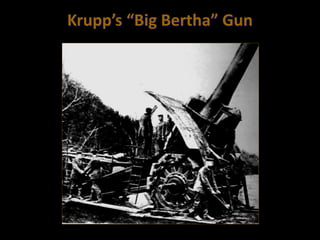
Krupp’s “Big Bertha” Gun
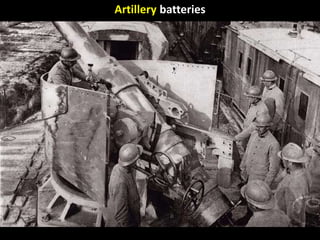
Artillery batteries
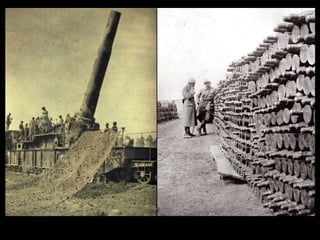
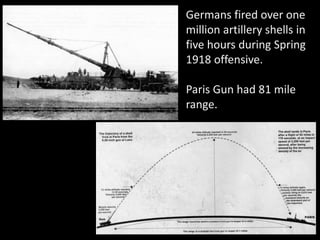
Germans fired over one
million artillery shells in
five hours during Spring
1918 offensive.
Paris Gun had 81 mile
range.
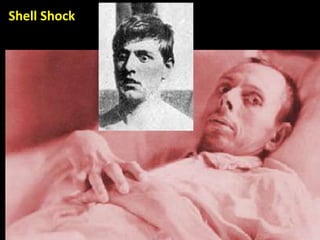
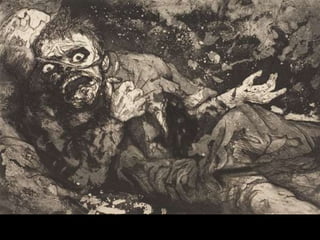
Shell Shock
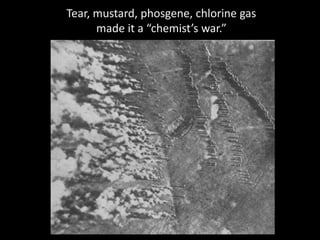
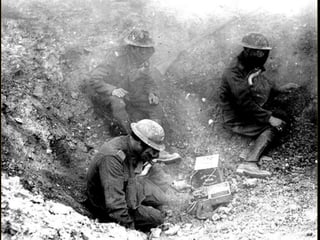
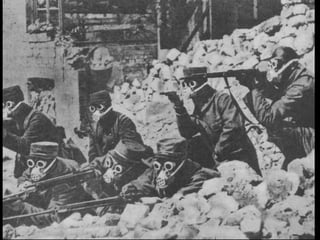
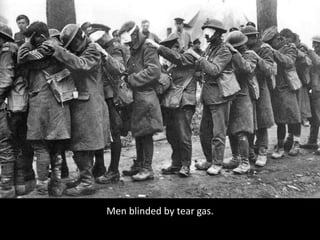
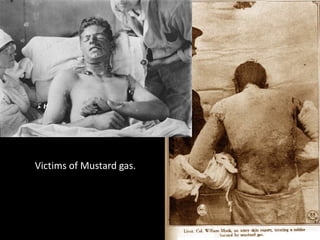
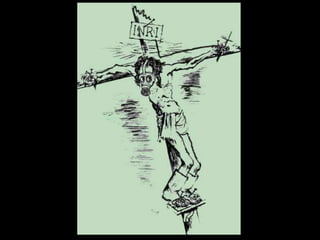
Tear, mustard, phosgene, chlorine gas
made it a “chemist’s war.”
Men blinded by tear gas.
Victims of Mustard gas.
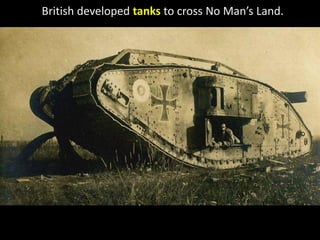
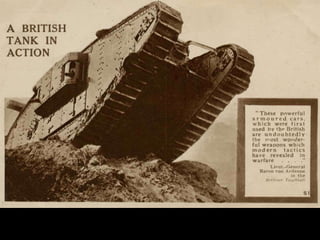
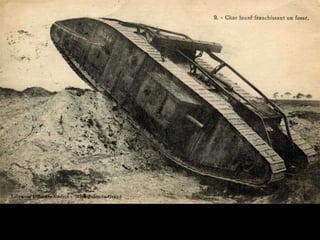
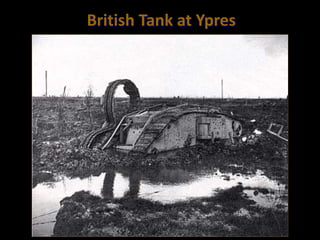
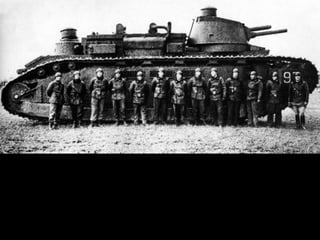
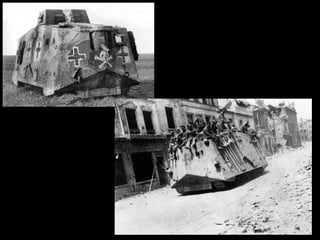
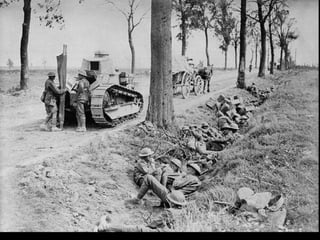
British developed tanks to cross No Man’s Land.
British Tank at Ypres
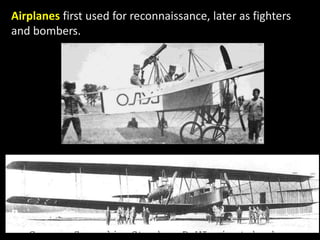
German Zeppelin-Staaken R.VI giant bomber
Airplanes first used for reconnaissance, later as fighters
and bombers.
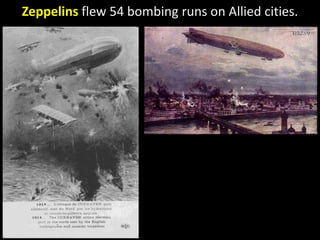
Zeppelins flew 54 bombing runs on Allied cities.
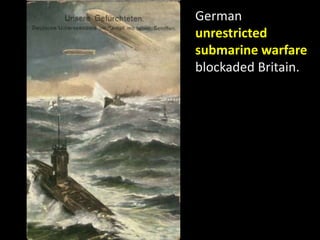
German
unrestricted
submarine warfare
blockaded Britain.
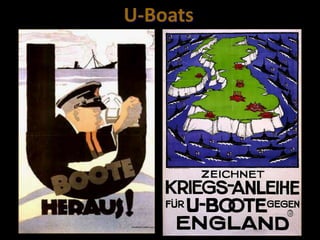
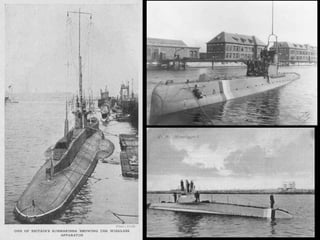
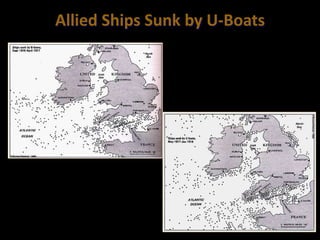
U-Boats
Allied Ships Sunk by U-Boats
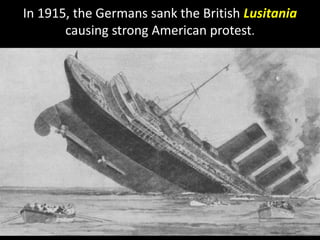
In 1915, the Germans sank the British Lusitania
causing strong American protest.
Sussex Pledge
May 1916
German promise to U.S. to limit submarine warfare:
• passenger ships would not be targeted
• merchant ships would not be sunk until the presence of
weapons had been established, if necessary by a search
of the ship
• merchant ships would not be sunk without provision for
the safety of passengers and crew
• rescinded February 1917; unrestricted submarine
warfare resumed
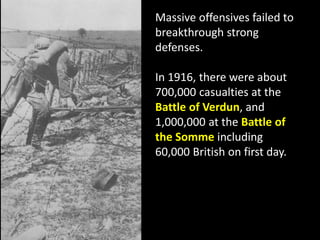
Massive offensives failed to
breakthrough strong
defenses.
In 1916, there were about
700,000 casualties at the
Battle of Verdun, and
1,000,000 at the Battle of
the Somme including
60,000 British on first day.
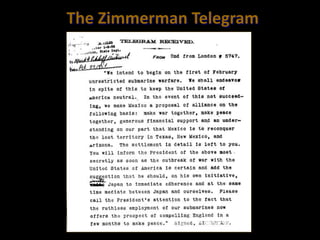
The Zimmerman Telegram
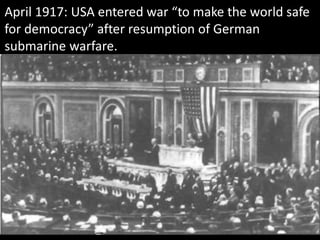
April 1917: USA entered war “to make the world safe
for democracy” after resumption of German
submarine warfare.
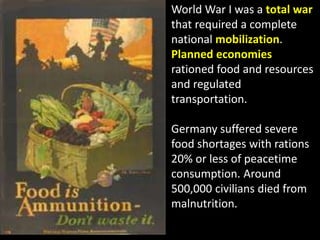
World War I was a total war
that required a complete
national mobilization.
Planned economies
rationed food and resources
and regulated
transportation.
Germany suffered severe
food shortages with rations
20% or less of peacetime
consumption. Around
500,000 civilians died from
malnutrition.
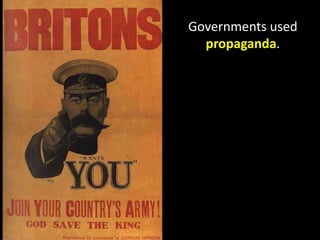
Governments used
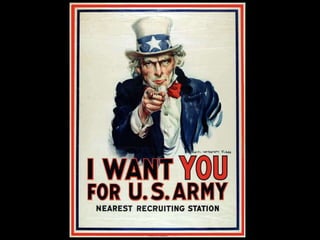
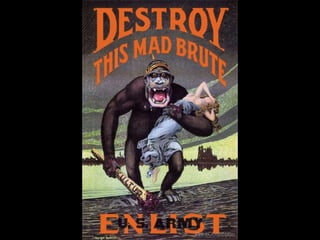
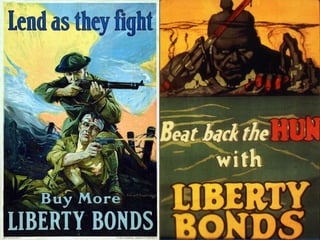
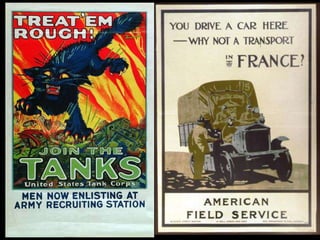
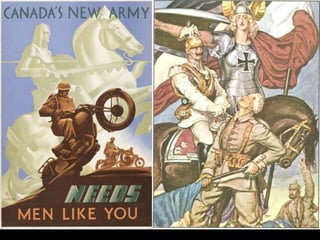
propaganda.
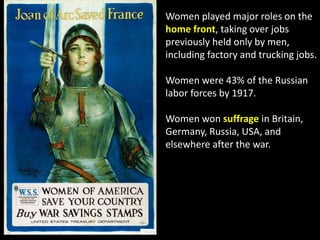
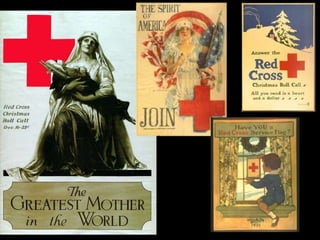
Women played major roles on the
home front, taking over jobs
previously held only by men,
including factory and trucking jobs.
Women were 43% of the Russian
labor forces by 1917.
Women won suffrage in Britain,
Germany, Russia, USA, and
elsewhere after the war.
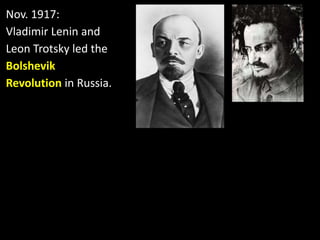
Nov. 1917:
Vladimir Lenin and
Leon Trotsky led the
Bolshevik
Revolution in Russia.
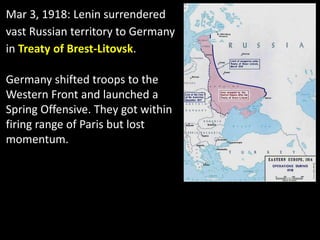
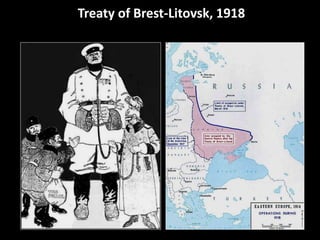
Mar 3, 1918: Lenin surrendered
vast Russian territory to Germany
in Treaty of Brest-Litovsk.
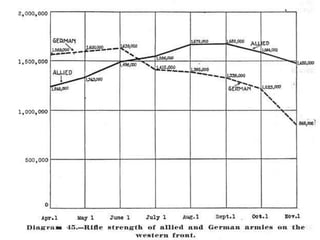
Germany shifted troops to the
Western Front and launched a
Spring Offensive. They got within
firing range of Paris but lost
momentum.
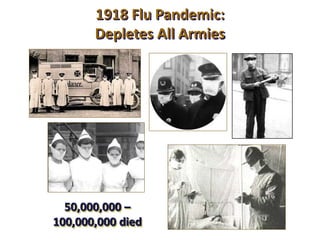
1918 Flu Pandemic:
Depletes All Armies
50,000,000 –
100,000,000 died
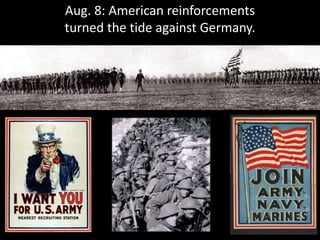
Aug. 8: American reinforcements
turned the tide against Germany.
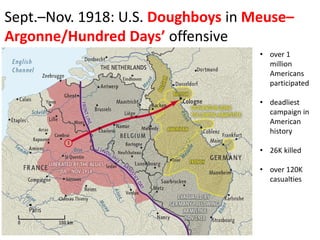
Sept.–Nov. 1918: U.S. Doughboys in Meuse–
Argonne/Hundred Days’ offensive
• over 1
million
Americans
participated
• deadliest
campaign in
American
history
• 26K killed
• over 120K
casualties
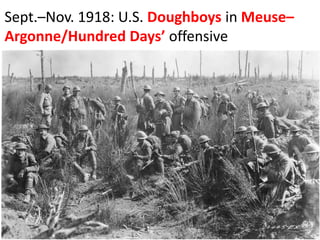
Sept.–Nov. 1918: U.S. Doughboys in Meuse–
Argonne/Hundred Days’ offensive
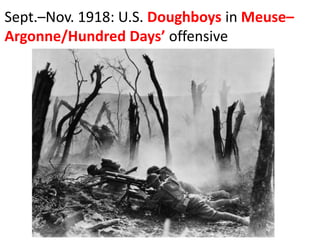
Sept.–Nov. 1918: U.S. Doughboys in Meuse–
Argonne/Hundred Days’ offensive
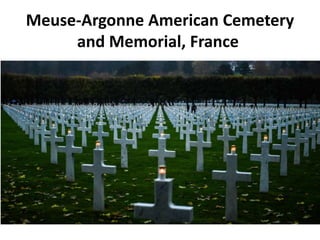
Meuse-Argonne American Cemetery
and Memorial, France
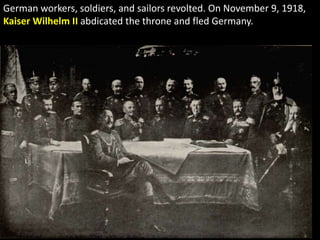
German workers, soldiers, and sailors revolted. On November 9, 1918,
Kaiser Wilhelm II abdicated the throne and fled Germany.
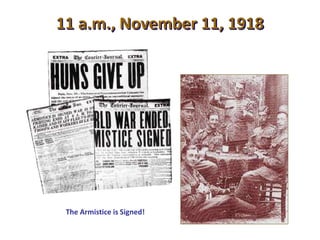
11 a.m., November 11, 1918
The Armistice is Signed!
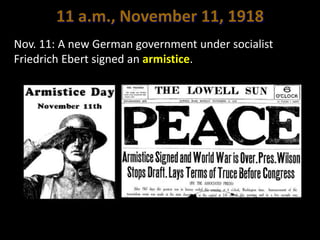
11 a.m., November 11, 1918
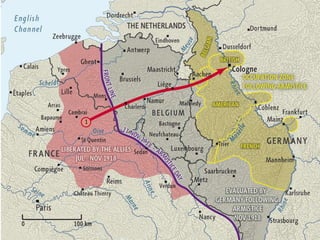
Nov. 11: A new German government under socialist
Friedrich Ebert signed an armistice.
Human Cost of the War
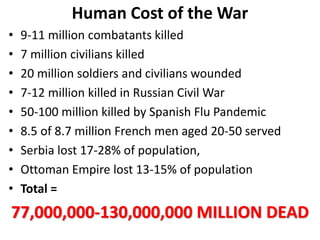
• 9-11 million combatants killed
• 7 million civilians killed
• 20 million soldiers and civilians wounded
• 7-12 million killed in Russian Civil War
• 50-100 million killed by Spanish Flu Pandemic
• 8.5 of 8.7 million French men aged 20-50 served
• Serbia lost 17-28% of population,
• Ottoman Empire lost 13-15% of population
• Total =
77,000,000-130,000,000 MILLION DEAD
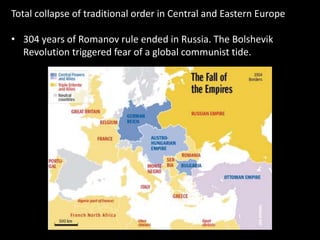
Total collapse of traditional order in Central and Eastern Europe
• 304 years of Romanov rule ended in Russia. The Bolshevik
Revolution triggered fear of a global communist tide.
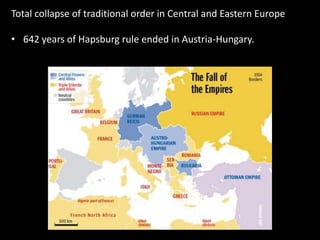
Total collapse of traditional order in Central and Eastern Europe
• 642 years of Hapsburg rule ended in Austria-Hungary.
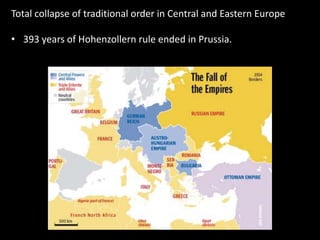
Total collapse of traditional order in Central and Eastern Europe
• 393 years of Hohenzollern rule ended in Prussia.
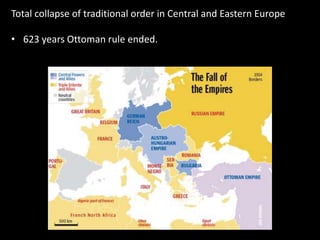
Total collapse of traditional order in Central and Eastern Europe
• 623 years Ottoman rule ended.
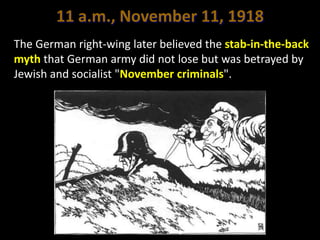
11 a.m., November 11, 1918
The German right-wing later believed the stab-in-the-back
myth that German army did not lose but was betrayed by
Jewish and socialist "November criminals".
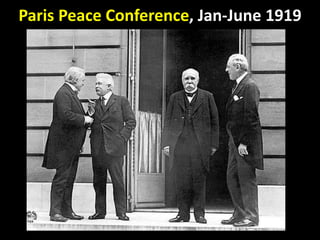
Paris Peace Conference, Jan-June 1919
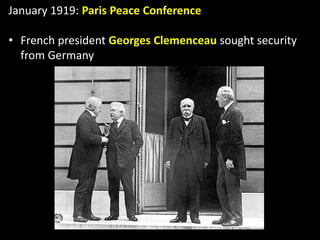
January 1919: Paris Peace Conference
• French president Georges Clemenceau sought security
from Germany
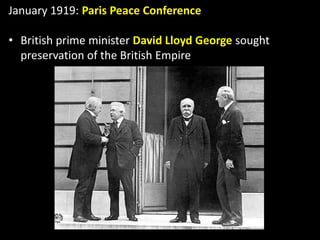
January 1919: Paris Peace Conference
• British prime minister David Lloyd George sought
preservation of the British Empire
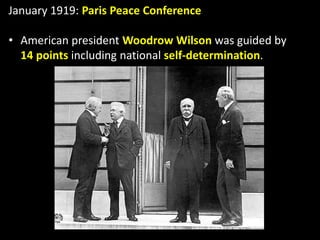
January 1919: Paris Peace Conference
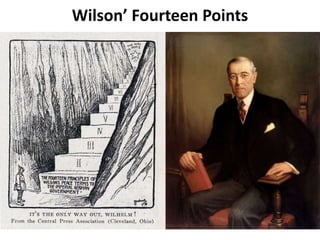
• American president Woodrow Wilson was guided by
14 points including national self-determination.
Wilson’ Fourteen Points
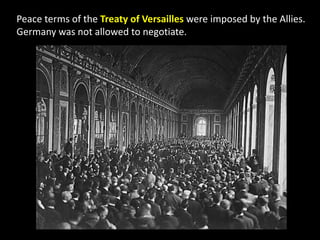
Peace terms of the Treaty of Versailles were imposed by the Allies.
Germany was not allowed to negotiate.
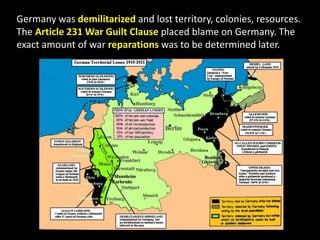
Germany was demilitarized and lost territory, colonies, resources.
The Article 231 War Guilt Clause placed blame on Germany. The
exact amount of war reparations was to be determined later.
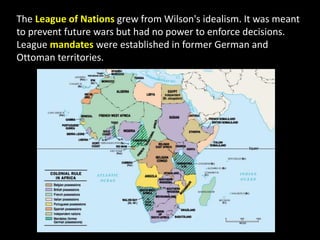
The League of Nations grew from Wilson's idealism. It was meant
to prevent future wars but had no power to enforce decisions.
League mandates were established in former German and
Ottoman territories.
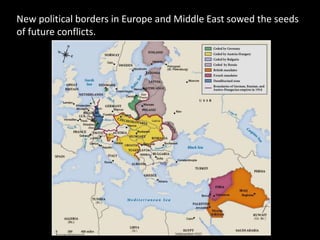
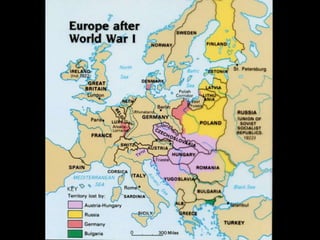
New political borders in Europe and Middle East sowed the seeds
of future conflicts.
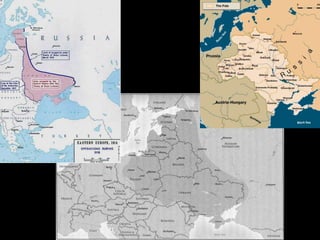
Treaty of Brest-Litovsk, 1918
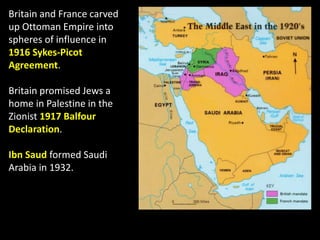
Britain and France carved
up Ottoman Empire into
spheres of influence in
1916 Sykes-Picot
Agreement.
Britain promised Jews a
home in Palestine in the
Zionist 1917 Balfour
Declaration.
Ibn Saud formed Saudi
Arabia in 1932.
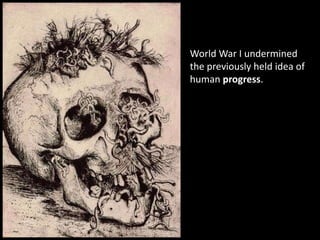
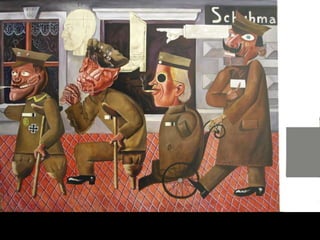
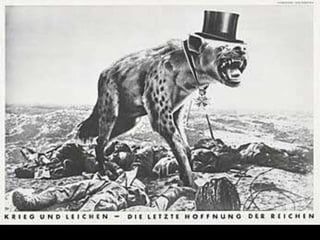
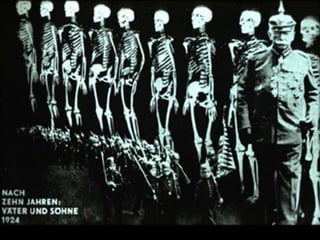
World War I undermined
the previously held idea of
human progress.
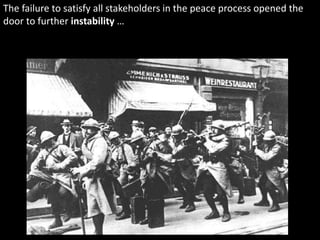
The failure to satisfy all stakeholders in the peace process opened the
door to further instability …
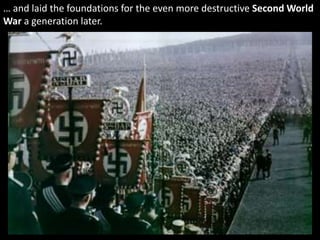
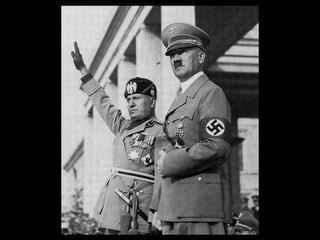
… and laid the foundations for the even more destructive Second World
War a generation later.
The great war

The great war