
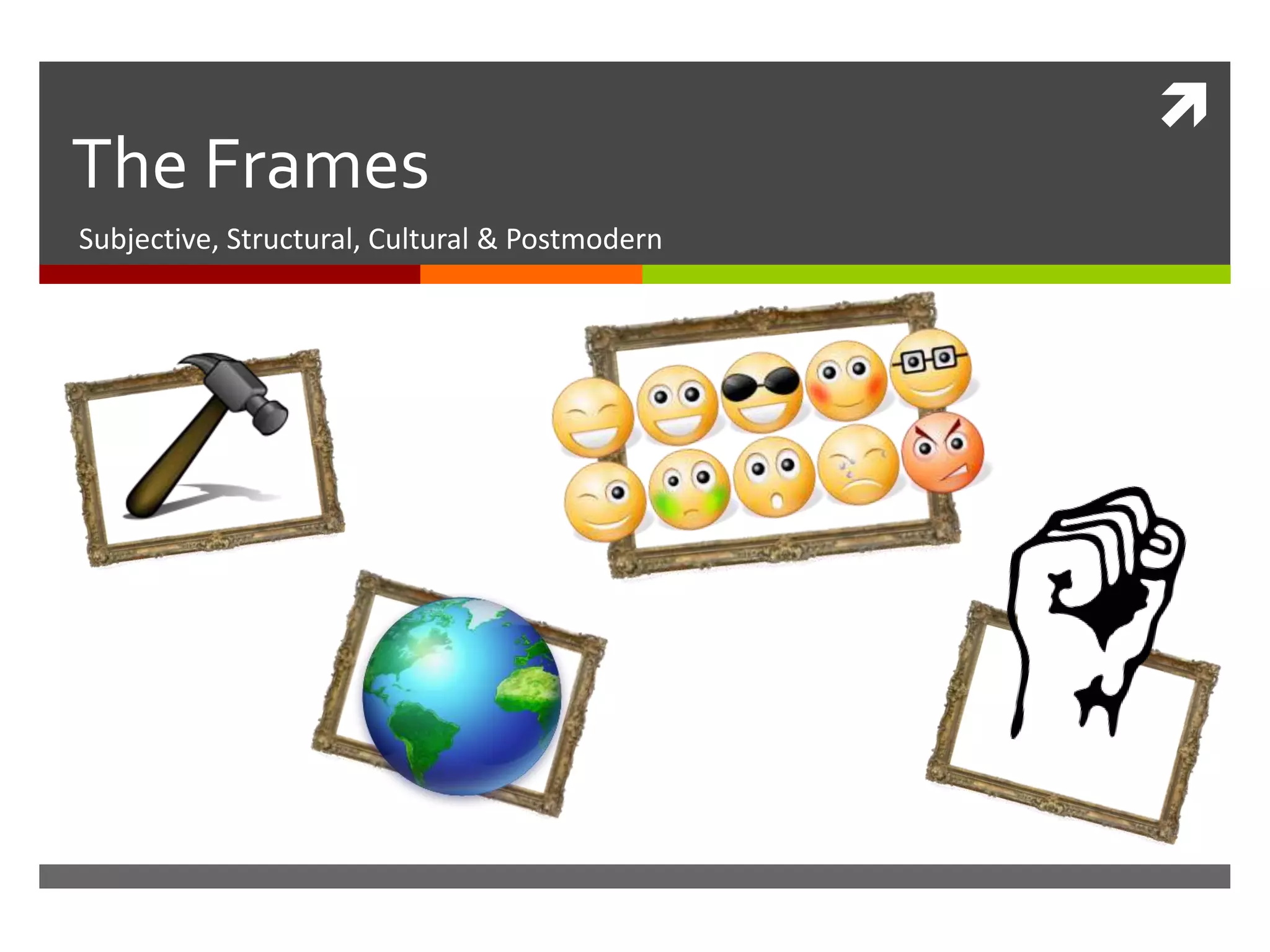
The Frames
Subjective, Structural, Cultural & Postmodern
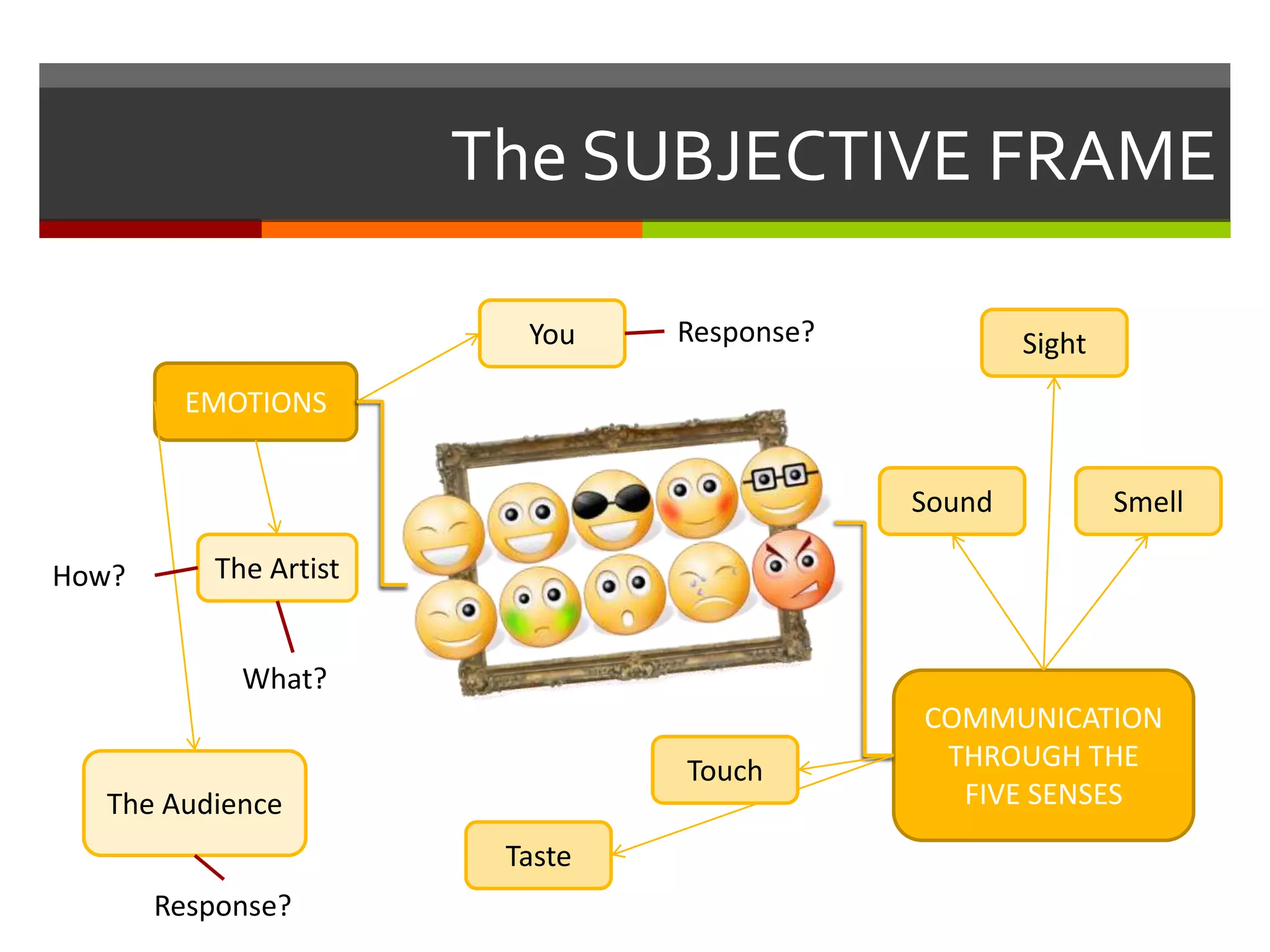
The SUBJECTIVE FRAME
EMOTIONS
COMMUNICATION
THROUGH THE
FIVE SENSES
Sight
Sound Smell
Taste
The Audience
You
The Artist
Touch
What?
How?
Response?
Response?
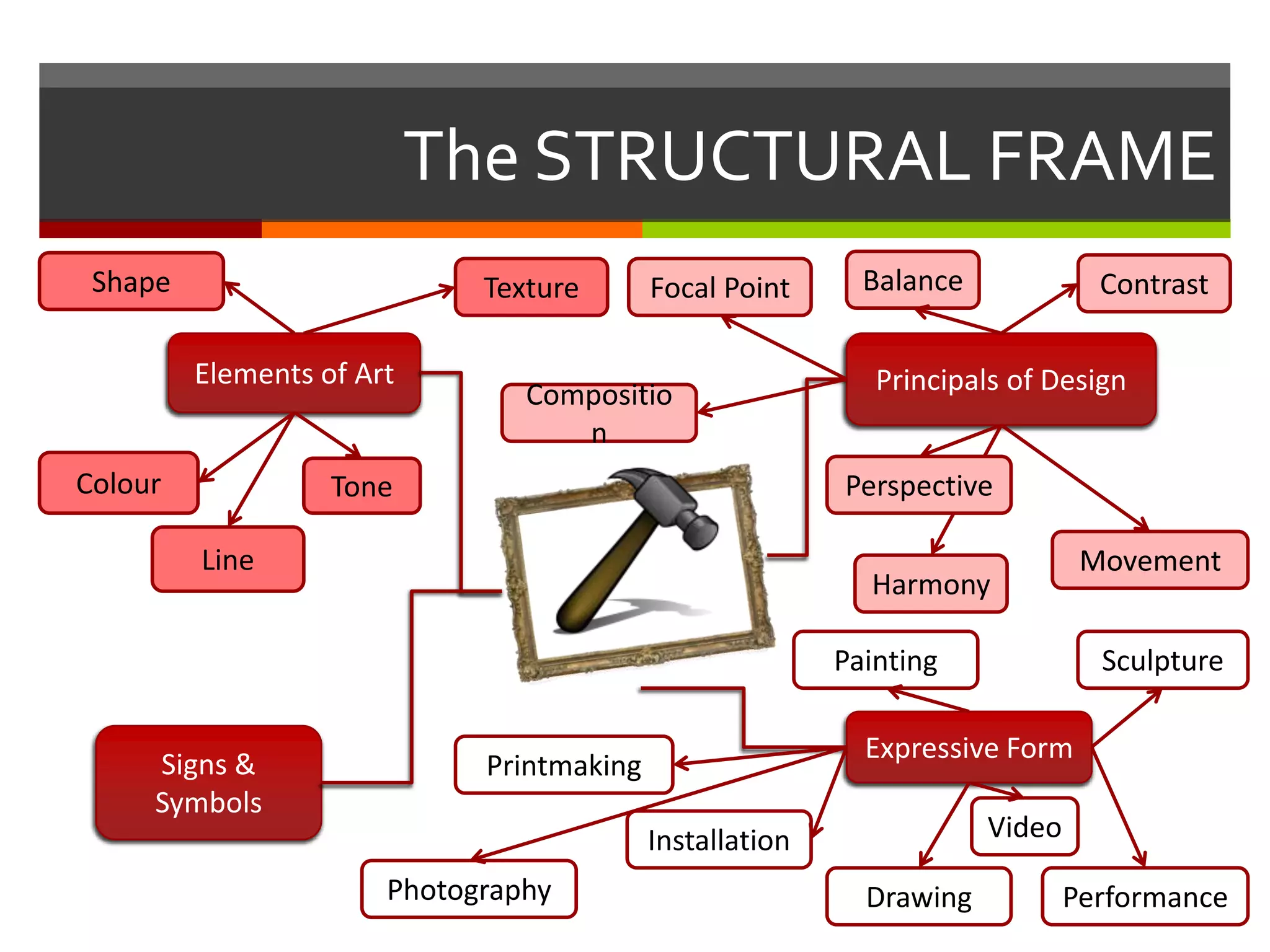
The STRUCTURAL FRAME
Signs &
Symbols
Principals of DesignElements of Art
Expressive Form
Colour
Line
TextureShape
Tone
Installation
Drawing
Painting
Printmaking
Photography Performance
Video
Sculpture
Compositio
n
Focal Point Balance
Harmony
Movement
Contrast
Perspective
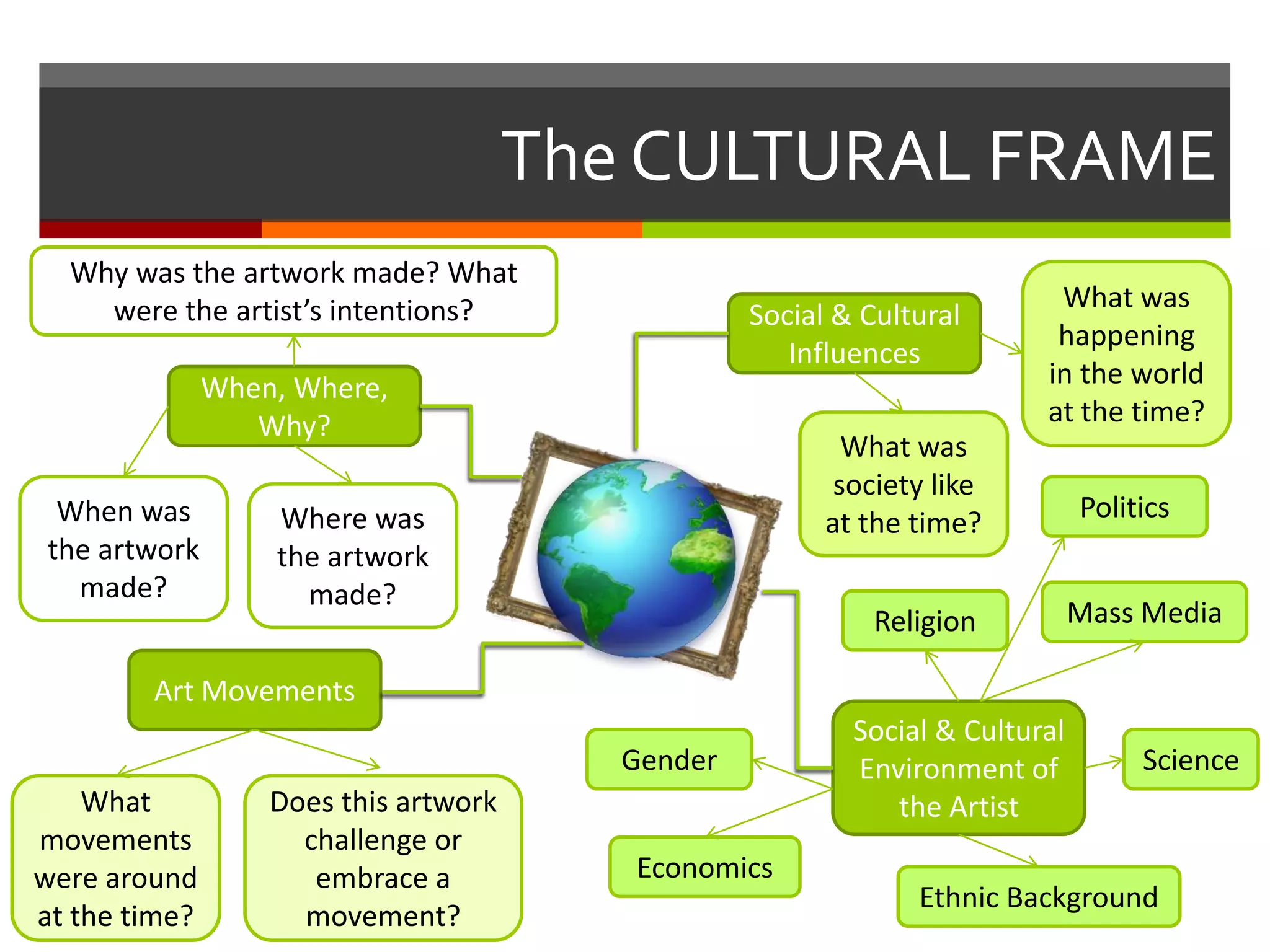
The CULTURAL FRAME
When, Where,
Why?
Social & Cultural
Influences
Art Movements
Social & Cultural
Environment of
the Artist
When was
the artwork
made?
Where was
the artwork
made?
Why was the artwork made? What
were the artist’s intentions?
What
movements
were around
at the time?
Does this artwork
challenge or
embrace a
movement?
What was
society like
at the time?
What was
happening
in the world
at the time?
Religion
Politics
Mass Media
Gender
Economics
Ethnic Background
Science
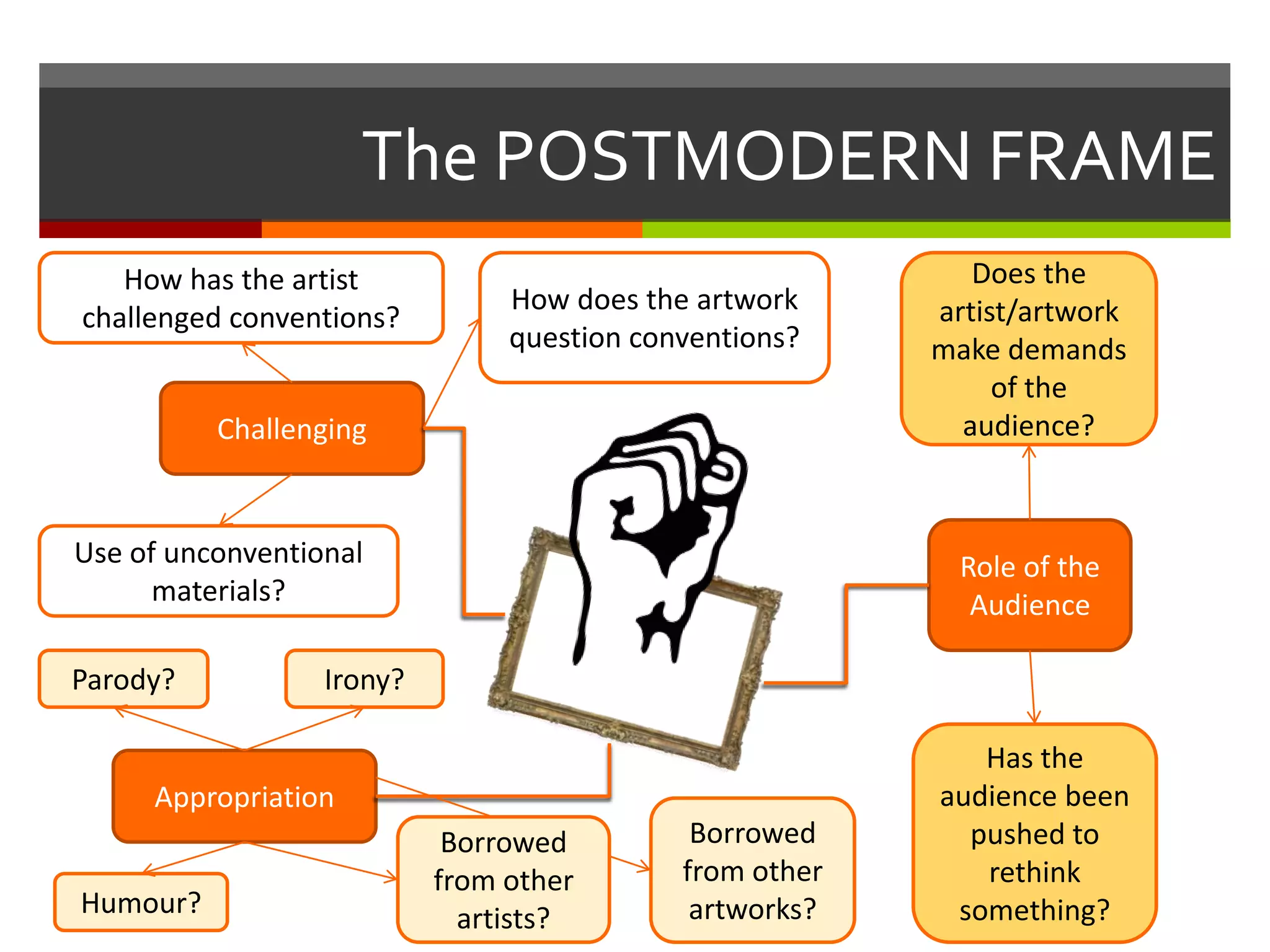
The POSTMODERN FRAME
Challenging
Appropriation
Role of the
Audience
How has the artist
challenged conventions?
Use of unconventional
materials?
How does the artwork
question conventions?
Parody? Irony?
Humour?
Borrowed
from other
artworks?
Does the
artist/artwork
make demands
of the
audience?
Has the
audience been
pushed to
rethink
something?
Borrowed
from other
artists?
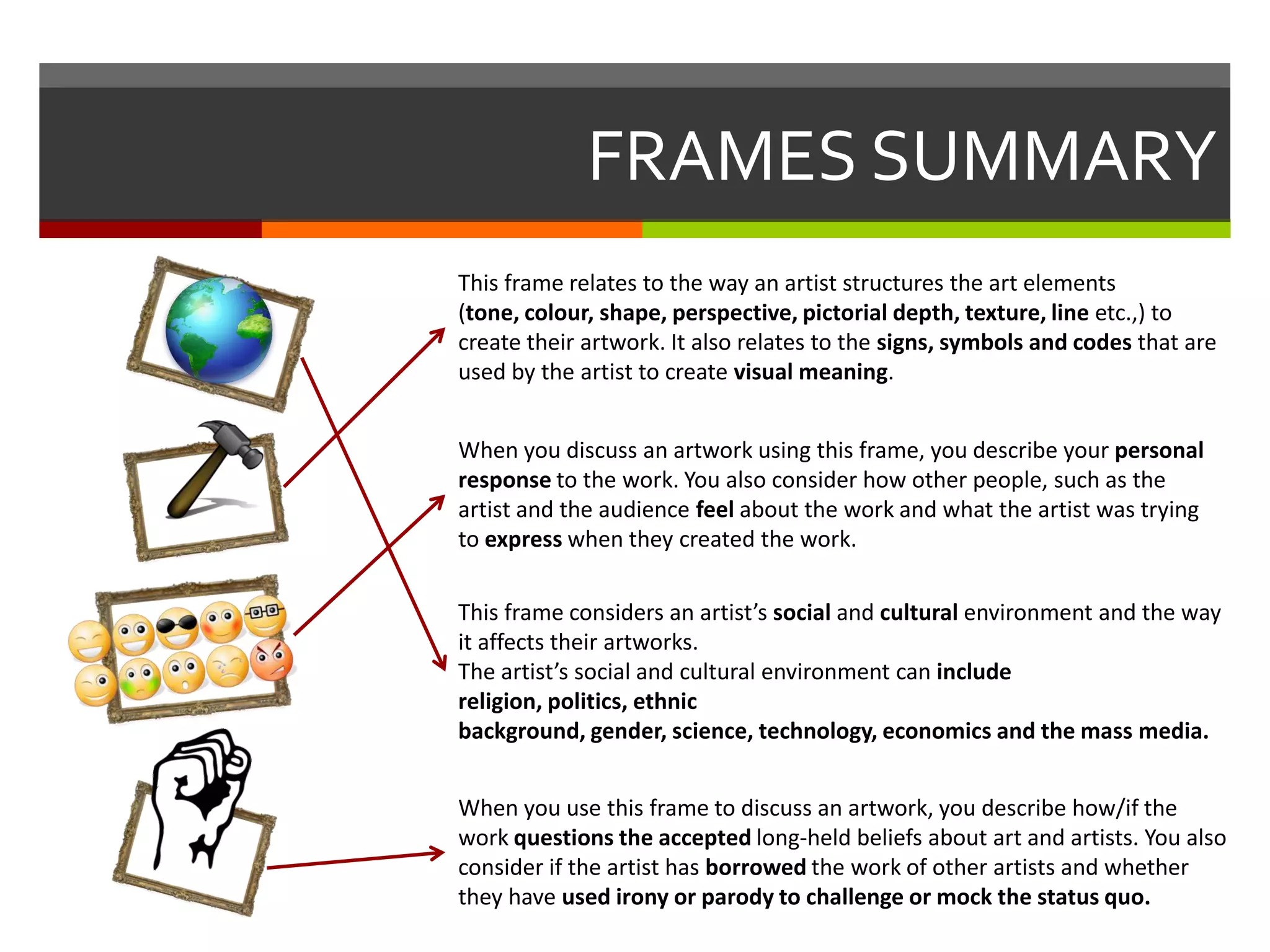
FRAMES SUMMARY
This frame relates to the way an artist structures the art elements
(tone, colour, shape, perspective, pictorial depth, texture, line etc.,) to
create their artwork. It also relates to the signs, symbols and codes that are
used by the artist to create visual meaning.
When you discuss an artwork using this frame, you describe your personal
response to the work. You also consider how other people, such as the
artist and the audience feel about the work and what the artist was trying
to express when they created the work.
This frame considers an artist’s social and cultural environment and the way
it affects their artworks.
The artist’s social and cultural environment can include
religion, politics, ethnic
background, gender, science, technology, economics and the mass media.
When you use this frame to discuss an artwork, you describe how/if the
work questions the accepted long-held beliefs about art and artists. You also
consider if the artist has borrowed the work of other artists and whether
they have used irony or parody to challenge or mock the status quo.

The Frames

  • 1.
  • 2.
    The SUBJECTIVE FRAME EMOTIONS COMMUNICATION THROUGHTHE FIVE SENSES Sight Sound Smell Taste The Audience You The Artist Touch What? How? Response? Response?
  • 3.
    The STRUCTURAL FRAME Signs& Symbols Principals of DesignElements of Art Expressive Form Colour Line TextureShape Tone Installation Drawing Painting Printmaking Photography Performance Video Sculpture Compositio n Focal Point Balance Harmony Movement Contrast Perspective
  • 4.
    The CULTURAL FRAME When,Where, Why? Social & Cultural Influences Art Movements Social & Cultural Environment of the Artist When was the artwork made? Where was the artwork made? Why was the artwork made? What were the artist’s intentions? What movements were around at the time? Does this artwork challenge or embrace a movement? What was society like at the time? What was happening in the world at the time? Religion Politics Mass Media Gender Economics Ethnic Background Science
  • 5.
    The POSTMODERN FRAME Challenging Appropriation Roleof the Audience How has the artist challenged conventions? Use of unconventional materials? How does the artwork question conventions? Parody? Irony? Humour? Borrowed from other artworks? Does the artist/artwork make demands of the audience? Has the audience been pushed to rethink something? Borrowed from other artists?
  • 6.
    FRAMES SUMMARY This framerelates to the way an artist structures the art elements (tone, colour, shape, perspective, pictorial depth, texture, line etc.,) to create their artwork. It also relates to the signs, symbols and codes that are used by the artist to create visual meaning. When you discuss an artwork using this frame, you describe your personal response to the work. You also consider how other people, such as the artist and the audience feel about the work and what the artist was trying to express when they created the work. This frame considers an artist’s social and cultural environment and the way it affects their artworks. The artist’s social and cultural environment can include religion, politics, ethnic background, gender, science, technology, economics and the mass media. When you use this frame to discuss an artwork, you describe how/if the work questions the accepted long-held beliefs about art and artists. You also consider if the artist has borrowed the work of other artists and whether they have used irony or parody to challenge or mock the status quo.