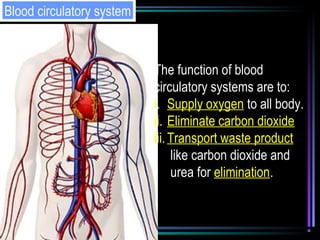
Blood circulatory system
The function of blood
circulatory systems are to:
i. Supply oxygen to all body.
ii. Eliminate carbon dioxide
iii.Transport waste product
like carbon dioxide and
urea for elimination.
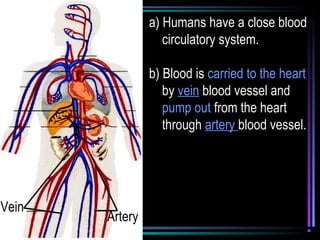
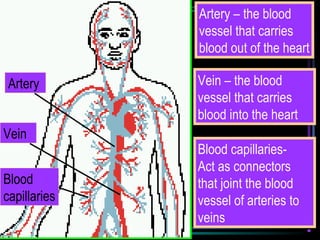
Artery
Vein
a) Humans have a close blood
circulatory system.
b) Blood is carried to the heart
by vein blood vessel and
pump out from the heart
through artery blood vessel.
Artery
Vein
Artery – the blood
vessel that carries
blood out of the heart
Vein – the blood
vessel that carries

blood into the heart
Blood
capillaries
Blood capillaries-
Act as connectors
that joint the blood
vessel of arteries to
veins
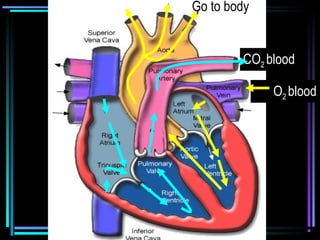
CO2 blood
O2 blood
Go to body
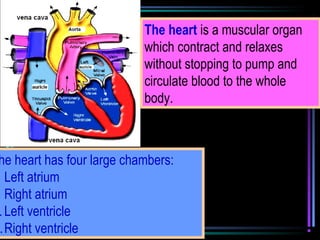
The heart is a muscular organ
which contract and relaxes
without stopping to pump and
circulate blood to the whole
body.
he heart has four large chambers:
Left atrium
Right atrium
.Left ventricle
.Right ventricle
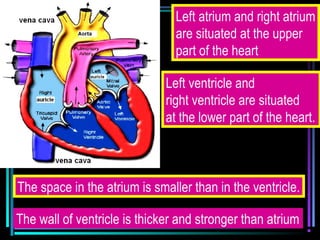
Left atrium and right atrium
are situated at the upper
part of the heart
Left ventricle and
right ventricle are situated
at the lower part of the heart.
The space in the atrium is smaller than in the ventricle.
The wall of ventricle is thicker and stronger than atrium
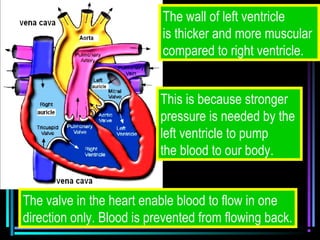
The wall of left ventricle
is thicker and more muscular
compared to right ventricle.
This is because stronger
pressure is needed by the
left ventricle to pump
the blood to our body.
The valve in the heart enable blood to flow in one
direction only. Blood is prevented from flowing back.
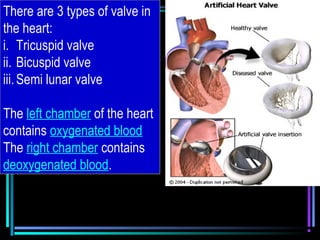
There are 3 types of valve in
the heart:
i. Tricuspid valve
ii. Bicuspid valve
iii.Semi lunar valve
The left chamber of the heart
contains oxygenated blood
The right chamber contains
deoxygenated blood.
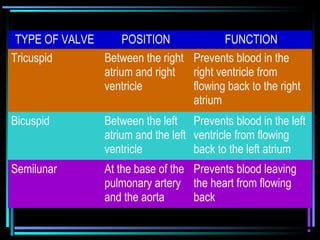
TYPE OF VALVE POSITION FUNCTION
Tricuspid Between the right
atrium and right
ventricle
Prevents blood in the
right ventricle from
flowing back to the right
atrium
Bicuspid Between the left
atrium and the left
ventricle
Prevents blood in the left
ventricle from flowing
back to the left atrium
Semilunar At the base of the
pulmonary artery
and the aorta
Prevents blood leaving
the heart from flowing
back
TYPE OF BLOOD
VESSEL
FUNCTION
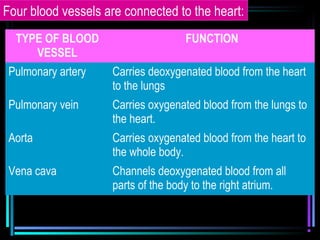
Pulmonary artery Carries deoxygenated blood from the heart
to the lungs
Pulmonary vein Carries oxygenated blood from the lungs to
the heart.
Aorta Carries oxygenated blood from the heart to
the whole body.
Vena cava Channels deoxygenated blood from all
parts of the body to the right atrium.
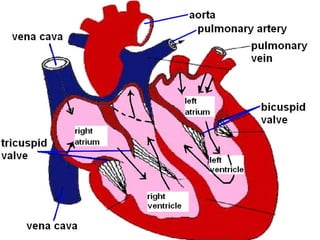
Four blood vessels are connected to the heart:
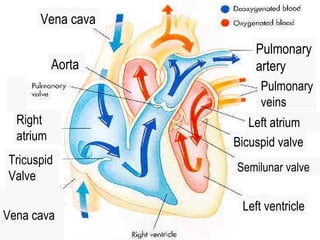
Right ventricle
S
Vena cava
Tricuspid
Valve
Right
atrium
Left ventricle
Bicuspid valve
Left atrium
Semilunar valve
Pulmonary
veins
Vena cava
Aorta
Pulmonary
artery
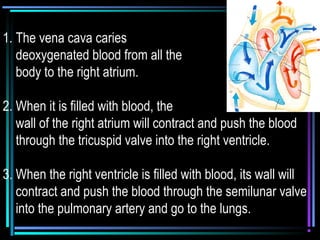
1. The vena cava caries
deoxygenated blood from all the
body to the right atrium.
2. When it is filled with blood, the
wall of the right atrium will contract and push the blood
through the tricuspid valve into the right ventricle.
3. When the right ventricle is filled with blood, its wall will
contract and push the blood through the semilunar valve
into the pulmonary artery and go to the lungs.
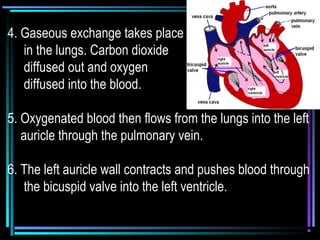
4. Gaseous exchange takes place
in the lungs. Carbon dioxide
diffused out and oxygen
diffused into the blood.
5. Oxygenated blood then flows from the lungs into the left
auricle through the pulmonary vein.
6. The left auricle wall contracts and pushes blood through
the bicuspid valve into the left ventricle.
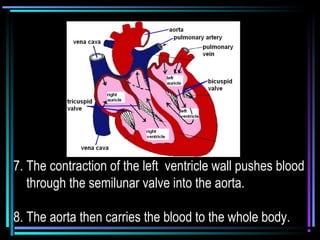
7. The contraction of the left ventricle wall pushes blood
through the semilunar valve into the aorta.
8. The aorta then carries the blood to the whole body.
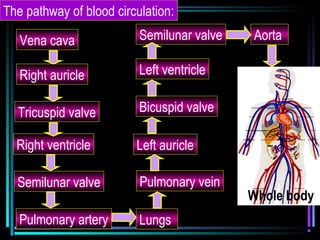
The pathway of blood circulation:
Vena cava
Right auricle
Tricuspid valve
Right ventricle
Semilunar valve
Pulmonary artery
Semilunar valve
Left ventricle
Bicuspid valve
Left auricle
Pulmonary vein
Lungs
Aorta
Whole body
Video : Heart 1
Video: Heart 2
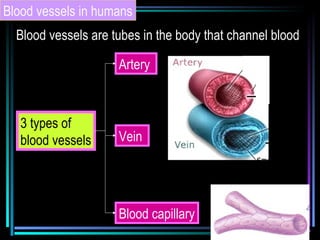
Blood vessels in humans
Blood vessels are tubes in the body that channel blood
3 types of
blood vessels
Artery
Vein
Blood capillary
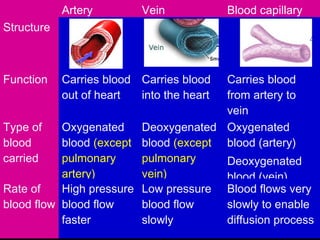
Artery Vein Blood capillary
Structure
Function Carries blood
out of heart
Carries blood
into the heart
Carries blood
from artery to
vein
Type of
blood
carried
Oxygenated
blood (except
pulmonary
artery)
Deoxygenated
blood (except
pulmonary
vein)
Oxygenated
blood (artery)
Deoxygenated
blood (vein)
Rate of
blood flow
High pressure
blood flow
faster
Low pressure
blood flow
slowly
Blood flows very
slowly to enable
diffusion process
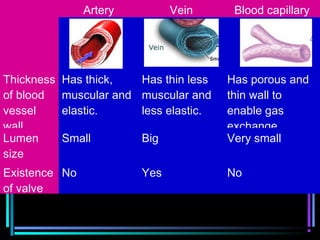
Artery Vein Blood capillary
Thickness
of blood
vessel
wall
Has thick,
muscular and
elastic.
Has thin less
muscular and
less elastic.
Has porous and
thin wall to
enable gas
exchange
Lumen
size
Small Big Very small
Existence
of valve
No Yes No
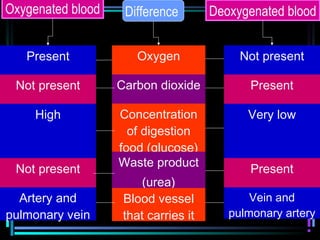
Oxygenated blood Deoxygenated bloodDifference
Present
Not present
High
Not present
Artery and
pulmonary vein
Oxygen
Carbon dioxide
Concentration
of digestion
food (glucose)
Waste product
(urea)
Blood vessel
that carries it
Not present
Present
Very low
Present
Vein and
pulmonary artery
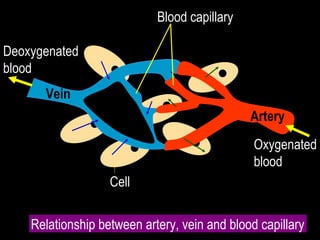
Deoxygenated
blood
Vein
Artery
Blood capillary
Oxygenated
blood
Relationship between artery, vein and blood capillary
Cell
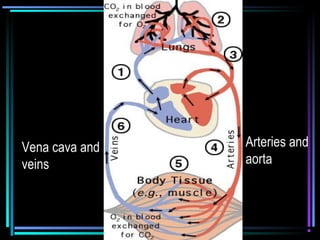
Vena cava and
veins
Arteries and
aorta
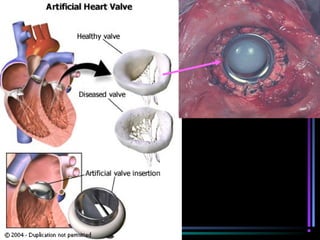
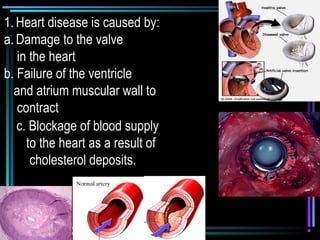
1. Heart disease is caused by:
a. Damage to the valve
in the heart
b. Failure of the ventricle
and atrium muscular wall to
contract
c. Blockage of blood supply
to the heart as a result of
cholesterol deposits.
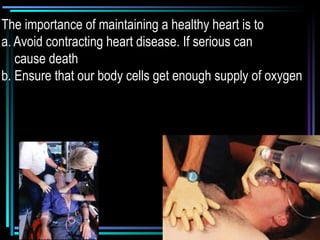
The importance of maintaining a healthy heart is to
a. Avoid contracting heart disease. If serious can
cause death
b. Ensure that our body cells get enough supply of oxygen
By :

2.1 blood circulation

  • 2.
    Blood circulatory system Thefunction of blood circulatory systems are to: i. Supply oxygen to all body. ii. Eliminate carbon dioxide iii.Transport waste product like carbon dioxide and urea for elimination.
  • 3.
    Artery Vein a) Humans havea close blood circulatory system. b) Blood is carried to the heart by vein blood vessel and pump out from the heart through artery blood vessel.
  • 4.
    Artery Vein Artery – theblood vessel that carries blood out of the heart Vein – the blood vessel that carries blood into the heart Blood capillaries Blood capillaries- Act as connectors that joint the blood vessel of arteries to veins
  • 6.
  • 7.
    The heart isa muscular organ which contract and relaxes without stopping to pump and circulate blood to the whole body. he heart has four large chambers: Left atrium Right atrium .Left ventricle .Right ventricle
  • 8.
    Left atrium andright atrium are situated at the upper part of the heart Left ventricle and right ventricle are situated at the lower part of the heart. The space in the atrium is smaller than in the ventricle. The wall of ventricle is thicker and stronger than atrium
  • 9.
    The wall ofleft ventricle is thicker and more muscular compared to right ventricle. This is because stronger pressure is needed by the left ventricle to pump the blood to our body. The valve in the heart enable blood to flow in one direction only. Blood is prevented from flowing back.
  • 11.
    There are 3types of valve in the heart: i. Tricuspid valve ii. Bicuspid valve iii.Semi lunar valve The left chamber of the heart contains oxygenated blood The right chamber contains deoxygenated blood.
  • 14.
    TYPE OF VALVEPOSITION FUNCTION Tricuspid Between the right atrium and right ventricle Prevents blood in the right ventricle from flowing back to the right atrium Bicuspid Between the left atrium and the left ventricle Prevents blood in the left ventricle from flowing back to the left atrium Semilunar At the base of the pulmonary artery and the aorta Prevents blood leaving the heart from flowing back
  • 16.
    TYPE OF BLOOD VESSEL FUNCTION Pulmonaryartery Carries deoxygenated blood from the heart to the lungs Pulmonary vein Carries oxygenated blood from the lungs to the heart. Aorta Carries oxygenated blood from the heart to the whole body. Vena cava Channels deoxygenated blood from all parts of the body to the right atrium. Four blood vessels are connected to the heart:
  • 18.
    Right ventricle S Vena cava Tricuspid Valve Right atrium Leftventricle Bicuspid valve Left atrium Semilunar valve Pulmonary veins Vena cava Aorta Pulmonary artery
  • 19.
    1. The venacava caries deoxygenated blood from all the body to the right atrium. 2. When it is filled with blood, the wall of the right atrium will contract and push the blood through the tricuspid valve into the right ventricle. 3. When the right ventricle is filled with blood, its wall will contract and push the blood through the semilunar valve into the pulmonary artery and go to the lungs.
  • 20.
    4. Gaseous exchangetakes place in the lungs. Carbon dioxide diffused out and oxygen diffused into the blood. 5. Oxygenated blood then flows from the lungs into the left auricle through the pulmonary vein. 6. The left auricle wall contracts and pushes blood through the bicuspid valve into the left ventricle.
  • 21.
    7. The contractionof the left ventricle wall pushes blood through the semilunar valve into the aorta. 8. The aorta then carries the blood to the whole body.
  • 22.
    The pathway ofblood circulation: Vena cava Right auricle Tricuspid valve Right ventricle Semilunar valve Pulmonary artery Semilunar valve Left ventricle Bicuspid valve Left auricle Pulmonary vein Lungs Aorta Whole body
  • 23.
    Video : Heart1 Video: Heart 2
  • 25.
    Blood vessels inhumans Blood vessels are tubes in the body that channel blood 3 types of blood vessels Artery Vein Blood capillary
  • 26.
    Artery Vein Bloodcapillary Structure Function Carries blood out of heart Carries blood into the heart Carries blood from artery to vein Type of blood carried Oxygenated blood (except pulmonary artery) Deoxygenated blood (except pulmonary vein) Oxygenated blood (artery) Deoxygenated blood (vein) Rate of blood flow High pressure blood flow faster Low pressure blood flow slowly Blood flows very slowly to enable diffusion process
  • 27.
    Artery Vein Bloodcapillary Thickness of blood vessel wall Has thick, muscular and elastic. Has thin less muscular and less elastic. Has porous and thin wall to enable gas exchange Lumen size Small Big Very small Existence of valve No Yes No
  • 29.
    Oxygenated blood DeoxygenatedbloodDifference Present Not present High Not present Artery and pulmonary vein Oxygen Carbon dioxide Concentration of digestion food (glucose) Waste product (urea) Blood vessel that carries it Not present Present Very low Present Vein and pulmonary artery
  • 30.
  • 33.
  • 35.
    1. Heart diseaseis caused by: a. Damage to the valve in the heart b. Failure of the ventricle and atrium muscular wall to contract c. Blockage of blood supply to the heart as a result of cholesterol deposits.
  • 36.
    The importance ofmaintaining a healthy heart is to a. Avoid contracting heart disease. If serious can cause death b. Ensure that our body cells get enough supply of oxygen
  • 38.