The Challenge of
  Technology
Future Technologies and
  Globalization Trends
 Foundational Material
Overarching Question
• Finding the balance between want and
  need
  – Students
  – Faculty
  – Institution (i.e. resources, mission)
  – Outside factors (i.e. accreditation
    agencies)


                                            2
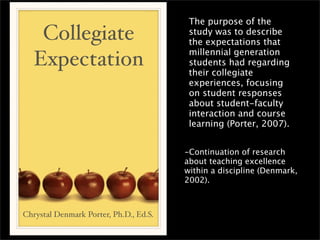
The purpose of the
    Collegiate                           study was to describe
                                         the expectations that
                                         millennial generation
   Expectation                           students had regarding
                                         their collegiate
                                         experiences, focusing
                                         on student responses
                                         about student-faculty
                                         interaction and course
                                         learning (Porter, 2007).


                                        -Continuation of research
                                        about teaching excellence
                                        within a discipline (Denmark,
                                        2002).


Chrystal Denmark Porter, Ph.D., Ed.S.
The Research
•   Using traditional methods to design a course and deliver
    course content through traditional formats may not, many
    cases, be the best method instructors should use if they are
    truly interested in the students learning process (Oblinger,
    2003).
•   Students view of their position
     – Students may have the expectation that education owes
        them in some manner for participating in the higher
        learning process. According to Sacks (1996) the notion of
        success is increasingly treated as a quasi-negotiable
        exchange...some consumers of education seem to invest no
        more personal responsibility in the transaction than a
        McDonald’s customer buying a Quarter Pounder with
        cheese.


                                                                4
The Research (2)
• Issue of Entitlement
  – As more colleges & universities implement
    business-like strategies to attract
    students to their institutions, students are
    becoming more keenly aware of their
    return-on-investment (Levine & Cureton,
    1998; Spiegler, 1998).


                                               5
The Research (3)
•   Role of Entertainment in Education
     – Among the top three choices identified by students as
       characteristics values in a college teacher, the instructor should
       be entertaining, friendly and warm, and challenging. Many
       students place a high value on being entertained (Sacks, 1996).
     – If effective teachers are entertaining teachers, and today’s media-
       saturated students expect to be entertained and cannot tolerate
       boredom, then it is time to underscore the need for entertainment
       in the classroom (Sacks, 1996).
     – The term “edutainment” has been coined to describe the
       phenomenon of combining traditional education with
       entertainment activities. There is a growing group of instructors
       who purposefully intend to provide entertaining activities as a
       means to relay information to their students. Contemporary
       trends may support edutainment (Porter, 2007).


                                                                            6
The Research (4)
• Edutainment (continued)
   – The modern system of higher education includes
     salient features: an open and flexible system,
     direct and easy access to every learner, a broad
     based and futuristic visionary stream of learning,
     edutainment and infotainment and student-
     centered learning, that is more emphasis on
     insight and knowledge than mere information
     collection, new knowledge with a personal touch
     and need and utility-oriented learning (Popli,
     2005).


                                                          7
College Student Attitudes
• Stressed
• Disappointed
• Unstructured Activities
  – Sleeping is a form of recreation, #1
    activity
  – Fun is in the club-and-bar scene
• Worried About Academics, but Bored
• Special

                                           8
College Student Development
                  Theory
•   Chickering’s Seven Vectors of Student Development
     – Linear progression that students experience as they are
       developing their sense of self and their identity
•   Perry’s Scheme of Intellectual & Ethical Development
     – Describes how students relate meaning to their experience
•   Kohlberg’s Theory of Moral Development
     – Designates three levels of moral reasoning or cognitive
       processes that an individual may be operating in when he
       or she is obliged to make decisions
•   King and Kitchener’s Reflective Judgment
     – Succession of events as students identify their personal
       trusts, beliefs, and opinions


                                                                   9
Classroom Strategies
• Creating Significant Learning Experiences
  – Design of instruction is most crucial in
    creating valuable and significant learning
    environments (Fink, 2003).
  – This is the area that few instructors
    receive instruction.
  – The way instructors approach their
    teaching, the attitudes and behaviors they
    specify, is related to student’s motivation
    to learn (Archer & Scevak, 1998).
                                              10
Classroom Strategies (2)
• Fink (2003) proposed that instruction
  and course design should be motivated
  by methods that encourage significant
  learning.
• The goal the instructor has for
  students in the course will likely
  dictate the components that should be
  incorporated in the course design
  (Fink, 2003).
                                      11
Course Design Outcomes
• Foundational knowledge
• Application
• Human dimension (learn something
  about the self and societal
  complications)
• Caring and learning


                                     12
Porter (2007) Results
•   Conversations
     – Expectations were based on conversations with individuals
       they trusted (i.e. peers, family, administrators, faculty)
•   Challenging Course Requirements
     – Self-assurance was gained as they successfully completed
       challenging courses by learning new tactics that worked to
       complete assignments with least effort and time
•   Instructors
     – Anticipated inability to relate, intellectual inferiority made
       them uncomfortable and uneasy
•   Technology
     – No initial expectations, preferred format included
       entertaining activities

                                                                        13
“It’s amazing, yet we are
not amazed.” Kevin Kelly
"We have to get better at
believing in the impossible.“
         Kevin Kelly
Change is About People,
   Not Technology
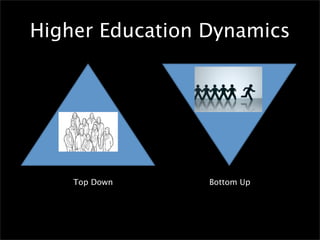
Higher Education Dynamics


    Top Down     Bottom Up
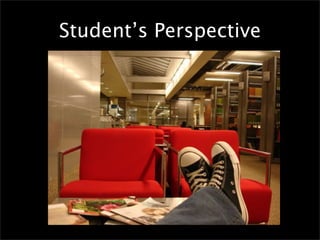
Student’s Perspective
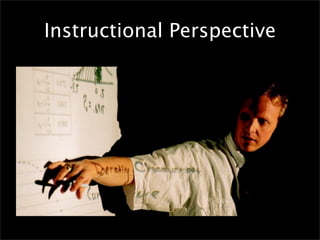
Instructional Perspective
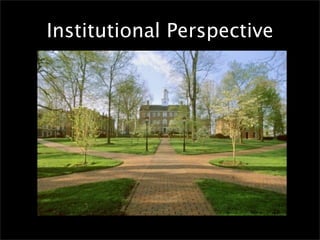
Institutional Perspective
Now It’s Your Turn to
Describe the Impossible

The Challenge of Technology

  • 1.
    The Challenge of Technology Future Technologies and Globalization Trends Foundational Material
  • 2.
    Overarching Question • Findingthe balance between want and need – Students – Faculty – Institution (i.e. resources, mission) – Outside factors (i.e. accreditation agencies) 2
  • 3.
    The purpose ofthe Collegiate study was to describe the expectations that millennial generation Expectation students had regarding their collegiate experiences, focusing on student responses about student-faculty interaction and course learning (Porter, 2007). -Continuation of research about teaching excellence within a discipline (Denmark, 2002). Chrystal Denmark Porter, Ph.D., Ed.S.
  • 4.
    The Research • Using traditional methods to design a course and deliver course content through traditional formats may not, many cases, be the best method instructors should use if they are truly interested in the students learning process (Oblinger, 2003). • Students view of their position – Students may have the expectation that education owes them in some manner for participating in the higher learning process. According to Sacks (1996) the notion of success is increasingly treated as a quasi-negotiable exchange...some consumers of education seem to invest no more personal responsibility in the transaction than a McDonald’s customer buying a Quarter Pounder with cheese. 4
  • 5.
    The Research (2) •Issue of Entitlement – As more colleges & universities implement business-like strategies to attract students to their institutions, students are becoming more keenly aware of their return-on-investment (Levine & Cureton, 1998; Spiegler, 1998). 5
  • 6.
    The Research (3) • Role of Entertainment in Education – Among the top three choices identified by students as characteristics values in a college teacher, the instructor should be entertaining, friendly and warm, and challenging. Many students place a high value on being entertained (Sacks, 1996). – If effective teachers are entertaining teachers, and today’s media- saturated students expect to be entertained and cannot tolerate boredom, then it is time to underscore the need for entertainment in the classroom (Sacks, 1996). – The term “edutainment” has been coined to describe the phenomenon of combining traditional education with entertainment activities. There is a growing group of instructors who purposefully intend to provide entertaining activities as a means to relay information to their students. Contemporary trends may support edutainment (Porter, 2007). 6
  • 7.
    The Research (4) •Edutainment (continued) – The modern system of higher education includes salient features: an open and flexible system, direct and easy access to every learner, a broad based and futuristic visionary stream of learning, edutainment and infotainment and student- centered learning, that is more emphasis on insight and knowledge than mere information collection, new knowledge with a personal touch and need and utility-oriented learning (Popli, 2005). 7
  • 8.
    College Student Attitudes •Stressed • Disappointed • Unstructured Activities – Sleeping is a form of recreation, #1 activity – Fun is in the club-and-bar scene • Worried About Academics, but Bored • Special 8
  • 9.
    College Student Development Theory • Chickering’s Seven Vectors of Student Development – Linear progression that students experience as they are developing their sense of self and their identity • Perry’s Scheme of Intellectual & Ethical Development – Describes how students relate meaning to their experience • Kohlberg’s Theory of Moral Development – Designates three levels of moral reasoning or cognitive processes that an individual may be operating in when he or she is obliged to make decisions • King and Kitchener’s Reflective Judgment – Succession of events as students identify their personal trusts, beliefs, and opinions 9
  • 10.
    Classroom Strategies • CreatingSignificant Learning Experiences – Design of instruction is most crucial in creating valuable and significant learning environments (Fink, 2003). – This is the area that few instructors receive instruction. – The way instructors approach their teaching, the attitudes and behaviors they specify, is related to student’s motivation to learn (Archer & Scevak, 1998). 10
  • 11.
    Classroom Strategies (2) •Fink (2003) proposed that instruction and course design should be motivated by methods that encourage significant learning. • The goal the instructor has for students in the course will likely dictate the components that should be incorporated in the course design (Fink, 2003). 11
  • 12.
    Course Design Outcomes •Foundational knowledge • Application • Human dimension (learn something about the self and societal complications) • Caring and learning 12
  • 13.
    Porter (2007) Results • Conversations – Expectations were based on conversations with individuals they trusted (i.e. peers, family, administrators, faculty) • Challenging Course Requirements – Self-assurance was gained as they successfully completed challenging courses by learning new tactics that worked to complete assignments with least effort and time • Instructors – Anticipated inability to relate, intellectual inferiority made them uncomfortable and uneasy • Technology – No initial expectations, preferred format included entertaining activities 13
  • 14.
    “It’s amazing, yetwe are not amazed.” Kevin Kelly
  • 15.
    "We have toget better at believing in the impossible.“ Kevin Kelly
  • 16.
    Change is AboutPeople, Not Technology
  • 17.
    Higher Education Dynamics Top Down Bottom Up
  • 19.
  • 20.
  • 21.
  • 22.
    Now It’s YourTurn to Describe the Impossible