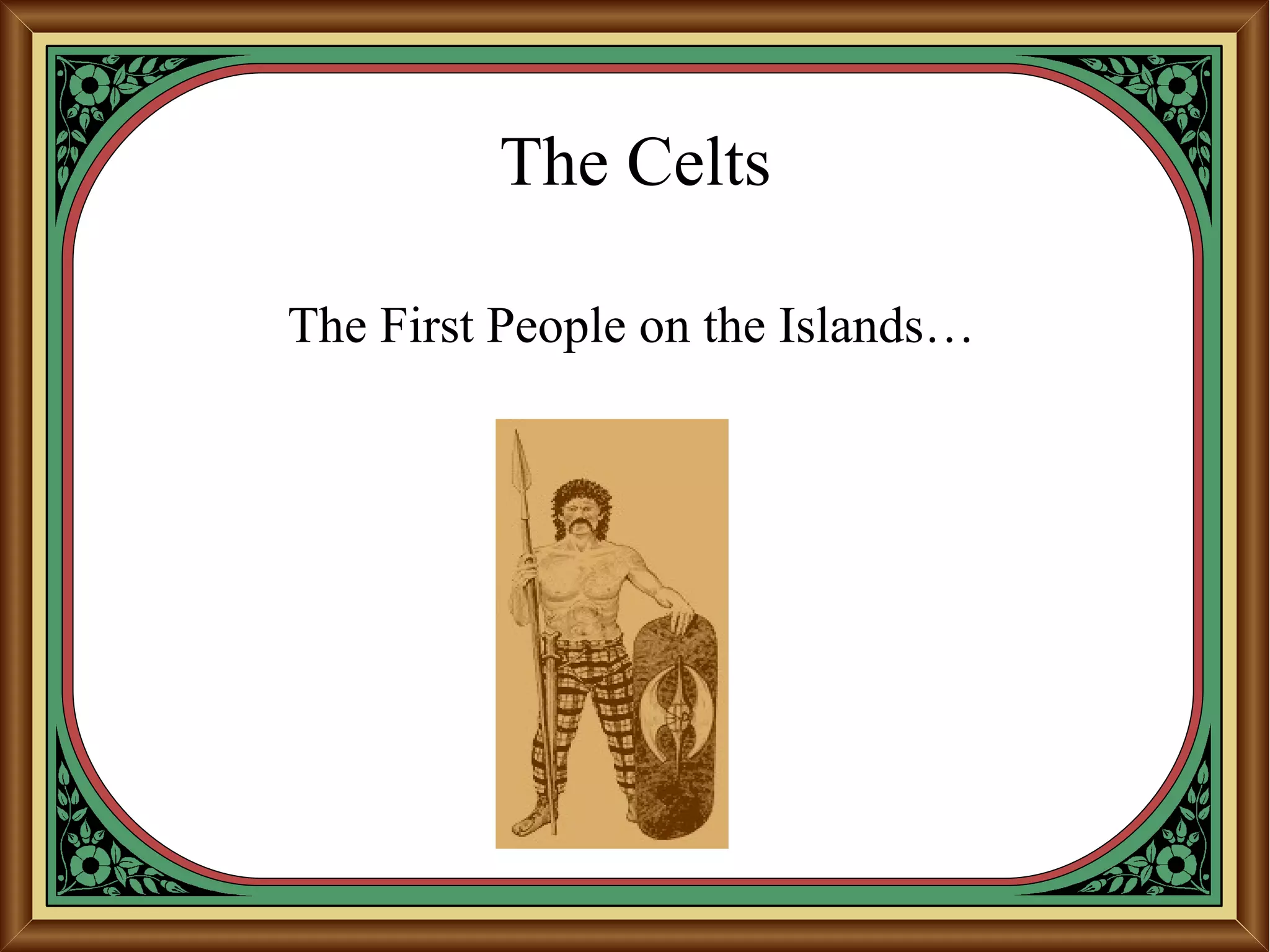
The Celts
The First People on the Islands…
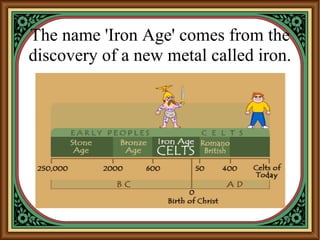
The name 'Iron Age' comes from the
discovery of a new metal called iron.
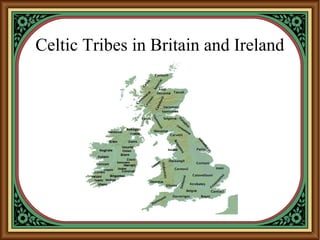
Celtic Tribes in Britain and Ireland
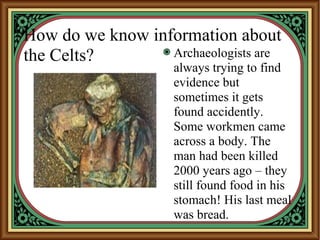
How do we know information about
the Celts? Archaeologists are
always trying to find
evidence but
sometimes it gets
found accidently.
Some workmen came
across a body. The
man had been killed
2000 years ago – they
still found food in his
stomach! His last meal
was bread.
The Celts
The Celts lived across
most of Europe during
the Iron Age.
People had lived in
Britain for thousands
of years before the
Romans arrived.
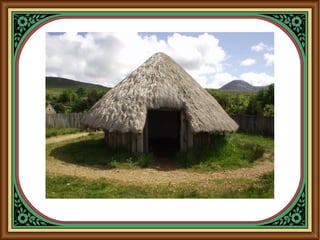
The Celts lived in
roundhouses with
thatched roofs of straw
or heather (plant that
grows on the hills of
northern Britain). In
places where there
were plenty of trees
the walls were made
out of wattle and daub
(hazel trees with clay
and straw).
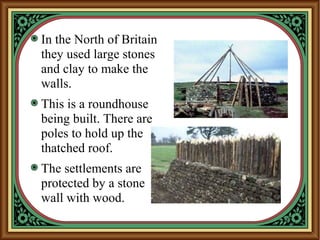
In the North of Britain
they used large stones
and clay to make the
walls.
This is a roundhouse
being built. There are
poles to hold up the
thatched roof.
The settlements are
protected by a stone
wall with wood.
The settlements
Families lived together
in settlements:
children, parents,
grandparents, aunts,
uncles and cousins.
The roundhouses were
built in groups. The
walls protected them
from wolves and wild
boar.
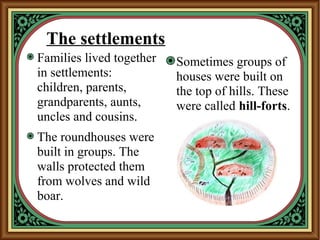
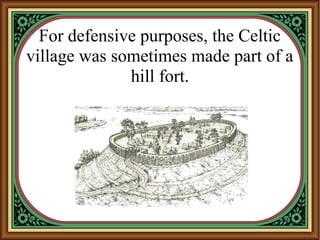
Sometimes groups of
houses were built on
the top of hills. These
were called hill-forts.
For defensive purposes, the Celtic
village was sometimes made part of a
hill fort.
Celts and personality
• Emotional, passionate, heroic, wild, and
drunken
 Sensual, artistic, hospitable, instinctual
 Proud, inventive, battle-loving
 They were farmers and traders and also did
some agriculture
 They traded metals, salt, pottery, glass and
coin ornaments
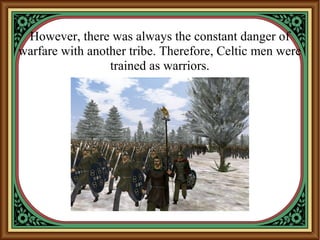
However, there was always the constant danger of
warfare with another tribe. Therefore, Celtic men were
trained as warriors.
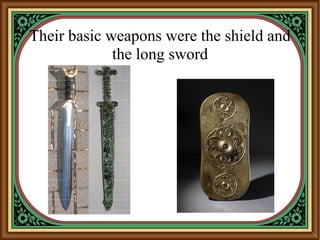
Their basic weapons were the shield and
the long sword
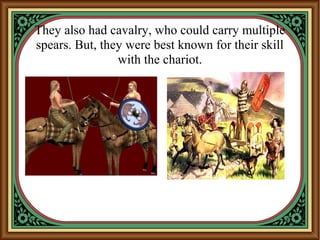
They also had cavalry, who could carry multiple
spears. But, they were best known for their skill
with the chariot.
Religion
Believed in the “otherworld”
Believed in many Gods (pagans)
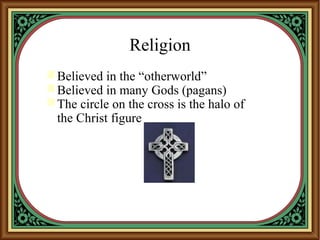
The circle on the cross is the halo of
the Christ figure
Sacrifice
 In battle they would cut peoples heads off and carry it
around. They were trophies to them, which
symbolized courage and valour
 “The sacrificed individual would be stabbed in the
back or the breast, and then studied, as the moment of
death was the point in which the earthly world of the
profane meets the sacred otherworld. The message
would then be returned to the examiners in the ways in
which the dying would pass on.”
Druids
 Druids “very knowledgeable one” were important to the
celtic culture
 They could stop a battle
 Responsibilities included: teaching the religious doctrine,
medicine, civil justice, sacrifice, divination, and care of
temples. To become a druid, school would take up to 20
years because it all had to be memorized
 They performed animal and human sacrifices and practiced
divination and other forms of magic
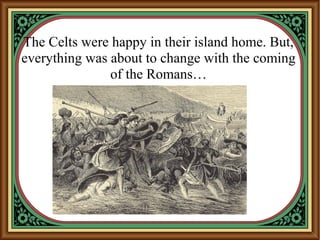
The Celts were happy in their island home. But,
everything was about to change with the coming
of the Romans…

The celts new

  • 1.
    The Celts The FirstPeople on the Islands…
  • 2.
    The name 'IronAge' comes from the discovery of a new metal called iron.
  • 3.
    Celtic Tribes inBritain and Ireland
  • 4.
    How do weknow information about the Celts? Archaeologists are always trying to find evidence but sometimes it gets found accidently. Some workmen came across a body. The man had been killed 2000 years ago – they still found food in his stomach! His last meal was bread.
  • 5.
    The Celts The Celtslived across most of Europe during the Iron Age. People had lived in Britain for thousands of years before the Romans arrived. The Celts lived in roundhouses with thatched roofs of straw or heather (plant that grows on the hills of northern Britain). In places where there were plenty of trees the walls were made out of wattle and daub (hazel trees with clay and straw).
  • 6.
    In the Northof Britain they used large stones and clay to make the walls. This is a roundhouse being built. There are poles to hold up the thatched roof. The settlements are protected by a stone wall with wood.
  • 8.
    The settlements Families livedtogether in settlements: children, parents, grandparents, aunts, uncles and cousins. The roundhouses were built in groups. The walls protected them from wolves and wild boar. Sometimes groups of houses were built on the top of hills. These were called hill-forts.
  • 9.
    For defensive purposes,the Celtic village was sometimes made part of a hill fort.
  • 10.
    Celts and personality •Emotional, passionate, heroic, wild, and drunken  Sensual, artistic, hospitable, instinctual  Proud, inventive, battle-loving  They were farmers and traders and also did some agriculture  They traded metals, salt, pottery, glass and coin ornaments
  • 11.
    However, there wasalways the constant danger of warfare with another tribe. Therefore, Celtic men were trained as warriors.
  • 12.
    Their basic weaponswere the shield and the long sword
  • 13.
    They also hadcavalry, who could carry multiple spears. But, they were best known for their skill with the chariot.
  • 14.
    Religion Believed in the“otherworld” Believed in many Gods (pagans) The circle on the cross is the halo of the Christ figure
  • 15.
    Sacrifice  In battlethey would cut peoples heads off and carry it around. They were trophies to them, which symbolized courage and valour  “The sacrificed individual would be stabbed in the back or the breast, and then studied, as the moment of death was the point in which the earthly world of the profane meets the sacred otherworld. The message would then be returned to the examiners in the ways in which the dying would pass on.”
  • 16.
    Druids  Druids “veryknowledgeable one” were important to the celtic culture  They could stop a battle  Responsibilities included: teaching the religious doctrine, medicine, civil justice, sacrifice, divination, and care of temples. To become a druid, school would take up to 20 years because it all had to be memorized  They performed animal and human sacrifices and practiced divination and other forms of magic
  • 17.
    The Celts werehappy in their island home. But, everything was about to change with the coming of the Romans…