Argentine Independence Day
“Be free that nothing else matters” José de San Martín
1- Read the text.
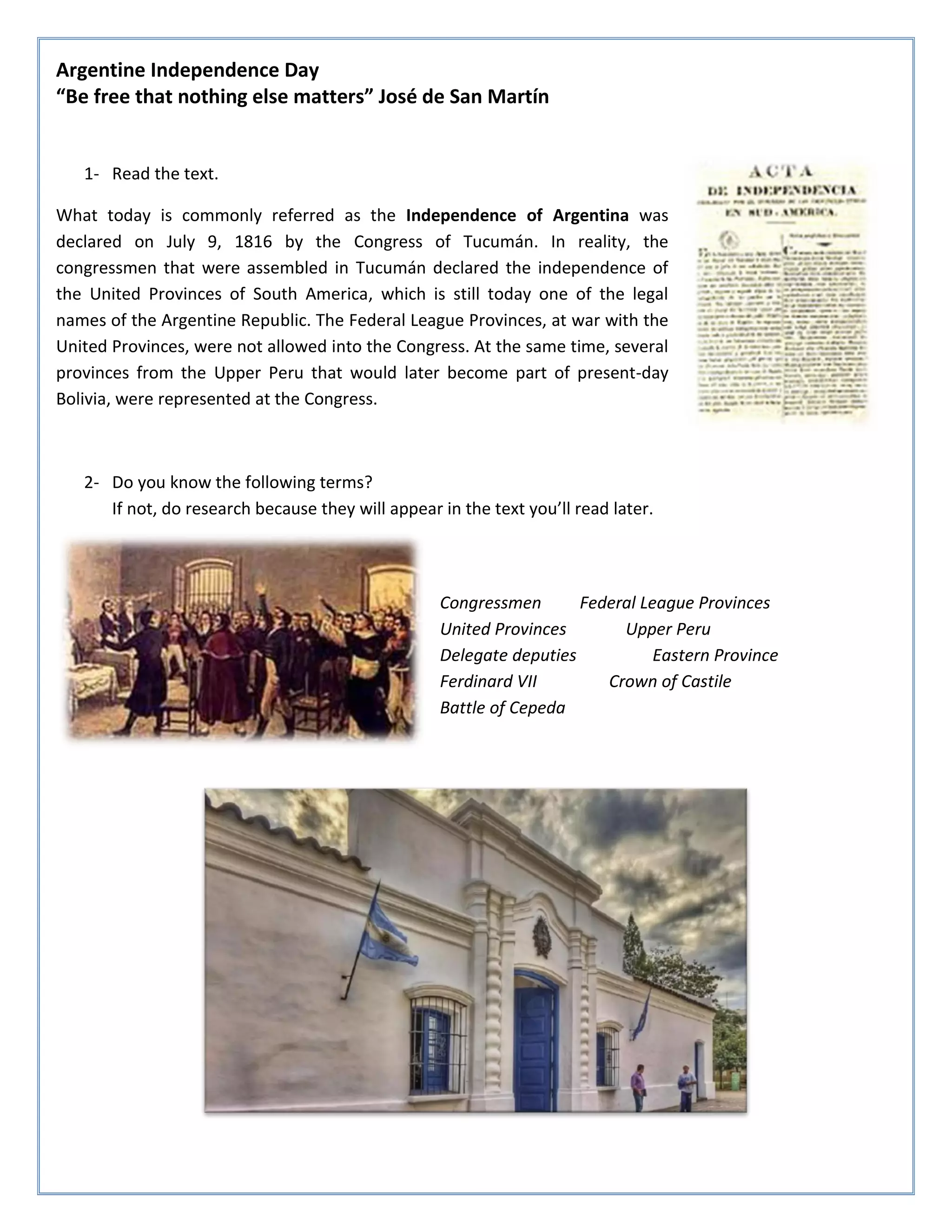
What today is commonly referred as the Independence of Argentina was
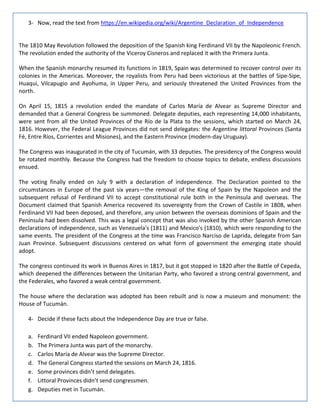
declared on July 9, 1816 by the Congress of Tucumán. In reality, the
congressmen that were assembled in Tucumán declared the independence of
the United Provinces of South America, which is still today one of the legal
names of the Argentine Republic. The Federal League Provinces, at war with the
United Provinces, were not allowed into the Congress. At the same time, several
provinces from the Upper Peru that would later become part of present-day
Bolivia, were represented at the Congress.
2- Do you know the following terms?
If not, do research because they will appear in the text you’ll read later.
Congressmen Federal League Provinces
United Provinces Upper Peru
Delegate deputies Eastern Province
Ferdinard VII Crown of Castile
Battle of Cepeda
3- Now, read the text from https://en.wikipedia.org/wiki/Argentine_Declaration_of_Independence
The 1810 May Revolution followed the deposition of the Spanish king Ferdinand VII by the Napoleonic French.
The revolution ended the authority of the Viceroy Cisneros and replaced it with the Primera Junta.
When the Spanish monarchy resumed its functions in 1819, Spain was determined to recover control over its
colonies in the Americas. Moreover, the royalists from Peru had been victorious at the battles of Sipe-Sipe,
Huaqui, Vilcapugio and Ayohuma, in Upper Peru, and seriously threatened the United Provinces from the
north.
On April 15, 1815 a revolution ended the mandate of Carlos María de Alvear as Supreme Director and
demanded that a General Congress be summoned. Delegate deputies, each representing 14,000 inhabitants,
were sent from all the United Provinces of the Río de la Plata to the sessions, which started on March 24,
1816. However, the Federal League Provinces did not send delegates: the Argentine littoral Provinces (Santa
Fé, Entre Ríos, Corrientes and Misiones), and the Eastern Province (modern-day Uruguay).
The Congress was inaugurated in the city of Tucumán, with 33 deputies. The presidency of the Congress would
be rotated monthly. Because the Congress had the freedom to choose topics to debate, endless discussions
ensued.
The voting finally ended on July 9 with a declaration of independence. The Declaration pointed to the
circumstances in Europe of the past six years—the removal of the King of Spain by the Napoleon and the
subsequent refusal of Ferdinand VII to accept constitutional rule both in the Peninsula and overseas. The
Document claimed that Spanish America recovered its sovereignty from the Crown of Castile in 1808, when
Ferdinand VII had been deposed, and therefore, any union between the overseas dominions of Spain and the
Peninsula had been dissolved. This was a legal concept that was also invoked by the other Spanish American
declarations of independence, such as Venezuela's (1811) and Mexico's (1810), which were responding to the
same events. The president of the Congress at the time was Francisco Narciso de Laprida, delegate from San
Juan Province. Subsequent discussions centered on what form of government the emerging state should
adopt.
The congress continued its work in Buenos Aires in 1817, but it got stopped in 1820 after the Battle of Cepeda,
which deepened the differences between the Unitarian Party, who favored a strong central government, and
the Federales, who favored a weak central government.
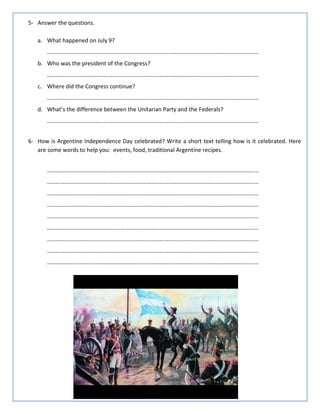
The house where the declaration was adopted has been rebuilt and is now a museum and monument: the
House of Tucumán.
4- Decide if these facts about the Independence Day are true or false.
a. Ferdinard VII ended Napoleon government.
b. The Primera Junta was part of the monarchy.
c. Carlos María de Alvear was the Supreme Director.
d. The General Congress started the sessions on March 24, 1816.
e. Some provinces didn’t send delegates.
f. Littoral Provinces didn’t send congressmen.
g. Deputies met in Tucumán.
5- Answer the questions.
a. What happened on July 9?
…………………………………………………………………………………………………………………………….....
b. Who was the president of the Congress?
…………………………………………………………………………………………………………………………….....
c. Where did the Congress continue?
…………………………………………………………………………………………………………………………….....
d. What’s the difference between the Unitarian Party and the Federals?
…………………………………………………………………………………………………………………………….....
6- How is Argentine Independence Day celebrated? Write a short text telling how is it celebrated. Here
are some words to help you: events, food, traditional Argentine recipes.
…………………………………………………………………………………………………………………………….....
…………………………………………………………………………………………………………………………….....
…………………………………………………………………………………………………………………………….....
…………………………………………………………………………………………………………………………….....
…………………………………………………………………………………………………………………………….....
…………………………………………………………………………………………………………………………….....
…………………………………………………………………………………………………………………………….....
…………………………………………………………………………………………………………………………….....
…………………………………………………………………………………………………………………………….....
7. Taking into account all the information in the blog and what you already know about the American
Revolution, complete the chart. (Do research for information you don’t know)
American Independence Argentine Independence
Who did they fight against
in the revolution to
become independent?
Who helped them, if
anyone?
Why did they want to
become independent?
(causes)
When did they get
independent?
Who was the first
president?
Main principles of the
constitution.
8. Personal opinion.
We have been independent for more than 200 years. Think about your life today, is there anything that you
can trace back to the time of independence? (Traditions, food, laws, etc.) What do you enjoy today that you
can say it is thanks to the May Revolution and the war of independence? (You can talk with your parents or
grandparents about this, take notes and then write your opinion)
Use phrases like:

Argentine independence-day-activities-

  • 1.
    Argentine Independence Day “Befree that nothing else matters” José de San Martín 1- Read the text. What today is commonly referred as the Independence of Argentina was declared on July 9, 1816 by the Congress of Tucumán. In reality, the congressmen that were assembled in Tucumán declared the independence of the United Provinces of South America, which is still today one of the legal names of the Argentine Republic. The Federal League Provinces, at war with the United Provinces, were not allowed into the Congress. At the same time, several provinces from the Upper Peru that would later become part of present-day Bolivia, were represented at the Congress. 2- Do you know the following terms? If not, do research because they will appear in the text you’ll read later. Congressmen Federal League Provinces United Provinces Upper Peru Delegate deputies Eastern Province Ferdinard VII Crown of Castile Battle of Cepeda
  • 2.
    3- Now, readthe text from https://en.wikipedia.org/wiki/Argentine_Declaration_of_Independence The 1810 May Revolution followed the deposition of the Spanish king Ferdinand VII by the Napoleonic French. The revolution ended the authority of the Viceroy Cisneros and replaced it with the Primera Junta. When the Spanish monarchy resumed its functions in 1819, Spain was determined to recover control over its colonies in the Americas. Moreover, the royalists from Peru had been victorious at the battles of Sipe-Sipe, Huaqui, Vilcapugio and Ayohuma, in Upper Peru, and seriously threatened the United Provinces from the north. On April 15, 1815 a revolution ended the mandate of Carlos María de Alvear as Supreme Director and demanded that a General Congress be summoned. Delegate deputies, each representing 14,000 inhabitants, were sent from all the United Provinces of the Río de la Plata to the sessions, which started on March 24, 1816. However, the Federal League Provinces did not send delegates: the Argentine littoral Provinces (Santa Fé, Entre Ríos, Corrientes and Misiones), and the Eastern Province (modern-day Uruguay). The Congress was inaugurated in the city of Tucumán, with 33 deputies. The presidency of the Congress would be rotated monthly. Because the Congress had the freedom to choose topics to debate, endless discussions ensued. The voting finally ended on July 9 with a declaration of independence. The Declaration pointed to the circumstances in Europe of the past six years—the removal of the King of Spain by the Napoleon and the subsequent refusal of Ferdinand VII to accept constitutional rule both in the Peninsula and overseas. The Document claimed that Spanish America recovered its sovereignty from the Crown of Castile in 1808, when Ferdinand VII had been deposed, and therefore, any union between the overseas dominions of Spain and the Peninsula had been dissolved. This was a legal concept that was also invoked by the other Spanish American declarations of independence, such as Venezuela's (1811) and Mexico's (1810), which were responding to the same events. The president of the Congress at the time was Francisco Narciso de Laprida, delegate from San Juan Province. Subsequent discussions centered on what form of government the emerging state should adopt. The congress continued its work in Buenos Aires in 1817, but it got stopped in 1820 after the Battle of Cepeda, which deepened the differences between the Unitarian Party, who favored a strong central government, and the Federales, who favored a weak central government. The house where the declaration was adopted has been rebuilt and is now a museum and monument: the House of Tucumán. 4- Decide if these facts about the Independence Day are true or false. a. Ferdinard VII ended Napoleon government. b. The Primera Junta was part of the monarchy. c. Carlos María de Alvear was the Supreme Director. d. The General Congress started the sessions on March 24, 1816. e. Some provinces didn’t send delegates. f. Littoral Provinces didn’t send congressmen. g. Deputies met in Tucumán.
  • 3.
    5- Answer thequestions. a. What happened on July 9? ……………………………………………………………………………………………………………………………..... b. Who was the president of the Congress? ……………………………………………………………………………………………………………………………..... c. Where did the Congress continue? ……………………………………………………………………………………………………………………………..... d. What’s the difference between the Unitarian Party and the Federals? ……………………………………………………………………………………………………………………………..... 6- How is Argentine Independence Day celebrated? Write a short text telling how is it celebrated. Here are some words to help you: events, food, traditional Argentine recipes. ……………………………………………………………………………………………………………………………..... ……………………………………………………………………………………………………………………………..... ……………………………………………………………………………………………………………………………..... ……………………………………………………………………………………………………………………………..... ……………………………………………………………………………………………………………………………..... ……………………………………………………………………………………………………………………………..... ……………………………………………………………………………………………………………………………..... ……………………………………………………………………………………………………………………………..... …………………………………………………………………………………………………………………………….....
  • 4.
    7. Taking intoaccount all the information in the blog and what you already know about the American Revolution, complete the chart. (Do research for information you don’t know) American Independence Argentine Independence Who did they fight against in the revolution to become independent? Who helped them, if anyone? Why did they want to become independent? (causes) When did they get independent? Who was the first president? Main principles of the constitution.
  • 5.
    8. Personal opinion. Wehave been independent for more than 200 years. Think about your life today, is there anything that you can trace back to the time of independence? (Traditions, food, laws, etc.) What do you enjoy today that you can say it is thanks to the May Revolution and the war of independence? (You can talk with your parents or grandparents about this, take notes and then write your opinion) Use phrases like: