Life as a slave
Today’s lesson
We are developing our knowledge of the experience of what
life was like as a Slave in the 1700-1800’s.
Today will be able to:
1) Describe the living conditions slaves had.
2) Describe the different types of jobs that slaves did.
Today’s lesson will involve:
1) Note taking
2) National 5 level Question.
Overview
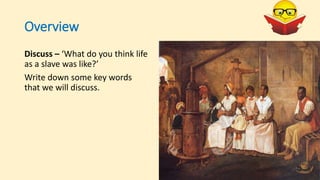
Discuss – ‘What do you think life
as a slave was like?’
Write down some key words
that we will discuss.
Task 1
Take a new mind-map in your jotter titled:
What was life like as a
slave?
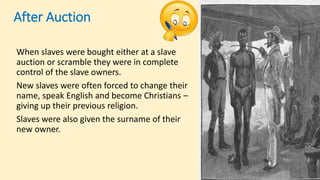
After Auction
When slaves were bought either at a slave
auction or scramble they were in complete
control of the slave owners.
New slaves were often forced to change their
name, speak English and become Christians –
giving up their previous religion.
Slaves were also given the surname of their
new owner.
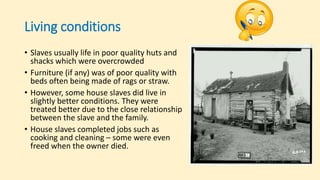
Living conditions
• Slaves usually life in poor quality huts and
shacks which were overcrowded
• Furniture (if any) was of poor quality with
beds often being made of rags or straw.
• However, some house slaves did live in
slightly better conditions. They were
treated better due to the close relationship
between the slave and the family.
• House slaves completed jobs such as
cooking and cleaning – some were even
freed when the owner died.
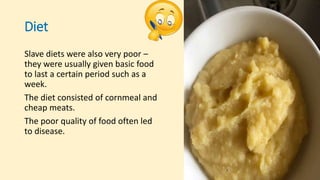
Diet
Slave diets were also very poor –
they were usually given basic food
to last a certain period such as a
week.
The diet consisted of cornmeal and
cheap meats.
The poor quality of food often led
to disease.
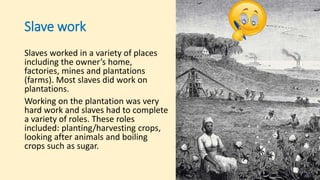
Slave work
Slaves worked in a variety of places
including the owner’s home,
factories, mines and plantations
(farms). Most slaves did work on
plantations.
Working on the plantation was very
hard work and slaves had to complete
a variety of roles. These roles
included: planting/harvesting crops,
looking after animals and boiling
crops such as sugar.
Treatment of Slaves
The treatment of slaves depended on
their owner, some were cruel, some
were not.
Some slaves were given more
responsibility for example as a reward
some got the chance to go into town for
the first time.
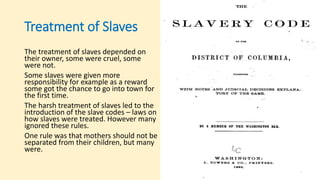
The harsh treatment of slaves led to the
introduction of the slave codes – laws on
how slaves were treated. However many
ignored these rules.
One rule was that mothers should not be
separated from their children, but many
were.
National 5 Question
Source F is from ‘Black peoples of the Americas’, a book written by a
historian in 1995.
Evaluate the usefulness of Source F as evidence of the treatment of
slaves on the plantations.
The planters in the Caribbean were afraid of a rebellion and they followed
a policy of control through fear. Slaves had no rights. They were seen as
possessions rather than human beings. Owners could deal with slaves
exactly as they pleased and there was no punishment for owners who
worked their slaves to death. Until the 19th century, no-one questioned
owners burning or torturing their slaves.

Life as a Slave

  • 1.
    Life as aslave
  • 2.
    Today’s lesson We aredeveloping our knowledge of the experience of what life was like as a Slave in the 1700-1800’s. Today will be able to: 1) Describe the living conditions slaves had. 2) Describe the different types of jobs that slaves did. Today’s lesson will involve: 1) Note taking 2) National 5 level Question.
  • 3.
    Overview Discuss – ‘Whatdo you think life as a slave was like?’ Write down some key words that we will discuss.
  • 4.
    Task 1 Take anew mind-map in your jotter titled: What was life like as a slave?
  • 5.
    After Auction When slaveswere bought either at a slave auction or scramble they were in complete control of the slave owners. New slaves were often forced to change their name, speak English and become Christians – giving up their previous religion. Slaves were also given the surname of their new owner.
  • 6.
    Living conditions • Slavesusually life in poor quality huts and shacks which were overcrowded • Furniture (if any) was of poor quality with beds often being made of rags or straw. • However, some house slaves did live in slightly better conditions. They were treated better due to the close relationship between the slave and the family. • House slaves completed jobs such as cooking and cleaning – some were even freed when the owner died.
  • 7.
    Diet Slave diets werealso very poor – they were usually given basic food to last a certain period such as a week. The diet consisted of cornmeal and cheap meats. The poor quality of food often led to disease.
  • 8.
    Slave work Slaves workedin a variety of places including the owner’s home, factories, mines and plantations (farms). Most slaves did work on plantations. Working on the plantation was very hard work and slaves had to complete a variety of roles. These roles included: planting/harvesting crops, looking after animals and boiling crops such as sugar.
  • 9.
    Treatment of Slaves Thetreatment of slaves depended on their owner, some were cruel, some were not. Some slaves were given more responsibility for example as a reward some got the chance to go into town for the first time. The harsh treatment of slaves led to the introduction of the slave codes – laws on how slaves were treated. However many ignored these rules. One rule was that mothers should not be separated from their children, but many were.
  • 10.
    National 5 Question SourceF is from ‘Black peoples of the Americas’, a book written by a historian in 1995. Evaluate the usefulness of Source F as evidence of the treatment of slaves on the plantations. The planters in the Caribbean were afraid of a rebellion and they followed a policy of control through fear. Slaves had no rights. They were seen as possessions rather than human beings. Owners could deal with slaves exactly as they pleased and there was no punishment for owners who worked their slaves to death. Until the 19th century, no-one questioned owners burning or torturing their slaves.