Celts
Who were the Celts?

The Celts were a group of peoples loosely
tied by similar language, religion, and
cultural expression.
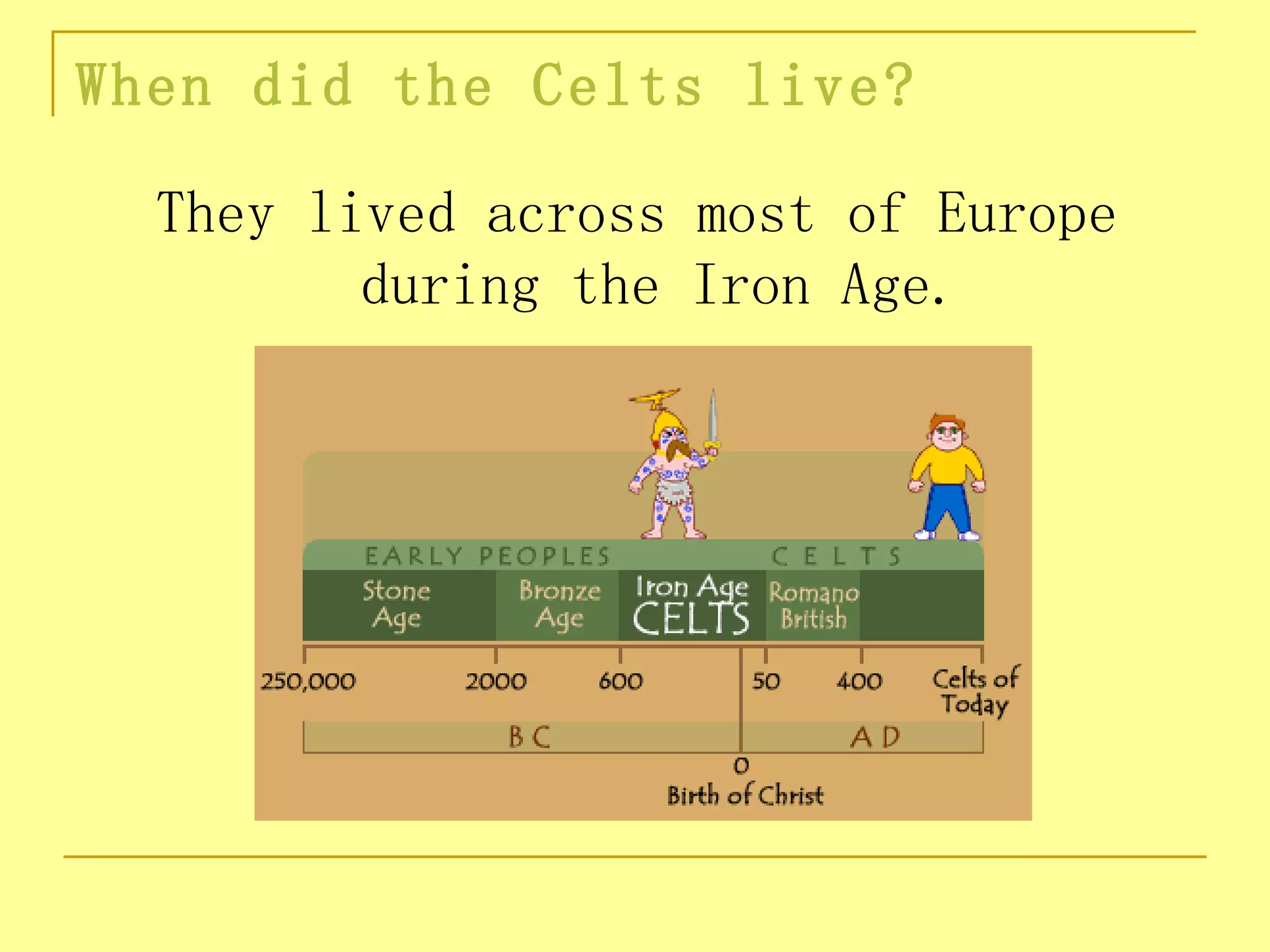
When did the Celts live?

  They lived across most of Europe
         during the Iron Age.
Why are the Celts called
       Iron Age Celts?
  The name 'Iron Age' comes from the discovery of a
  new metal called iron. The Celts found out how to
             make iron tools and weapons.
 Before the Iron Age the only metal used in Britain
               to make tools was bronze.
The Iron, was relatively cheap and available almost
                      everywhere.
Interesting fact

 No-one called the people living in
 Britain during the Iron Age, Celts until
 the eighteenth century. In fact the
 Romans called these people Britons, not
 Celts.
The name Celts is a 'modern' name and is
 used to collectively describe all the
 many tribes of people living during the
 Iron Age.
What clothes did the Celts
wear?
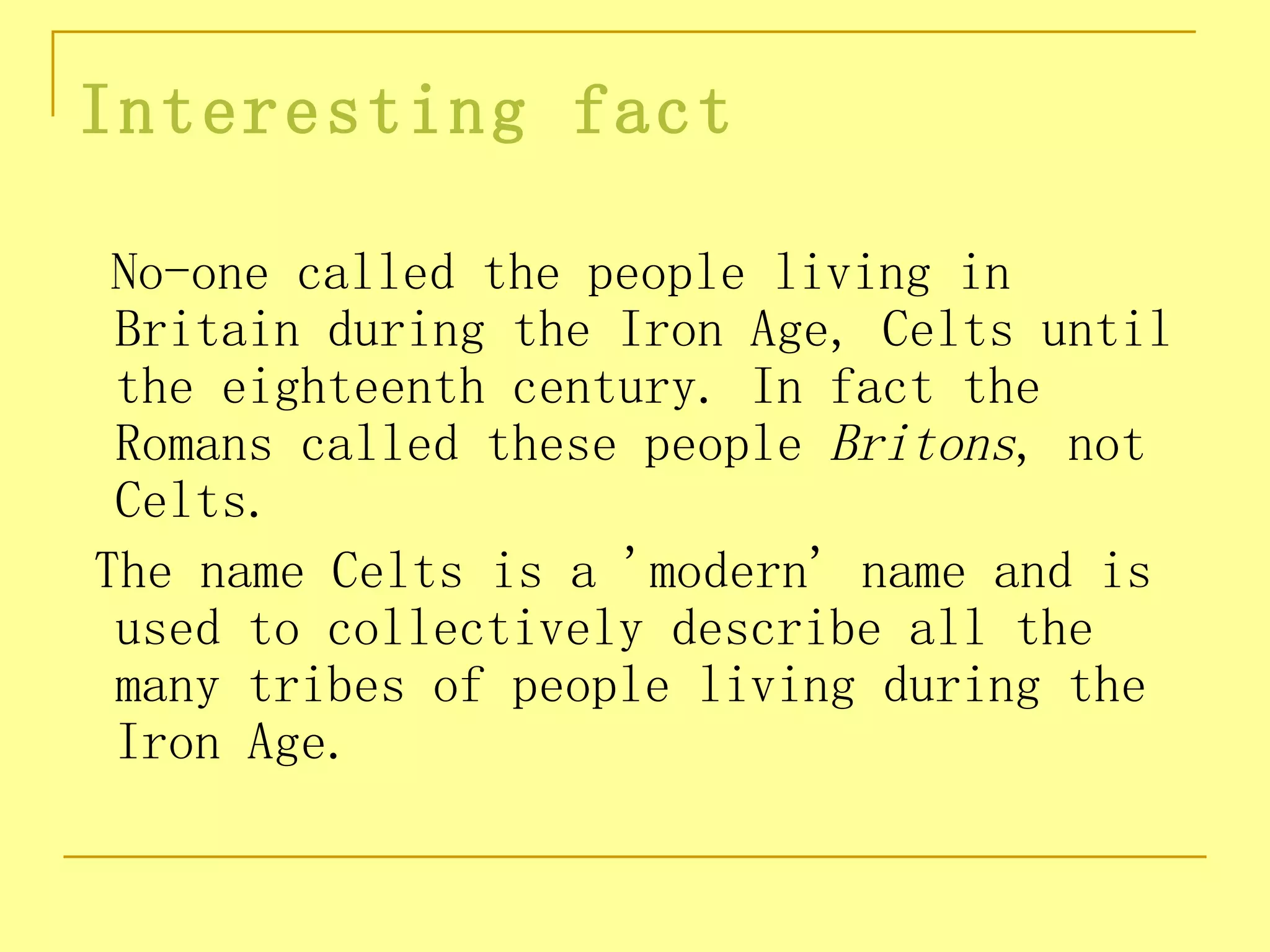
   The Celts loved bright dazzling colours. They
     dyed their woollen trousers and tops bright
                      colours.
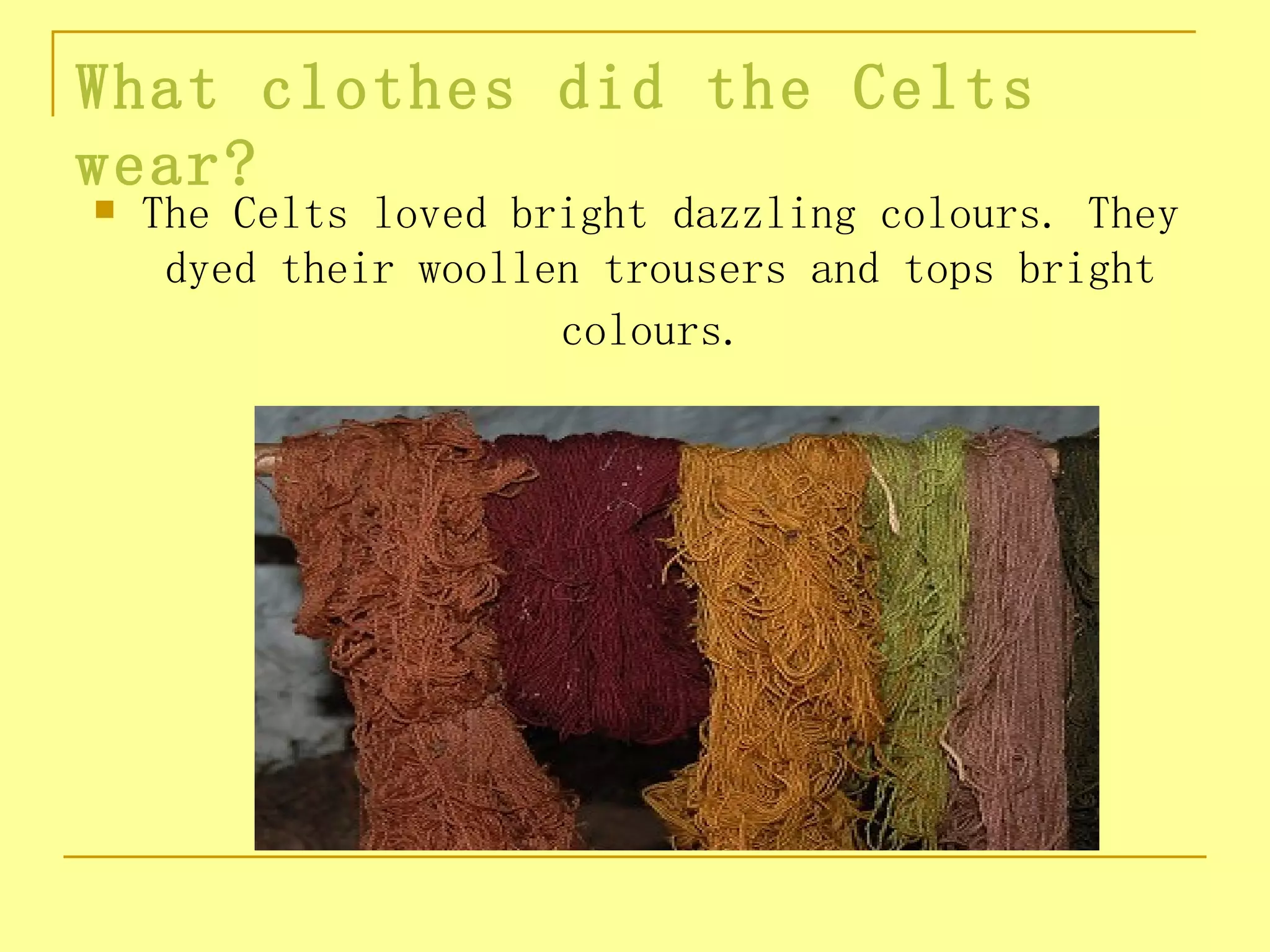
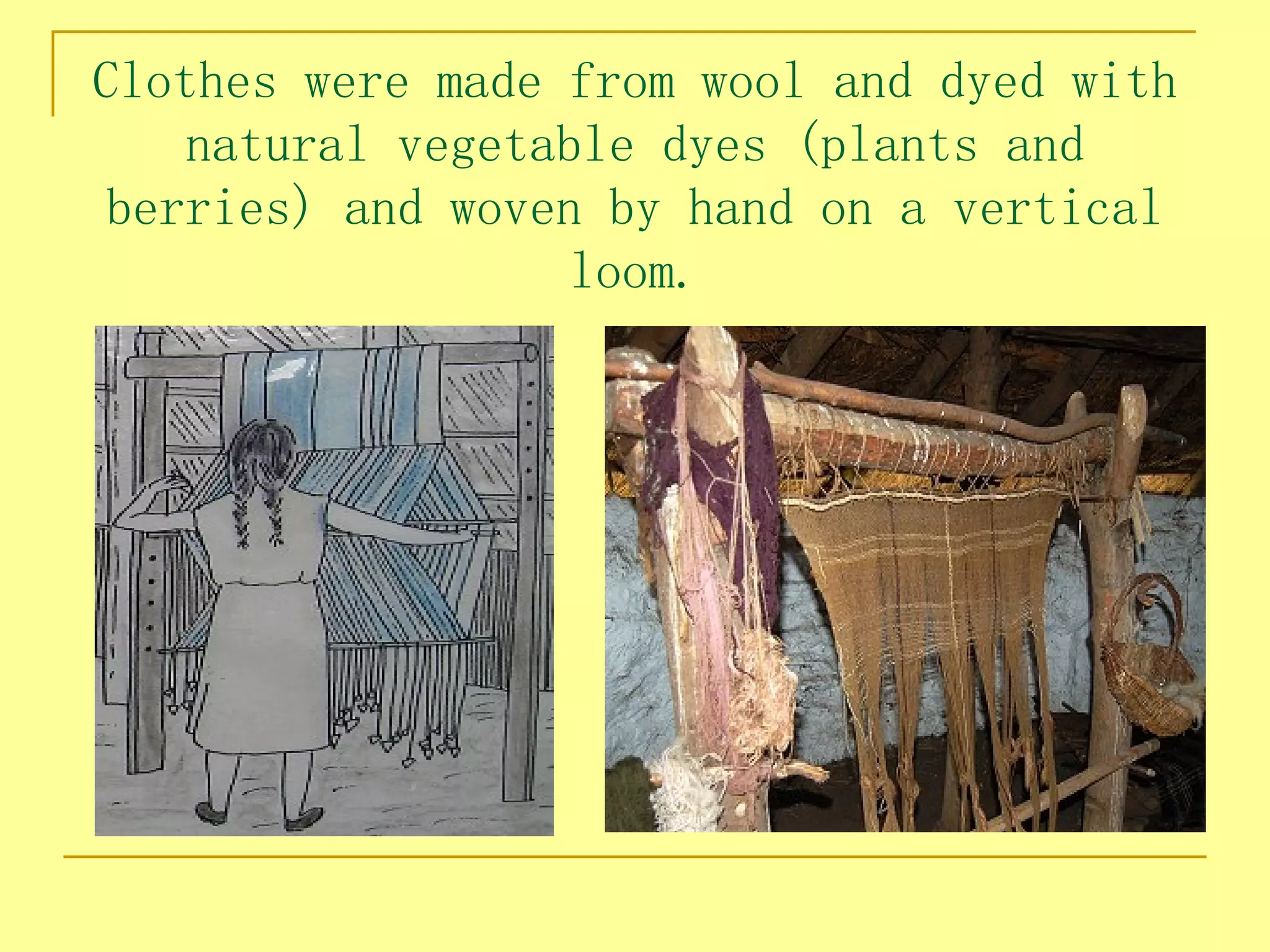
Clothes were made from wool and dyed with
    natural vegetable dyes (plants and
 berries) and woven by hand on a vertical
                   loom.
Jewellery
They wore jewellery made
from bronze, gold, tin,
silver, coral and
enamel.
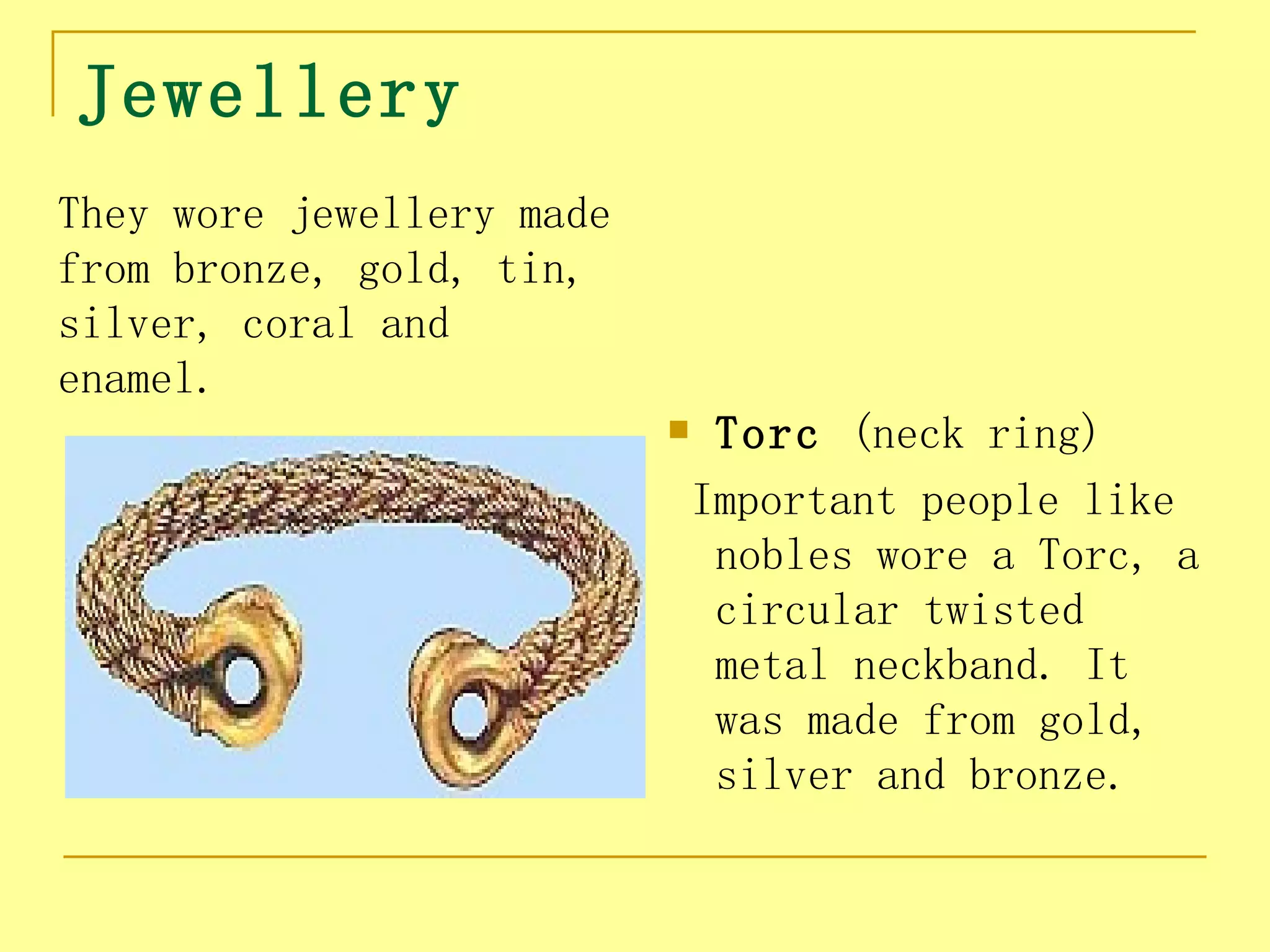
                               Torc (neck ring)
                               Important people like
                                nobles wore a Torc, a
                                circular twisted
                                metal neckband. It
                                was made from gold,
                                silver and bronze.
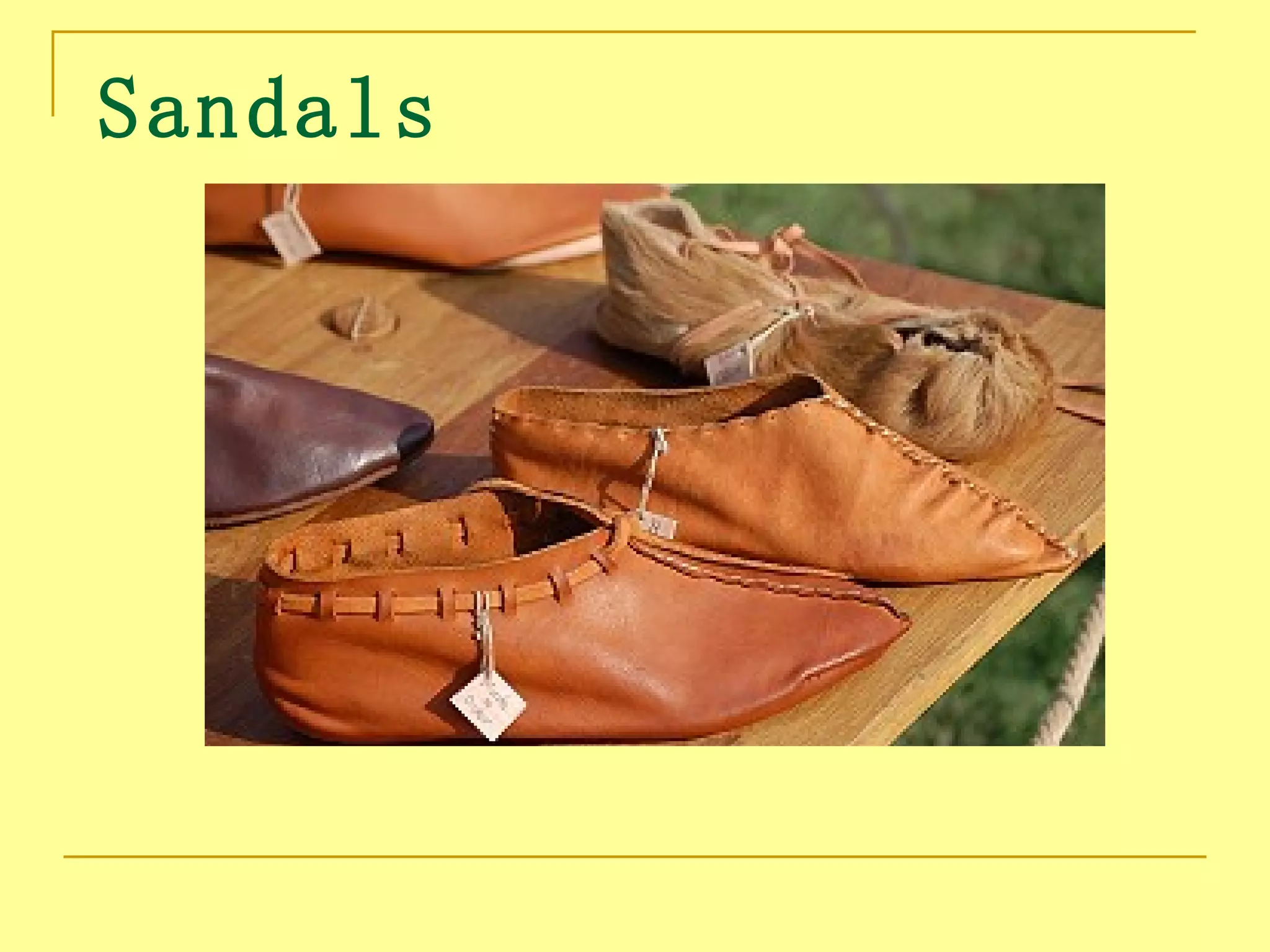
Sandals
What did they eat?
   PLANTS:
   Vegetables: leeks, onions, turnips and
    carrots.
   Wild nuts: hazelnuts and walnuts.
   Grains to make bread and also porridge
   Herbs: fennel, wild garlic, parsley
   Leaves: nettles and spinach
   ANIMALS:
   Wild animals: deer, wild boar, fox,
    beaver, and bear.
   Fish: trout, mackerel, and salmon.
   Domesticated animals: chicken, goat,
    sheep and pigs.
   Eggs from hens and wild birds eggs.

   INSECTS:
   Honey from bees.
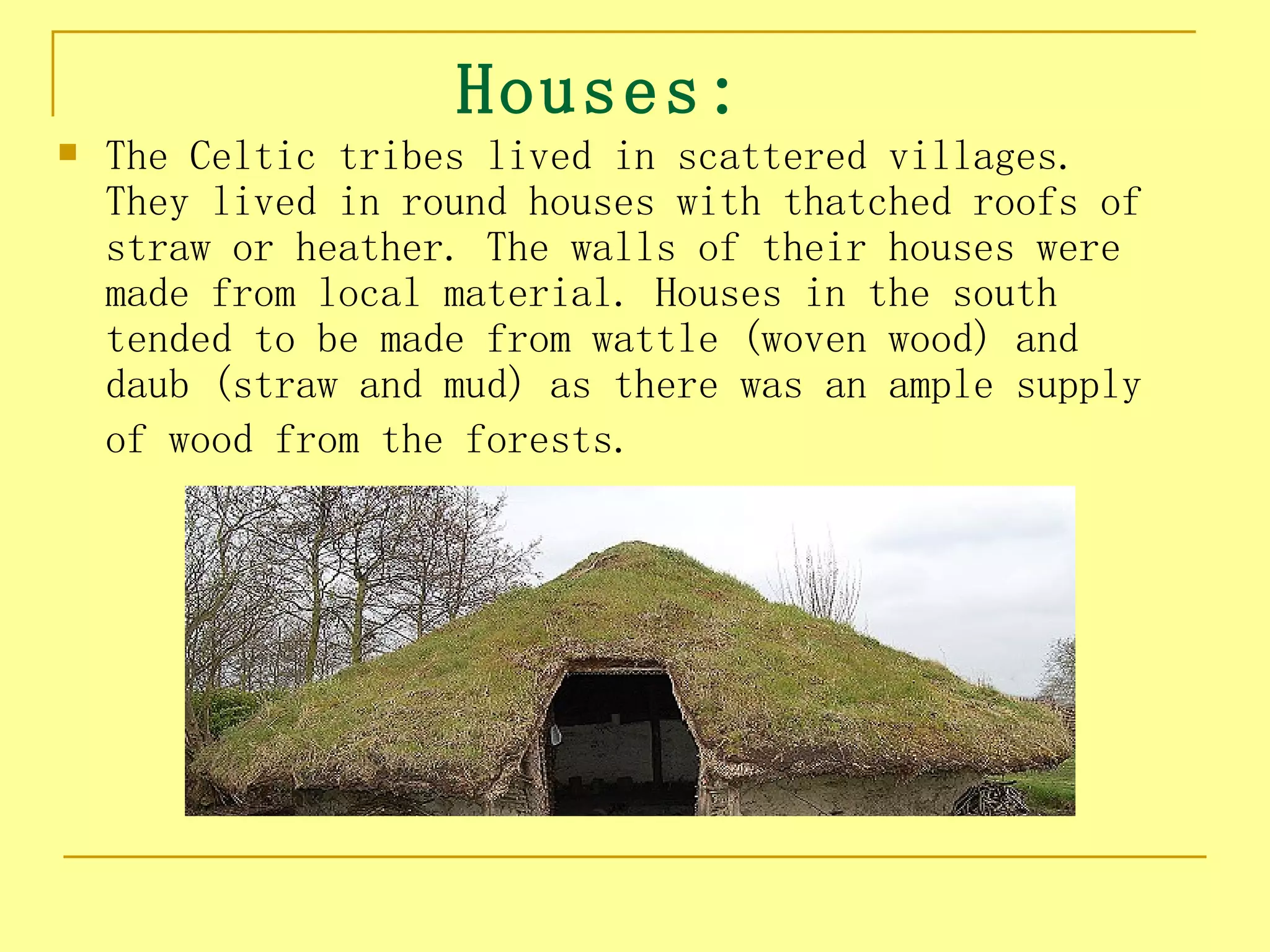
Houses:
   The Celtic tribes lived in scattered villages.
    They lived in round houses with thatched roofs of
    straw or heather. The walls of their houses were
    made from local material. Houses in the south
    tended to be made from wattle (woven wood) and
    daub (straw and mud) as there was an ample supply
    of wood from the forests.
The roof was made from straw with
                      mud placed on top to keep the
                                warmth in.


The houses had no
    windows.
                    The houses in the north were made with
                    large stones held together with clay.
Animals were often kept inside
                                             the house at night.


The Celts would light a fire in the
    middle of the roundhouse for
        cooking and heating.


                            The smoke from the fire escaped through
                                       a hole in the roof.
Farmers:
              Most Celts lived in
               scattered farming
               communities
               surrounded by a
               bank with wooden
               fencing and a ditch
               to keep out
               intruders and wild
               animals.
Religion:
The Iron Age
     Celts
of Europe and
   Britain
  were very
superstitious
   people.
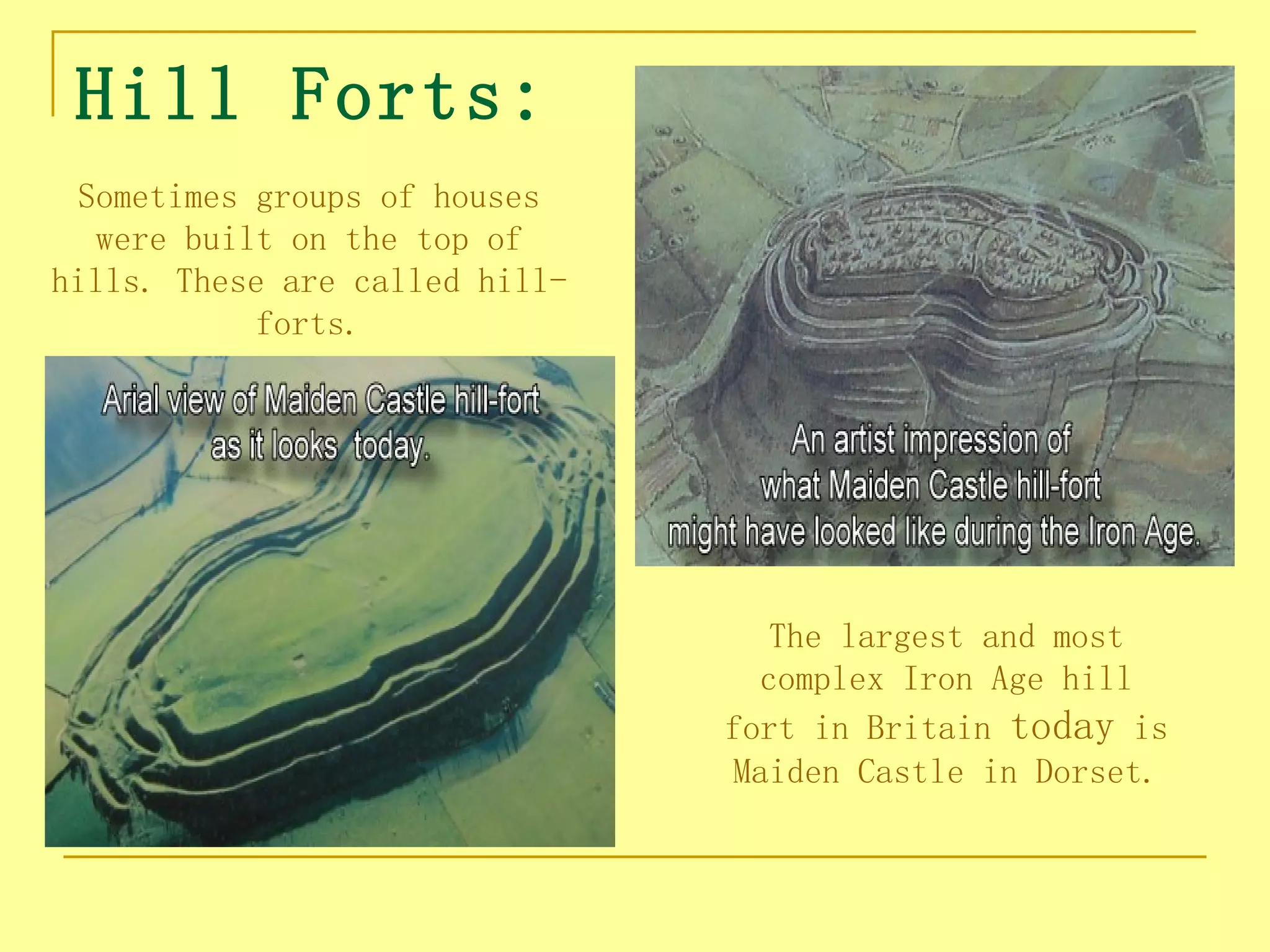
Hill Forts:
 Sometimes groups of houses
  were built on the top of
hills. These are called hill-
            forts.


                                   The largest and most
                                  complex Iron Age hill
                                fort in Britain today is
                                Maiden Castle in Dorset.
Gods and Goddesses:
The Celts believed in many gods and goddesses:
over 400 in fact. Among them were:
Sucellos, the sky god, with a hammer that caused
lightning,
Nodens, who made clouds and rain.
Many gods had no names, but lived in springs,
woods and other places.
Druids:
 Druids were the link between the supernatural
 world and the ordinary human one. They were able
 to predict what would happen in the future by
 interpreting nature. It is likely that they knew
 how to read and write, and they certainly had a
 good grasp of mathematics. They knew something of
 medicine and law, and they could trace the stars
 and the planets. The main centre of the druids in
 Britain was Anglesey, in Wales.
After Life:
   The Celts believed that the
   human soul had an afterlife,
 so when a person died they were
   buried with many things they
 would need for the after life.
Human Heads:
The Celts made many sculptures of human
heads in stone or wood. They believed
that the human soul lived inside the
head. They believed that capturing
someone's soul gave you really powerful
magic, which is why they collected the
heads of their enemies killed in battles.
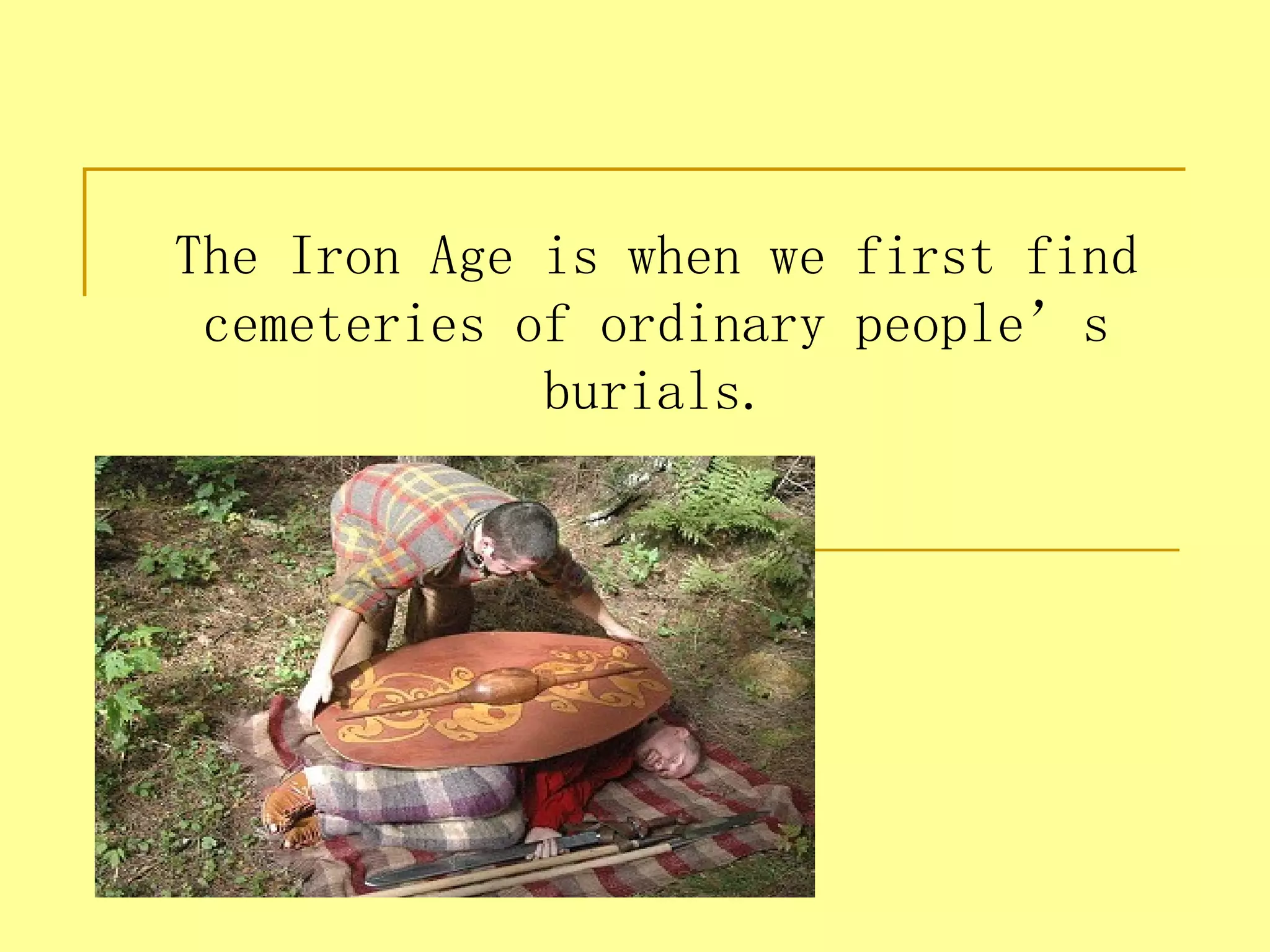
The Iron Age is when we first find
 cemeteries of ordinary people’s
             burials.
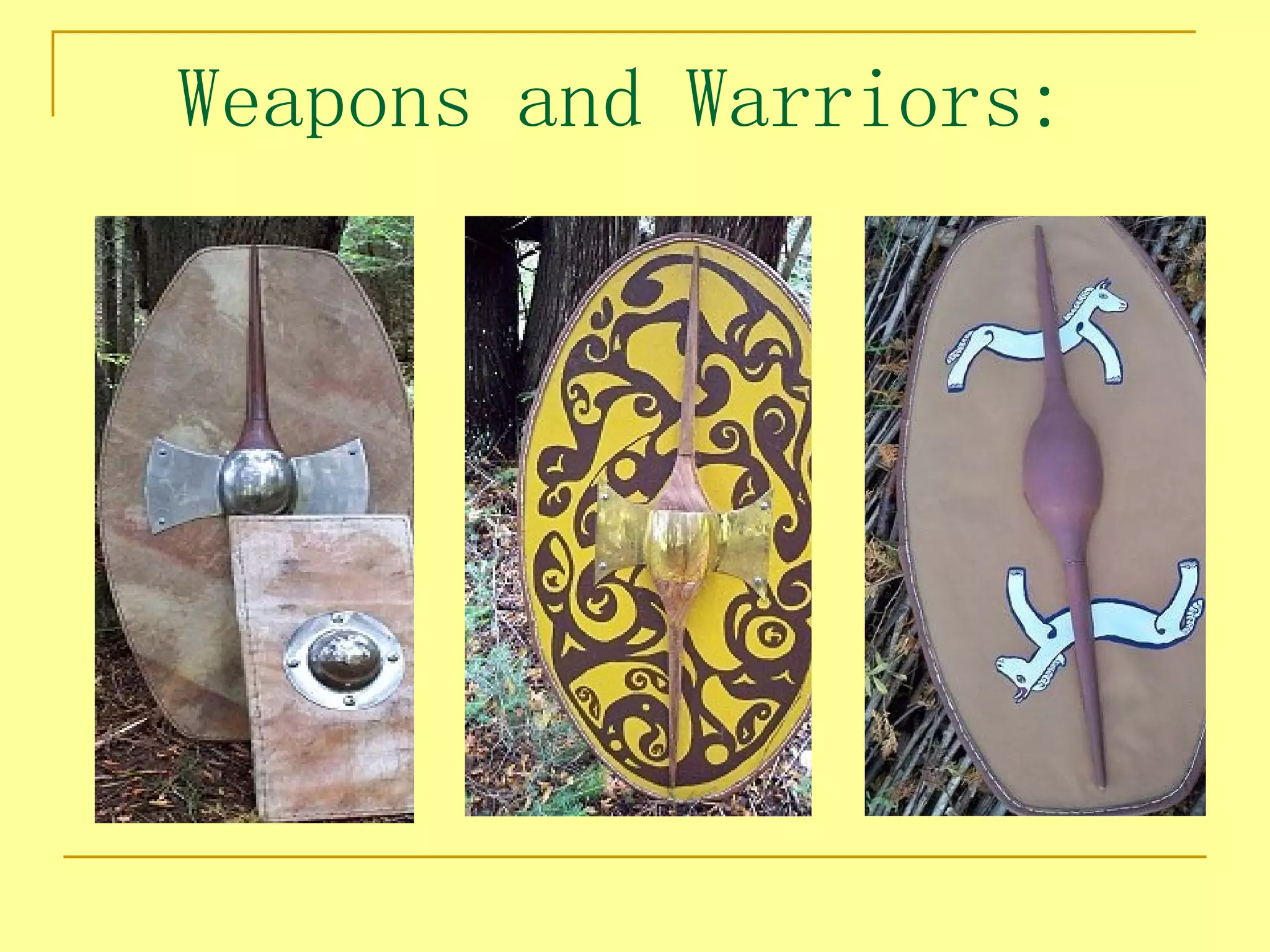
Weapons and Warriors:
Celtic society was divided into three
groups: a warrior aristocracy, an
intellectual class that included druids,
poets, and jurists, and everyone else. 


            They were not centrally governed.
                 Tribes were led by kings but
                 political organizations were
                         remarkably plastic.
Family life : 
  The basic unit of Celtic life was
  the clan, a sort of extended
  family. The Celts practiced a
  peculiar form of child rearing;
  they didn't rear them, they farmed
  them out.
Women:  
   They were technically equal to
   men, owned property, and could
   choose their own husbands.
   They could also be war leaders,
   as Boudicca.
Language:
 There was a written Celtic language, but it
  developed well into Christian times, so for
   much of Celtic history they relied on oral
transmission of culture, primarily through the
  efforts of bards and poets. These arts were
 tremendously important to the Celts, and much
 of what we know of their traditions comes to
 us today through the old tales and poems that
    were handed down for generations before
        eventually being written down. 
Celts
Celts

Celts

  • 1.
  • 2.
    Who were theCelts? The Celts were a group of peoples loosely tied by similar language, religion, and cultural expression.
  • 3.
    When did theCelts live? They lived across most of Europe during the Iron Age.
  • 4.
    Why are theCelts called Iron Age Celts? The name 'Iron Age' comes from the discovery of a new metal called iron. The Celts found out how to make iron tools and weapons. Before the Iron Age the only metal used in Britain to make tools was bronze. The Iron, was relatively cheap and available almost everywhere.
  • 5.
    Interesting fact No-onecalled the people living in Britain during the Iron Age, Celts until the eighteenth century. In fact the Romans called these people Britons, not Celts. The name Celts is a 'modern' name and is used to collectively describe all the many tribes of people living during the Iron Age.
  • 6.
    What clothes didthe Celts wear?  The Celts loved bright dazzling colours. They dyed their woollen trousers and tops bright colours.
  • 7.
    Clothes were madefrom wool and dyed with natural vegetable dyes (plants and berries) and woven by hand on a vertical loom.
  • 8.
    Jewellery They wore jewellerymade from bronze, gold, tin, silver, coral and enamel.  Torc (neck ring) Important people like nobles wore a Torc, a circular twisted metal neckband. It was made from gold, silver and bronze.
  • 9.
  • 10.
    What did theyeat?  PLANTS:  Vegetables: leeks, onions, turnips and carrots.  Wild nuts: hazelnuts and walnuts.  Grains to make bread and also porridge  Herbs: fennel, wild garlic, parsley  Leaves: nettles and spinach
  • 11.
    ANIMALS:  Wild animals: deer, wild boar, fox, beaver, and bear.  Fish: trout, mackerel, and salmon.  Domesticated animals: chicken, goat, sheep and pigs.  Eggs from hens and wild birds eggs.  INSECTS:  Honey from bees.
  • 12.
    Houses:  The Celtic tribes lived in scattered villages. They lived in round houses with thatched roofs of straw or heather. The walls of their houses were made from local material. Houses in the south tended to be made from wattle (woven wood) and daub (straw and mud) as there was an ample supply of wood from the forests.
  • 13.
    The roof wasmade from straw with mud placed on top to keep the warmth in. The houses had no windows. The houses in the north were made with large stones held together with clay.
  • 14.
    Animals were oftenkept inside the house at night. The Celts would light a fire in the middle of the roundhouse for cooking and heating. The smoke from the fire escaped through a hole in the roof.
  • 15.
    Farmers:  Most Celts lived in scattered farming communities surrounded by a bank with wooden fencing and a ditch to keep out intruders and wild animals.
  • 16.
    Religion: The Iron Age Celts of Europe and Britain were very superstitious people.
  • 17.
    Hill Forts: Sometimesgroups of houses were built on the top of hills. These are called hill- forts. The largest and most complex Iron Age hill fort in Britain today is Maiden Castle in Dorset.
  • 18.
    Gods and Goddesses: TheCelts believed in many gods and goddesses: over 400 in fact. Among them were: Sucellos, the sky god, with a hammer that caused lightning, Nodens, who made clouds and rain. Many gods had no names, but lived in springs, woods and other places.
  • 19.
    Druids: Druids werethe link between the supernatural world and the ordinary human one. They were able to predict what would happen in the future by interpreting nature. It is likely that they knew how to read and write, and they certainly had a good grasp of mathematics. They knew something of medicine and law, and they could trace the stars and the planets. The main centre of the druids in Britain was Anglesey, in Wales.
  • 20.
    After Life: The Celts believed that the human soul had an afterlife, so when a person died they were buried with many things they would need for the after life.
  • 21.
    Human Heads: The Celtsmade many sculptures of human heads in stone or wood. They believed that the human soul lived inside the head. They believed that capturing someone's soul gave you really powerful magic, which is why they collected the heads of their enemies killed in battles.
  • 22.
    The Iron Ageis when we first find cemeteries of ordinary people’s burials.
  • 23.
  • 24.
    Celtic society wasdivided into three groups: a warrior aristocracy, an intellectual class that included druids, poets, and jurists, and everyone else.  They were not centrally governed. Tribes were led by kings but political organizations were remarkably plastic.
  • 25.
    Family life :  The basic unit of Celtic life was the clan, a sort of extended family. The Celts practiced a peculiar form of child rearing; they didn't rear them, they farmed them out.
  • 26.
    Women:   They were technically equal to men, owned property, and could choose their own husbands. They could also be war leaders, as Boudicca.
  • 27.
    Language:  There wasa written Celtic language, but it developed well into Christian times, so for much of Celtic history they relied on oral transmission of culture, primarily through the efforts of bards and poets. These arts were tremendously important to the Celts, and much of what we know of their traditions comes to us today through the old tales and poems that were handed down for generations before eventually being written down.