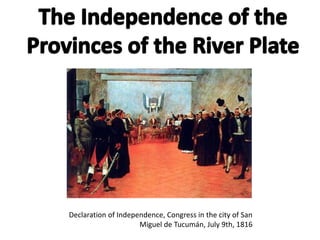
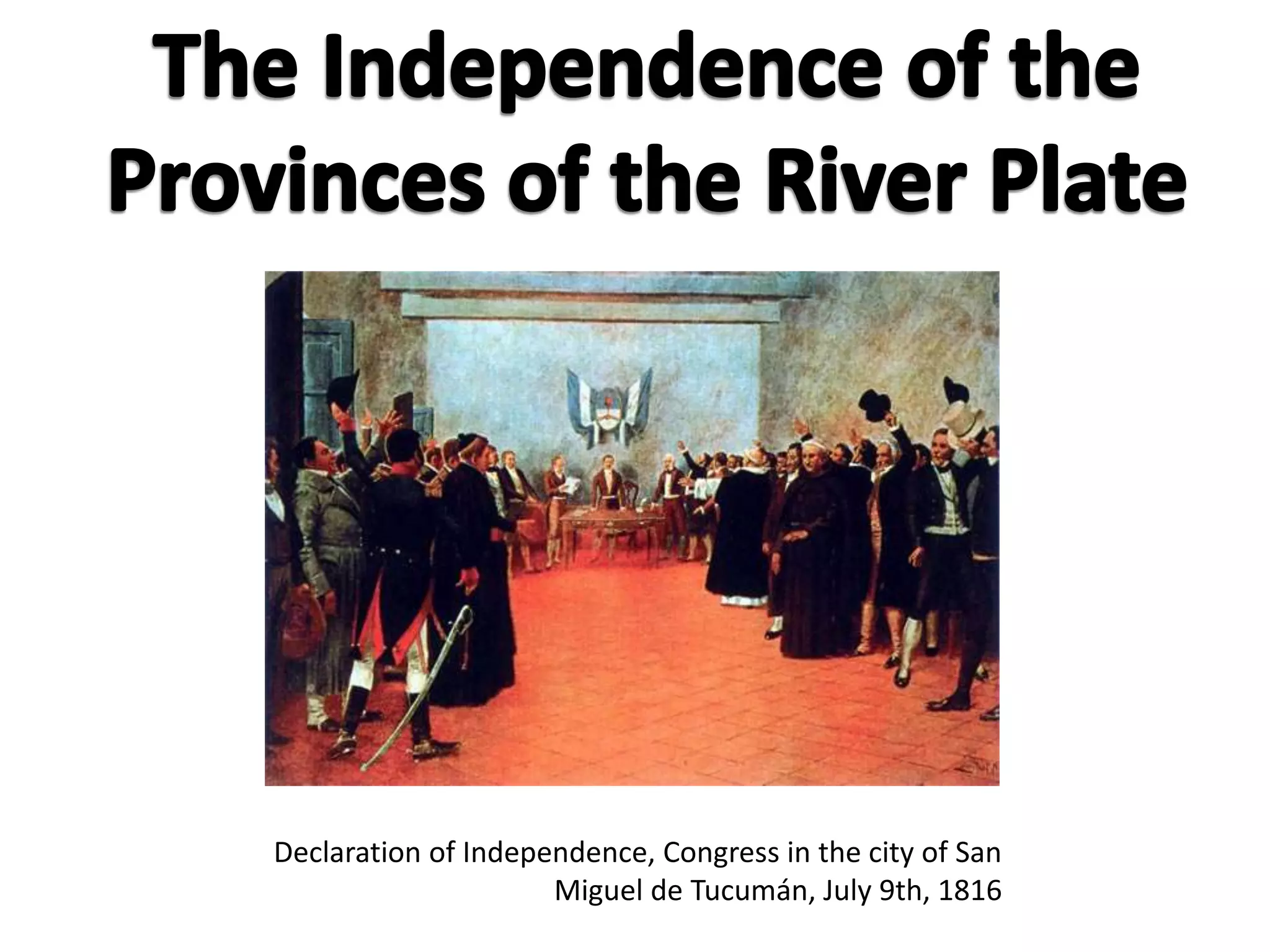
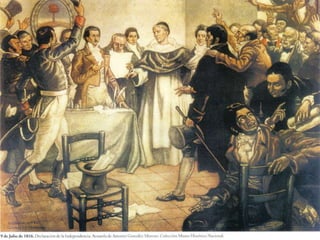
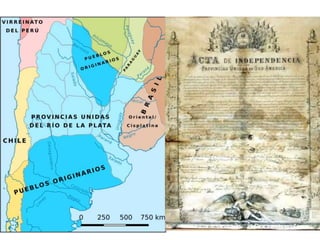
Declaration of Independence, Congress in the city of San
Miguel de Tucumán, July 9th, 1816
1)How do we explain this process of change?
2)Why do we remember this particular date with a
holiday?
3)What is the use of reflecting about past events?
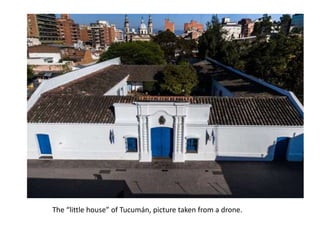
The “little house” of Tucumán, picture taken from a drone.
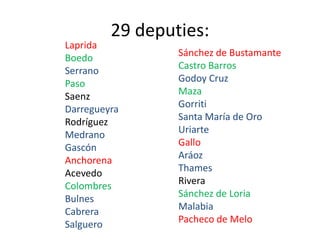
29 deputies:
Laprida
Boedo
Serrano
Paso
Saenz
Darregueyra
Rodríguez
Medrano
Gascón
Anchorena
Acevedo
Colombres
Bulnes
Cabrera
Salguero
Sánchez de Bustamante
Castro Barros
Godoy Cruz
Maza
Gorriti
Santa María de Oro
Uriarte
Gallo
Aráoz
Thames
Rivera
Sánchez de Loria
Malabia
Pacheco de Melo
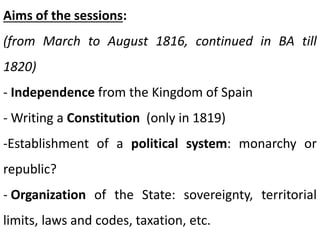
Aims of the sessions:
(from March to August 1816, continued in BA till
1820)
- Independence from the Kingdom of Spain
- Writing a Constitution (only in 1819)
-Establishment of a political system: monarchy or
republic?
- Organization of the State: sovereignty, territorial
limits, laws and codes, taxation, etc.
1) Context of questioning absolutist monarchies:
- The Enlightenment (XVIII century)
- French Revolution (1789-99)
- Expansion of the revolution in Europe (1793-
1815)
- American Revolution (1775-1783)
2) Events in the River Plate area:
- British invasions of 1806 and 1807: militarization
of the people of BA
- Napoleonic invasion of Spain (1808) and crisis of
the monarchy (1809)
- The May Revolution: self-government (United
Provinces of the River Plate)
- Counter revolutionary invasion (1814-15): the
wars of independence (Belgrano, San Martín)
How do we explain the causes of chemical and
physical changes?
With the understanding of natural mechanisms
How do we explain the causes of social and
political changes?
With the understanding of human action
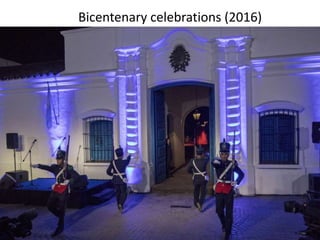
Bicentenary celebrations (2016)
Why do we remember this particular date with a
holiday?
- Bernardino Rivadavia (1825)
- Juan Manuel de Rosas (1835)
National-State formation (1860s, 70s):
- Bartolomé Mitre: president and official historian
- Domingo Faustino Sarmiento as president with an
nationalist project of education
holy -day : sacred day
Only for religions?
Remembering vs. understanding?
- Political uses by governments and States
- Social memory
- Scientific and political reflection by individuals
and groups
If the questions that open the study of History come
from present times (and peoples/’s interests)…
…then we can discover a relationship between the
past and the present!
To understand it? To explain it? To change it?
https://jamboard.google.com/d/1AWVMoEjjZWbMlJFflb_gRu0LX
l7dtZP7Qs3bDhSODEo/edit?usp=sharing

The independence for junior 7

  • 1.
    Declaration of Independence,Congress in the city of San Miguel de Tucumán, July 9th, 1816
  • 2.
    1)How do weexplain this process of change? 2)Why do we remember this particular date with a holiday? 3)What is the use of reflecting about past events?
  • 4.
    The “little house”of Tucumán, picture taken from a drone.
  • 5.
    29 deputies: Laprida Boedo Serrano Paso Saenz Darregueyra Rodríguez Medrano Gascón Anchorena Acevedo Colombres Bulnes Cabrera Salguero Sánchez deBustamante Castro Barros Godoy Cruz Maza Gorriti Santa María de Oro Uriarte Gallo Aráoz Thames Rivera Sánchez de Loria Malabia Pacheco de Melo
  • 7.
    Aims of thesessions: (from March to August 1816, continued in BA till 1820) - Independence from the Kingdom of Spain - Writing a Constitution (only in 1819) -Establishment of a political system: monarchy or republic? - Organization of the State: sovereignty, territorial limits, laws and codes, taxation, etc.
  • 9.
    1) Context ofquestioning absolutist monarchies: - The Enlightenment (XVIII century) - French Revolution (1789-99) - Expansion of the revolution in Europe (1793- 1815) - American Revolution (1775-1783) 2) Events in the River Plate area: - British invasions of 1806 and 1807: militarization of the people of BA - Napoleonic invasion of Spain (1808) and crisis of the monarchy (1809) - The May Revolution: self-government (United Provinces of the River Plate) - Counter revolutionary invasion (1814-15): the wars of independence (Belgrano, San Martín)
  • 11.
    How do weexplain the causes of chemical and physical changes? With the understanding of natural mechanisms How do we explain the causes of social and political changes? With the understanding of human action
  • 12.
  • 13.
    Why do weremember this particular date with a holiday? - Bernardino Rivadavia (1825) - Juan Manuel de Rosas (1835) National-State formation (1860s, 70s): - Bartolomé Mitre: president and official historian - Domingo Faustino Sarmiento as president with an nationalist project of education holy -day : sacred day Only for religions?
  • 14.
    Remembering vs. understanding? -Political uses by governments and States - Social memory - Scientific and political reflection by individuals and groups
  • 15.
    If the questionsthat open the study of History come from present times (and peoples/’s interests)… …then we can discover a relationship between the past and the present! To understand it? To explain it? To change it?
  • 16.