An Introduction
Lecture # 3
29th Feb 2016
Cell Biology
Ancient Times
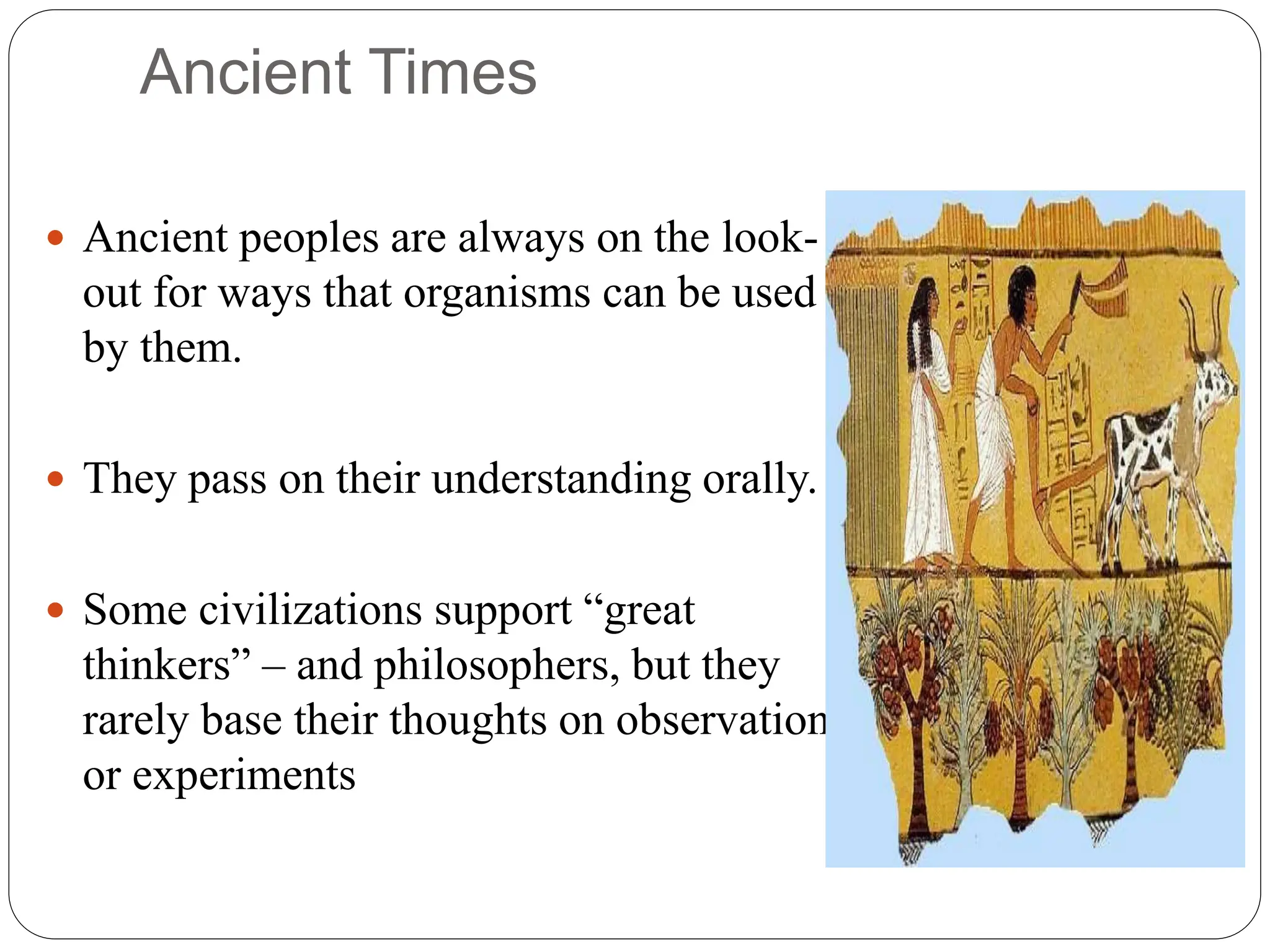
 Ancient peoples are always on the look-
out for ways that organisms can be used
by them.
 They pass on their understanding orally.
 Some civilizations support “great
thinkers” – and philosophers, but they
rarely base their thoughts on observation
or experiments
334 B.C - Aristotle
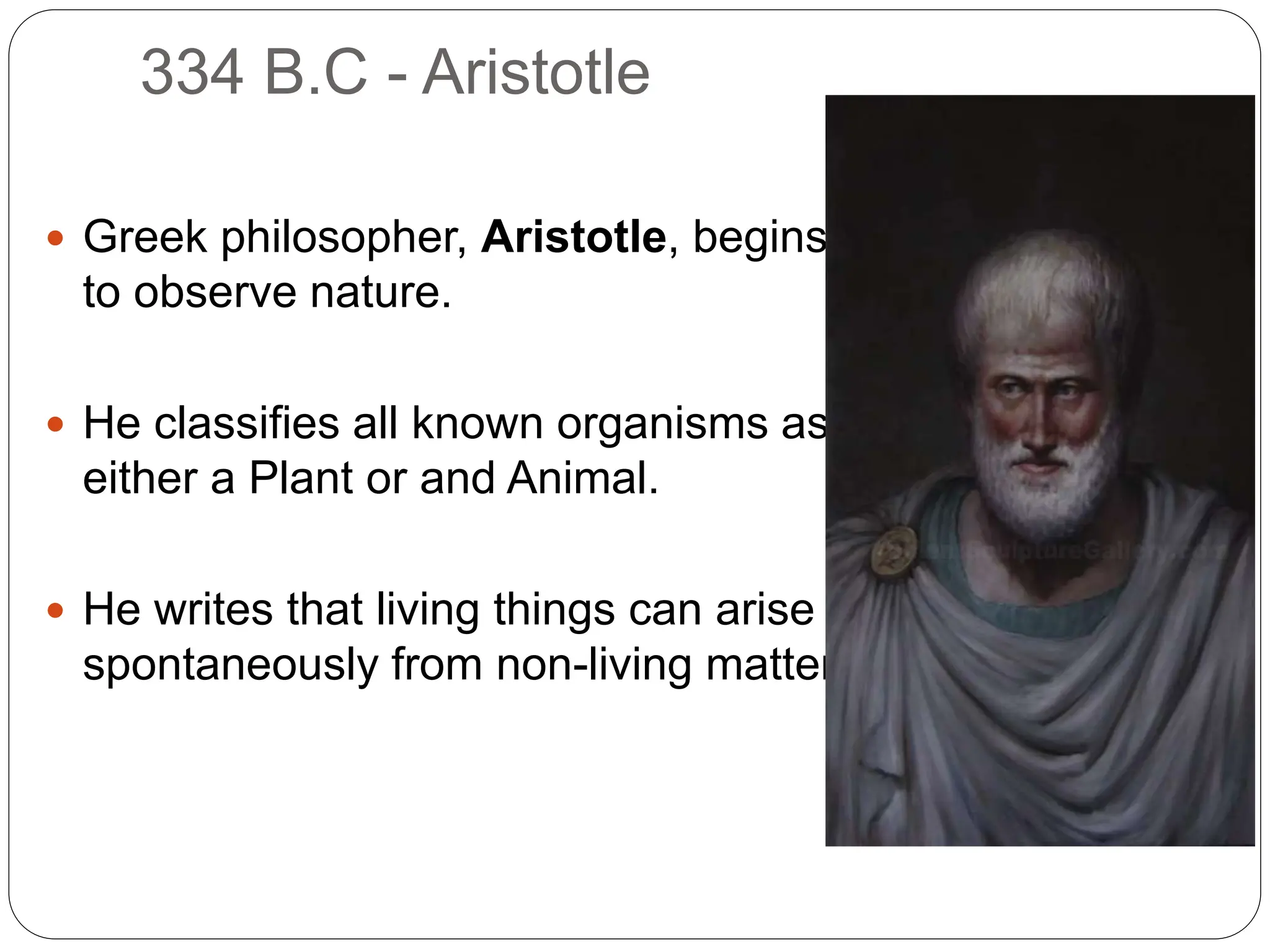
 Greek philosopher, Aristotle, begins
to observe nature.
 He classifies all known organisms as
either a Plant or and Animal.
 He writes that living things can arise
spontaneously from non-living matter.
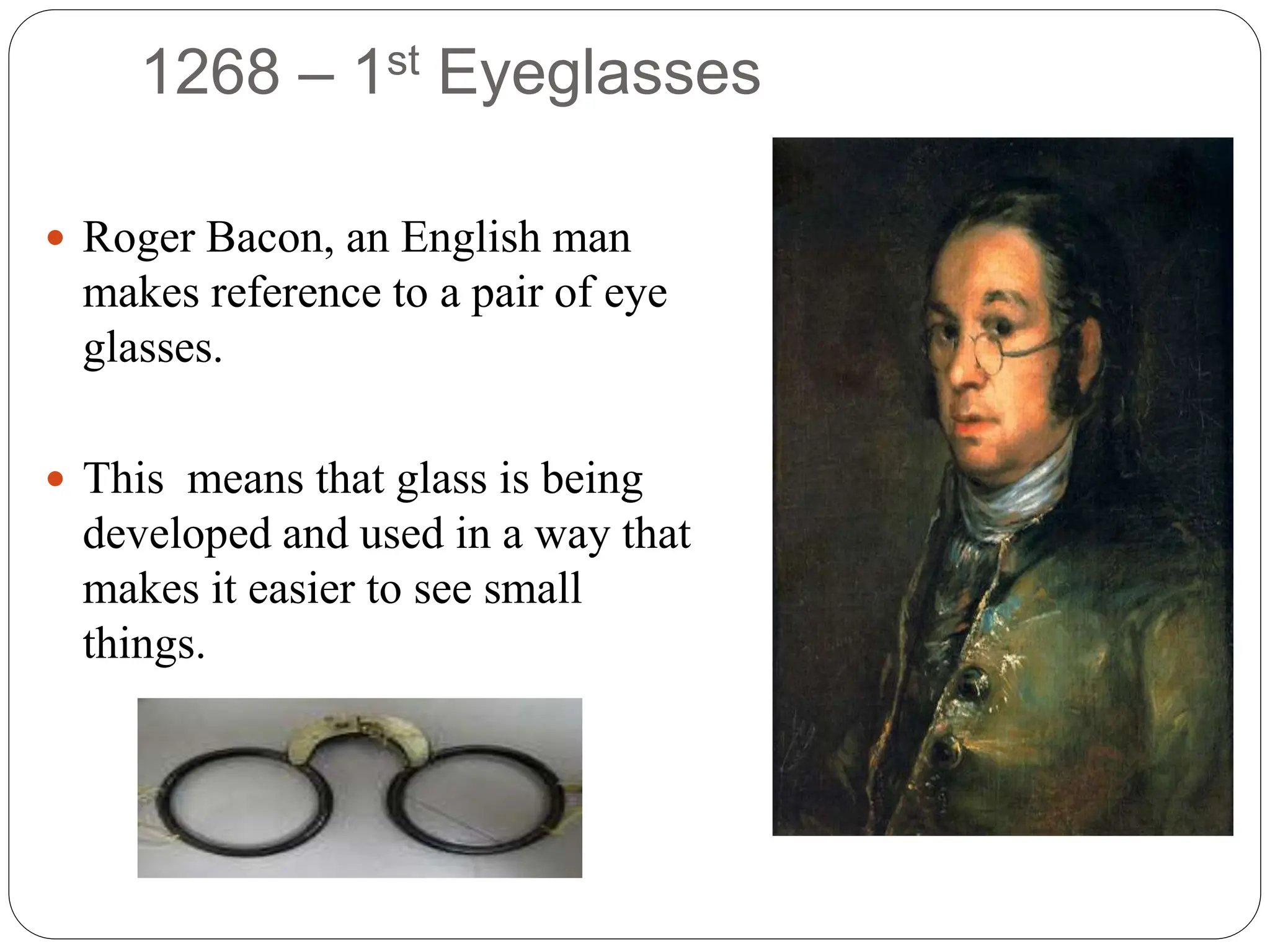
1268 – 1st Eyeglasses
 Roger Bacon, an English man
makes reference to a pair of eye
glasses.
 This means that glass is being
developed and used in a way that
makes it easier to see small
things.
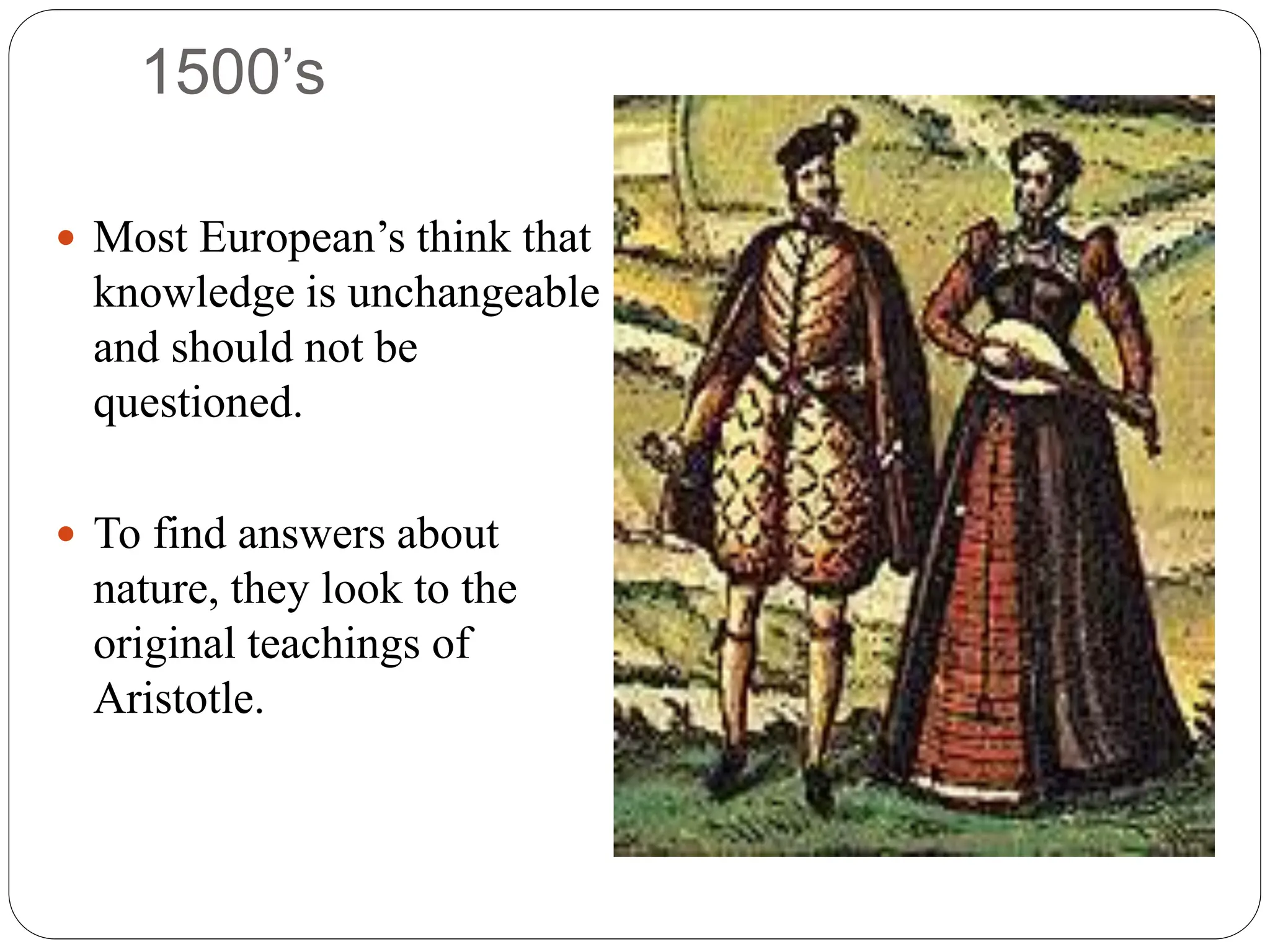
1500’s
 Most European’s think that
knowledge is unchangeable
and should not be
questioned.
 To find answers about
nature, they look to the
original teachings of
Aristotle.
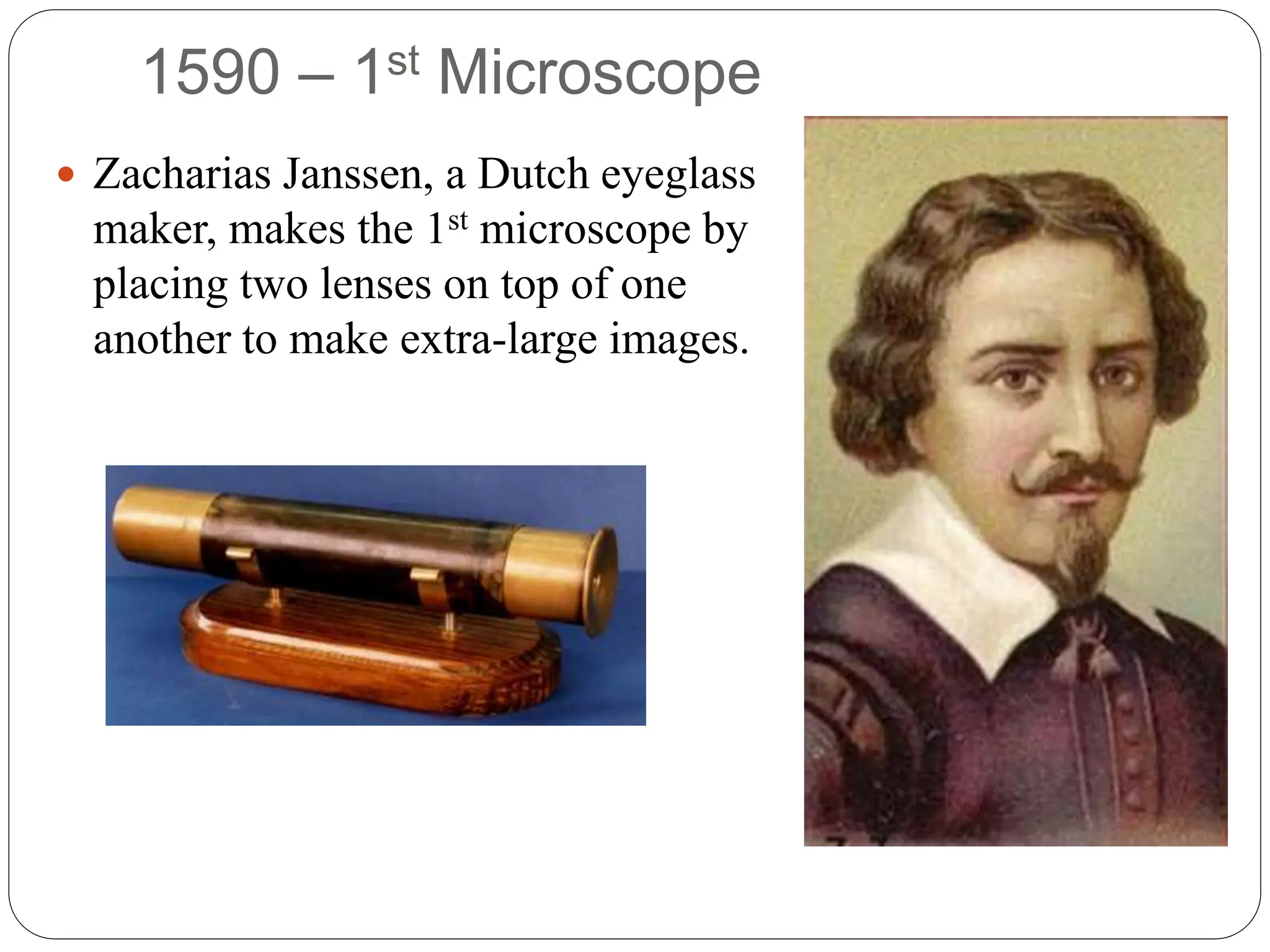
1590 – 1st Microscope
 Zacharias Janssen, a Dutch eyeglass
maker, makes the 1st microscope by
placing two lenses on top of one
another to make extra-large images.
1600’s
 People start to question the origins of
life.
 Many begin to suggest that life can
only come from other forms of life
rather than through spontaneous
generation (as was suggested by
Aristotle). This only took about 2000
years!
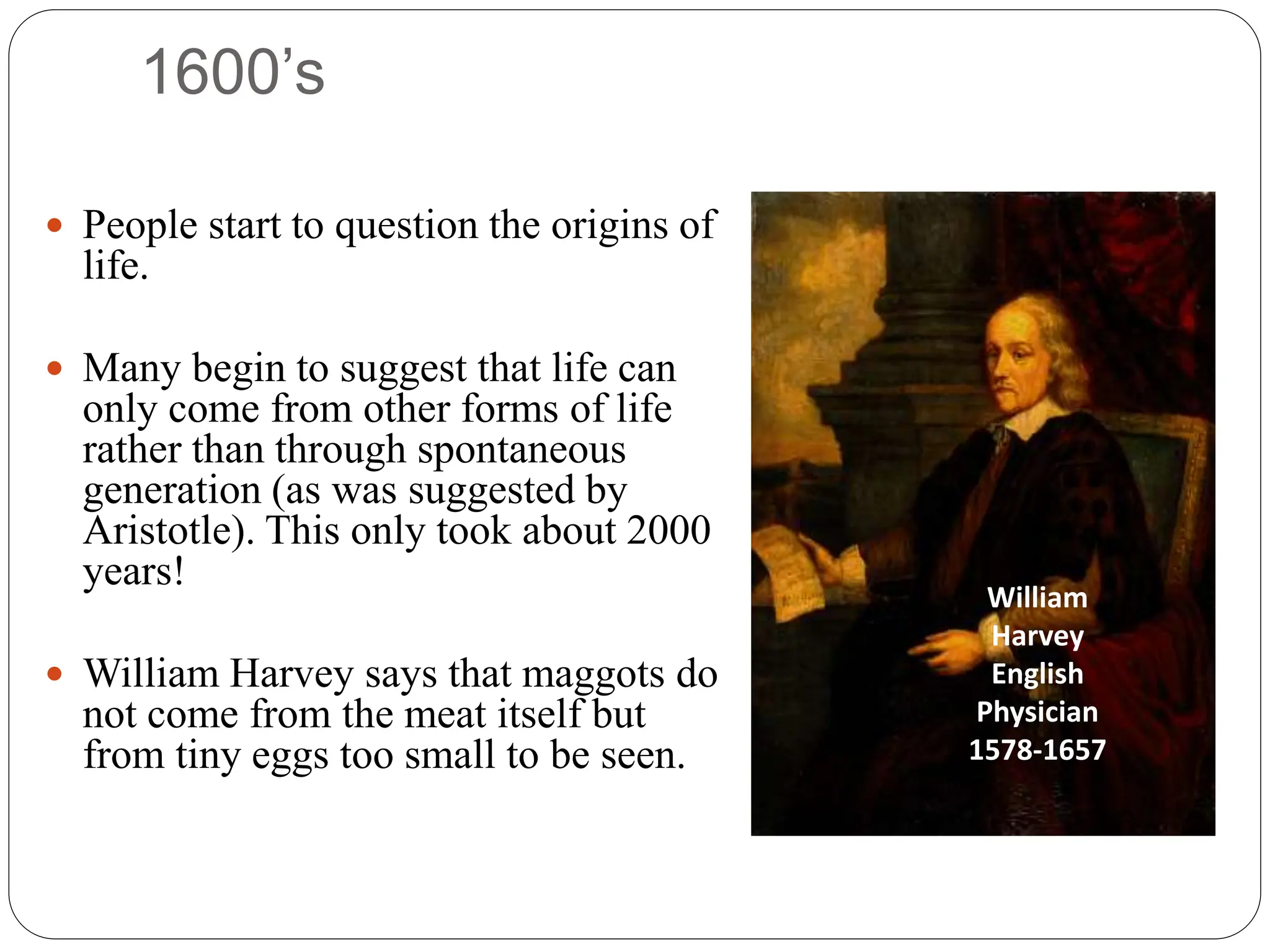
 William Harvey says that maggots do
not come from the meat itself but
from tiny eggs too small to be seen.
William
Harvey
English
Physician
1578-1657
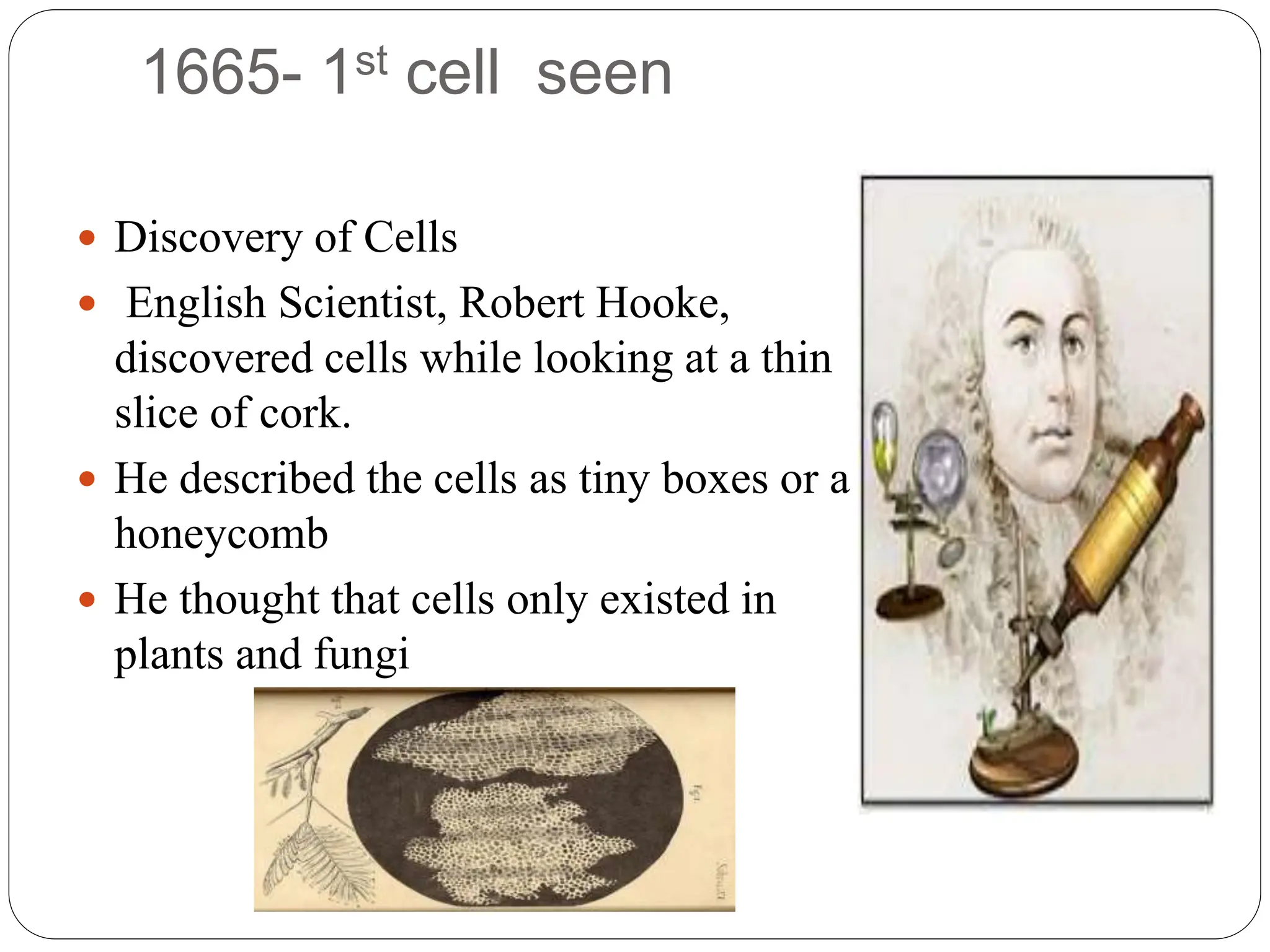
1665- 1st cell seen
 Discovery of Cells
 English Scientist, Robert Hooke,
discovered cells while looking at a thin
slice of cork.
 He described the cells as tiny boxes or a
honeycomb
 He thought that cells only existed in
plants and fungi
150-200 Year Gap???
 Between the Hooke/Leuwenhoek discoveries and the
mid 19th century, very little cell advancements were
made.
 This is probably due to the widely accepted, traditional
belief in Spontaneous Generation.
 Examples:
-Mice from dirty clothes/corn husks
-Maggots from rotting meat
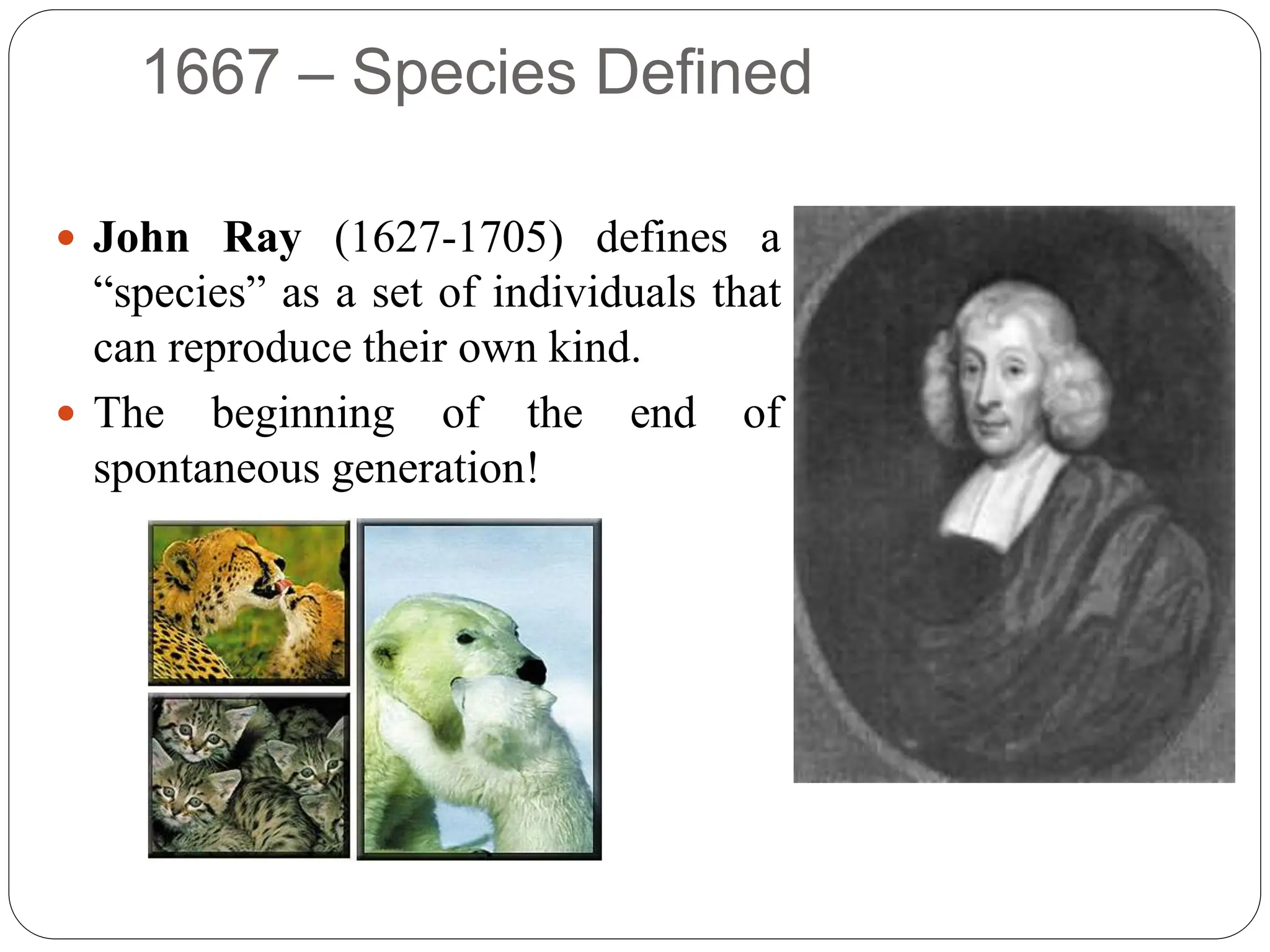
1667 – Species Defined
 John Ray (1627-1705) defines a
“species” as a set of individuals that
can reproduce their own kind.
 The beginning of the end of
spontaneous generation!
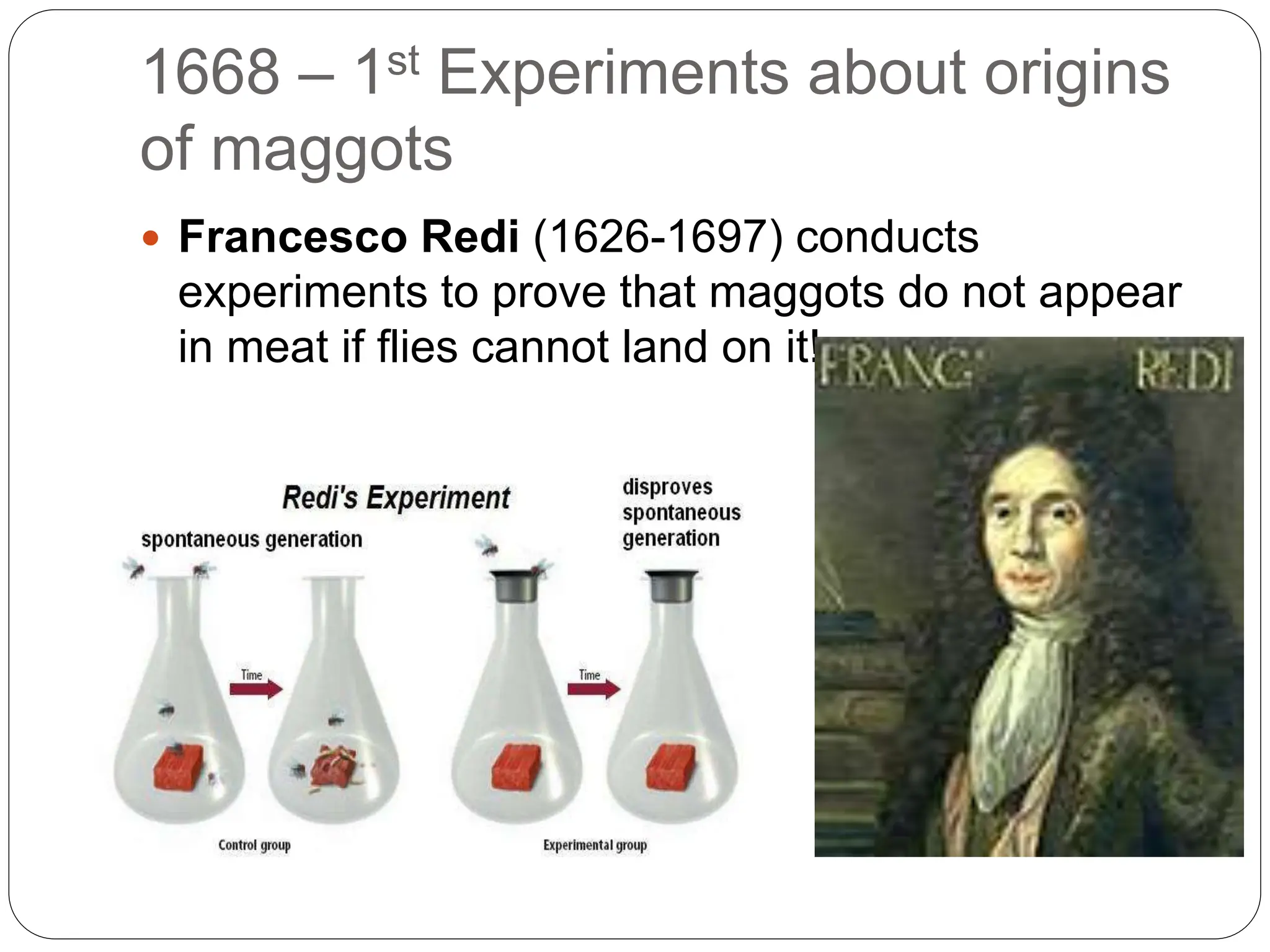
1668 – 1st Experiments about origins
of maggots
 Francesco Redi (1626-1697) conducts
experiments to prove that maggots do not appear
in meat if flies cannot land on it!
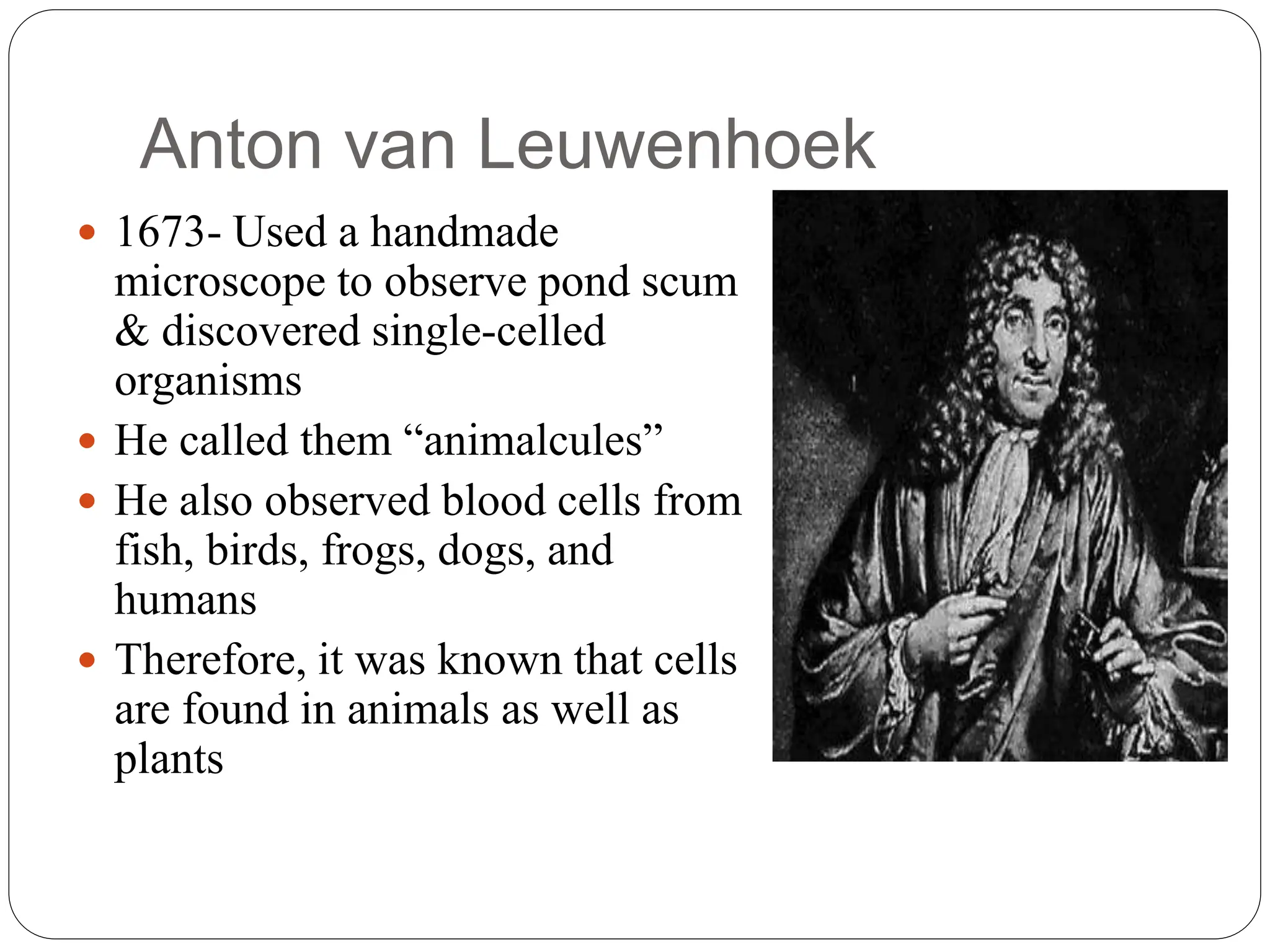
Anton van Leuwenhoek
 1673- Used a handmade
microscope to observe pond scum
& discovered single-celled
organisms
 He called them “animalcules”
 He also observed blood cells from
fish, birds, frogs, dogs, and
humans
 Therefore, it was known that cells
are found in animals as well as
plants
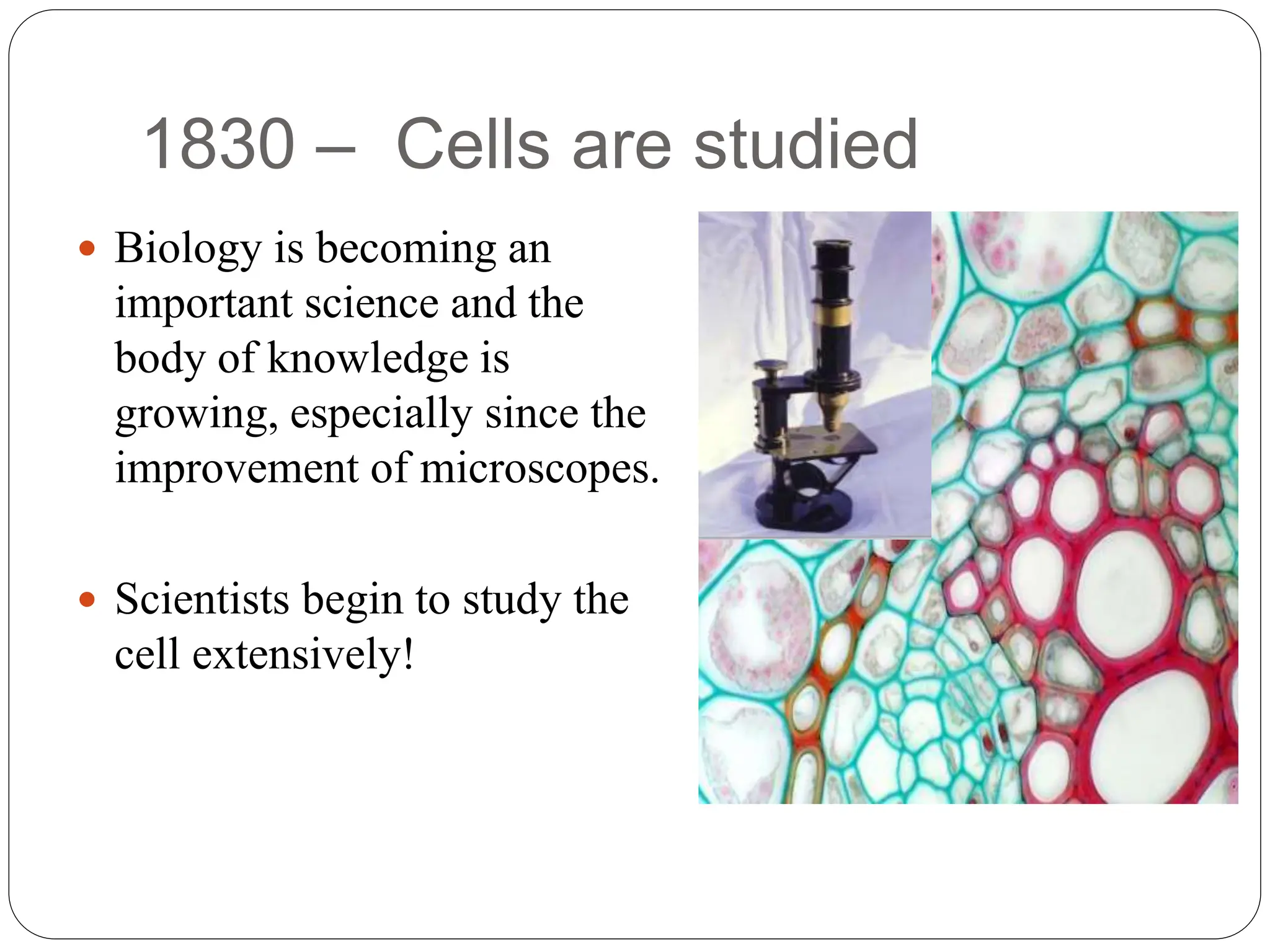
1830 – Cells are studied
 Biology is becoming an
important science and the
body of knowledge is
growing, especially since the
improvement of microscopes.
 Scientists begin to study the
cell extensively!
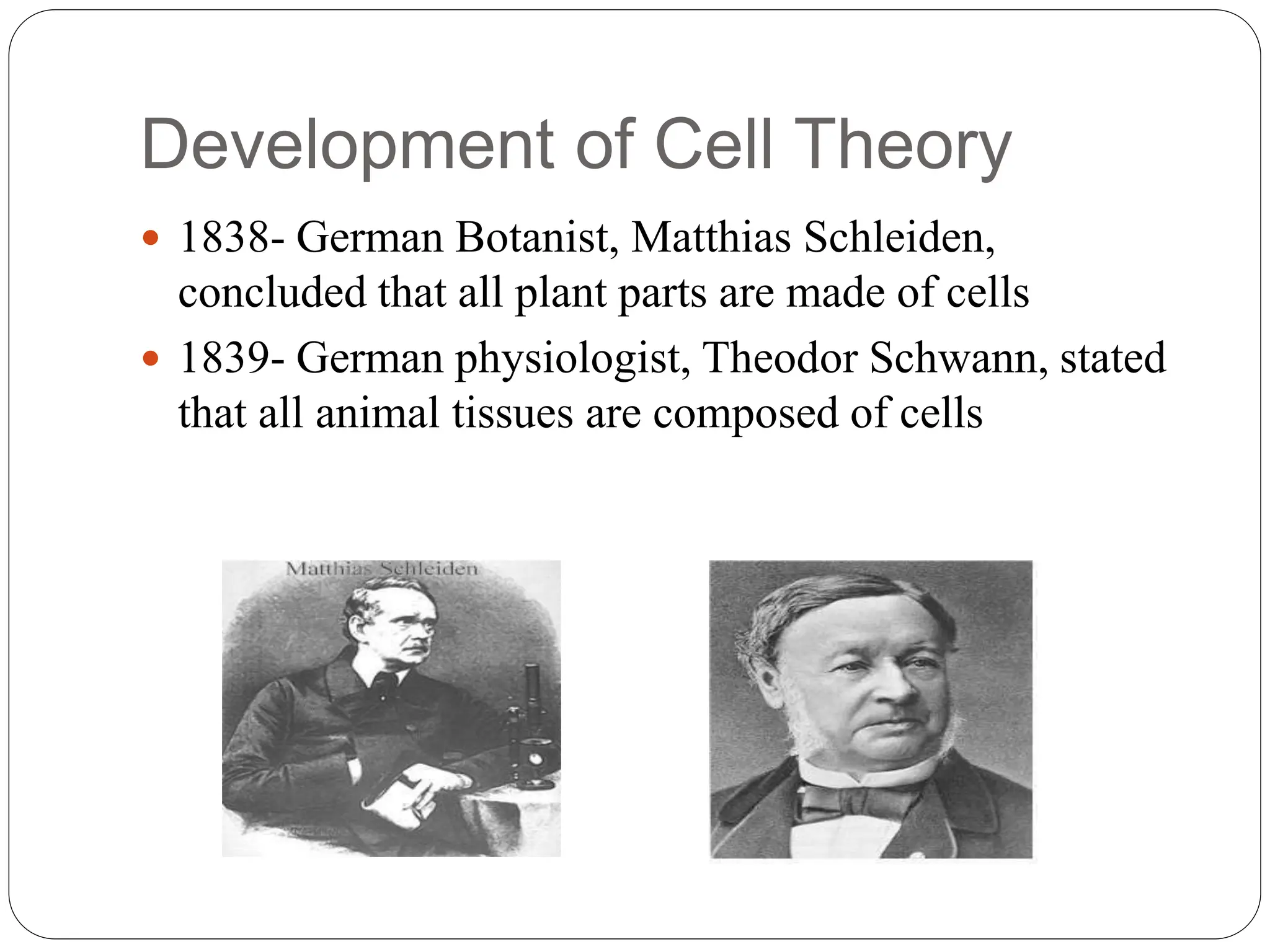
Development of Cell Theory
 1838- German Botanist, Matthias Schleiden,
concluded that all plant parts are made of cells
 1839- German physiologist, Theodor Schwann, stated
that all animal tissues are composed of cells
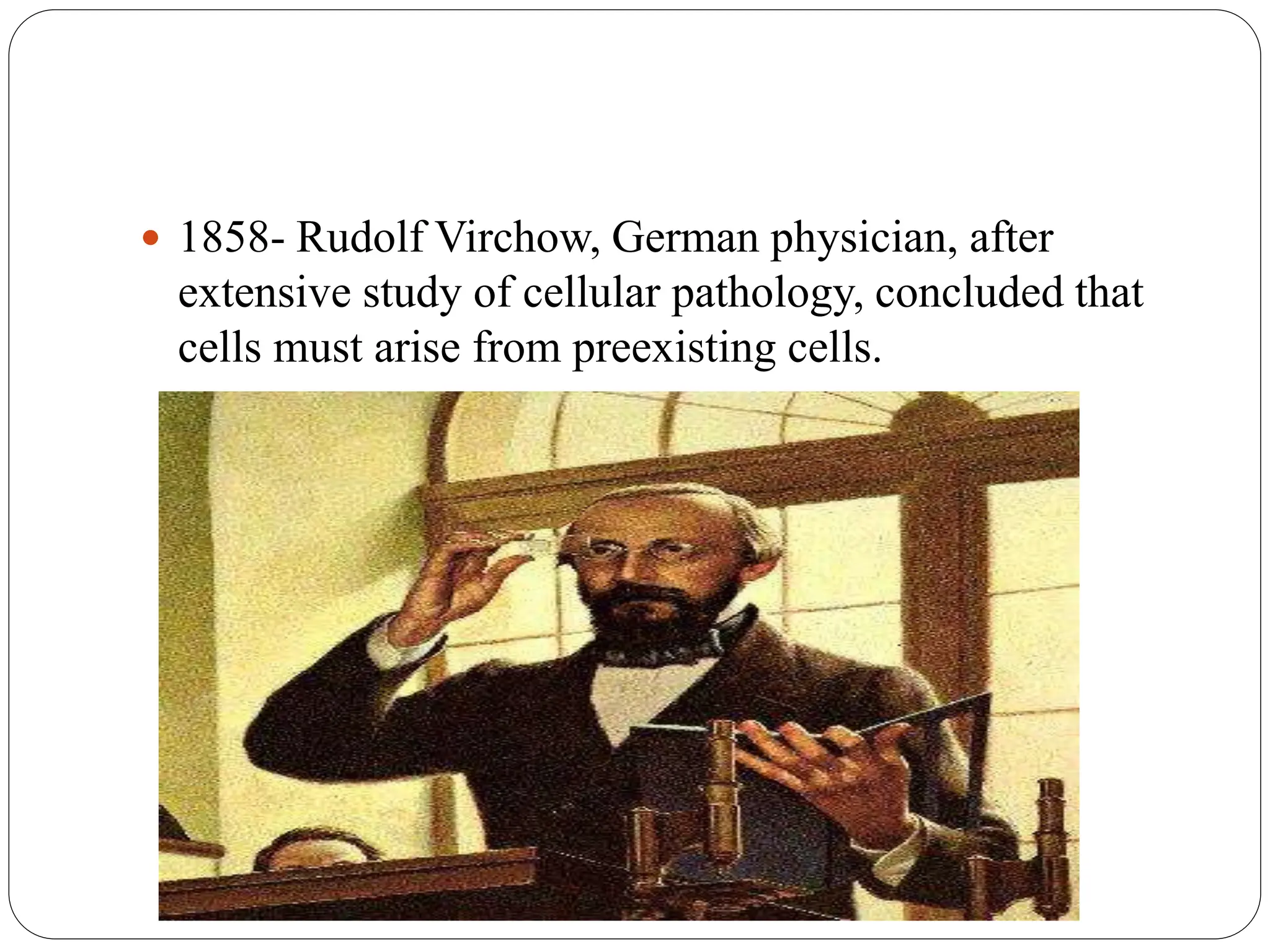
 1858- Rudolf Virchow, German physician, after
extensive study of cellular pathology, concluded that
cells must arise from preexisting cells.
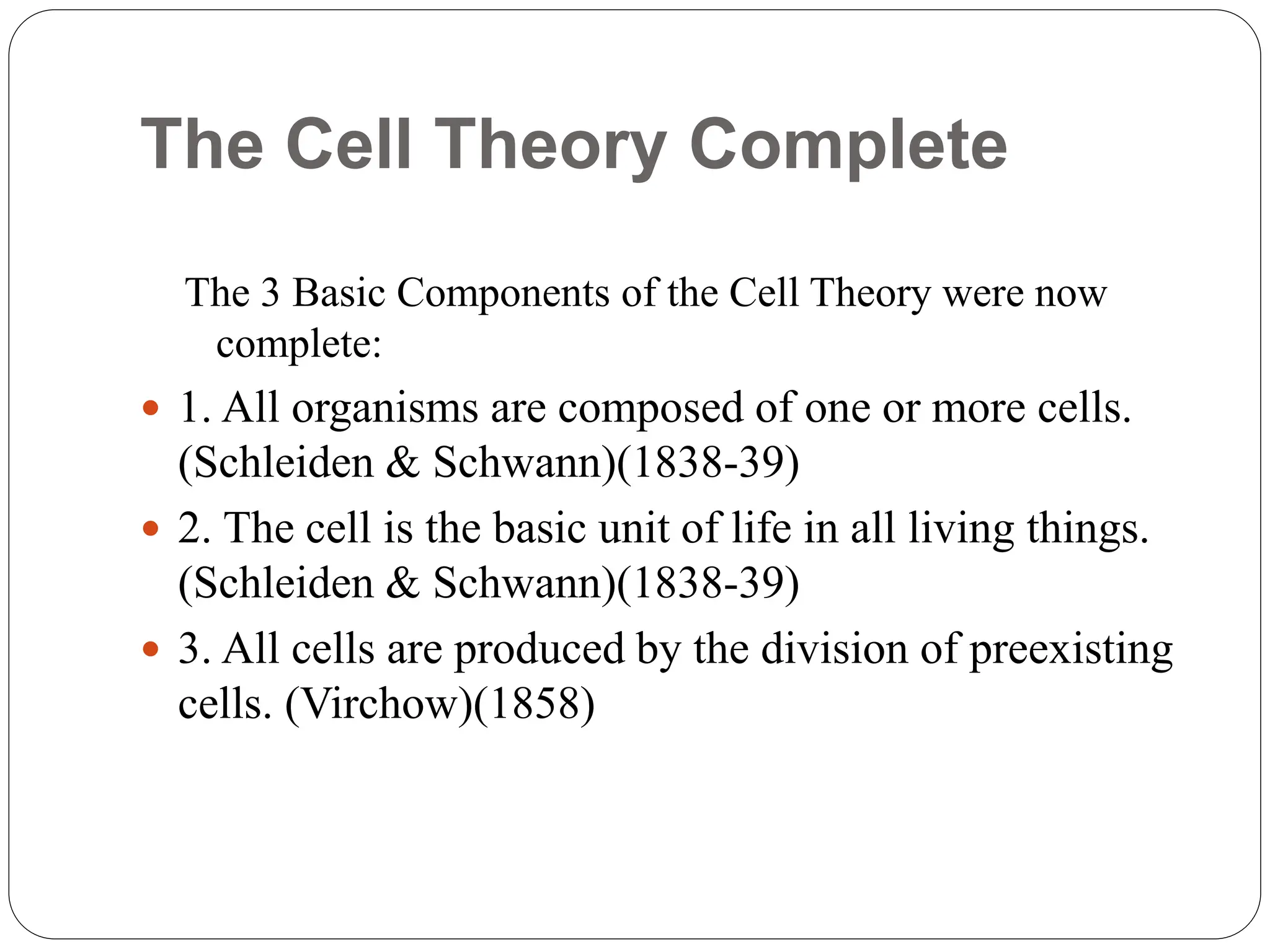
The Cell Theory Complete
The 3 Basic Components of the Cell Theory were now
complete:
 1. All organisms are composed of one or more cells.
(Schleiden & Schwann)(1838-39)
 2. The cell is the basic unit of life in all living things.
(Schleiden & Schwann)(1838-39)
 3. All cells are produced by the division of preexisting
cells. (Virchow)(1858)
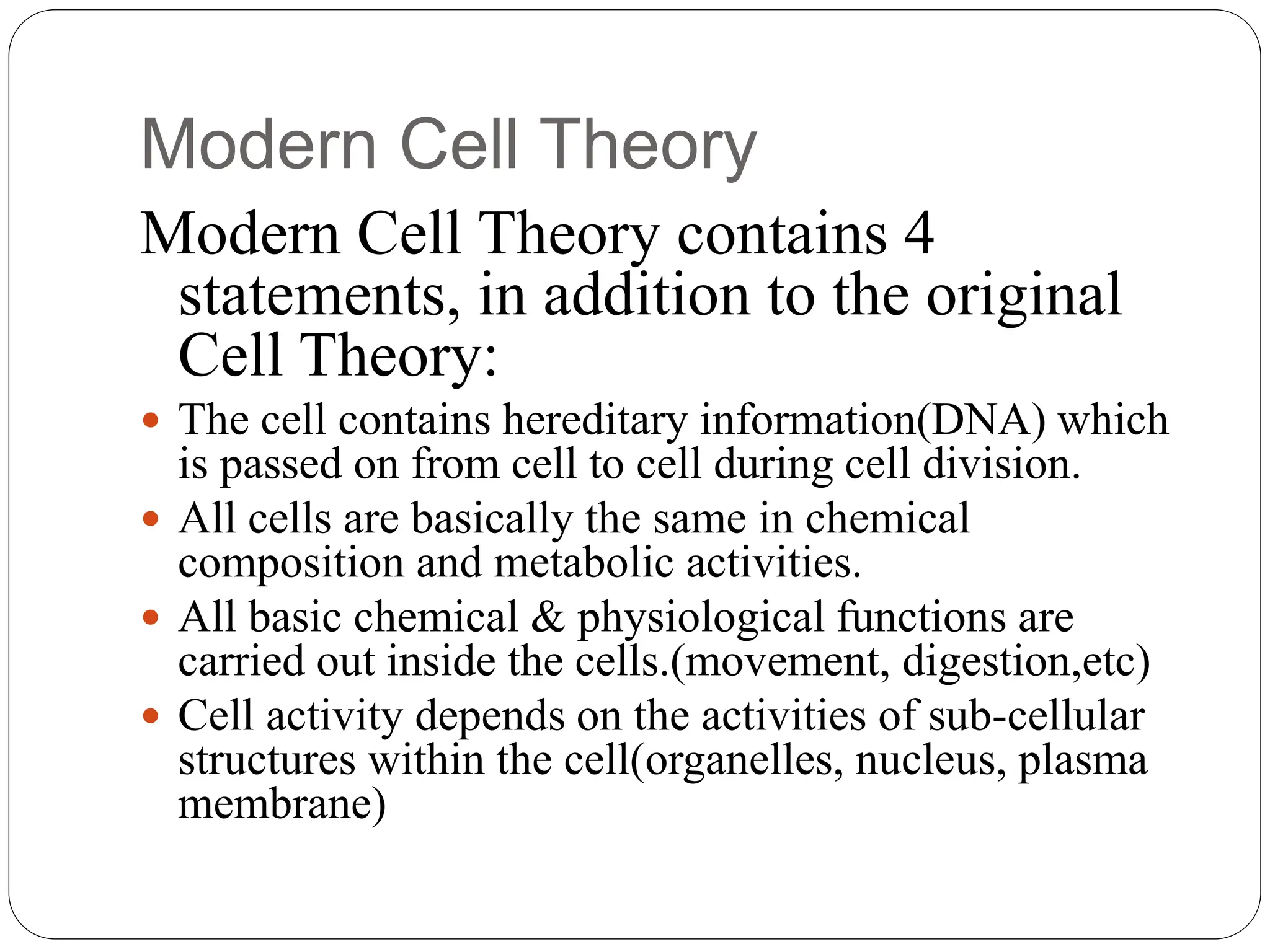
Modern Cell Theory
Modern Cell Theory contains 4
statements, in addition to the original
Cell Theory:
 The cell contains hereditary information(DNA) which
is passed on from cell to cell during cell division.
 All cells are basically the same in chemical
composition and metabolic activities.
 All basic chemical & physiological functions are
carried out inside the cells.(movement, digestion,etc)
 Cell activity depends on the activities of sub-cellular
structures within the cell(organelles, nucleus, plasma
membrane)
Education is the ability to
listen to almost
anything without losing
your temper or your self
confidence
Robert Frost
introduction to cell biology.pptx by AsmatAli

introduction to cell biology.pptx by AsmatAli

  • 1.
    An Introduction Lecture #3 29th Feb 2016 Cell Biology
  • 3.
    Ancient Times  Ancientpeoples are always on the look- out for ways that organisms can be used by them.  They pass on their understanding orally.  Some civilizations support “great thinkers” – and philosophers, but they rarely base their thoughts on observation or experiments
  • 4.
    334 B.C -Aristotle  Greek philosopher, Aristotle, begins to observe nature.  He classifies all known organisms as either a Plant or and Animal.  He writes that living things can arise spontaneously from non-living matter.
  • 5.
    1268 – 1stEyeglasses  Roger Bacon, an English man makes reference to a pair of eye glasses.  This means that glass is being developed and used in a way that makes it easier to see small things.
  • 6.
    1500’s  Most European’sthink that knowledge is unchangeable and should not be questioned.  To find answers about nature, they look to the original teachings of Aristotle.
  • 7.
    1590 – 1stMicroscope  Zacharias Janssen, a Dutch eyeglass maker, makes the 1st microscope by placing two lenses on top of one another to make extra-large images.
  • 8.
    1600’s  People startto question the origins of life.  Many begin to suggest that life can only come from other forms of life rather than through spontaneous generation (as was suggested by Aristotle). This only took about 2000 years!  William Harvey says that maggots do not come from the meat itself but from tiny eggs too small to be seen. William Harvey English Physician 1578-1657
  • 9.
    1665- 1st cellseen  Discovery of Cells  English Scientist, Robert Hooke, discovered cells while looking at a thin slice of cork.  He described the cells as tiny boxes or a honeycomb  He thought that cells only existed in plants and fungi
  • 10.
    150-200 Year Gap??? Between the Hooke/Leuwenhoek discoveries and the mid 19th century, very little cell advancements were made.  This is probably due to the widely accepted, traditional belief in Spontaneous Generation.  Examples: -Mice from dirty clothes/corn husks -Maggots from rotting meat
  • 11.
    1667 – SpeciesDefined  John Ray (1627-1705) defines a “species” as a set of individuals that can reproduce their own kind.  The beginning of the end of spontaneous generation!
  • 12.
    1668 – 1stExperiments about origins of maggots  Francesco Redi (1626-1697) conducts experiments to prove that maggots do not appear in meat if flies cannot land on it!
  • 13.
    Anton van Leuwenhoek 1673- Used a handmade microscope to observe pond scum & discovered single-celled organisms  He called them “animalcules”  He also observed blood cells from fish, birds, frogs, dogs, and humans  Therefore, it was known that cells are found in animals as well as plants
  • 14.
    1830 – Cellsare studied  Biology is becoming an important science and the body of knowledge is growing, especially since the improvement of microscopes.  Scientists begin to study the cell extensively!
  • 15.
    Development of CellTheory  1838- German Botanist, Matthias Schleiden, concluded that all plant parts are made of cells  1839- German physiologist, Theodor Schwann, stated that all animal tissues are composed of cells
  • 16.
     1858- RudolfVirchow, German physician, after extensive study of cellular pathology, concluded that cells must arise from preexisting cells.
  • 17.
    The Cell TheoryComplete The 3 Basic Components of the Cell Theory were now complete:  1. All organisms are composed of one or more cells. (Schleiden & Schwann)(1838-39)  2. The cell is the basic unit of life in all living things. (Schleiden & Schwann)(1838-39)  3. All cells are produced by the division of preexisting cells. (Virchow)(1858)
  • 18.
    Modern Cell Theory ModernCell Theory contains 4 statements, in addition to the original Cell Theory:  The cell contains hereditary information(DNA) which is passed on from cell to cell during cell division.  All cells are basically the same in chemical composition and metabolic activities.  All basic chemical & physiological functions are carried out inside the cells.(movement, digestion,etc)  Cell activity depends on the activities of sub-cellular structures within the cell(organelles, nucleus, plasma membrane)
  • 19.
    Education is theability to listen to almost anything without losing your temper or your self confidence Robert Frost