The Cardiovascular System:The Cardiovascular System:
Structure Function andStructure Function and
MeasurementMeasurement
Chapter 9Chapter 9
Organs of the CardiovascularOrgans of the Cardiovascular
SystemSystem
HeartHeart
Blood vesselsBlood vessels
– ArteriesArteries
ArteriolesArterioles
CapillariesCapillaries
– VeinsVeins
VenulesVenules
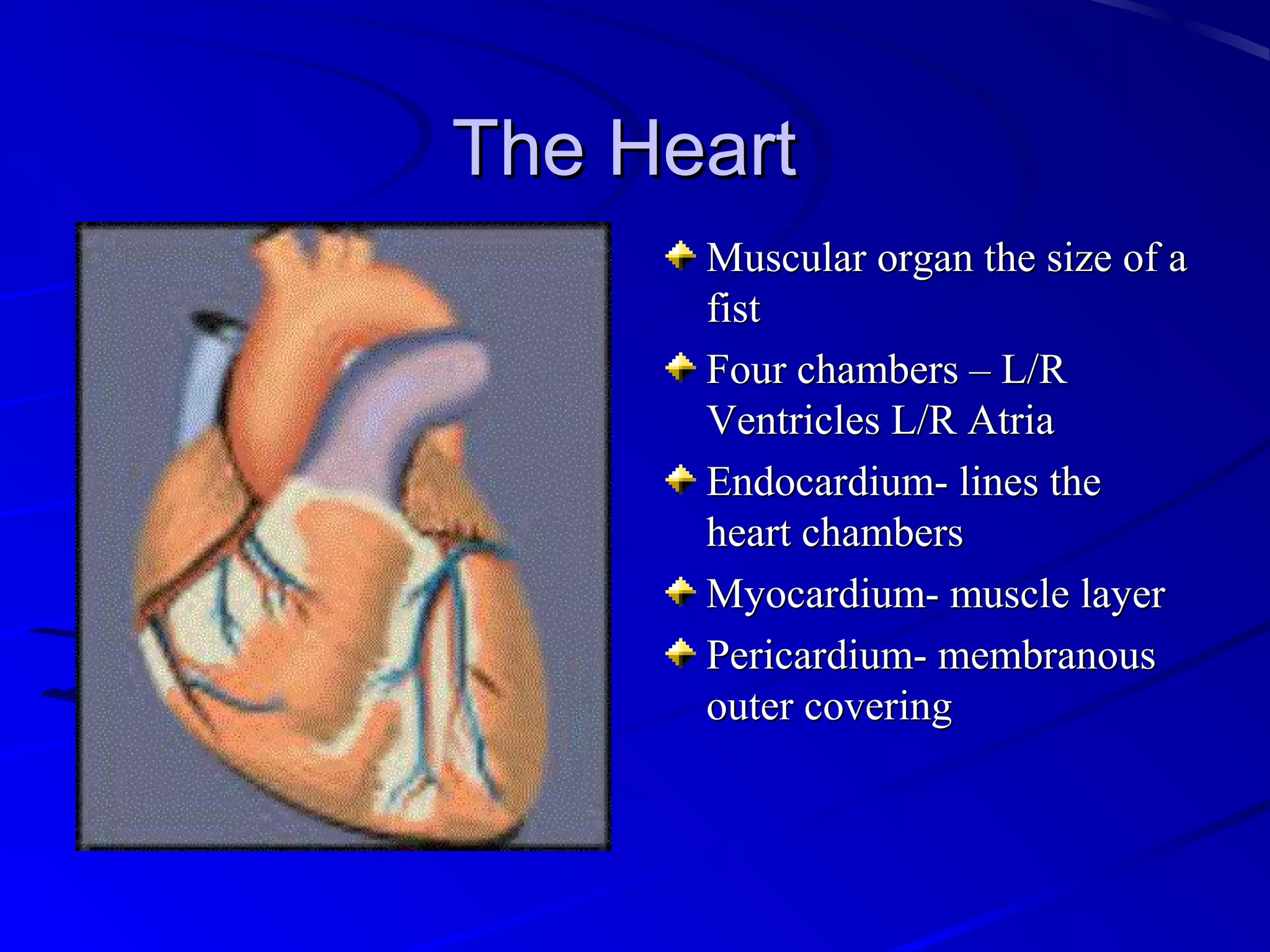
The HeartThe Heart
Muscular organ the size of aMuscular organ the size of a
fistfist
Four chambers – L/RFour chambers – L/R
Ventricles L/R AtriaVentricles L/R Atria
Endocardium- lines theEndocardium- lines the
heart chambersheart chambers
Myocardium- muscle layerMyocardium- muscle layer
Pericardium- membranousPericardium- membranous
outer coveringouter covering
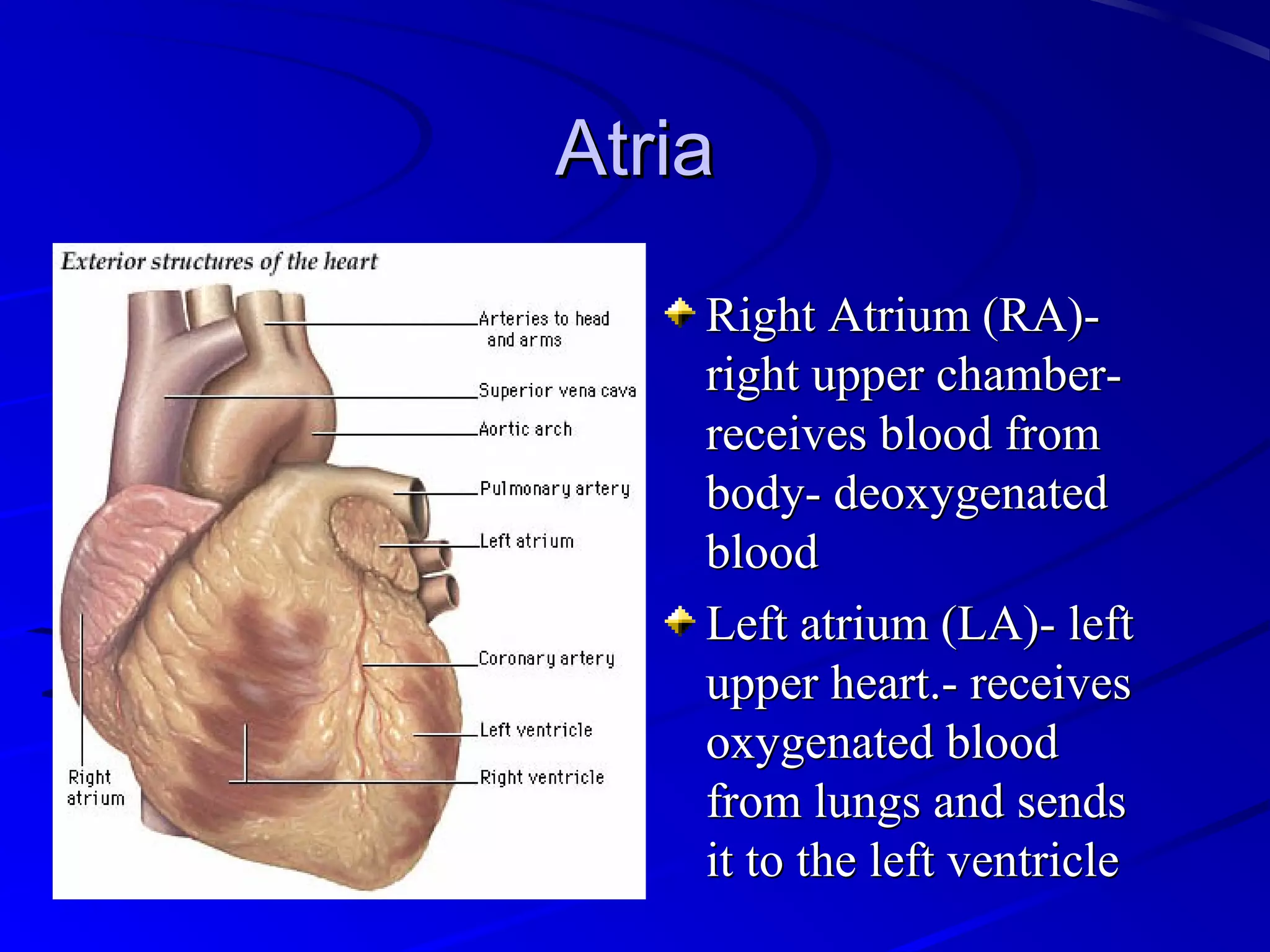
AtriaAtria
Right Atrium (RA)-Right Atrium (RA)-
right upper chamber-right upper chamber-
receives blood fromreceives blood from
body- deoxygenatedbody- deoxygenated
bloodblood
Left atrium (LA)- leftLeft atrium (LA)- left
upper heart.- receivesupper heart.- receives
oxygenated bloodoxygenated blood
from lungs and sendsfrom lungs and sends
it to the left ventricleit to the left ventricle
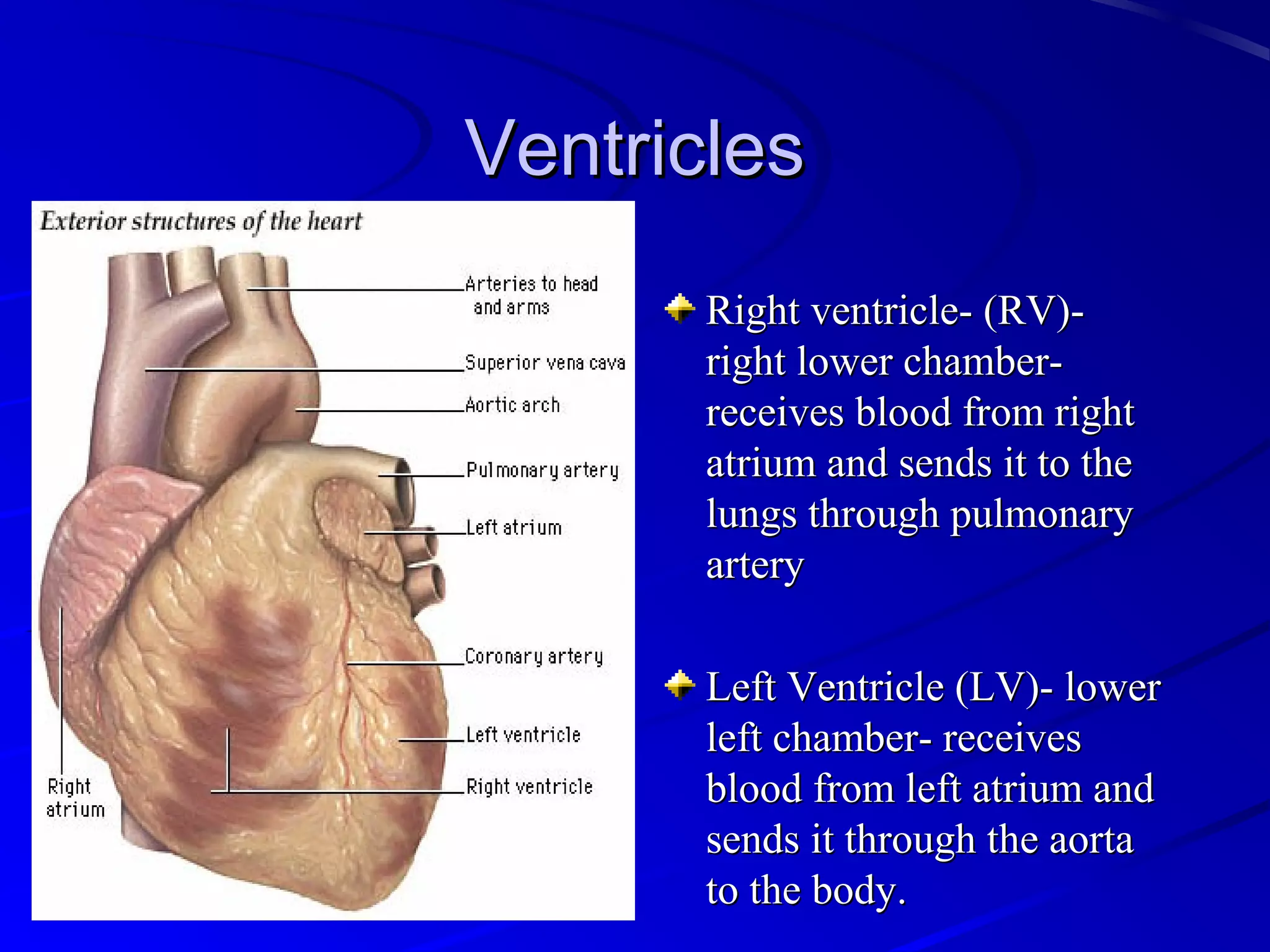
VentriclesVentricles
Right ventricle- (RV)-Right ventricle- (RV)-
right lower chamber-right lower chamber-
receives blood from rightreceives blood from right
atrium and sends it to theatrium and sends it to the
lungs through pulmonarylungs through pulmonary
arteryartery
Left Ventricle (LV)- lowerLeft Ventricle (LV)- lower
left chamber- receivesleft chamber- receives
blood from left atrium andblood from left atrium and
sends it through the aortasends it through the aorta
to the body.to the body.
AortaAorta: The main: The main
trunk of thetrunk of the
systemic arteries,systemic arteries,
carrying blood fromcarrying blood from
the left side of thethe left side of the
heart to theheart to the
arteries of all limbsarteries of all limbs
and organs.and organs.
PulmonaryPulmonary
ArteryArtery carriescarries
blood to lungsblood to lungs
Right
Atrium
Right
Ventricle
Left
Atrium
Left
Ventricle
Aorta
pulmonary artery
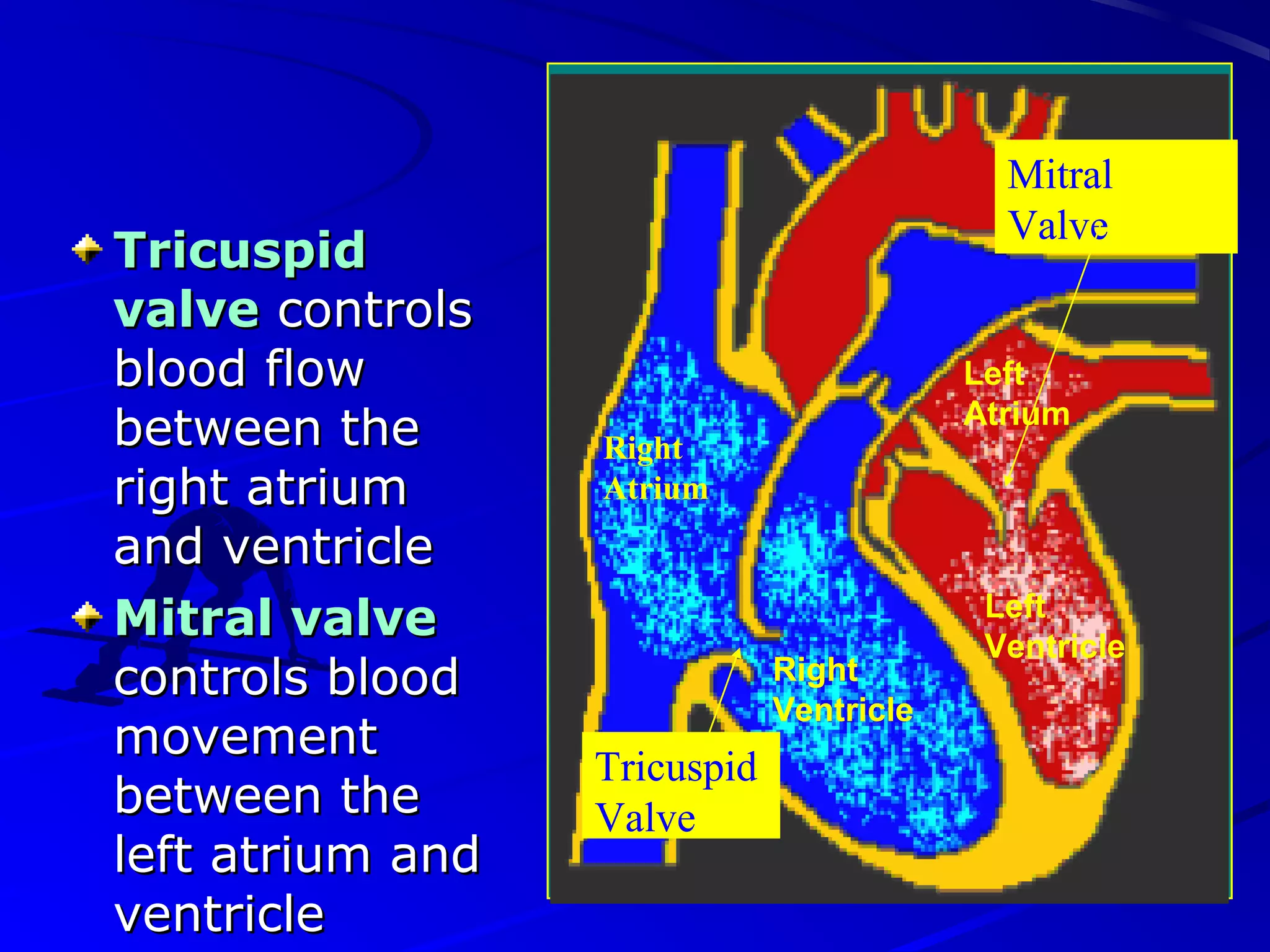
TricuspidTricuspid
valvevalve controlscontrols
blood flowblood flow
between thebetween the
right atriumright atrium
and ventricleand ventricle
Mitral valveMitral valve
controls bloodcontrols blood
movementmovement
between thebetween the
left atrium andleft atrium and
ventricleventricle
Right
Atrium
Right
Ventricle
Left
Atrium
Left
Ventricle
Tricuspid
Valve
Mitral
Valve
PulmonaryPulmonary
valvevalve controlscontrols
blood movementblood movement
from rightfrom right
ventricle intoventricle into
pulmonary arterypulmonary artery
TheThe aortic valveaortic valve
controls bloodcontrols blood
flow from the leftflow from the left
ventricle to theventricle to the
aortaaorta
Right
Atrium
Right
Ventricle
Left
Atrium
Left
Ventricle
Tricuspid
Valve
Pulmonary
valve
Mitral
Valve
Aortic valve
ArteriesArteries
Arteries- tubes thatArteries- tubes that
carry blood away fromcarry blood away from
the heart.the heart.
Muscular elastic wallsMuscular elastic walls
Form arterioles whichForm arterioles which
form capillariesform capillaries
Carry blood and oxygenCarry blood and oxygen
to the body cellsto the body cells
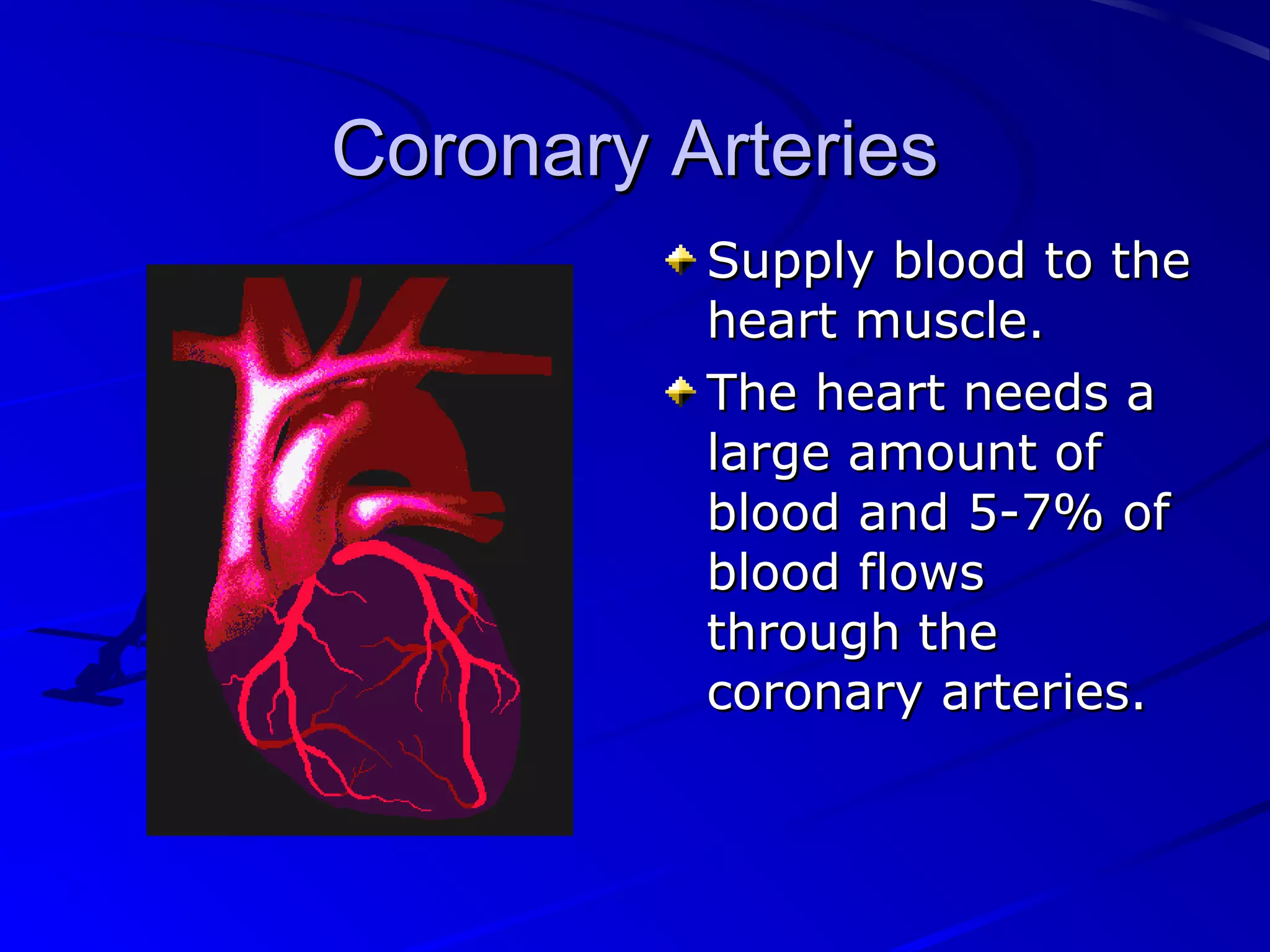
Coronary ArteriesCoronary Arteries
Supply blood to theSupply blood to the
heart muscle.heart muscle.
The heart needs aThe heart needs a
large amount oflarge amount of
blood and 5-7% ofblood and 5-7% of
blood flowsblood flows
through thethrough the
coronary arteries.coronary arteries.
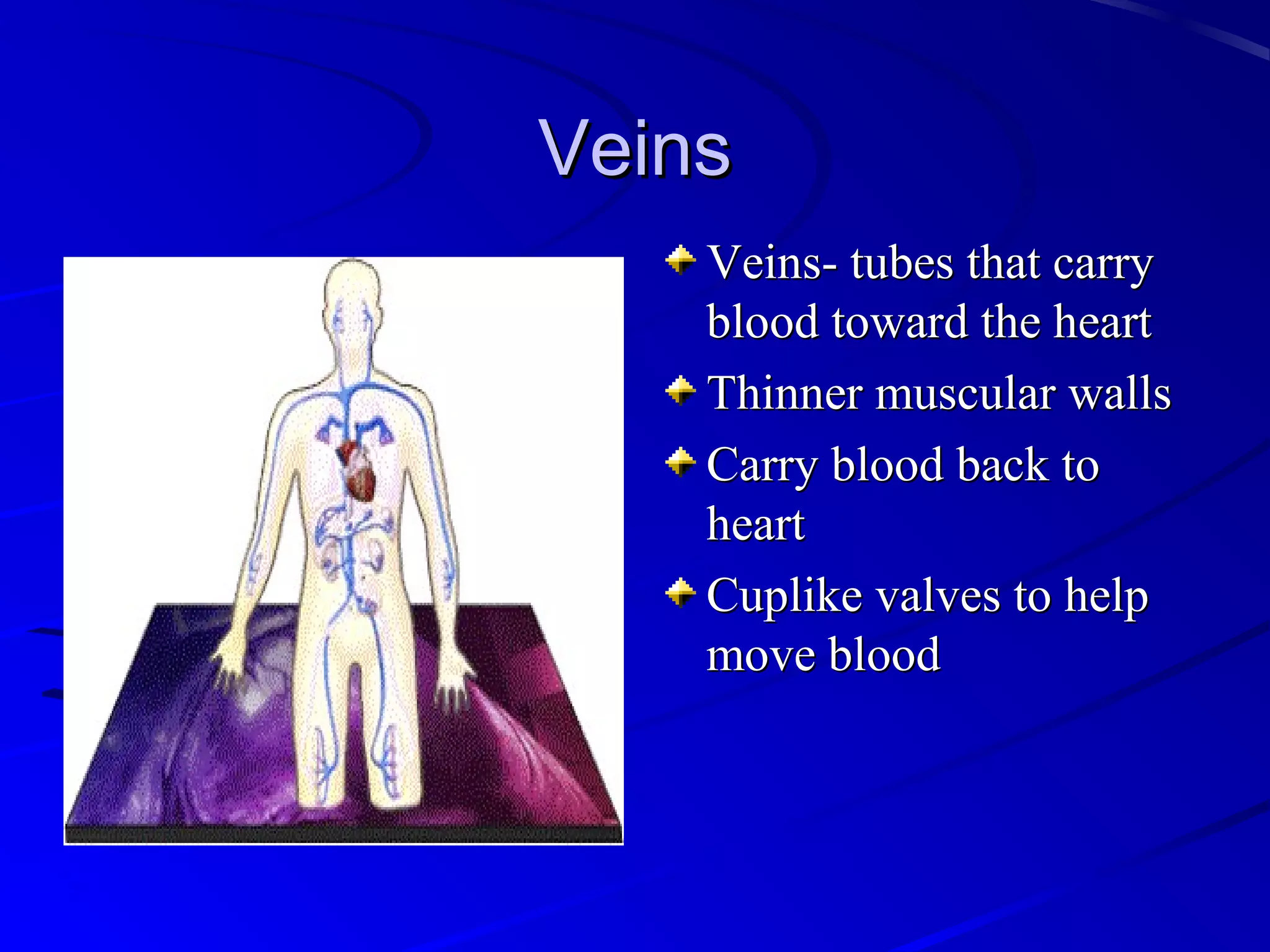
VeinsVeins
Veins- tubes that carryVeins- tubes that carry
blood toward the heartblood toward the heart
Thinner muscular wallsThinner muscular walls
Carry blood back toCarry blood back to
heartheart
Cuplike valves to helpCuplike valves to help
move bloodmove blood
CapillariesCapillaries
Capillaries- tubes thatCapillaries- tubes that
connect arteries andconnect arteries and
veinsveins
Walls only one cellWalls only one cell
thickthick
Site for exchange ofSite for exchange of
nutrients and oxygennutrients and oxygen
from blood cells andfrom blood cells and
carbon dioxide andcarbon dioxide and
wastes to the bloodwastes to the blood
BloodBlood
The body contains 4 toThe body contains 4 to
6 quarts6 quarts
Contains Plasma:Contains Plasma:
antibodies, nutrients,antibodies, nutrients,
gases, waste productsgases, waste products
Produced in boneProduced in bone
marrowmarrow
White and red bloodWhite and red blood
cellscells
Measuring Cardiac FunctionMeasuring Cardiac Function
Blood PressureBlood Pressure
ElectrocardiogramElectrocardiogram
Stress TestStress Test
AngiographyAngiography
Blood PressureBlood Pressure
Measure of fluidMeasure of fluid
pressure withinpressure within
systemsystem
Systolic Pressure:Systolic Pressure:
Pressure generatedPressure generated
by contractionby contraction
Diastolic Pressure:Diastolic Pressure:
Pressure achievedPressure achieved
betweenbetween
contractions.contractions.
SBP reflects the amountSBP reflects the amount
of work theof work the heart isheart is
performingperforming
DBP indicates the amountDBP indicates the amount
of peripheral resistanceof peripheral resistance
encounteredencountered
Arterial pressureArterial pressure
increases with age,increases with age, DDBPBP
more than SBPmore than SBP
With aging, major bloodWith aging, major blood
vesselsvessels increase inincrease in
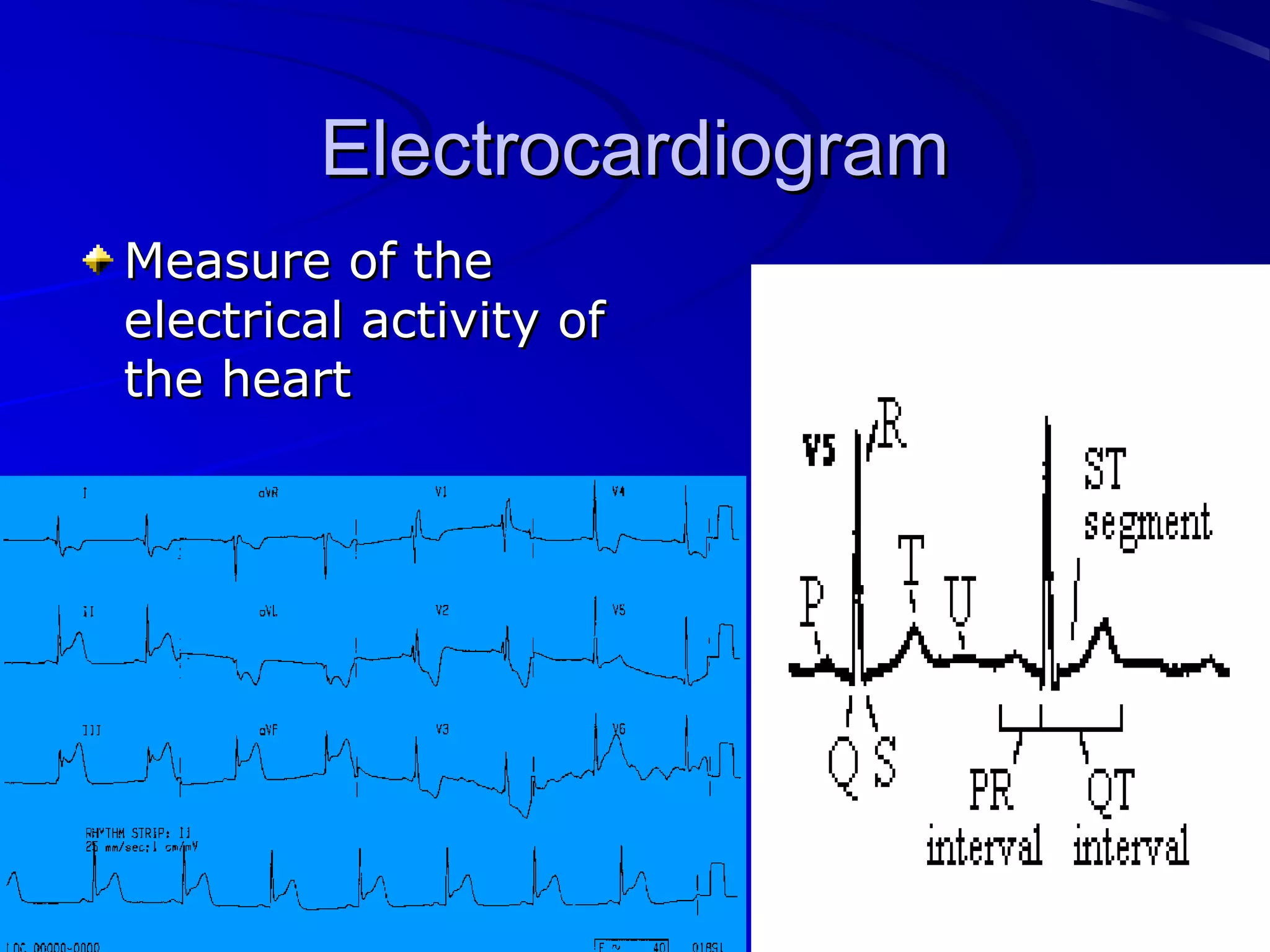
ElectrocardiogramElectrocardiogram
Measure of theMeasure of the
electrical activity ofelectrical activity of
the heartthe heart
Stress TestStress Test
ECG duringECG during
exerciseexercise
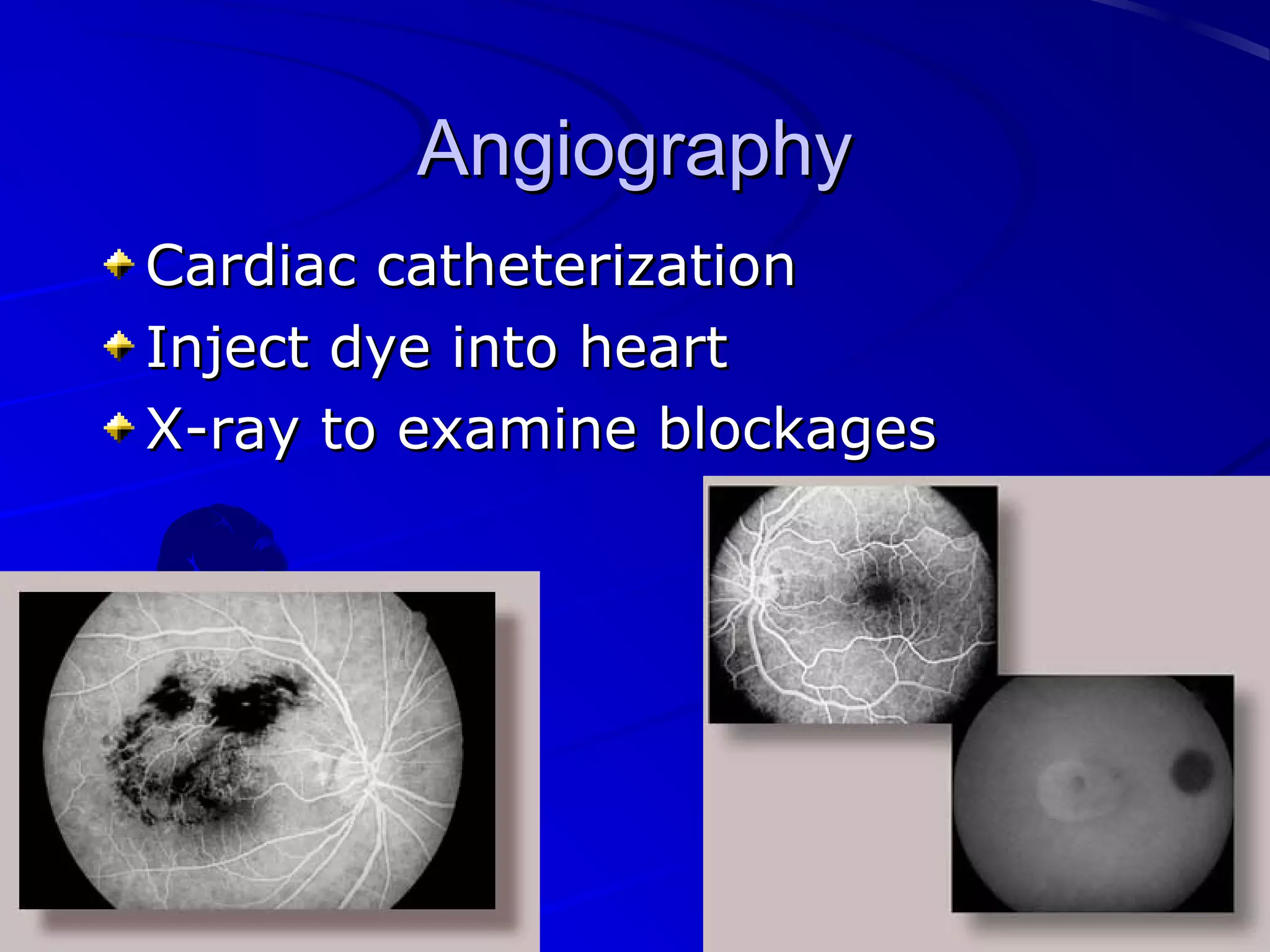
AngiographyAngiography
Cardiac catheterizationCardiac catheterization
Inject dye into heartInject dye into heart
X-ray to examine blockagesX-ray to examine blockages

The cardiovascular system

  • 1.
    The Cardiovascular System:TheCardiovascular System: Structure Function andStructure Function and MeasurementMeasurement Chapter 9Chapter 9
  • 2.
    Organs of theCardiovascularOrgans of the Cardiovascular SystemSystem HeartHeart Blood vesselsBlood vessels – ArteriesArteries ArteriolesArterioles CapillariesCapillaries – VeinsVeins VenulesVenules
  • 3.
    The HeartThe Heart Muscularorgan the size of aMuscular organ the size of a fistfist Four chambers – L/RFour chambers – L/R Ventricles L/R AtriaVentricles L/R Atria Endocardium- lines theEndocardium- lines the heart chambersheart chambers Myocardium- muscle layerMyocardium- muscle layer Pericardium- membranousPericardium- membranous outer coveringouter covering
  • 4.
    AtriaAtria Right Atrium (RA)-RightAtrium (RA)- right upper chamber-right upper chamber- receives blood fromreceives blood from body- deoxygenatedbody- deoxygenated bloodblood Left atrium (LA)- leftLeft atrium (LA)- left upper heart.- receivesupper heart.- receives oxygenated bloodoxygenated blood from lungs and sendsfrom lungs and sends it to the left ventricleit to the left ventricle
  • 5.
    VentriclesVentricles Right ventricle- (RV)-Rightventricle- (RV)- right lower chamber-right lower chamber- receives blood from rightreceives blood from right atrium and sends it to theatrium and sends it to the lungs through pulmonarylungs through pulmonary arteryartery Left Ventricle (LV)- lowerLeft Ventricle (LV)- lower left chamber- receivesleft chamber- receives blood from left atrium andblood from left atrium and sends it through the aortasends it through the aorta to the body.to the body.
  • 6.
    AortaAorta: The main:The main trunk of thetrunk of the systemic arteries,systemic arteries, carrying blood fromcarrying blood from the left side of thethe left side of the heart to theheart to the arteries of all limbsarteries of all limbs and organs.and organs. PulmonaryPulmonary ArteryArtery carriescarries blood to lungsblood to lungs Right Atrium Right Ventricle Left Atrium Left Ventricle Aorta pulmonary artery
  • 7.
    TricuspidTricuspid valvevalve controlscontrols blood flowbloodflow between thebetween the right atriumright atrium and ventricleand ventricle Mitral valveMitral valve controls bloodcontrols blood movementmovement between thebetween the left atrium andleft atrium and ventricleventricle Right Atrium Right Ventricle Left Atrium Left Ventricle Tricuspid Valve Mitral Valve
  • 8.
    PulmonaryPulmonary valvevalve controlscontrols blood movementbloodmovement from rightfrom right ventricle intoventricle into pulmonary arterypulmonary artery TheThe aortic valveaortic valve controls bloodcontrols blood flow from the leftflow from the left ventricle to theventricle to the aortaaorta Right Atrium Right Ventricle Left Atrium Left Ventricle Tricuspid Valve Pulmonary valve Mitral Valve Aortic valve
  • 9.
    ArteriesArteries Arteries- tubes thatArteries-tubes that carry blood away fromcarry blood away from the heart.the heart. Muscular elastic wallsMuscular elastic walls Form arterioles whichForm arterioles which form capillariesform capillaries Carry blood and oxygenCarry blood and oxygen to the body cellsto the body cells
  • 10.
    Coronary ArteriesCoronary Arteries Supplyblood to theSupply blood to the heart muscle.heart muscle. The heart needs aThe heart needs a large amount oflarge amount of blood and 5-7% ofblood and 5-7% of blood flowsblood flows through thethrough the coronary arteries.coronary arteries.
  • 11.
    VeinsVeins Veins- tubes thatcarryVeins- tubes that carry blood toward the heartblood toward the heart Thinner muscular wallsThinner muscular walls Carry blood back toCarry blood back to heartheart Cuplike valves to helpCuplike valves to help move bloodmove blood
  • 12.
    CapillariesCapillaries Capillaries- tubes thatCapillaries-tubes that connect arteries andconnect arteries and veinsveins Walls only one cellWalls only one cell thickthick Site for exchange ofSite for exchange of nutrients and oxygennutrients and oxygen from blood cells andfrom blood cells and carbon dioxide andcarbon dioxide and wastes to the bloodwastes to the blood
  • 13.
    BloodBlood The body contains4 toThe body contains 4 to 6 quarts6 quarts Contains Plasma:Contains Plasma: antibodies, nutrients,antibodies, nutrients, gases, waste productsgases, waste products Produced in boneProduced in bone marrowmarrow White and red bloodWhite and red blood cellscells
  • 15.
    Measuring Cardiac FunctionMeasuringCardiac Function Blood PressureBlood Pressure ElectrocardiogramElectrocardiogram Stress TestStress Test AngiographyAngiography
  • 16.
    Blood PressureBlood Pressure Measureof fluidMeasure of fluid pressure withinpressure within systemsystem Systolic Pressure:Systolic Pressure: Pressure generatedPressure generated by contractionby contraction Diastolic Pressure:Diastolic Pressure: Pressure achievedPressure achieved betweenbetween contractions.contractions. SBP reflects the amountSBP reflects the amount of work theof work the heart isheart is performingperforming DBP indicates the amountDBP indicates the amount of peripheral resistanceof peripheral resistance encounteredencountered Arterial pressureArterial pressure increases with age,increases with age, DDBPBP more than SBPmore than SBP With aging, major bloodWith aging, major blood vesselsvessels increase inincrease in
  • 17.
    ElectrocardiogramElectrocardiogram Measure of theMeasureof the electrical activity ofelectrical activity of the heartthe heart
  • 18.
    Stress TestStress Test ECGduringECG during exerciseexercise
  • 19.
    AngiographyAngiography Cardiac catheterizationCardiac catheterization Injectdye into heartInject dye into heart X-ray to examine blockagesX-ray to examine blockages

Editor's Notes

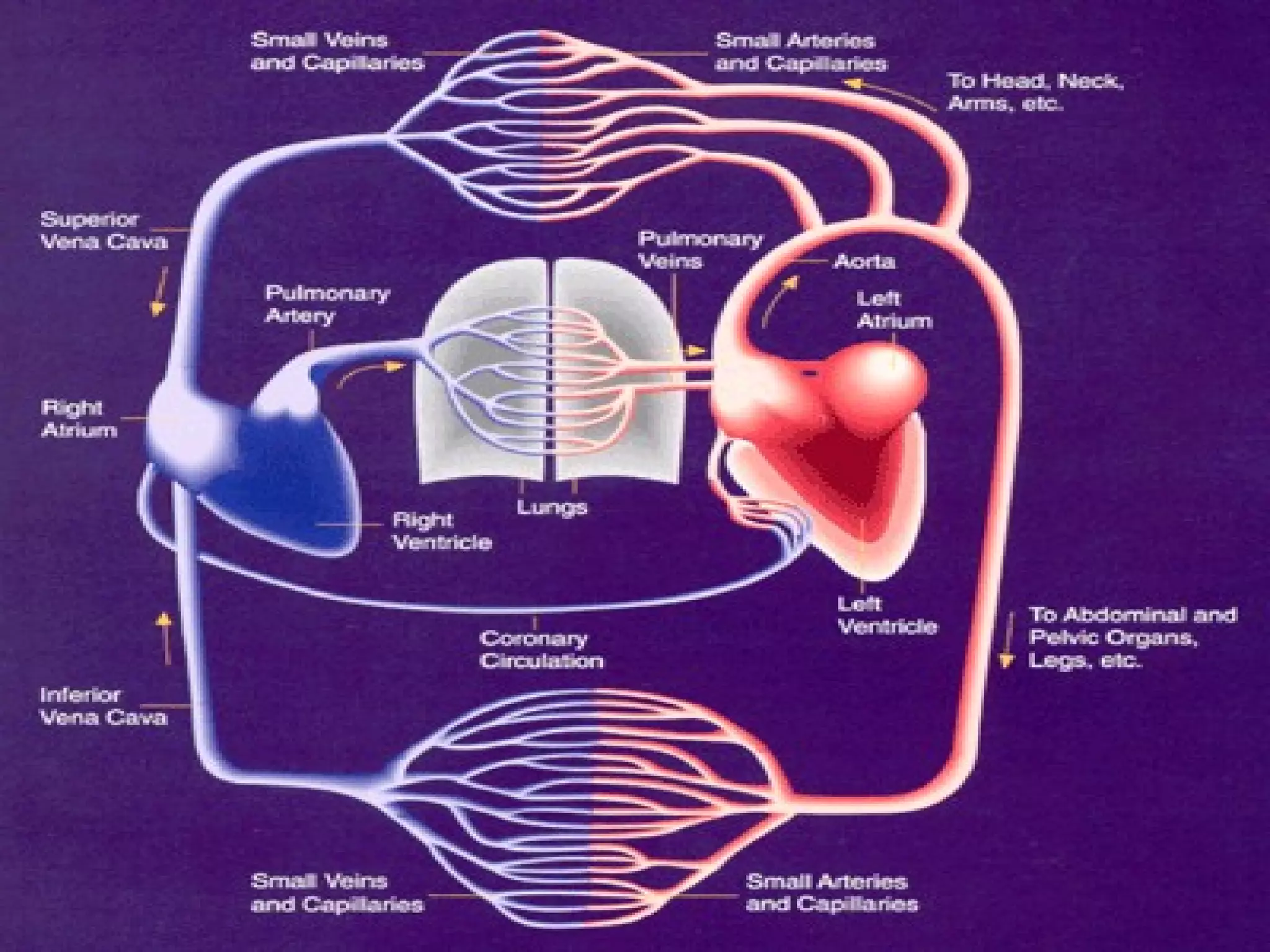
  • #8 Oxygen poor (blue) Blood travels from the right ventricle to the lungs where hemoglobin becomes saturated with oxygen. From the lungs oxygenated blood travels into the left atrium of the heart