METHODS AND APPROACHES OF A SECOND LANGUAGE Unit 3.  A pproaches, Communicative and Interaction Principles and Practical Guidelines for Language Teaching Text: The Postmethod Era Professor: César Hernández June, 2010  MAESTRIA EN EDUCACION BILINGÜE MEB
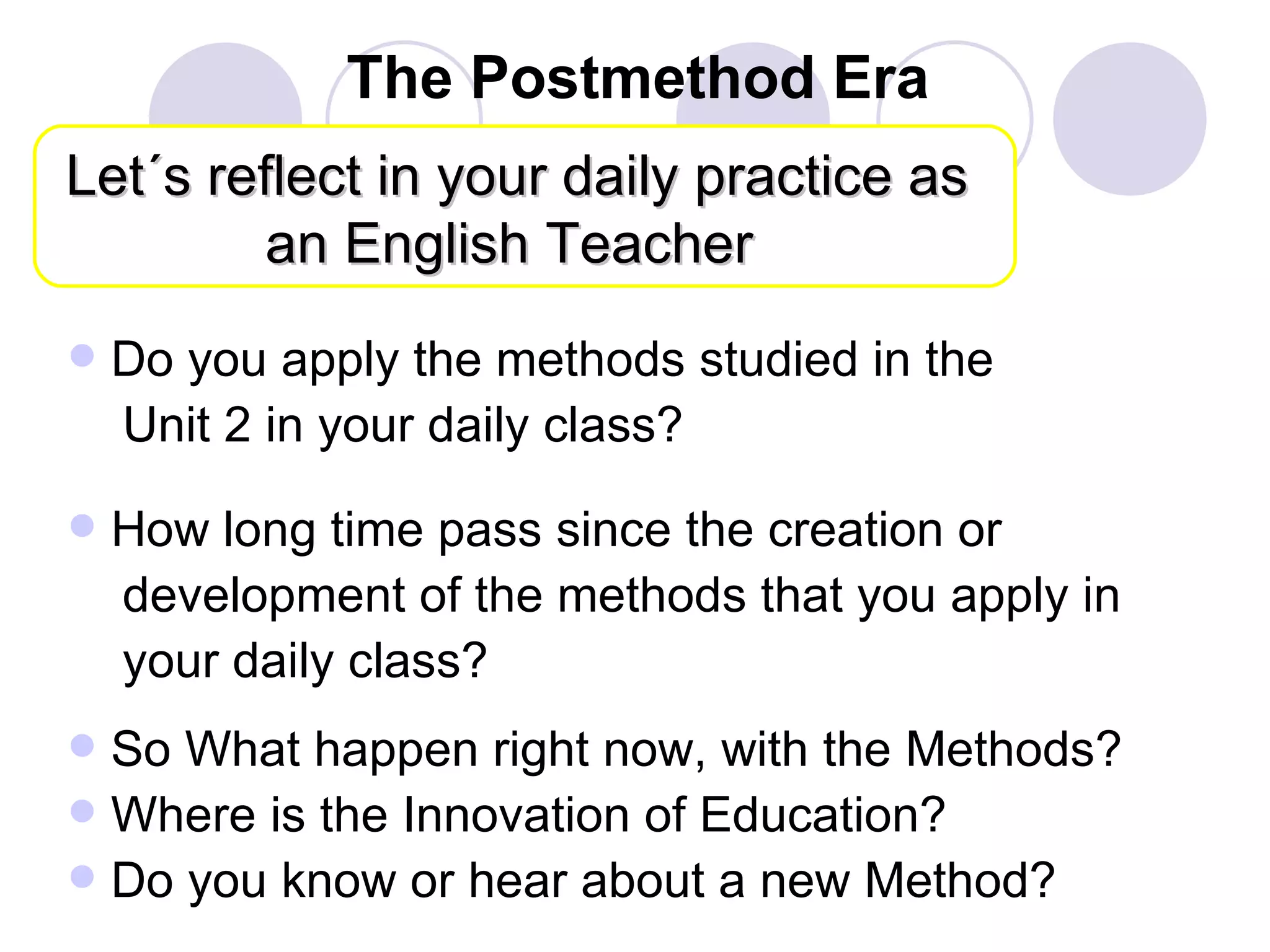
The Postmethod Era Do you apply the methods studied in the Unit 2 in your daily class? Let´s reflect in your daily practice as  an English Teacher  How long time pass since the creation or  development of the methods that you apply in  your daily class? So What happen right now, with the Methods?  Where is the Innovation of Education? Do you know or hear about a new Method?
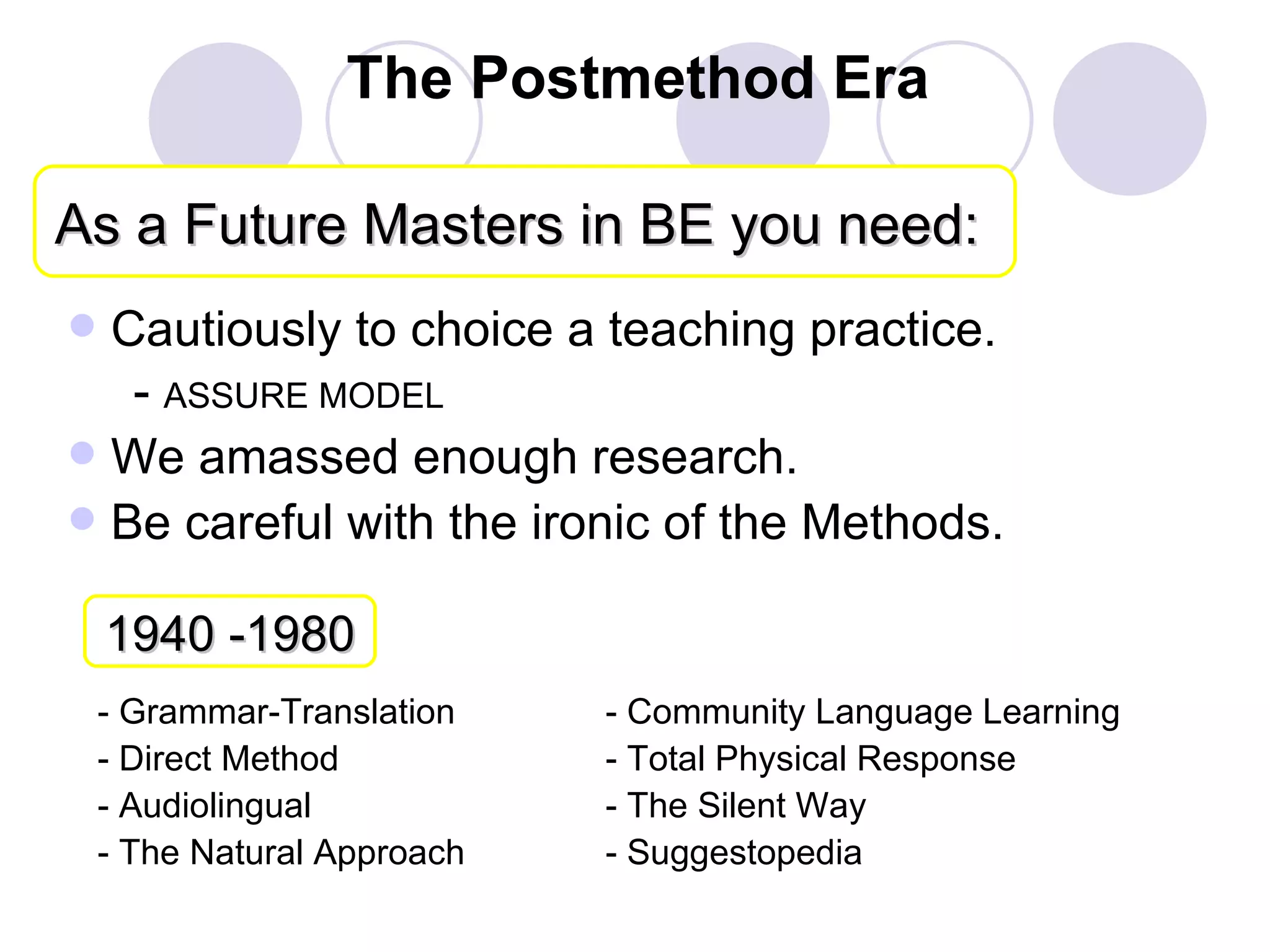
The Postmethod Era As a Future Masters in BE you need:  Cautiously to choice a teaching practice.   -  ASSURE MODEL We amassed enough research. Be careful with the ironic of the Methods.  1940 -1980 - Grammar-Translation - Community Language Learning - Direct Method - Total Physical Response - Audiolingual - The Silent Way - The Natural Approach - Suggestopedia
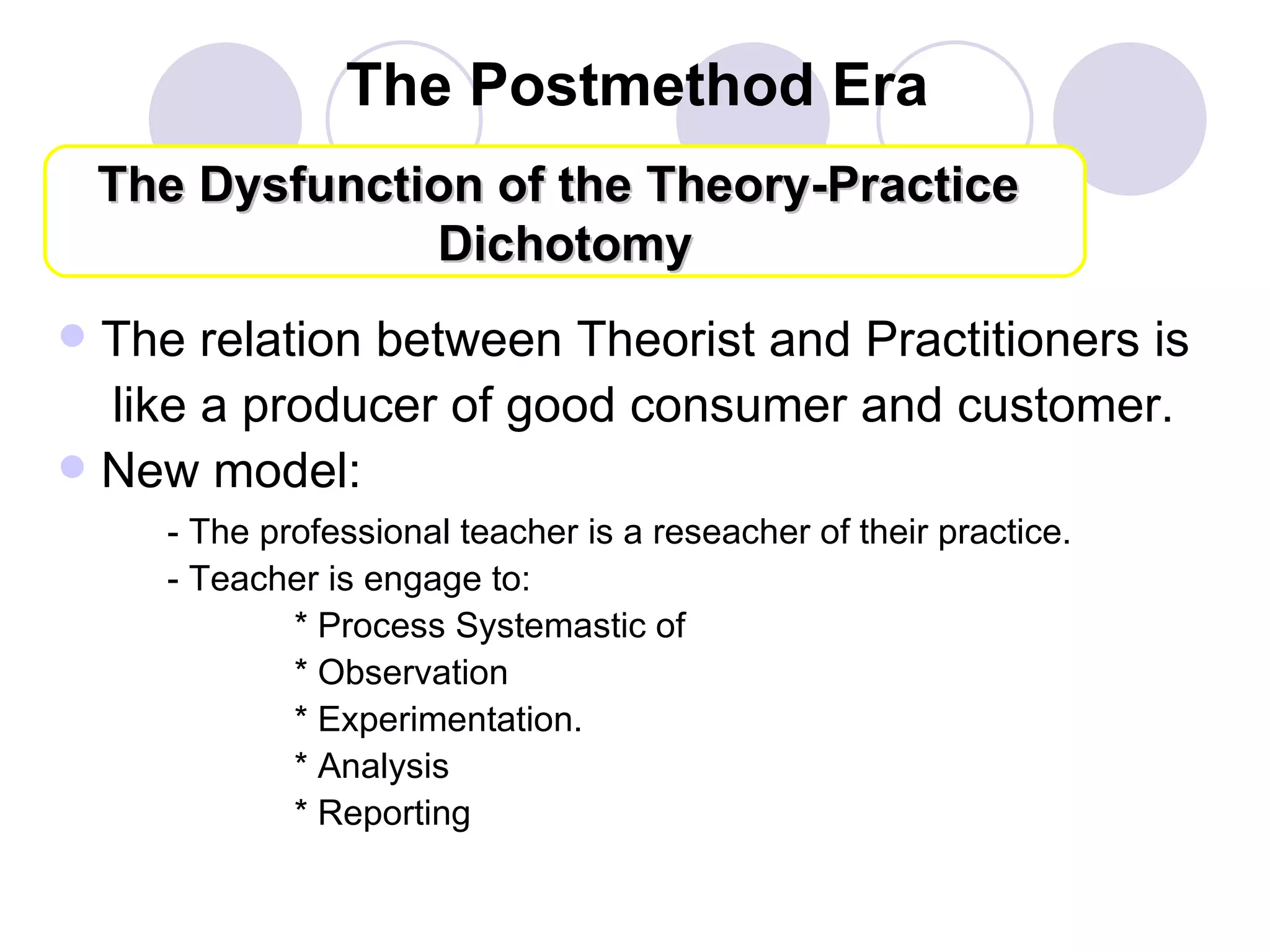
The Postmethod Era The relation between Theorist and Practitioners is like a producer of good consumer and customer. New model: The Dysfunction of the Theory-Practice  Dichotomy - The professional teacher is a reseacher of their practice. - Teacher is engage to: * Process Systemastic of * Observation * Experimentation. * Analysis  * Reporting
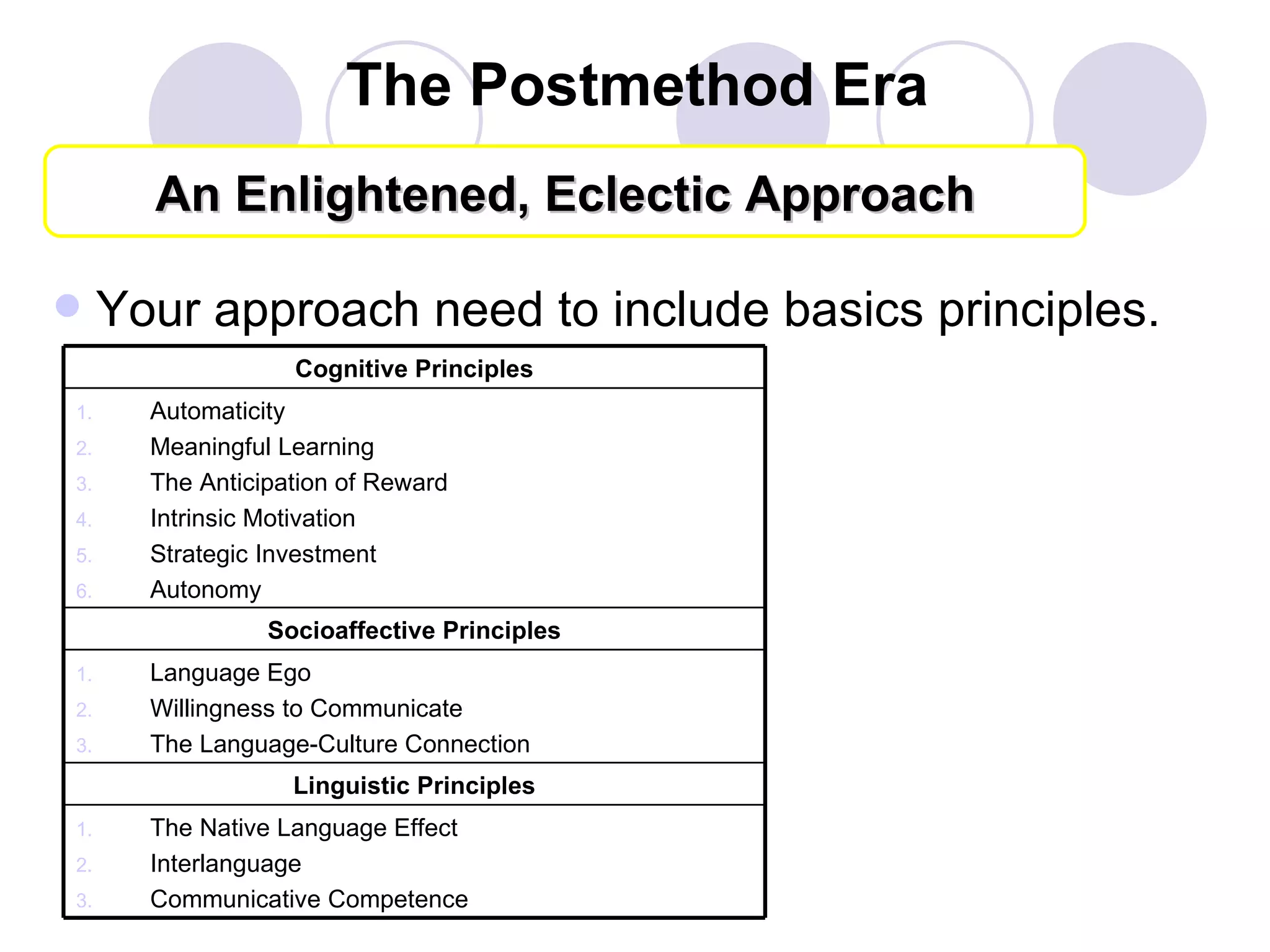
The Postmethod Era Your approach need to include basics principles. An Enlightened, Eclectic Approach The Native Language Effect Interlanguage Communicative Competence Linguistic Principles Language Ego Willingness to Communicate The Language-Culture Connection Socioaffective Principles Automaticity Meaningful Learning The Anticipation of Reward Intrinsic Motivation Strategic Investment Autonomy Cognitive Principles
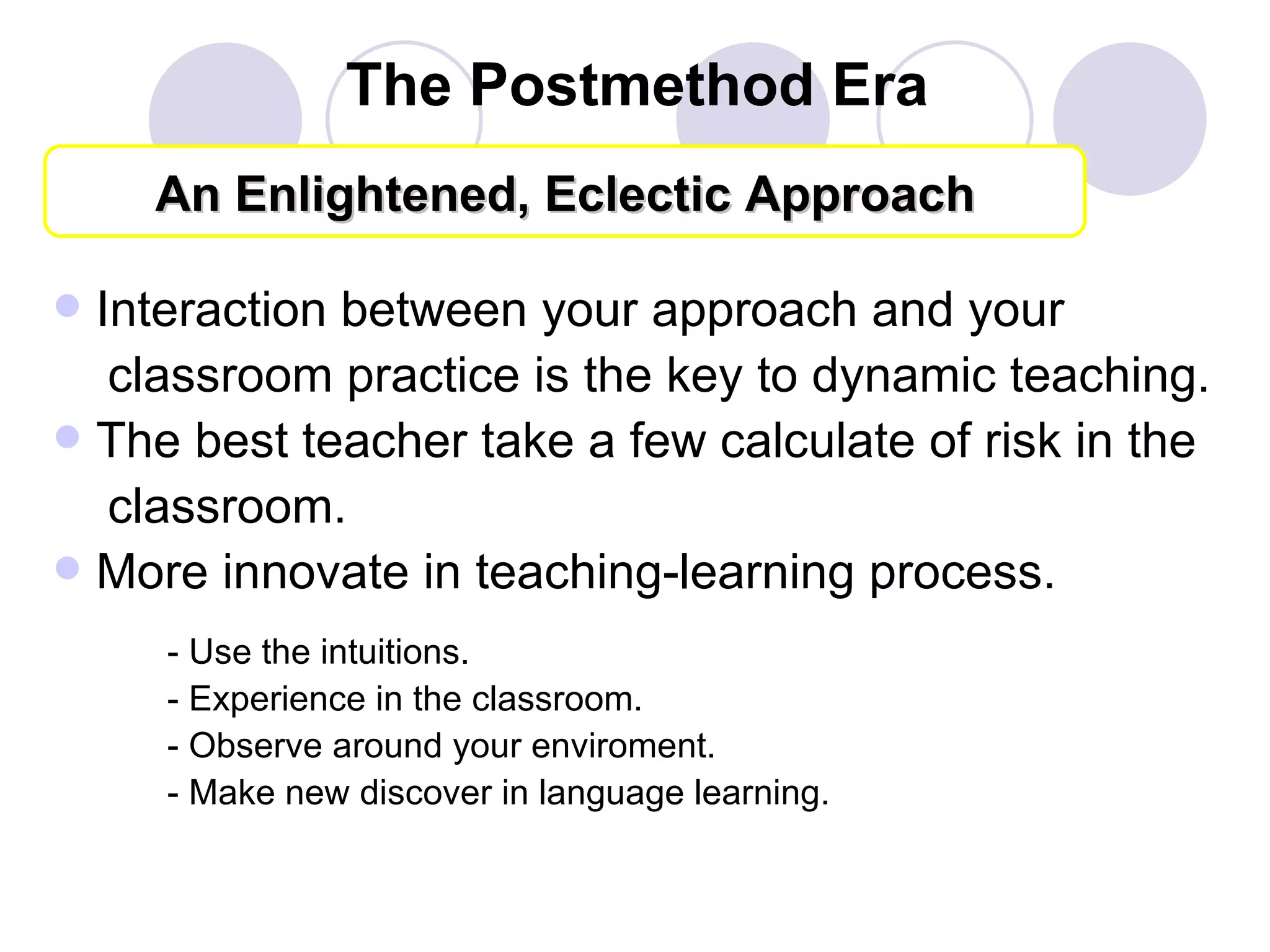
The Postmethod Era Interaction between your approach and your  classroom practice is the key to dynamic teaching. The best teacher take a few calculate of risk in the  classroom. More innovate in teaching-learning process. An Enlightened, Eclectic Approach - Use the intuitions. - Experience in the classroom. - Observe around your enviroment. - Make new discover in language learning.

The Postmethod Era in SLA

  • 1.
    METHODS AND APPROACHESOF A SECOND LANGUAGE Unit 3. A pproaches, Communicative and Interaction Principles and Practical Guidelines for Language Teaching Text: The Postmethod Era Professor: César Hernández June, 2010 MAESTRIA EN EDUCACION BILINGÜE MEB
  • 2.
    The Postmethod EraDo you apply the methods studied in the Unit 2 in your daily class? Let´s reflect in your daily practice as an English Teacher How long time pass since the creation or development of the methods that you apply in your daily class? So What happen right now, with the Methods? Where is the Innovation of Education? Do you know or hear about a new Method?
  • 3.
    The Postmethod EraAs a Future Masters in BE you need: Cautiously to choice a teaching practice. - ASSURE MODEL We amassed enough research. Be careful with the ironic of the Methods. 1940 -1980 - Grammar-Translation - Community Language Learning - Direct Method - Total Physical Response - Audiolingual - The Silent Way - The Natural Approach - Suggestopedia
  • 4.
    The Postmethod EraThe relation between Theorist and Practitioners is like a producer of good consumer and customer. New model: The Dysfunction of the Theory-Practice Dichotomy - The professional teacher is a reseacher of their practice. - Teacher is engage to: * Process Systemastic of * Observation * Experimentation. * Analysis * Reporting
  • 5.
    The Postmethod EraYour approach need to include basics principles. An Enlightened, Eclectic Approach The Native Language Effect Interlanguage Communicative Competence Linguistic Principles Language Ego Willingness to Communicate The Language-Culture Connection Socioaffective Principles Automaticity Meaningful Learning The Anticipation of Reward Intrinsic Motivation Strategic Investment Autonomy Cognitive Principles
  • 6.
    The Postmethod EraInteraction between your approach and your classroom practice is the key to dynamic teaching. The best teacher take a few calculate of risk in the classroom. More innovate in teaching-learning process. An Enlightened, Eclectic Approach - Use the intuitions. - Experience in the classroom. - Observe around your enviroment. - Make new discover in language learning.