BY:
BALJENDER SINGH
CMBA6
“BIG FIVE” personality model
Human resources professionals
often use the Big Five personality
dimensions to help place employees.
That is because these dimensions are
considered to be the underlying traits
that make up an individual’s overall
personality:
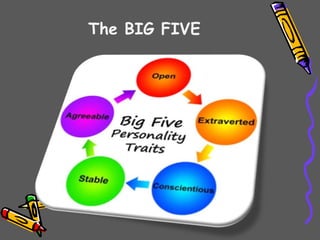
The BIG FIVE
OPENNESS TO EXPERIENCE MEASURES THE INDIVIDUAL’S
ABILITY TO BE OPEN TO ANY KIND OF EXPERIENCE THAT
HELPS HIM/HER TO DO THE JOB EFFECTIVELY.
 More Approachable
 Creative
 Imagination
 Curiosity
 Original
 Uncomfortable
 Practical
 Traditional
 Down-to-earth
 Conservative
 Simple
EXTRAVERSION FOCUSES ON THE COMFORT LEVEL
OF AN INDIVIDUAL IN INTERACTION WITH OTHERS.
 Assertive
 Outgoing
 Talkative
 Open
 Timid
 Quiet
 Reserved
CONSCIENTIOUSNESS REFERS TO THE EXTENT TO WHICH
INDIVIDUALS SHOW CONSISTENT & RELIABLE BEHAVIOR
WHILE WORKING IN THE ORGANIZATION.
 High Responsible
 Dependable
 Organized
 Persistent
 Thorough
 Unreliable
 Disorganized
 Inconsistent
 Easy-going
 Careless
EMOTIONAL STABILITY REFERS TO THE ABILITY OF
AN INDIVIDUAL TO CONTROL HIS/HER EMOTIONS AT
THE TIME OF CRISIS.
 Calm
 Self-confident
 Secure
 Stable
 Contented
 Nervous
 Depressed
 Insecure
 Fearful
 Moody
 Tense
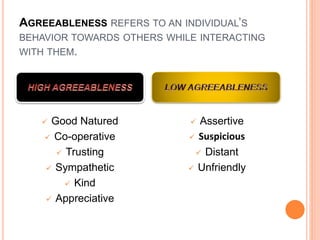
AGREEABLENESS REFERS TO AN INDIVIDUAL’S
BEHAVIOR TOWARDS OTHERS WHILE INTERACTING
WITH THEM.
 Good Natured
 Co-operative
 Trusting
 Sympathetic
 Kind
 Appreciative
 Assertive
 Suspicious
 Distant
 Unfriendly
the big five model personality test

the big five model personality test

  • 1.
  • 2.
    “BIG FIVE” personalitymodel Human resources professionals often use the Big Five personality dimensions to help place employees. That is because these dimensions are considered to be the underlying traits that make up an individual’s overall personality:
  • 3.
  • 4.
    OPENNESS TO EXPERIENCEMEASURES THE INDIVIDUAL’S ABILITY TO BE OPEN TO ANY KIND OF EXPERIENCE THAT HELPS HIM/HER TO DO THE JOB EFFECTIVELY.  More Approachable  Creative  Imagination  Curiosity  Original  Uncomfortable  Practical  Traditional  Down-to-earth  Conservative  Simple
  • 5.
    EXTRAVERSION FOCUSES ONTHE COMFORT LEVEL OF AN INDIVIDUAL IN INTERACTION WITH OTHERS.  Assertive  Outgoing  Talkative  Open  Timid  Quiet  Reserved
  • 6.
    CONSCIENTIOUSNESS REFERS TOTHE EXTENT TO WHICH INDIVIDUALS SHOW CONSISTENT & RELIABLE BEHAVIOR WHILE WORKING IN THE ORGANIZATION.  High Responsible  Dependable  Organized  Persistent  Thorough  Unreliable  Disorganized  Inconsistent  Easy-going  Careless
  • 7.
    EMOTIONAL STABILITY REFERSTO THE ABILITY OF AN INDIVIDUAL TO CONTROL HIS/HER EMOTIONS AT THE TIME OF CRISIS.  Calm  Self-confident  Secure  Stable  Contented  Nervous  Depressed  Insecure  Fearful  Moody  Tense
  • 8.
    AGREEABLENESS REFERS TOAN INDIVIDUAL’S BEHAVIOR TOWARDS OTHERS WHILE INTERACTING WITH THEM.  Good Natured  Co-operative  Trusting  Sympathetic  Kind  Appreciative  Assertive  Suspicious  Distant  Unfriendly