THE ACCOUNTING EQUATION
•The whole of financial accounting is
based on this simple idea
•It is the foundation of accounting
THE ACCOUNTING EQUATION
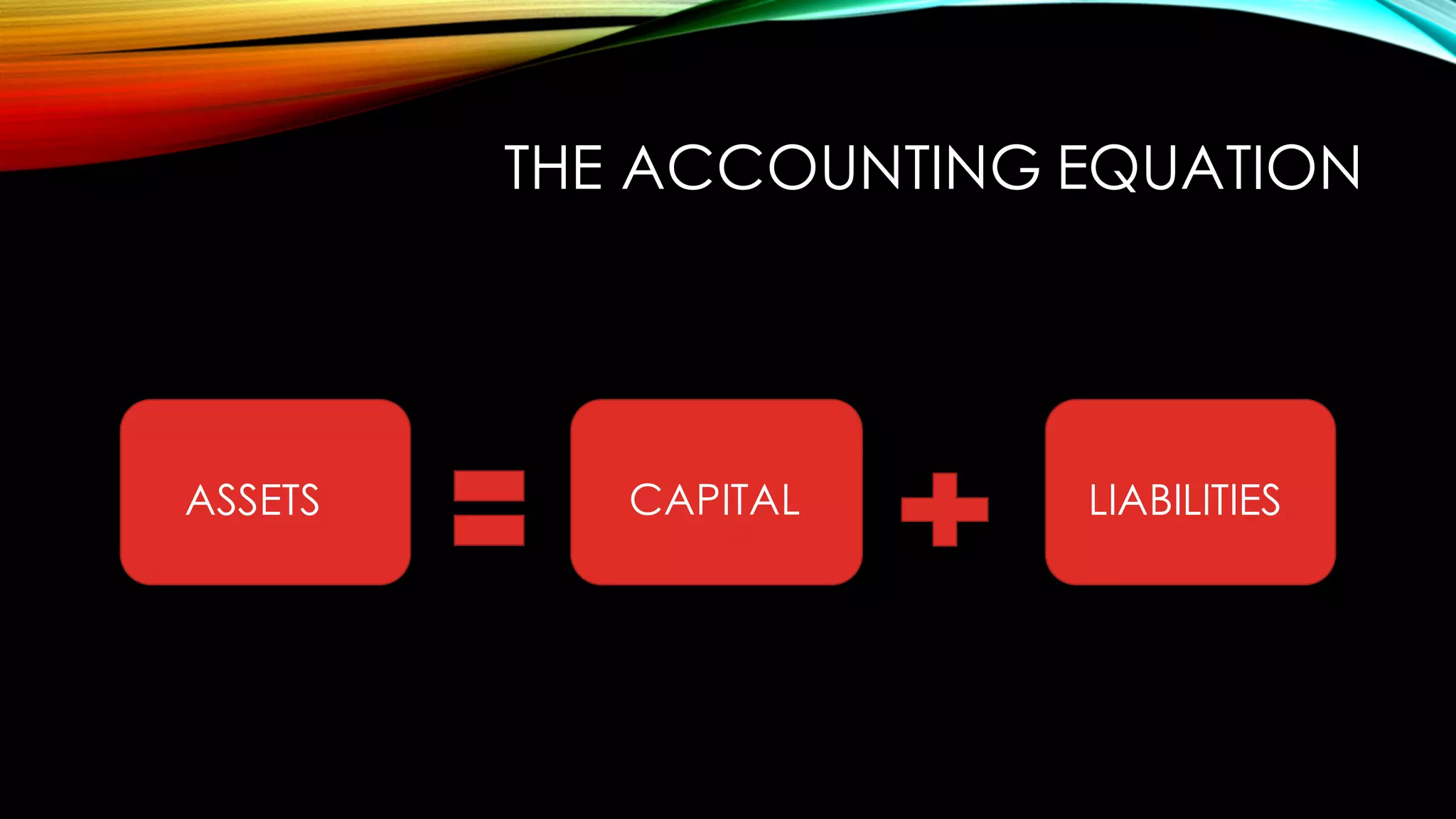
ASSETS CAPITAL LIABILITIES
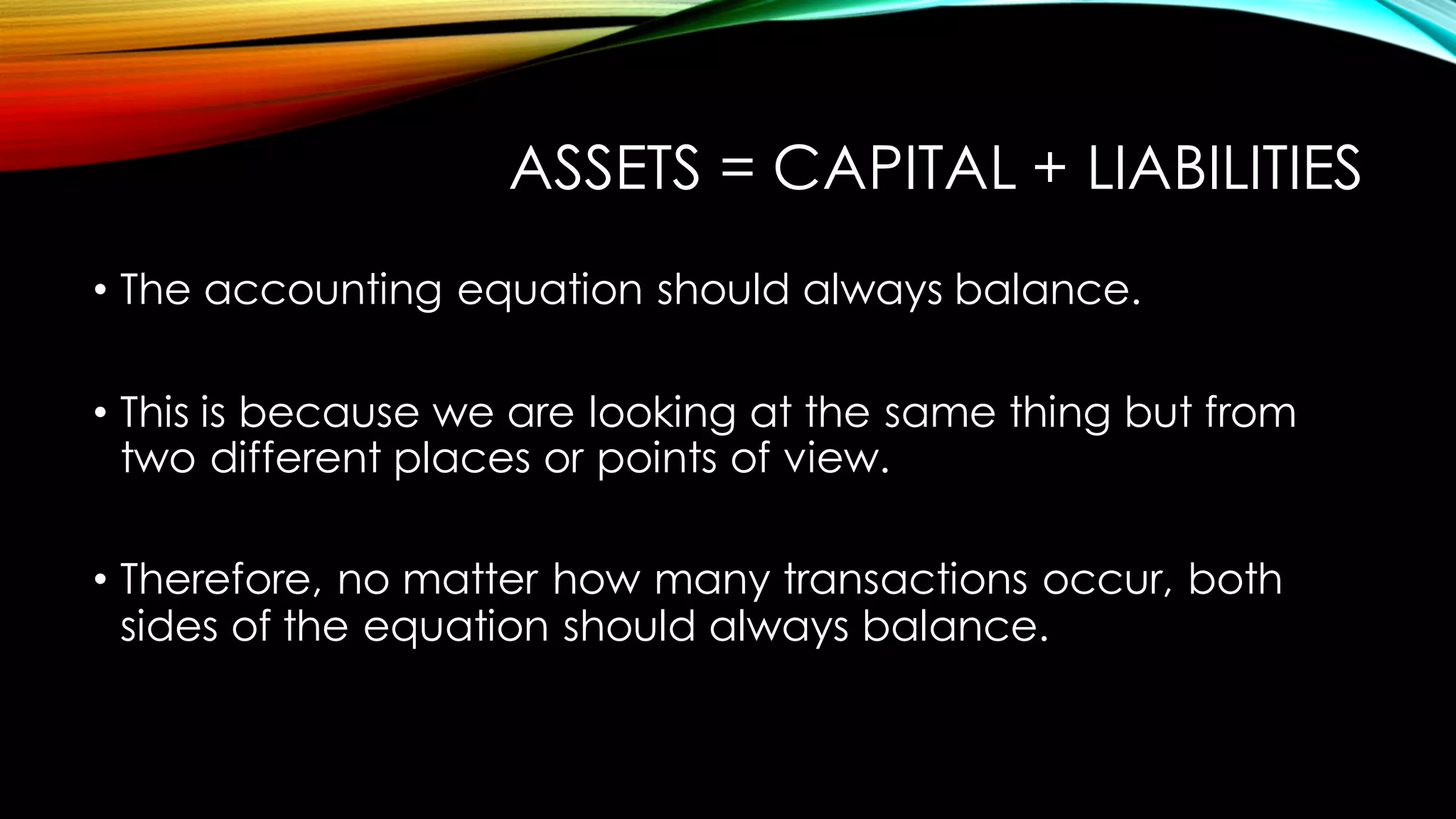
ASSETS = CAPITAL + LIABILITIES
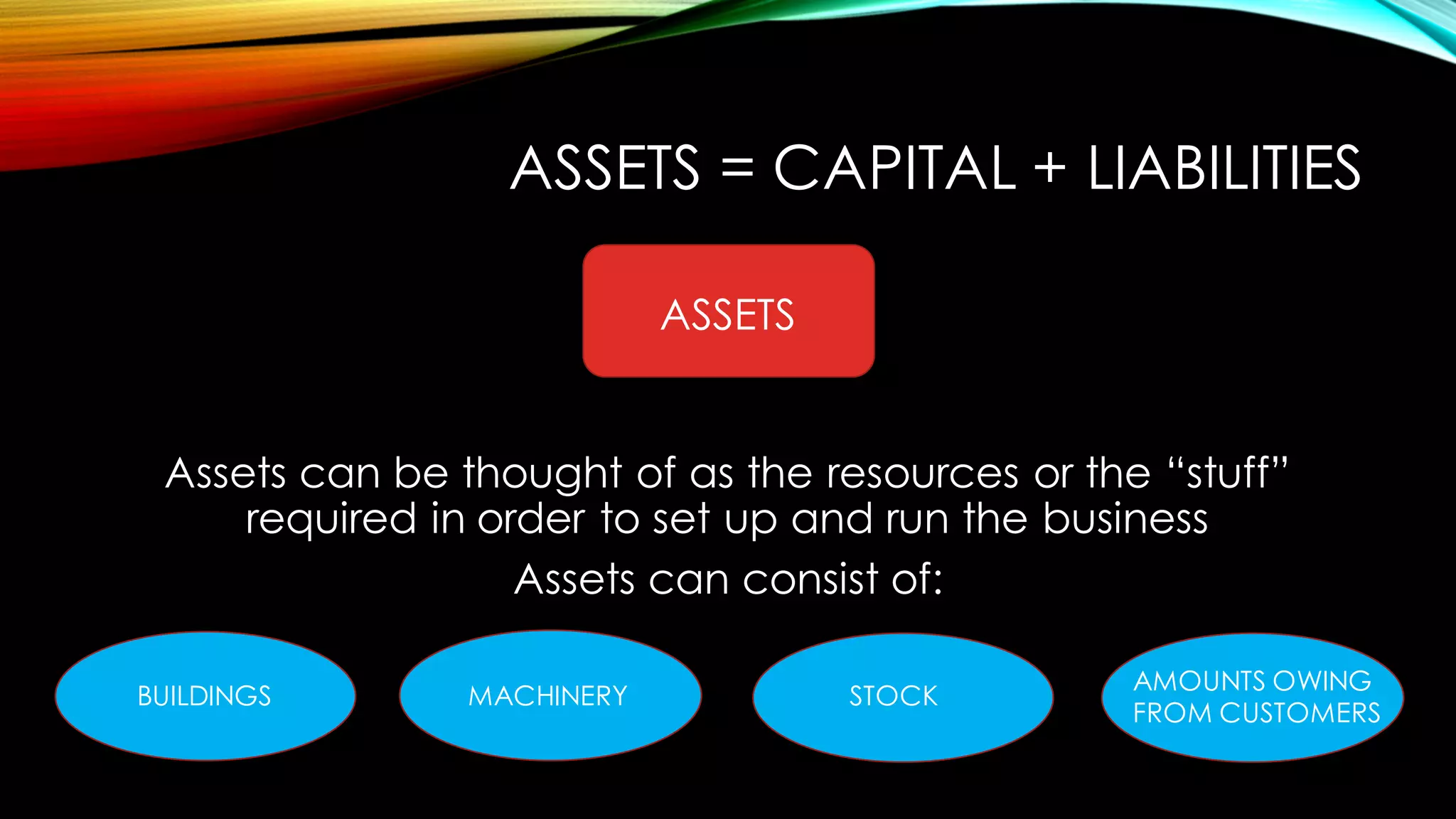
Assets can be thought of as the resources or the “stuff”
required in order to set up and run the business
Assets can consist of:
ASSETS
BUILDINGS MACHINERY STOCK
AMOUNTS OWING
FROM CUSTOMERS
ASSETS = CAPITAL + LIABILITIES
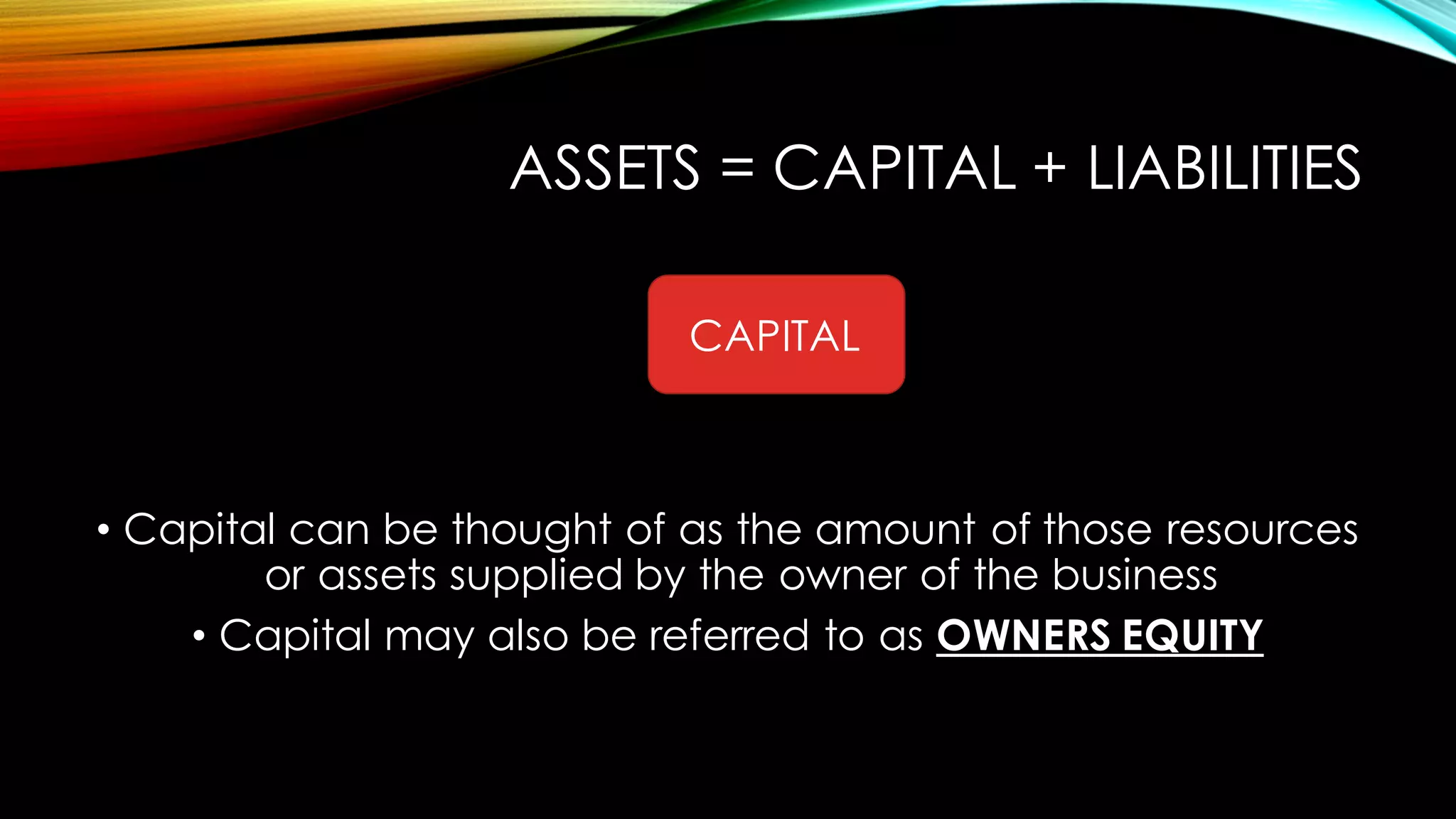
• Capital can be thought of as the amount of those resources
or assets supplied by the owner of the business
• Capital may also be referred to as OWNERS EQUITY
CAPITAL
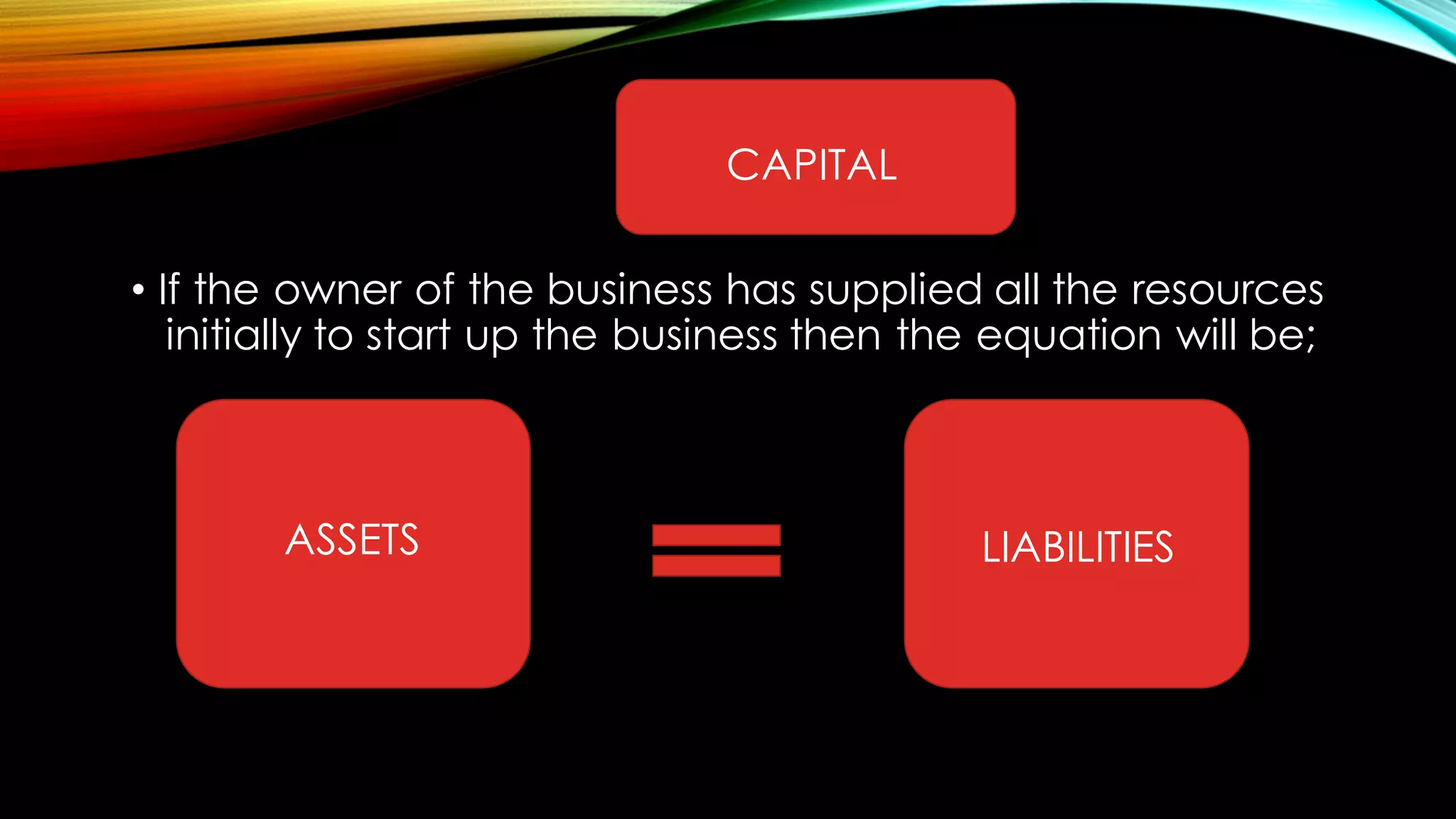
• If the owner of the business has supplied all the resources
initially to start up the business then the equation will be;
CAPITAL
ASSETS LIABILITIES
ASSETS = CAPITAL + LIABILITIES
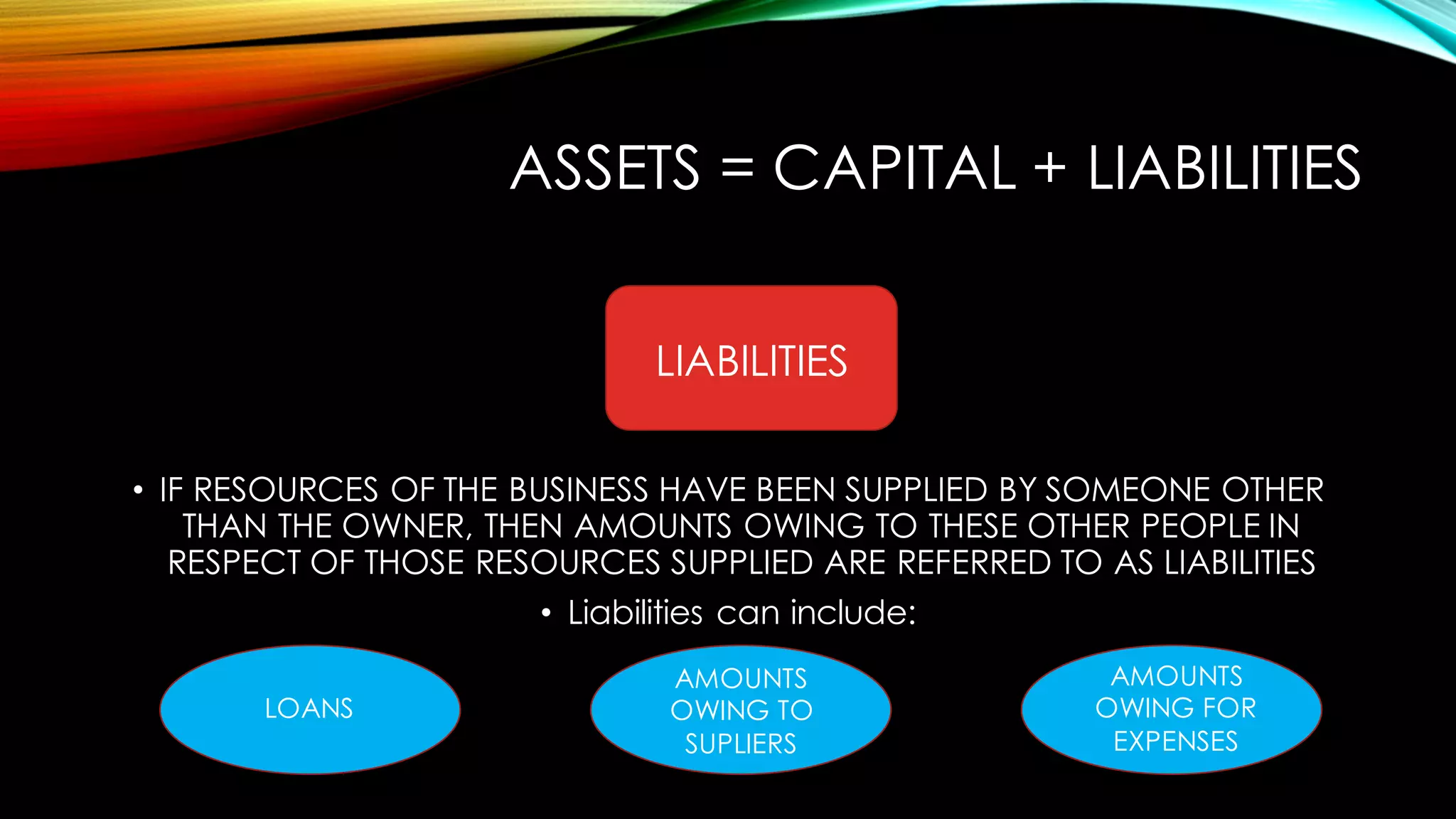
• IF RESOURCES OF THE BUSINESS HAVE BEEN SUPPLIED BY SOMEONE OTHER
THAN THE OWNER, THEN AMOUNTS OWING TO THESE OTHER PEOPLE IN
RESPECT OF THOSE RESOURCES SUPPLIED ARE REFERRED TO AS LIABILITIES
• Liabilities can include:
LIABILITIES
LOANS
AMOUNTS
OWING TO
SUPLIERS
AMOUNTS
OWING FOR
EXPENSES
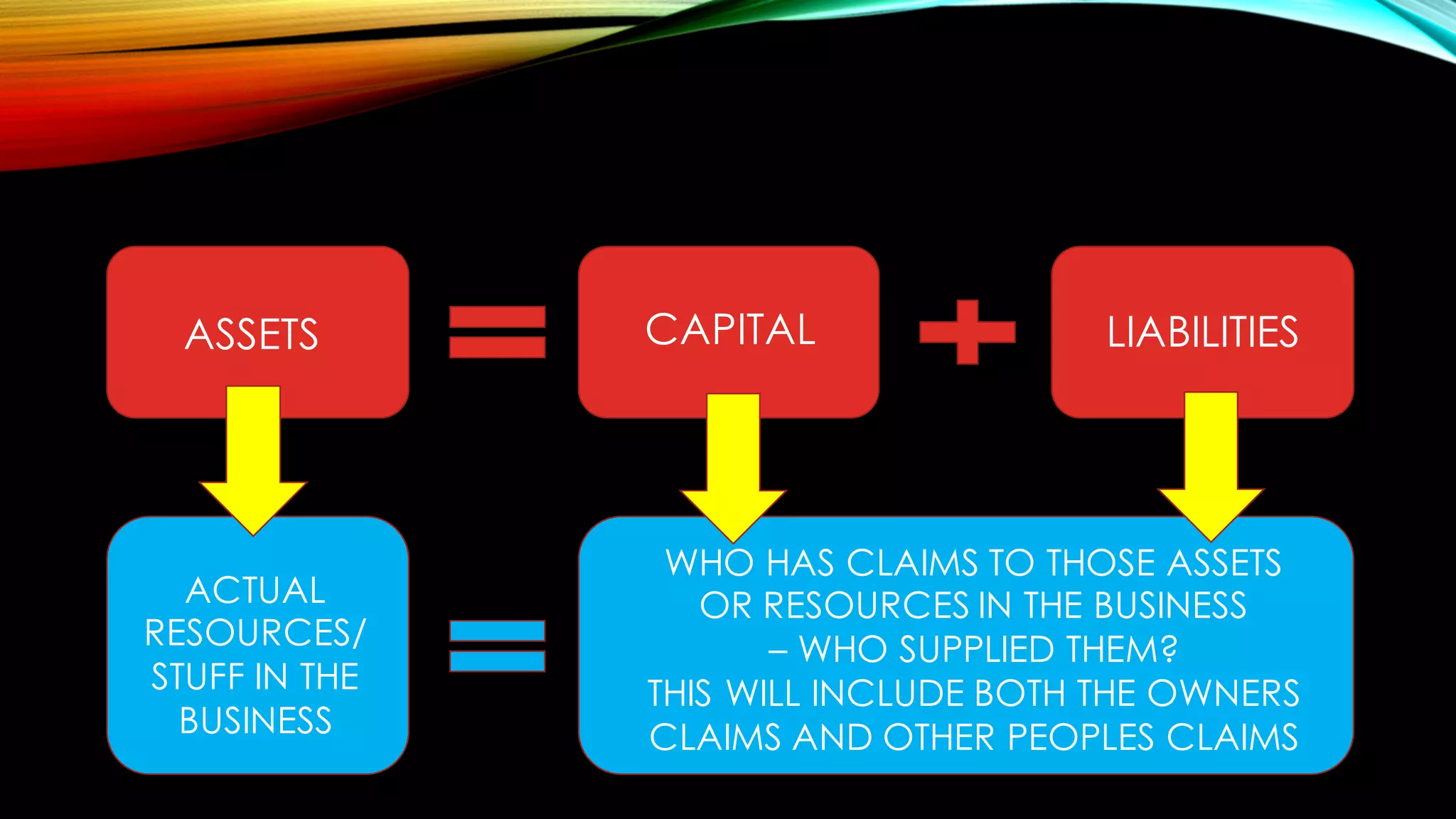
ASSETS CAPITAL LIABILITIES
ACTUAL
RESOURCES/
STUFF IN THE
BUSINESS
WHO HAS CLAIMS TO THOSE ASSETS
OR RESOURCES IN THE BUSINESS
– WHO SUPPLIED THEM?
THIS WILL INCLUDE BOTH THE OWNERS
CLAIMS AND OTHER PEOPLES CLAIMS
ASSETS = CAPITAL + LIABILITIES
• The accounting equation should always balance.
• This is because we are looking at the same thing but from
two different places or points of view.
• Therefore, no matter how many transactions occur, both
sides of the equation should always balance.
ACCOUNTING EQUATION
EXAMPLE
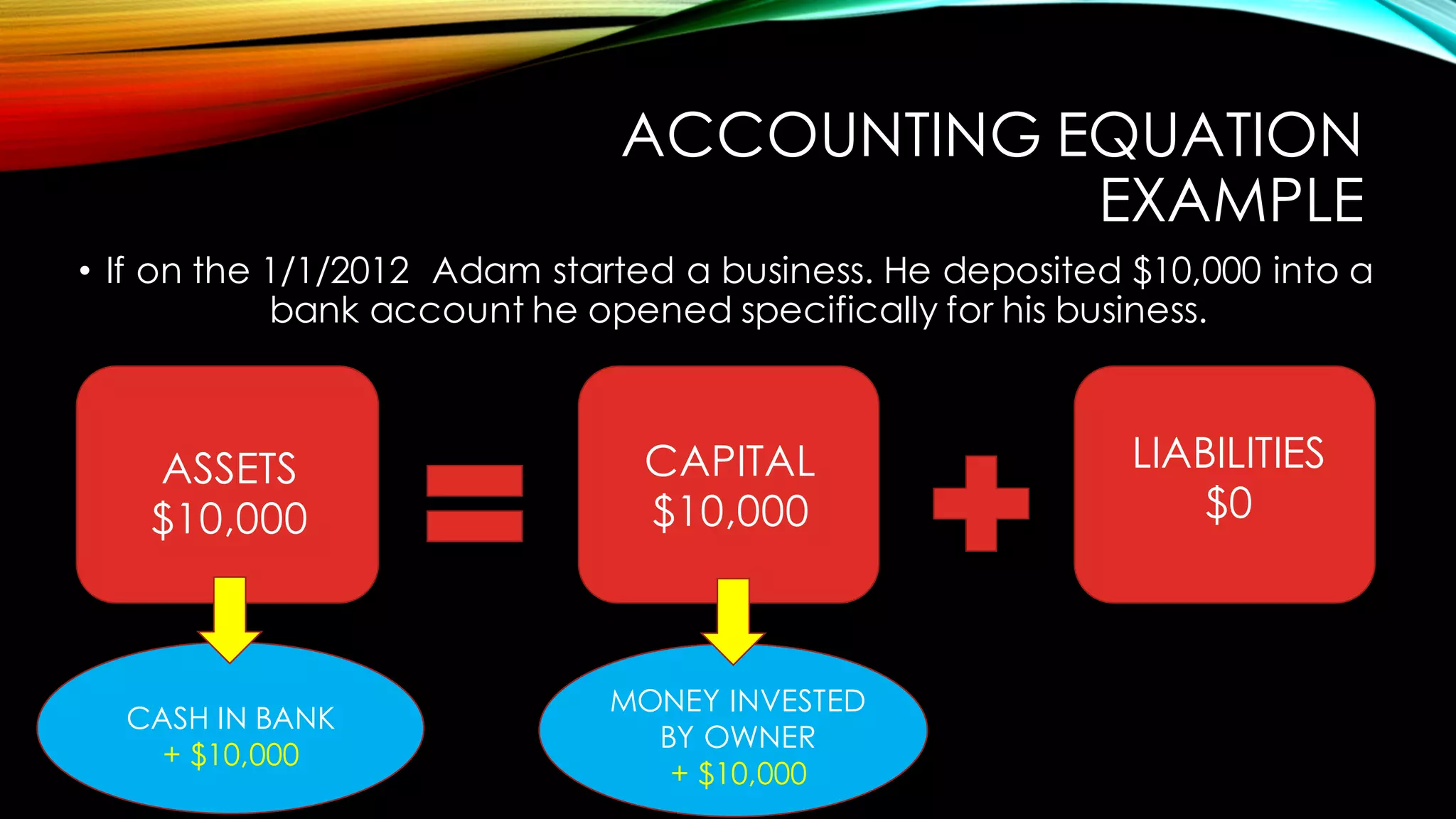
• If on the 1/1/2012 Adam started a business. He deposited $10,000 into a
bank account he opened specifically for his business.
ASSETS
$10,000
CAPITAL
$10,000
LIABILITIES
$0
CASH IN BANK
+ $10,000
MONEY INVESTED
BY OWNER
+ $10,000
ACCOUNTING EQUATION
EXAMPLE
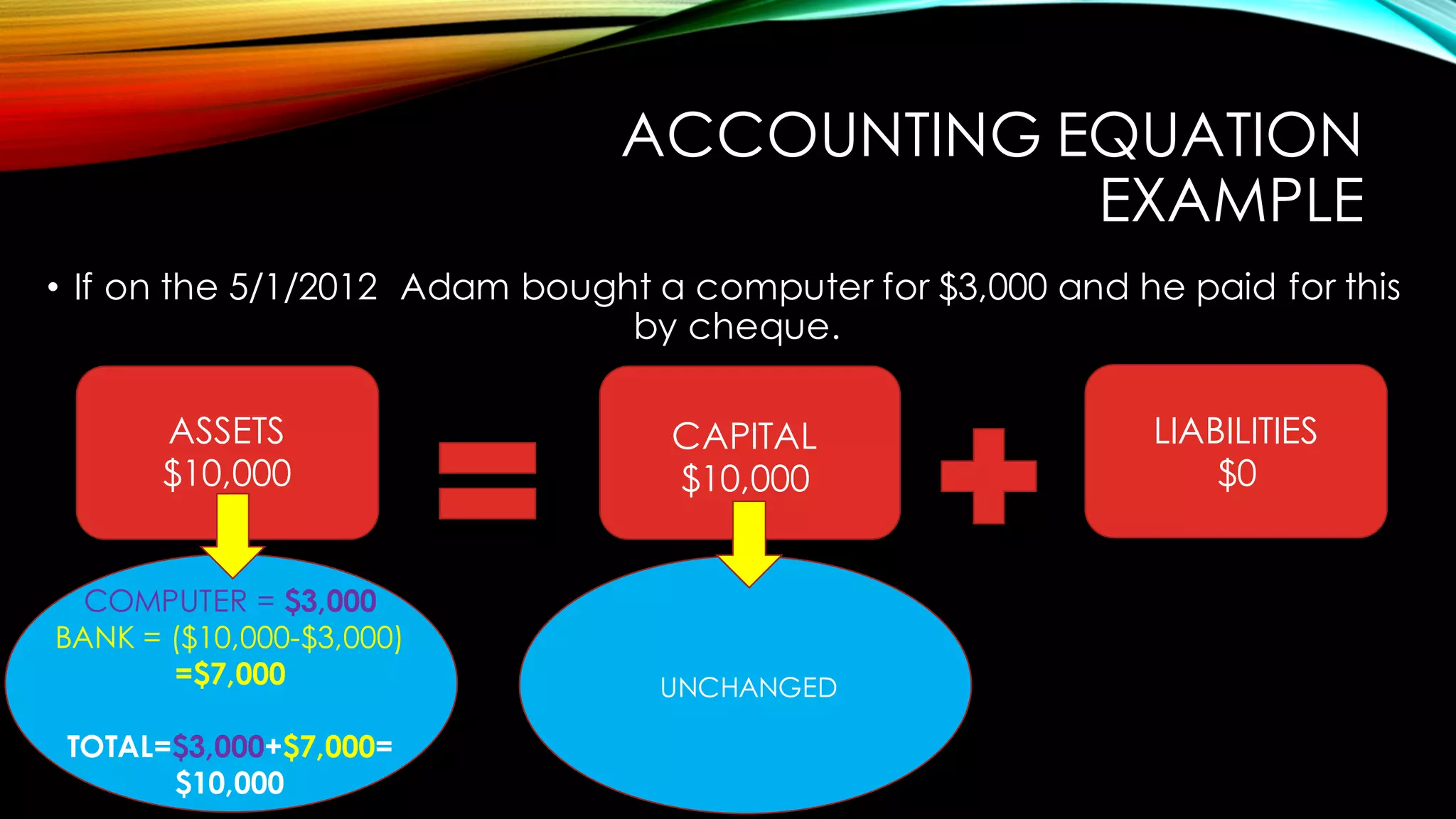
• If on the 5/1/2012 Adam bought a computer for $3,000 and he paid for this
by cheque.
ASSETS
$10,000
CAPITAL
$10,000
LIABILITIES
$0
COMPUTER = $3,000
BANK = ($10,000-$3,000)
=$7,000
TOTAL=$3,000+$7,000=
$10,000
UNCHANGED
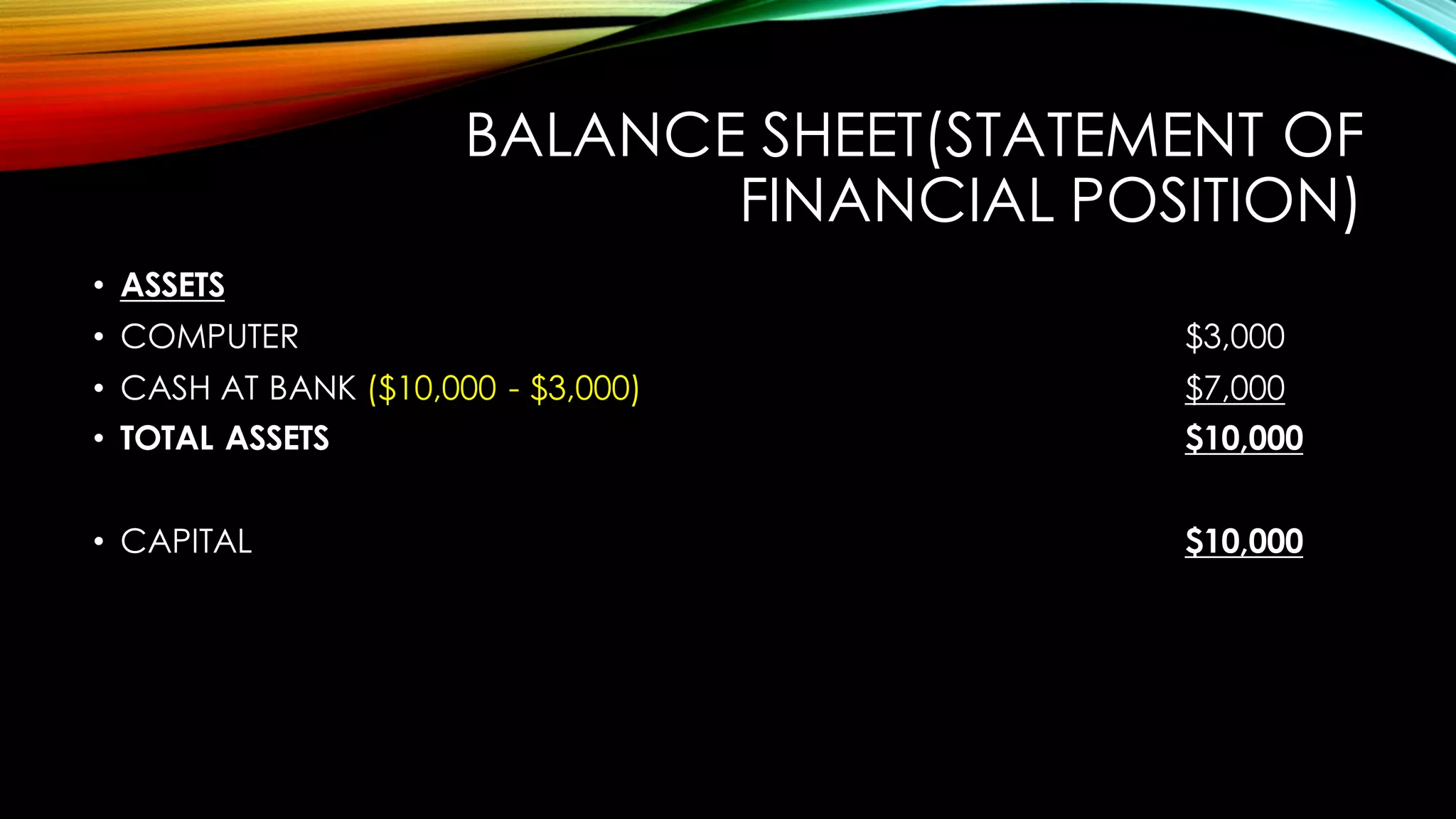
BALANCE SHEET(STATEMENT OF
FINANCIAL POSITION)
• ASSETS
• COMPUTER $3,000
• CASH AT BANK ($10,000 - $3,000) $7,000
• TOTAL ASSETS $10,000
• CAPITAL $10,000
ACCOUNTING EQUATION
EXAMPLE
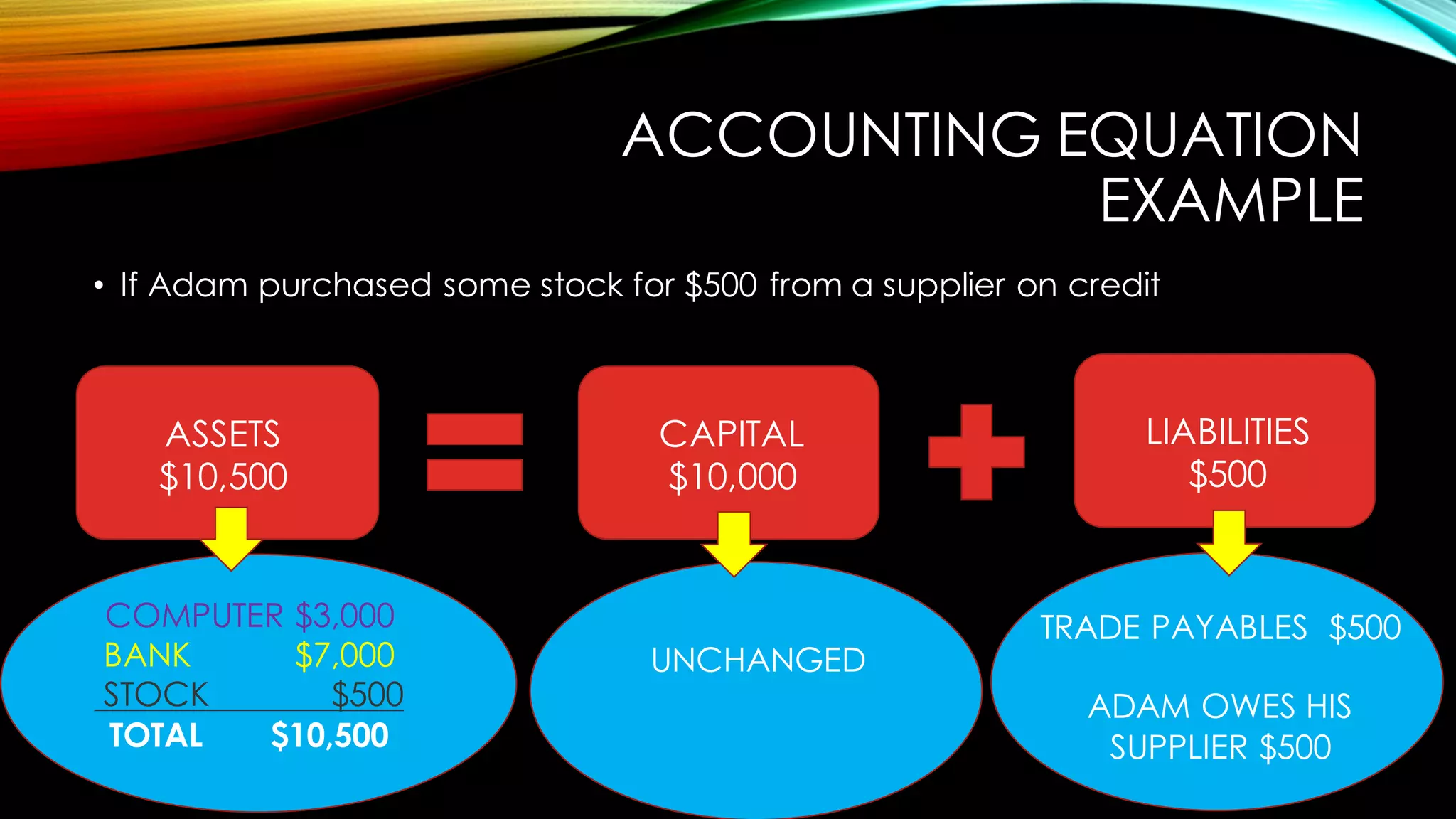
• If Adam purchased some stock for $500 from a supplier on credit
ASSETS
$10,500
CAPITAL
$10,000
LIABILITIES
$500
COMPUTER $3,000
BANK $7,000
STOCK $500
TOTAL $10,500
UNCHANGED
TRADE PAYABLES $500
ADAM OWES HIS
SUPPLIER $500
www.acadoceo.com

The Accounting Equation - Introduction

  • 1.
  • 2.
    THE ACCOUNTING EQUATION •Thewhole of financial accounting is based on this simple idea •It is the foundation of accounting
  • 3.
    THE ACCOUNTING EQUATION ASSETSCAPITAL LIABILITIES
  • 4.
    ASSETS = CAPITAL+ LIABILITIES Assets can be thought of as the resources or the “stuff” required in order to set up and run the business Assets can consist of: ASSETS BUILDINGS MACHINERY STOCK AMOUNTS OWING FROM CUSTOMERS
  • 5.
    ASSETS = CAPITAL+ LIABILITIES • Capital can be thought of as the amount of those resources or assets supplied by the owner of the business • Capital may also be referred to as OWNERS EQUITY CAPITAL
  • 6.
    • If theowner of the business has supplied all the resources initially to start up the business then the equation will be; CAPITAL ASSETS LIABILITIES
  • 7.
    ASSETS = CAPITAL+ LIABILITIES • IF RESOURCES OF THE BUSINESS HAVE BEEN SUPPLIED BY SOMEONE OTHER THAN THE OWNER, THEN AMOUNTS OWING TO THESE OTHER PEOPLE IN RESPECT OF THOSE RESOURCES SUPPLIED ARE REFERRED TO AS LIABILITIES • Liabilities can include: LIABILITIES LOANS AMOUNTS OWING TO SUPLIERS AMOUNTS OWING FOR EXPENSES
  • 8.
    ASSETS CAPITAL LIABILITIES ACTUAL RESOURCES/ STUFFIN THE BUSINESS WHO HAS CLAIMS TO THOSE ASSETS OR RESOURCES IN THE BUSINESS – WHO SUPPLIED THEM? THIS WILL INCLUDE BOTH THE OWNERS CLAIMS AND OTHER PEOPLES CLAIMS
  • 9.
    ASSETS = CAPITAL+ LIABILITIES • The accounting equation should always balance. • This is because we are looking at the same thing but from two different places or points of view. • Therefore, no matter how many transactions occur, both sides of the equation should always balance.
  • 10.
    ACCOUNTING EQUATION EXAMPLE • Ifon the 1/1/2012 Adam started a business. He deposited $10,000 into a bank account he opened specifically for his business. ASSETS $10,000 CAPITAL $10,000 LIABILITIES $0 CASH IN BANK + $10,000 MONEY INVESTED BY OWNER + $10,000
  • 11.
    ACCOUNTING EQUATION EXAMPLE • Ifon the 5/1/2012 Adam bought a computer for $3,000 and he paid for this by cheque. ASSETS $10,000 CAPITAL $10,000 LIABILITIES $0 COMPUTER = $3,000 BANK = ($10,000-$3,000) =$7,000 TOTAL=$3,000+$7,000= $10,000 UNCHANGED
  • 12.
    BALANCE SHEET(STATEMENT OF FINANCIALPOSITION) • ASSETS • COMPUTER $3,000 • CASH AT BANK ($10,000 - $3,000) $7,000 • TOTAL ASSETS $10,000 • CAPITAL $10,000
  • 13.
    ACCOUNTING EQUATION EXAMPLE • IfAdam purchased some stock for $500 from a supplier on credit ASSETS $10,500 CAPITAL $10,000 LIABILITIES $500 COMPUTER $3,000 BANK $7,000 STOCK $500 TOTAL $10,500 UNCHANGED TRADE PAYABLES $500 ADAM OWES HIS SUPPLIER $500
  • 14.