BIT 163 INTRODUCTION TO  ACCOUNTING
Accounting Definition Definition “ Accounting maybe define as  “A systematic recording of information which involves analyzing, classifying, summarizing and interpreting business transactions”
What are the purpose of Accounting Purpose of Accounting Planning how you are going to use your money Recording accounting data. Keeping specific records of information in specific manual. Enabling circulating information. Use accounting data to make decision.
Accounting Vs Finance Accounting Systematic recording of information Involves: Analyzing Classifying Summarizing Interpreting business transaction.
Accounting Vs Finance Finance “ A process involved in an attempt to obtain and allocate financial resources effectively and efficiently to achieve the firm’s goal: that is to maximize the shareholder’s wealth by maximizing the share price”.
Accounting Vs Finance The management of the firm has the primary goal of maximizing the wealth of its shareholders by maximizing the common stock share price Maximization of profit Ensuring the firm’s survival in the long run -Time Horizon -Timing of Returns -Distribution of Returns -Risk orientation
Sub field of Accounting Accounting can be sub-classified as to: Financial Accounting Management Accounting Auditing Taxation
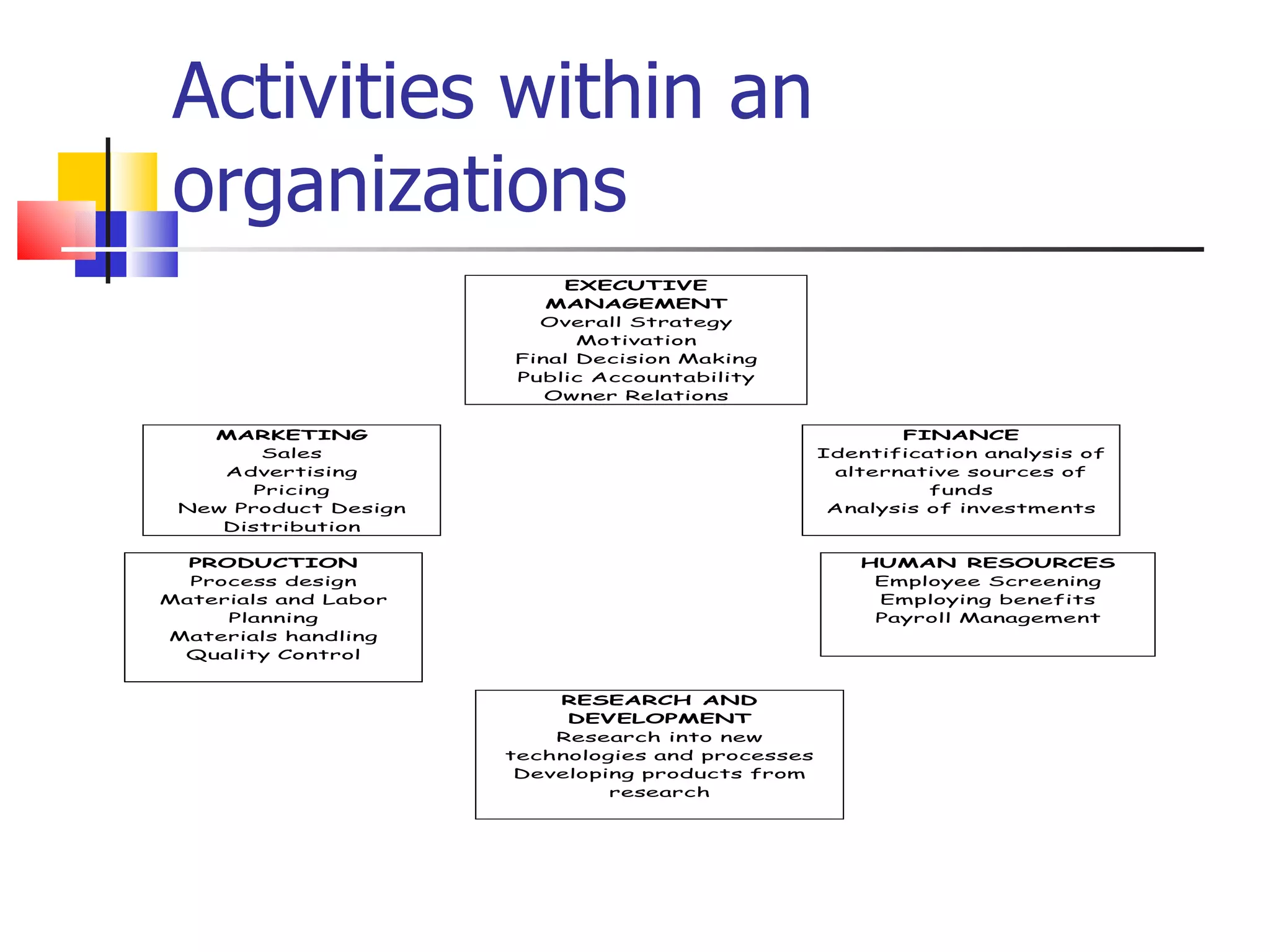
Activities within an organizations
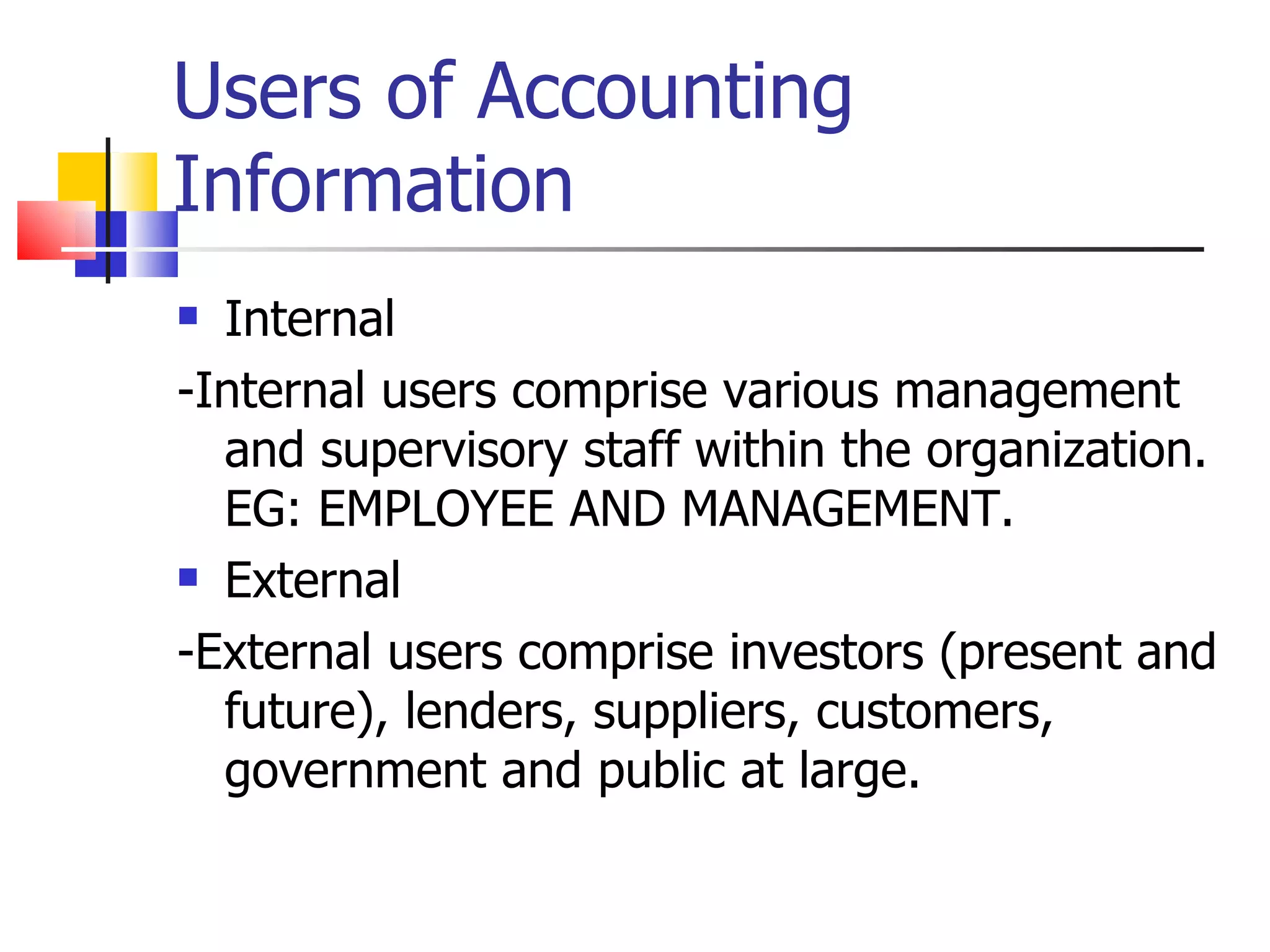
Users of Accounting Information Internal -Internal users comprise various management and supervisory staff within the organization. EG: EMPLOYEE AND MANAGEMENT. External -External users comprise investors (present and future), lenders, suppliers, customers, government and public at large.
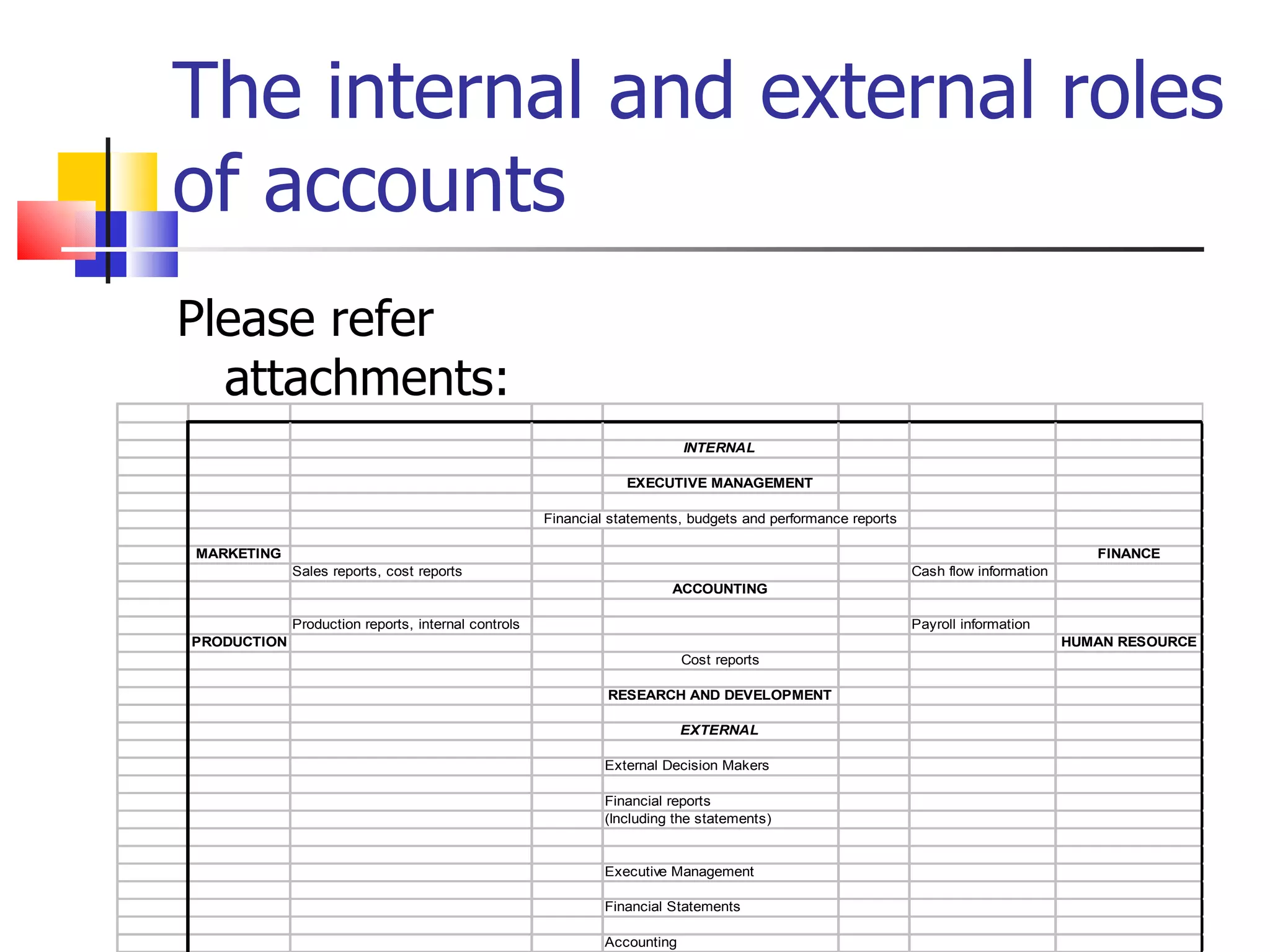
The internal and external roles of accounts Please refer attachments:
The difference between Accounting and Bookkeeping Discussion in class and notes given to students with the handouts.
Accounting Information Systems (AIS) Discussion in class and notes given to students with the handouts.
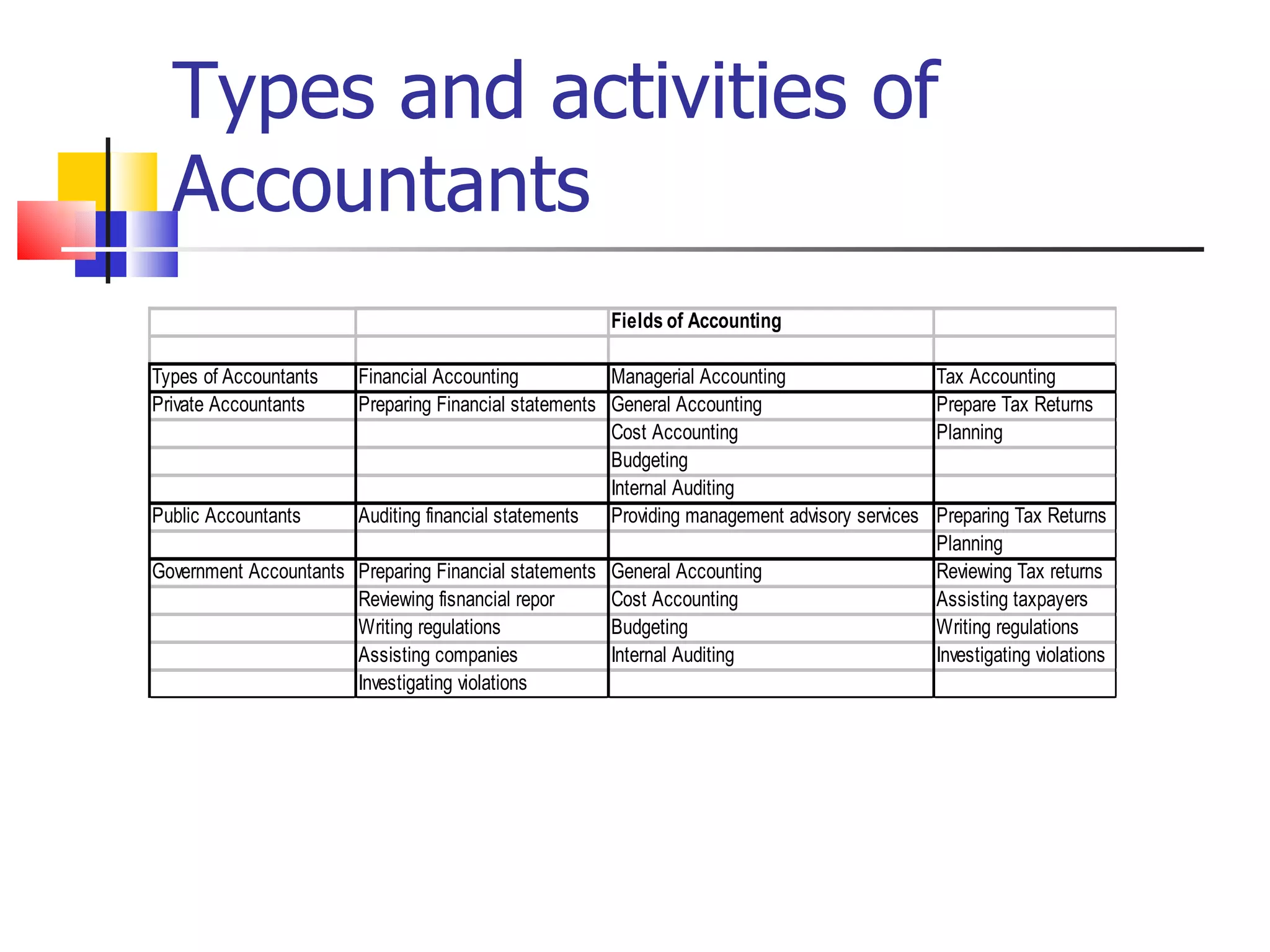
Types and activities of Accountants
Form of Business Sole Proprietor/Sole Trader Partnership Companies Co-operative Short Assignment 1.Briefly explain for all stated form of business.
Sole Proprietor or Sole Trader Business ownership is a single business carried on by individuals and owned by individual full. Business owner have a power to control the business operations. Owners and business is referred to as one of the same entity.  No separation between them. Owners will received all the profits and bear for all losses from business. Unlimited liabilities
Advantages Easy to set up. The owner has absolute power to control the business. Fast decision make by the owner of the business. Individual Tax. No need the complex financial reports.
Disadvantages Difficult to grow because of the limited capacity of capital Difficult to get capital financing from the financial institution because they need a strong assurance from the business. Liability is unlimited. Business will disband itself if the owner died.
Partnerships A partnership is defined as the relationship that exist between person carrying on business.  These person agree to combine some or all their property, labor and skill.  This relationship is based on contract. Business owned by minimum of two persons and maximum of 20 persons. Professional service partnerships consist of maximum 50 persons. There are two types of partnerships: -Active partner -Sleeping partner
Partnerships Strictly follow the Partnerships Act 1961 and partnerships contract of agreement for profit and loss distribution. Liability for partnerships is unlimited except for the limited partnerships. General partners have unlimited liability for partnerships debts, and the partnerships terminates when a general partner wishes to sell out or dies.
Advantages Partnerships allow for a greater amount of money, skill and other resources to be pooled. They are relatively easy to organize. They are subject to limited government regulations and do not face high tax rates.
Disadvantages Partnerships have a limited life. Each partner is subject to unlimited liability. This means that if the company fails, creditors can take action against both the partnership and the persons who are in it. Partners have mutual agency.  This means that one partner can make decisions without consulting to other(s).
Co-operative It is a business organization owned and operated by a group of individuals for their mutual benefits. A community based business Eg: Bank Rakyat, Koperasi Angkatan Tentera Malaysia and Angkasa.
Corporation A business created as a distinct legal entity composed of one or more individuals or entities. In Malaysia, corporations are follow strictly under Company Act 1965. Corporation are divide into two -Private Limited -Public Limited
Corporation Private limited can be held by minimum of 2 and maximum of 50 shareholders. There is no maximum shareholders for Public limited company. Shareholders will received their profit in the form of dividend. Corporation managed by Board of Director that appointed by shareholders in AGM. Liability of shareholders is limited base on the paid up capital. Tax is paid,  base on company profit. Eg: Tenaga Nasional Berhad, Safeguard Securicor Sdn Bhd.
Financial Information One of the accounting functions is to provide information about the enterprise.  The financial information generated must be useful to users.  In order to be useful, the information must have the following basic characteristics:   Understandability Relevance Reliability Comparability
The meaning of ethics Ethics are the “principles that determine the rightness or wrongness of particular acts or activities.  “Ethics are also “accepted standards of good behavior”

Introduction to accounting chapter 1 new

  • 1.
    BIT 163 INTRODUCTIONTO ACCOUNTING
  • 2.
    Accounting Definition Definition“ Accounting maybe define as “A systematic recording of information which involves analyzing, classifying, summarizing and interpreting business transactions”
  • 3.
    What are thepurpose of Accounting Purpose of Accounting Planning how you are going to use your money Recording accounting data. Keeping specific records of information in specific manual. Enabling circulating information. Use accounting data to make decision.
  • 4.
    Accounting Vs FinanceAccounting Systematic recording of information Involves: Analyzing Classifying Summarizing Interpreting business transaction.
  • 5.
    Accounting Vs FinanceFinance “ A process involved in an attempt to obtain and allocate financial resources effectively and efficiently to achieve the firm’s goal: that is to maximize the shareholder’s wealth by maximizing the share price”.
  • 6.
    Accounting Vs FinanceThe management of the firm has the primary goal of maximizing the wealth of its shareholders by maximizing the common stock share price Maximization of profit Ensuring the firm’s survival in the long run -Time Horizon -Timing of Returns -Distribution of Returns -Risk orientation
  • 7.
    Sub field ofAccounting Accounting can be sub-classified as to: Financial Accounting Management Accounting Auditing Taxation
  • 8.
    Activities within anorganizations
  • 9.
    Users of AccountingInformation Internal -Internal users comprise various management and supervisory staff within the organization. EG: EMPLOYEE AND MANAGEMENT. External -External users comprise investors (present and future), lenders, suppliers, customers, government and public at large.
  • 10.
    The internal andexternal roles of accounts Please refer attachments:
  • 11.
    The difference betweenAccounting and Bookkeeping Discussion in class and notes given to students with the handouts.
  • 12.
    Accounting Information Systems(AIS) Discussion in class and notes given to students with the handouts.
  • 13.
    Types and activitiesof Accountants
  • 14.
    Form of BusinessSole Proprietor/Sole Trader Partnership Companies Co-operative Short Assignment 1.Briefly explain for all stated form of business.
  • 15.
    Sole Proprietor orSole Trader Business ownership is a single business carried on by individuals and owned by individual full. Business owner have a power to control the business operations. Owners and business is referred to as one of the same entity. No separation between them. Owners will received all the profits and bear for all losses from business. Unlimited liabilities
  • 16.
    Advantages Easy toset up. The owner has absolute power to control the business. Fast decision make by the owner of the business. Individual Tax. No need the complex financial reports.
  • 17.
    Disadvantages Difficult togrow because of the limited capacity of capital Difficult to get capital financing from the financial institution because they need a strong assurance from the business. Liability is unlimited. Business will disband itself if the owner died.
  • 18.
    Partnerships A partnershipis defined as the relationship that exist between person carrying on business. These person agree to combine some or all their property, labor and skill. This relationship is based on contract. Business owned by minimum of two persons and maximum of 20 persons. Professional service partnerships consist of maximum 50 persons. There are two types of partnerships: -Active partner -Sleeping partner
  • 19.
    Partnerships Strictly followthe Partnerships Act 1961 and partnerships contract of agreement for profit and loss distribution. Liability for partnerships is unlimited except for the limited partnerships. General partners have unlimited liability for partnerships debts, and the partnerships terminates when a general partner wishes to sell out or dies.
  • 20.
    Advantages Partnerships allowfor a greater amount of money, skill and other resources to be pooled. They are relatively easy to organize. They are subject to limited government regulations and do not face high tax rates.
  • 21.
    Disadvantages Partnerships havea limited life. Each partner is subject to unlimited liability. This means that if the company fails, creditors can take action against both the partnership and the persons who are in it. Partners have mutual agency. This means that one partner can make decisions without consulting to other(s).
  • 22.
    Co-operative It isa business organization owned and operated by a group of individuals for their mutual benefits. A community based business Eg: Bank Rakyat, Koperasi Angkatan Tentera Malaysia and Angkasa.
  • 23.
    Corporation A businesscreated as a distinct legal entity composed of one or more individuals or entities. In Malaysia, corporations are follow strictly under Company Act 1965. Corporation are divide into two -Private Limited -Public Limited
  • 24.
    Corporation Private limitedcan be held by minimum of 2 and maximum of 50 shareholders. There is no maximum shareholders for Public limited company. Shareholders will received their profit in the form of dividend. Corporation managed by Board of Director that appointed by shareholders in AGM. Liability of shareholders is limited base on the paid up capital. Tax is paid, base on company profit. Eg: Tenaga Nasional Berhad, Safeguard Securicor Sdn Bhd.
  • 25.
    Financial Information Oneof the accounting functions is to provide information about the enterprise. The financial information generated must be useful to users. In order to be useful, the information must have the following basic characteristics:   Understandability Relevance Reliability Comparability
  • 26.
    The meaning ofethics Ethics are the “principles that determine the rightness or wrongness of particular acts or activities. “Ethics are also “accepted standards of good behavior”