The  Sixties
overviewCivil Rights
Presidents
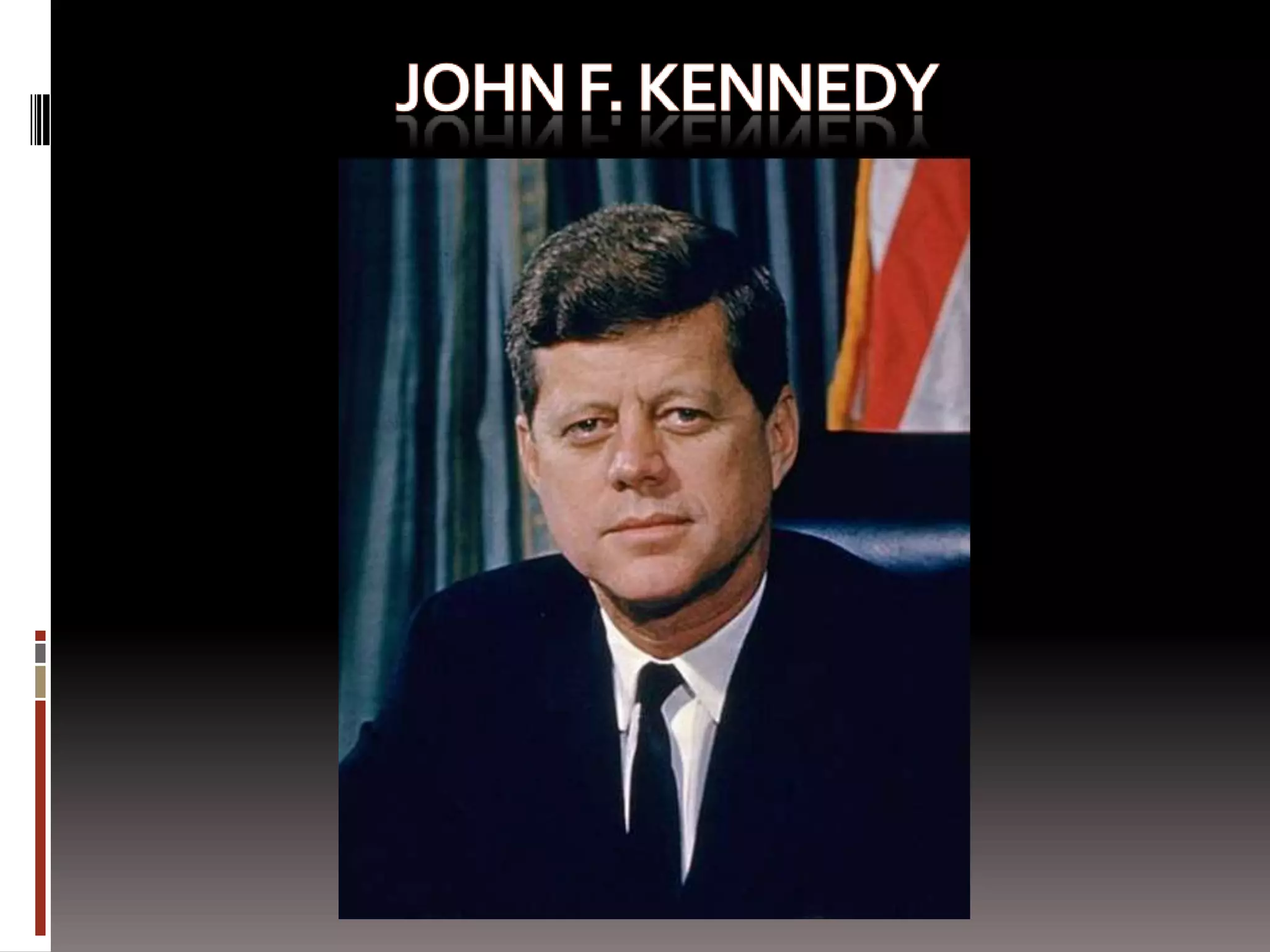
John F. Kennedy
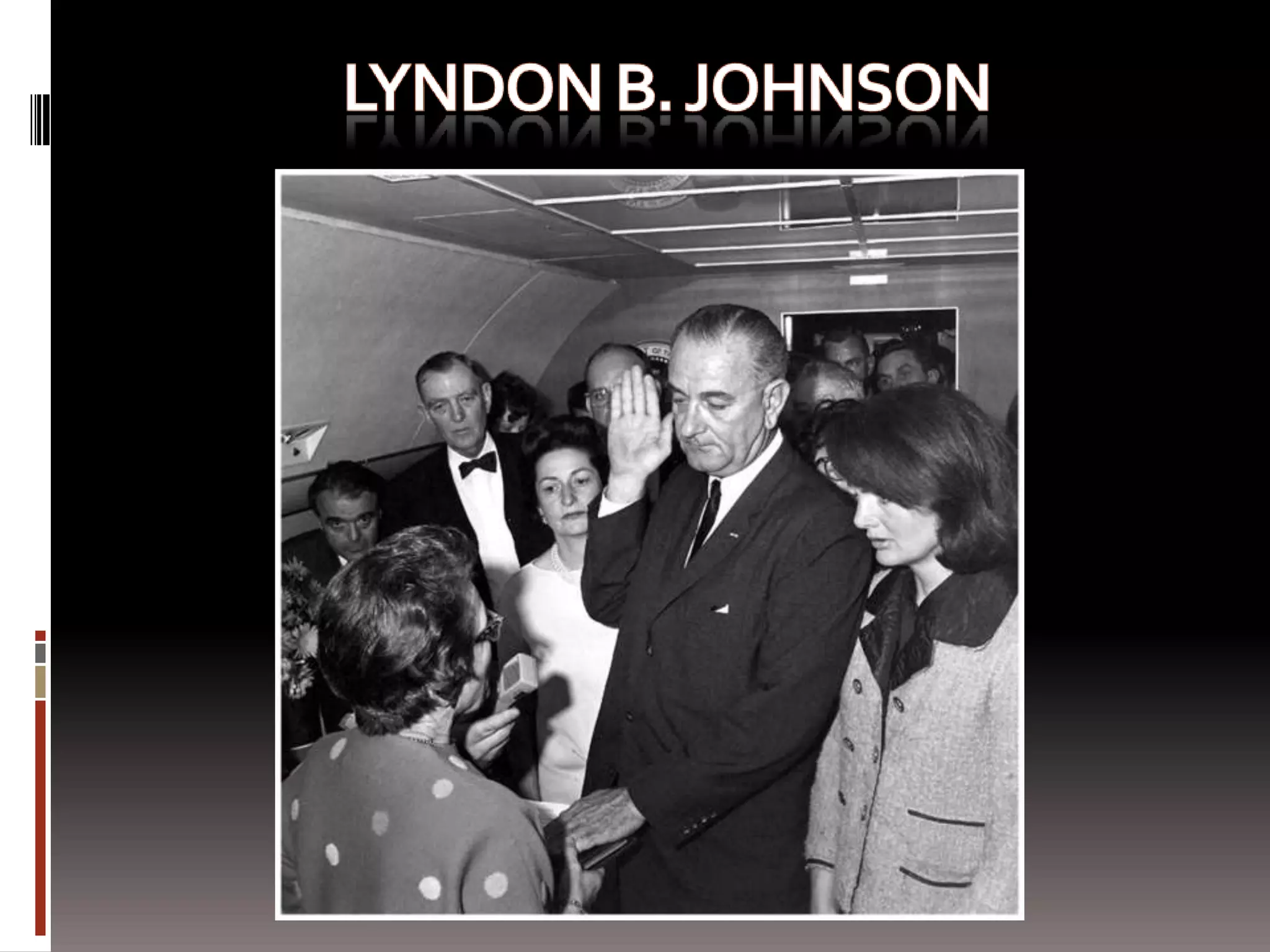
Lyndon B. Johnson
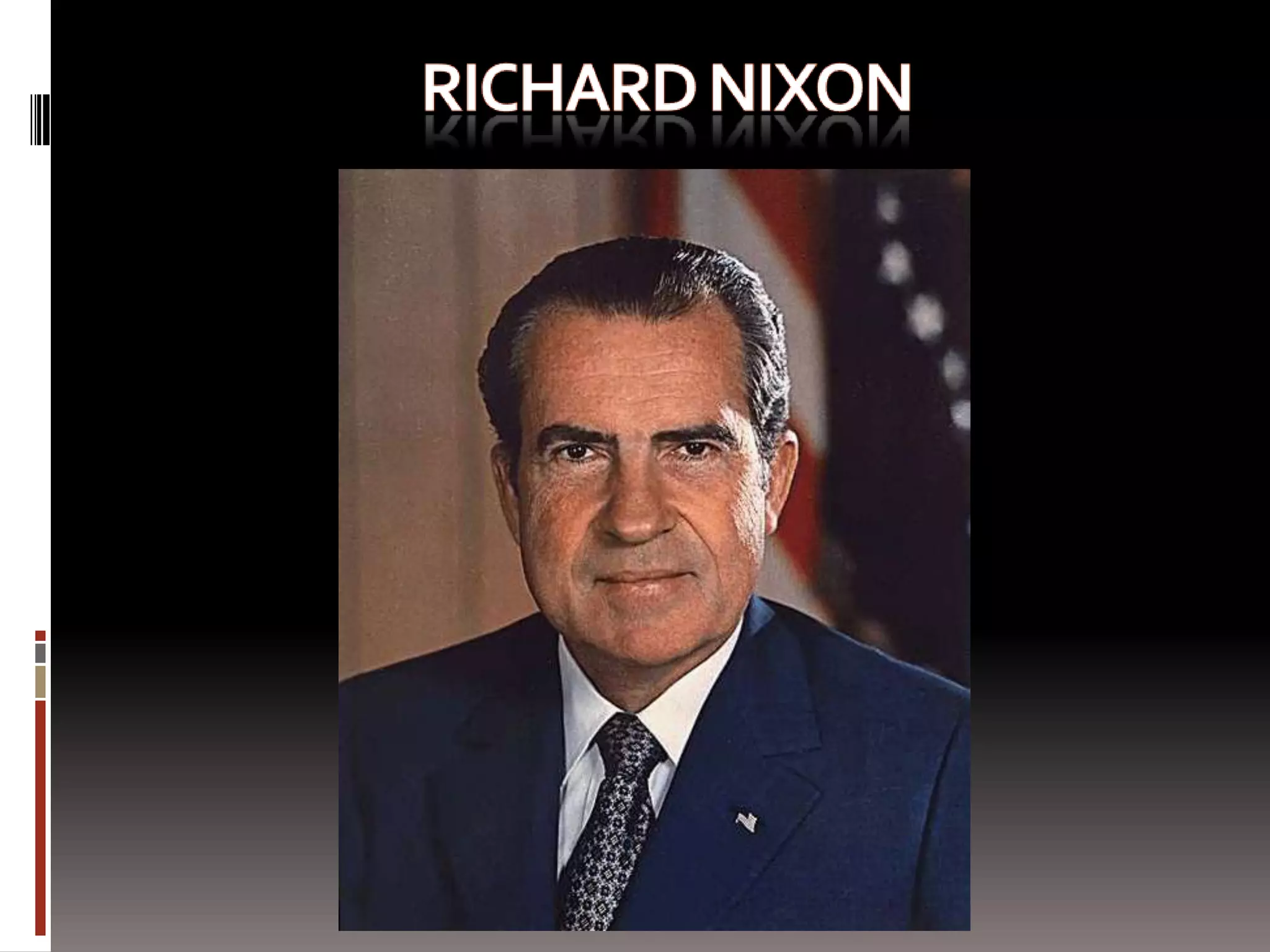
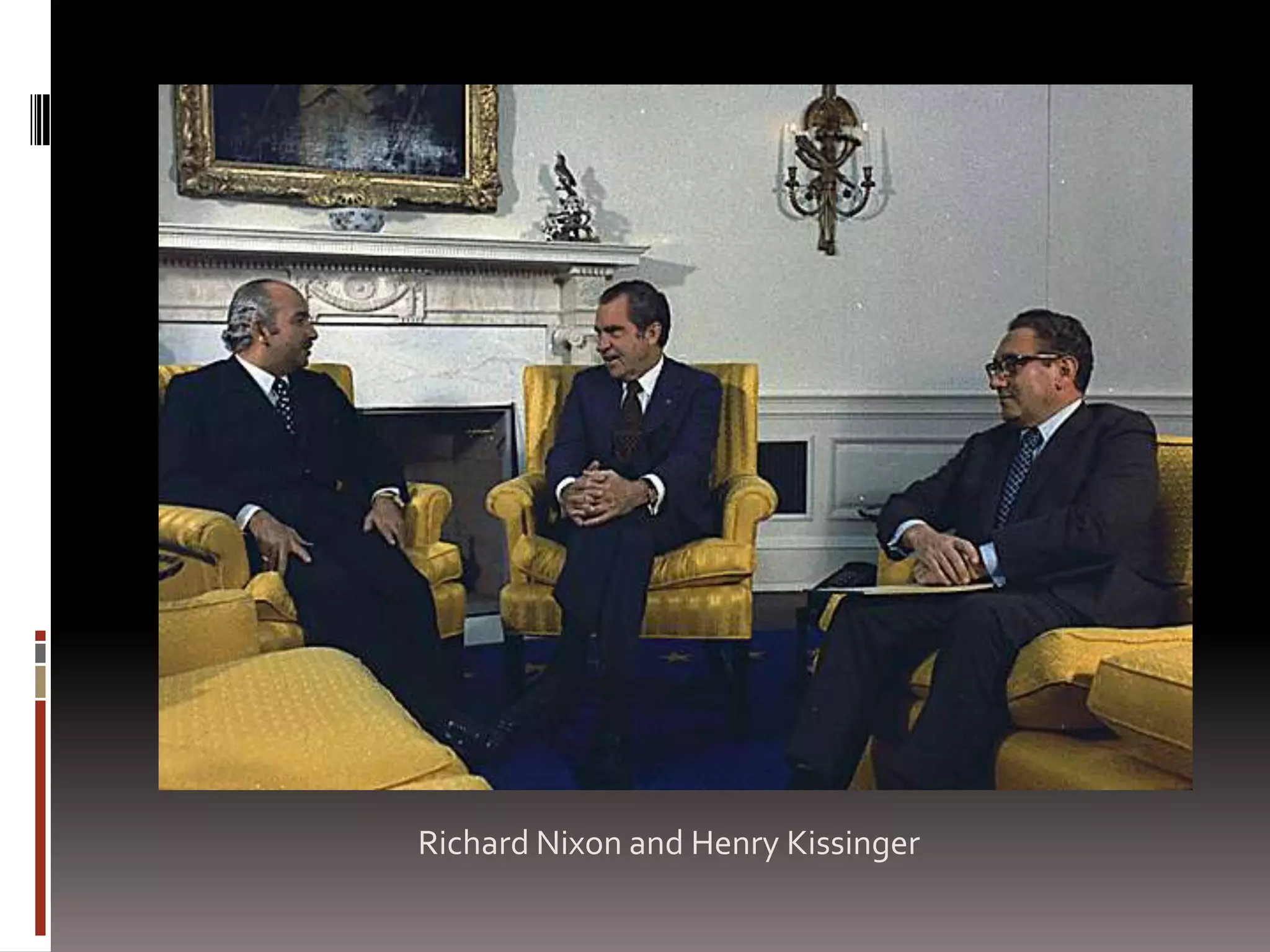
Richard Nixon
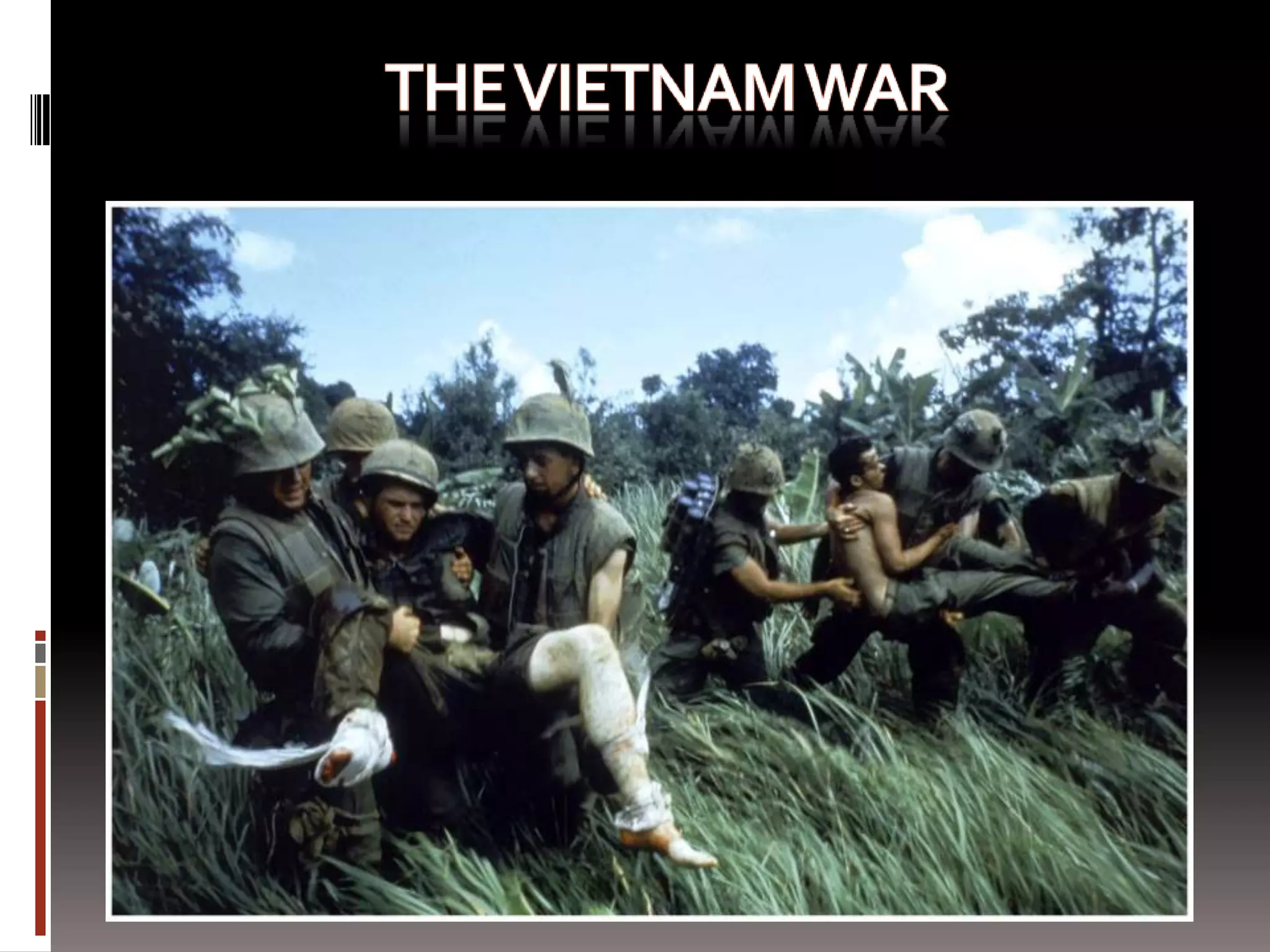
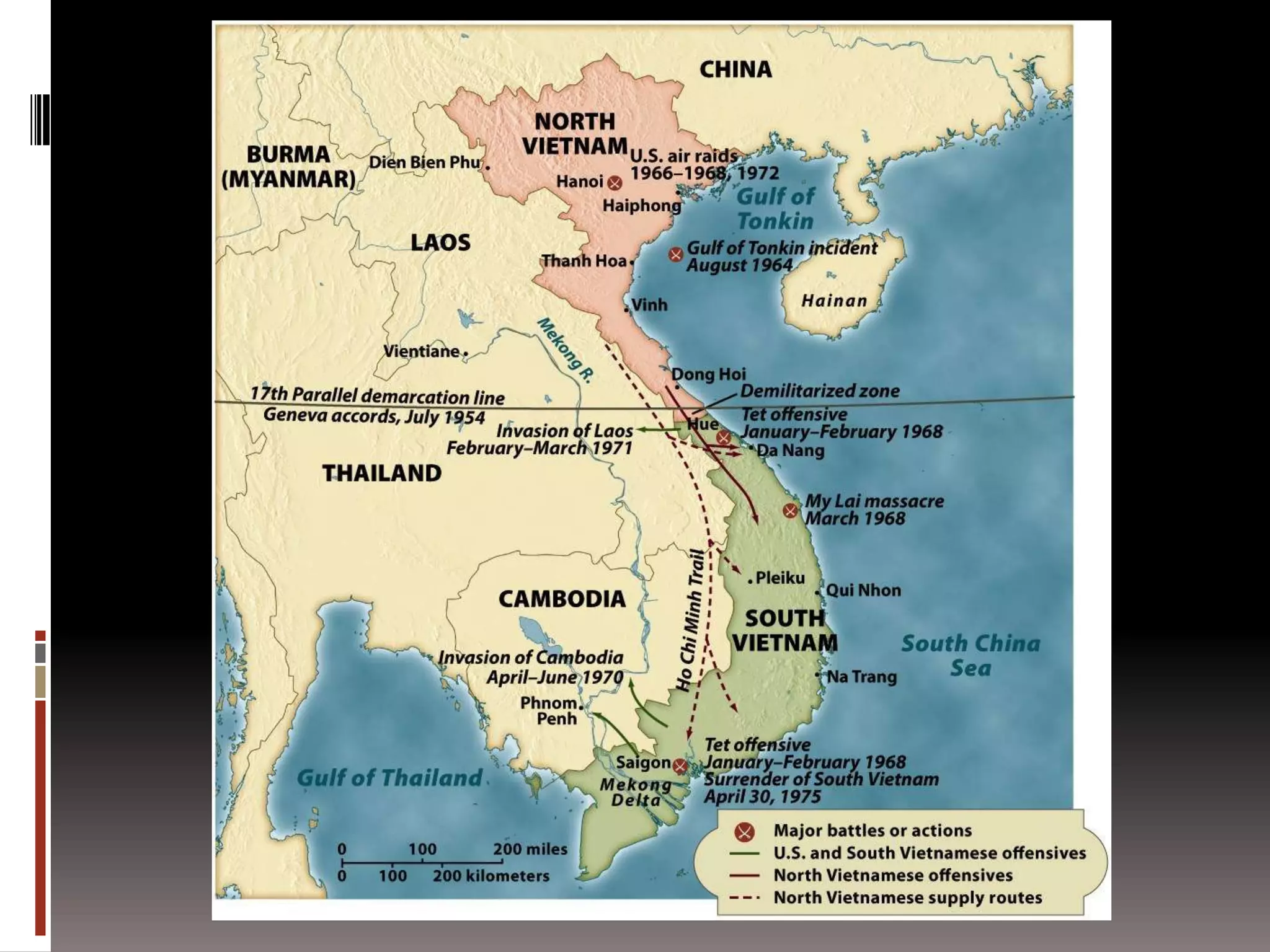
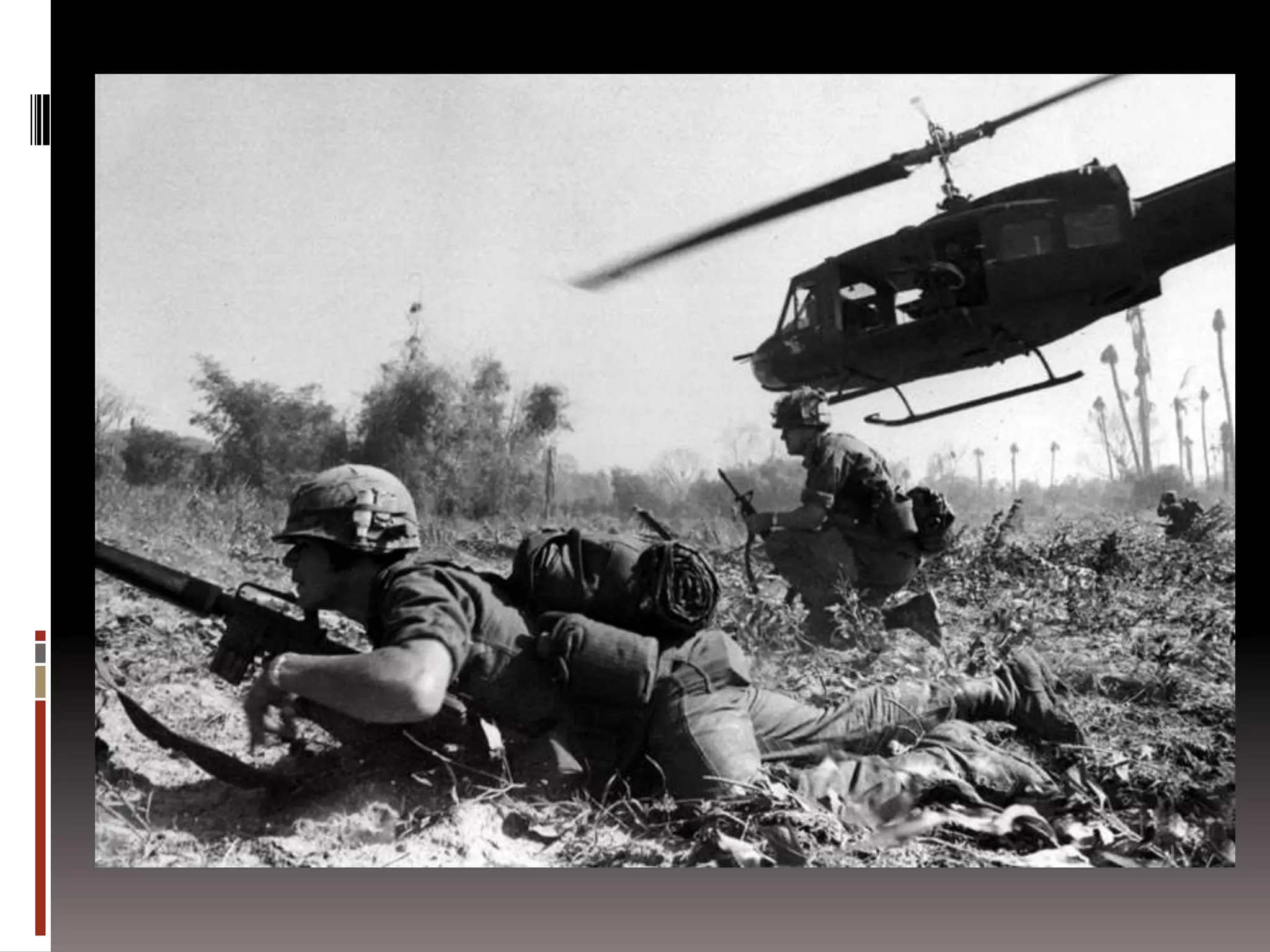
The Vietnam War
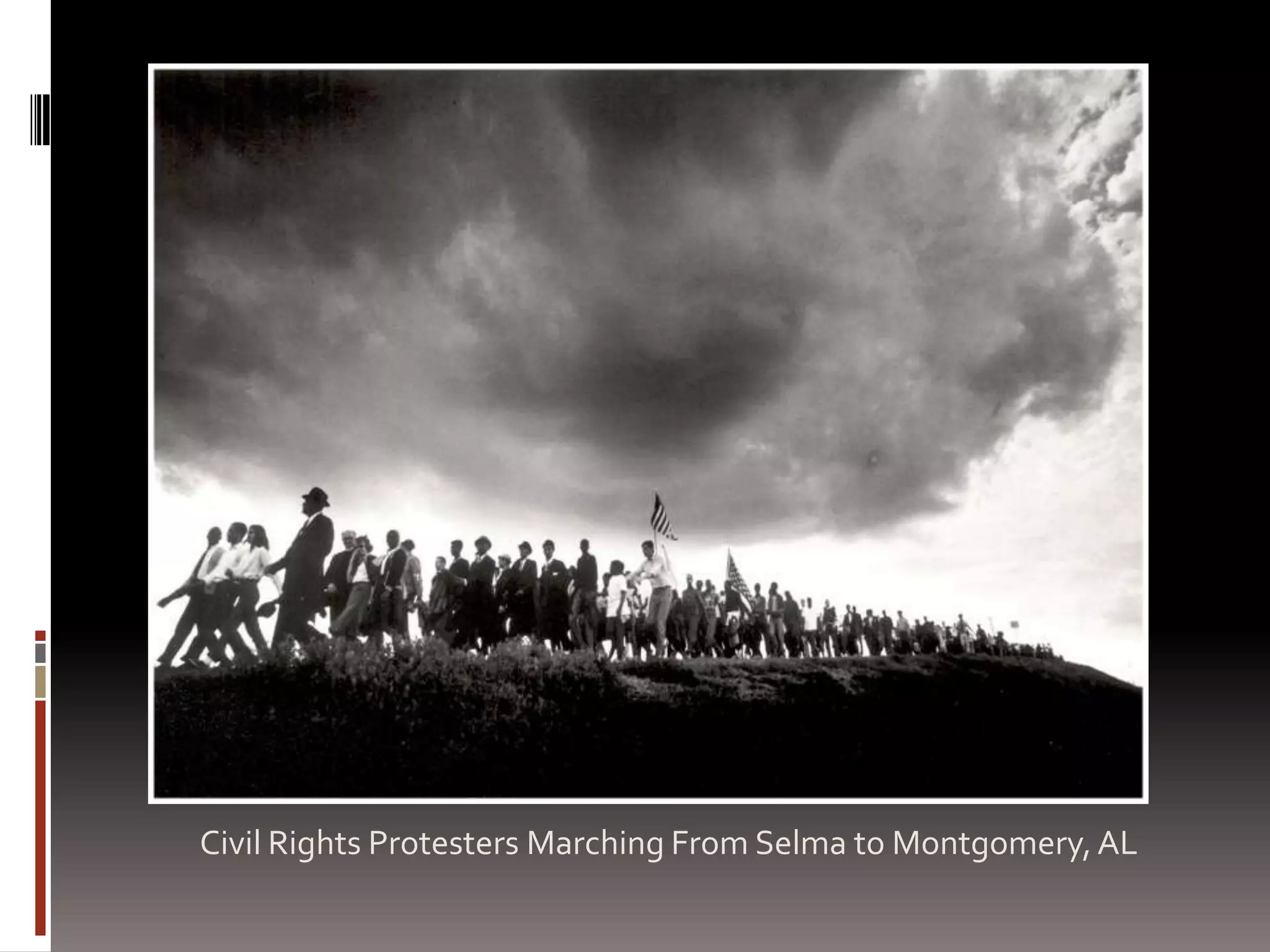
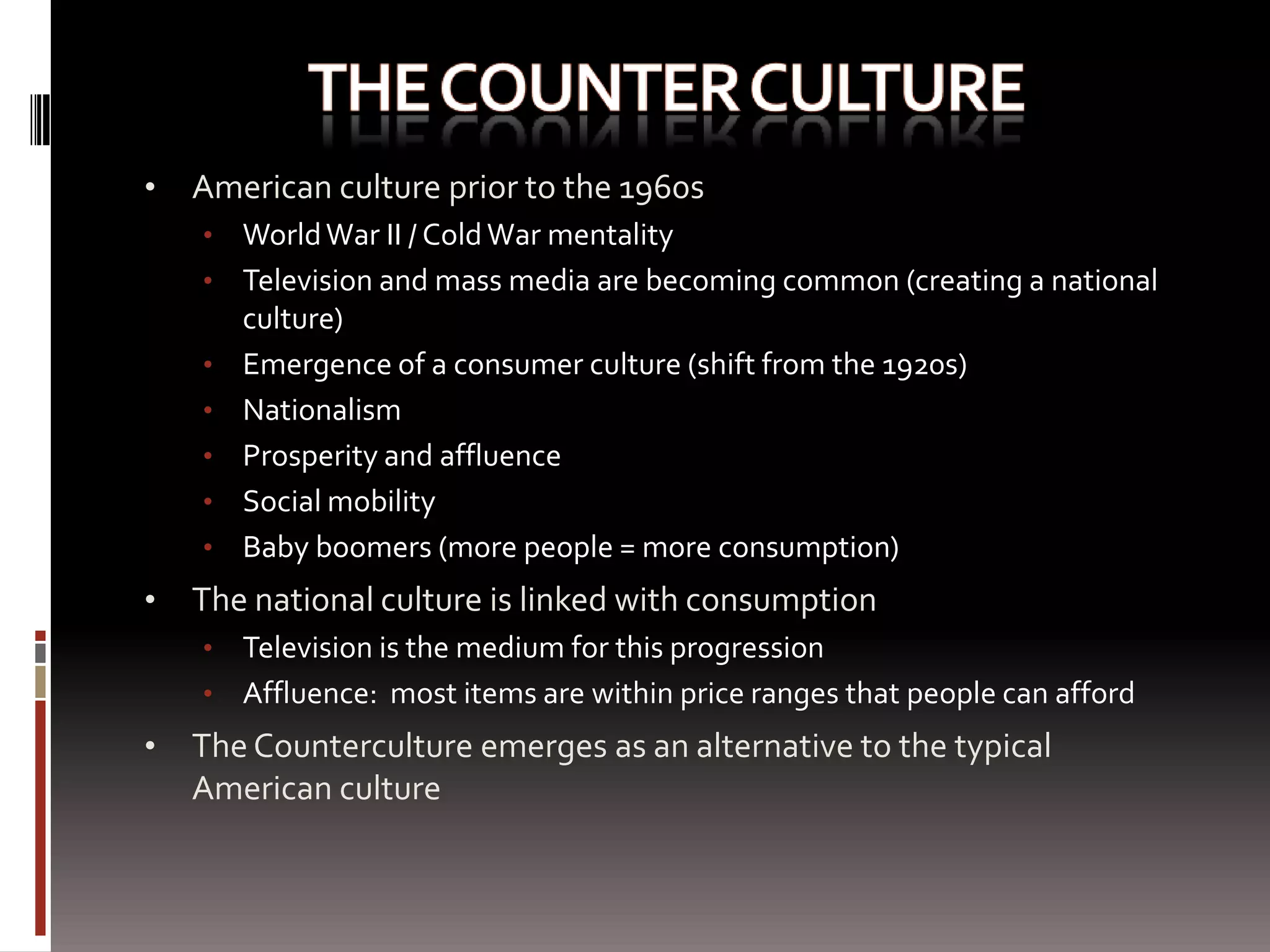
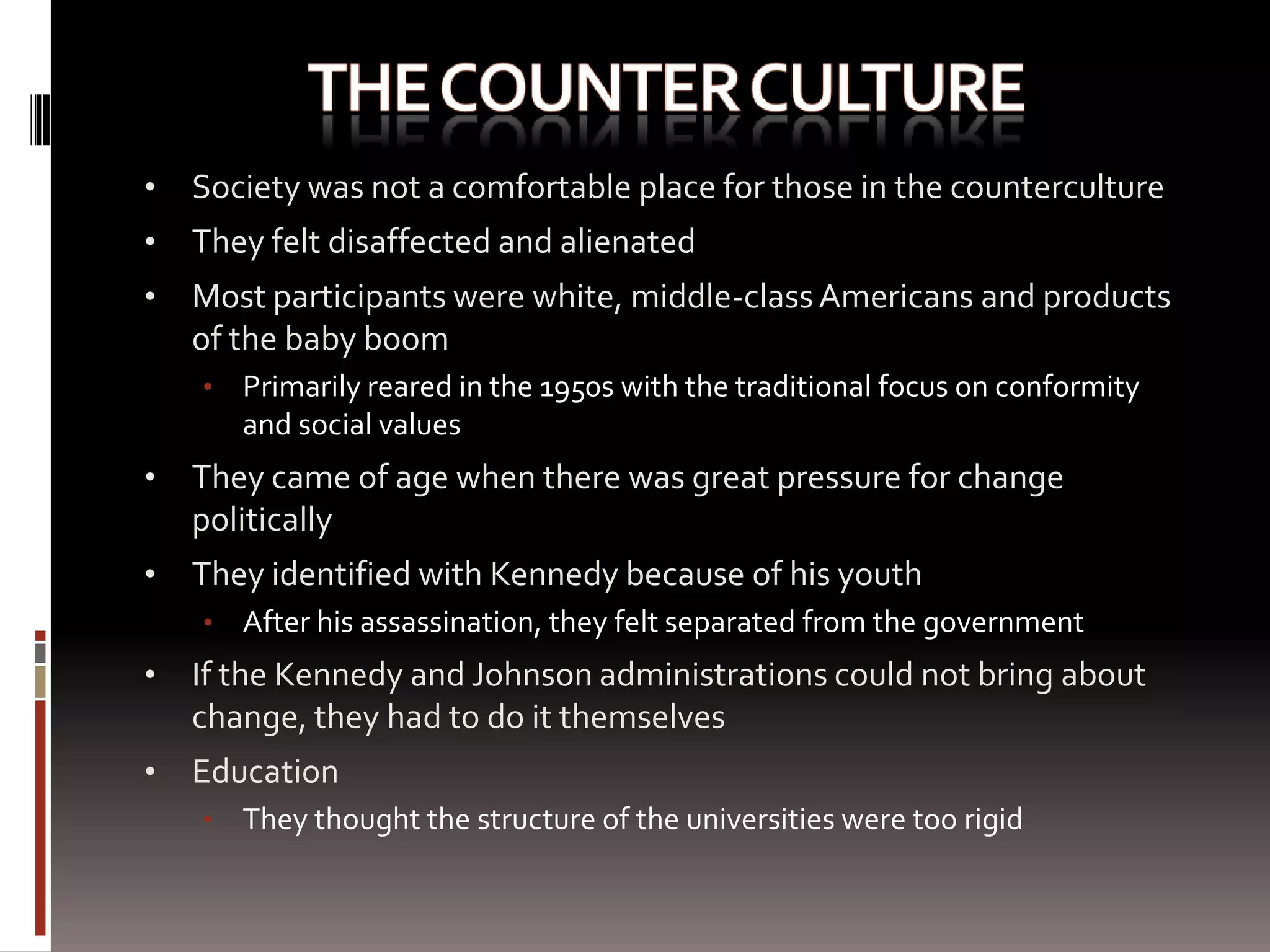
The CountercultureCivil Rights Protesters Marching From Selma to Montgomery, AL
The Civil Rights movementPhases of the MovementLegalization
mid-1950s to early 1960
Non-Violent Direct Action
1960 – 1965
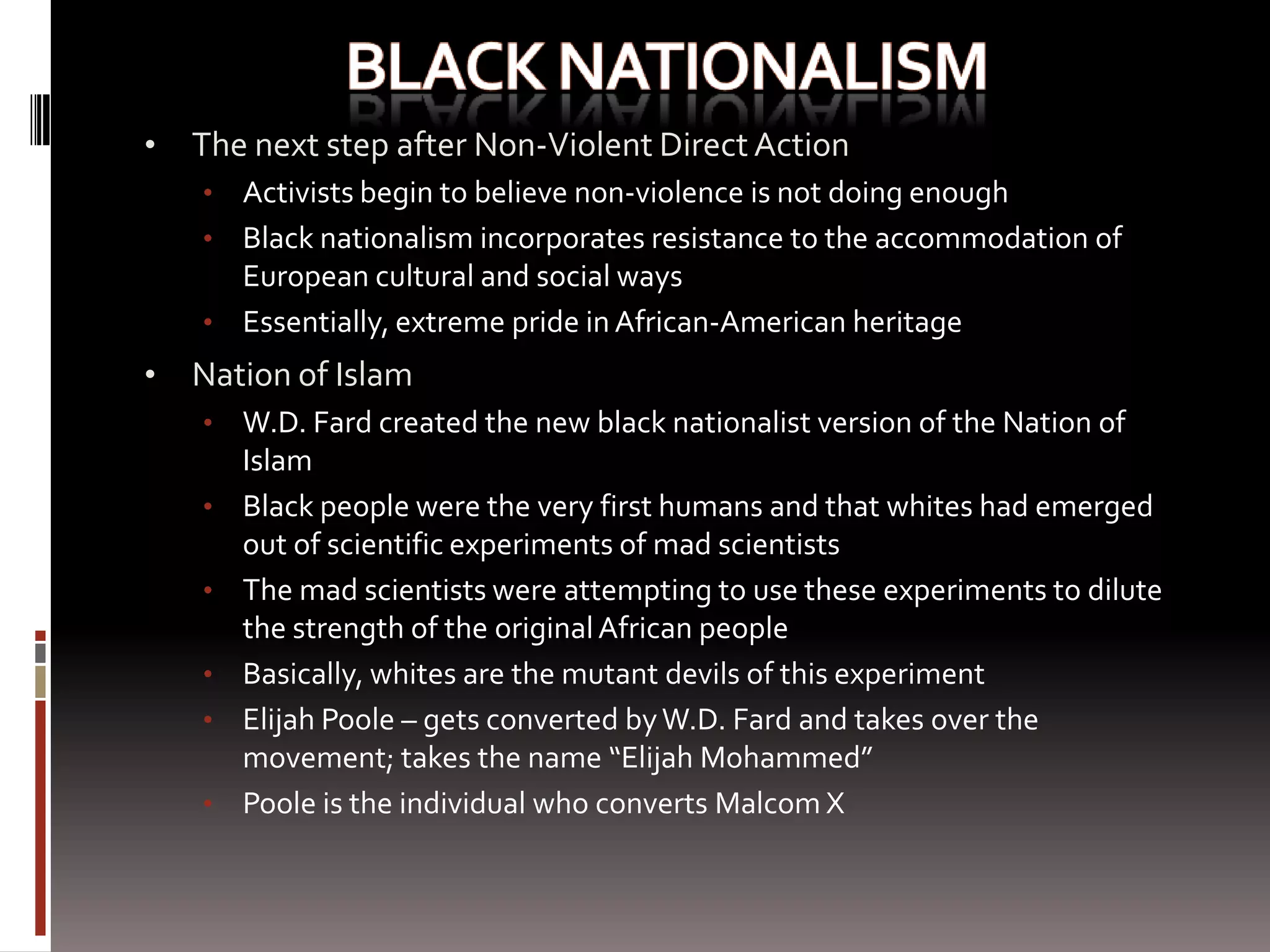
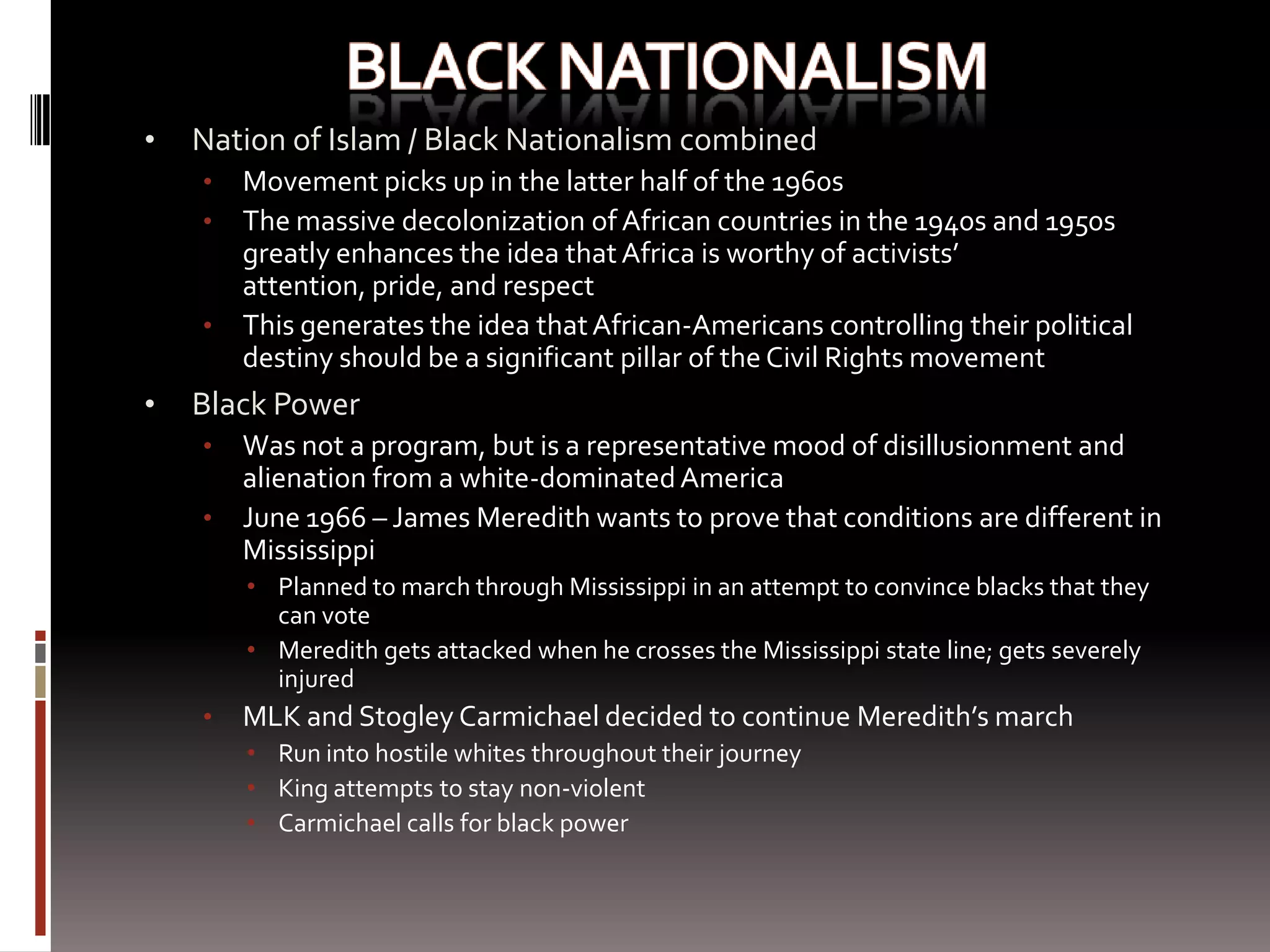
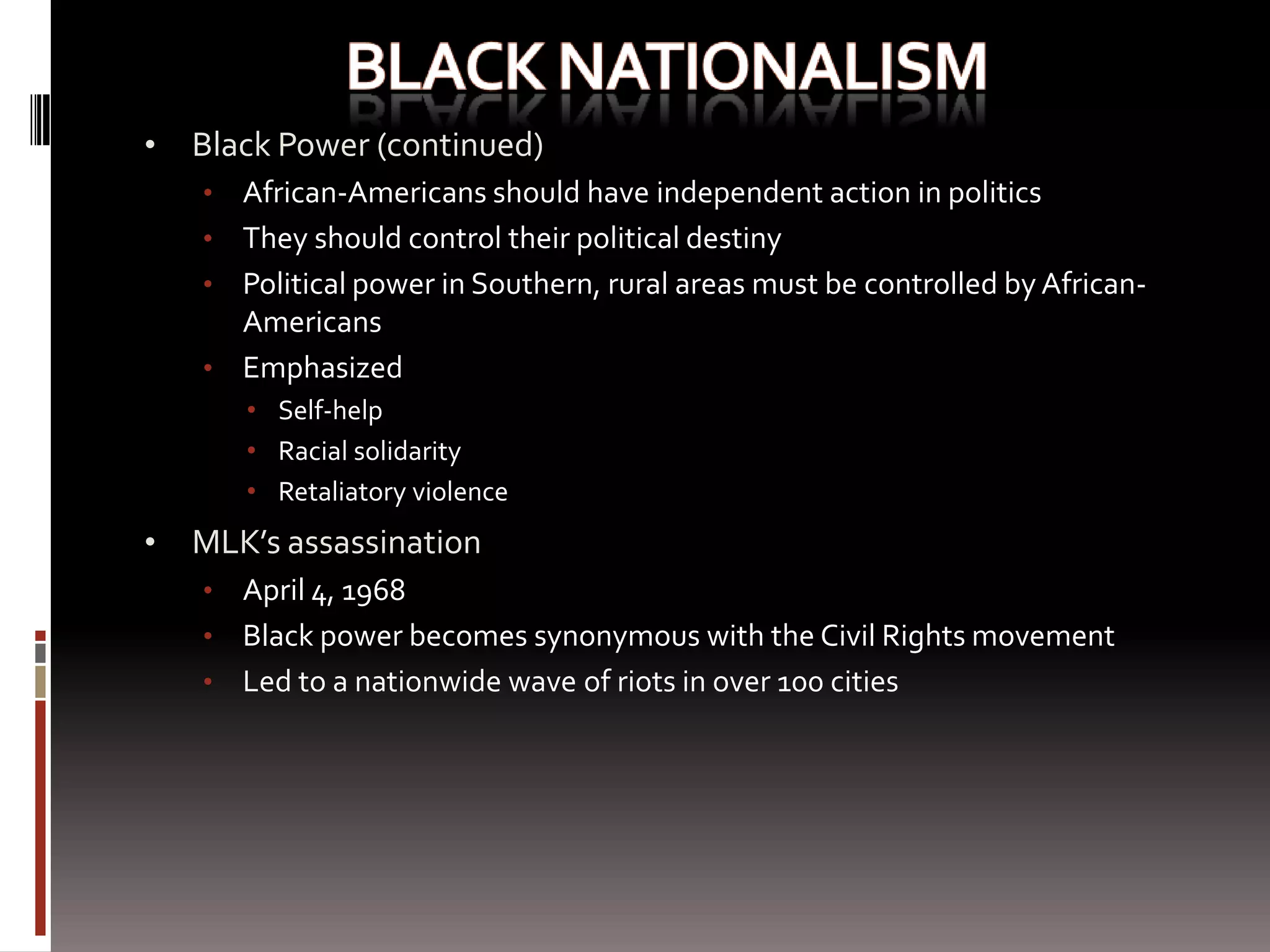
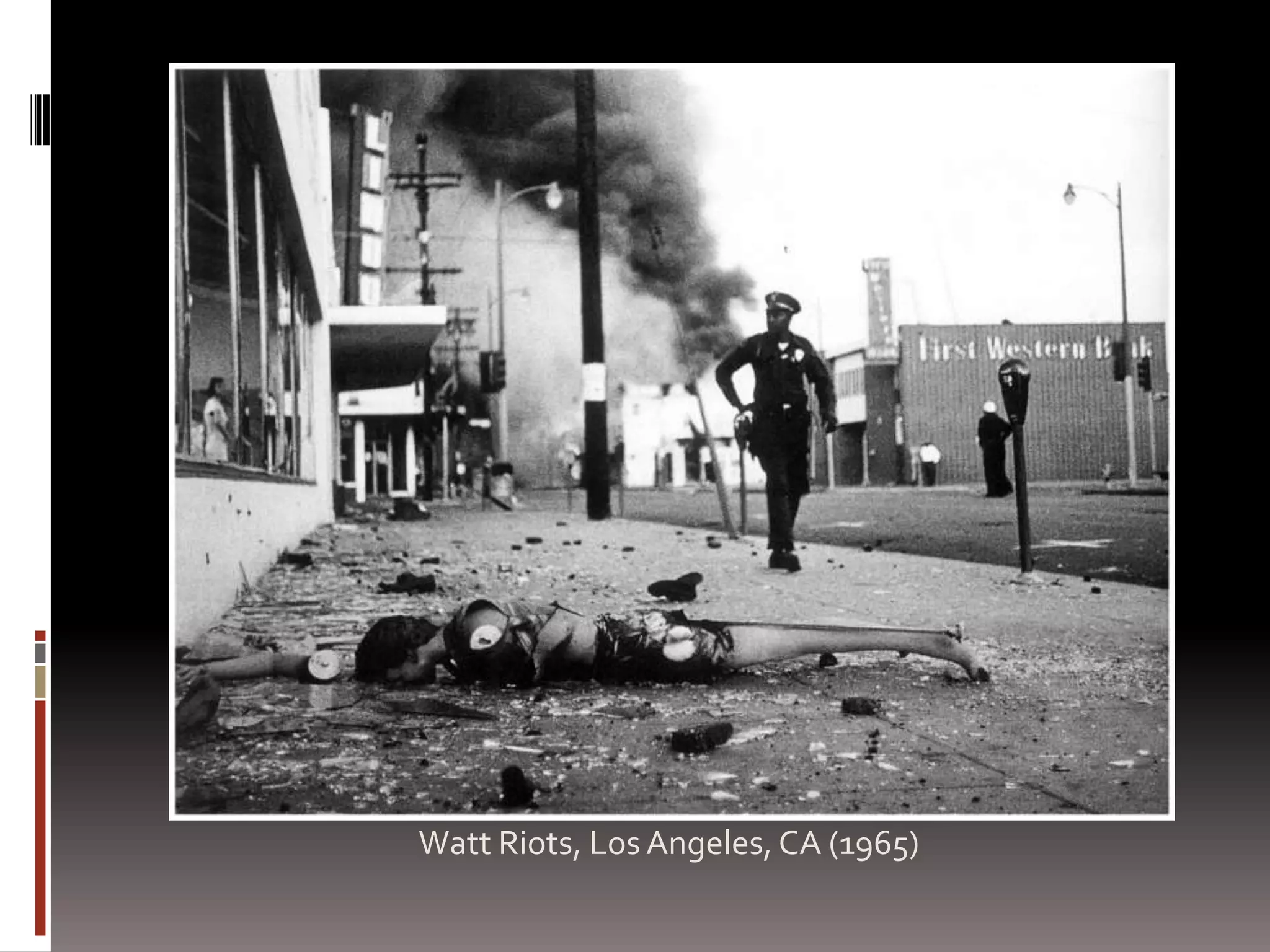
Black Nationalism
1965-1970legalizationWhat is legalization?
African-Americans relying on legal means to achieve civil rights goals
Brown v. Board of Education
1954 – ruled segregation unconstitutional in public schools
Separate facilities inherently make them unequal
NAACP (National Association for the Advancement of Colored People)
Formed in 1909
Originally focused on legislation to end lynching (the Jesse Washington case was paramount to their cause)
In the 1950s and 1960s, the NAACP championed legalizationOral History Interviewee on Desegregation in Waco
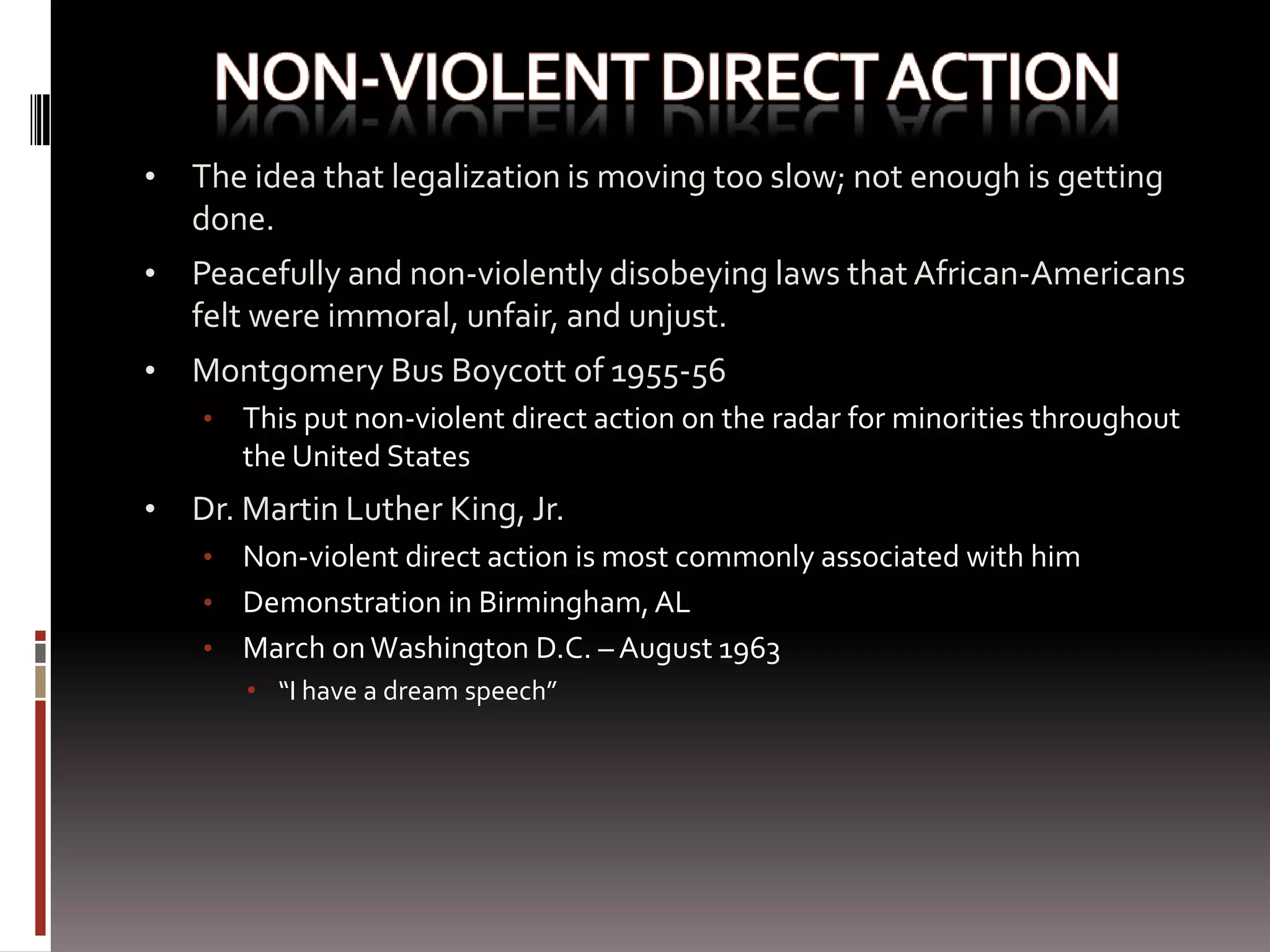
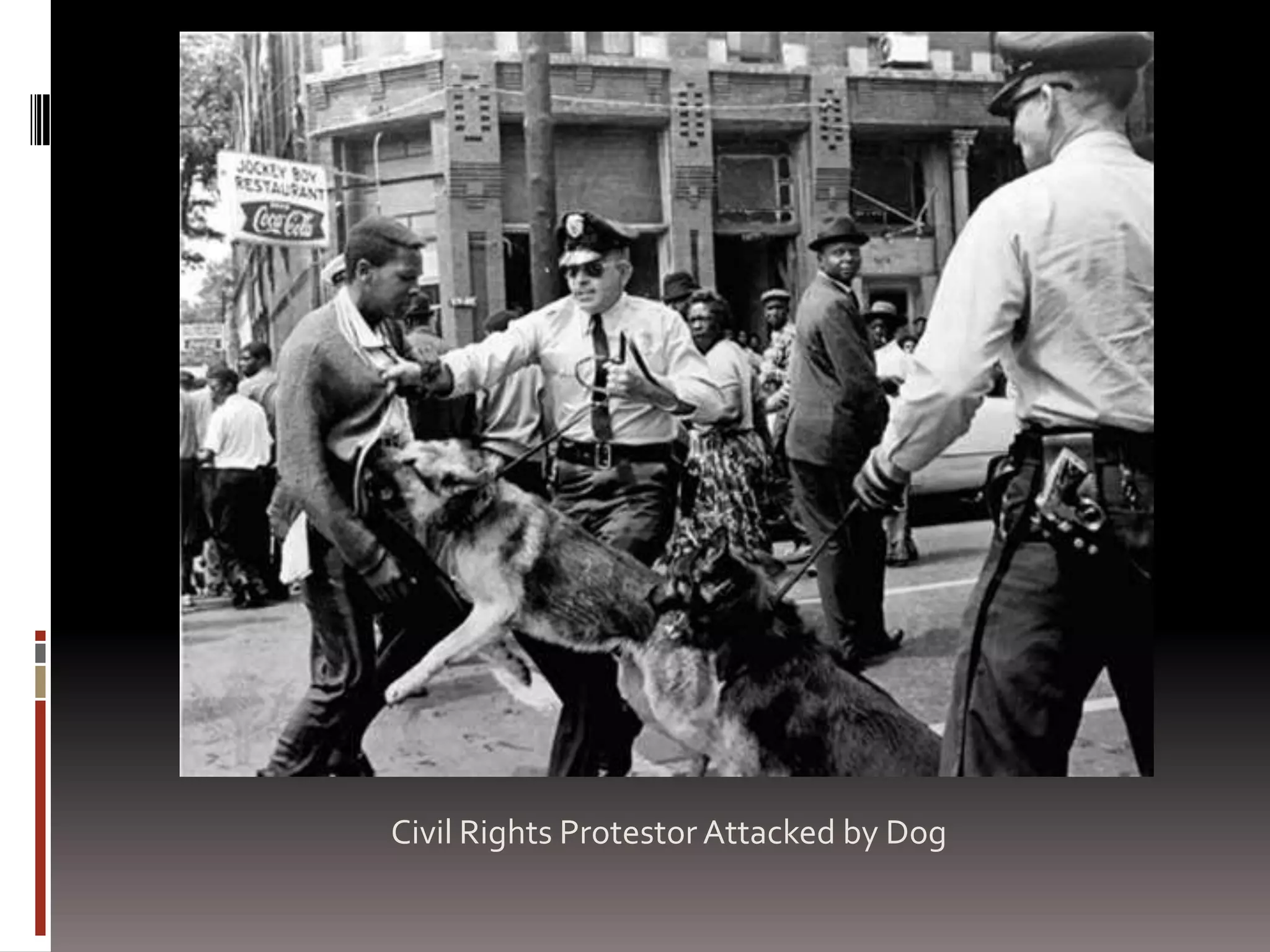
Non-Violent Direct ActionThe idea that legalization is moving too slow; not enough is getting done.
Peacefully and non-violently disobeying laws that African-Americans felt were immoral, unfair, and unjust.
Montgomery Bus Boycott of 1955-56
This put non-violent direct action on the radar for minorities throughout the United States
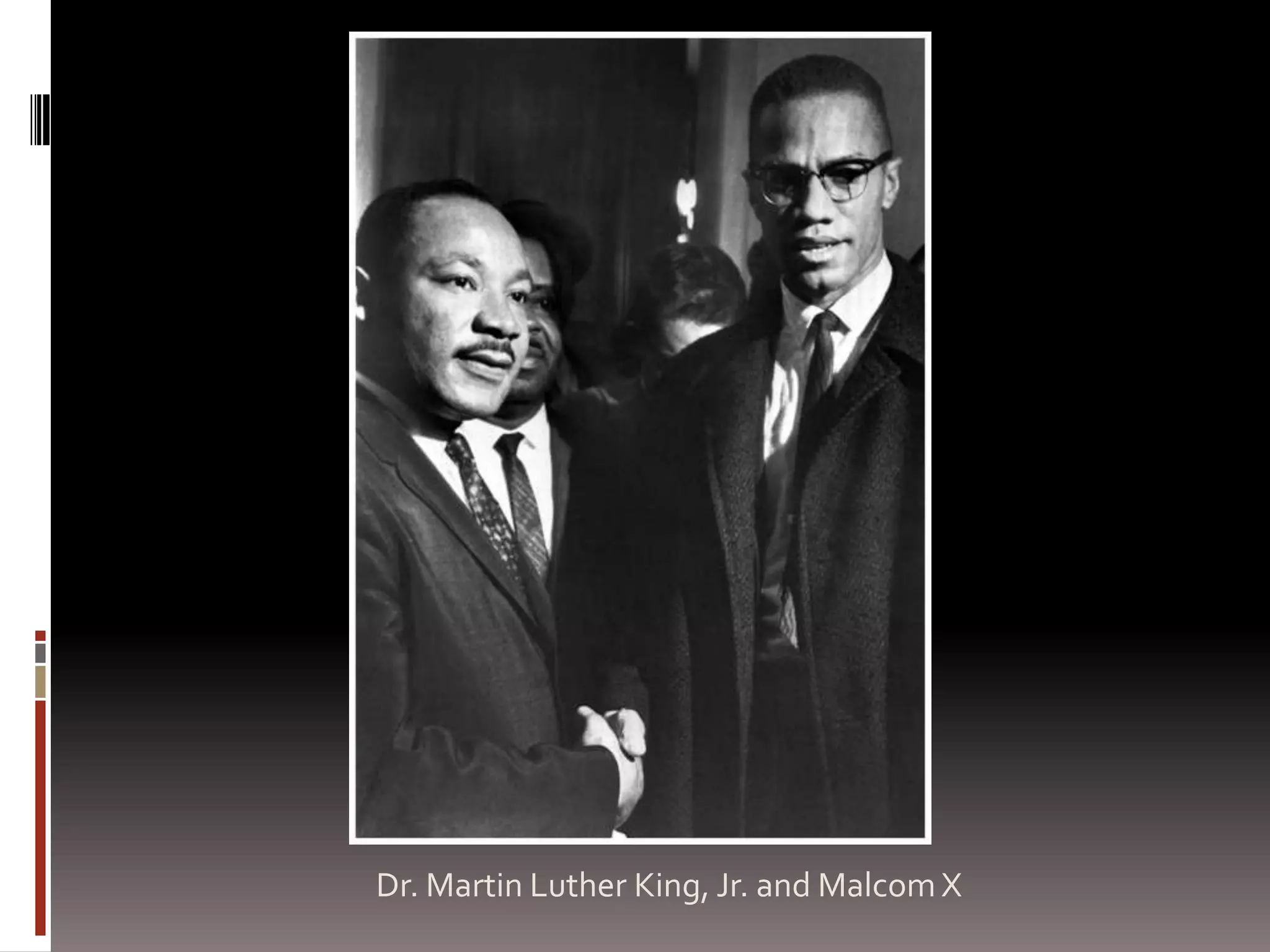
Dr. Martin Luther King, Jr.
Non-violent direct action is most commonly associated with him
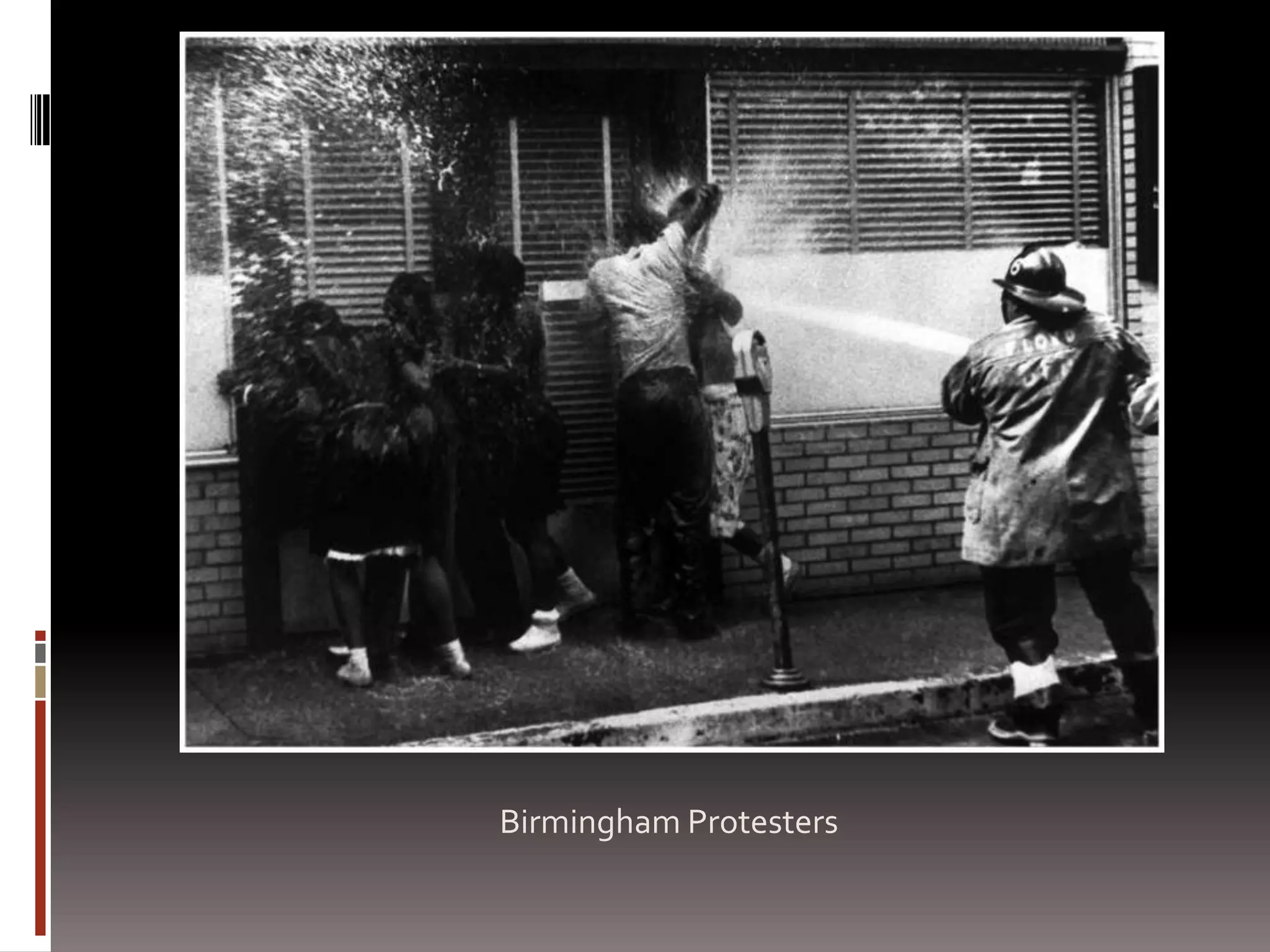
Demonstration in Birmingham, AL
March on Washington D.C. – August 1963
“I have a dream speech”Non-Violent Direct ActionSNCC (Student Non-Violent Coordinating Committee)
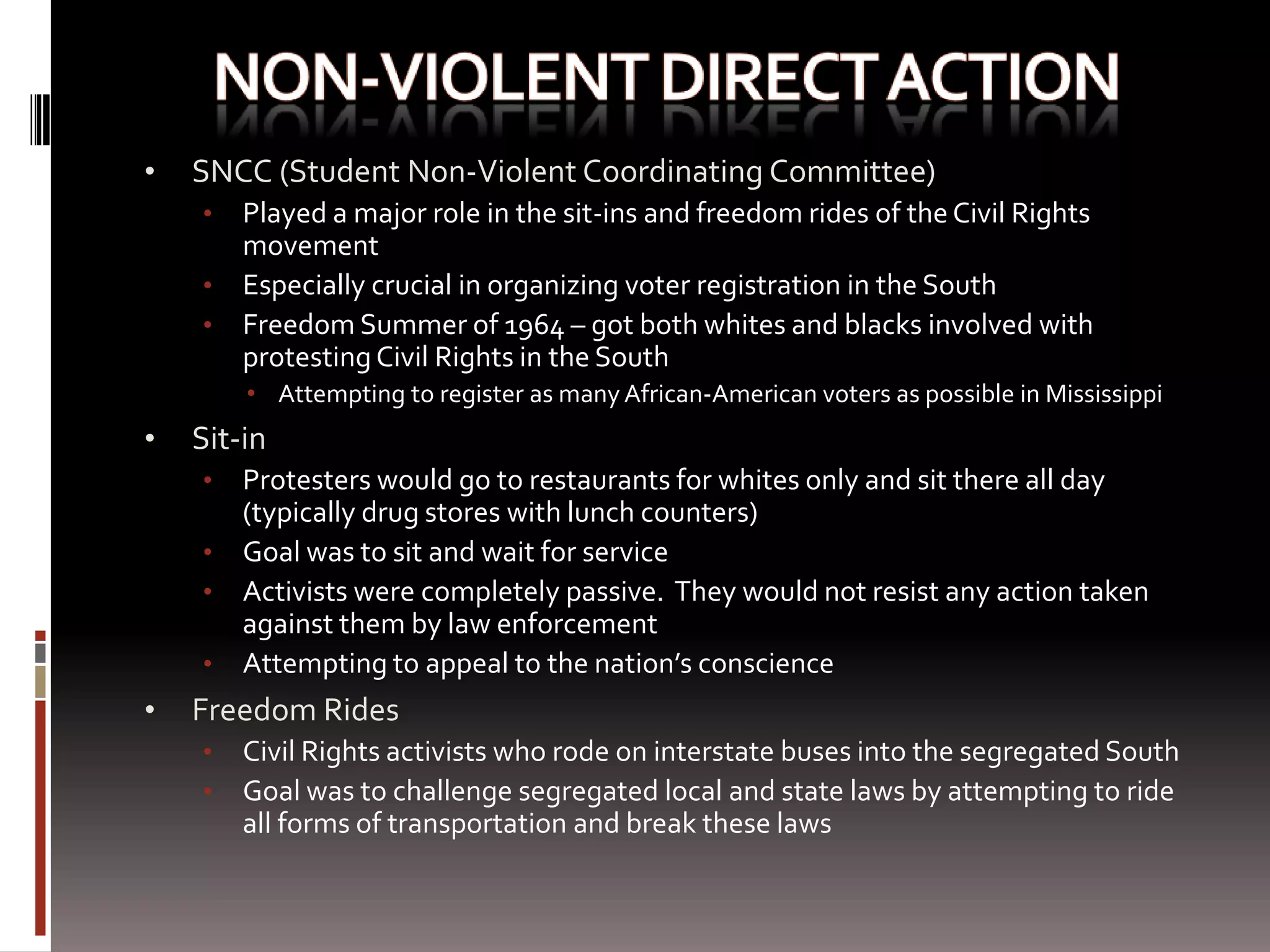
Played a major role in the sit-ins and freedom rides of the Civil Rights movement
Especially crucial in organizing voter registration in the South
Freedom Summer of 1964 – got both whites and blacks involved with protesting Civil Rights in the South
Attempting to register as many African-American voters as possible in Mississippi
Sit-in
Protesters would go to restaurants for whites only and sit there all day (typically drug stores with lunch counters)
Goal was to sit and wait for service
Activists were completely passive.  They would not resist any action taken against them by law enforcement

The 1960s