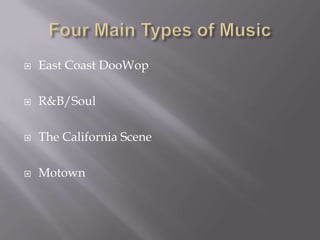
   East Coast DooWop

   R&B/Soul

   The California Scene

   Motown
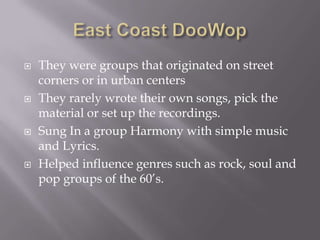
   They were groups that originated on street
    corners or in urban centers
   They rarely wrote their own songs, pick the
    material or set up the recordings.
   Sung In a group Harmony with simple music
    and Lyrics.
   Helped influence genres such as rock, soul and
    pop groups of the 60’s.
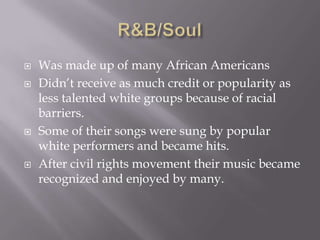
   Was made up of many African Americans
   Didn’t receive as much credit or popularity as
    less talented white groups because of racial
    barriers.
   Some of their songs were sung by popular
    white performers and became hits.
   After civil rights movement their music became
    recognized and enjoyed by many.
   Had a specific sound that soon spread across
    the nation. The surf & drag or fun in the sun.
   Surf rock took over the musical industry till the
    mid 1960s then it was replaced with
    psychedelic rock.
   Some of the most influential groups were the
    beach boys and the surfaris.
   All of the recording stars were black but it
    wasn’t considered totally black or soul music.
   Had a stable group of singers, songwriters, and
    musicians.
   Aspiring stars took lessons to smooth out their
    ghetto upbringing such as dance lessons, table
    manners and correct vocabulary.
   Artists were the complete package.
   Something that was popular was the message
    that this new music was presenting.

   There were many songs created regarding the
    war in Vietnam, civil rights and the rise of
    feminism.

   Many of these songs were used as anthems at
    protests, rallies and demonstrations.
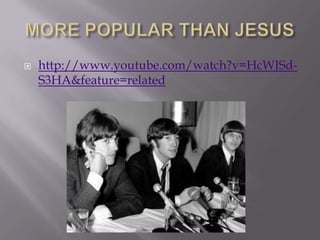
   The main controversy occurred when lead
    singer John Lennon stated that the Beatles were
    more well known than Jesus.
   Elvis went to the president and asked to have
    them banned from the united states.
   Their songs supported anti-war and had
    lifestyles that involved drug use.
   They were thought to be a bad influence on the
    youth of that generation.
   http://www.youtube.com/watch?v=HcWJSd-
    S3HA&feature=related
   Many black artists were popular within their
    own culture.

   The British Invasion ( the Beatles, and Rolling
    Stones) knocked many popular blacks off the
    charts.

   However soul music remain popular with the
    black community.
   Many blacks had to face the hardships of the
    times but they were faced with many more
    than their fellow white Americans.
   They had to constantly worry about their race
    and segregation along with drugs and the war
    in Vietnam.
   Things began to change in 1964 with the civil
    rights act and in 1965 when Martin Luther King
    Jr. appeared.
   Aretha Franklin


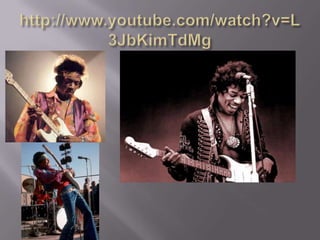
   Jimi Hendrix


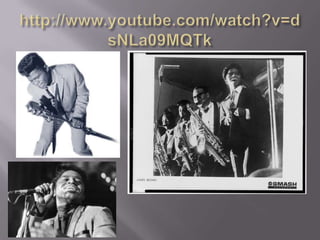
   James Brown
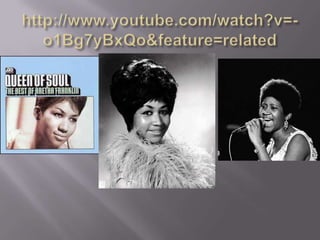
   THE QUEEN OF SOUL
   She epitomized soul at its most gospel-charged.
   Had huge hits like RESPECT, Chain of fools,
    and I say a little prayer.
   She had a big background in gospel and blues
    and other black musical influences which
    helped her become such an amazing soul
    singing artist.
   She was the first woman inducted into the hall
    of fame.
   Enlisted in the army in 1961 but continued to
    make music.
   Became a big hit in Britan
   In 1969 he performed his rock version of the
    Star Spangled Banner at Woodstock and was
    recognized for his great musical talents.
   He won over his American audience In 1967 at
    the Monterey Pop Festival with his stunning
    performance.
   Had a huge influence on all different genres of
    music.
   He played a big part in the musical messages
    being promoted during the civil rights
    movement .
   He would often cancel his performances in
    order to perform for black political occasions.
   He was sponsored by the government to play
    before the troops in Vietnam.
   His music united people from all over the
    country.
   He was well known for all the different types
    of dances he like to perform while singing.

   http://www.youtube.com/watch?v=MGbpuc
    WLfpE
   At the beginning of the 1960s there were many
    musical groups that were underrepresented
    and not supported by the public. By the mid to
    late 60’s many of this had changed.

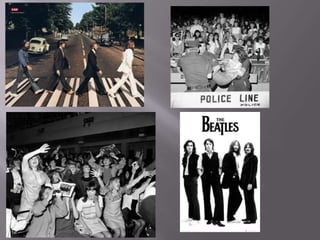
   The Beatles were a group that became very
    popular with the youth in our country but they
    were not supported by the older generation
    because of the messages that their music
    portrayed.
   The 60’s was a time for the youth to rebel and
    go against the grain. It was a time for change.
    This was no different for the musical
    community.

   African American music was not supported or
    really accepted by the white people in America
    because blacks were not considered equal.

   There were a few African American artists that
    pushed the limits and became very popular
    within their own race.
   After the Civil Rights act was passed in 1964 it
    changed the way that Americans viewed
    African American music.

   The 60s was a decade that completely changed
    the world that we live in today both with its
    political and musical movements.
   http://www.soul-patrol.com/funk/essay.htm
   http://rockhall.com/inductees/aretha-
    franklin/bio/
   http://www.spectropop.com/hmadanibrief.ht
    ml
   http://www.history-of-rock.com/doo.htm
   http://the60sofficialsite.com/Rhythm_and_Bl
    ues_Music_of_the_1960s.html

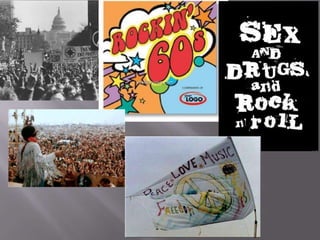
Music in the 1960’s

  • 2.
    East Coast DooWop  R&B/Soul  The California Scene  Motown
  • 3.
    They were groups that originated on street corners or in urban centers  They rarely wrote their own songs, pick the material or set up the recordings.  Sung In a group Harmony with simple music and Lyrics.  Helped influence genres such as rock, soul and pop groups of the 60’s.
  • 4.
    Was made up of many African Americans  Didn’t receive as much credit or popularity as less talented white groups because of racial barriers.  Some of their songs were sung by popular white performers and became hits.  After civil rights movement their music became recognized and enjoyed by many.
  • 5.
    Had a specific sound that soon spread across the nation. The surf & drag or fun in the sun.  Surf rock took over the musical industry till the mid 1960s then it was replaced with psychedelic rock.  Some of the most influential groups were the beach boys and the surfaris.
  • 6.
    All of the recording stars were black but it wasn’t considered totally black or soul music.  Had a stable group of singers, songwriters, and musicians.  Aspiring stars took lessons to smooth out their ghetto upbringing such as dance lessons, table manners and correct vocabulary.  Artists were the complete package.
  • 7.
    Something that was popular was the message that this new music was presenting.  There were many songs created regarding the war in Vietnam, civil rights and the rise of feminism.  Many of these songs were used as anthems at protests, rallies and demonstrations.
  • 9.
    The main controversy occurred when lead singer John Lennon stated that the Beatles were more well known than Jesus.  Elvis went to the president and asked to have them banned from the united states.  Their songs supported anti-war and had lifestyles that involved drug use.  They were thought to be a bad influence on the youth of that generation.
  • 10.
    http://www.youtube.com/watch?v=HcWJSd- S3HA&feature=related
  • 12.
    Many black artists were popular within their own culture.  The British Invasion ( the Beatles, and Rolling Stones) knocked many popular blacks off the charts.  However soul music remain popular with the black community.
  • 13.
    Many blacks had to face the hardships of the times but they were faced with many more than their fellow white Americans.  They had to constantly worry about their race and segregation along with drugs and the war in Vietnam.  Things began to change in 1964 with the civil rights act and in 1965 when Martin Luther King Jr. appeared.
  • 14.
    Aretha Franklin  Jimi Hendrix  James Brown
  • 15.
    THE QUEEN OF SOUL  She epitomized soul at its most gospel-charged.  Had huge hits like RESPECT, Chain of fools, and I say a little prayer.  She had a big background in gospel and blues and other black musical influences which helped her become such an amazing soul singing artist.  She was the first woman inducted into the hall of fame.
  • 17.
    Enlisted in the army in 1961 but continued to make music.  Became a big hit in Britan  In 1969 he performed his rock version of the Star Spangled Banner at Woodstock and was recognized for his great musical talents.  He won over his American audience In 1967 at the Monterey Pop Festival with his stunning performance.
  • 19.
    Had a huge influence on all different genres of music.  He played a big part in the musical messages being promoted during the civil rights movement .  He would often cancel his performances in order to perform for black political occasions.  He was sponsored by the government to play before the troops in Vietnam.
  • 20.
    His music united people from all over the country.  He was well known for all the different types of dances he like to perform while singing.  http://www.youtube.com/watch?v=MGbpuc WLfpE
  • 22.
    At the beginning of the 1960s there were many musical groups that were underrepresented and not supported by the public. By the mid to late 60’s many of this had changed.  The Beatles were a group that became very popular with the youth in our country but they were not supported by the older generation because of the messages that their music portrayed.
  • 23.
    The 60’s was a time for the youth to rebel and go against the grain. It was a time for change. This was no different for the musical community.  African American music was not supported or really accepted by the white people in America because blacks were not considered equal.  There were a few African American artists that pushed the limits and became very popular within their own race.
  • 24.
    After the Civil Rights act was passed in 1964 it changed the way that Americans viewed African American music.  The 60s was a decade that completely changed the world that we live in today both with its political and musical movements.
  • 25.
    http://www.soul-patrol.com/funk/essay.htm  http://rockhall.com/inductees/aretha- franklin/bio/  http://www.spectropop.com/hmadanibrief.ht ml  http://www.history-of-rock.com/doo.htm  http://the60sofficialsite.com/Rhythm_and_Bl ues_Music_of_the_1960s.html