THALAMUS
DR. ANITA CHOUDHARY
PROFESSOR &H.O.D
R.D.G.M.C Ujjain
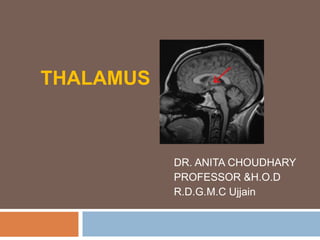
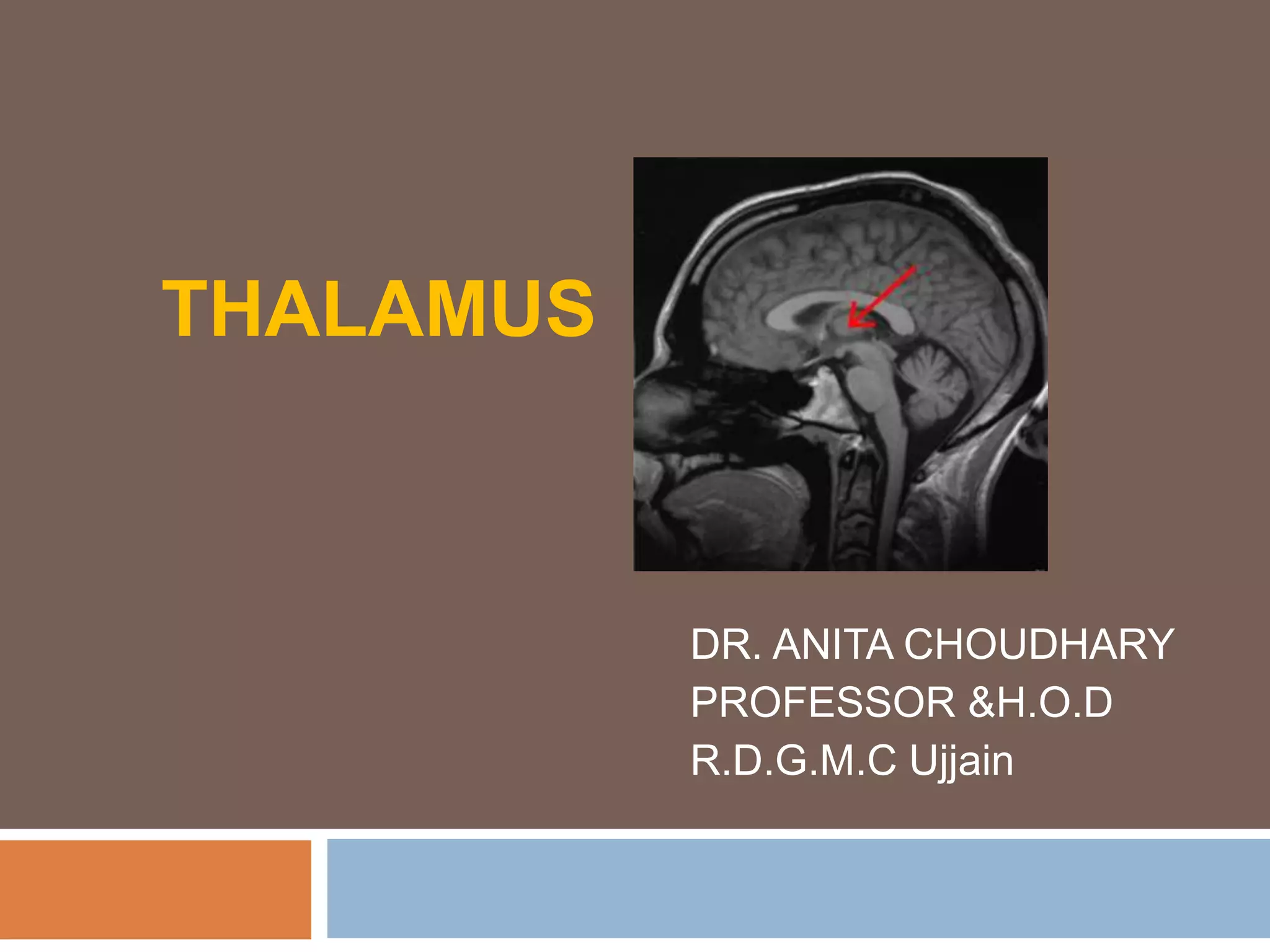
THALAMUS
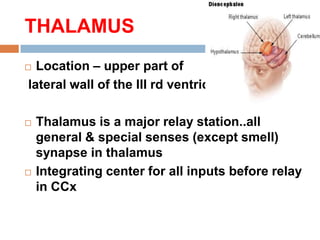
 Location – upper part of
lateral wall of the III rd ventricle.
 Thalamus is a major relay station..all
general & special senses (except smell)
synapse in thalamus
 Integrating center for all inputs before relay
in CCx
Thalamus
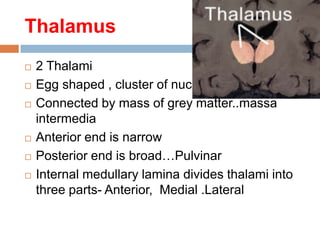
 2 Thalami
 Egg shaped , cluster of nuclei
 Connected by mass of grey matter..massa
intermedia
 Anterior end is narrow
 Posterior end is broad…Pulvinar
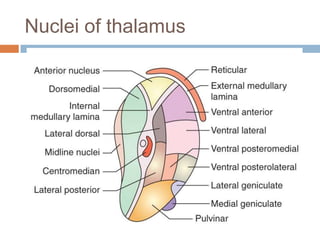
 Internal medullary lamina divides thalami into
three parts- Anterior, Medial .Lateral
Nuclei of thalamus
Thalamic Nuclei – Functional
Classification
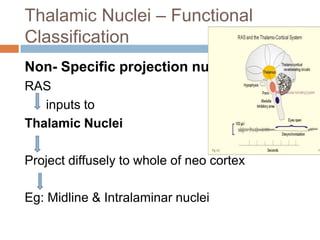
Non- Specific projection nuclei
RAS
inputs to
Thalamic Nuclei
Project diffusely to whole of neo cortex
Eg: Midline & Intralaminar nuclei
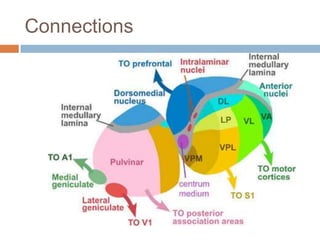
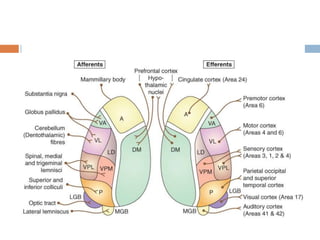
Connections
Functions
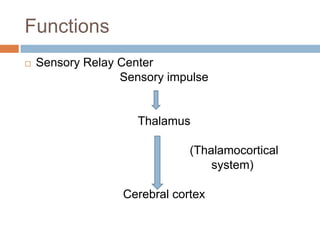
 Sensory Relay Center
Sensory impulse
Thalamus
(Thalamocortical
system)
Cerebral cortex
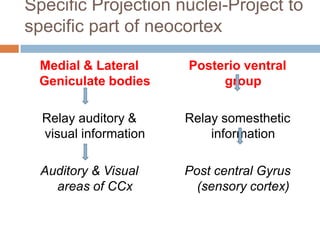
Specific Projection nuclei-Project to
specific part of neocortex
Medial & Lateral
Geniculate bodies
Relay auditory &
visual information
Auditory & Visual
areas of CCx
Posterio ventral
group
Relay somesthetic
information
Post central Gyrus
(sensory cortex)
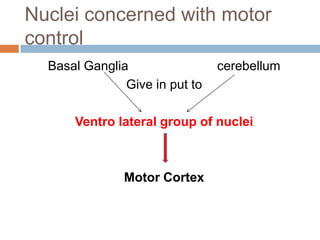
Nuclei concerned with motor
control
Basal Ganglia cerebellum
Give in put to
Ventro lateral group of nuclei
Motor Cortex
Nuclei concerned with memory &
emotions
Mammilary bodies
give inputs to
Anterior group of nuclei
Limbic cortex
Recent memory & emotions
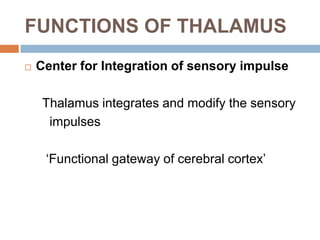
FUNCTIONS OF THALAMUS
 Center for Integration of sensory impulse
Thalamus integrates and modify the sensory
impulses
‘Functional gateway of cerebral cortex’
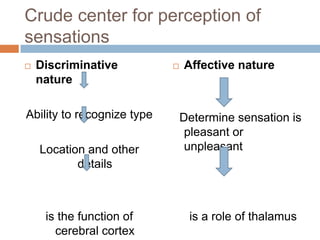
Crude center for perception of
sensations
 Discriminative
nature
Ability to recognize type
Location and other
details
is the function of
cerebral cortex
 Affective nature
Determine sensation is
pleasant or
unpleasant
is a role of thalamus
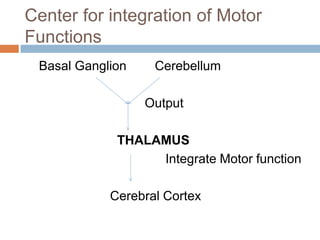
Center for integration of Motor
Functions
Basal Ganglion Cerebellum
Output
THALAMUS
Integrate Motor function
Cerebral Cortex
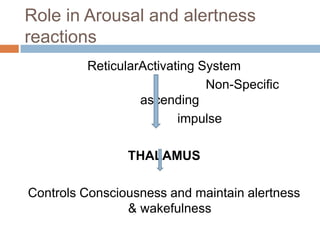
Role in Arousal and alertness
reactions
ReticularActivating System
Non-Specific
ascending
impulse
THALAMUS
Controls Consciousness and maintain alertness
& wakefulness
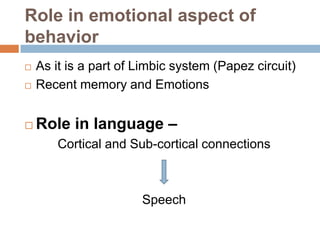
Role in emotional aspect of
behavior
 As it is a part of Limbic system (Papez circuit)
 Recent memory and Emotions
 Role in language –
Cortical and Sub-cortical connections
Speech
Center for Reflex activity-
All sensory fibers
Relay
Thalamus
Reflex Activity
Other functions…..
 Role in Synchronization of EEG
 Integration of visceral and somatic function
 Center for sexual sensation
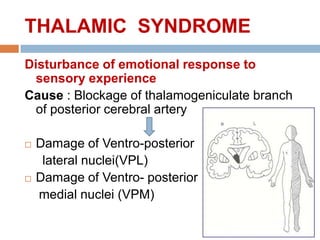
THALAMIC SYNDROME
Disturbance of emotional response to
sensory experience
Cause : Blockage of thalamogeniculate branch
of posterior cerebral artery
 Damage of Ventro-posterior
lateral nuclei(VPL)
 Damage of Ventro- posterior
medial nuclei (VPM)
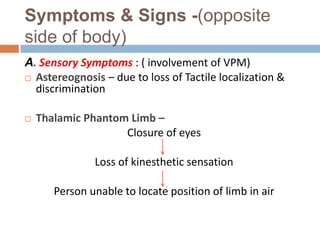
Symptoms & Signs -(opposite
side of body)
A. Sensory Symptoms : ( involvement of VPM)
 Astereognosis – due to loss of Tactile localization &
discrimination
 Thalamic Phantom Limb –
Closure of eyes
Loss of kinesthetic sensation
Person unable to locate position of limb in air
 Thalamic Over reaction :
Decrease Threshold for Pain, touch and
temperature- exaggerated & disagreeable
sensation
 Amelognosia – Illusion felt by patients that
his limb is absent
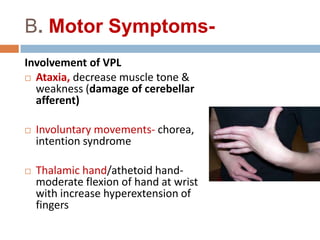
B. Motor Symptoms-
Involvement of VPL
 Ataxia, decrease muscle tone &
weakness (damage of cerebellar
afferent)
 Involuntary movements- chorea,
intention syndrome
 Thalamic hand/athetoid hand-
moderate flexion of hand at wrist
with increase hyperextension of
fingers
Korsakoff’s Syndrome
 Refers to lesion of MEDIODORSAL
NUCLEUS of thalamus
Characteristic feature:
 Difficult to remember new information
Frontal lobectomy
 Connection of dorsal nuclei of thalamus with
frontal lobe is surgically removed
 For relief of unbearable pain
THANK YOU

Thalamus

  • 1.
  • 2.
    THALAMUS  Location –upper part of lateral wall of the III rd ventricle.  Thalamus is a major relay station..all general & special senses (except smell) synapse in thalamus  Integrating center for all inputs before relay in CCx
  • 3.
    Thalamus  2 Thalami Egg shaped , cluster of nuclei  Connected by mass of grey matter..massa intermedia  Anterior end is narrow  Posterior end is broad…Pulvinar  Internal medullary lamina divides thalami into three parts- Anterior, Medial .Lateral
  • 4.
  • 5.
    Thalamic Nuclei –Functional Classification Non- Specific projection nuclei RAS inputs to Thalamic Nuclei Project diffusely to whole of neo cortex Eg: Midline & Intralaminar nuclei
  • 6.
  • 8.
    Functions  Sensory RelayCenter Sensory impulse Thalamus (Thalamocortical system) Cerebral cortex
  • 9.
    Specific Projection nuclei-Projectto specific part of neocortex Medial & Lateral Geniculate bodies Relay auditory & visual information Auditory & Visual areas of CCx Posterio ventral group Relay somesthetic information Post central Gyrus (sensory cortex)
  • 10.
    Nuclei concerned withmotor control Basal Ganglia cerebellum Give in put to Ventro lateral group of nuclei Motor Cortex
  • 11.
    Nuclei concerned withmemory & emotions Mammilary bodies give inputs to Anterior group of nuclei Limbic cortex Recent memory & emotions
  • 12.
    FUNCTIONS OF THALAMUS Center for Integration of sensory impulse Thalamus integrates and modify the sensory impulses ‘Functional gateway of cerebral cortex’
  • 13.
    Crude center forperception of sensations  Discriminative nature Ability to recognize type Location and other details is the function of cerebral cortex  Affective nature Determine sensation is pleasant or unpleasant is a role of thalamus
  • 14.
    Center for integrationof Motor Functions Basal Ganglion Cerebellum Output THALAMUS Integrate Motor function Cerebral Cortex
  • 15.
    Role in Arousaland alertness reactions ReticularActivating System Non-Specific ascending impulse THALAMUS Controls Consciousness and maintain alertness & wakefulness
  • 16.
    Role in emotionalaspect of behavior  As it is a part of Limbic system (Papez circuit)  Recent memory and Emotions  Role in language – Cortical and Sub-cortical connections Speech
  • 17.
    Center for Reflexactivity- All sensory fibers Relay Thalamus Reflex Activity
  • 18.
    Other functions…..  Rolein Synchronization of EEG  Integration of visceral and somatic function  Center for sexual sensation
  • 19.
    THALAMIC SYNDROME Disturbance ofemotional response to sensory experience Cause : Blockage of thalamogeniculate branch of posterior cerebral artery  Damage of Ventro-posterior lateral nuclei(VPL)  Damage of Ventro- posterior medial nuclei (VPM)
  • 20.
    Symptoms & Signs-(opposite side of body) A. Sensory Symptoms : ( involvement of VPM)  Astereognosis – due to loss of Tactile localization & discrimination  Thalamic Phantom Limb – Closure of eyes Loss of kinesthetic sensation Person unable to locate position of limb in air
  • 21.
     Thalamic Overreaction : Decrease Threshold for Pain, touch and temperature- exaggerated & disagreeable sensation  Amelognosia – Illusion felt by patients that his limb is absent
  • 22.
    B. Motor Symptoms- Involvementof VPL  Ataxia, decrease muscle tone & weakness (damage of cerebellar afferent)  Involuntary movements- chorea, intention syndrome  Thalamic hand/athetoid hand- moderate flexion of hand at wrist with increase hyperextension of fingers
  • 23.
    Korsakoff’s Syndrome  Refersto lesion of MEDIODORSAL NUCLEUS of thalamus Characteristic feature:  Difficult to remember new information
  • 24.
    Frontal lobectomy  Connectionof dorsal nuclei of thalamus with frontal lobe is surgically removed  For relief of unbearable pain
  • 25.