Content
 Definition
 Industrial Revolution
 Knitting Machine
 Weaving Machine
 Printing Machine
 Manufacturing Machine
 Spinning Machine
Industrial Revolution
In the past
Iron and Coal, 1855–60, by William
Scott illustrates the rise of coal and iron
working in the Industrial Revolution and the
heavy engineering projects they made possible.
Industrial Revolution
In the present
A Watt steam engine. The steam engine, made of iron
and fueled primarily by coal, became widely used in
the United Kingdom during the Industrial Revolution.
Knitting Machine
 Brand name: yuanda
 Model number: yd-SJF
 Type: 3-fleece
 knitting method: single
 Diameter:11’-44’
 Feeder: 33F-132F(3f.Rl)
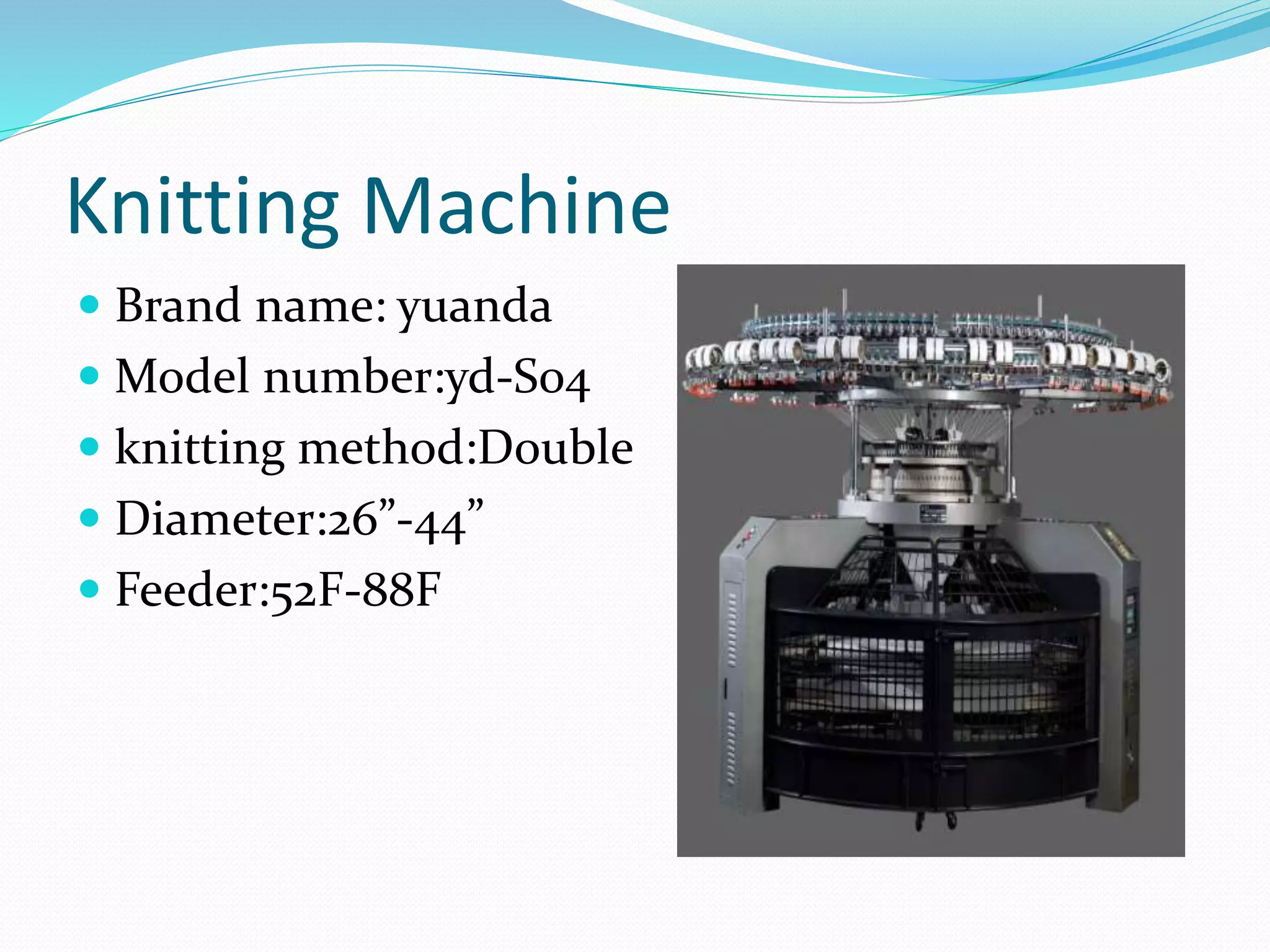
Knitting Machine
 Brand name: yuanda
 Model number:yd-S04
 knitting method:Double
 Diameter:26”-44”
 Feeder:52F-88F
Weaving Machine
>Model number: RFJA12
>Type:weaving machinary
>Reed width:(cm)150-340
>pick density:25-300picks/inch
>capacity:staple fiberNe100-Ne5
>Filamet fiber:500-1000D
>Warp flange diameter:800mm/1000mm
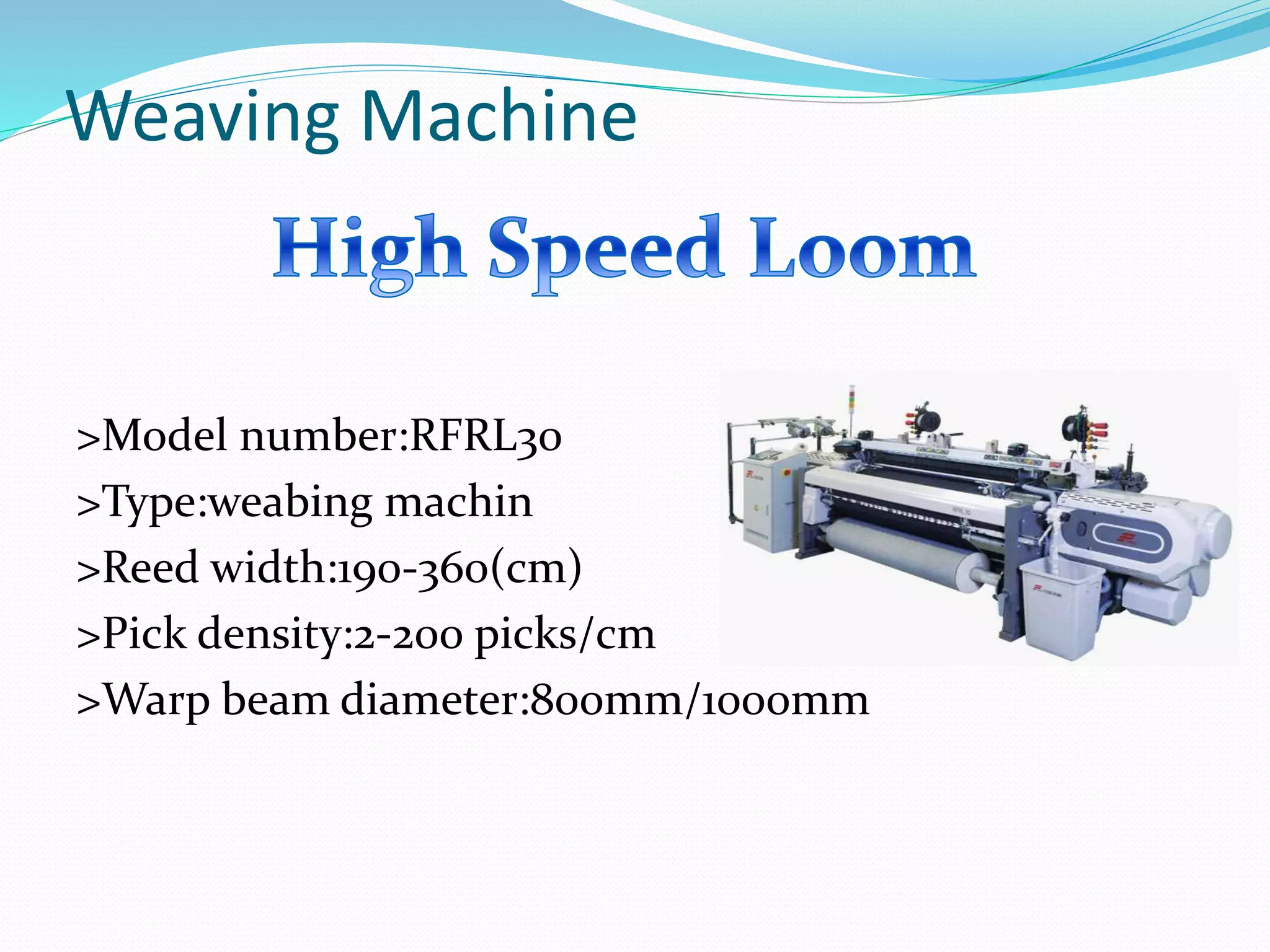
Weaving Machine
>Model number:RFRL30
>Type:weabing machin
>Reed width:190-360(cm)
>Pick density:2-200 picks/cm
>Warp beam diameter:800mm/1000mm
Printing Machine
 Open Die: This process is used to make Sewing
Machine.
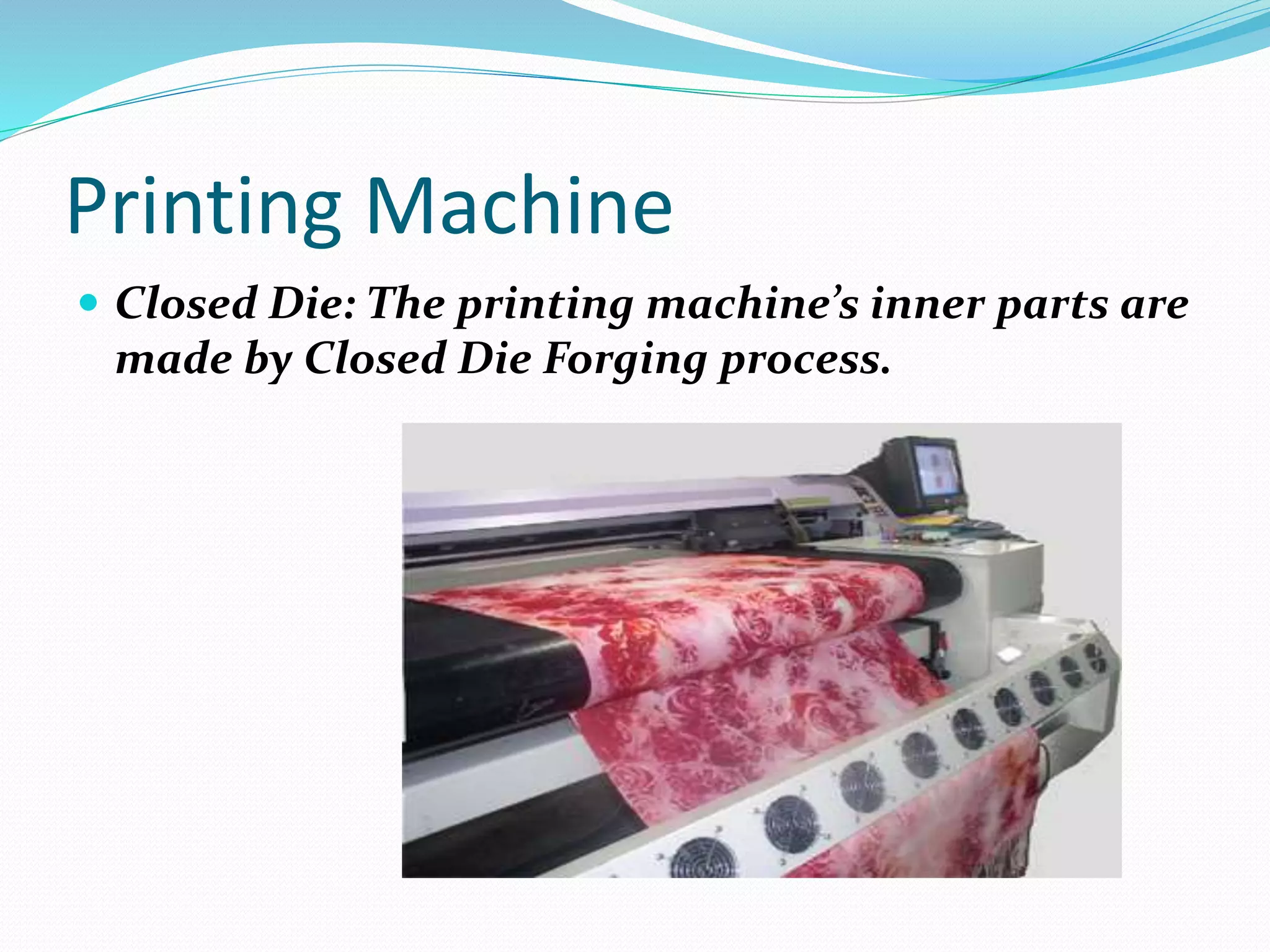
Printing Machine
 Closed Die: The printing machine’s inner parts are
made by Closed Die Forging process.
Manufacturing
 Textile manufacturing is a major industry. It is based
on the conversion of fibre into yarn, yarn into fabric.
These are then dyed or printed, fabricated into clothes.
Different types of fiber are used to produce
yarn. Cotton remains the most important natural
fibre, so is treated in depth. There are many variable
processes available at the spinning and fabric-forming
stages coupled with the complexities of
the finishing and colouration processes to the
production of a wide ranges of products. There
remains a large industry that useshand techniques to
achieve the same results.
Manufacturing Machine
Spinning Machine
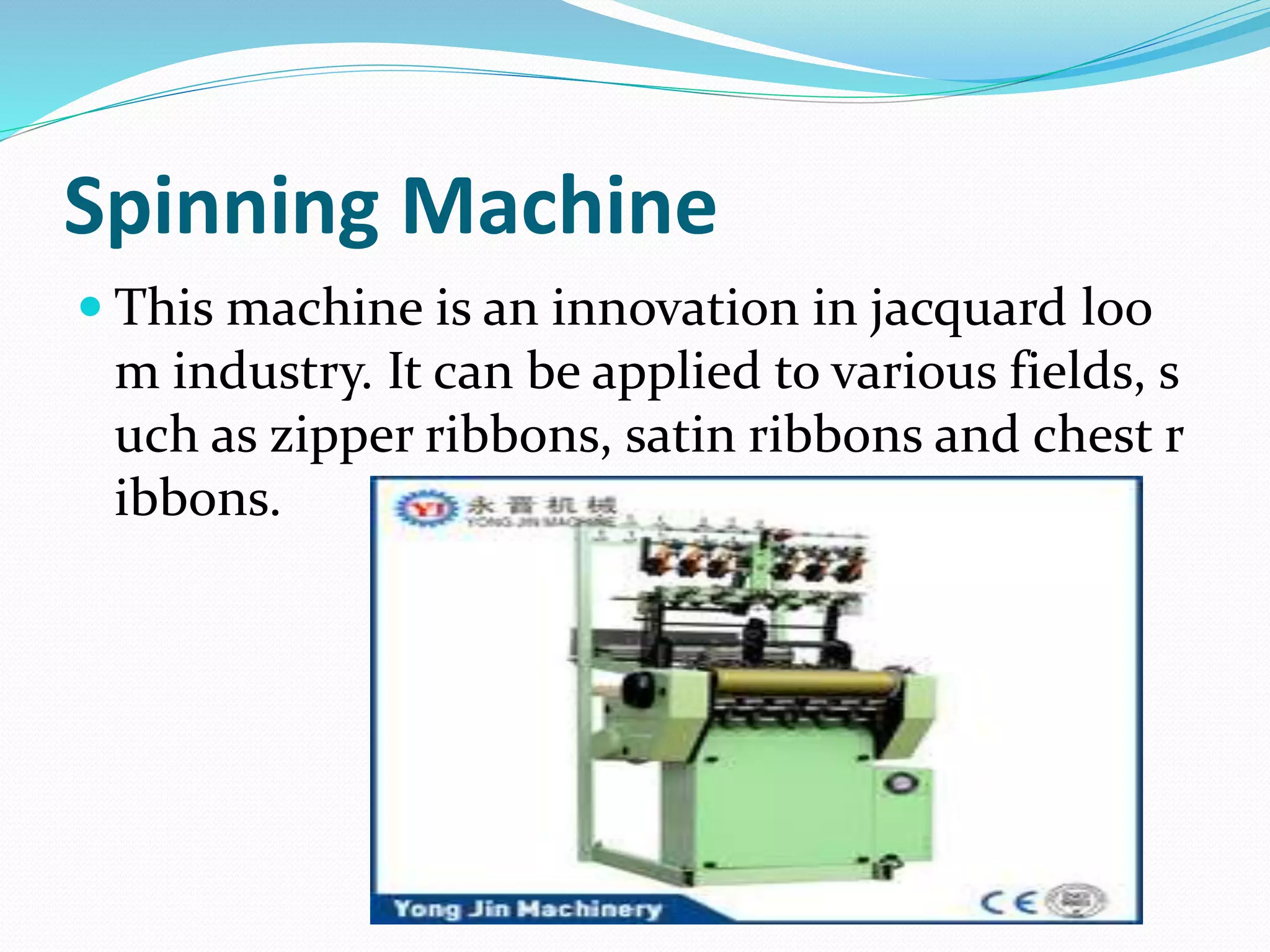
 This machine is an innovation in jacquard loo
m industry. It can be applied to various fields, s
uch as zipper ribbons, satin ribbons and chest r
ibbons.
Spinning Machine
supplier supports :
>100% product quality protection
> 100% on-time shipment protection
> 100% payment protection for your covered amount
Spinning Machine
Two types of spinning machine:
Mule spinning: The spinning mule is a machine used to
spin cotton and other fibres in
the mills of Lancashire and elsewhere. They were
used extensively from the late 18th to the early 20th
century
In this past
Spinning Machine
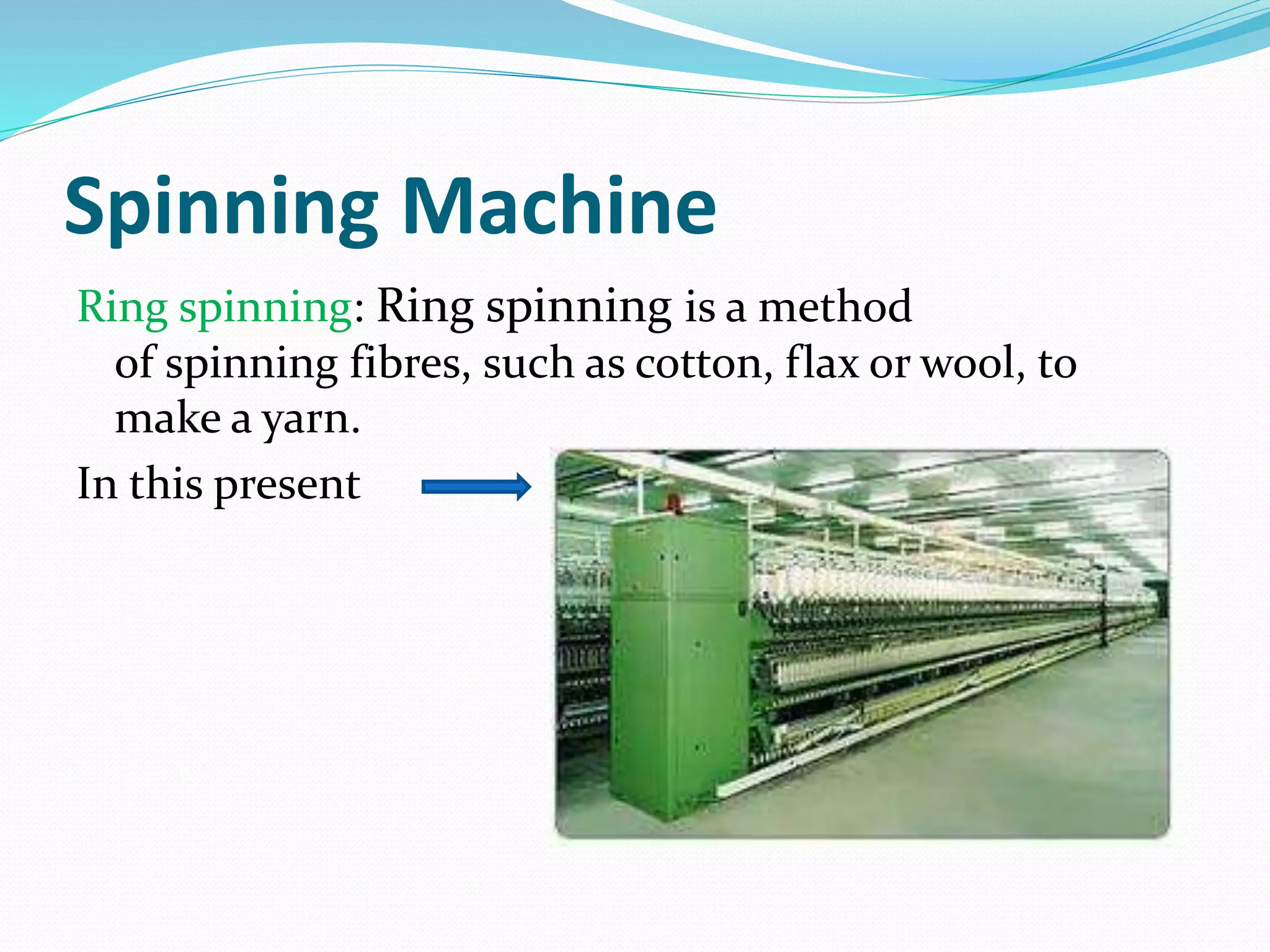
Ring spinning: Ring spinning is a method
of spinning fibres, such as cotton, flax or wool, to
make a yarn.
In this present
Thank You
Prepared By
Liton Ahmd
Department Of Textile Engineering
Daffodil International University

Textile Machineries

  • 2.
    Content  Definition  IndustrialRevolution  Knitting Machine  Weaving Machine  Printing Machine  Manufacturing Machine  Spinning Machine
  • 4.
    Industrial Revolution In thepast Iron and Coal, 1855–60, by William Scott illustrates the rise of coal and iron working in the Industrial Revolution and the heavy engineering projects they made possible.
  • 5.
    Industrial Revolution In thepresent A Watt steam engine. The steam engine, made of iron and fueled primarily by coal, became widely used in the United Kingdom during the Industrial Revolution.
  • 6.
    Knitting Machine  Brandname: yuanda  Model number: yd-SJF  Type: 3-fleece  knitting method: single  Diameter:11’-44’  Feeder: 33F-132F(3f.Rl)
  • 7.
    Knitting Machine  Brandname: yuanda  Model number:yd-S04  knitting method:Double  Diameter:26”-44”  Feeder:52F-88F
  • 8.
    Weaving Machine >Model number:RFJA12 >Type:weaving machinary >Reed width:(cm)150-340 >pick density:25-300picks/inch >capacity:staple fiberNe100-Ne5 >Filamet fiber:500-1000D >Warp flange diameter:800mm/1000mm
  • 9.
    Weaving Machine >Model number:RFRL30 >Type:weabingmachin >Reed width:190-360(cm) >Pick density:2-200 picks/cm >Warp beam diameter:800mm/1000mm
  • 10.
    Printing Machine  OpenDie: This process is used to make Sewing Machine.
  • 11.
    Printing Machine  ClosedDie: The printing machine’s inner parts are made by Closed Die Forging process.
  • 12.
    Manufacturing  Textile manufacturingis a major industry. It is based on the conversion of fibre into yarn, yarn into fabric. These are then dyed or printed, fabricated into clothes. Different types of fiber are used to produce yarn. Cotton remains the most important natural fibre, so is treated in depth. There are many variable processes available at the spinning and fabric-forming stages coupled with the complexities of the finishing and colouration processes to the production of a wide ranges of products. There remains a large industry that useshand techniques to achieve the same results.
  • 13.
  • 14.
    Spinning Machine  Thismachine is an innovation in jacquard loo m industry. It can be applied to various fields, s uch as zipper ribbons, satin ribbons and chest r ibbons.
  • 15.
    Spinning Machine supplier supports: >100% product quality protection > 100% on-time shipment protection > 100% payment protection for your covered amount
  • 16.
    Spinning Machine Two typesof spinning machine: Mule spinning: The spinning mule is a machine used to spin cotton and other fibres in the mills of Lancashire and elsewhere. They were used extensively from the late 18th to the early 20th century In this past
  • 17.
    Spinning Machine Ring spinning:Ring spinning is a method of spinning fibres, such as cotton, flax or wool, to make a yarn. In this present
  • 18.
    Thank You Prepared By LitonAhmd Department Of Textile Engineering Daffodil International University