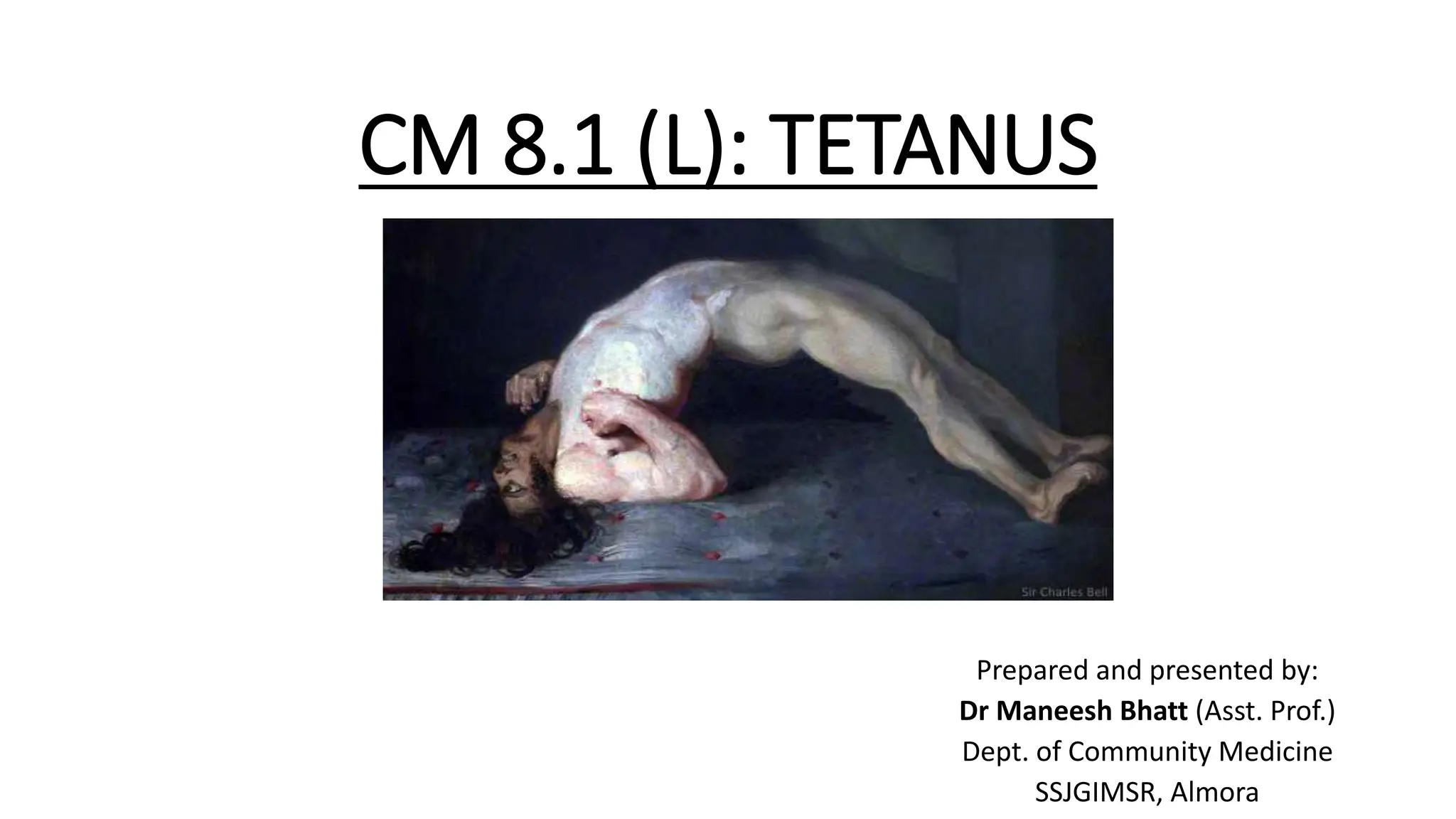
CM 8.1 (L): TETANUS
Prepared and presented by:
Dr Maneesh Bhatt (Asst. Prof.)
Dept. of Community Medicine
SSJGIMSR, Almora
CONTENTS
1.Introduction
2.Pathogenesis
3.Problem Statement: Worldwide
4.Maternal and Neonatal Tetanus
(MNT)
5.Challenges in Eradication
6.Preventive Measures
7.Types of Tetanus Vaccines
8.Historical Context and Progress
9.Maternal and Neonatal Tetanus
Elimination in India
10.Epidemiological Determinants of
Tetanus
11.Mode of Transmission
12.Types of Tetanus
13.Prevention of Tetanus
14.Prevention of Neonatal Tetanus
15.Prevention of Tetanus After Injury
16.Health Programs and Strategies
Introduction
• Tetanus is a severe illness caused by the toxin produced by
Clostridium tetani bacteria.
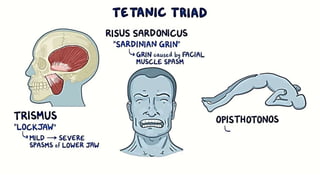
• It leads to rigid muscles, particularly in the jaw (lockjaw), face
(sardonic grin), back, neck (arching backward), and abdomen, with
painful spasms.
• Mortality rates range from 40 to 80 percent.
Pathogenesis
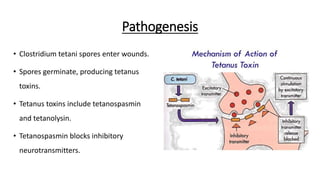
• Clostridium tetani spores enter wounds.
• Spores germinate, producing tetanus
toxins.
• Tetanus toxins include tetanospasmin
and tetanolysin.
• Tetanospasmin blocks inhibitory
neurotransmitters.
Pathogenesis
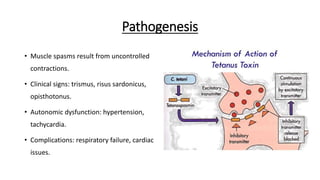
• Muscle spasms result from uncontrolled
contractions.
• Clinical signs: trismus, risus sardonicus,
opisthotonus.
• Autonomic dysfunction: hypertension,
tachycardia.
• Complications: respiratory failure, cardiac
issues.
Problem Statement : Worldwide
• Current Situation:
• Tetanus is rare in developed countries.
• Neonatal tetanus (NT) ranks second among the nine target
diseases of the EPI.
• Case-fatality rate can reach 80-90% without high-quality
treatment.
• Predominantly occurs in areas with poor access to healthcare,
often remaining undetected.
• Maternal and Neonatal Tetanus (MNT):
• Significant cause of neonatal and maternal mortality in developing
countries.
• Preventable through maternal immunization with tetanus toxoid
vaccines (TTCV) and hygienic obstetric and postnatal care.
• Persists due to unhygienic practices and limited access to
healthcare in remote communities.
• Challenges in Eradication:
• Tetanus spores are highly resistant and persist in the environment
for long periods.
• Eradication of NT is technically unfeasible, but MNT can be
eliminated through reducing incidence to very low levels.
• Preventive Measures:
• Clean delivery and umbilical cord care practices.
• Adequate TTCV doses for pregnant women.
• Vaccination campaigns targeting women of reproductive age in
high-risk areas.
• Strengthening surveillance to identify at-risk populations and
clusters.
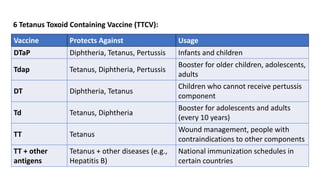
Vaccine Protects Against Usage
DTaP Diphtheria, Tetanus, Pertussis Infants and children
Tdap Tetanus, Diphtheria, Pertussis
Booster for older children, adolescents,
adults
DT Diphtheria, Tetanus
Children who cannot receive pertussis
component
Td Tetanus, Diphtheria
Booster for adolescents and adults
(every 10 years)
TT Tetanus
Wound management, people with
contraindications to other components
TT + other
antigens
Tetanus + other diseases (e.g.,
Hepatitis B)
National immunization schedules in
certain countries
6 Tetanus Toxoid Containing Vaccine (TTCV):
• Historical Context:
• In the 1980s, tetanus caused over 1 million deaths annually, with NT
alone responsible for 787,000 deaths in 1988.
• World Health Assembly aimed to eliminate NT by 1995 through
increased vaccine availability, clean deliveries, and surveillance.
• Maternal tetanus (MT) was added to the elimination goals in 1999,
leading to the Maternal and Neonatal Tetanus Elimination (MNTE)
program.
• NT elimination serves as a proxy for MT elimination due to their linkage
with maternal immunization status.
• Progress and Initiatives:
• Implementation of MNTE initiatives led to significant reductions in
MNT cases.
• Initiatives include promoting maternal tetanus immunization, safe
delivery practices, and proper umbilical cord care.
• WHO estimates a 96% reduction in neonatal tetanus deaths from
1988 to 2015, indicating substantial progress.
Maternal and Neonatal Tetanus Elimination in
India
• Strategy Mix:
• Training auxiliary nurse midwives and other birth attendants at the
village level.
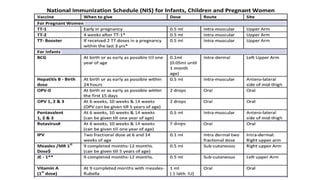
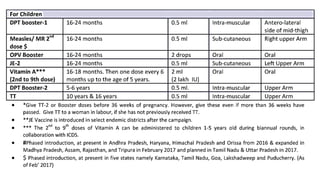
• Increasing routine Tetanus Toxoid (TT) protection.
• Collaboration with WHO, UNICEF, and other partners for
implementation.
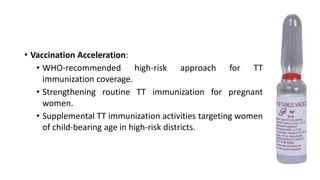
• Vaccination Acceleration:
• WHO-recommended high-risk approach for TT
immunization coverage.
• Strengthening routine TT immunization for pregnant
women.
• Supplemental TT immunization activities targeting women
of child-bearing age in high-risk districts.
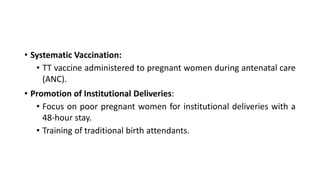
• Systematic Vaccination:
• TT vaccine administered to pregnant women during antenatal care
(ANC).
• Promotion of Institutional Deliveries:
• Focus on poor pregnant women for institutional deliveries with a
48-hour stay.
• Training of traditional birth attendants.
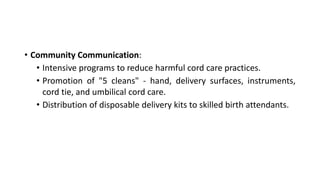
• Community Communication:
• Intensive programs to reduce harmful cord care practices.
• Promotion of "5 cleans" - hand, delivery surfaces, instruments,
cord tie, and umbilical cord care.
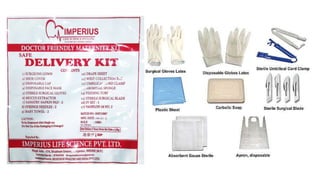
• Distribution of disposable delivery kits to skilled birth attendants.
• National Rural Health Mission (NRHM):
• Launch in 2005 strengthened initiatives.
• Introduction of Janani Suraksha Yojana (JSY), a conditional cash
transfer scheme, to encourage facility-based births.
• Integration and extension of outreach services.
• Intensive refresher training for skilled birth attendants.
• Operationalization of selected sub-centres and community health
centers (CHCs) for 24-hour obstetric and neonatal care.
• Strengthening facility-based neonatal care with specialized units.
• Deployment of Accredited Social Health Activists (ASHA) to
promote healthcare services.
• Impact:
• Increase in safe deliveries from 52% in 2007 to 76% in 2009.
• Launch of Janani Shishu Suraksha Karyakram in 2011.
• Substantial decline in MNT cases due to successful
implementation.
• Certification of MNT elimination achieved in 30 of 36 states/UTs by
December 2014.
• India officially certified for maternal and neonatal tetanus
elimination in May 2015.
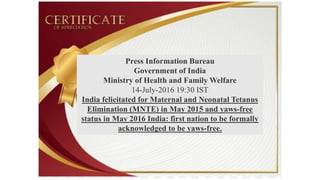
Press Information Bureau
Government of India
Ministry of Health and Family Welfare
14-July-2016 19:30 IST
India felicitated for Maternal and Neonatal Tetanus
Elimination (MNTE) in May 2015 and yaws-free
status in May 2016 India: first nation to be formally
acknowledged to be yaws-free.
Epidemiological Determinants of Tetanus
• Agent Factors:
• Agent: Clostridium tetani, gram-positive, anaerobic, spore-bearing
organism.
• Reservoir of Infection: Soil, dust, intestines of herbivorous
animals.
• Exotoxin: Produces tetanospasmin, highly lethal toxin affecting
nervous system.
• Period of Communicability: None, not transmitted from person to
person.
• Host Factors:
• Age: Common in ages 5 to 40 years; neonatal tetanus occurs in
infants, typically due to non-aseptic delivery conditions.
• Sex: Higher incidence in males; females more exposed during
delivery or abortion.
• Occupation: Agricultural workers at higher risk due to soil contact.
• Rural-Urban Differences: Incidence higher in rural areas;
influenced by environmental conditions.
• Immunity: No age is immune without prior immunization; herd
immunity doesn't protect individuals.
• Environmental and Social Factors:
• Environmental Hazard: Occurrence linked to ecological
surroundings, soil, agriculture, and animal husbandry.
• Social Factors: Unhygienic customs, delivery practices, lack of
primary healthcare services.
• Effects of Development: Urbanization, industrialization, and
mechanization reduce morbidity rates in developed countries.
• Mode of Transmission:
• Infection Acquisition: Contamination of wounds with tetanus spores.
• Range of Injuries: Includes trivial wounds, burns, surgeries, injections,
and more.
• Sequence of Events: Spores introduction, germination, exotoxin
elaboration, binding to receptors.
• Incubation Period:
• Usually 6 to 10 days, but can vary from 1 day to several months.
• Long incubation explained by dormant spores in wounds, prolonged by
prophylaxis.
• Types of Tetanus:
• Traumatic: Resulting from various wounds, even trivial ones.
• Puerperal: Following abortion, favored by post-abortal uterus
conditions.
• Otogenic: Ear infections, introduction of foreign bodies.
• Idiopathic: No definite injury history; possible causes include
microscopic trauma, toxin absorption, or inhalation of spores.
• Tetanus Neonatorum: Common in areas with poor hygiene,
typically from umbilical stump infection, known as "8th day
disease" in some regions.
Prevention of Tetanus:
• Active Immunization:
• Tetanus Toxoid (TT):
• Stimulates production of protective antitoxin.
• Aim to vaccinate entire community to maintain protective antitoxin levels.
• All persons should be immunized regardless of age.
• Preparations:
• Combined Vaccine (DPT): Administered routinely to infants in combination with
diphtheria and pertussis vaccines.
• Monovalent Vaccines: Purified tetanus toxoid (adsorbed) or plain toxoid.
• Two doses of adsorbed toxoid, spaced 1-2 months apart, followed by booster
doses.
• Purified toxoid preferred for higher and longer-lasting immunity.
• Passive Immunization:
• Human Tetanus Hyperimmunoglobulin (TIG):
• Best prophylactic, providing longer passive protection.
• Dose: 250 IU for all ages.
• No serum reactions.
• Anti-Tetanus Serum (ATS) (Equine):
• Standard dose: 1500 IU.
• Provides passive protection for 7-10 days.
• Disadvantages include potential allergic reactions and rapid excretion from
the body.
•Simultaneous Active and Passive Immunization:
•Non-immune persons receive both antitoxin and tetanus toxoid
simultaneously.
•Antitoxin provides immediate temporary protection, while toxoid
provides long-lasting immunity.
•Antibiotics:
•Used when active immunization is not immediately available or for non-
immune individuals with injuries.
•Ideal for immediate protection against tetanus.
•Drawbacks of ATS make antibiotics a preferred choice in some cases.
•Penicillin or erythromycin used to kill vegetative forms of tetanus
bacilli.
•Not a substitute for immunization; should be given as soon as possible
after injury.
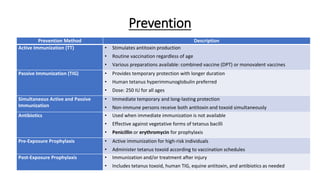
Prevention
Prevention Method Description
Active Immunization (TT) • Stimulates antitoxin production
• Routine vaccination regardless of age
• Various preparations available: combined vaccine (DPT) or monovalent vaccines
Passive Immunization (TIG) • Provides temporary protection with longer duration
• Human tetanus hyperimmunoglobulin preferred
• Dose: 250 IU for all ages
Simultaneous Active and Passive
Immunization
• Immediate temporary and long-lasting protection
• Non-immune persons receive both antitoxin and toxoid simultaneously
Antibiotics • Used when immediate immunization is not available
• Effective against vegetative forms of tetanus bacilli
• Penicillin or erythromycin for prophylaxis
Pre-Exposure Prophylaxis • Active immunization for high-risk individuals
• Administer tetanus toxoid according to vaccination schedules
Post-Exposure Prophylaxis • Immunization and/or treatment after injury
• Includes tetanus toxoid, human TIG, equine antitoxin, and antibiotics as needed
Prevention of Neonatal Tetanus
• Neonatal tetanus prevention focuses on clean delivery practices and
maternal immunization. Here's how it's approached:
• Clean Delivery Practices:
• Importance: In some industrialized countries, neonatal tetanus is
controlled solely through clean delivery practices.
• Strategies: Training traditional birth attendants, providing home
delivery kits, and educating pregnant women on "five cleans"
(clean hands, delivery surface, cord care - using clean blade and
tie).
• Avoidance of Cow Dung on Cord Stump:
• Importance: Cow dung and other unhygienic substances should be
strictly avoided on the cord stump.
• Rationale: Application of cow dung increases the risk of tetanus
infection due to contamination with tetanus spores present in the
dung.
• Education: Pregnant women should be educated about the
dangers of using cow dung or other unsterilized substances on the
cord stump to prevent neonatal tetanus.
• Maternal Immunization with Tetanus Toxoid:
• For Unimmunized Pregnant Women: Two doses of tetanus toxoid -
first early in pregnancy, second at least a month (4 weeks) later and at
least 3 weeks before delivery.
• For Previously Immunized Pregnant Women: A booster dose suffices.
No need for consecutive boosters due to risk of hyper-immunization
and side-effects.
• Extending Immunization: In high-risk areas, extend primary 2-dose
course to all women of child-bearing age if antenatal care coverage is
low.
• Immunization Timing:
• Antenatal Care Challenges: In developing countries where
antenatal care is limited, immunization should be given regardless
of pregnancy month.
• Golden Rule: No pregnant mother should be denied even one
dose of tetanus toxoid if seen late in pregnancy.
• Protection for Infants:
• Infants of Unimmunized Mothers: Administer antitoxin injection
(heterologous serum, 750 IU) within 6 hours of birth to protect
against neonatal tetanus.
Prevention of Tetanus after Injury
Prevention strategies for tetanus after injury focus on wound cleaning and
administration of ATS (Anti-Tetanus Serum):
1.Wound Cleaning:
1. Importance: Thorough cleaning of wounds removes foreign bodies, soil, dust, and
necrotic tissue, abolishing anaerobic conditions favoring tetanus spores'
germination.
2.Administration of ATS:
1. Test Dose: A test dose of ATS (0.1 ml) should be given subcutaneously, and the
patient observed carefully for any reaction, especially in patients with a history of
allergies.
2. Response to Reactions: In case of a reaction, subsequent administration of ATS
should be gradual and accompanied by adrenaline and hydrocortisone.
• Despite Precautions:
• Occasional Occurrence: Tetanus may occur despite active or
passive immunization efforts, but the aim is to provide maximum
protection given current scientific knowledge.
• These preventive measures aim to reduce the incidence of neonatal
tetanus and tetanus after injury, emphasizing the importance of clean
practices and timely immunization.
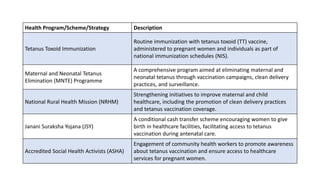
Health Program/Scheme/Strategy Description
Tetanus Toxoid Immunization
Routine immunization with tetanus toxoid (TT) vaccine,
administered to pregnant women and individuals as part of
national immunization schedules (NIS).
Maternal and Neonatal Tetanus
Elimination (MNTE) Programme
A comprehensive program aimed at eliminating maternal and
neonatal tetanus through vaccination campaigns, clean delivery
practices, and surveillance.
National Rural Health Mission (NRHM)
Strengthening initiatives to improve maternal and child
healthcare, including the promotion of clean delivery practices
and tetanus vaccination coverage.
Janani Suraksha Yojana (JSY)
A conditional cash transfer scheme encouraging women to give
birth in healthcare facilities, facilitating access to tetanus
vaccination during antenatal care.
Accredited Social Health Activists (ASHA)
Engagement of community health workers to promote awareness
about tetanus vaccination and ensure access to healthcare
services for pregnant women.
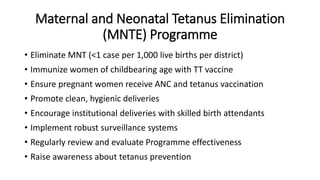
Maternal and Neonatal Tetanus Elimination
(MNTE) Programme
• Eliminate MNT (<1 case per 1,000 live births per district)
• Immunize women of childbearing age with TT vaccine
• Ensure pregnant women receive ANC and tetanus vaccination
• Promote clean, hygienic deliveries
• Encourage institutional deliveries with skilled birth attendants
• Implement robust surveillance systems
• Regularly review and evaluate Programme effectiveness
• Raise awareness about tetanus prevention
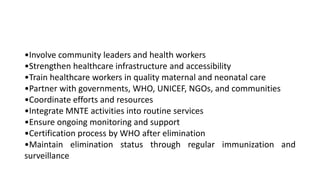
•Involve community leaders and health workers
•Strengthen healthcare infrastructure and accessibility
•Train healthcare workers in quality maternal and neonatal care
•Partner with governments, WHO, UNICEF, NGOs, and communities
•Coordinate efforts and resources
•Integrate MNTE activities into routine services
•Ensure ongoing monitoring and support
•Certification process by WHO after elimination
•Maintain elimination status through regular immunization and
surveillance
MCQs
1. Which specific toxin produced by Clostridium tetani is primarily
responsible for blocking inhibitory neurotransmitters?
A) Tetanolysin
B) Botulinum toxin
C) Tetanospasmin
D) Neurotoxin
2. What is the main preventive measure to eliminate maternal and
neonatal tetanus (MNT) in high-risk areas?
A) Use of antibiotics during pregnancy
B) Hygienic obstetric and postnatal care combined with maternal
immunization
C) Universal application of anti-tetanus serum
D) Exclusive reliance on tetanus immunoglobulin
3. What is the recommended action for infants born to unimmunized
mothers to prevent neonatal tetanus?
A) Immediate administration of tetanus toxoid
B) Single dose of tetanus antitoxin within 6 hours of birth
C) Administration of antibiotics
D) Regular monitoring without immediate intervention
4. Why is it technically unfeasible to eradicate neonatal tetanus (NT)
completely?
A) Tetanus spores can survive in the environment for extended periods
B) Vaccination is ineffective against tetanus
C) Tetanus is easily transmitted from person to person
D) NT has a short incubation period making prevention difficult
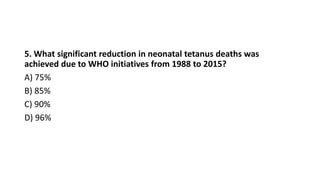
5. What significant reduction in neonatal tetanus deaths was
achieved due to WHO initiatives from 1988 to 2015?
A) 75%
B) 85%
C) 90%
D) 96%

Tetanus: Pathogenesis, Epidemiology and Management

  • 1.
    CM 8.1 (L):TETANUS Prepared and presented by: Dr Maneesh Bhatt (Asst. Prof.) Dept. of Community Medicine SSJGIMSR, Almora
  • 2.
    CONTENTS 1.Introduction 2.Pathogenesis 3.Problem Statement: Worldwide 4.Maternaland Neonatal Tetanus (MNT) 5.Challenges in Eradication 6.Preventive Measures 7.Types of Tetanus Vaccines 8.Historical Context and Progress 9.Maternal and Neonatal Tetanus Elimination in India 10.Epidemiological Determinants of Tetanus 11.Mode of Transmission 12.Types of Tetanus 13.Prevention of Tetanus 14.Prevention of Neonatal Tetanus 15.Prevention of Tetanus After Injury 16.Health Programs and Strategies
  • 3.
    Introduction • Tetanus isa severe illness caused by the toxin produced by Clostridium tetani bacteria. • It leads to rigid muscles, particularly in the jaw (lockjaw), face (sardonic grin), back, neck (arching backward), and abdomen, with painful spasms. • Mortality rates range from 40 to 80 percent.
  • 4.
    Pathogenesis • Clostridium tetanispores enter wounds. • Spores germinate, producing tetanus toxins. • Tetanus toxins include tetanospasmin and tetanolysin. • Tetanospasmin blocks inhibitory neurotransmitters.
  • 5.
    Pathogenesis • Muscle spasmsresult from uncontrolled contractions. • Clinical signs: trismus, risus sardonicus, opisthotonus. • Autonomic dysfunction: hypertension, tachycardia. • Complications: respiratory failure, cardiac issues.
  • 7.
    Problem Statement :Worldwide • Current Situation: • Tetanus is rare in developed countries. • Neonatal tetanus (NT) ranks second among the nine target diseases of the EPI. • Case-fatality rate can reach 80-90% without high-quality treatment. • Predominantly occurs in areas with poor access to healthcare, often remaining undetected.
  • 8.
    • Maternal andNeonatal Tetanus (MNT): • Significant cause of neonatal and maternal mortality in developing countries. • Preventable through maternal immunization with tetanus toxoid vaccines (TTCV) and hygienic obstetric and postnatal care. • Persists due to unhygienic practices and limited access to healthcare in remote communities.
  • 9.
    • Challenges inEradication: • Tetanus spores are highly resistant and persist in the environment for long periods. • Eradication of NT is technically unfeasible, but MNT can be eliminated through reducing incidence to very low levels.
  • 10.
    • Preventive Measures: •Clean delivery and umbilical cord care practices. • Adequate TTCV doses for pregnant women. • Vaccination campaigns targeting women of reproductive age in high-risk areas. • Strengthening surveillance to identify at-risk populations and clusters.
  • 11.
    Vaccine Protects AgainstUsage DTaP Diphtheria, Tetanus, Pertussis Infants and children Tdap Tetanus, Diphtheria, Pertussis Booster for older children, adolescents, adults DT Diphtheria, Tetanus Children who cannot receive pertussis component Td Tetanus, Diphtheria Booster for adolescents and adults (every 10 years) TT Tetanus Wound management, people with contraindications to other components TT + other antigens Tetanus + other diseases (e.g., Hepatitis B) National immunization schedules in certain countries 6 Tetanus Toxoid Containing Vaccine (TTCV):
  • 12.
    • Historical Context: •In the 1980s, tetanus caused over 1 million deaths annually, with NT alone responsible for 787,000 deaths in 1988. • World Health Assembly aimed to eliminate NT by 1995 through increased vaccine availability, clean deliveries, and surveillance. • Maternal tetanus (MT) was added to the elimination goals in 1999, leading to the Maternal and Neonatal Tetanus Elimination (MNTE) program. • NT elimination serves as a proxy for MT elimination due to their linkage with maternal immunization status.
  • 13.
    • Progress andInitiatives: • Implementation of MNTE initiatives led to significant reductions in MNT cases. • Initiatives include promoting maternal tetanus immunization, safe delivery practices, and proper umbilical cord care. • WHO estimates a 96% reduction in neonatal tetanus deaths from 1988 to 2015, indicating substantial progress.
  • 14.
    Maternal and NeonatalTetanus Elimination in India • Strategy Mix: • Training auxiliary nurse midwives and other birth attendants at the village level. • Increasing routine Tetanus Toxoid (TT) protection. • Collaboration with WHO, UNICEF, and other partners for implementation.
  • 15.
    • Vaccination Acceleration: •WHO-recommended high-risk approach for TT immunization coverage. • Strengthening routine TT immunization for pregnant women. • Supplemental TT immunization activities targeting women of child-bearing age in high-risk districts.
  • 18.
    • Systematic Vaccination: •TT vaccine administered to pregnant women during antenatal care (ANC). • Promotion of Institutional Deliveries: • Focus on poor pregnant women for institutional deliveries with a 48-hour stay. • Training of traditional birth attendants.
  • 19.
    • Community Communication: •Intensive programs to reduce harmful cord care practices. • Promotion of "5 cleans" - hand, delivery surfaces, instruments, cord tie, and umbilical cord care. • Distribution of disposable delivery kits to skilled birth attendants.
  • 21.
    • National RuralHealth Mission (NRHM): • Launch in 2005 strengthened initiatives. • Introduction of Janani Suraksha Yojana (JSY), a conditional cash transfer scheme, to encourage facility-based births. • Integration and extension of outreach services. • Intensive refresher training for skilled birth attendants. • Operationalization of selected sub-centres and community health centers (CHCs) for 24-hour obstetric and neonatal care. • Strengthening facility-based neonatal care with specialized units. • Deployment of Accredited Social Health Activists (ASHA) to promote healthcare services.
  • 22.
    • Impact: • Increasein safe deliveries from 52% in 2007 to 76% in 2009. • Launch of Janani Shishu Suraksha Karyakram in 2011. • Substantial decline in MNT cases due to successful implementation. • Certification of MNT elimination achieved in 30 of 36 states/UTs by December 2014. • India officially certified for maternal and neonatal tetanus elimination in May 2015.
  • 23.
    Press Information Bureau Governmentof India Ministry of Health and Family Welfare 14-July-2016 19:30 IST India felicitated for Maternal and Neonatal Tetanus Elimination (MNTE) in May 2015 and yaws-free status in May 2016 India: first nation to be formally acknowledged to be yaws-free.
  • 24.
    Epidemiological Determinants ofTetanus • Agent Factors: • Agent: Clostridium tetani, gram-positive, anaerobic, spore-bearing organism. • Reservoir of Infection: Soil, dust, intestines of herbivorous animals. • Exotoxin: Produces tetanospasmin, highly lethal toxin affecting nervous system. • Period of Communicability: None, not transmitted from person to person.
  • 25.
    • Host Factors: •Age: Common in ages 5 to 40 years; neonatal tetanus occurs in infants, typically due to non-aseptic delivery conditions. • Sex: Higher incidence in males; females more exposed during delivery or abortion. • Occupation: Agricultural workers at higher risk due to soil contact. • Rural-Urban Differences: Incidence higher in rural areas; influenced by environmental conditions. • Immunity: No age is immune without prior immunization; herd immunity doesn't protect individuals.
  • 26.
    • Environmental andSocial Factors: • Environmental Hazard: Occurrence linked to ecological surroundings, soil, agriculture, and animal husbandry. • Social Factors: Unhygienic customs, delivery practices, lack of primary healthcare services. • Effects of Development: Urbanization, industrialization, and mechanization reduce morbidity rates in developed countries.
  • 27.
    • Mode ofTransmission: • Infection Acquisition: Contamination of wounds with tetanus spores. • Range of Injuries: Includes trivial wounds, burns, surgeries, injections, and more. • Sequence of Events: Spores introduction, germination, exotoxin elaboration, binding to receptors. • Incubation Period: • Usually 6 to 10 days, but can vary from 1 day to several months. • Long incubation explained by dormant spores in wounds, prolonged by prophylaxis.
  • 28.
    • Types ofTetanus: • Traumatic: Resulting from various wounds, even trivial ones. • Puerperal: Following abortion, favored by post-abortal uterus conditions. • Otogenic: Ear infections, introduction of foreign bodies. • Idiopathic: No definite injury history; possible causes include microscopic trauma, toxin absorption, or inhalation of spores. • Tetanus Neonatorum: Common in areas with poor hygiene, typically from umbilical stump infection, known as "8th day disease" in some regions.
  • 29.
    Prevention of Tetanus: •Active Immunization: • Tetanus Toxoid (TT): • Stimulates production of protective antitoxin. • Aim to vaccinate entire community to maintain protective antitoxin levels. • All persons should be immunized regardless of age. • Preparations: • Combined Vaccine (DPT): Administered routinely to infants in combination with diphtheria and pertussis vaccines. • Monovalent Vaccines: Purified tetanus toxoid (adsorbed) or plain toxoid. • Two doses of adsorbed toxoid, spaced 1-2 months apart, followed by booster doses. • Purified toxoid preferred for higher and longer-lasting immunity.
  • 30.
    • Passive Immunization: •Human Tetanus Hyperimmunoglobulin (TIG): • Best prophylactic, providing longer passive protection. • Dose: 250 IU for all ages. • No serum reactions. • Anti-Tetanus Serum (ATS) (Equine): • Standard dose: 1500 IU. • Provides passive protection for 7-10 days. • Disadvantages include potential allergic reactions and rapid excretion from the body.
  • 31.
    •Simultaneous Active andPassive Immunization: •Non-immune persons receive both antitoxin and tetanus toxoid simultaneously. •Antitoxin provides immediate temporary protection, while toxoid provides long-lasting immunity.
  • 32.
    •Antibiotics: •Used when activeimmunization is not immediately available or for non- immune individuals with injuries. •Ideal for immediate protection against tetanus. •Drawbacks of ATS make antibiotics a preferred choice in some cases. •Penicillin or erythromycin used to kill vegetative forms of tetanus bacilli. •Not a substitute for immunization; should be given as soon as possible after injury.
  • 33.
    Prevention Prevention Method Description ActiveImmunization (TT) • Stimulates antitoxin production • Routine vaccination regardless of age • Various preparations available: combined vaccine (DPT) or monovalent vaccines Passive Immunization (TIG) • Provides temporary protection with longer duration • Human tetanus hyperimmunoglobulin preferred • Dose: 250 IU for all ages Simultaneous Active and Passive Immunization • Immediate temporary and long-lasting protection • Non-immune persons receive both antitoxin and toxoid simultaneously Antibiotics • Used when immediate immunization is not available • Effective against vegetative forms of tetanus bacilli • Penicillin or erythromycin for prophylaxis Pre-Exposure Prophylaxis • Active immunization for high-risk individuals • Administer tetanus toxoid according to vaccination schedules Post-Exposure Prophylaxis • Immunization and/or treatment after injury • Includes tetanus toxoid, human TIG, equine antitoxin, and antibiotics as needed
  • 34.
    Prevention of NeonatalTetanus • Neonatal tetanus prevention focuses on clean delivery practices and maternal immunization. Here's how it's approached: • Clean Delivery Practices: • Importance: In some industrialized countries, neonatal tetanus is controlled solely through clean delivery practices. • Strategies: Training traditional birth attendants, providing home delivery kits, and educating pregnant women on "five cleans" (clean hands, delivery surface, cord care - using clean blade and tie).
  • 35.
    • Avoidance ofCow Dung on Cord Stump: • Importance: Cow dung and other unhygienic substances should be strictly avoided on the cord stump. • Rationale: Application of cow dung increases the risk of tetanus infection due to contamination with tetanus spores present in the dung. • Education: Pregnant women should be educated about the dangers of using cow dung or other unsterilized substances on the cord stump to prevent neonatal tetanus.
  • 36.
    • Maternal Immunizationwith Tetanus Toxoid: • For Unimmunized Pregnant Women: Two doses of tetanus toxoid - first early in pregnancy, second at least a month (4 weeks) later and at least 3 weeks before delivery. • For Previously Immunized Pregnant Women: A booster dose suffices. No need for consecutive boosters due to risk of hyper-immunization and side-effects. • Extending Immunization: In high-risk areas, extend primary 2-dose course to all women of child-bearing age if antenatal care coverage is low.
  • 37.
    • Immunization Timing: •Antenatal Care Challenges: In developing countries where antenatal care is limited, immunization should be given regardless of pregnancy month. • Golden Rule: No pregnant mother should be denied even one dose of tetanus toxoid if seen late in pregnancy. • Protection for Infants: • Infants of Unimmunized Mothers: Administer antitoxin injection (heterologous serum, 750 IU) within 6 hours of birth to protect against neonatal tetanus.
  • 38.
    Prevention of Tetanusafter Injury Prevention strategies for tetanus after injury focus on wound cleaning and administration of ATS (Anti-Tetanus Serum): 1.Wound Cleaning: 1. Importance: Thorough cleaning of wounds removes foreign bodies, soil, dust, and necrotic tissue, abolishing anaerobic conditions favoring tetanus spores' germination. 2.Administration of ATS: 1. Test Dose: A test dose of ATS (0.1 ml) should be given subcutaneously, and the patient observed carefully for any reaction, especially in patients with a history of allergies. 2. Response to Reactions: In case of a reaction, subsequent administration of ATS should be gradual and accompanied by adrenaline and hydrocortisone.
  • 39.
    • Despite Precautions: •Occasional Occurrence: Tetanus may occur despite active or passive immunization efforts, but the aim is to provide maximum protection given current scientific knowledge. • These preventive measures aim to reduce the incidence of neonatal tetanus and tetanus after injury, emphasizing the importance of clean practices and timely immunization.
  • 40.
    Health Program/Scheme/Strategy Description TetanusToxoid Immunization Routine immunization with tetanus toxoid (TT) vaccine, administered to pregnant women and individuals as part of national immunization schedules (NIS). Maternal and Neonatal Tetanus Elimination (MNTE) Programme A comprehensive program aimed at eliminating maternal and neonatal tetanus through vaccination campaigns, clean delivery practices, and surveillance. National Rural Health Mission (NRHM) Strengthening initiatives to improve maternal and child healthcare, including the promotion of clean delivery practices and tetanus vaccination coverage. Janani Suraksha Yojana (JSY) A conditional cash transfer scheme encouraging women to give birth in healthcare facilities, facilitating access to tetanus vaccination during antenatal care. Accredited Social Health Activists (ASHA) Engagement of community health workers to promote awareness about tetanus vaccination and ensure access to healthcare services for pregnant women.
  • 41.
    Maternal and NeonatalTetanus Elimination (MNTE) Programme • Eliminate MNT (<1 case per 1,000 live births per district) • Immunize women of childbearing age with TT vaccine • Ensure pregnant women receive ANC and tetanus vaccination • Promote clean, hygienic deliveries • Encourage institutional deliveries with skilled birth attendants • Implement robust surveillance systems • Regularly review and evaluate Programme effectiveness • Raise awareness about tetanus prevention
  • 42.
    •Involve community leadersand health workers •Strengthen healthcare infrastructure and accessibility •Train healthcare workers in quality maternal and neonatal care •Partner with governments, WHO, UNICEF, NGOs, and communities •Coordinate efforts and resources •Integrate MNTE activities into routine services •Ensure ongoing monitoring and support •Certification process by WHO after elimination •Maintain elimination status through regular immunization and surveillance
  • 43.
  • 44.
    1. Which specifictoxin produced by Clostridium tetani is primarily responsible for blocking inhibitory neurotransmitters? A) Tetanolysin B) Botulinum toxin C) Tetanospasmin D) Neurotoxin
  • 45.
    2. What isthe main preventive measure to eliminate maternal and neonatal tetanus (MNT) in high-risk areas? A) Use of antibiotics during pregnancy B) Hygienic obstetric and postnatal care combined with maternal immunization C) Universal application of anti-tetanus serum D) Exclusive reliance on tetanus immunoglobulin
  • 46.
    3. What isthe recommended action for infants born to unimmunized mothers to prevent neonatal tetanus? A) Immediate administration of tetanus toxoid B) Single dose of tetanus antitoxin within 6 hours of birth C) Administration of antibiotics D) Regular monitoring without immediate intervention
  • 47.
    4. Why isit technically unfeasible to eradicate neonatal tetanus (NT) completely? A) Tetanus spores can survive in the environment for extended periods B) Vaccination is ineffective against tetanus C) Tetanus is easily transmitted from person to person D) NT has a short incubation period making prevention difficult
  • 48.
    5. What significantreduction in neonatal tetanus deaths was achieved due to WHO initiatives from 1988 to 2015? A) 75% B) 85% C) 90% D) 96%