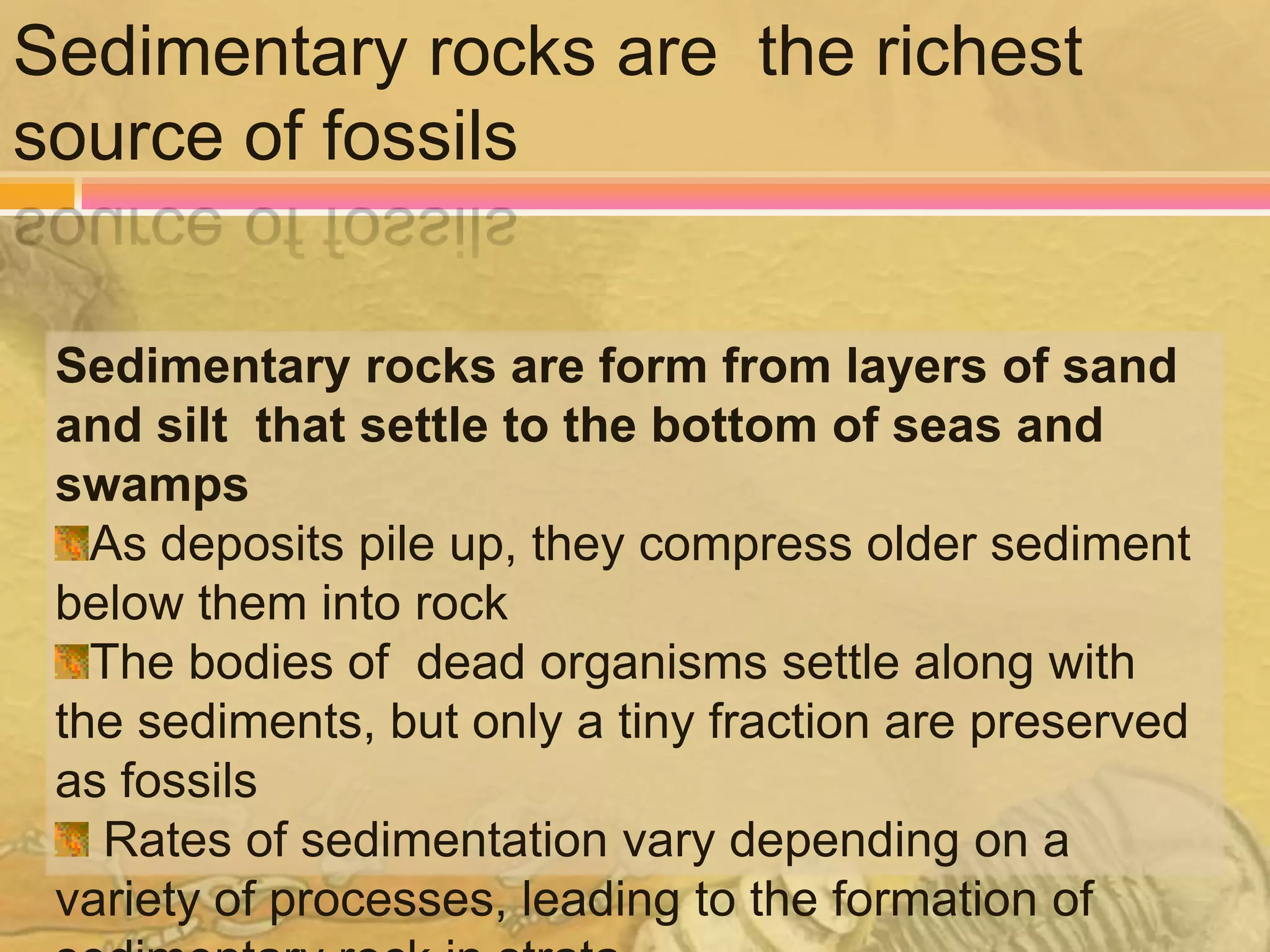
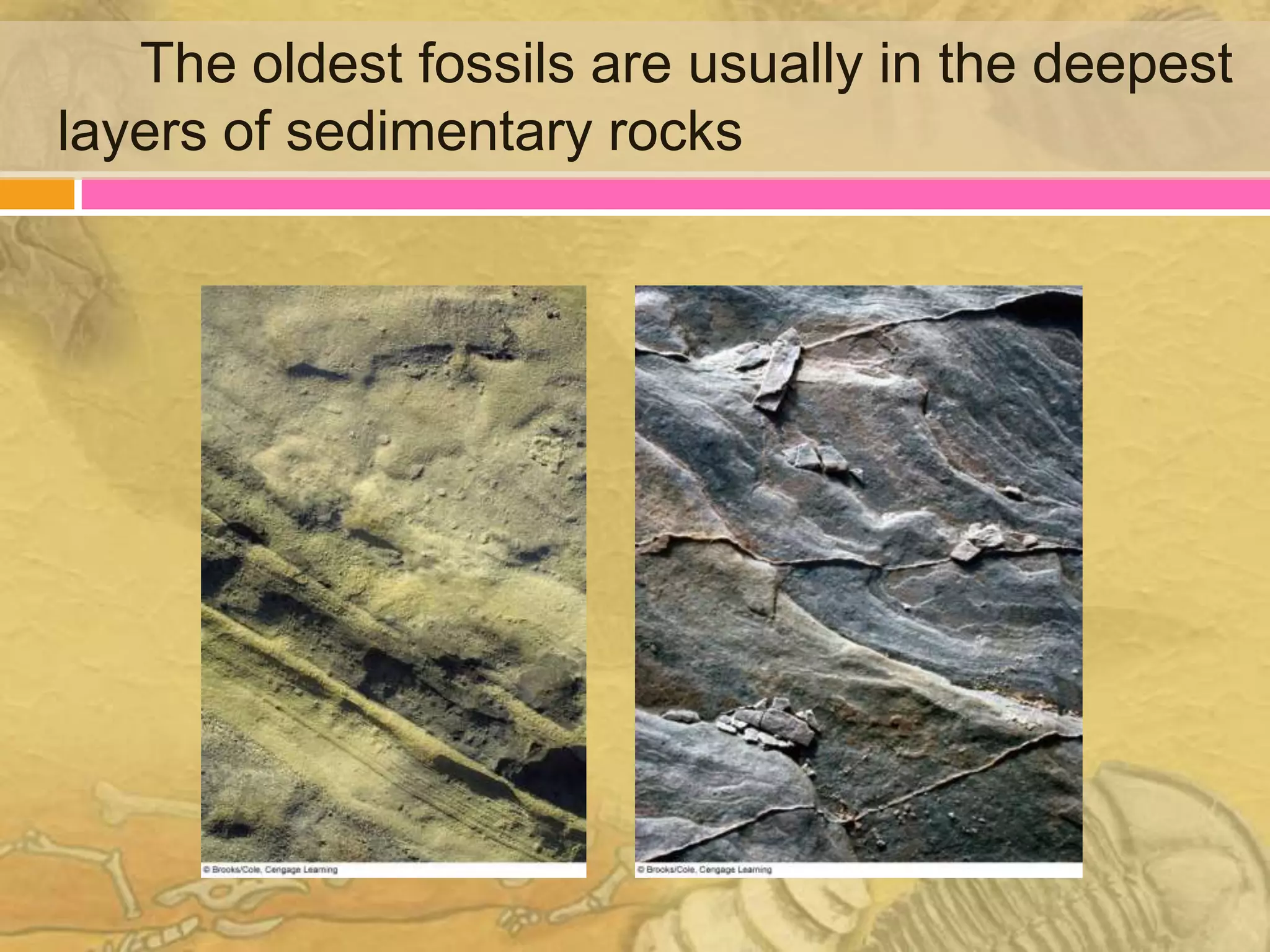
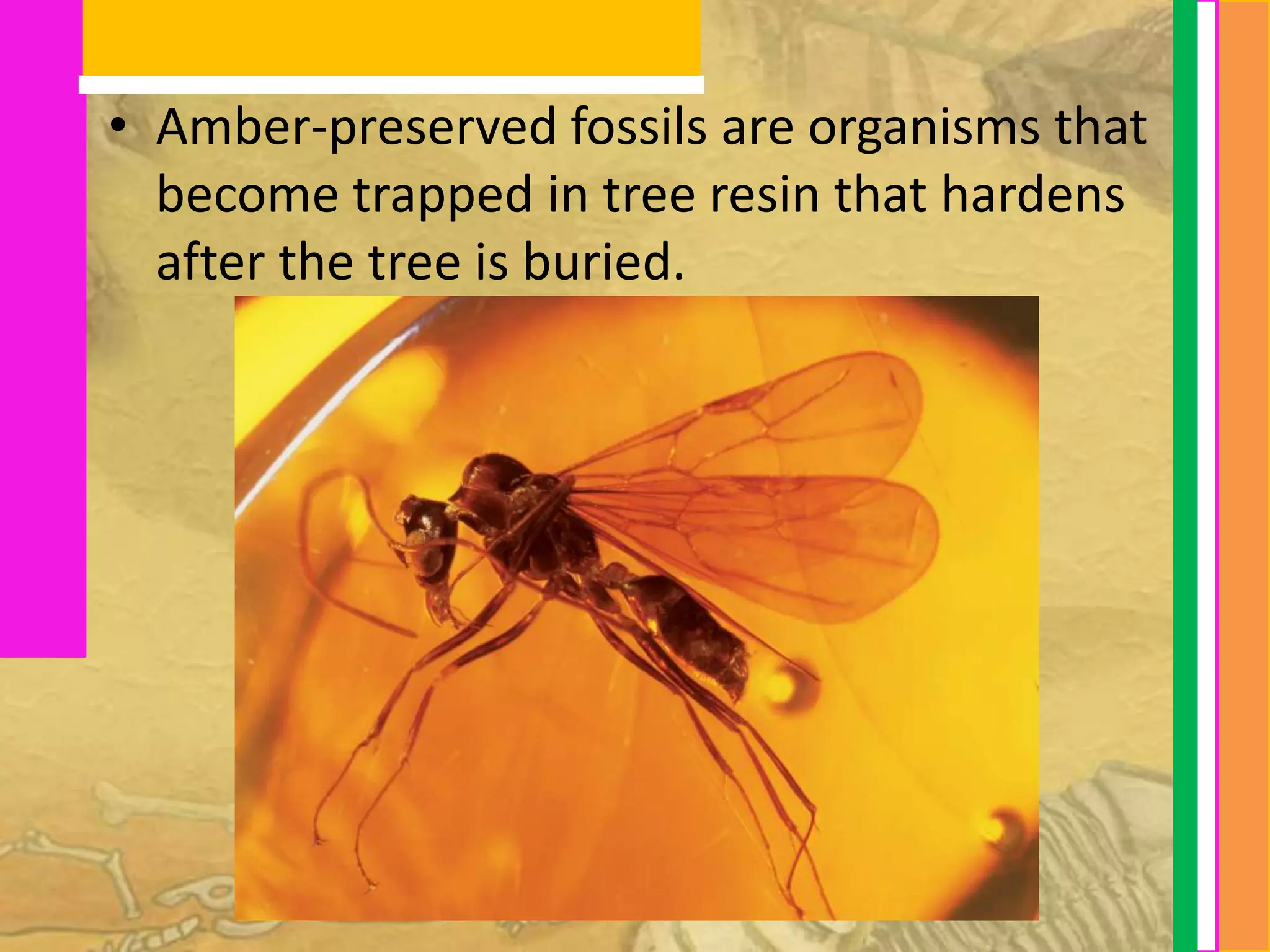
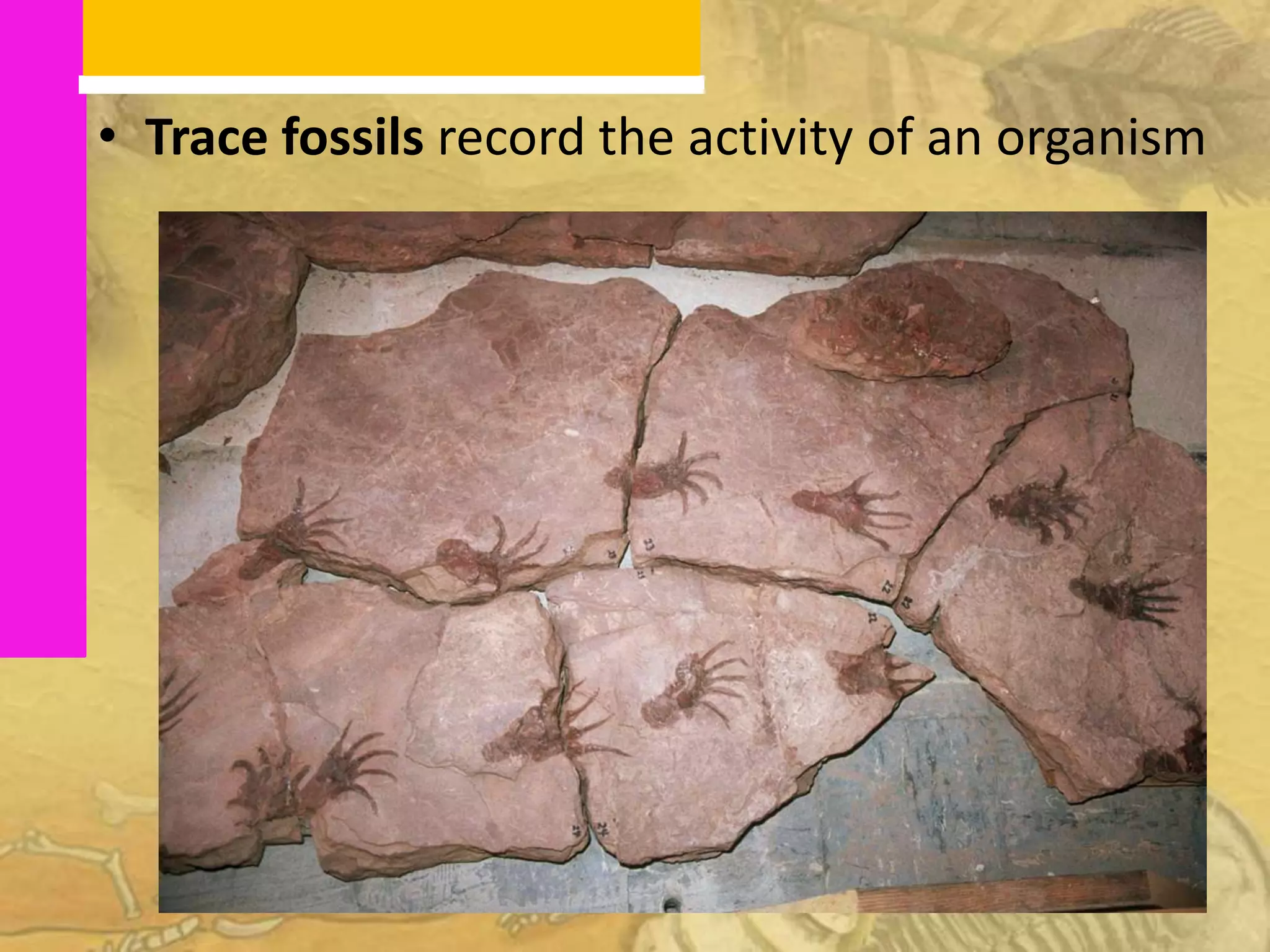
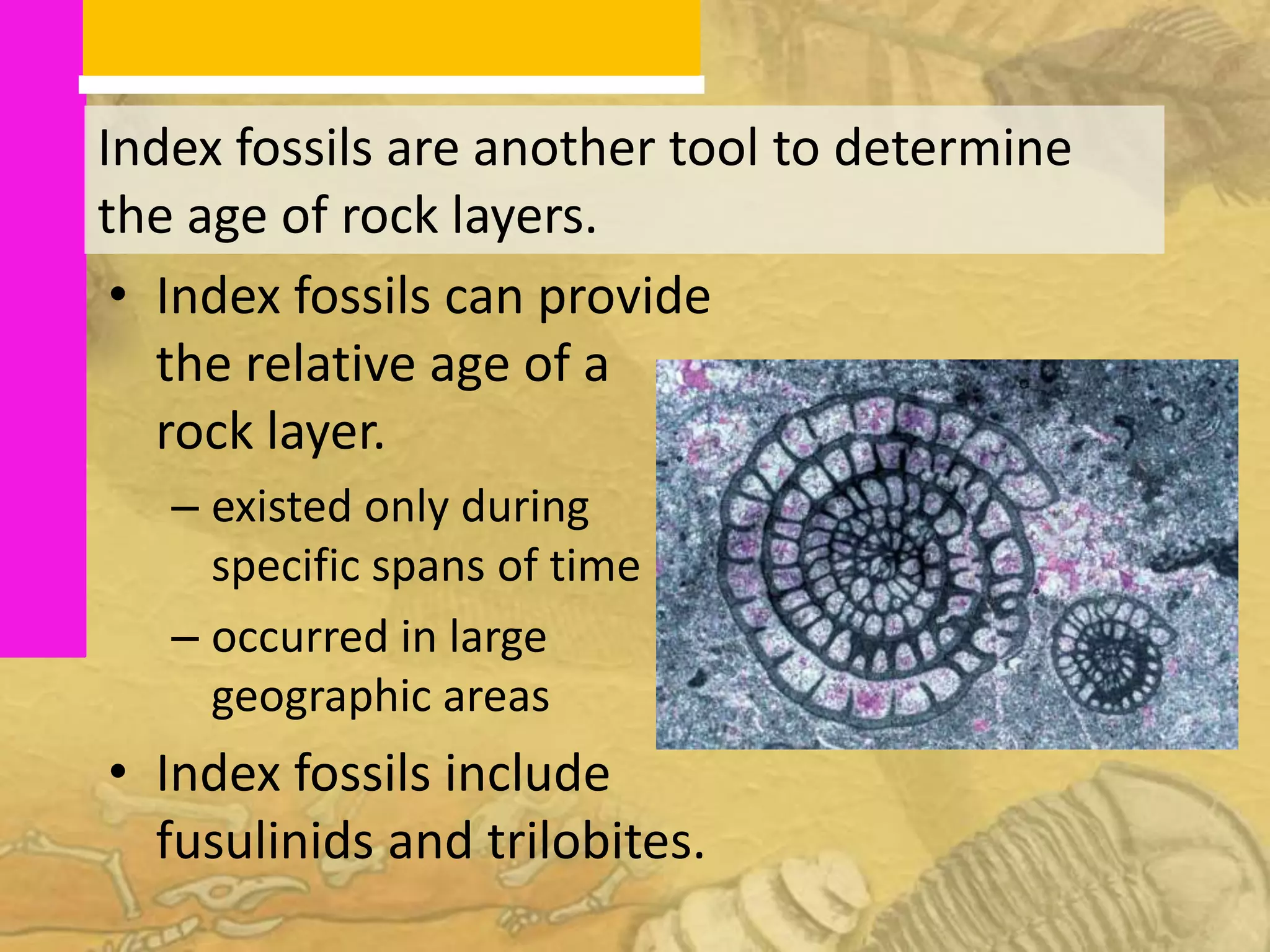
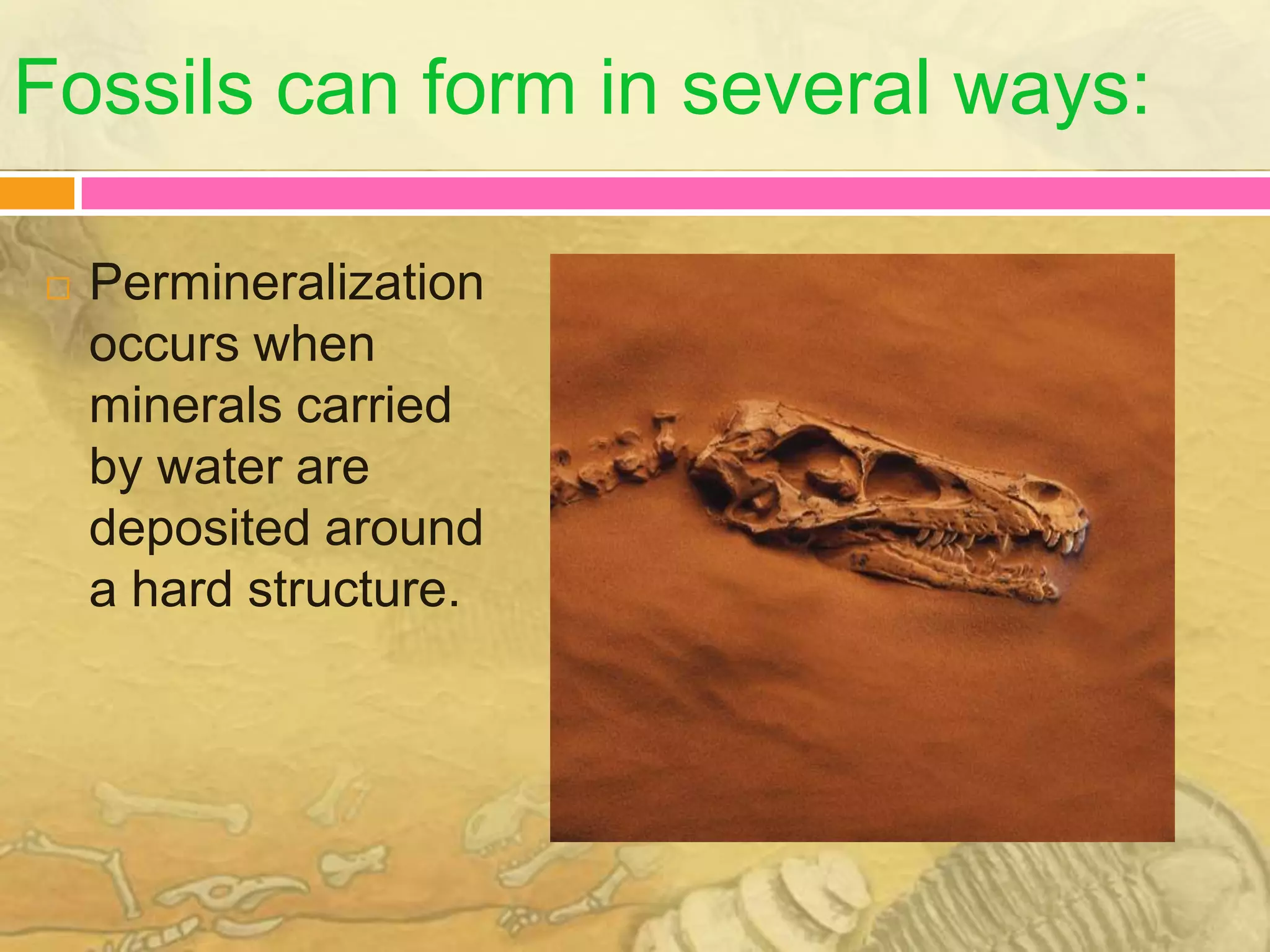
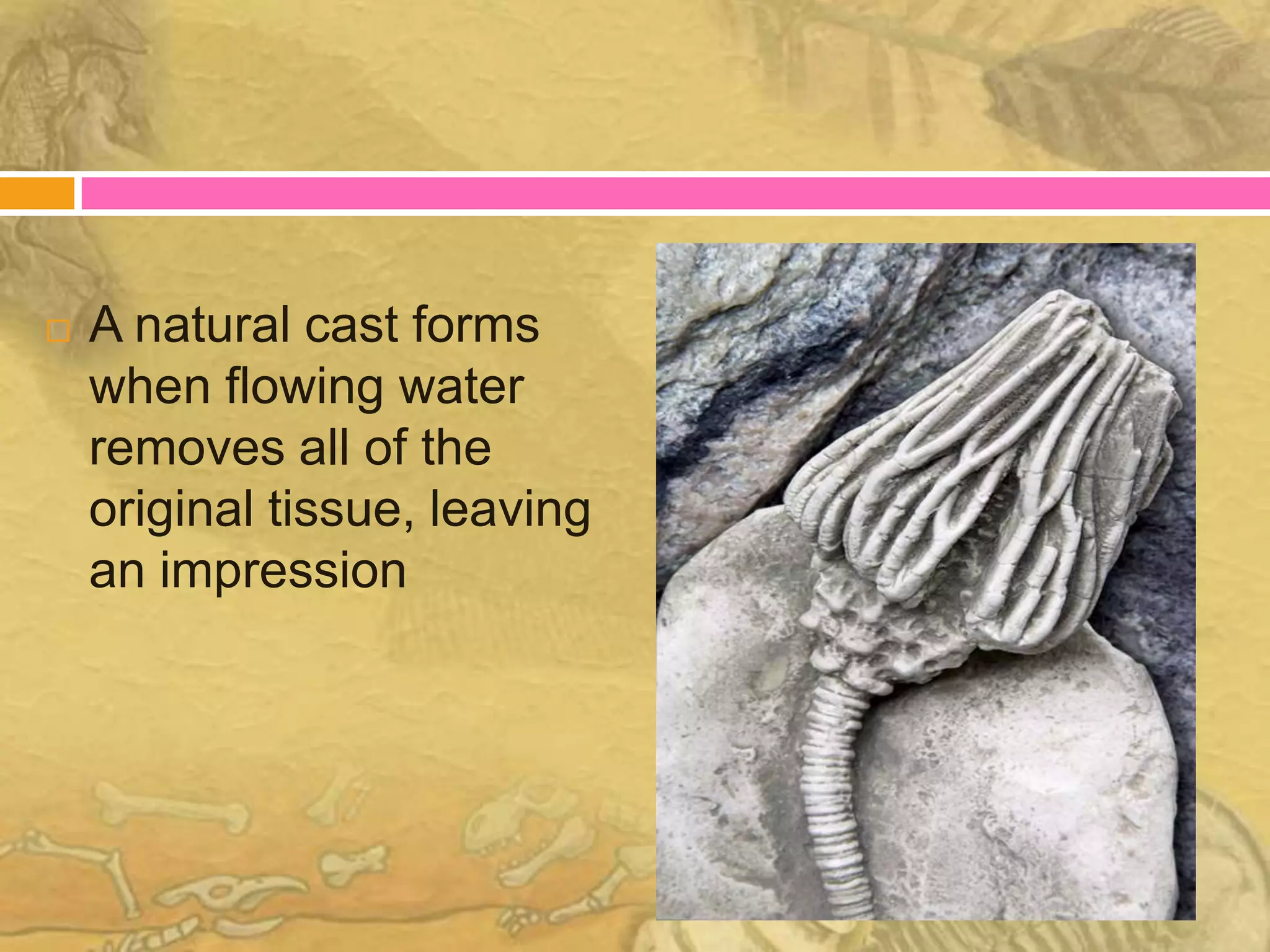
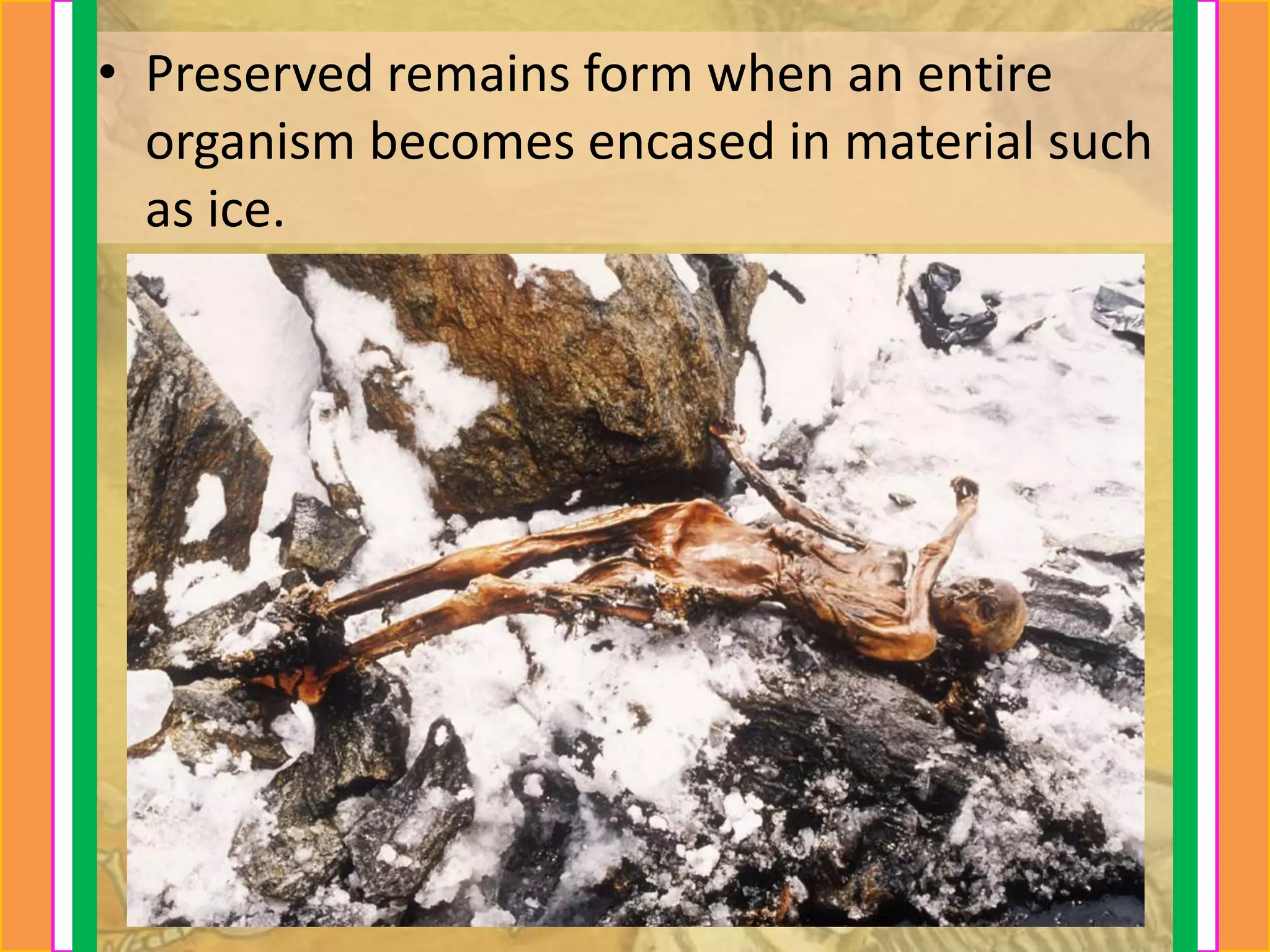
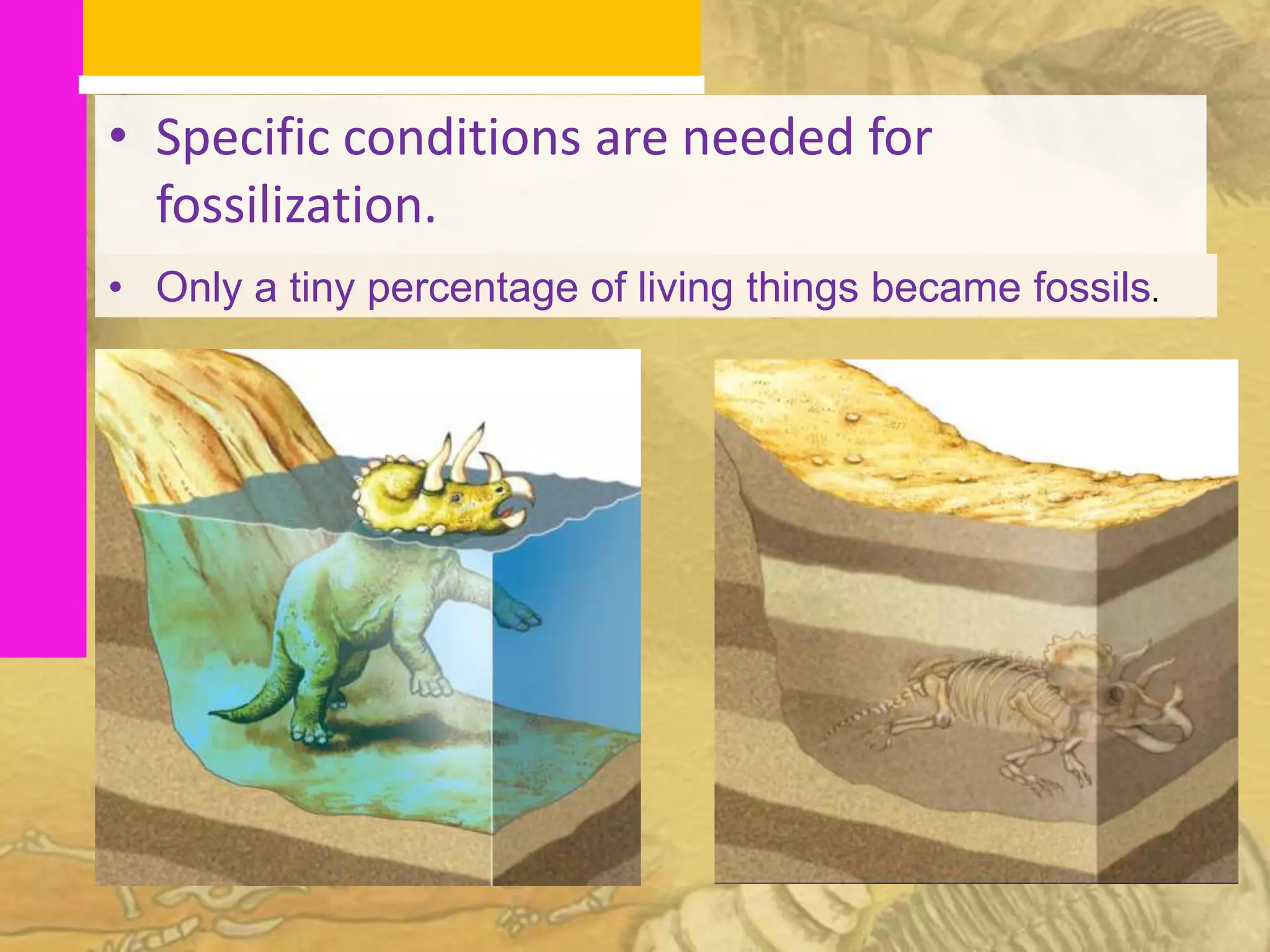
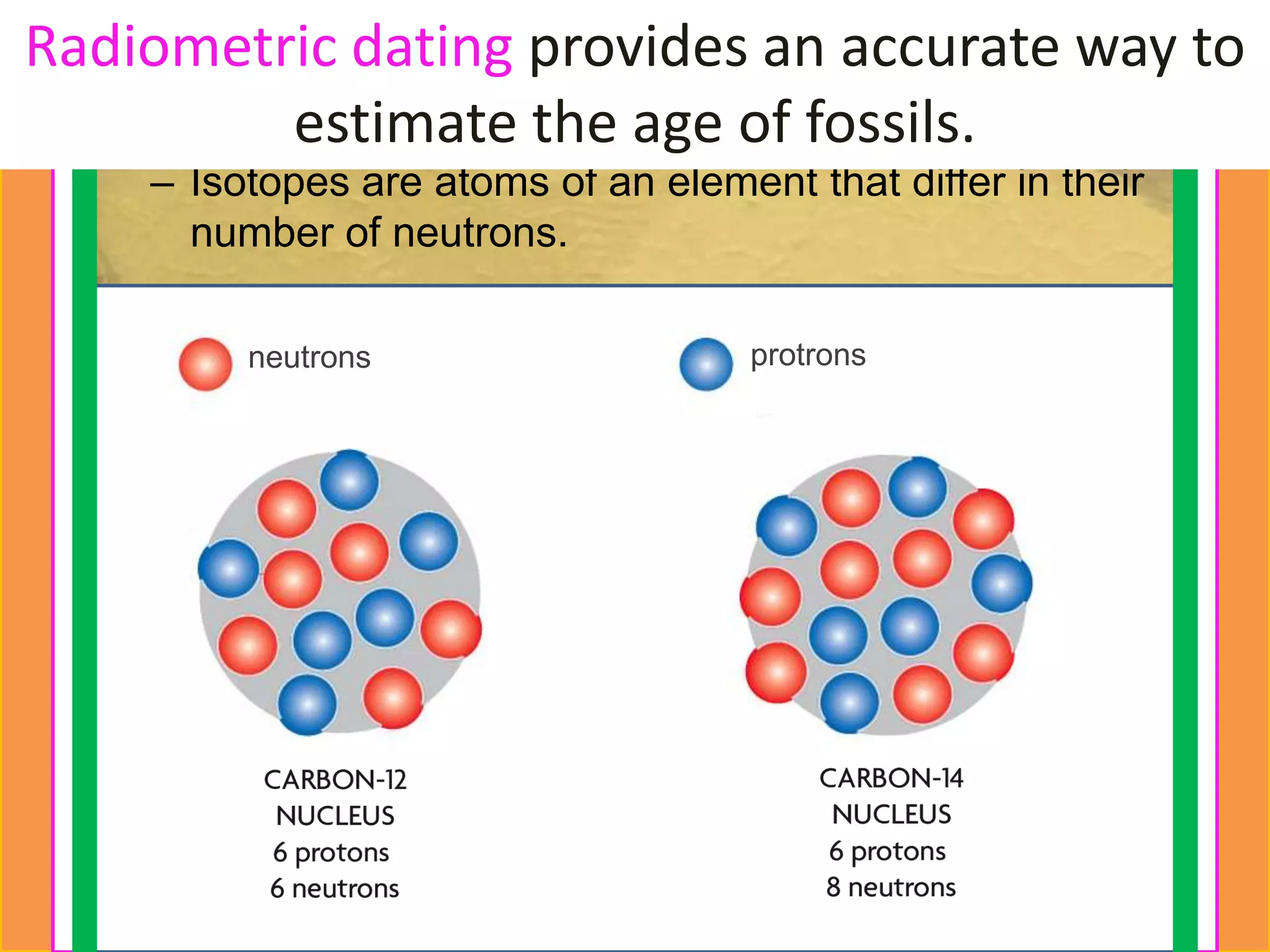
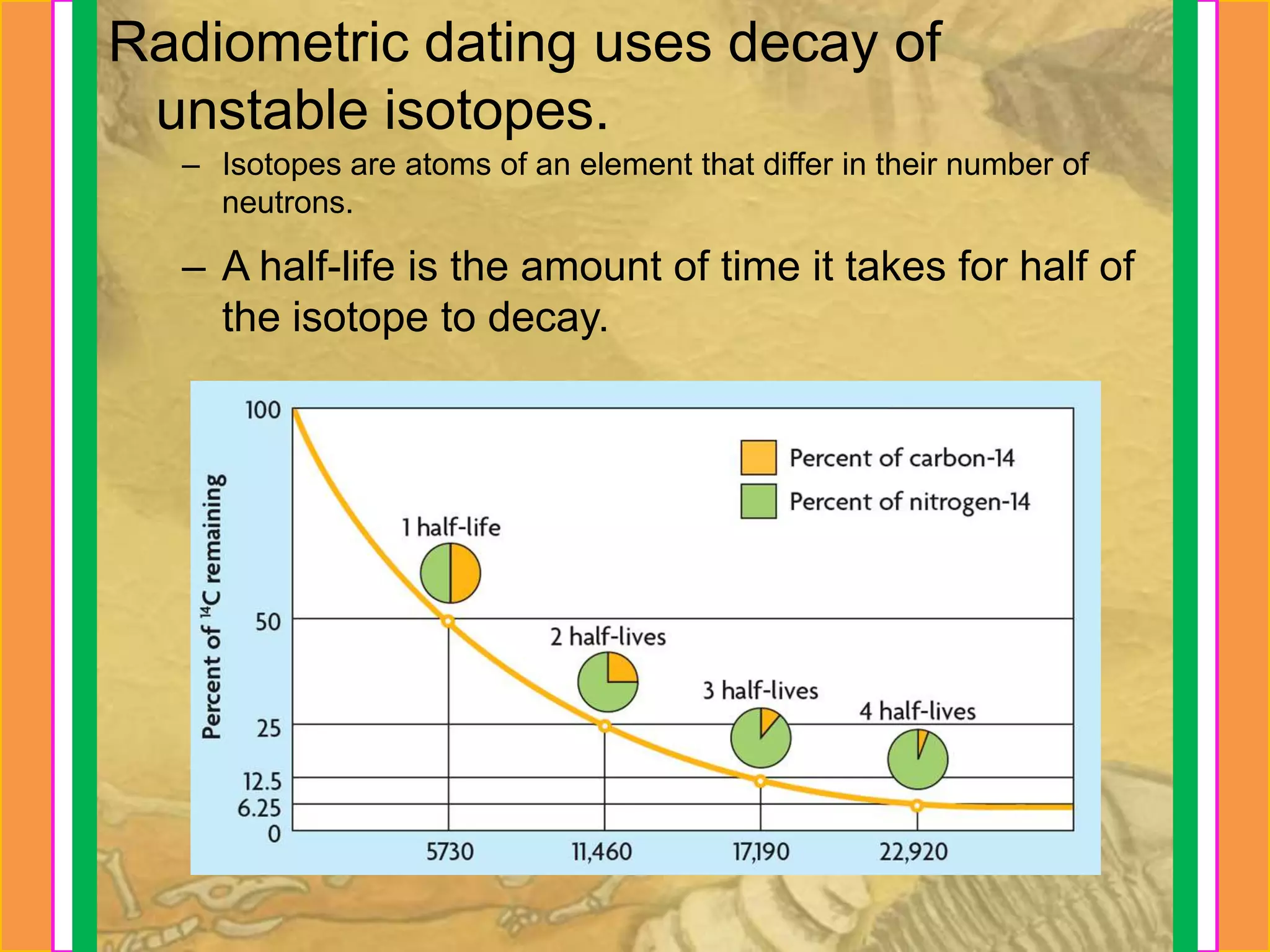
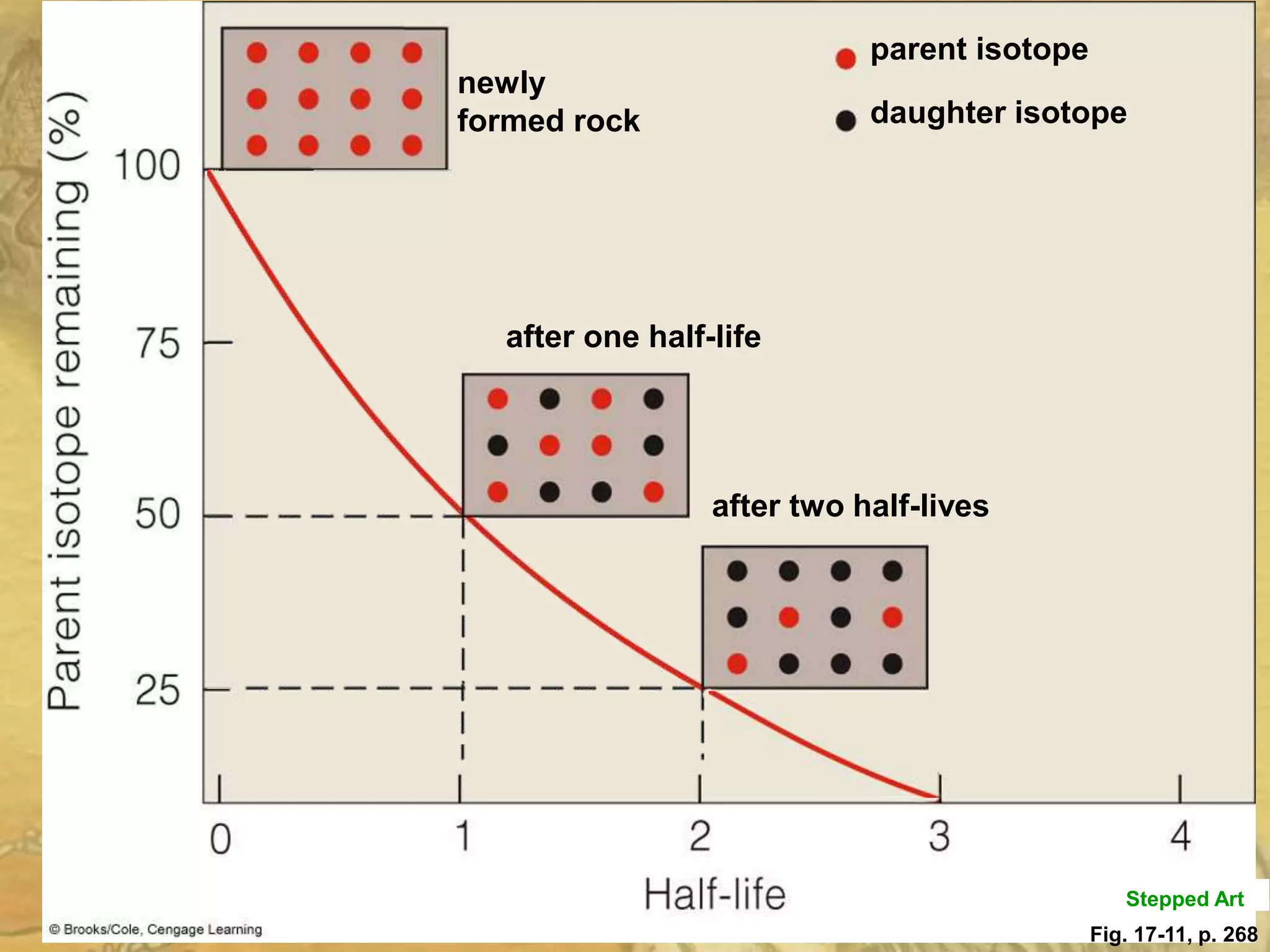
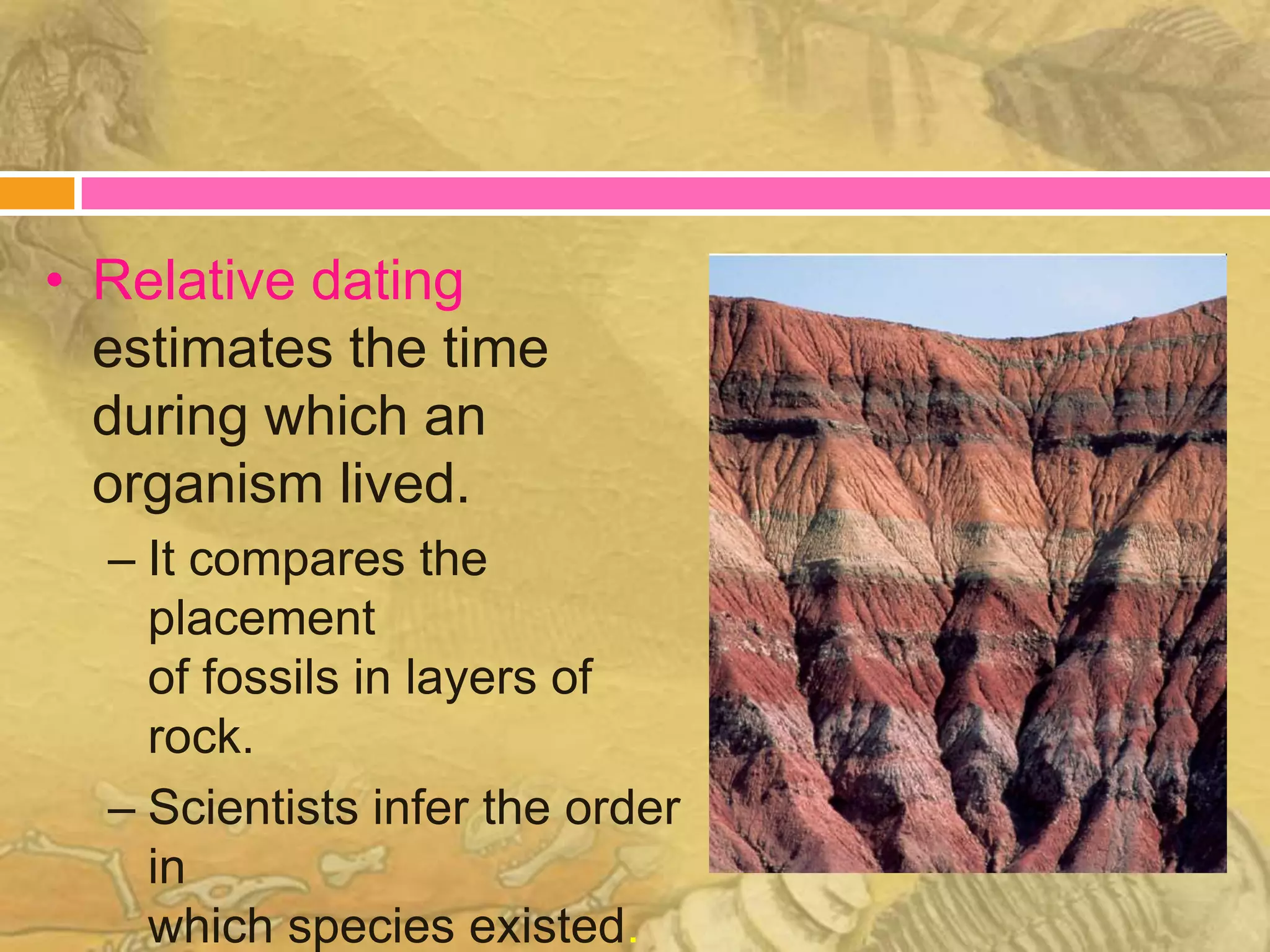
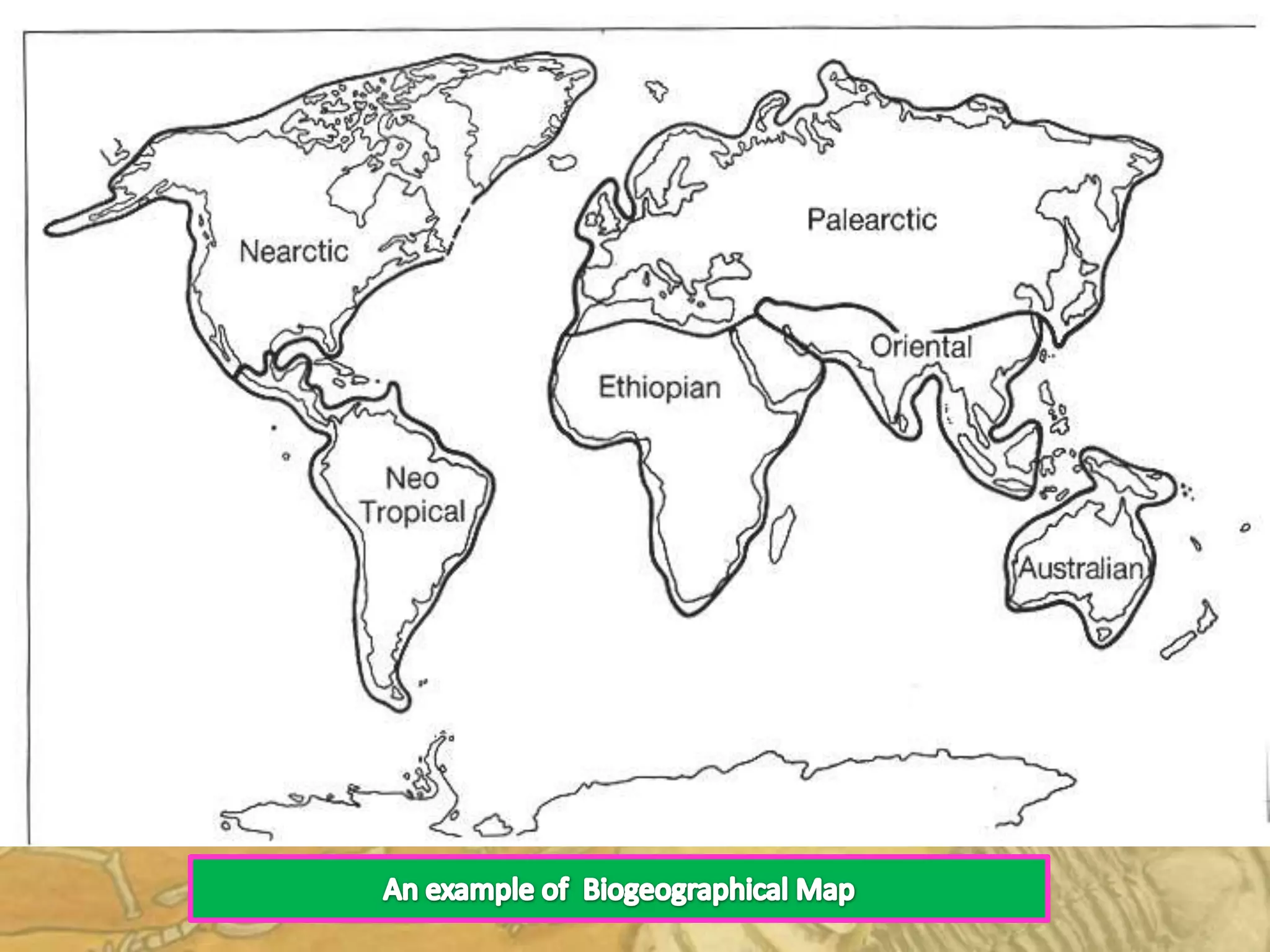
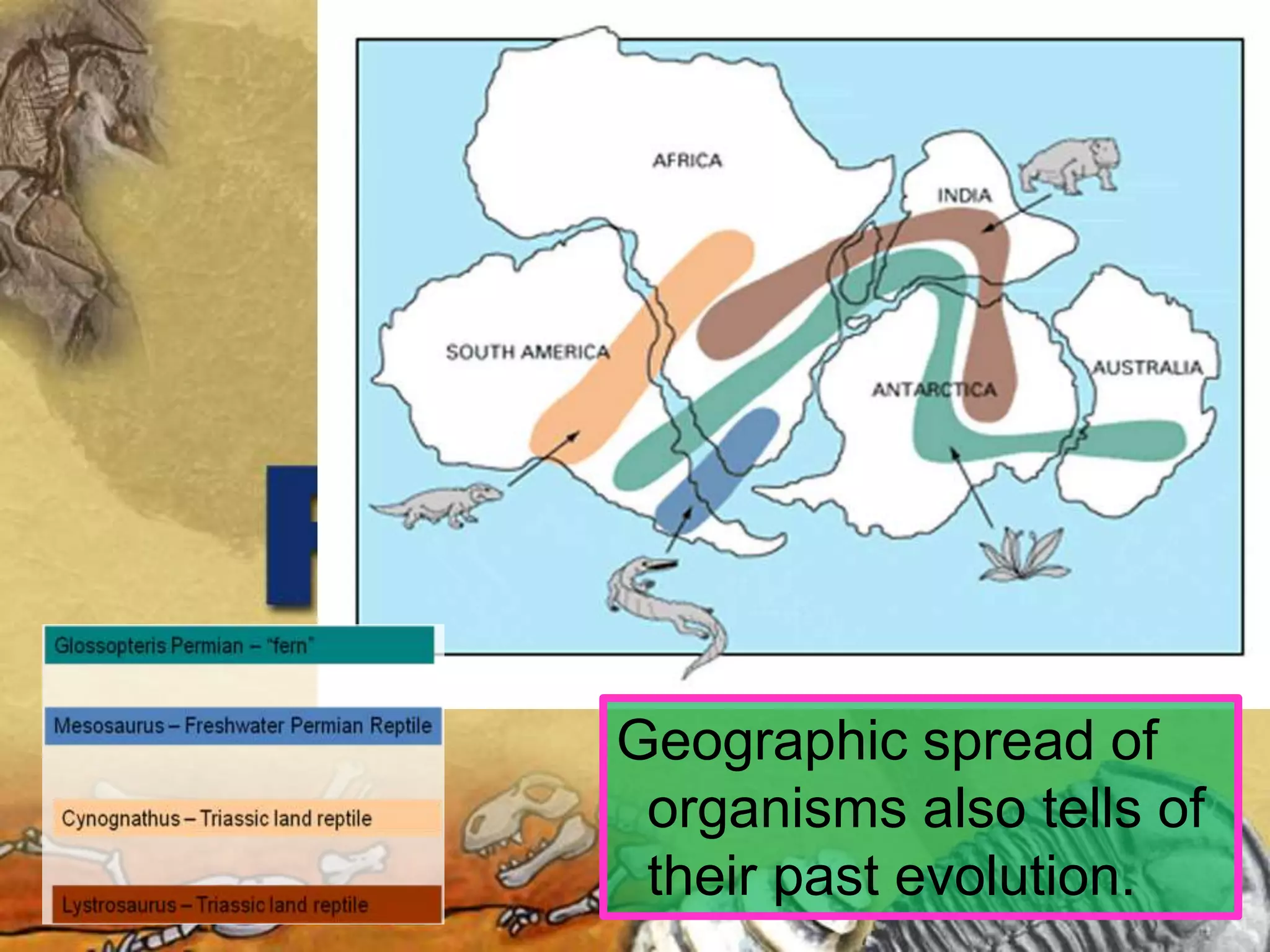
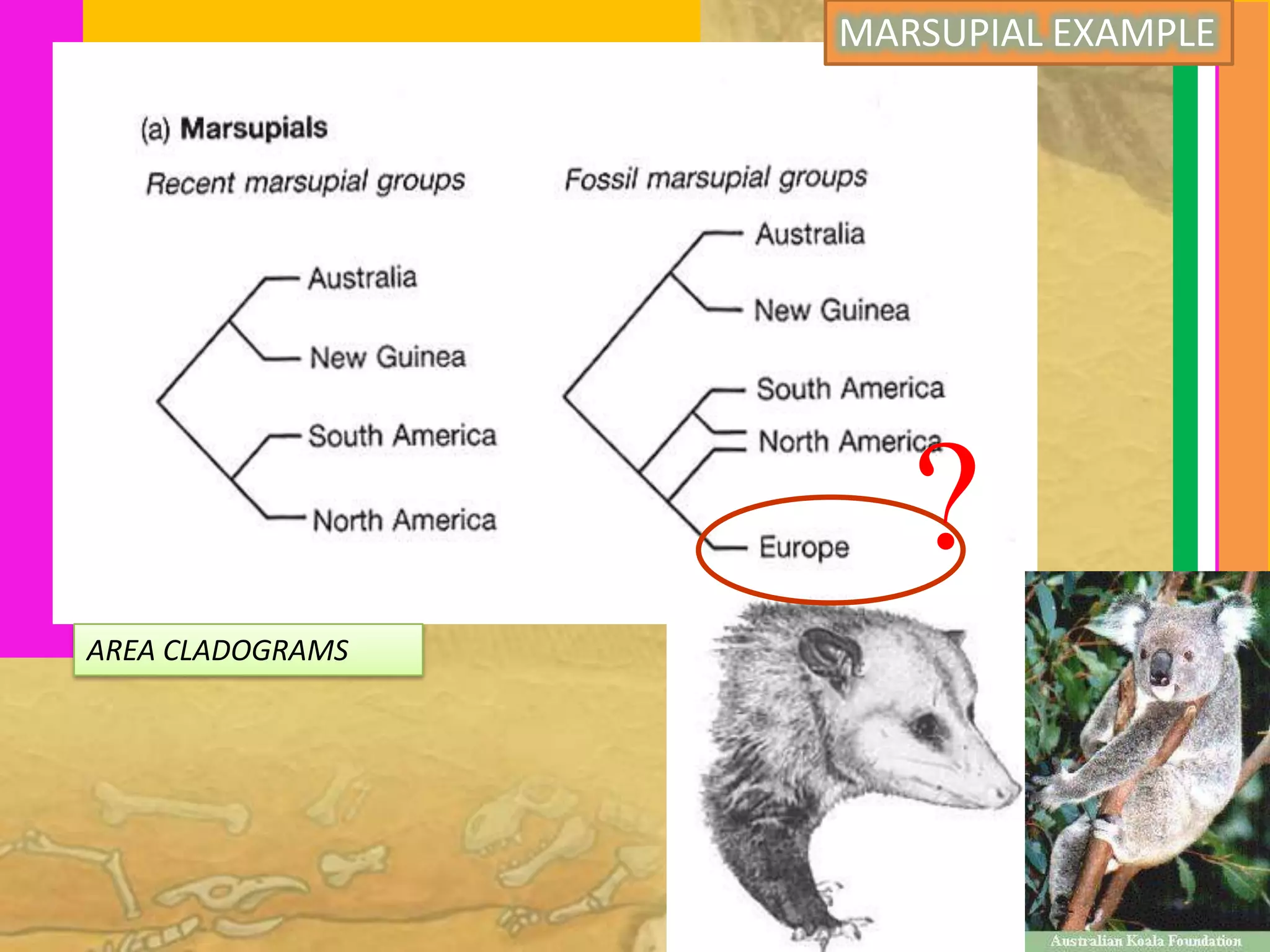
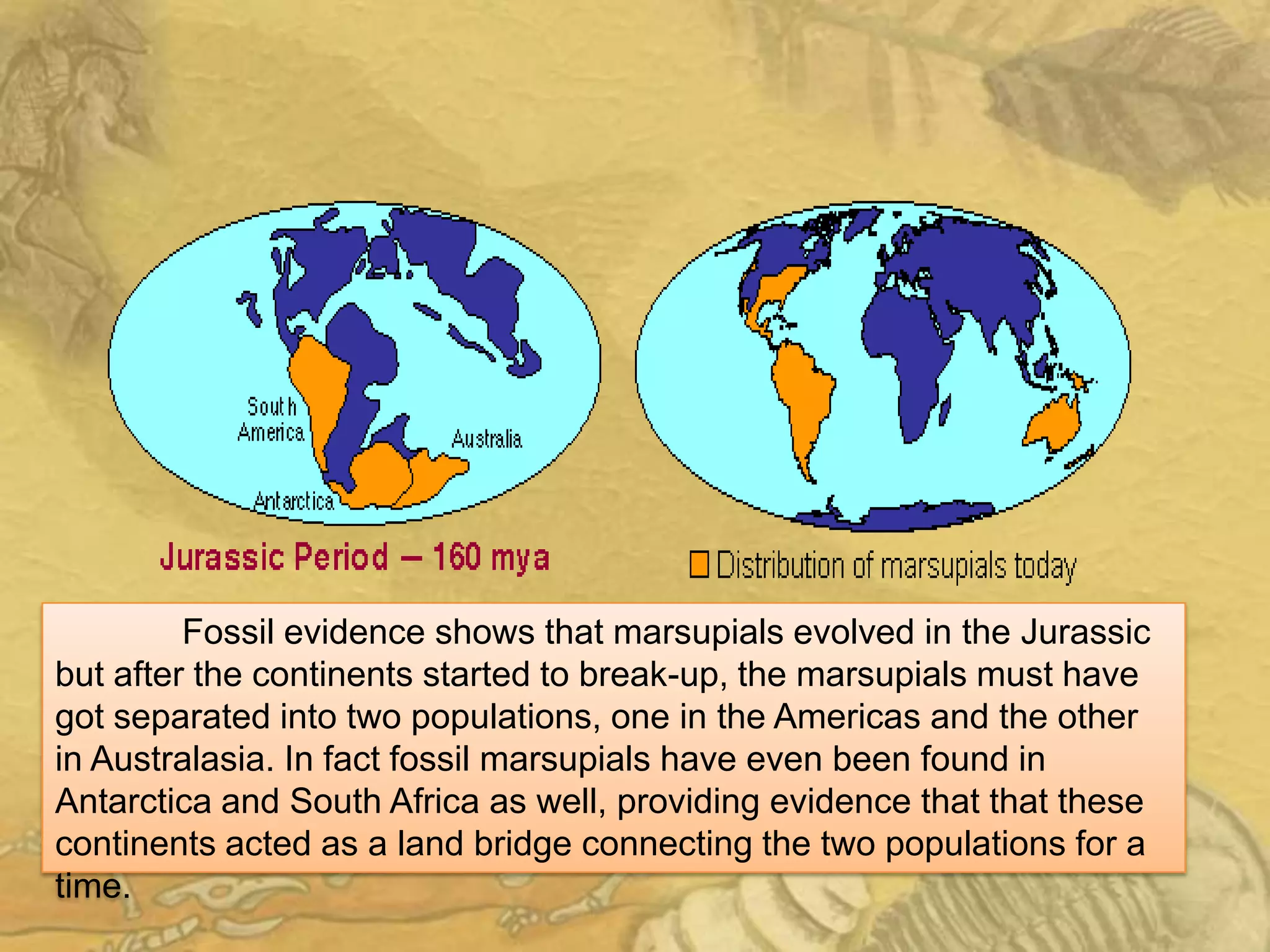
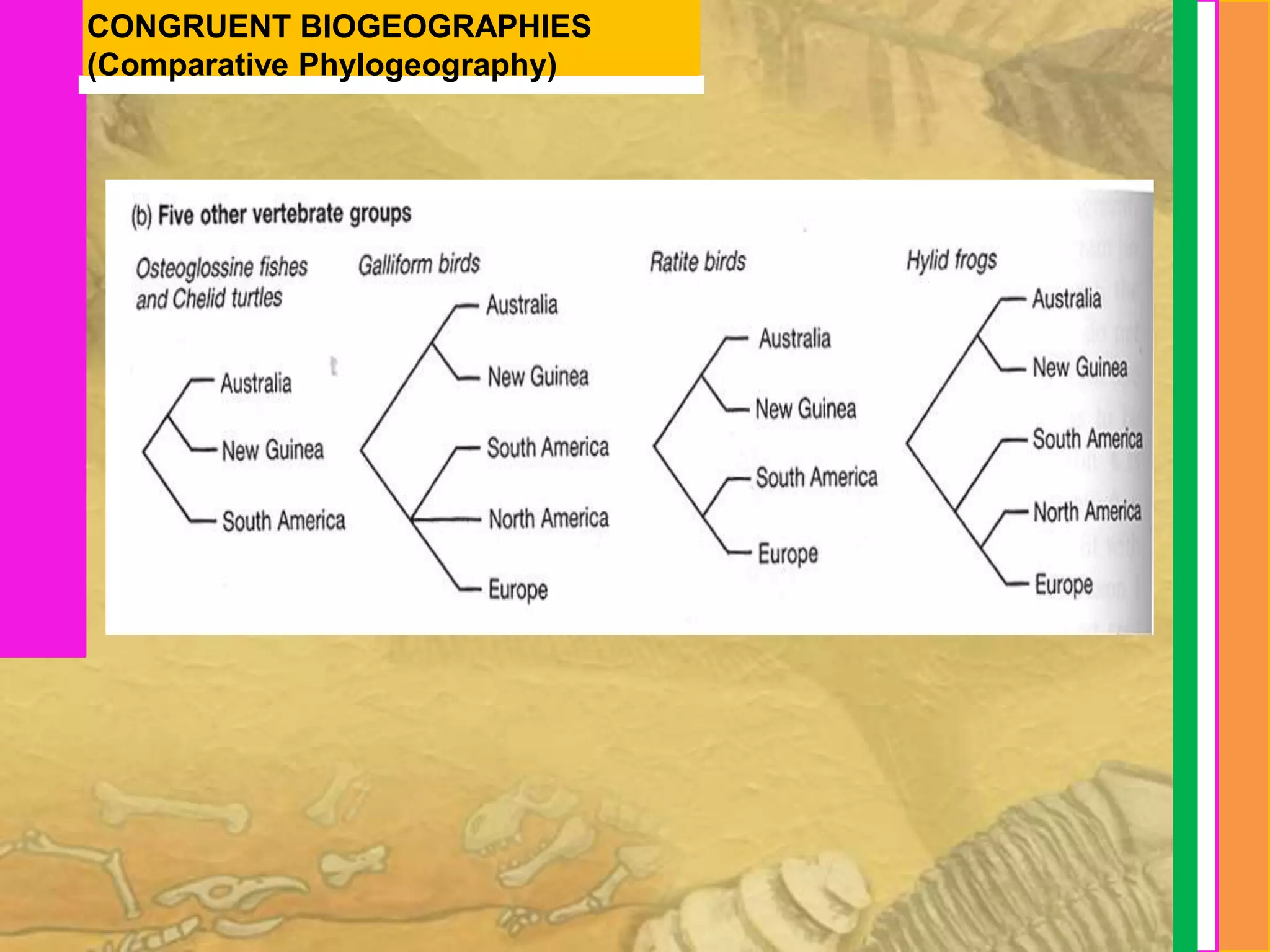
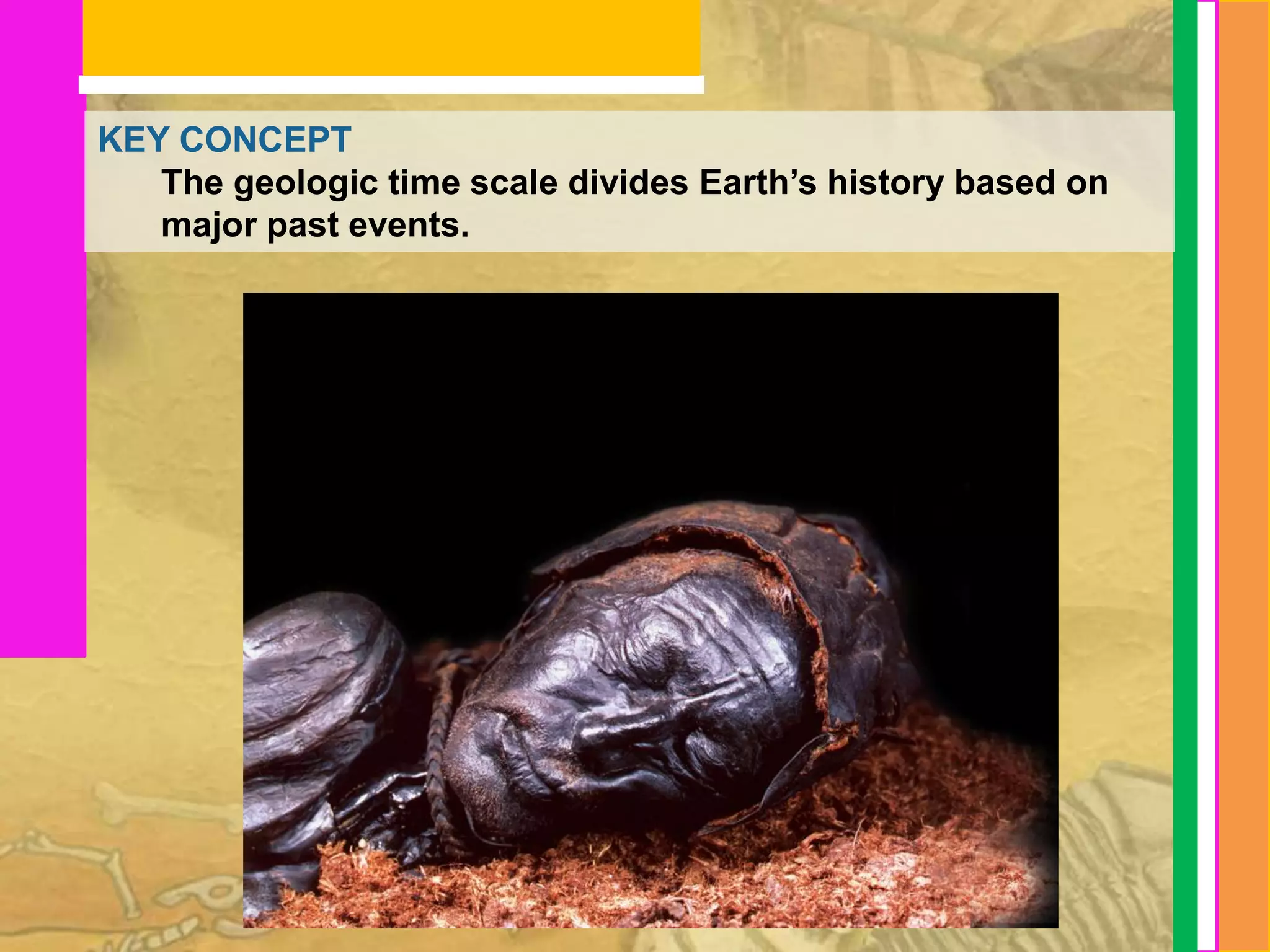
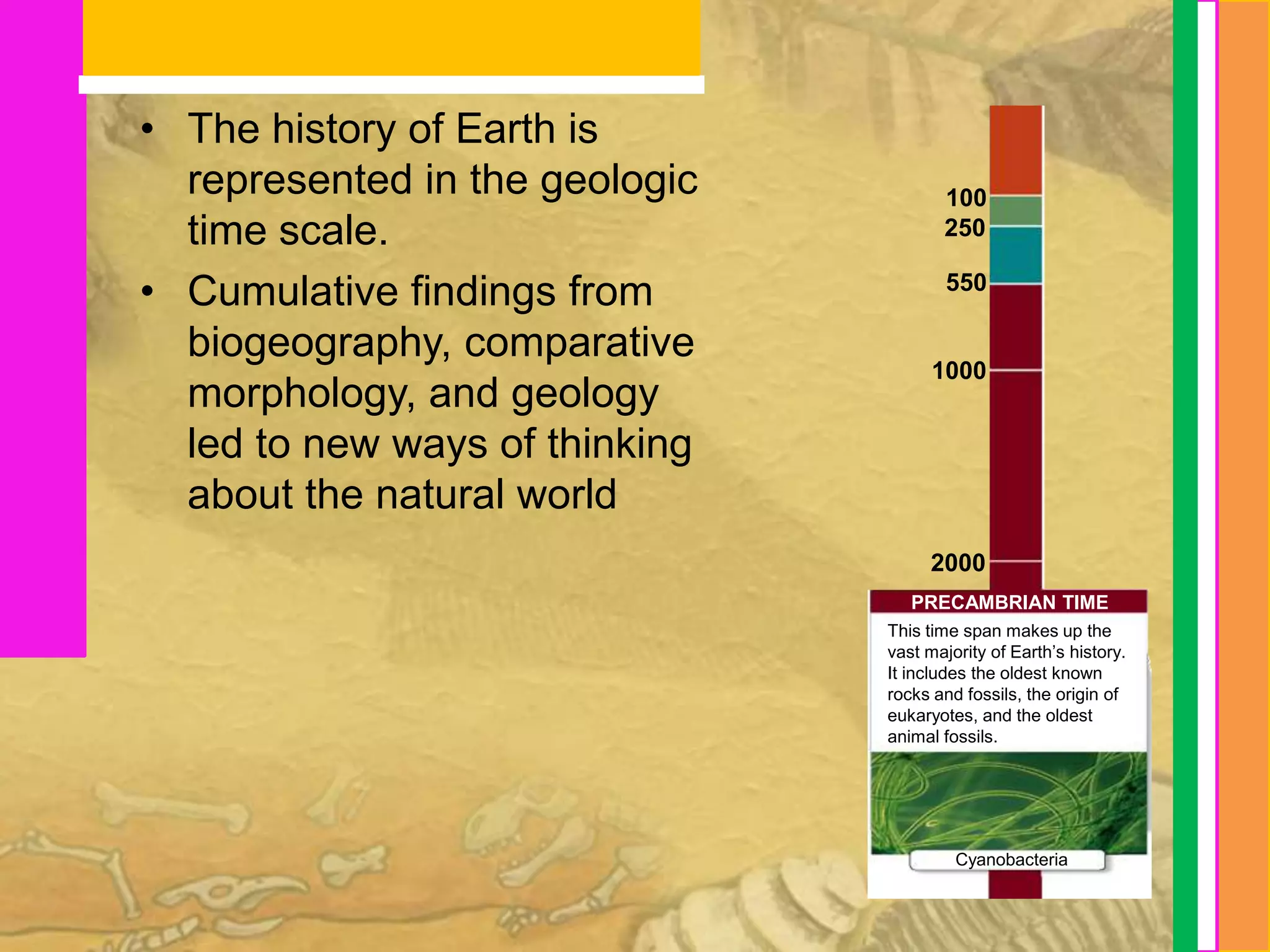
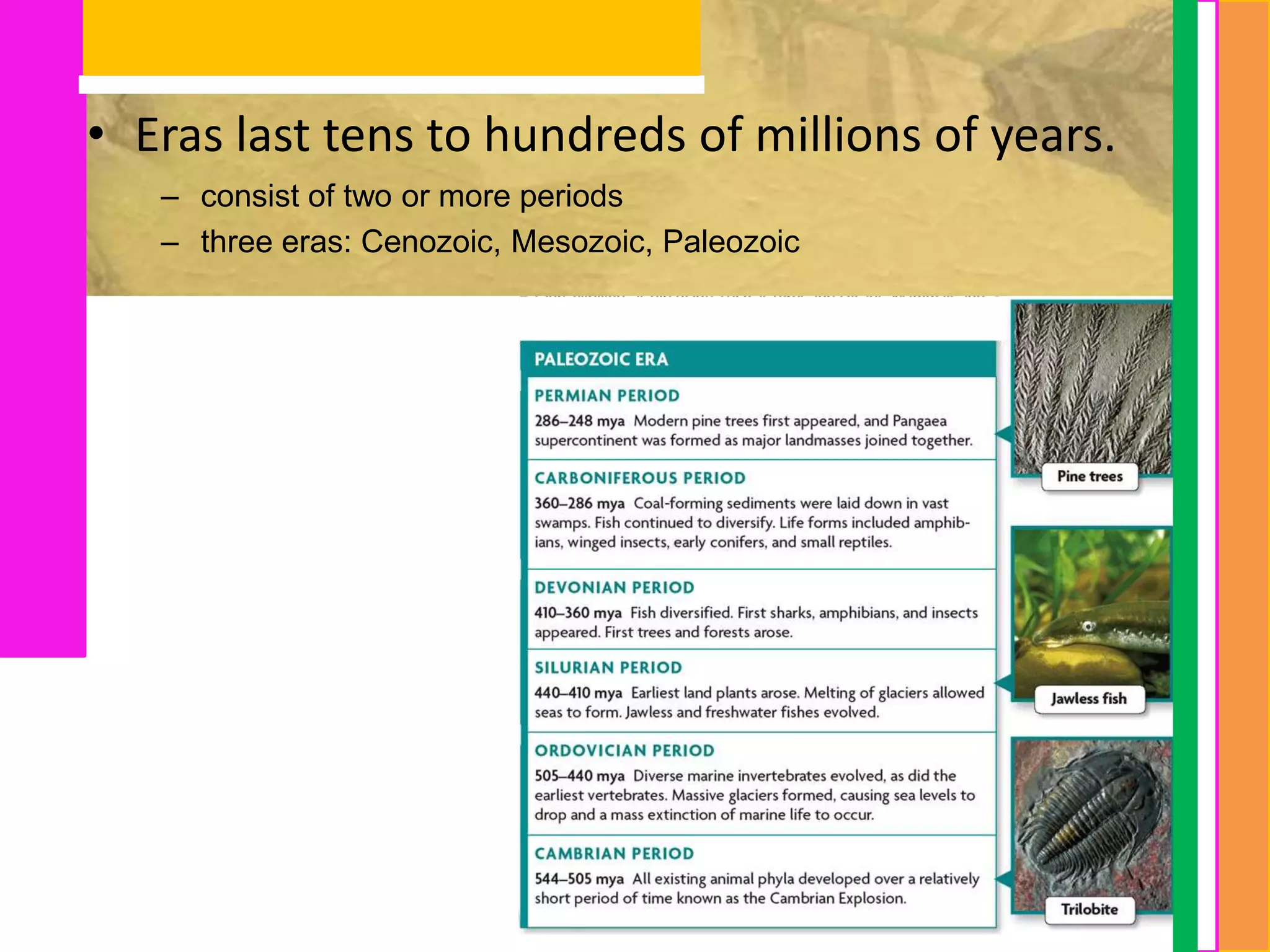
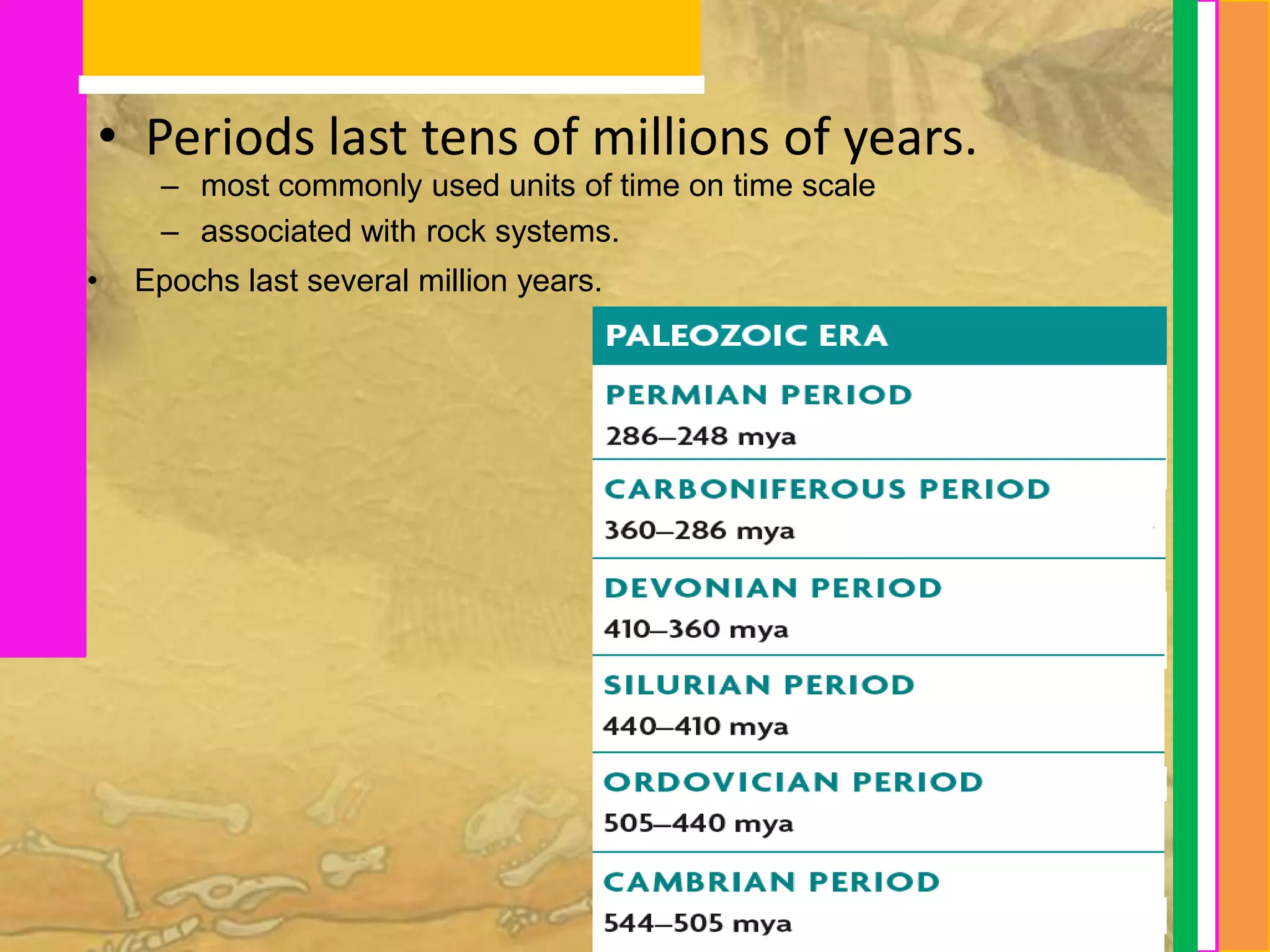
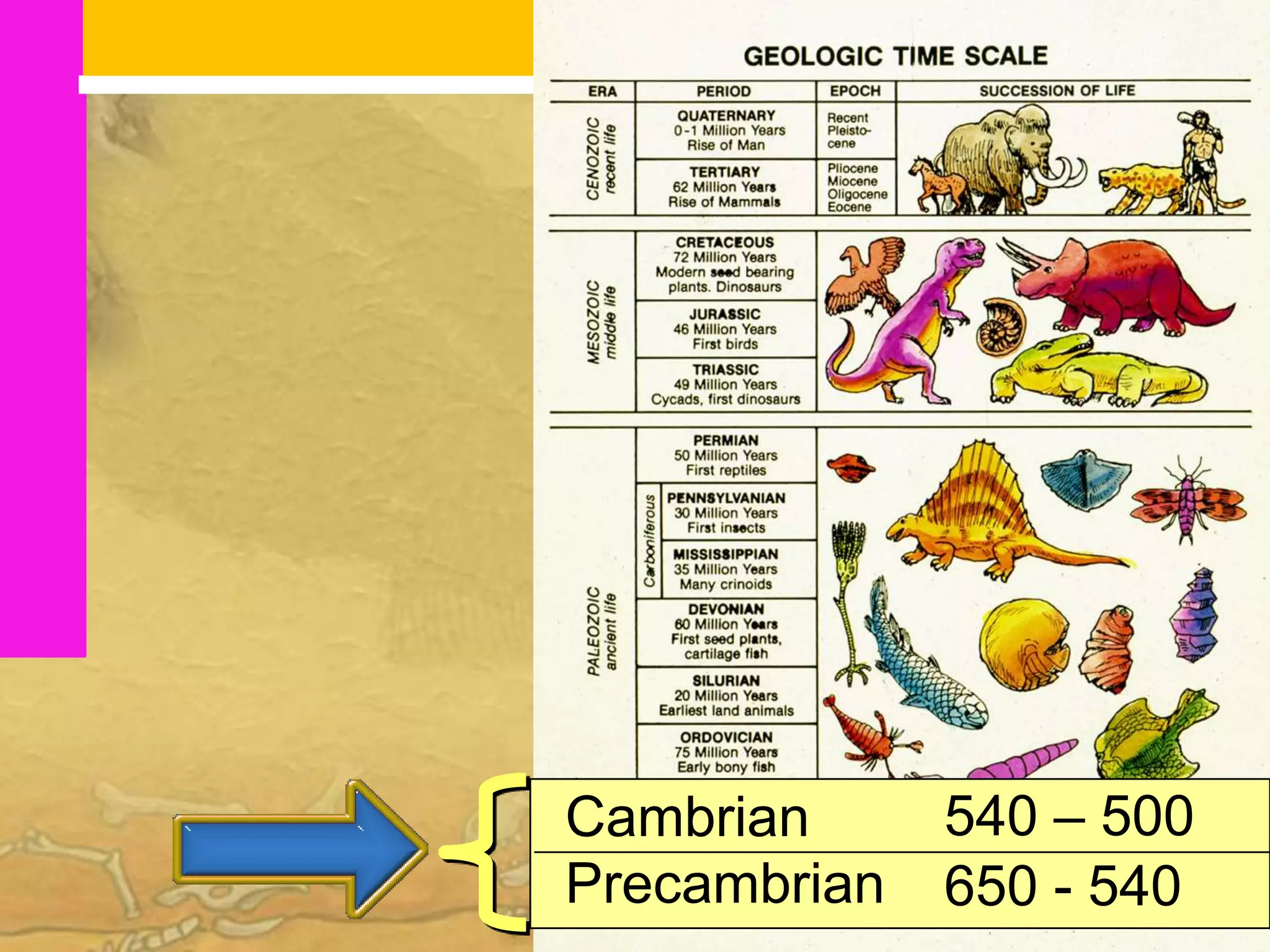
The document discusses terrestrial fossil records and paleobiogeography. It provides information on what fossils are, how they are formed in sedimentary rocks, and examples of different types of terrestrial fossils like amber fossils and trace fossils. Index fossils are described as tools to determine the relative age of rock layers. Radiometric dating is discussed as an accurate way to estimate the age of fossils using radioactive decay of isotopes. Relative dating compares fossil placement in rock layers to infer the order species existed. Fossils, evolution, and biogeography are connected to reconstruct how organisms have changed over geologic time and dispersed across continents.