First Life The first life forms on Earth did not need oxygen.  Who or what were these organisms? How about  _________ !!!!!!!!!!!!!!!! _________  are not complete organisms. They need other organisms to provide nutrients to live SO!!!!!!!!!!!!!!!!!
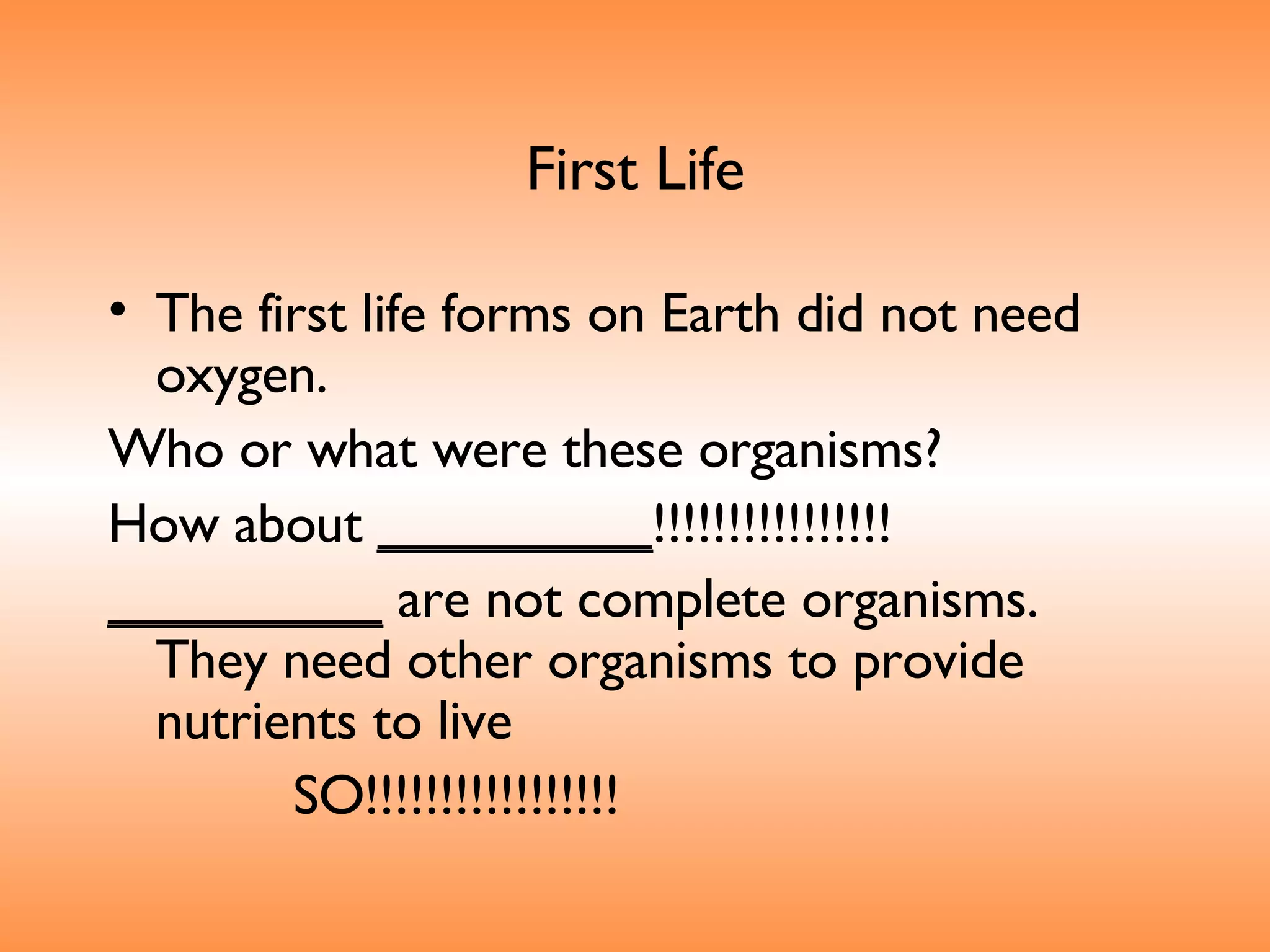
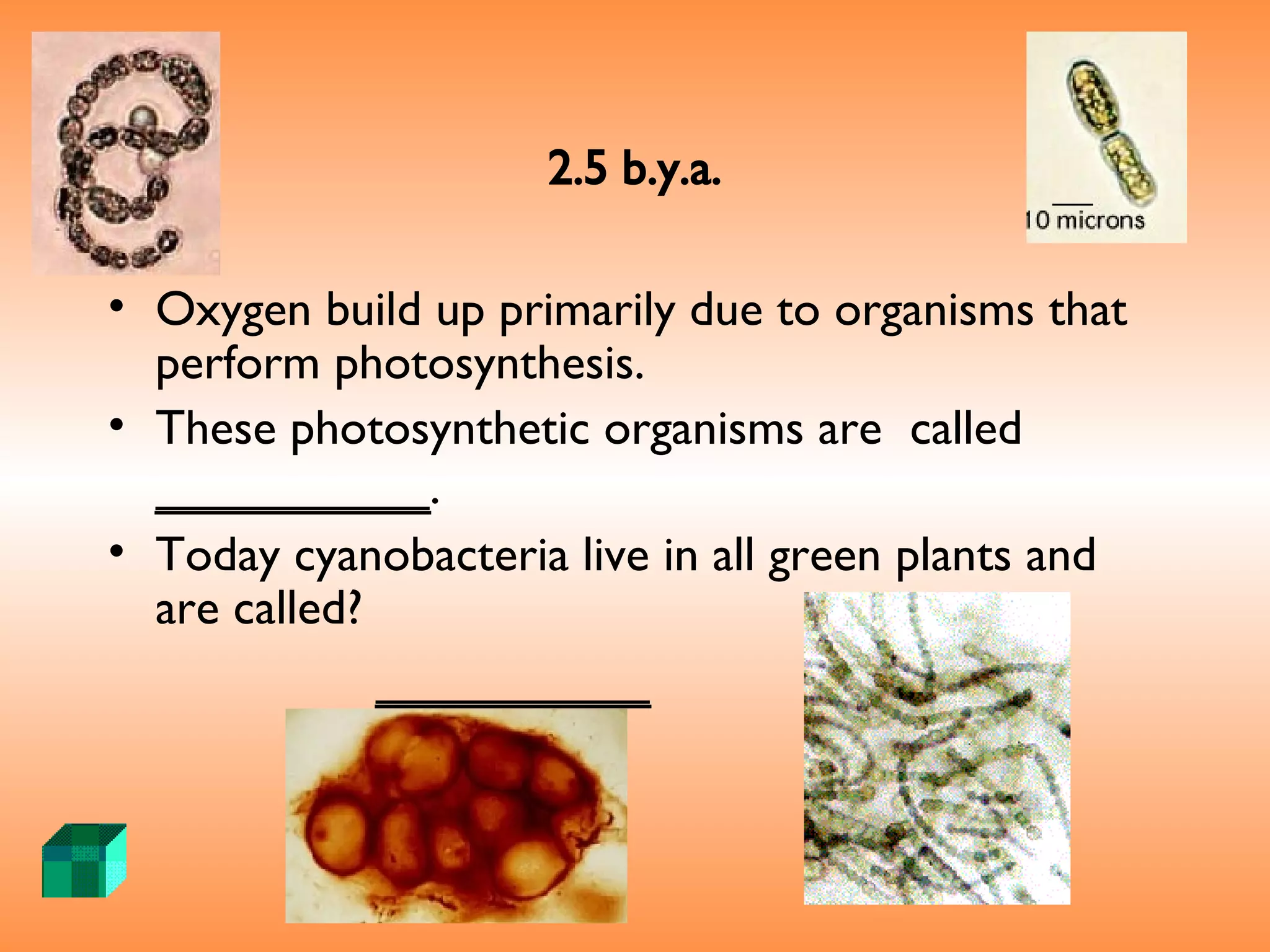
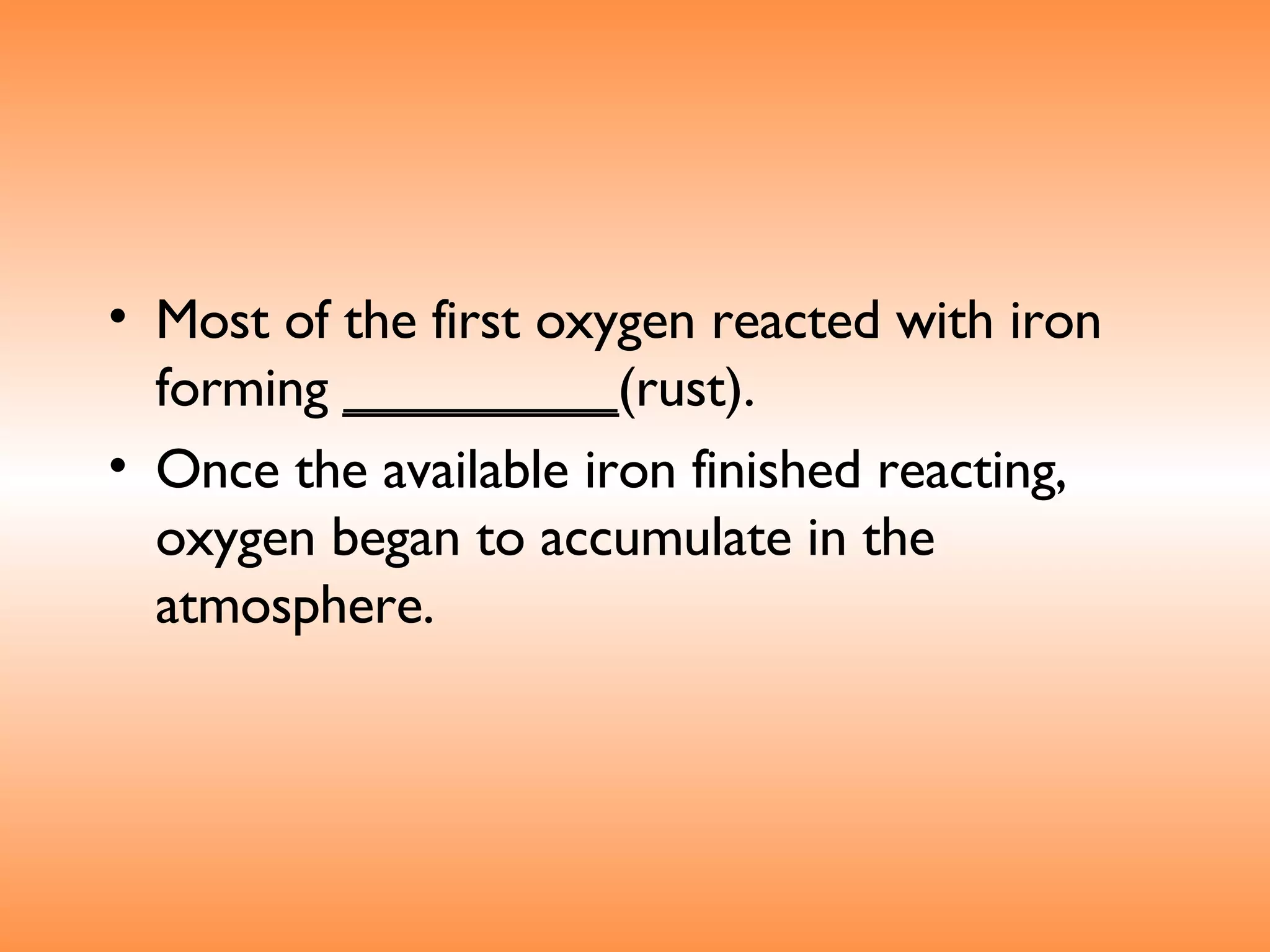
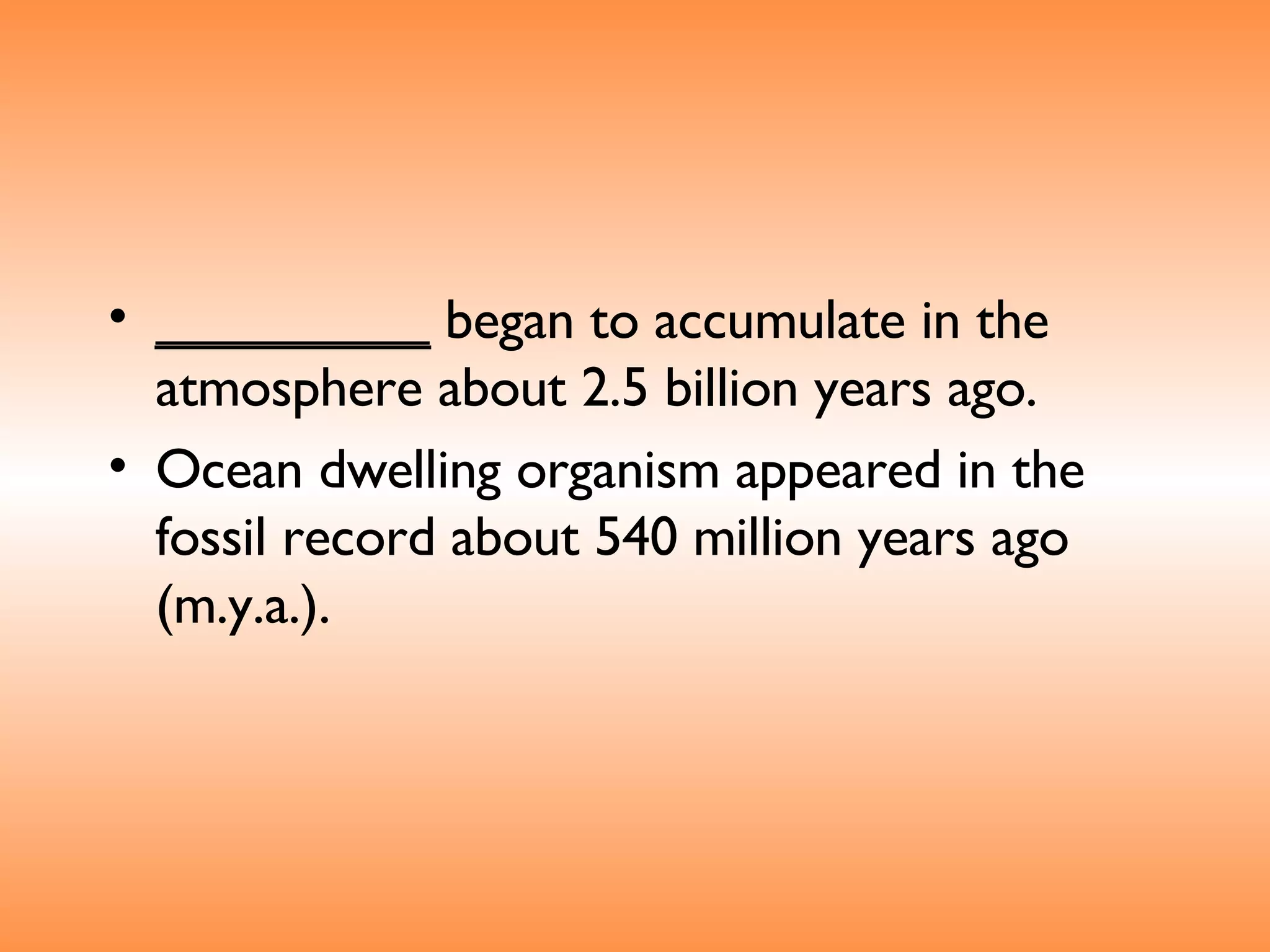
2.5 b.y.a. Oxygen build up primarily due to organisms that perform photosynthesis. These photosynthetic organisms are  called  _________ . Today cyanobacteria live in all green plants and are called?   _________
Most of the first oxygen reacted with iron forming  _________ (rust).  Once the available iron finished reacting, oxygen began to accumulate in the atmosphere.
_________  began to accumulate in the atmosphere about 2.5 billion years ago. Ocean dwelling organism appeared in the fossil record about 540 million years ago (m.y.a.).
Precambrian Fossils   _________  – are layered mounts of calcium carbonate, which are the remains of material deposited by algae.
Paleozoic Era: Life Explodes The Paleozoic ear is made of several  periods  including: Permian – youngest period Pennsylvanian Mississippian Devonian  Silurian Ordovician  Cambrian – oldest period
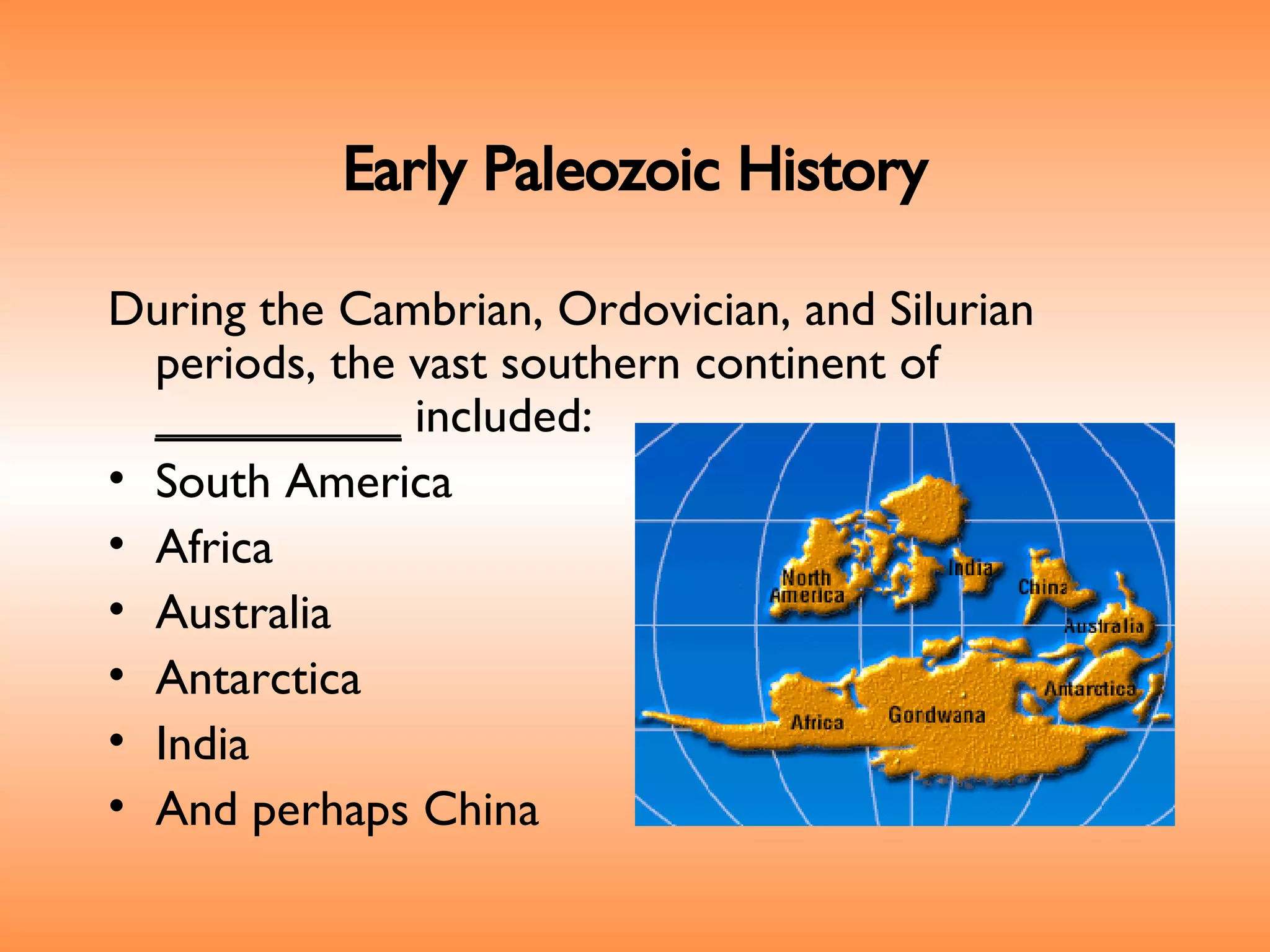
Early Paleozoic History During the Cambrian, Ordovician, and Silurian periods, the vast southern continent of  _________  included: South America Africa Australia Antarctica India And perhaps China
North America  was most likely on or near the equator. had no living things, plant or animal.  Later on North America collides with Africa beginning the formation of the Appalachian Mountains and continues for 200 million years.
By the Silurian period, shallow seas or epicontinental seas covered much of North America. Many barrier reefs prevented circulation between the shallow marine basins and the open ocean.  As the water evaporated salt and gypsum deposits formed.
_________   2.7 b.y.a We now have the basic part to make all forms of life We just need to make things more and more complex _________  must adjust to do different kinds of jobs
What is the name of the 1 celled life form in the oceans? _________ represents all animal life to come _________ represents all plant life to come Plankton – 1.8 b.y.a.
Colonial organisms _________  critters that are not very specialized _________   _________  - (polyps) _________
Early Paleozoic Life Life at this time is restricted to the oceans. All forms of life were invertebrates. 1-  _________  – bottom dwelling scavengers. They occurred in more than 600 types. They were the  _________  form of life at this time.
Paleozoic Era - Cambrian period Dominant form of life is the   trilobite Body segments Head shield Tail shield
2 –  _________  – these shelled organisms replace trilobites as the dominant form of life. Except for one species, brachiopods are extinct today.  Their larvae were free swimming, but like oysters and clams, these shelled animals were attached to the ocean floor.
Paleozoic Era - Cambrian period brachiopods  are present [ forerunner to the  _________ ]
3 –  _________  – cousin to the octopus and squid. These highly mobile  _________  were the major predator of the time.  Cephalopods were the first large animal on Earth. By the end of the Ordovician many organism were able to secret material to form hard parts such as an exoskeleton.
Paleozoic Era –Ordovician 505 – 440 m.y.a. cephalopods ( _________ ) oldest one is the  _________
Late Paleozoic   The tectonic reorganization of Earth’s landmasses into one supercontinent called  _________ .
Late Paleozoic History   North America collides with Africa closing the narrow sea that separated them.  As this collision continues the rest of the Northern Hemisphere continents join them. This resulted in the formation of the northern continent of  _________ . By the Permian, Gondwana has traveled north and collides with Laurasia. By the end of the Paleozoic  _________  is formed.
Late Paleozoic Life   Plants living at the water’s edge move onto the land.  These plants were leafless vertical spikes about the size of your index finger. By the end of the Devonian Period (40 million years later) there were forests.  The first forests were in  _________  …..
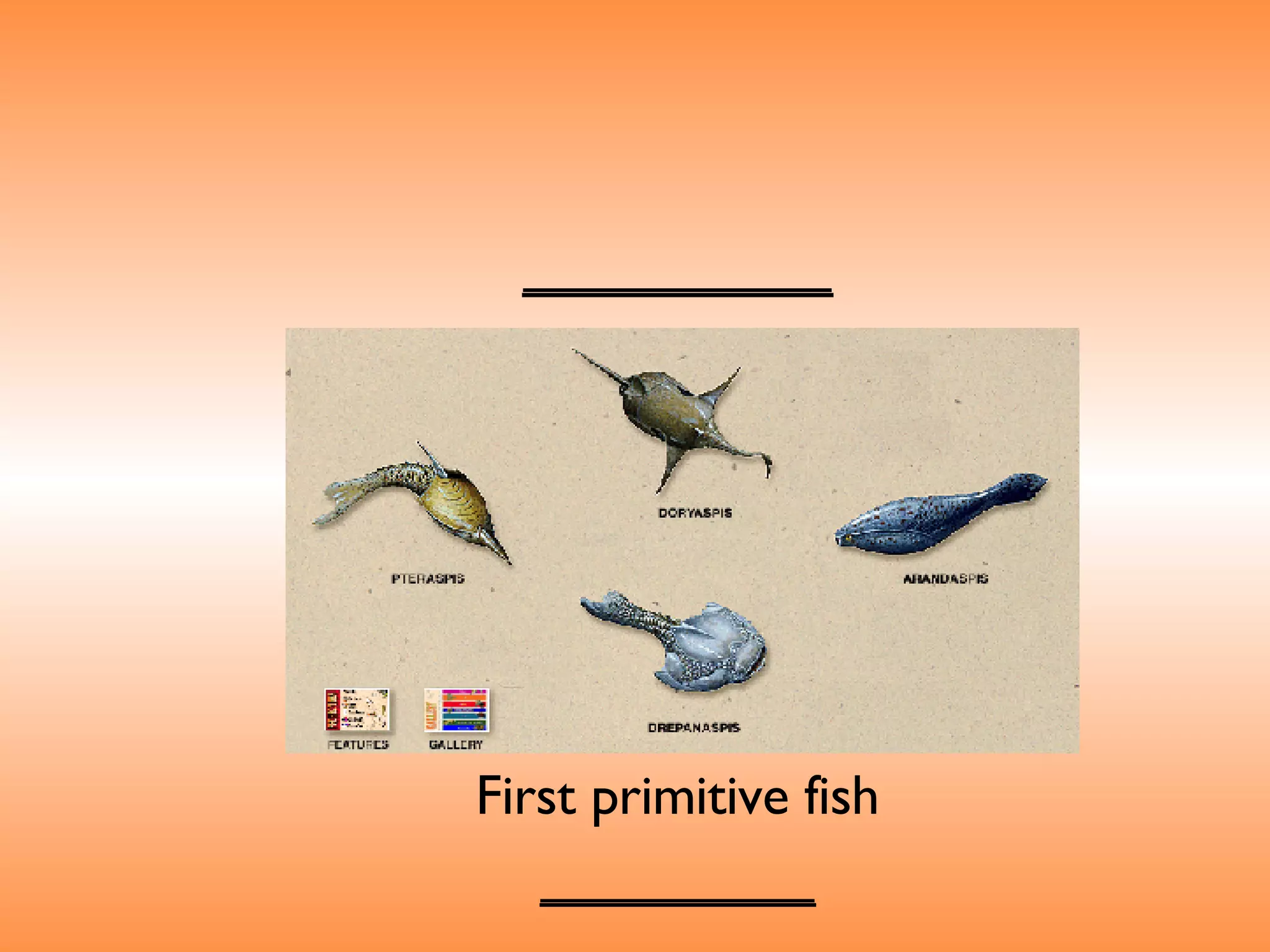
_________ First primitive fish _________
Paleozoic Era – Silurian 440 – 410 m.y.a. Appearance of  _________  water fish. 1st land critters appear and were?????   _________ Including:  _________ _________ _________ _________ _________
Paleozoic Era - Devonian  Known as the  AGE OF FISHES   _________ _________   _________ _________ _________ all modern fish
Amphibians diversified on land because they had no major competitors.  By the Pennsylvanian period large tropical swamps extended across North America, Europe, and Siberia.  Coal deposits today resulted from these swamps.
Lobe fin  became the ancestor of _________

Chapter 13outlinept2

  • 1.
    First Life Thefirst life forms on Earth did not need oxygen. Who or what were these organisms? How about _________ !!!!!!!!!!!!!!!! _________ are not complete organisms. They need other organisms to provide nutrients to live SO!!!!!!!!!!!!!!!!!
  • 2.
    2.5 b.y.a. Oxygenbuild up primarily due to organisms that perform photosynthesis. These photosynthetic organisms are called _________ . Today cyanobacteria live in all green plants and are called? _________
  • 3.
    Most of thefirst oxygen reacted with iron forming _________ (rust). Once the available iron finished reacting, oxygen began to accumulate in the atmosphere.
  • 4.
    _________ beganto accumulate in the atmosphere about 2.5 billion years ago. Ocean dwelling organism appeared in the fossil record about 540 million years ago (m.y.a.).
  • 5.
    Precambrian Fossils _________ – are layered mounts of calcium carbonate, which are the remains of material deposited by algae.
  • 6.
    Paleozoic Era: LifeExplodes The Paleozoic ear is made of several periods including: Permian – youngest period Pennsylvanian Mississippian Devonian Silurian Ordovician Cambrian – oldest period
  • 7.
    Early Paleozoic HistoryDuring the Cambrian, Ordovician, and Silurian periods, the vast southern continent of _________ included: South America Africa Australia Antarctica India And perhaps China
  • 8.
    North America was most likely on or near the equator. had no living things, plant or animal. Later on North America collides with Africa beginning the formation of the Appalachian Mountains and continues for 200 million years.
  • 9.
    By the Silurianperiod, shallow seas or epicontinental seas covered much of North America. Many barrier reefs prevented circulation between the shallow marine basins and the open ocean. As the water evaporated salt and gypsum deposits formed.
  • 10.
    _________ 2.7 b.y.a We now have the basic part to make all forms of life We just need to make things more and more complex _________ must adjust to do different kinds of jobs
  • 11.
    What is thename of the 1 celled life form in the oceans? _________ represents all animal life to come _________ represents all plant life to come Plankton – 1.8 b.y.a.
  • 12.
    Colonial organisms _________ critters that are not very specialized _________ _________ - (polyps) _________
  • 13.
    Early Paleozoic LifeLife at this time is restricted to the oceans. All forms of life were invertebrates. 1- _________ – bottom dwelling scavengers. They occurred in more than 600 types. They were the _________ form of life at this time.
  • 14.
    Paleozoic Era -Cambrian period Dominant form of life is the trilobite Body segments Head shield Tail shield
  • 15.
    2 – _________ – these shelled organisms replace trilobites as the dominant form of life. Except for one species, brachiopods are extinct today. Their larvae were free swimming, but like oysters and clams, these shelled animals were attached to the ocean floor.
  • 16.
    Paleozoic Era -Cambrian period brachiopods are present [ forerunner to the _________ ]
  • 17.
    3 – _________ – cousin to the octopus and squid. These highly mobile _________ were the major predator of the time. Cephalopods were the first large animal on Earth. By the end of the Ordovician many organism were able to secret material to form hard parts such as an exoskeleton.
  • 18.
    Paleozoic Era –Ordovician505 – 440 m.y.a. cephalopods ( _________ ) oldest one is the _________
  • 19.
    Late Paleozoic The tectonic reorganization of Earth’s landmasses into one supercontinent called _________ .
  • 20.
    Late Paleozoic History North America collides with Africa closing the narrow sea that separated them. As this collision continues the rest of the Northern Hemisphere continents join them. This resulted in the formation of the northern continent of _________ . By the Permian, Gondwana has traveled north and collides with Laurasia. By the end of the Paleozoic _________ is formed.
  • 21.
    Late Paleozoic Life Plants living at the water’s edge move onto the land. These plants were leafless vertical spikes about the size of your index finger. By the end of the Devonian Period (40 million years later) there were forests. The first forests were in _________ …..
  • 22.
  • 23.
    Paleozoic Era –Silurian 440 – 410 m.y.a. Appearance of _________ water fish. 1st land critters appear and were????? _________ Including: _________ _________ _________ _________ _________
  • 24.
    Paleozoic Era -Devonian Known as the AGE OF FISHES _________ _________ _________ _________ _________ all modern fish
  • 25.
    Amphibians diversified onland because they had no major competitors. By the Pennsylvanian period large tropical swamps extended across North America, Europe, and Siberia. Coal deposits today resulted from these swamps.
  • 26.
    Lobe fin became the ancestor of _________