tense Affirmative/Negative/Question Use Signal Words
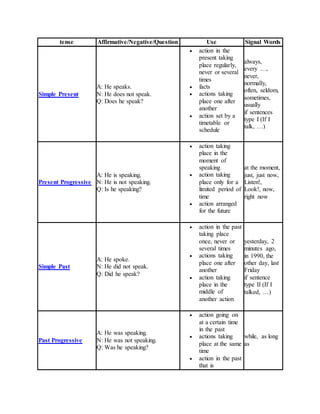
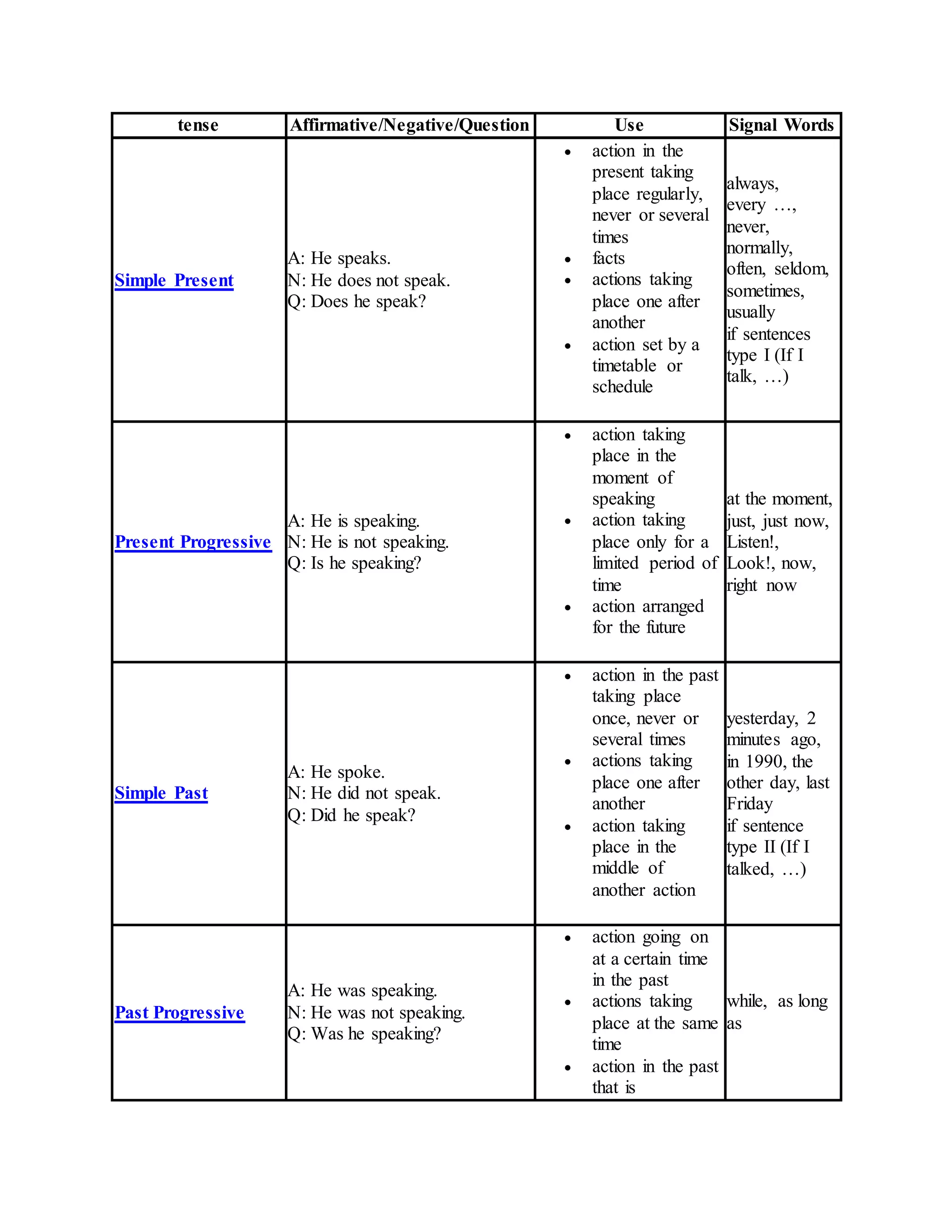
Simple Present
A: He speaks.
N: He does not speak.
Q: Does he speak?
 action in the
present taking
place regularly,
never or several
times
 facts
 actions taking
place one after
another
 action set by a
timetable or
schedule
always,
every …,
never,
normally,
often, seldom,
sometimes,
usually
if sentences
type I (If I
talk, …)
Present Progressive
A: He is speaking.
N: He is not speaking.
Q: Is he speaking?
 action taking
place in the
moment of
speaking
 action taking
place only for a
limited period of
time
 action arranged
for the future
at the moment,
just, just now,
Listen!,
Look!, now,
right now
Simple Past
A: He spoke.
N: He did not speak.
Q: Did he speak?
 action in the past
taking place
once, never or
several times
 actions taking
place one after
another
 action taking
place in the
middle of
another action
yesterday, 2
minutes ago,
in 1990, the
other day, last
Friday
if sentence
type II (If I
talked, …)
Past Progressive
A: He was speaking.
N: He was not speaking.
Q: Was he speaking?
 action going on
at a certain time
in the past
 actions taking
place at the same
time
 action in the past
that is
while, as long
as
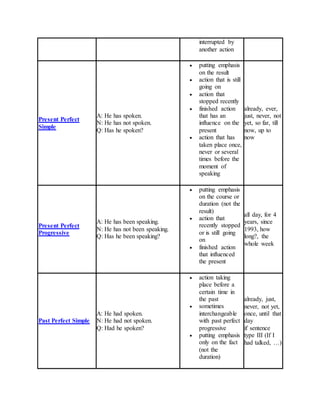
interrupted by
another action
Present Perfect
Simple
A: He has spoken.
N: He has not spoken.
Q: Has he spoken?
 putting emphasis
on the result
 action that is still
going on
 action that
stopped recently
 finished action
that has an
influence on the
present
 action that has
taken place once,
never or several
times before the
moment of
speaking
already, ever,
just, never, not
yet, so far, till
now, up to
now
Present Perfect
Progressive
A: He has been speaking.
N: He has not been speaking.
Q: Has he been speaking?
 putting emphasis
on the course or
duration (not the
result)
 action that
recently stopped
or is still going
on
 finished action
that influenced
the present
all day, for 4
years, since
1993, how
long?, the
whole week
Past Perfect Simple
A: He had spoken.
N: He had not spoken.
Q: Had he spoken?
 action taking
place before a
certain time in
the past
 sometimes
interchangeable
with past perfect
progressive
 putting emphasis
only on the fact
(not the
duration)
already, just,
never, not yet,
once, until that
day
if sentence
type III (If I
had talked, …)
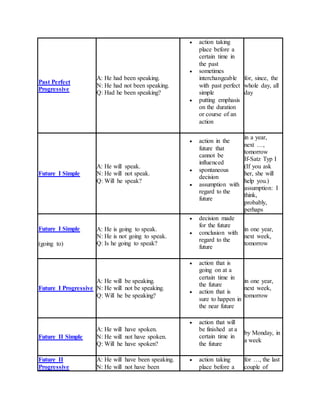
Past Perfect
Progressive
A: He had been speaking.
N: He had not been speaking.
Q: Had he been speaking?
 action taking
place before a
certain time in
the past
 sometimes
interchangeable
with past perfect
simple
 putting emphasis
on the duration
or course of an
action
for, since, the
whole day, all
day
Future I Simple
A: He will speak.
N: He will not speak.
Q: Will he speak?
 action in the
future that
cannot be
influenced
 spontaneous
decision
 assumption with
regard to the
future
in a year,
next …,
tomorrow
If-Satz Typ I
(If you ask
her, she will
help you.)
assumption: I
think,
probably,
perhaps
Future I Simple
(going to)
A: He is going to speak.
N: He is not going to speak.
Q: Is he going to speak?
 decision made
for the future
 conclusion with
regard to the
future
in one year,
next week,
tomorrow
Future I Progressive
A: He will be speaking.
N: He will not be speaking.
Q: Will he be speaking?
 action that is
going on at a
certain time in
the future
 action that is
sure to happen in
the near future
in one year,
next week,
tomorrow
Future II Simple
A: He will have spoken.
N: He will not have spoken.
Q: Will he have spoken?
 action that will
be finished at a
certain time in
the future
by Monday, in
a week
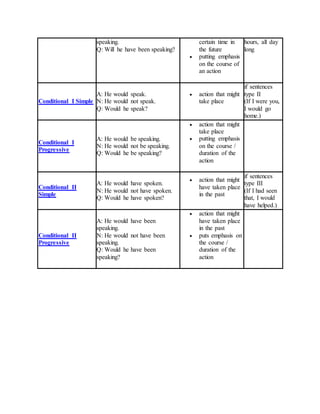
Future II
Progressive
A: He will have been speaking.
N: He will not have been
 action taking
place before a
for …, the last
couple of
speaking.
Q: Will he have been speaking?
certain time in
the future
 putting emphasis
on the course of
an action
hours, all day
long
Conditional I Simple
A: He would speak.
N: He would not speak.
Q: Would he speak?
 action that might
take place
if sentences
type II
(If I were you,
I would go
home.)
Conditional I
Progressive
A: He would be speaking.
N: He would not be speaking.
Q: Would he be speaking?
 action that might
take place
 putting emphasis
on the course /
duration of the
action
Conditional II
Simple
A: He would have spoken.
N: He would not have spoken.
Q: Would he have spoken?
 action that might
have taken place
in the past
if sentences
type III
(If I had seen
that, I would
have helped.)
Conditional II
Progressive
A: He would have been
speaking.
N: He would not have been
speaking.
Q: Would he have been
speaking?
 action that might
have taken place
in the past
 puts emphasis on
the course /
duration of the
action

Tense chart

  • 1.
    tense Affirmative/Negative/Question UseSignal Words Simple Present A: He speaks. N: He does not speak. Q: Does he speak?  action in the present taking place regularly, never or several times  facts  actions taking place one after another  action set by a timetable or schedule always, every …, never, normally, often, seldom, sometimes, usually if sentences type I (If I talk, …) Present Progressive A: He is speaking. N: He is not speaking. Q: Is he speaking?  action taking place in the moment of speaking  action taking place only for a limited period of time  action arranged for the future at the moment, just, just now, Listen!, Look!, now, right now Simple Past A: He spoke. N: He did not speak. Q: Did he speak?  action in the past taking place once, never or several times  actions taking place one after another  action taking place in the middle of another action yesterday, 2 minutes ago, in 1990, the other day, last Friday if sentence type II (If I talked, …) Past Progressive A: He was speaking. N: He was not speaking. Q: Was he speaking?  action going on at a certain time in the past  actions taking place at the same time  action in the past that is while, as long as
  • 2.
    interrupted by another action PresentPerfect Simple A: He has spoken. N: He has not spoken. Q: Has he spoken?  putting emphasis on the result  action that is still going on  action that stopped recently  finished action that has an influence on the present  action that has taken place once, never or several times before the moment of speaking already, ever, just, never, not yet, so far, till now, up to now Present Perfect Progressive A: He has been speaking. N: He has not been speaking. Q: Has he been speaking?  putting emphasis on the course or duration (not the result)  action that recently stopped or is still going on  finished action that influenced the present all day, for 4 years, since 1993, how long?, the whole week Past Perfect Simple A: He had spoken. N: He had not spoken. Q: Had he spoken?  action taking place before a certain time in the past  sometimes interchangeable with past perfect progressive  putting emphasis only on the fact (not the duration) already, just, never, not yet, once, until that day if sentence type III (If I had talked, …)
  • 3.
    Past Perfect Progressive A: Hehad been speaking. N: He had not been speaking. Q: Had he been speaking?  action taking place before a certain time in the past  sometimes interchangeable with past perfect simple  putting emphasis on the duration or course of an action for, since, the whole day, all day Future I Simple A: He will speak. N: He will not speak. Q: Will he speak?  action in the future that cannot be influenced  spontaneous decision  assumption with regard to the future in a year, next …, tomorrow If-Satz Typ I (If you ask her, she will help you.) assumption: I think, probably, perhaps Future I Simple (going to) A: He is going to speak. N: He is not going to speak. Q: Is he going to speak?  decision made for the future  conclusion with regard to the future in one year, next week, tomorrow Future I Progressive A: He will be speaking. N: He will not be speaking. Q: Will he be speaking?  action that is going on at a certain time in the future  action that is sure to happen in the near future in one year, next week, tomorrow Future II Simple A: He will have spoken. N: He will not have spoken. Q: Will he have spoken?  action that will be finished at a certain time in the future by Monday, in a week Future II Progressive A: He will have been speaking. N: He will not have been  action taking place before a for …, the last couple of
  • 4.
    speaking. Q: Will hehave been speaking? certain time in the future  putting emphasis on the course of an action hours, all day long Conditional I Simple A: He would speak. N: He would not speak. Q: Would he speak?  action that might take place if sentences type II (If I were you, I would go home.) Conditional I Progressive A: He would be speaking. N: He would not be speaking. Q: Would he be speaking?  action that might take place  putting emphasis on the course / duration of the action Conditional II Simple A: He would have spoken. N: He would not have spoken. Q: Would he have spoken?  action that might have taken place in the past if sentences type III (If I had seen that, I would have helped.) Conditional II Progressive A: He would have been speaking. N: He would not have been speaking. Q: Would he have been speaking?  action that might have taken place in the past  puts emphasis on the course / duration of the action