tenses
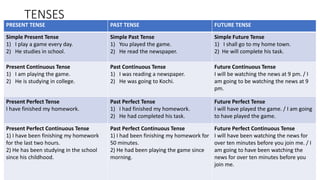
TENSES
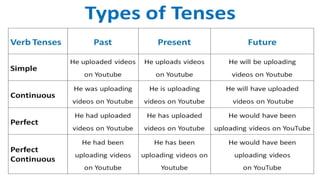
PRESENT TENSE PAST TENSE FUTURE TENSE
Simple Present Tense
1) I play a game every day.
2) He studies in school.
Simple Past Tense
1) You played the game.
2) He read the newspaper.
Simple Future Tense
1) I shall go to my home town.
2) He will complete his task.
Present Continuous Tense
1) I am playing the game.
2) He is studying in college.
Past Continuous Tense
1) I was reading a newspaper.
2) He was going to Kochi.
Future Continuous Tense
I will be watching the news at 9 pm. / I
am going to be watching the news at 9
pm.
Present Perfect Tense
I have finished my homework.
Past Perfect Tense
1) I had finished my homework.
2) He had completed his task.
Future Perfect Tense
I will have played the game. / I am going
to have played the game.
Present Perfect Continuous Tense
1) I have been finishing my homework
for the last two hours.
2) He has been studying in the school
since his childhood.
Past Perfect Continuous Tense
1) I had been finishing my homework for
50 minutes.
2) He had been playing the game since
morning.
Future Perfect Continuous Tense
I will have been watching the news for
over ten minutes before you join me. / I
am going to have been watching the
news for over ten minutes before you
join me.
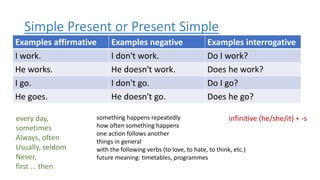
Simple Present or Present Simple
Examples affirmative Examples negative Examples interrogative
I work. I don't work. Do I work?
He works. He doesn't work. Does he work?
I go. I don't go. Do I go?
He goes. He doesn't go. Does he go?
every day,
sometimes
Always, often
Usually, seldom
Never,
first ... then
something happens repeatedly
how often something happens
one action follows another
things in general
with the following verbs (to love, to hate, to think, etc.)
future meaning: timetables, programmes
infinitive (he/she/it) + -s
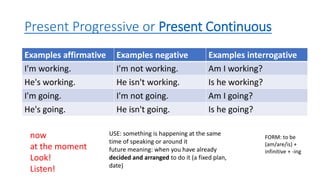
Present Progressive or Present Continuous
Examples affirmative Examples negative Examples interrogative
I'm working. I'm not working. Am I working?
He's working. He isn't working. Is he working?
I'm going. I'm not going. Am I going?
He's going. He isn't going. Is he going?
now
at the moment
Look!
Listen!
USE: something is happening at the same
time of speaking or around it
future meaning: when you have already
decided and arranged to do it (a fixed plan,
date)
FORM: to be
(am/are/is) +
infinitive + -ing
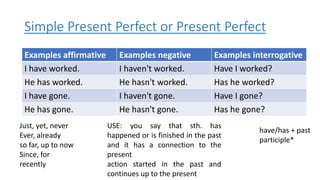
Simple Present Perfect or Present Perfect
Examples affirmative Examples negative Examples interrogative
I have worked. I haven't worked. Have I worked?
He has worked. He hasn't worked. Has he worked?
I have gone. I haven't gone. Have I gone?
He has gone. He hasn't gone. Has he gone?
Just, yet, never
Ever, already
so far, up to now
Since, for
recently
USE: you say that sth. has
happened or is finished in the past
and it has a connection to the
present
action started in the past and
continues up to the present
have/has + past
participle*
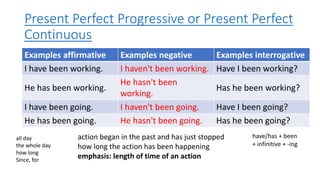
Present Perfect Progressive or Present Perfect
Continuous
Examples affirmative Examples negative Examples interrogative
I have been working. I haven't been working. Have I been working?
He has been working.
He hasn't been
working.
Has he been working?
I have been going. I haven't been going. Have I been going?
He has been going. He hasn't been going. Has he been going?
all day
the whole day
how long
Since, for
action began in the past and has just stopped
how long the action has been happening
emphasis: length of time of an action
have/has + been
+ infinitive + -ing
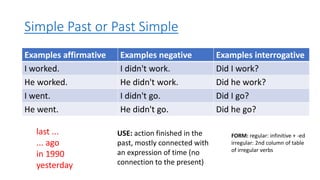
Simple Past or Past Simple
Examples affirmative Examples negative Examples interrogative
I worked. I didn't work. Did I work?
He worked. He didn't work. Did he work?
I went. I didn't go. Did I go?
He went. He didn't go. Did he go?
last ...
... ago
in 1990
yesterday
USE: action finished in the
past, mostly connected with
an expression of time (no
connection to the present)
FORM: regular: infinitive + -ed
irregular: 2nd column of table
of irregular verbs
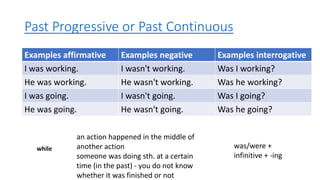
Past Progressive or Past Continuous
Examples affirmative Examples negative Examples interrogative
I was working. I wasn't working. Was I working?
He was working. He wasn't working. Was he working?
I was going. I wasn't going. Was I going?
He was going. He wasn't going. Was he going?
while
an action happened in the middle of
another action
someone was doing sth. at a certain
time (in the past) - you do not know
whether it was finished or not
was/were +
infinitive + -ing
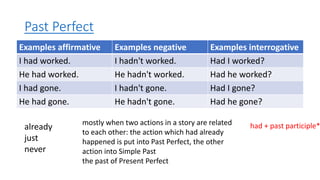
Past Perfect
Examples affirmative Examples negative Examples interrogative
I had worked. I hadn't worked. Had I worked?
He had worked. He hadn't worked. Had he worked?
I had gone. I hadn't gone. Had I gone?
He had gone. He hadn't gone. Had he gone?
already
just
never
mostly when two actions in a story are related
to each other: the action which had already
happened is put into Past Perfect, the other
action into Simple Past
the past of Present Perfect
had + past participle*
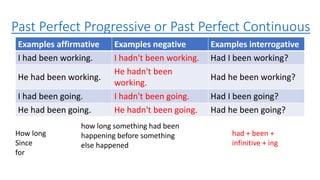
Past Perfect Progressive or Past Perfect Continuous
Examples affirmative Examples negative Examples interrogative
I had been working. I hadn't been working. Had I been working?
He had been working.
He hadn't been
working.
Had he been working?
I had been going. I hadn't been going. Had I been going?
He had been going. He hadn't been going. Had he been going?
How long
Since
for
how long something had been
happening before something
else happened
had + been +
infinitive + ing
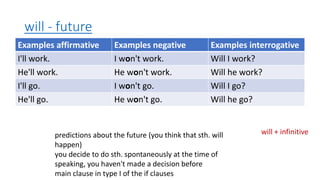
will - future
Examples affirmative Examples negative Examples interrogative
I'll work. I won't work. Will I work?
He'll work. He won't work. Will he work?
I'll go. I won't go. Will I go?
He'll go. He won't go. Will he go?
predictions about the future (you think that sth. will
happen)
you decide to do sth. spontaneously at the time of
speaking, you haven't made a decision before
main clause in type I of the if clauses
will + infinitive
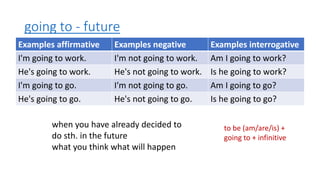
going to - future
Examples affirmative Examples negative Examples interrogative
I'm going to work. I'm not going to work. Am I going to work?
He's going to work. He's not going to work. Is he going to work?
I'm going to go. I'm not going to go. Am I going to go?
He's going to go. He's not going to go. Is he going to go?
when you have already decided to
do sth. in the future
what you think what will happen
to be (am/are/is) +
going to + infinitive
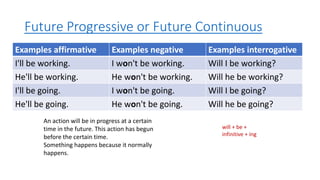
Future Progressive or Future Continuous
Examples affirmative Examples negative Examples interrogative
I'll be working. I won't be working. Will I be working?
He'll be working. He won't be working. Will he be working?
I'll be going. I won't be going. Will I be going?
He'll be going. He won't be going. Will he be going?
An action will be in progress at a certain
time in the future. This action has begun
before the certain time.
Something happens because it normally
happens.
will + be +
infinitive + ing
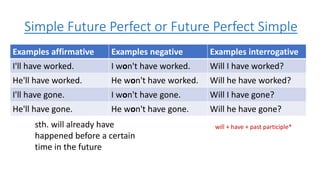
Simple Future Perfect or Future Perfect Simple
Examples affirmative Examples negative Examples interrogative
I'll have worked. I won't have worked. Will I have worked?
He'll have worked. He won't have worked. Will he have worked?
I'll have gone. I won't have gone. Will I have gone?
He'll have gone. He won't have gone. Will he have gone?
sth. will already have
happened before a certain
time in the future
will + have + past participle*
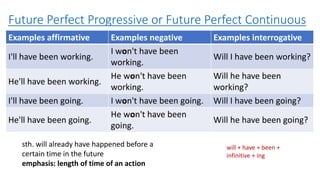
Future Perfect Progressive or Future Perfect Continuous
Examples affirmative Examples negative Examples interrogative
I'll have been working.
I won't have been
working.
Will I have been working?
He'll have been working.
He won't have been
working.
Will he have been
working?
I'll have been going. I won't have been going. Will I have been going?
He'll have been going.
He won't have been
going.
Will he have been going?
sth. will already have happened before a
certain time in the future
emphasis: length of time of an action
will + have + been +
infinitive + ing
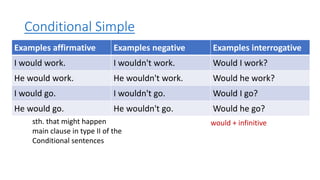
Conditional Simple
Examples affirmative Examples negative Examples interrogative
I would work. I wouldn't work. Would I work?
He would work. He wouldn't work. Would he work?
I would go. I wouldn't go. Would I go?
He would go. He wouldn't go. Would he go?
sth. that might happen
main clause in type II of the
Conditional sentences
would + infinitive
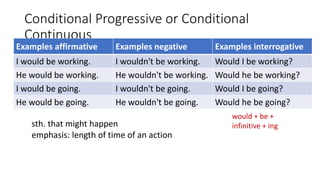
Conditional Progressive or Conditional
Continuous
Examples affirmative Examples negative Examples interrogative
I would be working. I wouldn't be working. Would I be working?
He would be working. He wouldn't be working. Would he be working?
I would be going. I wouldn't be going. Would I be going?
He would be going. He wouldn't be going. Would he be going?
sth. that might happen
emphasis: length of time of an action
would + be +
infinitive + ing
tenses.pptx

tenses.pptx

  • 1.
  • 2.
    TENSES PRESENT TENSE PASTTENSE FUTURE TENSE Simple Present Tense 1) I play a game every day. 2) He studies in school. Simple Past Tense 1) You played the game. 2) He read the newspaper. Simple Future Tense 1) I shall go to my home town. 2) He will complete his task. Present Continuous Tense 1) I am playing the game. 2) He is studying in college. Past Continuous Tense 1) I was reading a newspaper. 2) He was going to Kochi. Future Continuous Tense I will be watching the news at 9 pm. / I am going to be watching the news at 9 pm. Present Perfect Tense I have finished my homework. Past Perfect Tense 1) I had finished my homework. 2) He had completed his task. Future Perfect Tense I will have played the game. / I am going to have played the game. Present Perfect Continuous Tense 1) I have been finishing my homework for the last two hours. 2) He has been studying in the school since his childhood. Past Perfect Continuous Tense 1) I had been finishing my homework for 50 minutes. 2) He had been playing the game since morning. Future Perfect Continuous Tense I will have been watching the news for over ten minutes before you join me. / I am going to have been watching the news for over ten minutes before you join me.
  • 4.
    Simple Present orPresent Simple Examples affirmative Examples negative Examples interrogative I work. I don't work. Do I work? He works. He doesn't work. Does he work? I go. I don't go. Do I go? He goes. He doesn't go. Does he go? every day, sometimes Always, often Usually, seldom Never, first ... then something happens repeatedly how often something happens one action follows another things in general with the following verbs (to love, to hate, to think, etc.) future meaning: timetables, programmes infinitive (he/she/it) + -s
  • 5.
    Present Progressive orPresent Continuous Examples affirmative Examples negative Examples interrogative I'm working. I'm not working. Am I working? He's working. He isn't working. Is he working? I'm going. I'm not going. Am I going? He's going. He isn't going. Is he going? now at the moment Look! Listen! USE: something is happening at the same time of speaking or around it future meaning: when you have already decided and arranged to do it (a fixed plan, date) FORM: to be (am/are/is) + infinitive + -ing
  • 6.
    Simple Present Perfector Present Perfect Examples affirmative Examples negative Examples interrogative I have worked. I haven't worked. Have I worked? He has worked. He hasn't worked. Has he worked? I have gone. I haven't gone. Have I gone? He has gone. He hasn't gone. Has he gone? Just, yet, never Ever, already so far, up to now Since, for recently USE: you say that sth. has happened or is finished in the past and it has a connection to the present action started in the past and continues up to the present have/has + past participle*
  • 7.
    Present Perfect Progressiveor Present Perfect Continuous Examples affirmative Examples negative Examples interrogative I have been working. I haven't been working. Have I been working? He has been working. He hasn't been working. Has he been working? I have been going. I haven't been going. Have I been going? He has been going. He hasn't been going. Has he been going? all day the whole day how long Since, for action began in the past and has just stopped how long the action has been happening emphasis: length of time of an action have/has + been + infinitive + -ing
  • 8.
    Simple Past orPast Simple Examples affirmative Examples negative Examples interrogative I worked. I didn't work. Did I work? He worked. He didn't work. Did he work? I went. I didn't go. Did I go? He went. He didn't go. Did he go? last ... ... ago in 1990 yesterday USE: action finished in the past, mostly connected with an expression of time (no connection to the present) FORM: regular: infinitive + -ed irregular: 2nd column of table of irregular verbs
  • 9.
    Past Progressive orPast Continuous Examples affirmative Examples negative Examples interrogative I was working. I wasn't working. Was I working? He was working. He wasn't working. Was he working? I was going. I wasn't going. Was I going? He was going. He wasn't going. Was he going? while an action happened in the middle of another action someone was doing sth. at a certain time (in the past) - you do not know whether it was finished or not was/were + infinitive + -ing
  • 10.
    Past Perfect Examples affirmativeExamples negative Examples interrogative I had worked. I hadn't worked. Had I worked? He had worked. He hadn't worked. Had he worked? I had gone. I hadn't gone. Had I gone? He had gone. He hadn't gone. Had he gone? already just never mostly when two actions in a story are related to each other: the action which had already happened is put into Past Perfect, the other action into Simple Past the past of Present Perfect had + past participle*
  • 11.
    Past Perfect Progressiveor Past Perfect Continuous Examples affirmative Examples negative Examples interrogative I had been working. I hadn't been working. Had I been working? He had been working. He hadn't been working. Had he been working? I had been going. I hadn't been going. Had I been going? He had been going. He hadn't been going. Had he been going? How long Since for how long something had been happening before something else happened had + been + infinitive + ing
  • 12.
    will - future Examplesaffirmative Examples negative Examples interrogative I'll work. I won't work. Will I work? He'll work. He won't work. Will he work? I'll go. I won't go. Will I go? He'll go. He won't go. Will he go? predictions about the future (you think that sth. will happen) you decide to do sth. spontaneously at the time of speaking, you haven't made a decision before main clause in type I of the if clauses will + infinitive
  • 13.
    going to -future Examples affirmative Examples negative Examples interrogative I'm going to work. I'm not going to work. Am I going to work? He's going to work. He's not going to work. Is he going to work? I'm going to go. I'm not going to go. Am I going to go? He's going to go. He's not going to go. Is he going to go? when you have already decided to do sth. in the future what you think what will happen to be (am/are/is) + going to + infinitive
  • 14.
    Future Progressive orFuture Continuous Examples affirmative Examples negative Examples interrogative I'll be working. I won't be working. Will I be working? He'll be working. He won't be working. Will he be working? I'll be going. I won't be going. Will I be going? He'll be going. He won't be going. Will he be going? An action will be in progress at a certain time in the future. This action has begun before the certain time. Something happens because it normally happens. will + be + infinitive + ing
  • 15.
    Simple Future Perfector Future Perfect Simple Examples affirmative Examples negative Examples interrogative I'll have worked. I won't have worked. Will I have worked? He'll have worked. He won't have worked. Will he have worked? I'll have gone. I won't have gone. Will I have gone? He'll have gone. He won't have gone. Will he have gone? sth. will already have happened before a certain time in the future will + have + past participle*
  • 16.
    Future Perfect Progressiveor Future Perfect Continuous Examples affirmative Examples negative Examples interrogative I'll have been working. I won't have been working. Will I have been working? He'll have been working. He won't have been working. Will he have been working? I'll have been going. I won't have been going. Will I have been going? He'll have been going. He won't have been going. Will he have been going? sth. will already have happened before a certain time in the future emphasis: length of time of an action will + have + been + infinitive + ing
  • 17.
    Conditional Simple Examples affirmativeExamples negative Examples interrogative I would work. I wouldn't work. Would I work? He would work. He wouldn't work. Would he work? I would go. I wouldn't go. Would I go? He would go. He wouldn't go. Would he go? sth. that might happen main clause in type II of the Conditional sentences would + infinitive
  • 18.
    Conditional Progressive orConditional Continuous Examples affirmative Examples negative Examples interrogative I would be working. I wouldn't be working. Would I be working? He would be working. He wouldn't be working. Would he be working? I would be going. I wouldn't be going. Would I be going? He would be going. He wouldn't be going. Would he be going? sth. that might happen emphasis: length of time of an action would + be + infinitive + ing