


TEMPERATURE-
HUMIDITY
CONTROLLER WITH
FIRE DETECTOR
Made By:-ANJALI SINGH
OBJECTIVE
To decrease the temperature when the temperature set
point is crossed.
It decreases the moisture content in the room.
It increases temperature when the temperature set
point is crossed.
It controls the fire and alarms the people.
It cuts off the gas supply in case of fire which can be
uncontrollable up to an extent.
It also provide a facility in which cooling, heating
process can be more effective by closing the windows.
WHAT IS CONTROLLER
A controller, in a computing context, is a hardware
device or a software program that manages or
directs the flow of data between two entities.
In computing, controllers may be cards, microchips
or separate hardware devices for the control of a
peripheral device.
In a general sense, a controller can be thought of as
something or someone that interfaces between two
systems and manages communications between
them.
TYPES OF CONTROLLER
Temperature Controller
Humidity Controller
TEMPERATURE CONTR0LLER
An on-off controller is the simplest form of
temperature control device.
The output from the device is either on or off, with no
middle state.
An on-off controller will switch the output only when
the temperature crosses the set point.
For heating control, the output is on when the
temperature is below the set point and off above set
point.
HUMIDITY CONTROLLER
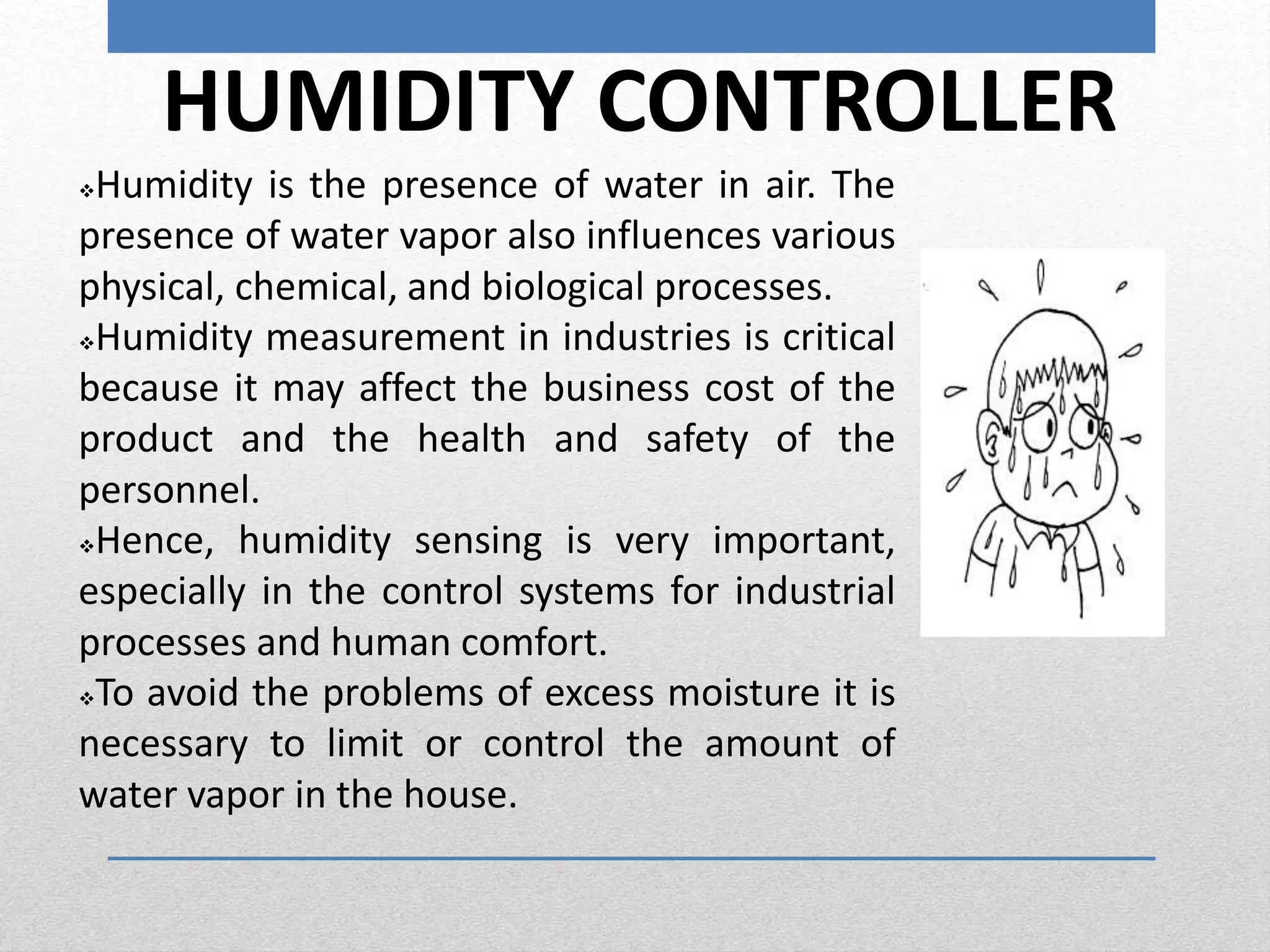
Humidity is the presence of water in air. The
presence of water vapor also influences various
physical, chemical, and biological processes.
Humidity measurement in industries is critical
because it may affect the business cost of the
product and the health and safety of the
personnel.
Hence, humidity sensing is very important,
especially in the control systems for industrial
processes and human comfort.
To avoid the problems of excess moisture it is
necessary to limit or control the amount of
water vapor in the house.
• Measurement - Relative humidity (RH) is the
amount of water vapor in the air compared with
the amount of vapor needed to make the air
saturated at the air's current temperature
Example:
At 3 p.m. the air has 9 grams of water vapor per cubic meter of
air. We divide 9 by 30 and multiply by 100 to get a relative
humidity of 30%
What is Relative Humidity
(RH)
WHAT IS DETECTOR
A DETECTOR is a device or instrument designed to
detect the presence of a particular object or substance
A heat detector is designed to respond when the
convected thermal energy of a fire increases the
temperature of a heat sensitive element.
 The thermal mass and conductivity of the element
regulate the rate flow of heat into the element.
WHAT ARE SENSORS
A sensor is a device that detects events or changes in
quantities and provides a corresponding output,
generally as an electrical or optical signal.
A sensor's sensitivity indicates how much the sensor's
output changes when the input quantity being
measured changes.
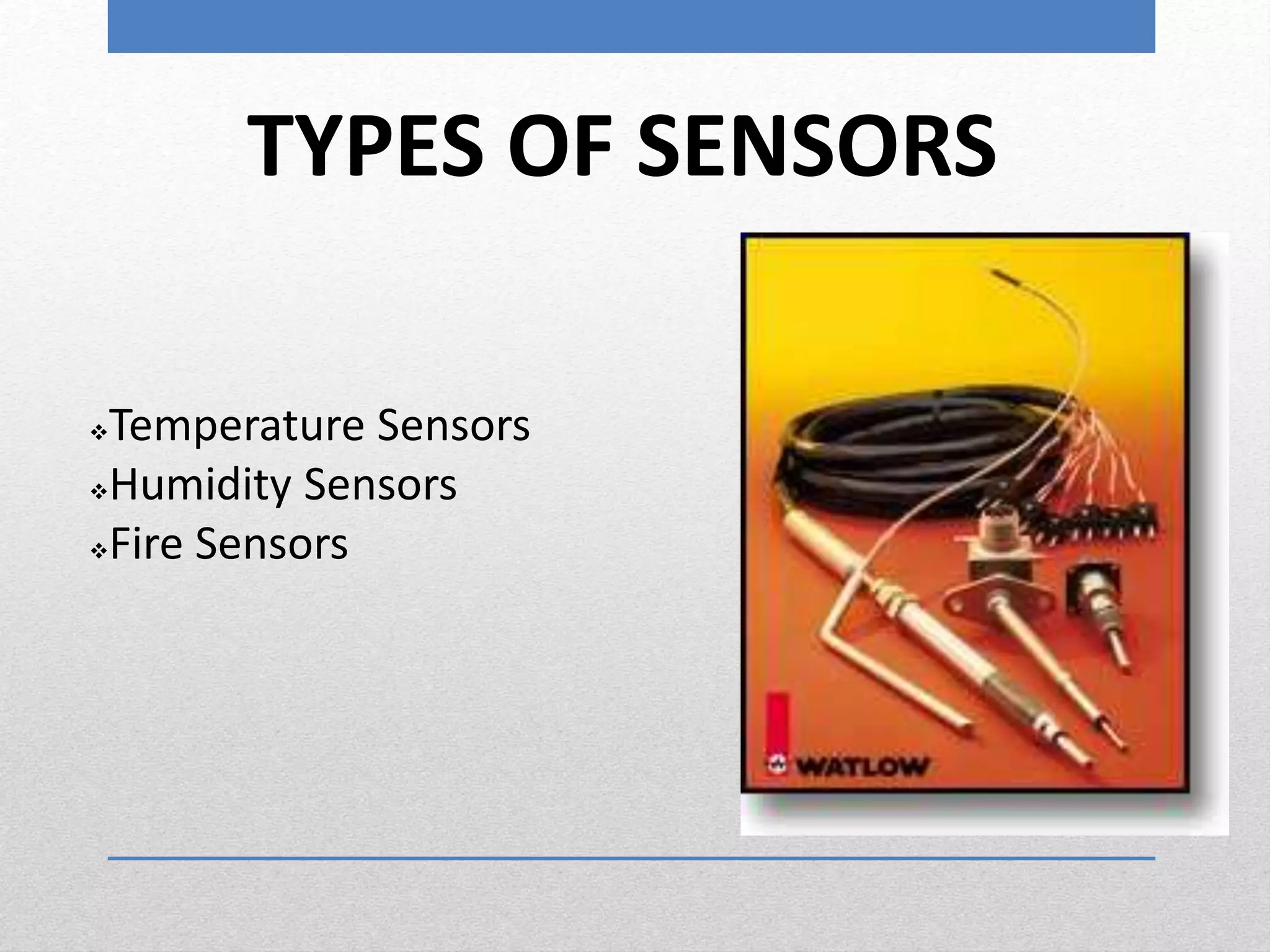
TYPES OF SENSORS
Temperature Sensors
Humidity Sensors
Fire Sensors
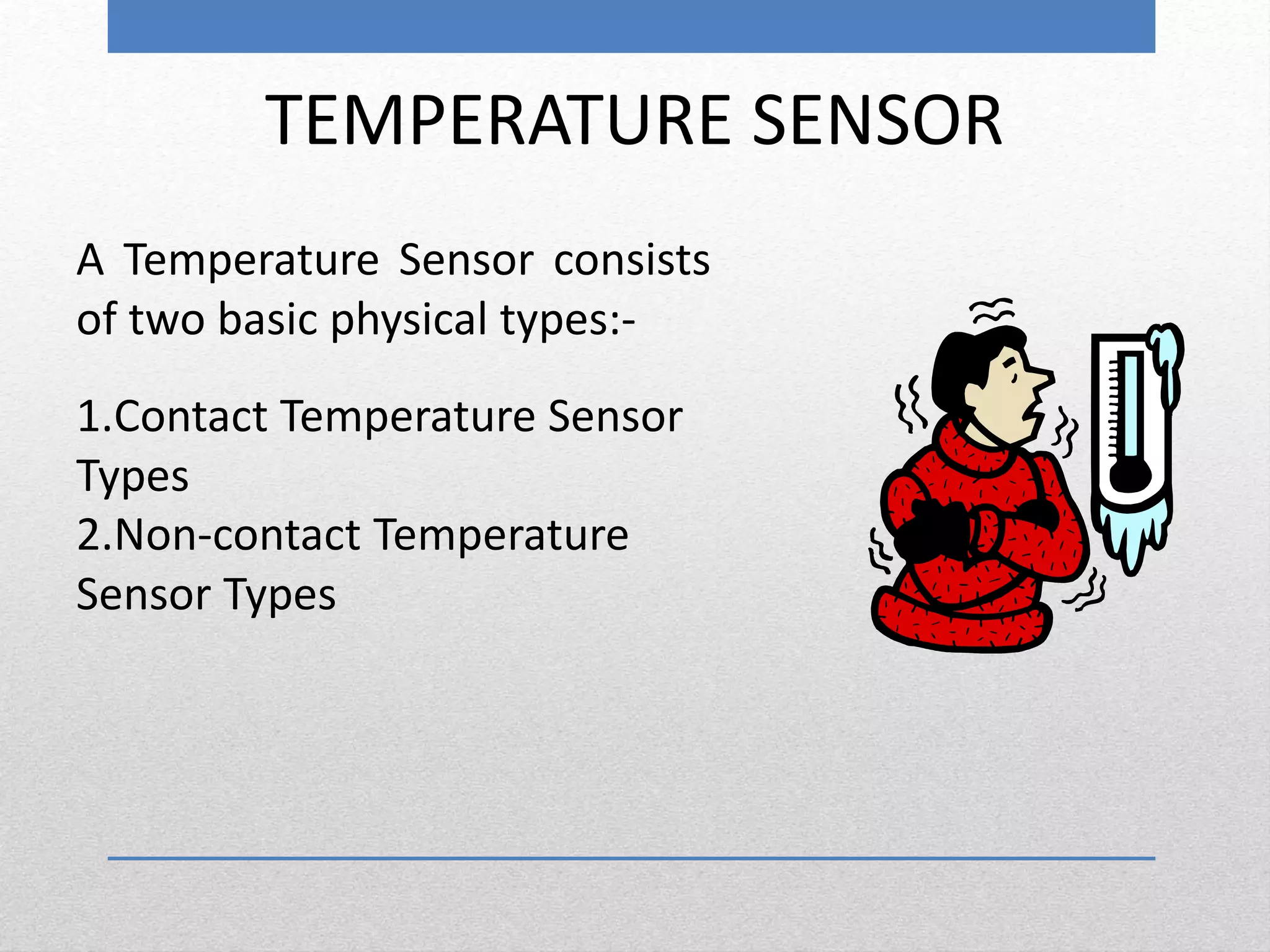
TEMPERATURE SENSOR
A Temperature Sensor consists
of two basic physical types:-
1.Contact Temperature Sensor
Types
2.Non-contact Temperature
Sensor Types
1. Contact Temperature Sensor Types –
These types of temperature sensor are required to be in
physical contact with the object being sensed and use
conduction to monitor changes in temperature.
They can be used to detect solids, liquids or gases over a wide
range of temperatures.
2. Non-contact Temperature Sensor Types –
These types of temperature sensor use convection and
radiation to monitor changes in temperature.
They can be used to detect liquids and gases that emit radiant
energy as heat rises and cold settles to the bottom in
convection currents or detect the radiant energy being
transmitted from an object in the form of infra-red radiation
(the sun).
HUMIDITY SENSOR
A humidity sensor senses relative
humidity. This means that it measures
both air temperature and moisture.
Relative humidity, expressed as a
percent, is the ratio of actual moisture
in the air to the highest amount of
moisture air at that temperature can
hold.
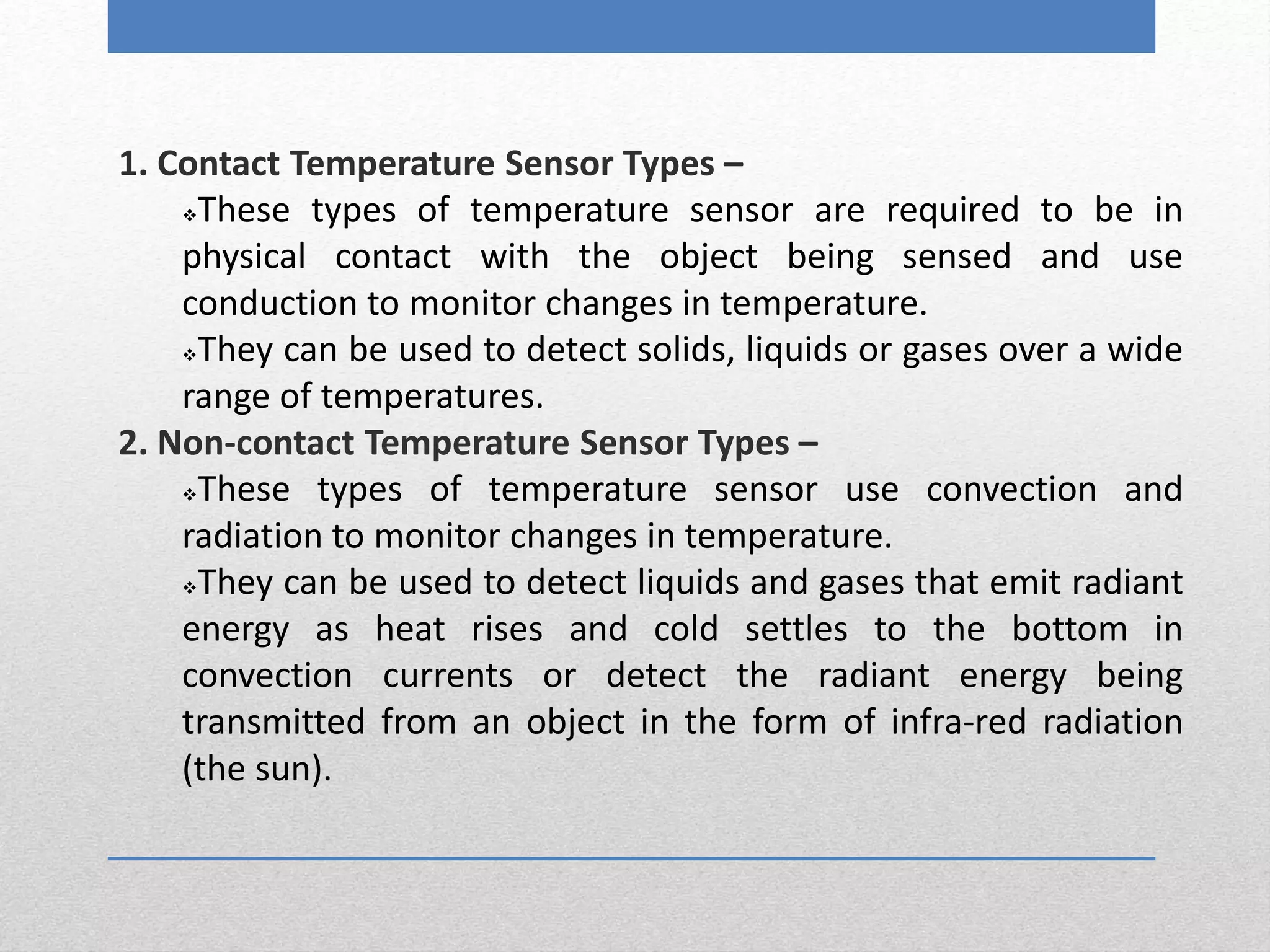
Sensirion
( SHT Series )
The warmer the air is, the more
moisture it can hold, so relative
humidity changes with fluctuations in
temperature.
A humidity sensor, also called a
hygrometer, measures and regularly
reports the relative humidity in the air.
They may be used in homes for people
with illnesses affected by humidity; as
part of home heating, ventilating, and
air conditioning (HVAC) systems;
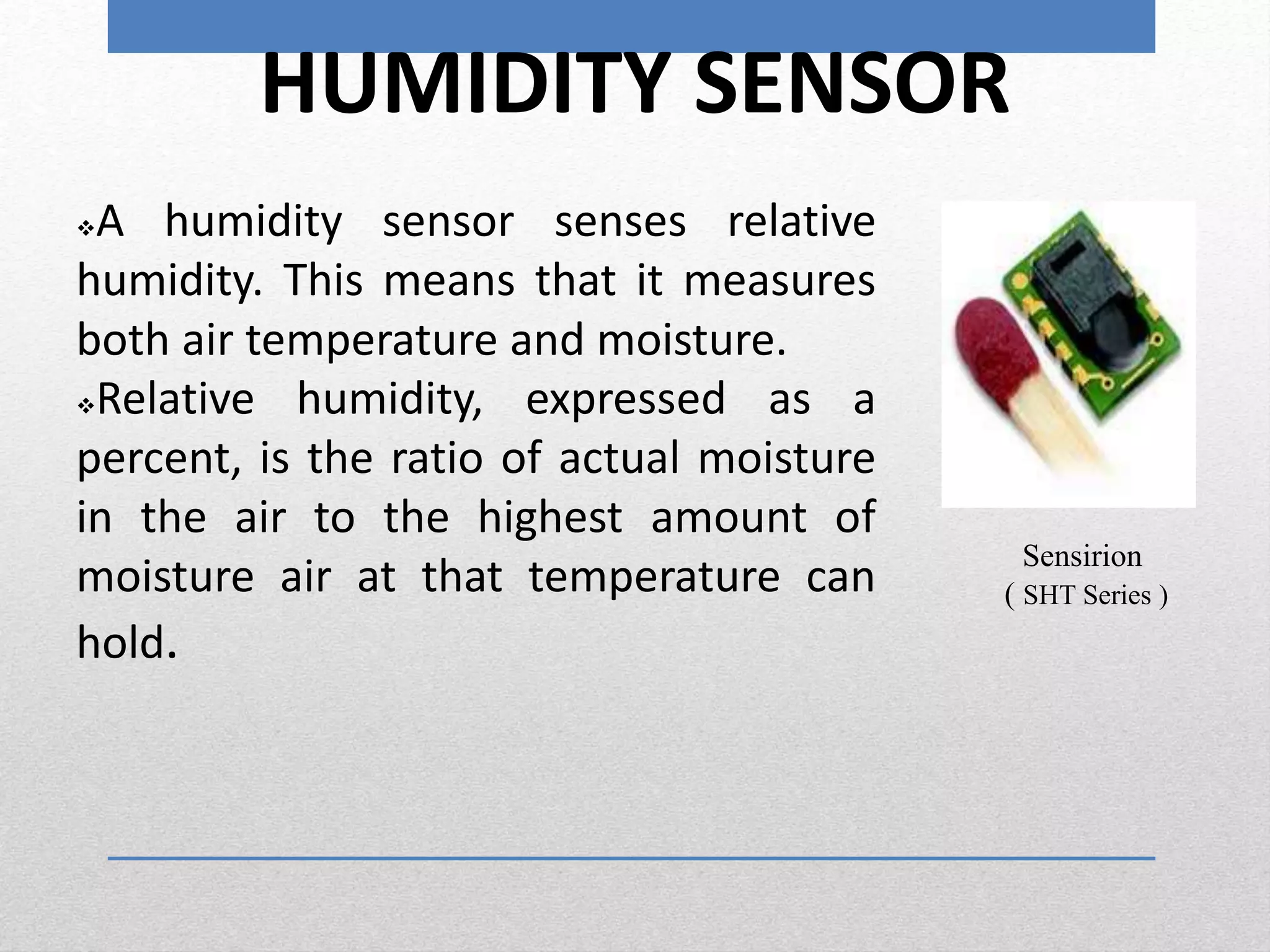
Honeywell
( HIH series )
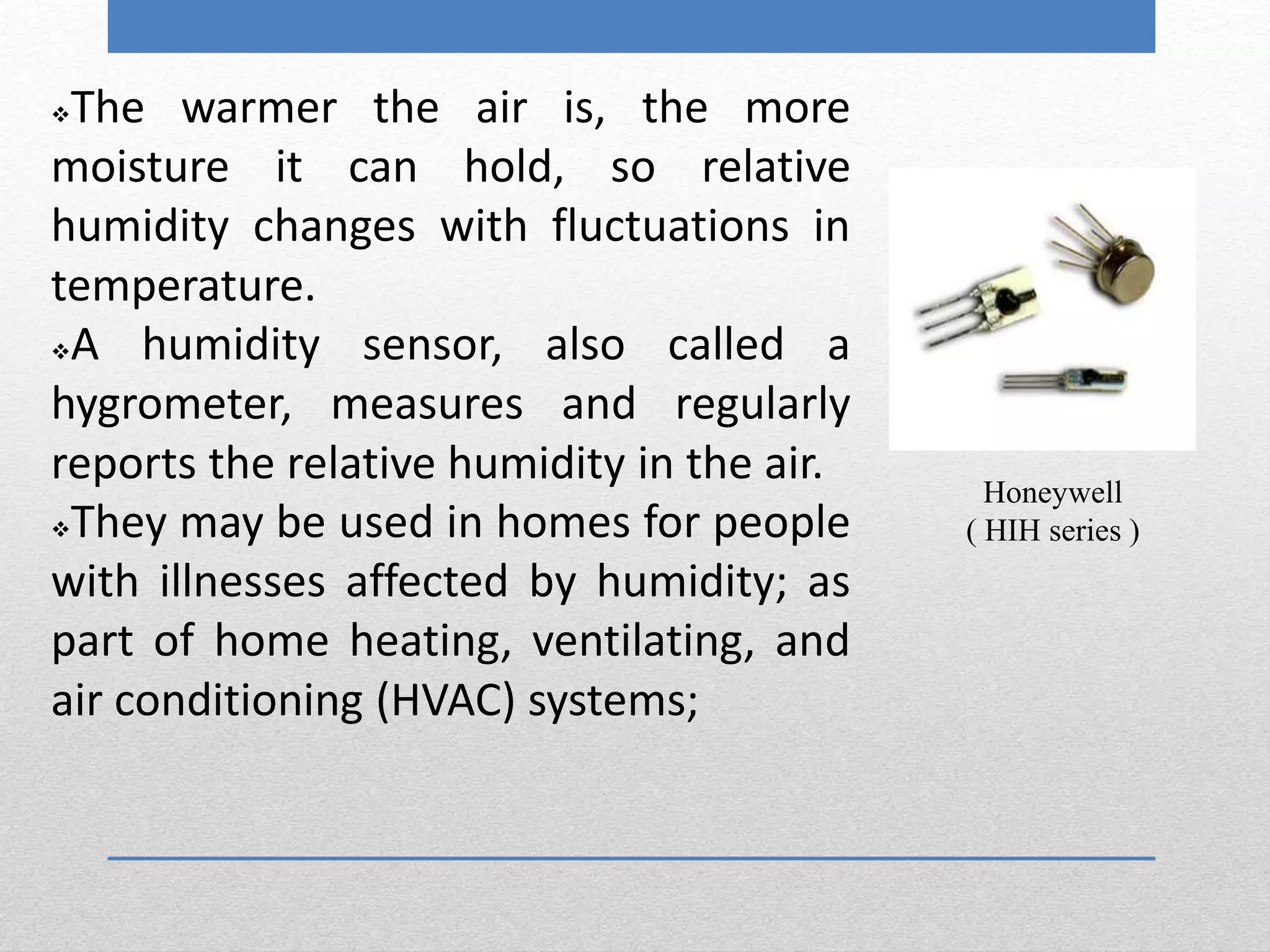
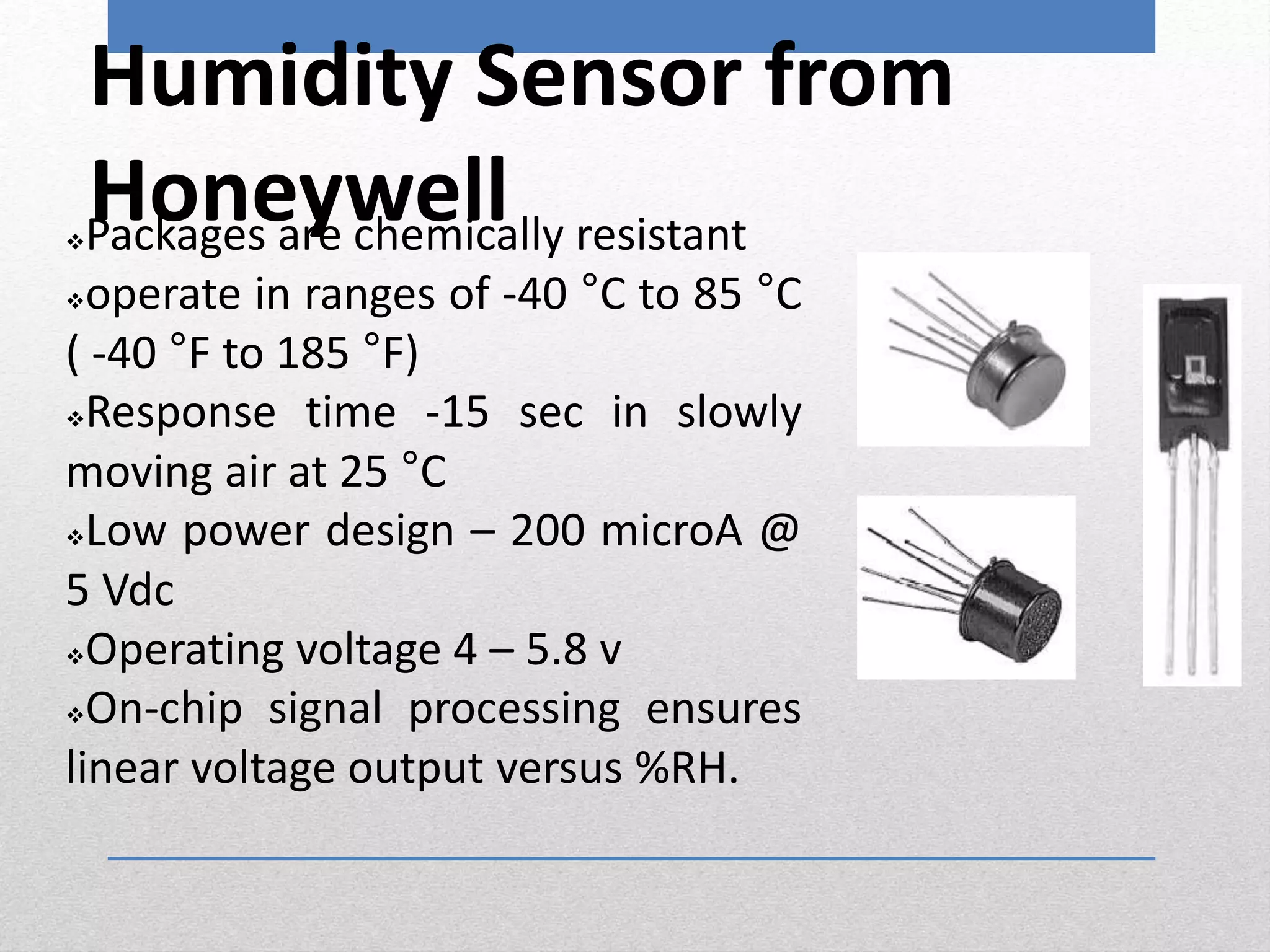
Humidity Sensor from
HoneywellPackages are chemically resistant
operate in ranges of -40 °C to 85 °C
( -40 °F to 185 °F)
Response time -15 sec in slowly
moving air at 25 °C
Low power design – 200 microA @
5 Vdc
Operating voltage 4 – 5.8 v
On-chip signal processing ensures
linear voltage output versus %RH.
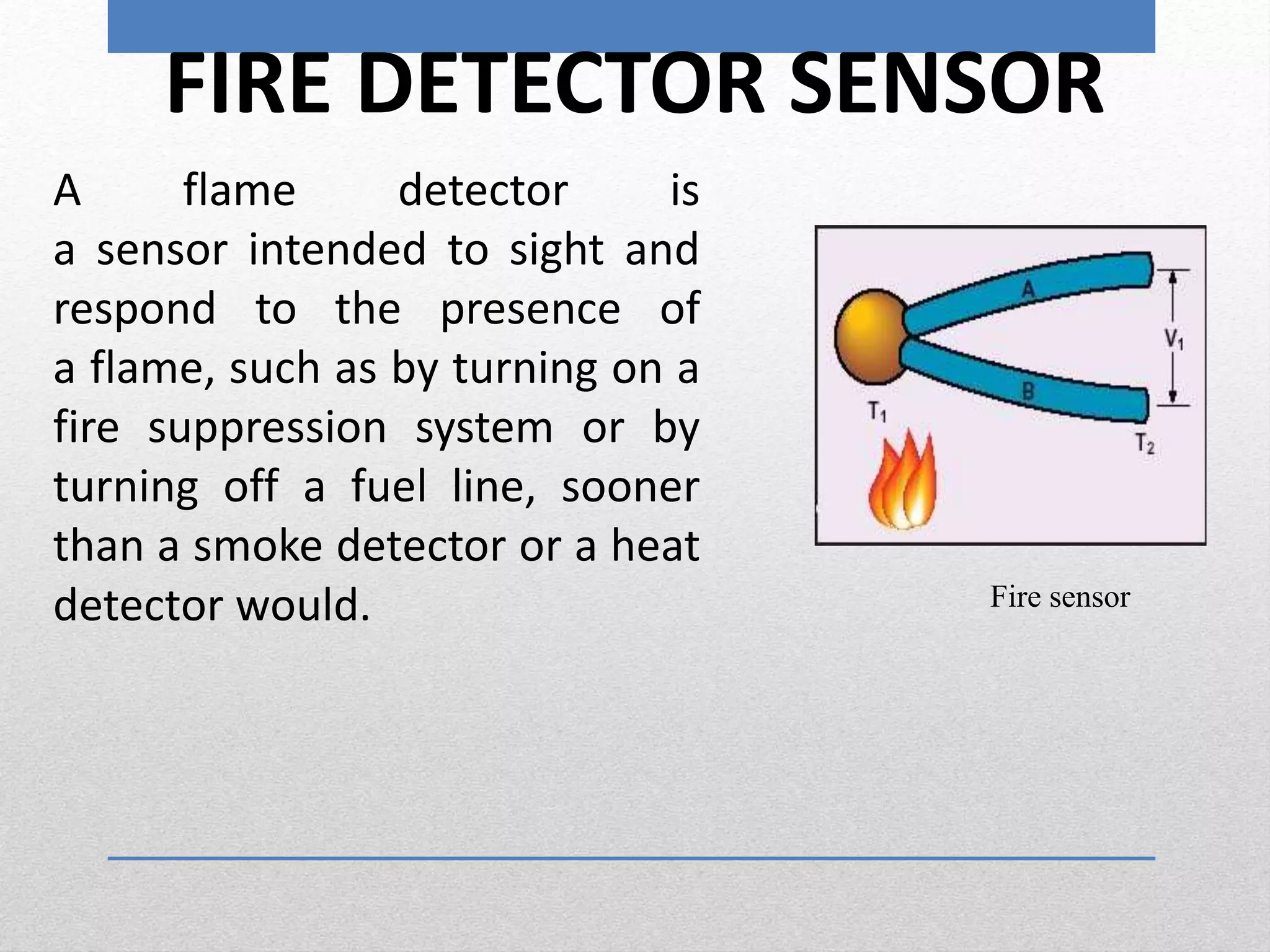
FIRE DETECTOR SENSOR
A flame detector is
a sensor intended to sight and
respond to the presence of
a flame, such as by turning on a
fire suppression system or by
turning off a fuel line, sooner
than a smoke detector or a heat
detector would. Fire sensor
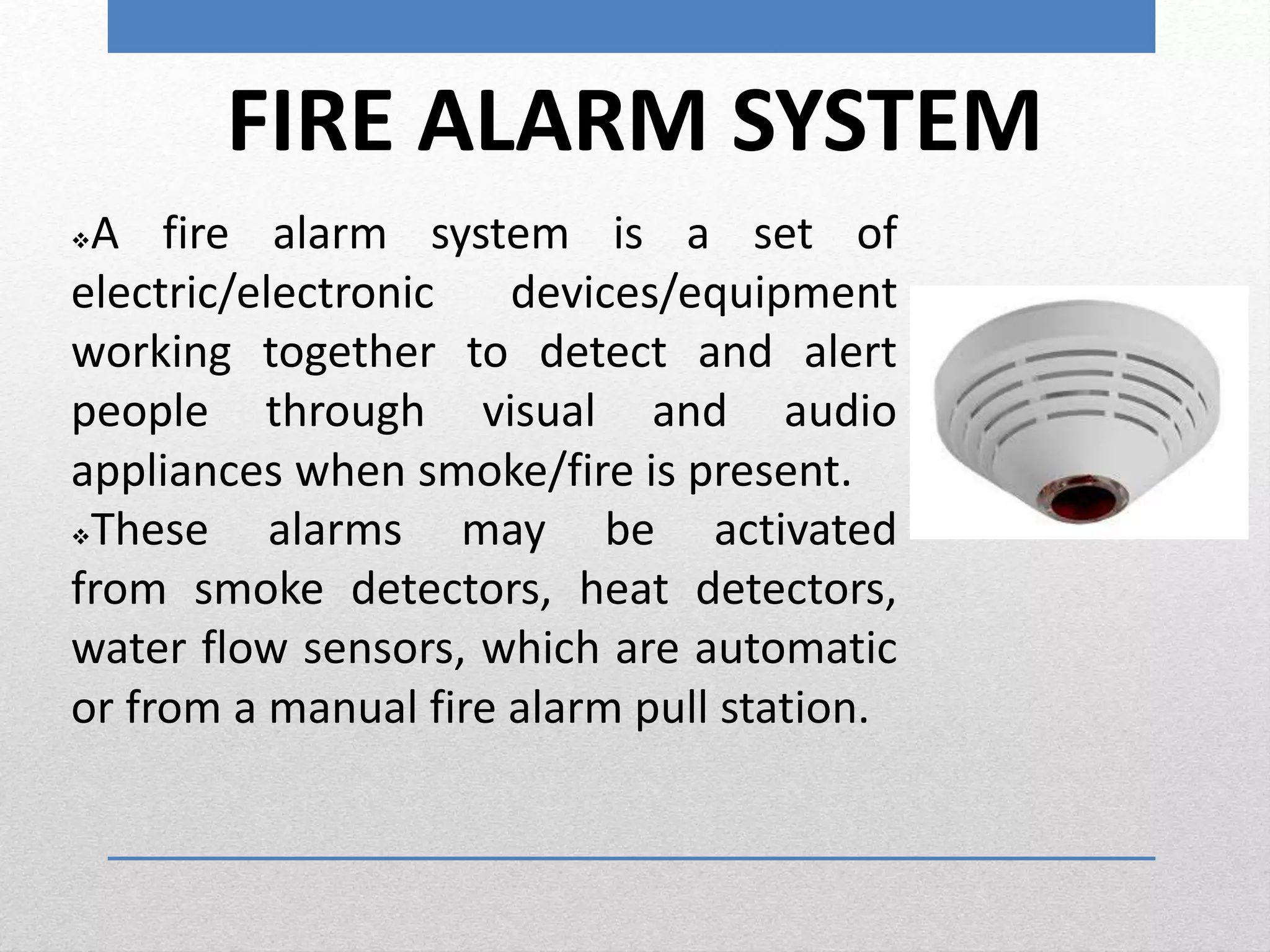
FIRE ALARM SYSTEM
A fire alarm system is a set of
electric/electronic devices/equipment
working together to detect and alert
people through visual and audio
appliances when smoke/fire is present.
These alarms may be activated
from smoke detectors, heat detectors,
water flow sensors, which are automatic
or from a manual fire alarm pull station.
B
L
O
C
K
D
I
A
G
R
A
M
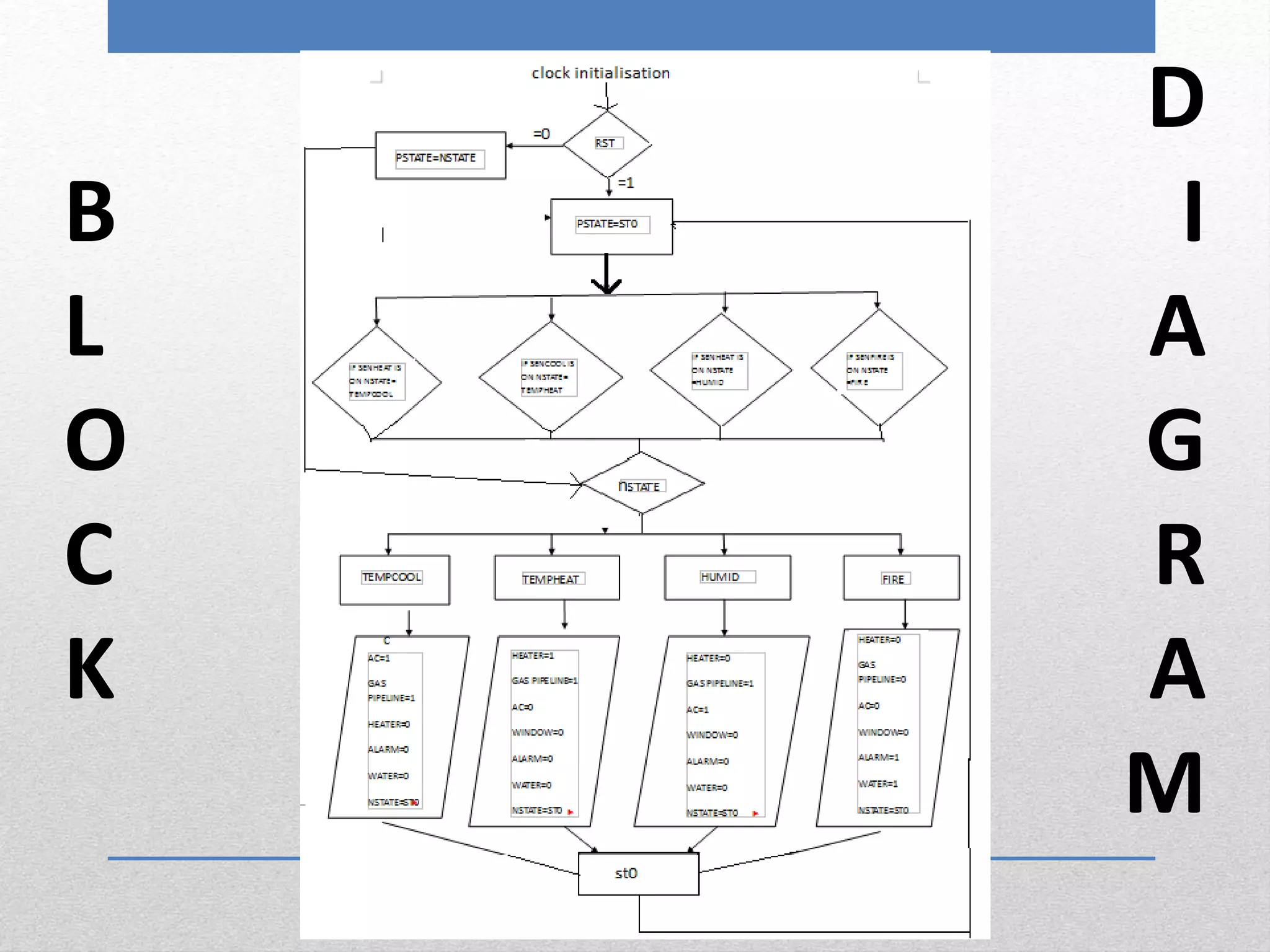
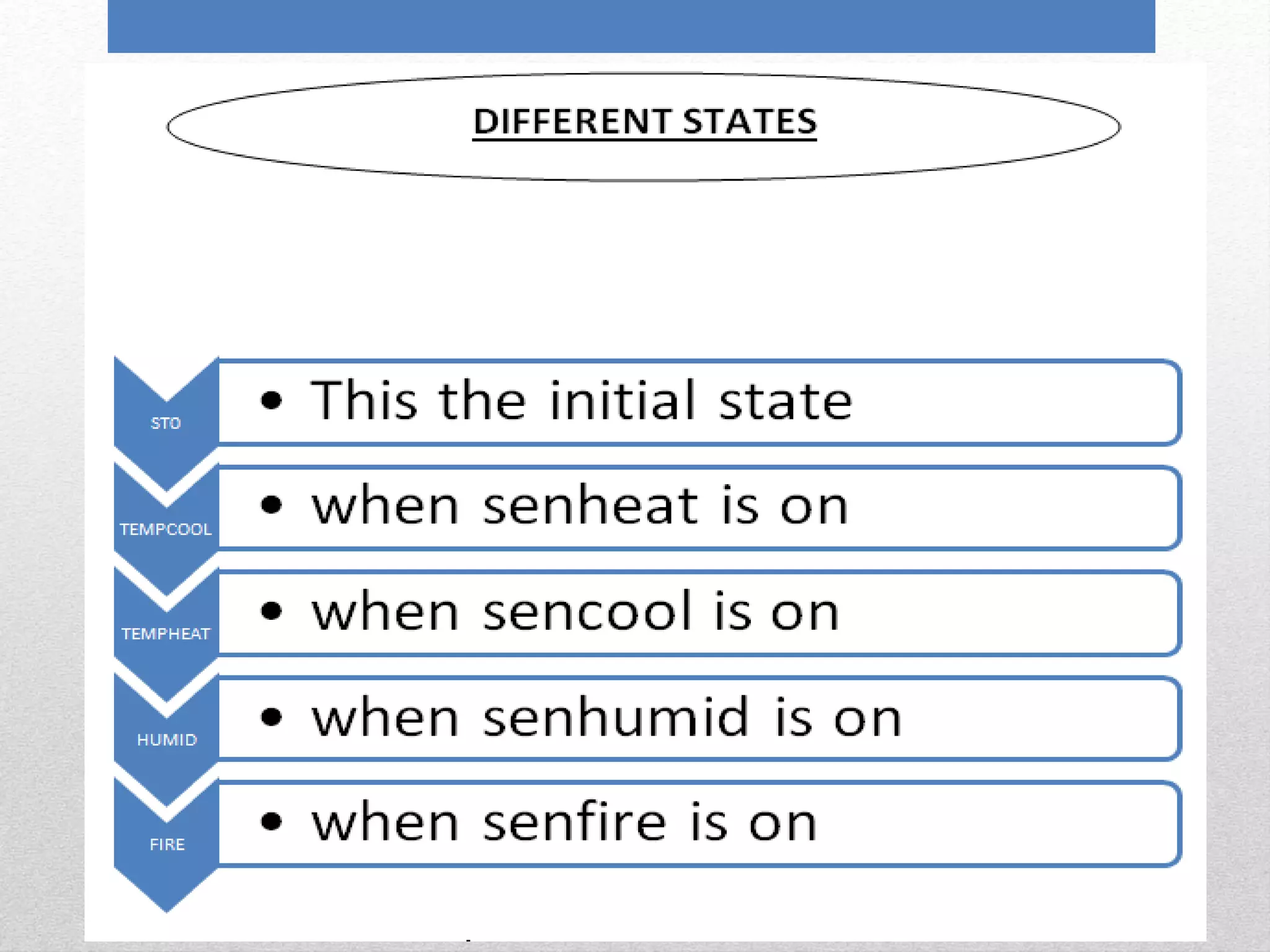
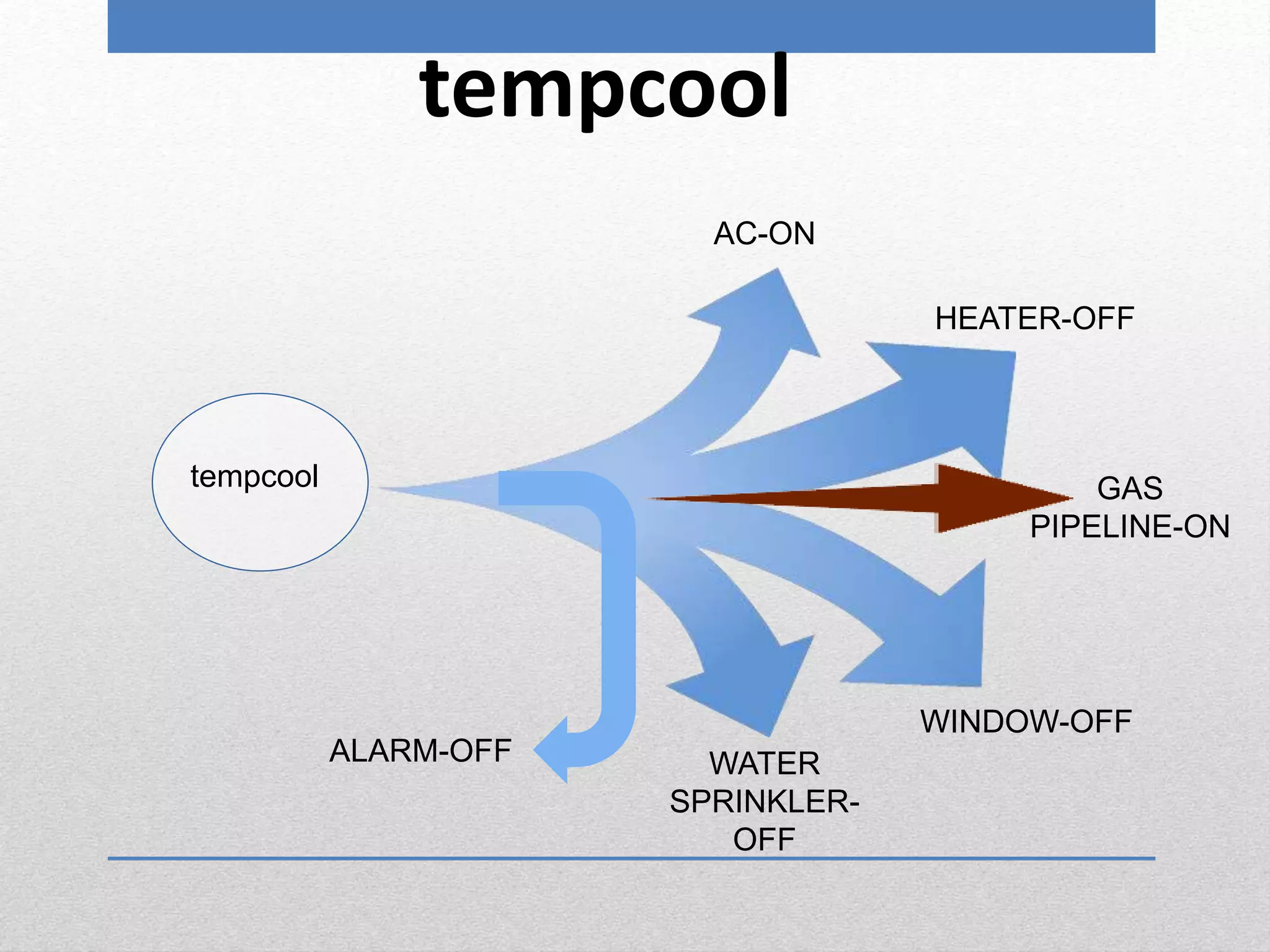
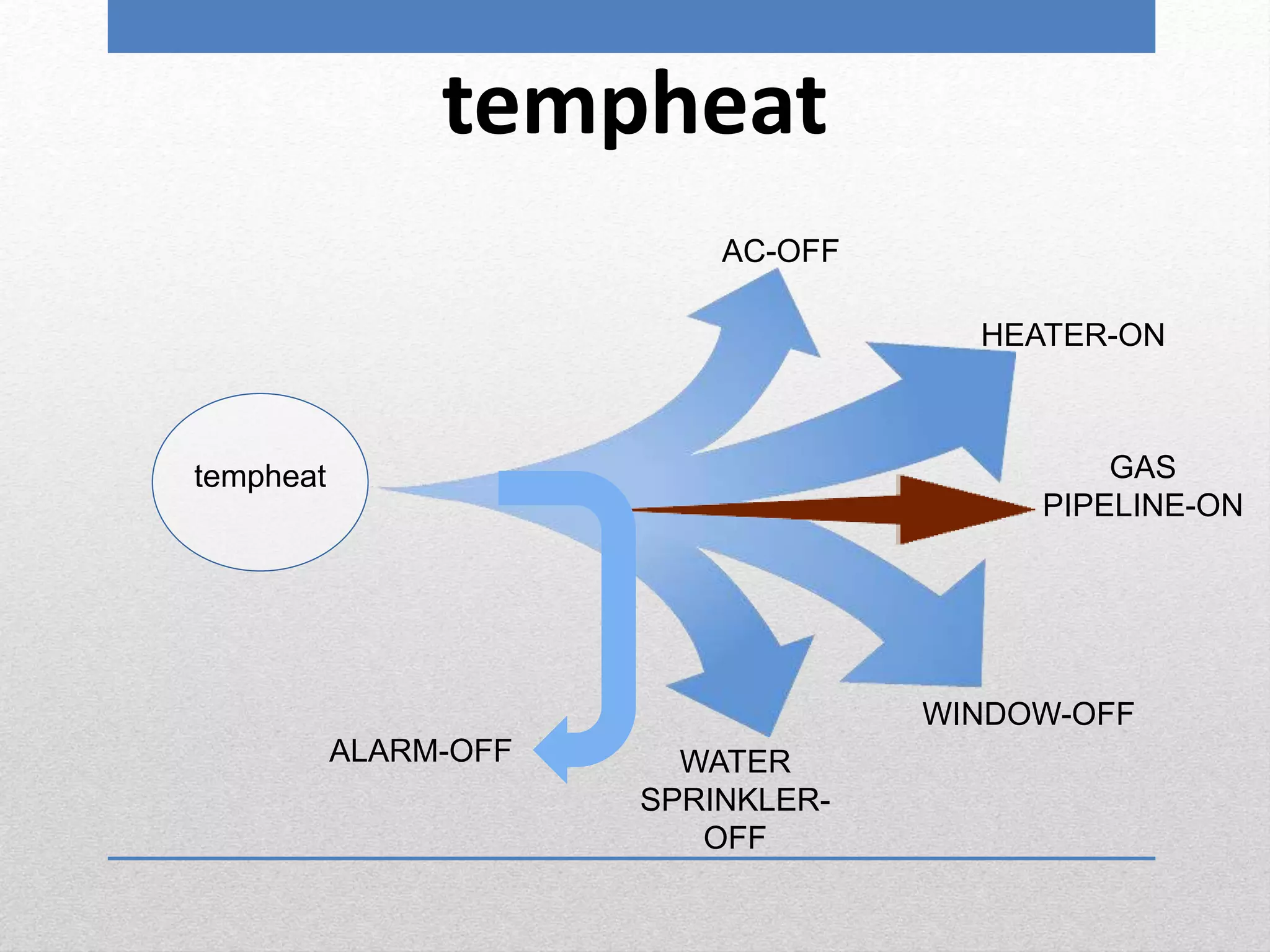
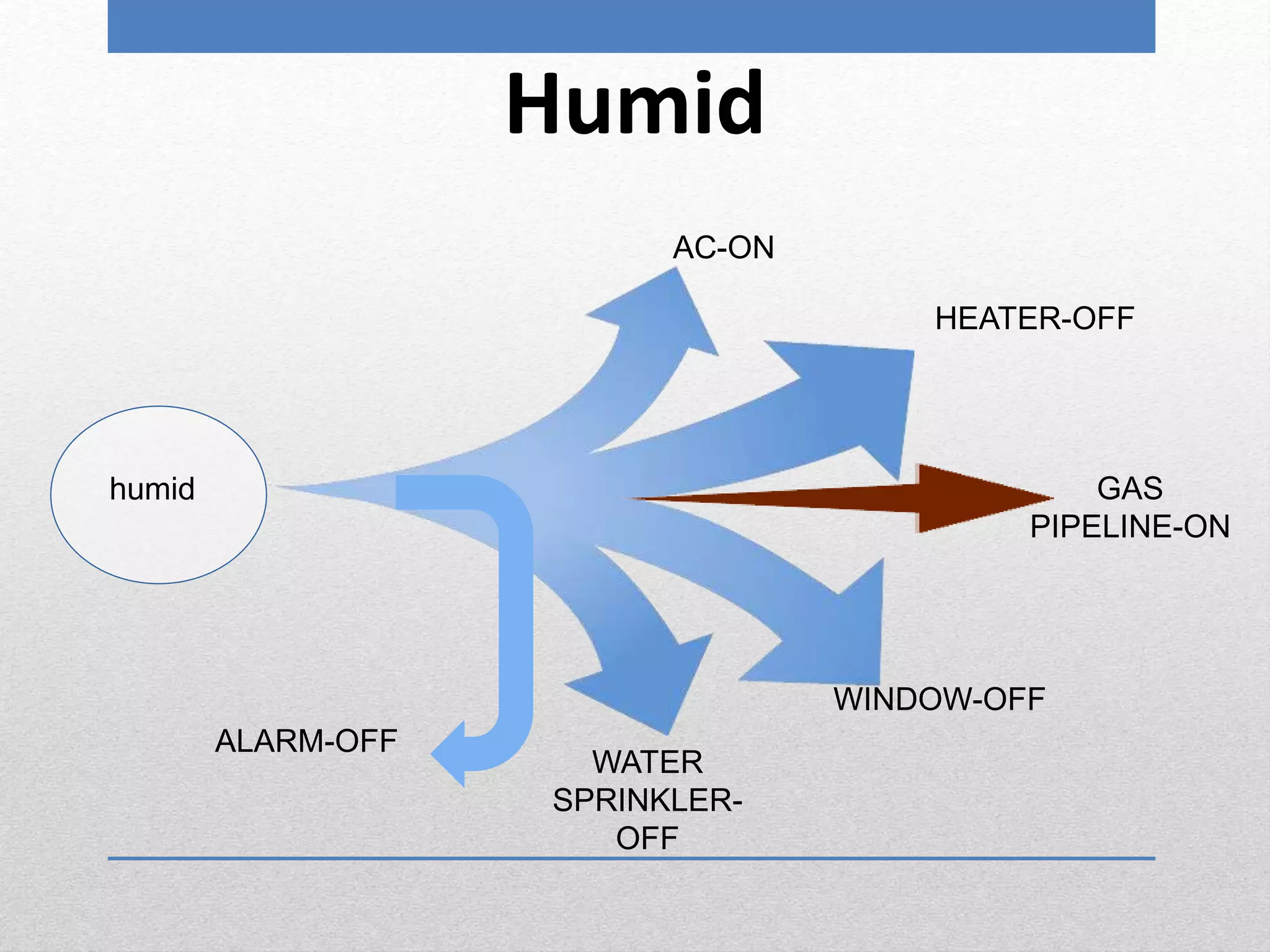
What these states
functions
tempcool
HEATER-OFF
AC-ON
GAS
PIPELINE-ON
WINDOW-OFF
WATER
SPRINKLER-
OFF
tempcool
ALARM-OFF
tempheat
tempheat
AC-OFF
GAS
PIPELINE-ON
WINDOW-OFF
WATER
SPRINKLER-
OFF
HEATER-ON
ALARM-OFF
Humid
humid
AC-ON
WINDOW-OFF
GAS
PIPELINE-ON
HEATER-OFF
WATER
SPRINKLER-
OFF
ALARM-OFF
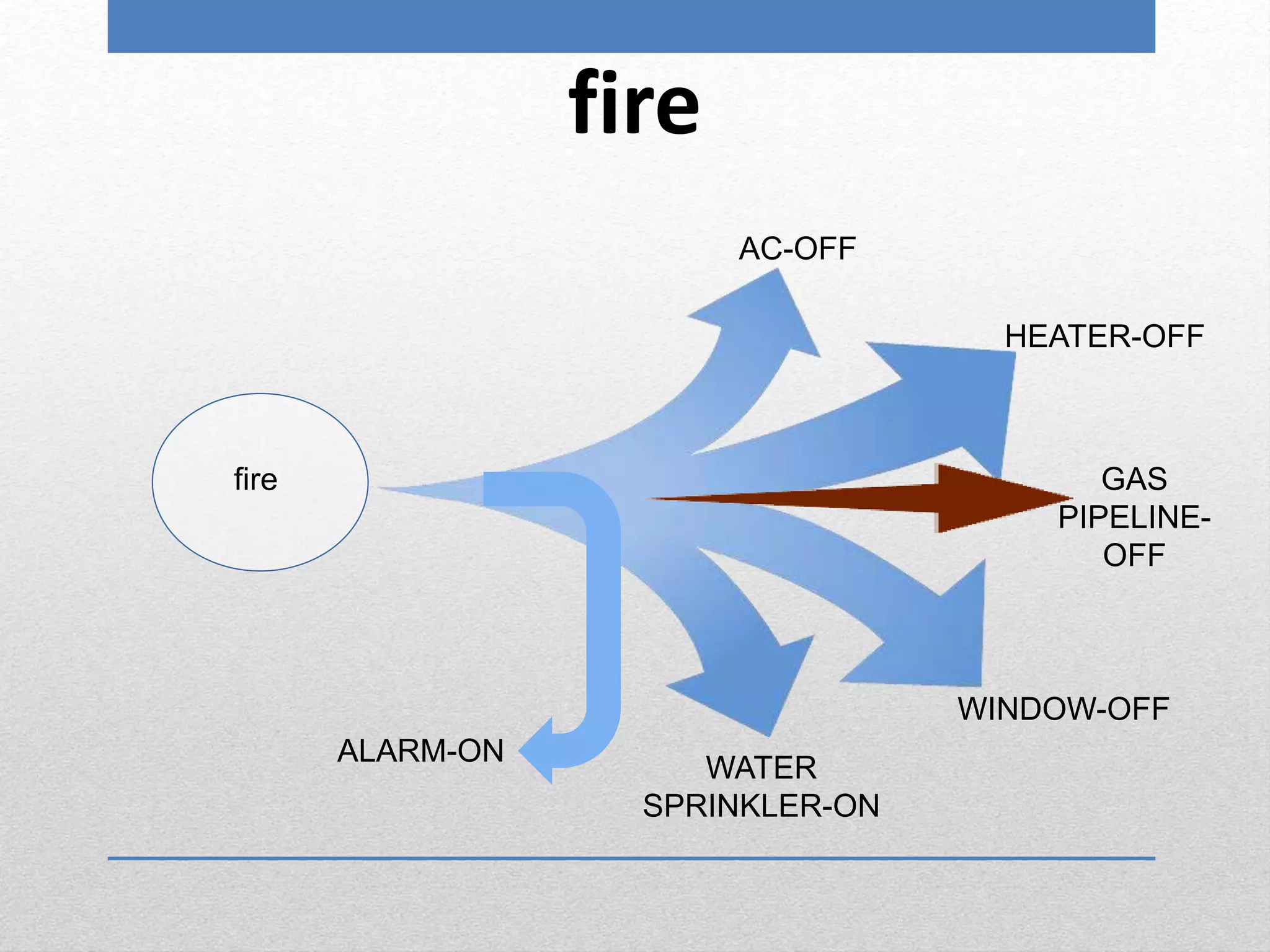
fire
fire GAS
PIPELINE-
OFF
WINDOW-OFF
HEATER-OFF
WATER
SPRINKLER-ON
AC-OFF
ALARM-ON
Application
Hospitals
Restaurants
Cinema Theaters
Schools and educational institutions
Hotels
Offices
Railways and metro services
Malls and shopping complexes
Housing societies
REFRENCES
www.verilog.com
www.wikipedia.com
www.google.com
www.altera.com
vol.verilog.com
http://content.honeywell.com
www.sensirion.com
TEMPERATURE-HUMIDITY CONTROLLER WITH FIRE DETECTOR

TEMPERATURE-HUMIDITY CONTROLLER WITH FIRE DETECTOR

  • 1.
  • 2.
    OBJECTIVE To decrease thetemperature when the temperature set point is crossed. It decreases the moisture content in the room. It increases temperature when the temperature set point is crossed. It controls the fire and alarms the people. It cuts off the gas supply in case of fire which can be uncontrollable up to an extent. It also provide a facility in which cooling, heating process can be more effective by closing the windows.
  • 3.
  • 4.
    A controller, ina computing context, is a hardware device or a software program that manages or directs the flow of data between two entities. In computing, controllers may be cards, microchips or separate hardware devices for the control of a peripheral device. In a general sense, a controller can be thought of as something or someone that interfaces between two systems and manages communications between them.
  • 5.
    TYPES OF CONTROLLER TemperatureController Humidity Controller
  • 6.
    TEMPERATURE CONTR0LLER An on-offcontroller is the simplest form of temperature control device. The output from the device is either on or off, with no middle state. An on-off controller will switch the output only when the temperature crosses the set point. For heating control, the output is on when the temperature is below the set point and off above set point.
  • 7.
    HUMIDITY CONTROLLER Humidity isthe presence of water in air. The presence of water vapor also influences various physical, chemical, and biological processes. Humidity measurement in industries is critical because it may affect the business cost of the product and the health and safety of the personnel. Hence, humidity sensing is very important, especially in the control systems for industrial processes and human comfort. To avoid the problems of excess moisture it is necessary to limit or control the amount of water vapor in the house.
  • 8.
    • Measurement -Relative humidity (RH) is the amount of water vapor in the air compared with the amount of vapor needed to make the air saturated at the air's current temperature Example: At 3 p.m. the air has 9 grams of water vapor per cubic meter of air. We divide 9 by 30 and multiply by 100 to get a relative humidity of 30% What is Relative Humidity (RH)
  • 9.
  • 10.
    A DETECTOR isa device or instrument designed to detect the presence of a particular object or substance A heat detector is designed to respond when the convected thermal energy of a fire increases the temperature of a heat sensitive element.  The thermal mass and conductivity of the element regulate the rate flow of heat into the element.
  • 11.
  • 12.
    A sensor isa device that detects events or changes in quantities and provides a corresponding output, generally as an electrical or optical signal. A sensor's sensitivity indicates how much the sensor's output changes when the input quantity being measured changes.
  • 13.
    TYPES OF SENSORS TemperatureSensors Humidity Sensors Fire Sensors
  • 14.
    TEMPERATURE SENSOR A TemperatureSensor consists of two basic physical types:- 1.Contact Temperature Sensor Types 2.Non-contact Temperature Sensor Types
  • 15.
    1. Contact TemperatureSensor Types – These types of temperature sensor are required to be in physical contact with the object being sensed and use conduction to monitor changes in temperature. They can be used to detect solids, liquids or gases over a wide range of temperatures. 2. Non-contact Temperature Sensor Types – These types of temperature sensor use convection and radiation to monitor changes in temperature. They can be used to detect liquids and gases that emit radiant energy as heat rises and cold settles to the bottom in convection currents or detect the radiant energy being transmitted from an object in the form of infra-red radiation (the sun).
  • 16.
    HUMIDITY SENSOR A humiditysensor senses relative humidity. This means that it measures both air temperature and moisture. Relative humidity, expressed as a percent, is the ratio of actual moisture in the air to the highest amount of moisture air at that temperature can hold. Sensirion ( SHT Series )
  • 17.
    The warmer theair is, the more moisture it can hold, so relative humidity changes with fluctuations in temperature. A humidity sensor, also called a hygrometer, measures and regularly reports the relative humidity in the air. They may be used in homes for people with illnesses affected by humidity; as part of home heating, ventilating, and air conditioning (HVAC) systems; Honeywell ( HIH series )
  • 18.
    Humidity Sensor from HoneywellPackagesare chemically resistant operate in ranges of -40 °C to 85 °C ( -40 °F to 185 °F) Response time -15 sec in slowly moving air at 25 °C Low power design – 200 microA @ 5 Vdc Operating voltage 4 – 5.8 v On-chip signal processing ensures linear voltage output versus %RH.
  • 19.
    FIRE DETECTOR SENSOR Aflame detector is a sensor intended to sight and respond to the presence of a flame, such as by turning on a fire suppression system or by turning off a fuel line, sooner than a smoke detector or a heat detector would. Fire sensor
  • 20.
    FIRE ALARM SYSTEM Afire alarm system is a set of electric/electronic devices/equipment working together to detect and alert people through visual and audio appliances when smoke/fire is present. These alarms may be activated from smoke detectors, heat detectors, water flow sensors, which are automatic or from a manual fire alarm pull station.
  • 21.
  • 24.
  • 25.
  • 26.
  • 27.
  • 28.
  • 29.
    Application Hospitals Restaurants Cinema Theaters Schools andeducational institutions Hotels Offices Railways and metro services Malls and shopping complexes Housing societies
  • 30.