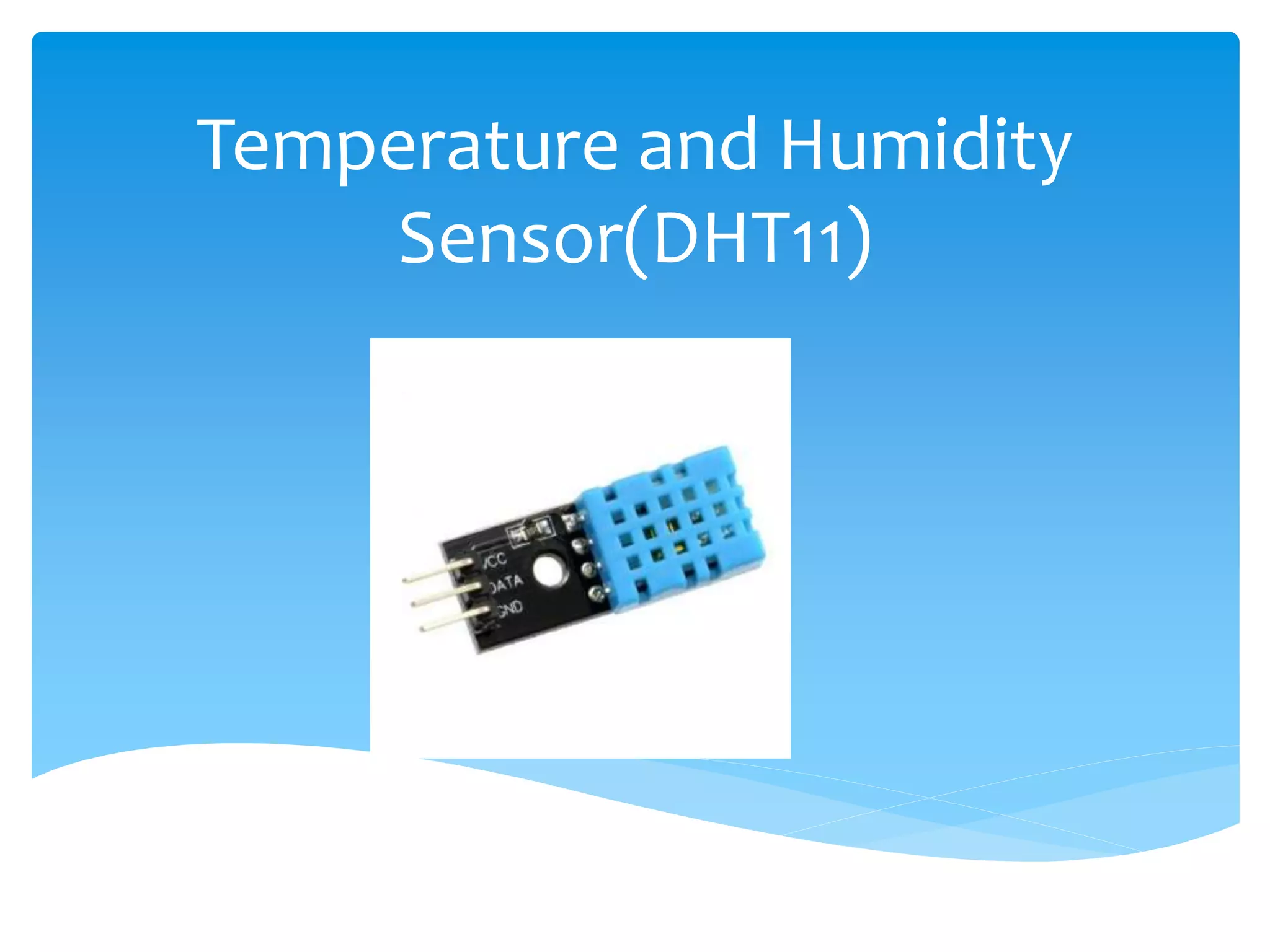
Temperature and Humidity
Sensor(DHT11)
 DHT11 is a digital sensor for sensing temperature and
humidity.
 To measure the surrounding air this sensor uses a
thermistor and a capacitive humidity sensor.
Introduction
 It has two main part one is used for temperature
measurement and other is used for humidity
measurement
Principle
 It consists of NTC sensor or thermistor to measure the
temperature
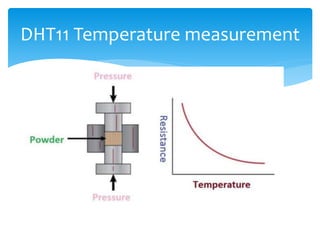
 Thermistor is basically a variable resistor which changes its
resistance with change in temperature
 These thermistors made by sintering semiconductor
materials such as ceramic or polymers in order to large
change in resistor with small change in temperature.
 When temperature changes there is a change in resistance
of the thermistor by this we can find the temperature of
our environment
DHT11 Temperature measurement
part
DHT11 Temperature measurement
 For Humidity measurement it uses humidity
component which has two electrodes with humidity
holding substrate between them
 As moisture content changes in our environment the
conductivity changes or resistance between electrode
changes.
DHT11 Humidity measurement
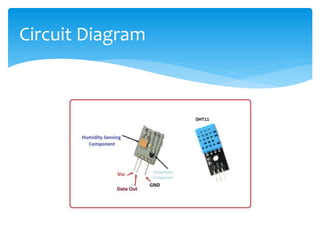
Circuit Diagram
 DHT11 sensor consists of capacitive humidity sensing
element and a thermistor for sensing temperature.
 The humidity sensing capacitor has two electrodes
with the moisture holding substrate as dielectric
between them
 Change in the capacitive value occusrs with the
change in humidity levels.
 The IC measure process this changed resistance
values and change them into digital form
Explanation
 For measuring temperature this sensor uses a
negative temperature coefficient thermistor
 Which causes a decrease in its resistance value as
increase in temperature.
 To get the larger resistance value even for the
smallest change in temperature
 This sensor is made up of semiconductor ceramics
and polymers
Explanation
 Operating Voltage: 3.5V to 5.5V.
 Operating current: 0.3mA (measuring) 60uA (standby)
 Output: Serial data.
 Temperature Range: 0°C to 50°C.
 Humidity Range: 20% to 90%
 Resolution: Temperature and Humidity both are 16-bit.
 Accuracy: ±1°C and ±1%
Features
 Excellent quality
 Fast response
 Anti-interference ability
 Extremely accurate calibration of humidity calibration
chamber
Advantages
 Since DHT11 uses capacitive humidity sensing method
it has limited long term stability
 It is sensitive to dewing and certain aggressive
substances
Disadvantages
 It is used in ventilation and air conditioning systems
 Predict the weather conditions
 Humidity sensors is used in a preventive measure in
homes
 Offices, cars, museums industries
Applications

DHT11-Temperature_and_Humidity_Sensor.pptx

  • 1.
  • 2.
     DHT11 isa digital sensor for sensing temperature and humidity.  To measure the surrounding air this sensor uses a thermistor and a capacitive humidity sensor. Introduction
  • 3.
     It hastwo main part one is used for temperature measurement and other is used for humidity measurement Principle
  • 4.
     It consistsof NTC sensor or thermistor to measure the temperature  Thermistor is basically a variable resistor which changes its resistance with change in temperature  These thermistors made by sintering semiconductor materials such as ceramic or polymers in order to large change in resistor with small change in temperature.  When temperature changes there is a change in resistance of the thermistor by this we can find the temperature of our environment DHT11 Temperature measurement part
  • 5.
  • 6.
     For Humiditymeasurement it uses humidity component which has two electrodes with humidity holding substrate between them  As moisture content changes in our environment the conductivity changes or resistance between electrode changes. DHT11 Humidity measurement
  • 7.
  • 8.
  • 9.
     DHT11 sensorconsists of capacitive humidity sensing element and a thermistor for sensing temperature.  The humidity sensing capacitor has two electrodes with the moisture holding substrate as dielectric between them  Change in the capacitive value occusrs with the change in humidity levels.  The IC measure process this changed resistance values and change them into digital form Explanation
  • 10.
     For measuringtemperature this sensor uses a negative temperature coefficient thermistor  Which causes a decrease in its resistance value as increase in temperature.  To get the larger resistance value even for the smallest change in temperature  This sensor is made up of semiconductor ceramics and polymers Explanation
  • 11.
     Operating Voltage:3.5V to 5.5V.  Operating current: 0.3mA (measuring) 60uA (standby)  Output: Serial data.  Temperature Range: 0°C to 50°C.  Humidity Range: 20% to 90%  Resolution: Temperature and Humidity both are 16-bit.  Accuracy: ±1°C and ±1% Features
  • 12.
     Excellent quality Fast response  Anti-interference ability  Extremely accurate calibration of humidity calibration chamber Advantages
  • 13.
     Since DHT11uses capacitive humidity sensing method it has limited long term stability  It is sensitive to dewing and certain aggressive substances Disadvantages
  • 14.
     It isused in ventilation and air conditioning systems  Predict the weather conditions  Humidity sensors is used in a preventive measure in homes  Offices, cars, museums industries Applications